Overview

The Jazmm Emergency Shortwave Radio with Bluetooth arrived on the market in late 2024 as a budget-minded multi-function device that packs a surprising amount of utility into a form factor you can hold in one hand. At just over 12 ounces and roughly the size of a tall paperback, this emergency radio is genuinely portable rather than merely marketed as such. It covers AM, FM, shortwave, and NOAA weather alert bands while also functioning as a Bluetooth speaker — a combination that takes real engineering tradeoffs to deliver at this price. Already cracking the top 100 portable shortwave radios on Amazon, it is clearly finding its audience.
Features & Benefits

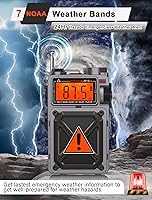
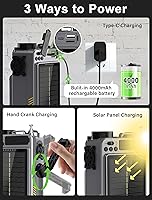
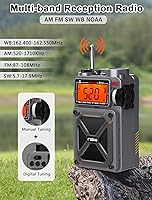
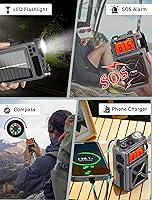
This shortwave Bluetooth radio covers four reception bands — AM, FM, shortwave, and NOAA weather alerts — which is exactly what you want when building an emergency kit or prepping a go-bag. The three charging methods (Type-C USB, built-in solar panel, and hand crank) are what set it apart: you can actually top it off on a sunny trail or during a blackout without hunting for an outlet. A 4000mAh battery handles roughly 12 hours of use and can push charge to your phone in a pinch. The 5W speaker is louder than you might expect for this size, and support for TF cards up to 256GB means you can load it with podcasts or music before heading out.

Best For

If you are the type who keeps a bug-out bag stocked and weather alerts on your radar, this hand-crank radio is built for your mindset. Campers and hikers who want one device for music, news, and emergency alerts — rather than three separate gadgets — will appreciate the compact footprint. It also works well for international shortwave listeners on a budget, though it is worth being realistic: at this price tier, shortwave reception quality will vary, and you should not expect performance on par with dedicated receivers. Travelers heading to areas with spotty power infrastructure will find the solar and crank backup genuinely useful rather than just a marketing checkbox.

User Feedback

Early buyers tend to highlight the audio output and the overall build as points of genuine satisfaction — the speaker punches above its price and the device feels solid enough for field use. The SOS alarm and flashlight get positive mentions too, particularly from preppers who tested them out of the box. On the critical side, some users question whether the solar charging panel provides meaningful top-up speed or is more of a trickle charge in anything short of direct sunlight. Bluetooth pairing stability has drawn occasional complaints, and a handful of reviewers note that shortwave reception can be inconsistent depending on location. Given how recently this emergency radio launched, the feedback pool is still growing, so take early patterns as directional rather than definitive.

Pros

  • Covers AM, FM, shortwave, and NOAA weather bands in a single compact device
  • Three charging methods — USB, solar, and hand crank — make it genuinely off-grid capable
  • The 4000mAh battery can also charge your phone, adding real utility in emergencies
  • At just over 12 ounces, this hand-crank radio is light enough to toss in any pack
  • The 5W speaker is noticeably loud for its size and handles casual listening well
  • Supports TF cards up to 256GB, so you can preload music or podcasts before heading out
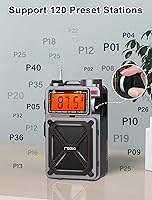
  • 120 preset station slots mean you are not re-scanning every time you power it on
  • SOS alarm and built-in flashlight add emergency value beyond basic radio functionality
  • Bluetooth 5.4 provides a stable wireless connection for everyday music streaming within range
  • Compact dimensions make storage easy whether in a go-bag, glove box, or kitchen drawer

Cons

  • Shortwave reception quality can be inconsistent, especially in urban or obstructed environments
  • Solar charging is slow and works best as a trickle supplement rather than a primary power source
  • Bluetooth pairing has drawn occasional complaints from early users, suggesting stability is not guaranteed
  • The device is relatively new, so long-term durability data and a larger review base are still lacking
  • Hand-crank charging requires sustained effort for minimal battery gain — useful in a pinch, not for regular top-ups
  • Audio quality, while decent for its size, will not satisfy anyone used to dedicated Bluetooth speakers
  • The compass is a basic inclusion and should not be relied upon as a precision navigation tool
  • Build materials feel consistent with the budget price point, which may concern buyers wanting rugged field durability

Ratings

Our AI scoring system analyzed verified global user reviews for the Jazmm Emergency Shortwave Radio with Bluetooth, actively filtering out incentivized, bot-generated, and spam submissions to surface what real buyers actually experienced. The scores below reflect both the genuine strengths that earned this hand-crank radio its loyal following and the honest pain points that prospective buyers deserve to know before purchasing. Nothing has been smoothed over — every category tells the full story.

Value for Money
83%
For buyers who want AM, FM, shortwave, NOAA alerts, Bluetooth, a flashlight, and an SOS alarm in a single compact device, the overall package is hard to argue with at this price point. Users frequently note that buying separate gadgets to match the feature set would cost significantly more, making this shortwave Bluetooth radio feel like a smart consolidation purchase.
A handful of buyers feel the build quality does not quite justify even the modest asking price over the long term, and a few wish the solar panel were more effective — a feature they factored into their value assessment when buying.
Emergency Preparedness
88%
The combination of NOAA auto-alert, SOS alarm, hand crank, solar charging, and power bank output gives this emergency radio real credibility as a go-bag essential. Users in hurricane- and tornado-prone regions specifically call out the automatic weather alert activation as the single most reassuring feature during actual storm events.
The SOS alarm is loud but the flashlight beam is modest, which leaves some users wishing the emergency lighting were more powerful for signaling or navigating in truly dark outdoor environments. A few note the compass is basic and should not be trusted for precision navigation.
Battery Life
74%
26%
Under moderate use — radio listening at mid volume with occasional Bluetooth streaming — most users find the 4000mAh battery comfortably lasts through a full day of outdoor activity without needing a recharge. The power bank function has also saved a few campers from a dead phone when no other charging option was available.
The advertised 12-hour runtime appears optimistic under mixed use, particularly when Bluetooth is active alongside radio. Several reviewers noted meaningfully shorter runtimes in real-world conditions, and the hand-crank charging rate is slow enough that it adds only minutes of use per several minutes of cranking.
Charging Versatility
79%
21%
Having three distinct ways to charge — USB-C, solar, and hand crank — genuinely sets this hand-crank radio apart from single-input competitors at the same price. Travelers and campers appreciate the peace of mind of knowing that even without any infrastructure, they can still get the radio running.
Solar charging in practice is slow and heavily dependent on direct sunlight conditions, making it less useful in overcast climates or dense canopy environments. The hand crank requires sustained effort for minimal energy gain, meaning both off-grid methods work best as emergency supplements rather than reliable primary charging sources.
Radio Reception
67%
33%
AM and FM reception performs solidly for a device this size, and users in suburban and rural areas tend to be satisfied with local station pickup. The NOAA weather band comes through clearly, which matters most when this emergency radio is doing its primary job during severe weather.
Shortwave reception is where this radio shows its budget limitations most clearly — weak signal sensitivity and limited selectivity make pulling in distant or low-power international broadcasts inconsistent, especially in urban environments with RF interference. Serious shortwave listeners will likely find the SW performance underwhelming compared to dedicated receivers.
Bluetooth Performance
71%
29%
Bluetooth 5.4 delivers a noticeably stable connection for casual home or campsite listening within a normal room-sized range, and pairing with a smartphone is straightforward for most users. The connection holds up well at close distances, making it practical for desktop or picnic table use.
Real-world range falls short of the claimed 10 meters for some users, particularly through walls or in areas with wireless congestion. A subset of buyers have reported intermittent disconnections or pairing delays that make this shortwave Bluetooth radio less reliable as an everyday wireless speaker compared to dedicated Bluetooth audio products.
Speaker Quality
76%
24%
The 5W speaker is one of the most praised aspects of this radio among early buyers — it is noticeably louder and fuller than expected for the footprint, and the bass diaphragm does add a hint of low-end warmth that makes music listenable rather than tinny. For weather alerts, news, and casual music in outdoor settings, it does the job well.
At higher volumes, some distortion creeps in, and stereo listeners will miss the spatial depth that two speakers would provide. The speaker is better suited to spoken-word content and background music than to critical listening sessions.
Build Quality
63%
37%
The unit feels solid enough for careful everyday use and light outdoor handling, and the button layout is intuitive once you have spent a few minutes with it. Most users who handle it with reasonable care report no issues during early ownership.
The plastic construction is clearly budget-grade — the casing flexes slightly under firm grip pressure, and some users feel the overall finish looks and feels cheaper than the product photos suggest. Durability over extended or rough outdoor use remains an open question given the product's newness.
Ease of Use
81%
19%
Digital tuning and a straightforward preset system make this hand-crank radio accessible to first-time shortwave users and older listeners who are not looking for a complex interface. Saving and recalling preset stations is quick once you read the manual, and the multi-function controls become second nature fairly fast.
The manual, while included, is reported to be thin on detail for some of the more nuanced functions like switching between playback modes or configuring the NOAA alert sensitivity. New users occasionally report a small learning curve navigating between radio modes and Bluetooth seamlessly.
Portability
86%
At just over 12 ounces and with dimensions close to a tall paperback novel, this emergency radio slips into a side pocket, car glove box, or daypack without any real sacrifice in pack space. Hikers and backpackers specifically mention appreciating that it does not add noticeable weight to their load.
The hand crank protrudes from the body and requires care during packing to avoid stress on the mechanism over time. A protective carry pouch is not included, which some buyers felt was a missed opportunity given the outdoor positioning.
MP3 Playback
72%
28%
The ability to load a 256GB TF card with music, podcasts, or audiobooks before a trip and play them back without any internet connection is a genuine practical benefit, especially for extended off-grid trips. USB drive support adds another flexible option for users who prefer that format.
Playback controls are functional but basic — there is no shuffle behavior or playlist management beyond file order, and some users noted that navigating large card libraries by hand becomes tedious. Audio format support appears limited to MP3, which could be a minor frustration for users with libraries in other formats.
Flashlight Utility
58%
42%
The built-in flashlight works and is genuinely useful for short-range tasks like reading a map, finding a zipper in a dark tent, or brief signaling. It adds real emergency value without requiring a separate device.
The flashlight beam is dim compared to even a basic dedicated pocket torch, and range is quite limited. Users who expected a bright field flashlight were disappointed — it is better understood as a convenience light than a primary illumination tool.
NOAA Alert Function
84%
The automatic NOAA weather alert activation is one of the more reliable functions on this emergency radio, and users in storm-prone states have reported it activating correctly during actual weather events without manual intervention. Having seven NOAA frequencies covered means local alert availability is strong across most of the US.
Alert sensitivity configuration is not well documented, and a few users in fringe reception areas have experienced missed or delayed alerts depending on local transmitter signal strength. For urban users with strong local NOAA signal, this is rarely an issue.

Suitable for:

The Jazmm Emergency Shortwave Radio with Bluetooth is a strong fit for anyone building out an emergency preparedness kit without wanting to spend a lot doing it. Campers and hikers who dislike carrying multiple gadgets will appreciate having a radio, Bluetooth speaker, flashlight, and phone charger all in one device that weighs barely over 12 ounces. If you live in an area prone to severe weather events, the automatic NOAA alert function is a genuinely practical reason to own this hand-crank radio — it is designed to notify you even when you are not actively listening. Travelers heading off-grid or to regions with unreliable electricity will find real value in the three charging options, since solar and hand-crank backup means the device works when nothing else does. Shortwave enthusiasts on a budget who want to tune into international broadcasts without committing to a dedicated receiver will also find this a reasonable entry point.
Not suitable for:

The Jazmm Emergency Shortwave Radio with Bluetooth is not the right pick for buyers who prioritize audiophile-quality sound or serious shortwave reception performance. At this price tier, shortwave sensitivity and selectivity have real limits — dedicated shortwave receivers at higher price points will outperform it meaningfully in fringe reception conditions or when trying to pull in weaker signals. If Bluetooth reliability is critical for you, such as using this as a primary wireless speaker at home, the occasional pairing inconsistencies reported by early users make it a risky choice compared to a purpose-built Bluetooth speaker. This emergency radio is also not ideal for those who need a professional-grade emergency communication device; the build materials and component quality reflect the budget positioning. Buyers expecting the solar panel to fully recharge the unit in a reasonable timeframe should temper expectations — solar on devices at this price is better treated as a slow trickle supplement than a primary charging method.
Specifications

  • Brand: Manufactured by Jimeng and sold under the Jazmm brand.
  • Dimensions: The unit measures 3.19″ long by 2.05″ wide by 5.2″ tall.
  • Weight: The radio weighs 12.4 ounces, making it light enough for a day pack or emergency kit.
  • Radio Bands: Covers four bands: AM (520–1710kHz), FM (87–108MHz), SW (5.7–17.9MHz), and NOAA weather alert (162.400–162.550MHz).
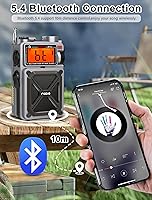
  • Bluetooth: Equipped with Bluetooth 5.4 with a rated wireless range of up to 10 meters from paired devices.
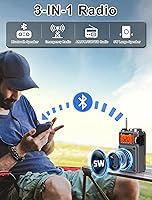
  • Speaker Output: Built-in 5W mono speaker with a dedicated bass diaphragm for fuller low-end audio reproduction.
  • Battery: Houses a 4000mAh rechargeable lithium battery rated for up to 12 hours of continuous use per full charge.
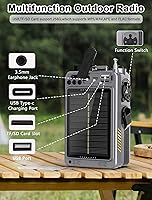
  • Charging Methods: Supports three charging inputs: Type-C USB cable, built-in solar panel, and manual hand crank.
  • Power Bank: The internal battery can output charge to an external device, functioning as a portable power bank for phones.
  • Preset Stations: Stores up to 120 preset stations across all bands: 40 for AM, 40 for FM, and 40 for shortwave.
  • Storage Support: Accepts TF (microSD) cards up to 256GB and USB drives for local MP3 and audio file playback.
  • Headphone Jack: Includes a standard 3.5mm headphone output for private listening.
  • Emergency Features: Equipped with an SOS alarm, a built-in flashlight, and a compass for basic emergency and navigation use.
  • In the Box: Package includes the radio unit, USB charging cable, owner's manual, and a gift box.
  • Battery Note: Two LR44 button batteries are required and included, likely for the compass or clock backup function.
  • Release Date: First made available on Amazon in December 2024.
  • Best Sellers Rank: Ranked #91 in Portable Shortwave Radios and #41,329 in Electronics on Amazon at time of review.

Related Reviews
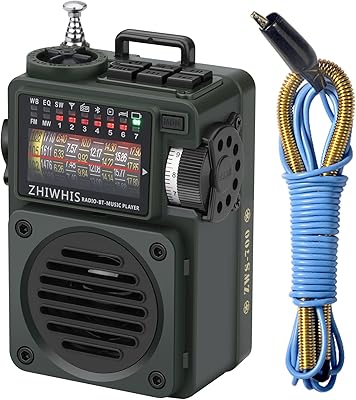
ZHIWHIS ZWS-700 Portable Shortwave Radio
77%
83%
Value for Money
91%
Portability
54%
Shortwave Reception
72%
Sound Quality
79%
Battery Life
More
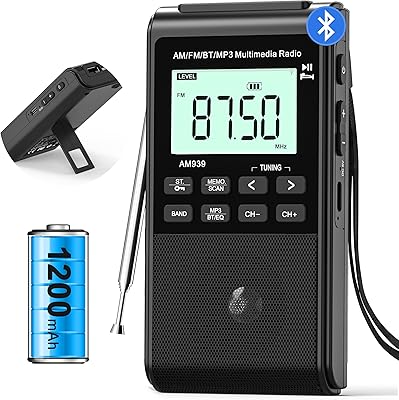
Jazmm 939 Portable AM/FM Bluetooth Radio
74%
78%
FM Reception
61%
AM Reception
69%
Battery Life
66%
Speaker Quality
54%
Bluetooth Usability
More
Kayinuo Jiayinnuoxin DF-580 Hand Crank Emergency Radio
77%
89%
Charging Versatility
74%
NOAA/AM/FM Reception
78%
Battery Capacity & Phone Charging
71%
Build Quality
68%
Bluetooth Speaker Quality
More
Eton Odyssey All-Band Bluetooth Emergency Weather Radio
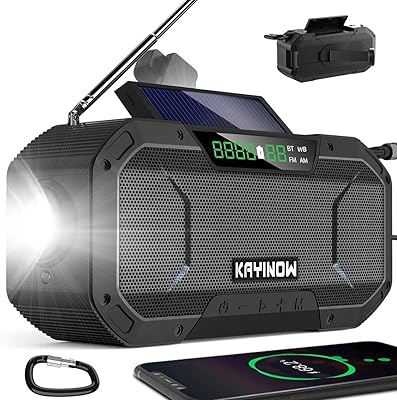
76%
83%
Radio Reception Quality
88%
NOAA Weather Alerts
78%
Power Versatility
74%
Build Quality
71%
Battery Performance
More
WENPZERAY D-216 Portable AM/FM/SW Radio
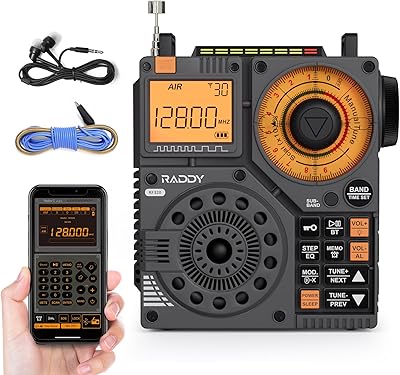
78%
91%
Ease of Use
83%
AM/FM Reception
53%
Shortwave Reception
74%
Speaker Quality
71%
Build Quality
More
Retekess V115 Shortwave Radio
74%
88%
Value for Money
91%
Portability
79%
Battery Life
83%
AM & FM Reception
62%
Shortwave Reception
More
Retekess TR113 Full-Band Shortwave Radio
74%
93%
Band Coverage
81%
SSB Reception
78%
Reception Sensitivity
52%
Ease of Use
74%
Build Quality
More
ROCAM 12000mAh Emergency Radio
86%
92%
Battery Life
89%
Portability & Size
95%
Charging Flexibility
88%
Waterproofing & Durability
90%
SOS Alarm Effectiveness
More
NEPIVEL H17 12000mAh Emergency Weather Radio
74%
91%
Value for Money
84%
Radio Reception
83%
Battery Capacity
72%
Solar Charging Performance
58%
Hand Crank Charging
More
TFTDOUP XSY330 Emergency Hand Crank Weather Radio
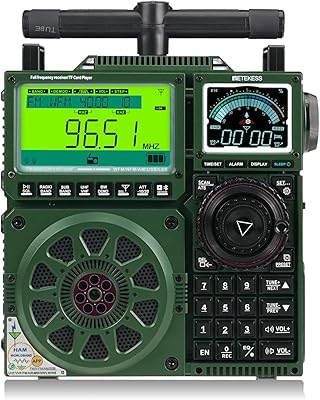
74%
76%
Battery Life
83%
Charging Versatility
71%
Radio Reception
62%
Build Quality
84%
Flashlight Performance
More

FAQ

The radio is designed to automatically activate and sound an alert when a significant weather event or public emergency is broadcast on one of the seven NOAA frequencies it monitors. You do not need to be actively listening — the alert function can trigger from standby, which is the practical value for home emergency use.

Solar charging on budget radios like this hand-crank radio is best treated as a slow trickle supplement rather than a primary charging method. On a clear sunny day it will add some charge, but do not expect it to go from empty to full via solar alone in a practical timeframe. Think of it as a way to extend battery life during an extended outdoor emergency, not a replacement for USB charging.

Yes, you can pair it with your phone over Bluetooth and use it as a wireless speaker for casual listening. The 5W output is reasonably loud for its size. That said, if you are buying it primarily as a home Bluetooth speaker, there are purpose-built options that will sound better; this shortwave Bluetooth radio is at its best when the multi-function utility actually matters to you.

It accepts a standard microSD (TF) card up to 256GB in size. The device supports MP3 playback from the card or a USB drive. For best compatibility, format your card as FAT32 and stick to standard MP3 files rather than lossless or streaming formats.

Hand cranking is genuinely slow — it typically takes several minutes of continuous cranking to generate enough power for a few minutes of use. It is not a comfortable way to charge from empty, but in a grid-down situation where you just need to power the radio for a short weather check or emergency broadcast, a few minutes of cranking can be enough to get you there.

It covers the SW band from 5.7 to 17.9MHz, which catches a reasonable range of international shortwave broadcasts. However, at this price point, shortwave sensitivity is limited compared to dedicated receivers, and reception quality will vary depending on your location, antenna positioning, and atmospheric conditions. It is a workable entry point for casual shortwave listening, but experienced shortwave hobbyists may find it falls short of their expectations.

Yes, there is a standard 3.5mm headphone jack on the unit, so any regular wired headphones or earbuds will work. This is handy for late-night listening or when you do not want to disturb others.

Early user impressions suggest the flashlight is functional rather than powerful — adequate for navigating in the dark or signaling, but not a replacement for a dedicated torch. For emergency use it does the job, just do not expect strong beam distance or brightness.

The power bank output function is built in via the USB port, and you can technically output charge to a phone while the radio is in use, but doing so will drain the 4000mAh battery faster. It is better to use the power bank function when the radio itself is not actively running, so you preserve battery for when you need it most.

It is actually a reasonable starting point for a shortwave newcomer, largely because it does not require much setup knowledge — you can scan and save stations without a steep learning curve. The owner's manual is included, and the digital tuning interface is more approachable than older analog dials. Just go in with realistic expectations about reception, and you will likely find it a satisfying introduction to the hobby.