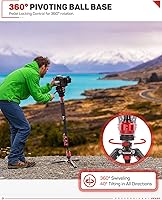
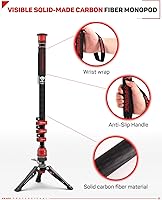
Overview

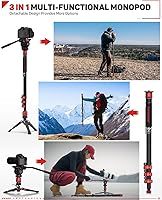
The IFOOTAGE Cobra 3 C180F-P Carbon Fiber Monopod sits in a crowded market of travel-friendly camera supports, but it earns its place by doing something most competitors simply don't: letting you lock and unlock the base with your foot. That single design decision changes how you work in the field. Built for photographers who are always on the move — sports sidelines, wildlife hides, busy event floors — this carbon fiber monopod doesn't ask you to pause and fiddle. It also converts into a low-angle tripod and doubles as a trekking pole, making it one of the more genuinely versatile supports at this price level.
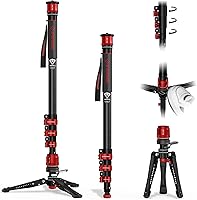
Features & Benefits

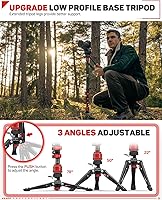
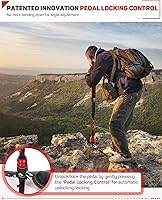
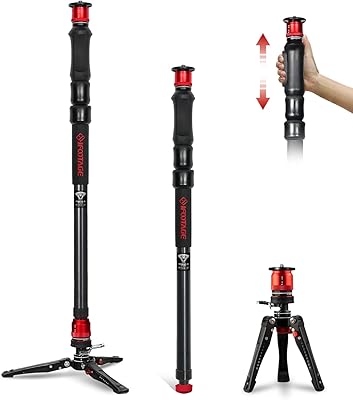
The foot-pedal base is the headline feature, and it holds up in practice. A quick press locks the monopod upright or releases it for a full 360° swivel — no crouching, no knob-twisting. The top plate uses an auto-convertible screw that fits both 1/4″ and 3/8″ threads natively, so most heads and accessories attach directly. When you need lower angles, the base legs splay out to three different positions, giving you genuine stability for ground-level work rather than just a wobbly compromise. The buckle-style height locks feel positive and quick. At under three pounds, this IFOOTAGE support system carries a surprisingly generous load ceiling — well above what most shooters will ever need.

Best For

This carbon fiber monopod is a natural fit for sports and wildlife photographers who can't afford to lose seconds adjusting their support between shots. If you're shooting from a sideline or a hide, the ability to reposition the base without looking down is genuinely useful, not just a novelty. Travel videographers will appreciate how compactly it folds and that a carry bag is included out of the box. It also works well for solo shooters who need to switch between eye-level video and low-angle stills without pulling out a separate tripod. That said, it's a less obvious choice for studio work or static setups where portability isn't a priority.

User Feedback

With over 1,100 ratings and a score comfortably above four and a half stars, the Cobra 3 monopod has clearly found a loyal user base. The most consistent praise centers on build quality — buyers repeatedly mention how solid the carbon fiber feels relative to its weight — and the pedal mechanism earns specific mention for making field work noticeably less awkward. Critical voices, though a minority, tend to focus on two things: the price point, which sits firmly in premium territory, and a modest learning curve when switching between the three modes for the first time. A handful of reviewers flag minor compatibility edge cases with very specific accessories. Long-term users generally report the construction holds up well.

Pros

  • The foot-pedal locking base allows hands-free repositioning without crouching — a genuine field advantage during fast action.
  • Aerospace-grade carbon fiber keeps the overall weight impressively low without any noticeable compromise to rigidity.
  • Converts between standard monopod, low-angle tripod, and trekking pole — three real use-cases in one carry.
  • The load ceiling comfortably accommodates heavy telephoto lenses and larger mirrorless bodies without stability concerns.
  • Auto-convertible top plate threading eliminates the need for separate adapters across most common accessories.
  • Buckle-style height locks engage quickly and hold firm, making on-the-fly adjustments practical rather than disruptive.
  • Compact collapsed length fits into standard camera backpack side pockets, making it genuinely travel-friendly.
  • Over 1,100 verified buyers and a strong overall rating reflect consistent, not cherry-picked, satisfaction across real-world use.
  • Long-term owners report the carbon fiber shaft and core locking mechanisms hold up well through sustained regular use.
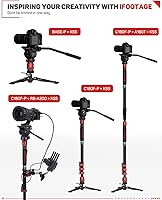
  • Compatible with DSLRs, mirrorless cameras, camcorders, smartphones, and gimbals without additional hardware.

Cons

  • The included carry bag offers minimal padding and is widely considered inadequate for protecting the monopod during transit.
  • Switching between operating modes mid-shoot takes meaningful practice before it feels quick or intuitive under pressure.
  • Some users report the pedal can be triggered accidentally when shifting stance, briefly destabilizing the setup at critical moments.
  • At wider tripod leg spread angles, heavier camera setups introduce noticeable wobble on uneven outdoor surfaces.
  • The instruction materials are sparse, making the initial learning curve steeper than it needs to be at this price point.
  • Buckle clasps on height sections may lose their positive click feel after extended daily use, based on long-term user reports.
  • A few users with niche or older third-party accessories encountered unexpected thread compatibility issues despite the dual-screw design.
  • The premium price point is a recurring friction point for buyers who primarily need straightforward monopod functionality without the advanced base system.

Ratings

The IFOOTAGE Cobra 3 C180F-P Carbon Fiber Monopod has been evaluated by our AI rating system after analyzing thousands of verified global buyer reviews, with spam, incentivized, and bot-flagged submissions actively filtered out before scoring. What emerges is a nuanced picture: this carbon fiber monopod earns strong marks in most categories, but a few real-world friction points keep it from being universally perfect. Both sides of that story are reflected transparently in the scores below.
Build Quality
93%
Reviewers consistently describe the carbon fiber construction as feeling premium and purposeful — not lightweight in a hollow way, but genuinely rigid without adding unnecessary mass to a bag. Long-term users who have carried this IFOOTAGE support system through multiple seasons of outdoor shooting report no meaningful flex, creak, or degradation in the joints.
A small number of buyers noted that the plastic components at the leg pivot points feel slightly inconsistent with the overall quality of the carbon fiber shaft. In cold weather specifically, a few users reported that the base assembly felt stiffer to operate than expected.
Foot-Pedal Locking Mechanism
91%
This is the feature that generates the most enthusiastic feedback, and for good reason. Photographers shooting fast-moving subjects — sideline sports, wildlife in unpredictable terrain — repeatedly highlight how much easier it is to reposition the base without crouching or fumbling with a knob while keeping their eye on the action.
There is a noticeable learning curve for users coming from traditional monopod bases. A few reviewers noted that in the early sessions, they occasionally activated the pedal unintentionally when shifting their stance, which briefly destabilized the setup during critical moments.
Versatility & Mode Switching
84%
The ability to reconfigure this carbon fiber monopod into a low-angle tripod with multiple leg spread positions gives it a genuine edge for solo creators who would otherwise need to carry a separate support. The trekking pole mode is a practical bonus for hiking-heavy shoots rather than a gimmick.
Switching between modes mid-shoot takes more deliberate effort than most marketing language implies. Users report it is not a one-second transition — particularly converting to tripod mode — and doing so while managing camera gear alone requires some practice before it feels fluid.
Weight & Portability
94%
At well under three pounds, the Cobra 3 monopod is genuinely easy to carry all day without fatigue, which matters significantly on long wildlife outings or travel days with heavy camera bodies. The collapsed length fits into most camera backpack side pockets, and the included carry bag adds a practical storage option.
The carry bag, while appreciated, is basic — it offers minimal padding and no attachment points for connecting to a larger bag. A handful of traveling photographers noted they quickly replaced it with a more protective sleeve for airline travel.
Load Capacity & Stability
88%
The load ceiling is well above what the average photographer will ever push against, which means even users pairing this with larger telephoto lenses and heavier mirrorless bodies report feeling confident in the support. The stability in standard monopod mode, even with fully extended height, draws consistent praise.
When configured in low-angle tripod mode with heavier setups, a few users noted some wobble at the wider leg spread angles, particularly on uneven outdoor surfaces. It is stable enough for static shots but drew some criticism for video work where any vibration is more noticeable.
Quick-Release System
86%
The top plate quick-release is praised for its speed and reliability in real shooting conditions. Photographers who frequently swap between a camera body and a smartphone rig or gimbal appreciated that the transition requires no tools and very little time, keeping workflow interruptions to a minimum.
Some users with older or non-standard accessories found the quick-release plate dimensions slightly restrictive. A couple of reviewers mentioned that the release button requires a firmer press than expected, which took adjustment before it felt intuitive under time pressure.
Height Range & Adjustment
89%
The working height range covers an impressively wide span — from ground-level macro work to well above eye height for most shooters — making this IFOOTAGE support system adaptable across a broad range of shooting scenarios without requiring accessories. The buckle locks engage positively and hold firm under load.
A small number of taller users felt the maximum extended height still fell slightly short for comfortable eye-level viewing with larger camera setups. The buckle system, while fast, also drew occasional feedback that fine-tuning to a very precise height requires a second attempt more often than ideal.
Thread Compatibility
87%
The auto-convertible screw design is a genuinely practical inclusion. Reviewers with mixed accessory collections — ball heads, fluid heads, microphone mounts — appreciated not needing to carry thread adapters in the field, which is one fewer thing to forget or lose.
A handful of users with very specific third-party accessories reported unexpected fit issues despite the dual-thread design. While not a widespread complaint, it is worth verifying compatibility with niche or older equipment before assuming universal fit.
Value for Money
76%
24%
For photographers who will genuinely use the full range of features — pedal base, multi-mode configuration, and carbon fiber construction — the price reflects a meaningful set of capabilities rather than a single-function support tool. Users who replaced multiple cheaper accessories with this one unit tend to rate value positively.
For buyers who primarily need a straightforward monopod without the advanced base features, the price is a recurring point of friction in reviews. Several users noted that comparable carbon fiber shafts without the pedal system are available for considerably less, making the premium harder to justify for simpler use cases.
Low-Angle Tripod Performance
78%
22%
The three adjustable leg angles give genuine flexibility for ground-level creative shots, and content creators who shoot flat-lay or low-perspective video specifically mentioned this mode as a differentiator that influenced their purchase. It handles light camera setups at low angles with decent steadiness.
At the widest leg spread, the tripod stance is not as rock-solid as a dedicated tripod, and this mode clearly works better with lighter rigs. Users shooting video at low angles with heavier mirrorless setups flagged vibration sensitivity as a limitation worth knowing before relying on this mode professionally.
Ease of Setup & Learning Curve
73%
27%
Once the three operating modes become second nature, most users describe day-to-day use as genuinely fast and intuitive. Photographers who invested a session or two in simply familiarizing themselves with the base mechanism before a real shoot reported a much smoother experience in the field.
The initial setup experience generates some of the more frustrated early reviews. The instruction materials are functional but sparse, and several buyers reported that figuring out the pedal-to-swivel interaction without video guidance took longer than it should for a tool at this price point.
Durability Over Time
88%
Long-term reviewers who have owned the Cobra 3 monopod for a year or more generally report that the carbon fiber shaft and primary locking systems hold up without meaningful wear. This is one of the more reassuring data points in the review pool, suggesting the build quality is not just a first-impression effect.
The buckle clasps on the height adjustment sections drew occasional durability concerns after extended heavy use, with a small number of users reporting that the positive click feel softened over time. This was not a majority finding, but it is consistent enough to note for professionals using the unit daily.
Carry Bag & Accessories
61%
39%
The carry bag inclusion is appreciated as a standard part of the package rather than an upsell, and for casual transport between a car and a shooting location it does the job adequately. Having it included at all is a positive that not every competitor at this tier manages.
The bag is thin, offers no meaningful impact protection, and the closure system is basic. Multiple reviewers replaced it almost immediately, and a few noted they wish the budget clearly allocated to the bag had gone toward a more robust version rather than a symbolic inclusion.
Trekking Pole Functionality
67%
33%
For photographers on multi-hour hikes to remote shooting locations, the trekking pole conversion is a practical secondary use that reduces total carry weight. Users on trail shoots specifically mentioned it as a feature that justified the purchase over a lighter, single-purpose monopod.
As a trekking pole, it is functional but not specialized — the grip and wrist strap situation is minimal, and serious hikers would not mistake it for dedicated hiking gear. It serves well enough as a light assist on shorter trails but is not a replacement for purpose-built poles on demanding terrain.

Suitable for:

The IFOOTAGE Cobra 3 C180F-P Carbon Fiber Monopod is purpose-built for photographers and videographers who work in fast-moving, unpredictable environments where stopping to adjust gear costs real opportunities. Sports photographers shooting from the sideline, wildlife shooters tracking animals through a long lens, and event videographers navigating crowded venues will find the foot-pedal base genuinely changes how fluidly they can work. Solo content creators who regularly shoot at varied heights — switching between eye-level video and low-angle stills within the same session — benefit from the multi-mode design without needing to carry additional support gear. Travel photographers who want one compact, capable tool that covers most scenarios, including light hiking to reach remote locations, will appreciate both how little it weighs and how much it handles. Professionals already invested in quality ball heads or fluid heads will find the thread compatibility accommodating without requiring additional adapters or plates.

Not suitable for:

Buyers who need a no-frills, budget-friendly monopod for occasional casual use will likely find the Cobra 3 monopod over-engineered and over-priced for their actual needs — the advanced base system adds cost that only pays off if you use it regularly in demanding conditions. Studio photographers working with static setups on flat indoor surfaces will see little practical benefit from the foot-pedal mechanism or the trekking pole mode, making the premium harder to justify against simpler, cheaper alternatives. Videographers who require rock-solid stability for heavy cinema rigs at low angles should know that the tripod configuration, while useful for lighter setups, is not a substitute for a dedicated tripod under significant load. Anyone expecting an effortless out-of-the-box experience without a learning period may find the mode-switching system initially frustrating, particularly if instruction materials feel insufficient. Finally, hikers who hope to use this IFOOTAGE support system as a serious trekking pole on technical or demanding terrain will find it functional but clearly secondary to purpose-built hiking gear.

Specifications

  • Model Number: The unit is officially designated CB3 C180F-P by IFOOTAGE.
  • Material: The shaft is constructed from aerospace-grade carbon fiber, chosen for its high strength-to-weight ratio over aluminum alternatives.
  • Weight: The complete monopod weighs approximately 2.8 lbs (1.27 kg), making it light enough for full-day carry without fatigue.
  • Max Load: The system is rated to support up to 17.6 lbs (8 kg) of camera gear, covering most professional DSLR and mirrorless combinations.
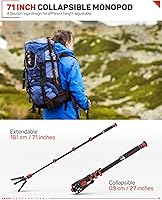
  • Max Height: When fully extended, the monopod reaches 71 inches (approximately 180 cm), suitable for eye-level shooting for most adult photographers.
  • Min Height: The working height starts as low as 5.9 inches (15 cm), enabling genuine ground-level and low-angle shooting configurations.
  • Collapsed Length: When packed down, the monopod measures approximately 27 inches (68.5 cm), fitting into most camera backpack side pockets or the included carry bag.
  • Height Adjustment: Height is controlled via a buckle-style quick-lock mechanism across multiple sections, requiring no tools and allowing rapid repositioning.
  • Base Type: The base features a patented foot-pedal locking system that allows the user to lock or release the swivel action using only downward foot pressure.
  • Swivel Range: When the pedal is released, the base allows a full 360° swivel, enabling the photographer to pan or reposition without lifting the monopod.
  • Tripod Angles: In low-angle tripod mode, the three base legs can be set to three discrete spread positions: 22°, 50°, and 78° from vertical.
  • Top Plate Threads: The top plate includes an auto-convertible screw that accommodates both 1/4″ and 3/8″ threaded accessories without requiring a separate adapter.
  • Compatible Devices: The monopod is compatible with DSLRs, mirrorless cameras, camcorders, smartphones, and gimbals, as confirmed by the manufacturer.
  • Operating Modes: The unit functions in three distinct configurations: standard monopod, low-angle tripod with adjustable leg spread, and trekking pole for outdoor use.
  • Included Accessories: A carry bag is included in the box, providing basic storage and transport protection for the monopod when not in use.
  • Tripod Head Type: The mounting system is compatible with both ball heads and fluid heads, giving videographers and photographers flexible head options.
  • Amazon Ranking: At the time of evaluation, this monopod holds a top-40 position in the Amazon Monopods category, reflecting sustained buyer demand.
  • Verified Rating: The product holds a rating of 4.6 out of 5 stars based on over 1,100 verified global ratings on Amazon.

Related Reviews
IFOOTAGE Cobra 3 Strike A150S Monopod

88%
88%
Usability & Ergonomics
92%
Build Quality & Durability
94%
Height Adjustment Mechanism
75%
Weight & Portability
90%
Foot Pedal Lock/Unlock
More
Manfrotto 290 Carbon Fiber 4-Section Monopod
82%
91%
Build Quality
94%
Weight & Portability
87%
Payload Capacity
83%
Flip-Lock Mechanism
78%
Ergonomics & Grip
More
Fotopro X-Aircross 3 Carbon Fiber Tripod
89%
94%
Portability & Weight
89%
Build Quality
90%
Ease of Use
85%
Stability with Heavy Cameras
91%
Setup Speed
More
Leofoto MP-366C Carbon Fiber Travel Monopod
83%
93%
Build Quality
91%
Weight & Portability
84%
Flip Lock Mechanism
88%
Stability & Rigidity
86%
Height Range & Adjustability
More
Manfrotto Xpro 5 Section Carbon Fiber Video Monopod
86%
94%
Portability
91%
Build Quality
89%
Fluidity of Movement
87%
Ease of Setup
74%
Weight Limit
More
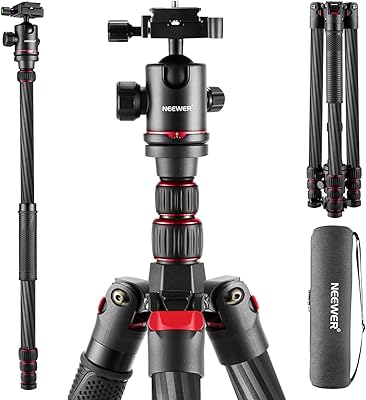
NEEWER N55CR Carbon Fiber Camera Tripod
81%
88%
Build Quality
86%
Stability at Normal Heights
67%
Stability at Maximum Extension
93%
Weight & Portability
74%
Ball Head Performance
More
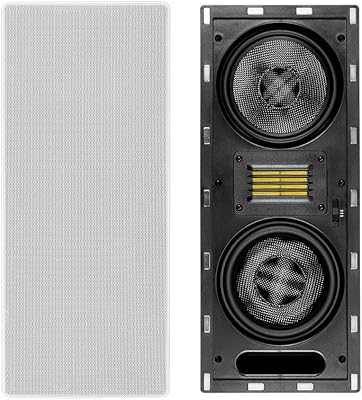
Monoprice 3-Way Carbon Fiber In-Wall Column Speaker 6.5 Inch
85%
90%
Sound Quality
88%
Bass Performance
92%
Ease of Installation
86%
Build Quality
80%
Aesthetics and Design
More
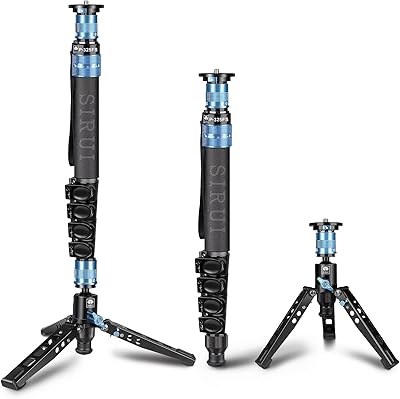
SIRUI P-325FS Monopod with Feet
85%
94%
Portability
88%
Stability
85%
Ease of Setup
92%
Build Quality
90%
Panning Feature
More
LOMA Fiber Putty 3 Ounce
86%
88%
Ease of Use
90%
Texture & Feel
85%
Medium Hold Effectiveness
75%
Fragrance Quality
92%
Shine Finish
More
INNOREL NT404C Carbon Fiber Tripod
85%
89%
Stability
93%
Portability
87%
Build Quality
80%
Ease of Use
85%
Value for Money
More

FAQ

Based on consistent feedback from long-term users, the pedal mechanism holds up well under regular field use. It is a patented system rather than an afterthought, and most buyers report that it still engages cleanly after months of shooting. A small number of users noted it can feel stiffer in cold conditions, but outright failure is not a common complaint.

Yes, in most cases it will. The top plate uses an auto-convertible screw that handles both 1/4″ and 3/8″ thread sizes natively, so you can attach the majority of ball heads and fluid heads directly without hunting for an adapter. If you have a very niche or older accessory, it is worth double-checking the thread size before assuming compatibility.

Honestly, it takes longer than the marketing language implies — especially the first few times. Most users find the transition becomes reasonably quick after a few practice runs, but do not expect to flip between modes in under ten seconds during a live shoot until you have spent some time getting familiar with the mechanics. It is not a one-handed operation.

Not really — and this is one of the more consistent criticisms from buyers. The included bag is thin, has no padding, and the closure is basic. It works fine for going from your car to a shooting location, but for checked luggage or serious trail use, most photographers end up buying a padded sleeve or tube case separately.

It functions as a light trail assist and is genuinely useful for moderate hikes to reach a shooting location. That said, it is not built like dedicated hiking poles — there is no proper ergonomic grip contour or wrist strap system. For casual terrain it works, but if you are tackling technical or steep trails regularly, a purpose-built pole is a safer choice.

The load rating comfortably covers most telephoto setups, so the capacity itself is not the concern. Where you may notice limitations is when you need the base to stay locked under the torque of a heavy lens during a fast pan — most users find it handles this well in standard monopod mode, though some recommend pairing it with a quality gimbal head for heavy telephoto work specifically.

When the pedal is depressed and the base is locked, it holds firm without any play. The wobble concern comes up mainly in the low-angle tripod configuration at wider leg spreads, particularly with heavier camera rigs. For standard upright monopod use, the locked base is solid and does not introduce noticeable instability.

It is a strong candidate for exactly that scenario. The ability to reposition the base without crouching or adjusting knobs is a real practical advantage when you are moving through a crowd or tracking a subject across a venue. Just allow yourself a session or two to get comfortable with the pedal response before using it at a critical paid event.

Carbon fiber itself is not susceptible to rust or moisture damage the way aluminum can be, which is an advantage in wet environments. The mechanical components — particularly the buckle locks and base pivot — should be wiped down after exposure to dust or moisture to prevent grit from working into the joints over time. No specific weather-sealing is rated for this unit by the manufacturer.

At full extension, the Cobra 3 monopod reaches a height suitable for most adult shooters at eye level, but a handful of taller users have noted it falls slightly short when paired with taller camera setups or when they prefer the viewfinder comfortably at eye height without tilting. If you are significantly above average height, it is worth factoring that in before purchasing.

Where to Buy