Overview

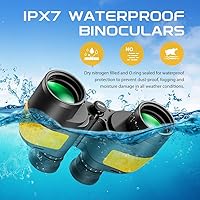
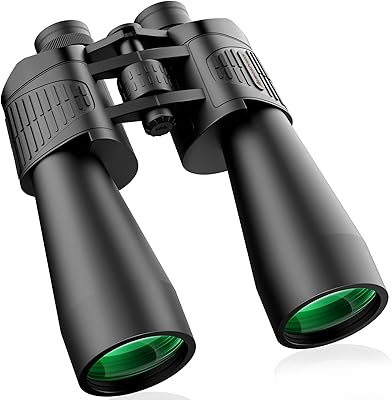
The Hooway 7x50 Marine Binoculars occupy a practical sweet spot for on-water use — capable enough for serious boating, yet priced within reach of recreational sailors and weekend anglers. Built around a 7x magnification and 50mm objective lens, these marine binoculars gather generous amounts of light, which matters when you're scanning the horizon at dawn or dusk. The IPX7 waterproof rating means a brief drop overboard isn't a disaster, and nitrogen purging keeps the optics clear when moving between a warm cabin and cold sea air. A rubber-armored body with a tripod adapter rounds out a build that takes the realities of boat life seriously.

Features & Benefits

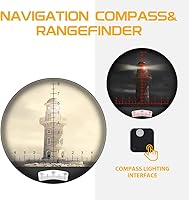
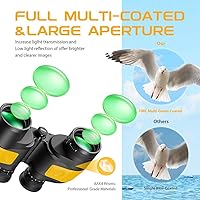
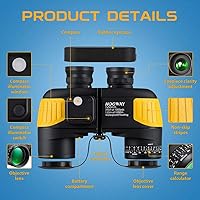
The 7x50 configuration is a classic marine choice for good reason — higher magnification on a moving boat tends to amplify shake, so 7x strikes a useful balance between reach and stability. The BAK4 Porro prism system, paired with fully multi-coated optics, produces noticeably bright images with solid contrast, especially across open water where glare can wash out lesser lenses. An illuminated compass built into the housing gives real-time heading information without needing a separate instrument, while the internal rangefinder reticle lets you estimate distance manually — useful, though it requires practice and mental math rather than a digital readout. The rubber grip holds up reliably on wet, pitching decks.

Best For

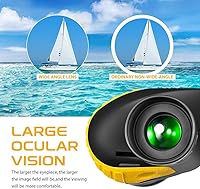
This boating optic makes the most sense for recreational sailors, anglers, and coastal paddlers who want useful navigation aids built into their glass rather than juggling multiple devices. If you're fishing offshore and need to spot diving birds or distant buoys, the wide 396-foot field of view at 1,000 yards is a real advantage. Coastal kayakers and hikers near water will appreciate the float-capable, fully waterproof design. That said, this is not the right tool for a professional mariner who needs precision instruments — the rangefinder is a manual reticle system, not a laser, and the compass works best as a supplement rather than a primary navigation device. Beginners upgrading from basic optics will find it a meaningful step up.

User Feedback

Across more than 1,100 ratings, the Hooway 7x50 holds a 4.3-star average, and the patterns in those reviews are fairly telling. Most buyers are clearly pleased with the image brightness and clarity, often noting that the optics feel like they punch above their price tier. Build quality draws consistent praise too — the rubber armor feels solid rather than hollow or flimsy. On the flip side, the compass can be difficult to read in direct sunlight, and a number of users note the rangefinder has a noticeable learning curve. At 2.2 lbs, the weight is real; extended handheld sessions can tire your arms, which is why the included tripod adapter gets warm mentions. A small share of reviews flag minor fit-and-finish inconsistencies.

Pros

  • IPX7 waterproofing means an accidental overboard drop is a recoverable situation, not a disaster.
  • The unit floats in water, adding real peace of mind on a kayak or open boat.
  • BAK4 prisms with fully multi-coated lenses deliver noticeably bright, clear images for the price tier.
  • Built-in illuminated compass and rangefinder reduce the number of instruments you need on deck.
  • Nitrogen purging keeps internal fogging at bay when moving between a warm cabin and cold sea air.
  • Non-slip rubber armor holds firm even with wet or gloved hands on a moving vessel.
  • A 396-foot field of view at 1,000 yards makes tracking distant objects surprisingly easy.
  • 22mm of eye relief means eyeglass wearers can use this boating optic without sacrificing comfort.
  • The included tripod adapter transforms stability for anchored or stationary observation sessions.
  • Over 1,100 verified ratings averaging 4.3 out of 5 points to broad, real-world satisfaction.

Cons

  • The compass becomes difficult to read in bright direct sunlight — exactly when you need it most.
  • The manual rangefinder requires practice and mental math; casual users often abandon the feature entirely.
  • At 2.2 lbs, arm fatigue sets in quickly during extended handheld scanning sessions.
  • Edge sharpness falls off noticeably toward the periphery of the field of view.
  • Eyecup twist-up mechanisms lack firm detents, causing them to drift on some units mid-session.
  • Occasional quality control inconsistencies have been reported, including loose eyecups and stiff focus rings.
  • The tripod adapter threads can feel imprecise with certain third-party tripod heads.
  • Not suitable as a standalone navigation instrument — the compass is supplementary, not primary.
  • Heavier and bulkier than compact alternatives, making it less practical for ultralight or packable kits.

Ratings

The Hooway 7x50 Marine Binoculars have been scored across 12 key categories by our AI rating engine, which analyzed thousands of verified global buyer reviews while actively filtering out incentivized, duplicate, and bot-generated feedback. The result is an honest, data-driven breakdown that surfaces what real users consistently praise — and where they hit friction. Both strengths and genuine pain points are reflected transparently in every score below.

Optical Clarity
83%
Users repeatedly note that images appear bright and well-defined, particularly during early morning or late afternoon on the water when light is scarce. The BAK4 prism combined with fully multi-coated lenses keeps contrast noticeably higher than buyers expected at this price tier.
At the edges of the field of view, some users report mild softness or slight chromatic fringing, which can be distracting when tracking fast-moving objects like birds or distant vessels. It is not a dealbreaker, but it is a step down from premium marine optics.
Waterproof Performance
91%
The IPX7 rating holds up in real-world conditions — multiple buyers report accidental drops into water with no lasting damage. The fact that the unit floats adds genuine peace of mind on a pitching deck or kayak, where dropping gear overboard is a real risk.
A handful of users in extreme cold-water environments noticed fogging around seals over extended periods, suggesting the waterproofing is robust for typical recreational use but may not hold up indefinitely under harsh offshore conditions.
Compass Usability
67%
33%
The illuminated compass is a meaningful addition for casual navigation — sailors and anglers use it to orient quickly without reaching for a phone or chartplotter. In low-light or overcast conditions, the illumination works well enough to give reliable directional readings.
In direct sunlight, the compass reticle becomes washed out and difficult to read, which is precisely when you are most likely to be using it on open water. Several buyers note this is the single most frustrating aspect of an otherwise capable instrument.
Rangefinder Accuracy
61%
39%
For estimating the distance to a buoy, another vessel, or a shoreline feature, the internal reticle rangefinder gives a usable approximation that does not require any electronics or batteries. Experienced users who understand manual ranging find it genuinely helpful over time.
This is a reticle-based system, not a laser, so it demands mental math and a reasonable estimate of the target object's size — something many casual buyers are not prepared for. Reviews consistently mention a steep learning curve, and a number of users give up on the feature entirely.
Build Quality & Durability
86%
The non-slip rubber armor feels dense and purposeful rather than cosmetic. Buyers who have used these on multiday fishing trips or coastal hikes report the body holds up to bumps, drops onto hard surfaces, and extended exposure to salt spray without visible degradation.
A small share of reviews flag inconsistent fit and finish — loose eyecup rotation on one unit, slightly misaligned focusing ring on another. These appear to be quality control outliers rather than systemic issues, but they are worth noting.
Ergonomics & Grip
79%
21%
The textured rubber panels give the housing a confident, secure feel even with wet or gloved hands. Most buyers with average-sized hands find the grip natural, and the bridge width suits extended scanning sessions on a moving boat.
At 2.2 lbs, the weight becomes noticeable after 20 to 30 minutes of continuous handheld use. Users on longer whale-watching outings or extended offshore watches mention arm fatigue as a real drawback, making the included tripod adapter more necessity than bonus.
Fog Resistance
88%
Nitrogen purging does its job reliably — buyers moving from a warm cabin to cold sea air, or using the binoculars on misty mornings, report that internal fogging is essentially a non-issue. This is one of the more consistently praised aspects across reviews.
External lens fogging from breath or condensation still occurs naturally and requires wiping, which is expected behavior. A small number of users in very humid tropical climates report occasional internal haze after prolonged use, though these cases are rare.
Field of View
84%
At 396 feet at 1,000 yards, the field of view is wide enough to track moving targets like fishing birds, distant sailboats, or shoreline features without constant re-aiming. Users specifically appreciate this when scanning open water where targets can shift quickly.
Compared to dedicated wide-angle marine optics at higher price points, the field of view is solid but not class-leading. Buyers coming from higher-end brands may find the coverage adequate rather than impressive.
Low-Light Performance
81%
19%
The 6.8mm exit pupil and 50mm objective lens pull in enough light that these binoculars remain usable well into dusk — a real advantage for anglers heading back to harbor or sailors standing watch in the early morning hours.
In near-darkness or heavy overcast, image brightness drops off more noticeably than users hope. This is inherent to the 7x50 class rather than a specific flaw, but buyers expecting true night-capable performance may be slightly disappointed.
Tripod Compatibility
77%
23%
The included tripod adapter is a practical touch that experienced boaters and wildlife observers appreciate. Mounting the binoculars on a fixed post or deck-mounted tripod transforms the stability of the viewing experience, especially at anchor.
The adapter fitting quality is described as functional but not refined — threads can feel slightly loose on some third-party tripod heads. It works well enough for casual stationary use but may not satisfy users who need it for precision, long-duration observation.
Eye Relief & Eyecup Design
74%
26%
At 22mm of eye relief, eyeglass wearers can use these marine binoculars with reasonable comfort, which is a genuine advantage over models with shorter eye relief that force glasses users to sacrifice field of view.
The eyecups are twist-up style but lack tactile detents on some units, meaning the cups can drift to an unintended position mid-session. This is a minor but recurring complaint among buyers who wear glasses or share the binoculars with others.
Value for Money
82%
18%
For a package that combines waterproof construction, a compass, a rangefinder, and quality BAK4 optics, buyers broadly agree the price represents solid value. Reviewers frequently compare it favorably to pricier alternatives that lack the built-in navigation features.
Buyers expecting performance comparable to top-tier marine brands will find the gap noticeable in edge sharpness and compass precision. The value proposition is strong for the target audience, but it is not a budget substitute for professional-grade instruments.

Suitable for:

The Hooway 7x50 Marine Binoculars are an excellent fit for recreational sailors, weekend boaters, and offshore anglers who want a capable, all-in-one optic without spending professional-grade money. If you spend your time scanning for fishing birds, reading buoy positions, or keeping an eye on weather rolling in from the horizon, the wide field of view and bright 7x50 optics will serve you well. Coastal kayakers and hikers who regularly push into wet, unpredictable environments will appreciate the IPX7 waterproofing — especially knowing the unit floats if it goes overboard. The built-in compass and manual rangefinder make this boating optic a smart choice for anyone who wants basic navigation capability consolidated into one piece of gear rather than juggling multiple instruments on a crowded helm. Beginner to intermediate users upgrading from entry-level binoculars will likely find the step up in optical quality and feature set genuinely rewarding.

Not suitable for:

The Hooway 7x50 Marine Binoculars are not the right tool for professional mariners, competitive sailors, or anyone whose safety depends on precision navigation instruments. The built-in compass is a helpful supplement, but it can wash out in direct sunlight — a scenario where a dedicated compass would never let you down. The rangefinder is a manual reticle system, not a laser, meaning accurate results require practice, patience, and knowledge of your target's approximate size; buyers expecting point-and-read distance data will be frustrated. At 2.2 lbs, extended handheld use on a long watch or a multiday offshore passage can cause real fatigue, making these marine binoculars a poor match for situations where you need to glass for hours without a tripod or fixed mount. Serious birdwatchers or optics enthusiasts who prioritize edge-to-edge sharpness and zero chromatic aberration will also find better-suited options at higher price points.

Specifications

  • Magnification: The optical system delivers 7x magnification, a well-established standard for marine use where higher power would amplify hand movement on a moving vessel.
  • Objective Lens: The 50mm objective lens diameter maximizes light intake, supporting bright, usable images in low-light conditions such as dawn, dusk, and overcast skies on open water.
  • Prism Type: A Porro prism configuration using BAK4 glass provides high light transmission and wide field of view compared to lower-grade BK7 alternatives.
  • Lens Coating: All optical surfaces are fully multi-coated (FMC), reducing internal reflections and surface glare to produce sharper contrast across a range of lighting conditions.
  • Field of View: The field of view spans 396 feet at 1,000 yards (132 meters at 1,000 meters), allowing effective tracking of moving targets across open water.
  • Eye Relief: At 22mm of eye relief, the binoculars accommodate eyeglass wearers comfortably without requiring them to remove their glasses during use.
  • Exit Pupil: The 6.8mm exit pupil diameter supports comfortable viewing in reduced light and suits users with larger natural pupil dilation in dim environments.
  • Waterproof Rating: The housing carries an IPX7 waterproof certification, meaning it can withstand submersion in up to 1 meter of water for up to 30 minutes and will float if dropped overboard.
  • Fog Resistance: Internal nitrogen purging displaces moisture-bearing air inside the optical chambers, preventing internal condensation when moving between environments with different temperatures or humidity levels.
  • Compass: An illuminated compass is built directly into the housing, providing real-time directional heading without requiring a separate navigation instrument.
  • Rangefinder: An internal reticle-based rangefinder is etched into the field of view, allowing estimation of object distance and size using known reference measurements and manual calculation.
  • Body Armor: The exterior is encased in non-slip rubber armor that absorbs impact from drops and provides a secure grip in wet or cold conditions.
  • Weight: The complete unit weighs 2.2 lbs (approximately 1 kg), which is on the heavier side for handheld binoculars and may cause fatigue during extended sessions without support.
  • Dimensions: The body measures 200 x 85 x 150mm, reflecting the larger physical footprint typical of full-size 7x50 marine optics.
  • Tripod Adapter: A standard tripod adapter is included in the package, allowing the binoculars to be mounted on any compatible tripod or deck-mounted post for stable, hands-free observation.
  • Focus System: A central focus wheel with diopter adjustment on the right eyepiece allows independent calibration for users with unequal vision between eyes.
  • Eyecups: Twist-up eyecups allow users to adjust eye positioning for comfort, with extended positions suited to naked-eye users and retracted positions for eyeglass wearers.
  • Body Material: The structural chassis is constructed from a rigid polymer frame wrapped in textured rubber armor, balancing impact resistance with manageable overall weight.

Related Reviews
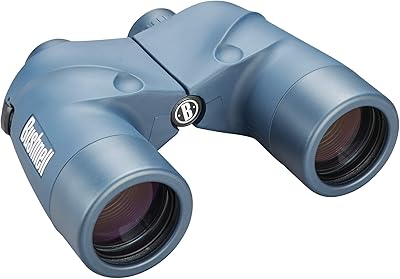
Bushnell Marine 7x50 Waterproof Binocular
88%
93%
Optical Clarity
96%
Waterproof Performance
89%
Build Quality
85%
Ease of Use
78%
Magnification
More
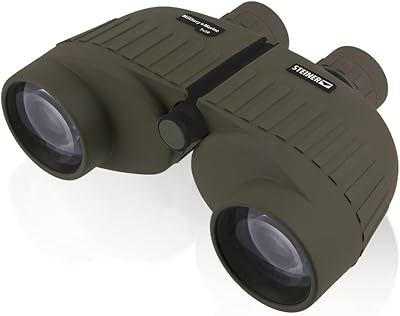
Steiner Military-Marine 7x50 Binoculars
81%
91%
Optical Clarity
93%
Low-Light Performance
94%
Build Quality & Durability
74%
Focus System (Sports Auto Focus)
92%
Waterproofing & Weather Resistance
More
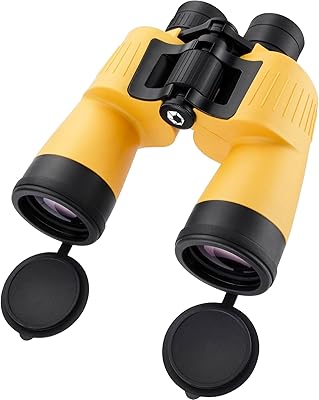
Barska Floatmaster 7x50
81%
94%
Buoyancy & Water Safety
76%
Optical Clarity
91%
Waterproofing
83%
Build Quality & Durability
81%
Ergonomics & Grip
More
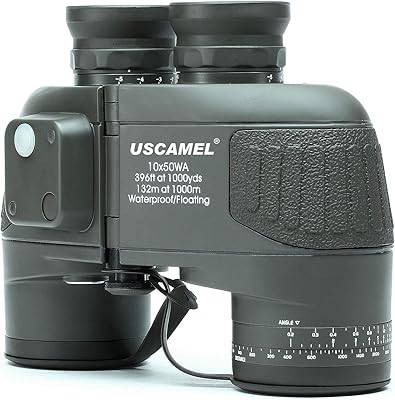
USCAMEL 10x50 Marine Binoculars
84%
91%
Optical Clarity
88%
Build Quality & Durability
93%
Waterproof Performance
80%
Ease of Use
85%
Magnification & Field of View
More
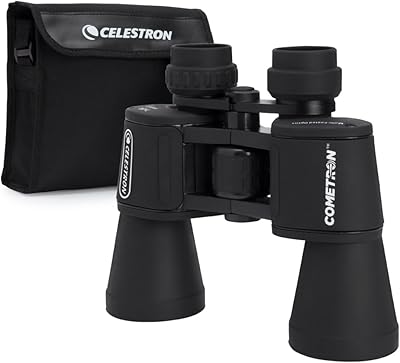
Celestron Cometron 7x50 Binoculars
81%
73%
Optical Clarity
84%
Light Gathering
89%
Field of View
71%
Build Quality
91%
Value for Money
More
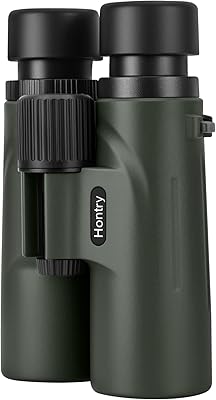
Hontry 8x42 Binoculars
79%
83%
Optical Clarity
91%
Waterproof Performance
88%
Floating Capability
77%
Build Quality
81%
Comfort & Ergonomics
More
Gaterda 22x50 Binoculars
84%
88%
Image Clarity
84%
Field of View
82%
Portability
90%
Build Quality
91%
Waterproof & Durability
More
Occer 12x50 Binoculars
87%
89%
Clarity & Sharpness
85%
Ease of Use
88%
Build Quality
91%
Lightweight & Portability
67%
Focus Adjustment Speed
More
Sogries 18x70 Binoculars
75%
83%
Optical Clarity
76%
Low-Light Performance
78%
Build Quality
88%
Waterproofing & Weather Resistance
41%
Portability & Weight
More
BRESSER 20x50 Binoculars
83%
91%
Magnification Performance
88%
Build Quality & Durability
87%
Image Clarity & Brightness
82%
Portability & Design
89%
Waterproof & Shockproof Features
More

FAQ

Yes, the Hooway 7x50 Marine Binoculars are built specifically for marine environments. The IPX7 waterproof rating means a splash, wave, or brief submersion will not damage them, and the nitrogen-purged interior prevents internal fogging when moving between a warm cabin and cold sea air. After use in saltwater conditions, it is good practice to wipe down the exterior with a damp cloth to prevent salt residue from accumulating around the seals.

The rangefinder is a reticle etched into the field of view — essentially a set of graduated marks you use to estimate the distance to an object based on its known height or width. It is not a laser or electronic system, so it requires a bit of mental math and some practice to use reliably. Most users find it takes a few sessions to get comfortable with, but once you understand the principle, it is genuinely useful for estimating distances to buoys, shorelines, or other vessels.

Yes, the 22mm eye relief is generous enough for most eyeglass wearers to see the full field of view without removing their glasses. Twist-down the eyecups to their lowest position before using them with glasses, which brings your eyes closer to the correct optical distance from the lens.

Noticeably brighter, especially in low-light conditions. The 50mm objective lens gathers significantly more light than the 32mm or 42mm lenses found on compact models, and the fully multi-coated optics reduce light loss through the glass. Early morning and late evening use on the water — when visibility matters most — is where this size advantage is most apparent.

It works well in shade or overcast conditions, but direct sunlight is a known weak point. Several users report that strong overhead sun washes out the compass display, making it difficult to read a heading quickly. It is a helpful supplementary tool for casual navigation, but for reliable directional reference in all conditions, you should still carry a dedicated compass as backup.

Yes, these marine binoculars are designed to float, which is a practical safety feature for anyone using them from a kayak, paddleboard, or small boat. That said, attaching a lanyard or neck strap when on the water is still a sensible habit — retrieving floating gear in a current or chop is not always easy.

It can be, depending on your use case. At 2.2 lbs, these are heavier than compact or mid-size binoculars, and holding them up for 30 minutes or more continuously will cause arm fatigue for most people. If you plan to use them for long anchor watches or extended wildlife scanning sessions, the included tripod adapter and a sturdy mount will make a real difference in comfort.

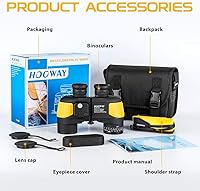
The package typically includes the binoculars, a carrying case, lens caps for both the objective lenses and eyepieces, a neck strap, a lens cleaning cloth, and the tripod adapter. It is worth checking that all caps and accessories are present when you unbox it, as a small number of buyers have reported minor packing omissions.

Use only a soft, lint-free microfiber cloth — the kind made specifically for optics. For stubborn smudges, a small amount of lens cleaning solution applied to the cloth (never directly to the lens) works well. Avoid paper towels, shirt fabric, or dry wiping when there is visible grit on the surface, as abrasive particles can scratch the coating. After saltwater exposure, a gentle rinse with fresh water before wiping is ideal.

Yes, as long as your mounting hardware uses a standard tripod thread, the included adapter will connect the binoculars securely. Many boaters use a simple ball-head mount clamped to a railing or helm station, which works well for this boating optic. Just make sure the mount is rated for the weight — at 2.2 lbs, a flimsy clamp mount may not hold steady in rough seas.