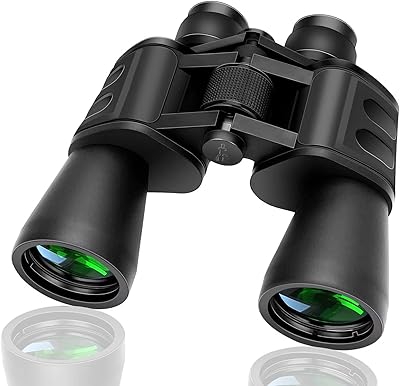
Overview

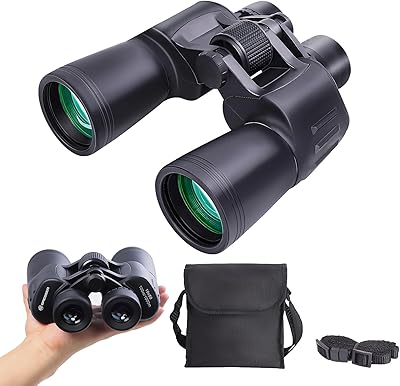
The WOZEL 20x70 Binoculars sit in an interesting spot for outdoor enthusiasts who want serious magnification without spending serious money. A 20x magnification paired with a large 70mm objective lens is a combination you typically find in much pricier glass, so the value proposition here is real. Out of the box, the rubber-armored body feels solid and grips well, and the build quality surpasses what you might expect at this price tier. That said, these are firmly positioned for hobbyists and casual users. If you are a professional birder or dedicated wildlife photographer, you will likely want more — but for everyone else, the first impression is genuinely positive.
Features & Benefits

The wide front lens pulls in substantial light, which means usable images at dusk or dawn — though do not expect miracles in truly dark conditions. The BAK4 prisms and fully multi-coated optics do their job well, delivering colors that look natural rather than washed out. At this level of magnification, the reach is genuinely impressive for picking out distant birds or spotting game across a wide field, but handheld use is a real challenge — any slight movement gets amplified noticeably. A tripod is worth considering. The center focus wheel turns smoothly, and the rubber-grip body stays comfortable even in damp or cold outdoor conditions.

Best For

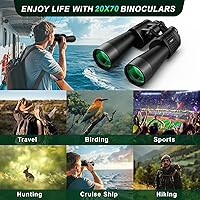
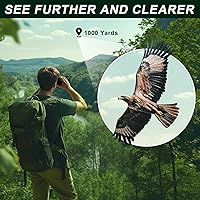
These high-power binoculars shine brightest when you are stationary. Set up at a bird blind, a hunting stand, or a scenic overlook, and the reach really pays off — you can pick out fine feather details or distant game at distances that would be blurry smudges through standard lower-power glass. Stargazers on a budget will find the light-gathering capacity useful for scanning the night sky. Hunters needing long-range spotting from a fixed position will appreciate what the WOZEL glass offers. They also make a thoughtful gift for travelers who want one versatile optic for wildlife and sightseeing. Anyone planning long hikes should factor in the considerable carrying weight.

User Feedback

Buyers consistently praise the image brightness and the clarity this 20x70 optic delivers at range, particularly given the accessible price point. The value-for-money sentiment is strong across reviews. Where feedback turns critical is stability — at this magnification, handheld shake is a genuine frustration for many buyers, and the call for a tripod comes up repeatedly. The weight, over two and a half pounds, earns complaints from anyone hoping to carry the glass all day. Eyeglass wearers report mixed results with eye relief and focus comfort. Build quality earns broadly positive marks relative to cost, and strong early sales rankings for a product this new suggest real market traction.

Pros

  • Delivers impressive reach for spotting distant birds, game, or landmarks from a stationary position.
  • The large front lens gathers enough light for usable, bright images during dawn and dusk outings.
  • BAK4 prisms and multi-coated lenses produce natural color rendering without obvious washout.
  • Rubber-armored body handles field knocks well and grips confidently in damp or cold conditions.
  • The center focus wheel is smooth and precise, making fine adjustments easy during longer observation sessions.
  • Strong value for hobbyists stepping up from basic compact binoculars for the first time.
  • Clean packaging and included accessories make this a ready-to-gift option without extra effort.
  • Build quality consistently exceeds buyer expectations given the accessible price point.
  • Works well for stationary stargazing, giving a noticeably larger and brighter view of the night sky than smaller-aperture glass.

Cons

  • Handheld use at this magnification causes significant image shake — a tripod is effectively a required accessory.
  • Eyeglass wearers frequently report vignetting and reduced field of view that makes comfortable viewing difficult.
  • Carrying these high-power binoculars around your neck all day quickly becomes tiring due to the substantial weight.
  • No tripod adapter is included despite tripod support being almost essential at this magnification level.
  • Edge sharpness is noticeably softer than mid-range or premium optics, especially visible on high-contrast subjects.
  • The narrow field of view makes tracking fast-moving birds, wildlife, or action sports genuinely frustrating.
  • Low-light performance, while decent, falls short of what premium glass can deliver in truly dark or forested conditions.
  • The neck strap padding is minimal, adding to discomfort during any extended carrying on foot.
  • Long-term durability data is limited given the product is relatively new to market.
  • Some users report chromatic fringing around high-contrast edges, particularly when viewing against bright skies.

Ratings

The scores below reflect our AI-powered analysis of verified global buyer reviews for the WOZEL 20x70 Binoculars, with spam, bot-generated, and incentivized feedback actively filtered out before any score is calculated. We looked at thousands of real-world experiences across bird watching, hunting, stargazing, and travel use cases to build a picture that is honest about both what these high-power binoculars do well and where they fall short. The results are transparent — strengths and frustrations are weighted equally so you can make a genuinely informed decision.

Optical Clarity
83%
Most buyers are pleasantly surprised by how sharp and color-accurate the image is at distance, especially when the glass is mounted steady. The multi-coated optics reduce visible glare during golden-hour bird watching sessions, and targets across a wide field resolve with solid detail for a product in this price range.
Edge sharpness drops off noticeably compared to mid-range or premium optics, which experienced birders tend to spot immediately. Some users report a slight chromatic fringing around high-contrast subjects like birds against a bright sky, which can be distracting during extended sessions.
Magnification Performance
78%
22%
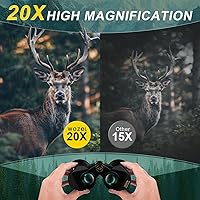
The reach at this magnification level is genuinely impressive — users watching waterfowl from a dock or scanning a distant ridgeline for deer describe being able to resolve details they simply could not see with standard 8x or 10x glass. For stationary observation, the power is a real advantage.
At this level of magnification, any hand movement gets amplified significantly, making handheld use frustrating for many buyers. Without a tripod or stable surface to brace against, the image bounces enough to cause eye fatigue quickly, which is a recurring pain point in negative reviews.
Low-Light Performance
71%
29%
The wide front lens pulls in noticeably more light than smaller-aperture binoculars, making these a reasonable choice for early-morning wildlife watching or dusk hunting. Buyers in open environments like fields and coastlines report usable, reasonably bright images well into twilight conditions.
Under genuinely low-light conditions — dense forest at dusk or pre-dawn darkness — the performance lags behind premium glass by a clear margin. BAK4 prisms and multi-coated lenses help at the margins, but do not close the gap with brands that invest heavily in superior glass quality and coatings.
Build Quality
76%
24%
The rubber-armored exterior feels more robust than buyers typically expect at this price point, and the body handles knocks and drops during field use without obvious structural damage. The grip texture is practical in damp or cold conditions, and the overall assembly feels tight rather than hollow or plasticky.
The hinge tension and diopter adjustment feel looser than on better-built competitors, and a few buyers report minor misalignment issues appearing after extended use. It is durable enough for casual outings but unlikely to hold up to the kind of daily punishment a professional or serious hobbyist would put it through.
Handheld Stability
52%
48%
For very brief observation moments — a quick scan of a treeline or checking a distant boat — the weight and grip of the body provide just enough stability to get a usable look. Users with a steady hand and some optics experience manage reasonably well in calm, wind-free conditions.
At 20x magnification, handheld shake is a persistent and widely cited complaint. Many buyers wish they had understood this limitation before purchasing, and a tripod adapter is effectively a required accessory rather than an optional upgrade. This is a fundamental physics limitation, not a product defect, but it catches many buyers off guard.
Focusing Mechanism
79%
21%
The center focus wheel turns smoothly and with enough resistance that it does not drift out of adjustment during a session. Birders tracking slow-moving subjects like herons or hawks report being able to fine-tune focus quickly without overshooting, which matters more than most buyers anticipate until they are in the field.
At the extreme close end of the focus range, some users notice the wheel becomes slightly stiff, and achieving a truly sharp image on nearby subjects takes more fiddling than it should. A small number of buyers report the focus wheel feeling slightly gritty after a few months of regular outdoor use.
Eye Relief & Eyepiece Comfort
61%
39%
For bare-eyed users, the eyepiece provides a reasonably comfortable viewing experience during shorter sessions, and the large eyepiece diameter helps frame a generous image without pressing your face uncomfortably close. Casual users tend not to flag this as a significant issue.
Eyeglass wearers consistently report difficulty achieving a full field of view, with significant vignetting cutting into the image when wearing glasses. The eye relief distance is not well-suited to spectacle wearers, and this represents one of the more common sources of disappointment in negative reviews.
Weight & Portability
58%
42%
The size-to-power ratio is reasonable for stationary use — when set up on a tripod or resting on a windowsill, the weight is not an issue at all. Buyers using these from a fixed hunting stand or a boat deck tend not to raise weight as a concern.
Carrying these on foot for more than an hour is noticeably tiring, particularly with the neck strap that comes included. Hikers and travelers who expected to roam with these hanging around their neck find the weight accumulates quickly, and several buyers explicitly recommend these only for stationary or vehicle-based use.
Value for Money
84%
The combination of specs offered at this price tier is difficult to match, and buyers who enter with realistic expectations consistently feel they got more than they paid for. For hobbyists stepping up from budget compact binoculars, the jump in reach and image size feels substantial and satisfying.
Buyers who expect the same optical refinement as established brands at similar or slightly higher price points may feel underwhelmed. The value proposition holds strongly for casual users but weakens for those who have prior experience with higher-grade glass and know what they are comparing against.
Accessories & Packaging
73%
27%
The included neck strap, lens caps, and carry case give the package a complete, gift-ready feel that buyers appreciate, particularly those purchasing as a holiday or birthday present. The box presentation is clean and the accessories are functional rather than flimsy throwaways.
The included neck strap is basic and not well-padded, which becomes uncomfortable quickly given the weight of the glass. A tripod adapter is not included despite tripod use being effectively necessary at this magnification level, which feels like a missed opportunity for a more complete package.
Field of View
66%
34%
For long-distance subjects that stay relatively still — distant shorebirds, a grazing deer, a far mountain peak — the field of view feels adequate and delivers a satisfyingly large image. Stationary nature observers tend not to flag this as a limitation in their use pattern.
The narrow field of view at 20x magnification makes tracking fast-moving subjects like songbirds in flight or sporting event action genuinely difficult. Users who expected to follow action quickly through these binoculars frequently express frustration, as reacquiring a moving target takes more time than with lower-power glass.
Ease of Setup & Use
81%
19%
New users report getting the binoculars to a usable state within a few minutes out of the box, which matters for gift recipients who may not have prior optics experience. The interpupillary distance adjustment is straightforward, and the diopter correction is easy to locate and adjust.
Getting the diopter setting dialed in correctly takes some patience, and users who skip this step tend to report softer-than-expected images. A few buyers with no prior binocular experience struggled to understand how to set the eyepiece correction properly, suggesting the included instruction guide could be more thorough.
Durability Over Time
69%
31%
Short-to-medium-term durability reports are generally positive, with most buyers not encountering structural issues within the first several months of regular seasonal use. The rubber exterior continues to grip well and shows reasonable resistance to surface wear from typical outdoor handling.
Longer-term reliability data is limited given the product launched in late 2024, so sustained durability over multiple seasons is still an open question. A handful of early buyers report minor fogging or internal dust accumulation after extended outdoor use in humid environments, which warrants watching as more reviews accumulate.
Glare & Stray Light Control
74%
26%
The multi-coated lenses handle direct side lighting reasonably well during outdoor daytime use, and buyers using these at open-air sporting events or on the water report manageable flare even in bright midday sun. Color rendering holds up without excessive washout in high-contrast lighting scenarios.
Shooting directly toward a low sun or strong backlit scene reveals the limits of the coating quality, with some internal reflections appearing that distract from the image. This is most commonly noted by hunters glassing into a setting sun, where premium glass with superior anti-reflection coatings would handle the situation more cleanly.

Suitable for:

The WOZEL 20x70 Binoculars are genuinely well-matched for outdoor enthusiasts who do most of their observing from a fixed position rather than on the move. Birders who set up at a feeder, a shoreline, or a dedicated blind will get the most out of the long reach this glass provides, resolving details on distant species that a standard 8x or 10x binocular simply cannot touch. Hunters glassing from a tree stand or a hilltop vantage point will appreciate the same advantage. Casual stargazers looking to scan wide star fields and pick out lunar surface detail on a budget will find the large front lens pulls in enough light to make night sessions rewarding. These are also a strong choice as a gift — the packaging is clean, the accessories feel complete, and the out-of-box experience is positive enough to impress someone who is just getting into outdoor hobbies.
Not suitable for:

Anyone planning to carry these on foot for extended periods should think carefully before buying — at over two and a half pounds, the weight becomes a real burden on long hikes, and the included neck strap offers minimal padding to help. The WOZEL 20x70 Binoculars are also a poor fit for eyeglass wearers, who consistently report vignetting and difficulty achieving a full field of view without removing their glasses. Buyers hoping to track fast-moving subjects — songbirds in dense brush, action at a sporting event, or flushed game birds — will struggle with the narrow field of view that comes with this level of magnification. If you expect to use these handheld without any support, the image shake at 20x will likely frustrate you within the first session; a tripod is effectively required, and that is an added cost and inconvenience not everyone anticipates. Serious birders and wildlife photographers who have used quality glass from established optics brands will notice the gap in edge sharpness and coating refinement.
Specifications

  • Magnification: These binoculars deliver 20x magnification, bringing distant subjects significantly closer than standard 8x or 10x models.
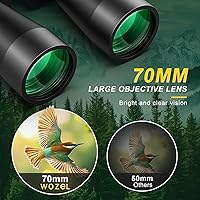
  • Objective Lens: The 70mm objective lens diameter maximizes light intake, supporting brighter images particularly during low-light conditions at dawn or dusk.
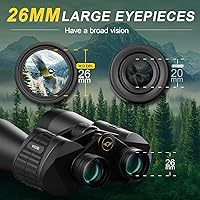
  • Eyepiece Diameter: A 26mm large eyepiece provides a generous image frame, reducing the need to press your eye uncomfortably close during extended viewing sessions.
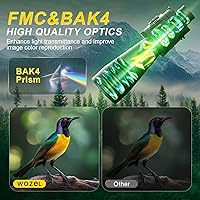
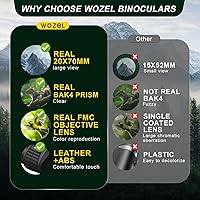
  • Prism Type: BAK4 borosilicate prisms are used internally, offering better light transmission and reduced image softness at the edges compared to lower-grade BK7 prisms.
  • Lens Coating: Fully multi-coated (FMC) optics are applied to all air-to-glass surfaces, helping to minimize glare, improve contrast, and reproduce colors more accurately.
  • Body Material: The exterior is wrapped in rubber armoring that provides impact resistance, a secure grip in wet or cold conditions, and basic protection against accidental drops.
  • Focusing System: A central focus wheel controls sharpness adjustment for both barrels simultaneously, allowing quick and precise focus changes without repositioning your hands.
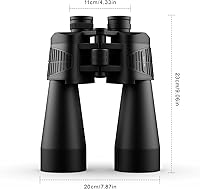
  • Item Weight: The unit weighs approximately 2.61 lbs (about 1.18 kg), which is notable for handheld use and warrants consideration for anyone planning extended carrying on foot.
  • Package Dimensions: The retail package measures 9.84 x 8.46 x 3.23 inches, reflecting the substantial size of this high-magnification optical instrument.
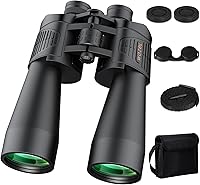
  • Included Accessories: Each unit ships with a carrying case, neck strap, and lens caps for both the objective and eyepiece ends, providing basic protection from the outset.
  • Recommended Use: Designed for bird watching, hunting, hiking, stargazing, sightseeing, and travel — primarily suited for stationary or semi-stationary observation scenarios.
  • Target User: Intended for adult users, with no specific age restriction beyond general suitability for grown hobbyists and outdoor enthusiasts.
  • Brand & Origin: Manufactured and sold under the WOZEL brand, with the product first made available to consumers in November 2024.
  • Tripod Compatibility: These binoculars are compatible with standard tripod adapters (not included), which are strongly recommended given the image shake inherent at 20x magnification.
  • Diopter Adjustment: A diopter correction ring allows users to compensate for vision differences between their left and right eyes, enabling a sharper image once calibrated.
  • Waterproofing: No official waterproof or nitrogen-purged rating is listed by the manufacturer, so these should be used with caution in rain or high-humidity environments.
  • Field of View: High magnification naturally narrows the field of view, making these better suited for fixed, distant subjects than for tracking fast-moving targets.
  • BSR Ranking: As of early 2025, the product ranked in the top 40 in the Binoculars category on Amazon, reflecting strong early sales traction for a recently launched listing.

Related Reviews
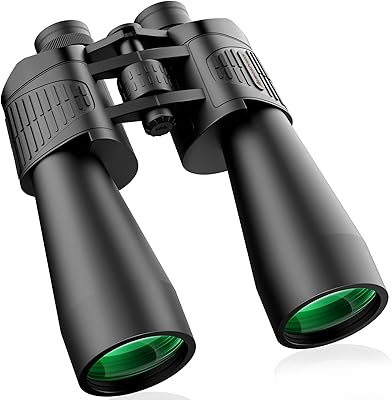
Aurosports 20x70 Binoculars
83%
91%
Magnification & Clarity
85%
Low Light Performance
88%
Build Quality & Durability
78%
Portability & Comfort
84%
Accessories in Box
More
ZIYOUHU 20x50 Binoculars
74%
74%
Optical Clarity
71%
Light Transmission
63%
Magnification Usability
69%
Build Quality
82%
Waterproofing & Fog Resistance
More
Allenjoy 20x50 Binoculars
78%
83%
Optical Clarity
78%
Magnification Performance
69%
Low-Light Performance
81%
Build Quality
88%
Ease of Focus
More
Deesoo 20x52 Binoculars
73%
74%
Optical Clarity
81%
Magnification Performance
69%
Build Quality
62%
Low-Light Capability
53%
Image Stability
More
Gaterda 22x50 Binoculars
84%
88%
Image Clarity
84%
Field of View
82%
Portability
90%
Build Quality
91%
Waterproof & Durability
More
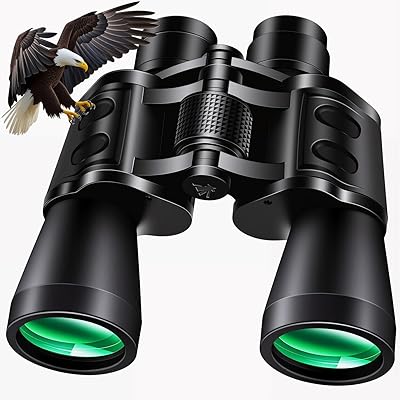
Aurosports 15x56 Binoculars
77%
83%
Optical Clarity
71%
Low-Light Performance
67%
Magnification Usability
76%
Build Quality
88%
Value for Money
More
DEESOO 25x32 Binoculars
80%
78%
Optical Clarity
71%
Magnification Performance
74%
Low-Light Performance
93%
Portability & Size
69%
Build Quality & Durability
More
Rodcirant 15x25 Binoculars
85%
89%
Value for Money
84%
Magnification Performance
95%
Portability and Size
90%
Durability (Waterproof/Fog-proof)
88%
Ease of Use (One-handed Operation)
More
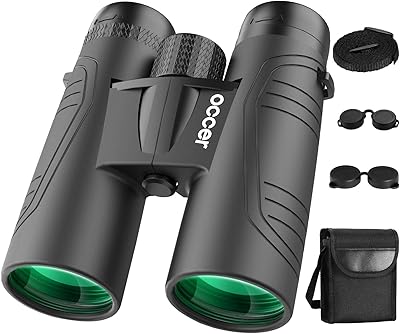
Occer 15x42 Binoculars
86%
88%
Magnification and Clarity
92%
Portability and Weight
85%
Optical Quality
87%
Build Quality
90%
Ease of Use
More
Retulgie 12x25 Compact Binoculars
75%
74%
Optical Clarity
58%
Low-Light Performance
63%
Build Quality
91%
Portability & Size
78%
Comfort & Ergonomics
More

FAQ

Technically you can use them handheld, but in practice 20x magnification amplifies every small hand tremor into a noticeably bouncing image. Most users find handheld viewing tiring and frustrating within a few minutes. For any session longer than a quick glance, a tripod or a stable surface to brace against makes a significant difference. A standard tripod adapter fits these binoculars, though one is not included in the box.

Probably not the best choice for that use case. The narrow field of view at this magnification makes it hard to locate and track birds moving through trees, and the weight becomes uncomfortable during longer walks. These high-power binoculars really shine when you are set up in one spot — a garden, a hide, a shoreline — rather than on the move. For mobile birding, a lighter 8x or 10x pair would serve you better.

The large front lens does pull in more light than smaller-aperture binoculars, which helps during the low-light hours favored by many wildlife watchers. You will get usable, reasonably bright images in open environments like fields or coastlines. That said, do not expect miracles in dense woodland or genuine darkness — the coating and glass quality help at the margins, but this is not the same league as premium optics from established brands.

Unfortunately, eyeglass wearers are one of the groups that most commonly report dissatisfaction with this 20x70 optic. The eye relief distance is not generous enough to accommodate glasses comfortably, and many spectacle wearers see a vignetting effect — a dark ring around the edge of the image — that cuts into the field of view. If you wear glasses and cannot view without them, this is worth considering carefully before purchasing.

Yes, and this is actually one of the stronger use cases for this glass. The large front lens gathers a meaningful amount of light, making the moon and brighter deep-sky objects like star clusters and nebulae noticeably more vivid than through a smaller pair. Mount them on a tripod, let your eyes adjust to the dark, and you will get a genuinely rewarding experience for casual astronomy on a budget.

For context, a typical pair of mid-range binoculars weighs between 0.6 and 1.2 lbs, so at over two and a half pounds, these are substantially heavier than what most people are used to carrying. Hanging from a neck strap for a few hours becomes noticeably uncomfortable. If you are planning to use them at a fixed location like a hunting stand or a window, the weight is a non-issue. For hiking or travel where you are on your feet all day, it is a real consideration.

Cover the right objective lens, look through the binoculars with your left eye, and use the center focus wheel to get a sharp image. Then cover the left objective lens, look with your right eye, and use the diopter ring — usually located on the right eyepiece — to fine-tune focus for that eye independently. Once set, the center wheel handles all future focus adjustments for both eyes together. It takes a few minutes but makes a noticeable difference in image sharpness.

No official waterproof rating is listed for these binoculars, so they should not be trusted in sustained rain or submersion. Light splashes or brief drizzle are unlikely to cause immediate damage, but the rubber armoring is primarily there for grip and impact protection rather than water sealing. If you regularly observe in wet conditions, look for a model with an IPX rating or nitrogen-purging to prevent internal fogging.

Yes, meaningfully so — particularly in terms of color accuracy and how bright the image looks at range. The BAK4 prisms and multi-coated lenses make a real difference compared to entry-level glass that uses cheaper BK7 prisms and single-coated optics. The step up is most visible when you are viewing at distance in less-than-ideal light. Where you will notice limitations is edge sharpness and any chromatic fringing around high-contrast objects, which are more visible than in better-quality glass.

The package includes the binoculars themselves, a neck strap, a carrying case, and protective lens caps for both the eyepiece and objective ends. A tripod adapter is not included, which is worth noting since tripod use is practically necessary at this magnification. The packaging is tidy and complete enough to work well as a gift without needing to add much else.