




Overview

The Hisense 85U7H 85-inch QLED 4K Smart TV sits in an interesting spot: a large-format display aimed at buyers who want a genuinely big screen without crossing into OLED territory on price. Hisense's ULED lineup is the brand's premium tier, and the U7H lands in the middle of that range — capable, but not the company's flagship. Being a 2022 model, it's worth knowing that newer iterations exist, so current pricing may work in your favor. The Google TV platform sets it apart from competitors running Roku or Fire TV, offering a more unified content experience. A solid performer at this size, though contrast expectations should stay realistic going in.

Features & Benefits

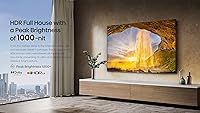
The panel uses Quantum Dot technology — essentially a layer of microscopic crystals that push colors noticeably wider and brighter than a conventional LED screen. In practice, HDR content pops with vivid saturation, and daylight sports viewing benefits from the higher peak brightness. The 120Hz refresh rate means fast motion stays sharp, whether you're watching a live game or playing on a PS5. ULED local dimming — Hisense's term for full-array backlight zone control — helps manage contrast without dimming the entire screen at once. Google TV ties everything together with cross-app content search, Chromecast support, and Alexa compatibility for households already invested in Amazon's smart home ecosystem.

Best For

This 85-inch Hisense makes the most sense for buyers upgrading from a 65-inch or smaller set who want a genuinely cinematic jump in scale. If you watch a lot of sports or use current-gen consoles, the 120Hz panel earns its keep. Bright, well-lit living rooms suit this TV better than pitch-dark home theaters — QLED delivers its best results when ambient light isn't exposing its contrast limits. Households running Google services will find the smart platform intuitive straight out of the box. One honest caveat: dedicated cinephiles prioritizing deep blacks above all else might find a smaller OLED a better trade-off for that use case specifically.

User Feedback

Owners consistently praise the picture brightness and the sheer visual impact of 85 inches in a living room — the size-to-price ratio draws a lot of positive attention, and Google TV setup gets good marks for being straightforward. On the downside, backlight blooming around bright objects in dark scenes is a real and recurring complaint; manageable in mixed lighting, but noticeable in a truly dark room. Most buyers end up adding a soundbar, since the built-in audio underwhelms at this screen size. Physical setup is another friction point — at nearly 134 pounds, assembling the stand solo is genuinely awkward. Long-term software update consistency draws mixed opinions compared to Samsung and LG alternatives at similar sizes.

Pros

  • Quantum Dot panel delivers noticeably vivid, saturated colors in well-lit rooms.
  • 85 inches of screen real estate creates a genuinely cinematic living room experience.
  • 120Hz refresh rate keeps sports and fast-motion content sharp and smooth.
  • Google TV platform offers clean content discovery across streaming apps without much friction.
  • ULED full-array local dimming improves contrast over basic edge-lit LED sets.
  • HDMI 2.1 input supports next-gen console output without compromise.
  • Alexa compatibility works well for households already using Amazon smart home devices.
  • The U7H offers strong size-for-price value compared to similarly sized competitors.
  • Built-in Chromecast makes casting from phones and tablets genuinely effortless.
  • Google TV setup is straightforward, with most buyers up and running quickly.

Cons

  • Backlight blooming around bright objects in dark scenes is a recurring and noticeable issue.
  • Built-in speakers are underwhelming for a screen this large — a soundbar adds to the total cost.
  • At nearly 134 pounds, delivery, positioning, and stand assembly are physically demanding.
  • Being a 2022 model, newer U7 variants are available and worth comparing before buying.
  • Long-term software update consistency is less reliable than what Samsung or LG typically offer.
  • Remote control usability draws mixed feedback, with some buyers finding navigation unintuitive.
  • QLED contrast performance falls short of OLED in dedicated dark home theater setups.
  • The large footprint requires a very sturdy, wide media console — furniture compatibility matters.
  • Some buyers report inconsistency when comparing unit-to-unit picture calibration out of the box.

Ratings

The scores below reflect our AI-driven analysis of verified global buyer reviews for the Hisense 85U7H 85-inch QLED 4K Smart TV, with spam, bot-submitted, and incentivized feedback actively filtered out before scoring. Each category is weighted against real-world usage patterns reported by owners across a range of home setups and viewing habits. Both the highlights and the friction points are represented here without softening either side.

Picture Brightness
88%
Owners consistently single out the panel's brightness as one of its strongest traits, particularly during daytime sports viewing when ambient light would wash out a dimmer screen. The Quantum Dot layer pushes color saturation noticeably higher than standard LED sets, making HDR content feel genuinely vivid rather than just technically correct.
While peak brightness impresses in mixed or bright lighting, a small but vocal group of reviewers note that auto-brightness adjustments can feel abrupt during transitions between scenes, which draws attention to the processing rather than the content.
Contrast & Black Levels
66%
34%
The ULED full-array local dimming does a respectable job controlling backlight zones, and in mixed-lighting rooms the improvement over basic edge-lit TVs is tangible — dark letterbox bars stay dark without the entire image dimming.
In genuinely dark rooms, backlight blooming around bright objects is a recurring and well-documented complaint. Subtitles on black backgrounds, white logos on dark scenes, and stadium lights against night skies all tend to produce visible halos that undercut the viewing experience for serious movie watchers.
Color Accuracy
83%
Color reproduction earns strong marks across a wide range of content, from streaming HDR films to broadcast sports. Buyers coming from older non-QLED sets consistently describe the difference in color depth as immediately noticeable, particularly in greens and reds.
Out-of-the-box color calibration varies somewhat between units, with a handful of reviewers noting that the default picture mode runs slightly oversaturated. A basic calibration pass — either manual or via a calibration mode — resolves this for most users.
Motion Performance
86%
The native 120Hz panel is a practical win for sports fans and console gamers, not just a spec on paper. Football broadcasts, on-ball tracking, and fast-paced gaming sequences all stay sharp in ways that 60Hz panels simply cannot match at this screen size.
The motion smoothing (Smooth Motion) setting is enabled by default and produces the soap-opera effect that experienced viewers find distracting on cinematic content. It requires manual adjustment out of the box, which catches less technically inclined buyers off guard.
Smart TV Platform
84%
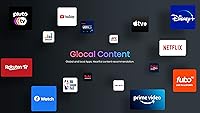
Google TV is among the better smart TV operating systems available, and the U7H benefits from it noticeably. Content discovery works across streaming apps, Chromecast is built in and reliable, and the Google Play Store means app availability rarely becomes a problem.
A subset of owners report occasional sluggishness in the interface after extended use, and some mention that the home screen carries more promoted content than they'd prefer. Software update cadence, while functional, is less consistent than what Samsung's Tizen or LG's webOS users typically experience.
Gaming Performance
81%
19%
The HDMI 2.1 input supports 4K at 120fps, which puts the U7H in a usable position for PS5 and Xbox Series X owners who want a large display without buying a dedicated gaming monitor. Input lag in game mode is competitive with similarly priced sets.
The TV has one HDMI 2.1 port rather than multiple, which becomes a limitation for households running more than one current-gen console simultaneously. Auto low-latency mode works but has been reported to occasionally disengage unexpectedly after firmware updates.
Built-in Audio
51%
49%
The built-in speakers handle casual daytime TV and streaming dialogue adequately, and for a secondary room setup where audio expectations are modest they get the job done without additional hardware.
At 85 inches, buyer expectations for audio quality run high, and the built-in speakers fall well short of them. Bass is thin, volume headroom is limited, and the overall soundstage feels undersized relative to the screen. The near-unanimous recommendation from owners is to budget for a soundbar from the start.
Value for Money
79%
21%
At 85 inches with a native 120Hz QLED panel and Google TV, the U7H offers a screen size and feature combination that competes credibly with pricier alternatives from Samsung and LG. For buyers whose priority is maximizing screen real estate within a defined budget, the size-to-performance ratio is genuinely strong.
Being a 2022 model means that equivalent or improved options now exist at similar or lower price points, which slightly erodes the value case. Buyers who also factor in the near-mandatory soundbar purchase will find the true total cost of ownership higher than the initial price suggests.
Build Quality
74%
26%
The cabinet and bezel feel solid for the price tier, and the slim-border design looks appropriately modern in a living room setting. The stand, once assembled, holds the TV securely and doesn't introduce noticeable wobble even on hardwood floors.
The plastic finish on the rear panel feels noticeably budget-grade when you're handling a TV at this price point, and a few owners have noted minor cosmetic inconsistencies around the bezel edges. It doesn't affect performance, but it does undercut the premium impression at close range.
Setup & Installation
62%
38%
The Google TV initial setup process is well-regarded — it walks through account linking, Wi-Fi configuration, and app installation without confusion, and most buyers report being up and running within 15 to 20 minutes of first power-on.
Physical installation is where things get complicated. At 133.7 lbs, this TV requires two people minimum for safe unboxing and stand assembly, and several reviewers describe the process as stressful without prior experience handling large-panel TVs. Stand foot attachment requires precise alignment that isn't well communicated in the included guide.
Remote Control
67%
33%
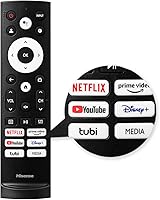
The remote is well-sized and includes dedicated streaming app buttons that most Google TV owners use regularly. Voice control activation via the built-in microphone works reliably with both Google Assistant and Alexa.
Button layout feedback is divided — some buyers find the shortcut keys useful, while others describe the remote as feeling cluttered. IR-only control (no Bluetooth) means the remote requires line-of-sight, which becomes a practical irritant in installations where the TV is recessed or at an angle.
Connectivity
82%
18%
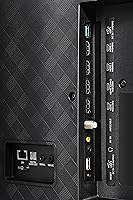
The connectivity suite is well-rounded for the price, covering HDMI, Ethernet, Bluetooth, and dual-band Wi-Fi. Ethernet stability is frequently praised by buyers who prefer a wired connection for streaming reliability, and Bluetooth pairing with headphones and soundbars is reported as consistent.
The HDMI port count is adequate but not generous — buyers with a full home theater stack (console, Blu-ray player, streaming stick, AV receiver) may find themselves needing an HDMI switch. USB port availability for external storage is also more limited than some competing models.
Long-Term Reliability
69%
31%
The majority of U7H owners report no significant hardware issues over the first year or two of use, and Hisense's warranty coverage is in line with industry standards for the TV category. Panel uniformity holds up well in most reported cases over time.
Firmware update consistency is the most frequently raised long-term concern. A handful of buyers report that updates have introduced new bugs or changed picture processing behavior unexpectedly, with resolution timelines that lag behind what Samsung and LG owners typically experience from those brands.
Viewing Angles
63%
37%
For on-axis and near-center viewing — which covers most standard living room seating arrangements — the picture holds up well with minimal color shift or brightness falloff that would distract from the content.
Off-axis performance is a recognizable weak point for this panel type, and the U7H is no exception. Viewers seated at wider angles from center — common in larger rooms with side seating — will notice color accuracy and contrast dropping off more quickly than on competing VA or OLED panels.

Suitable for:

The Hisense 85U7H 85-inch QLED 4K Smart TV is built for buyers who want a genuinely large screen and aren't willing to compromise on picture brightness to get there. It's an especially strong fit for sports fans — the 120Hz refresh rate keeps fast motion crisp, and the Quantum Dot panel holds up well in bright rooms where most game-day watching actually happens. Households already running Google services will find the smart platform intuitive from day one, with Chromecast built in and cross-app content search that actually works. Casual and mid-level gamers connecting a PS5 or Xbox Series X will appreciate the HDMI 2.1 input and the smooth motion handling. If you're stepping up from a 55 or 65-inch set and want the living room to feel genuinely different, this large-screen QLED delivers that impact without requiring an OLED budget.

Not suitable for:

The Hisense 85U7H 85-inch QLED 4K Smart TV is a harder sell for buyers who watch a lot of content in a fully darkened room, because backlight blooming around bright objects in dark scenes is a documented and real limitation of this panel. Dedicated cinephiles who prioritize inky blacks and precise contrast above all else will likely find a smaller OLED a more satisfying long-term choice, even at a similar price point. Apartment dwellers or anyone without help on delivery day should think carefully — at nearly 134 pounds, this TV is physically demanding to move and assemble, and solo setup is genuinely awkward. Buyers expecting premium built-in audio will be disappointed; the speakers are functional, but a soundbar purchase should be factored into the total budget. Those considering this as a 2022 model should also be aware that Hisense has released newer U7 iterations, so it's worth comparing current pricing against updated alternatives before committing.

Specifications

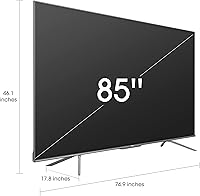
  • Screen Size: The panel measures 84.6 inches diagonally, marketed as an 85-inch class display.
  • Display Technology: Uses QLED (Quantum Dot LED) technology, which adds a layer of microscopic crystals to the backlight for wider color output and higher brightness than standard LED panels.
  • Resolution: Native 4K Ultra HD resolution (3840 x 2160 pixels) for detailed, sharp imagery across all supported content.
  • Refresh Rate: 120Hz native refresh rate, which reduces motion blur during fast-moving content like live sports and action sequences.
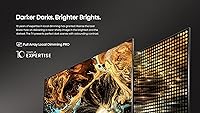
  • Local Dimming: ULED full-array local dimming divides the backlight into independently controlled zones to improve contrast without dimming the entire screen simultaneously.
  • Smart Platform: Runs Google TV, which provides unified content search across streaming apps, built-in Chromecast, and access to the Google Play Store.
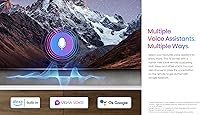
  • Voice Assistants: Supports both Google Assistant (native) and Amazon Alexa (compatible), allowing voice control through either ecosystem.
  • Connectivity: Equipped with HDMI, Ethernet, Bluetooth, and dual-band Wi-Fi for both wired and wireless connection options.
  • HDMI Input: Includes multiple HDMI ports with at least one HDMI 2.1-capable input supporting higher bandwidth for next-generation console output.
  • Aspect Ratio: Standard 16:9 widescreen aspect ratio, consistent with modern broadcast, streaming, and gaming content formats.
  • Dimensions: With the stand attached, the TV measures 3.7″ deep, 74.9″ wide, and 43.1″ tall.
  • Weight: The unit weighs approximately 133.7 lbs with the stand, requiring at least two people for safe handling and installation.
  • Audio: Features built-in speakers; Hisense does not publish a specific wattage figure for this model, and most owners opt to pair it with an external soundbar.
  • Model Number: Official Hisense model designation is 85U7H, part of the 2022 ULED U7H product family.
  • Release Year: First made available in July 2022, placing it one generation behind Hisense's current U7 lineup.
  • In the Box: Package includes the TV, stand, remote control, power cable, and a printed quick start guide.
  • Color: The chassis and bezel finish is black, with a standard slim-border design common to the ULED lineup.
  • VESA Mount: Compatible with standard VESA wall mount patterns; buyers should confirm exact hole spacing with their chosen mount before purchasing.

Related Reviews
TCL 85-Inch QM7 QLED 4K Smart TV
80%
88%
Picture Quality
91%
Brightness & HDR
74%
Local Dimming & Contrast
86%
Motion & Refresh Rate
84%
Gaming Performance
More
Samsung QN85D 85-inch QLED 4K Smart TV
77%
91%
Picture Brightness
87%
Color Accuracy
74%
Contrast & Black Levels
88%
Motion Handling
83%
AI Upscaling
More
Hisense 43″ E6 QLED 4K Smart TV
76%
88%
Picture Quality
54%
Motion Handling
83%
HDR Performance
67%
Smart TV Interface
58%
Audio Performance
More
Samsung Q80D 85-Inch QLED 4K Smart TV
82%
88%
Picture Quality
74%
Contrast & Black Levels
93%
Brightness
91%
Motion Handling
89%
Gaming Performance
More
TCL 85-Inch Q651G QLED Smart TV
75%
81%
Picture Quality
63%
Contrast & Black Levels
84%
Color Accuracy
79%
Gaming Performance
77%
Motion Handling
More
Samsung 85-inch Q8F QLED 4K Smart TV
77%
83%
Picture Quality
88%
Color Accuracy
81%
Gaming Performance
79%
Motion Handling
74%
Smart TV Platform
More
TCL 85-Inch QM8 QLED Mini LED TV
76%
93%
Picture Brightness
76%
Contrast & Black Levels
84%
Color Accuracy
89%
Gaming Performance
78%
Motion Handling
More
TCL Q681G 85-Inch QLED 4K Smart TV
76%
78%
Picture Quality
71%
Brightness & HDR Performance
67%
Local Dimming
84%
Gaming Performance
82%
Smart TV & Software
More
Hisense 85-inch U8QG Mini-LED Smart TV
81%
91%
Picture Quality
93%
Brightness & HDR Performance
84%
Contrast & Local Dimming
89%
Gaming Performance
86%
Motion Handling
More
Hisense 85-inch E6 QLED 4K Smart TV
76%
84%
Picture Quality
91%
Value for Money
58%
Refresh Rate & Motion
63%
Gaming Performance
76%
Smart TV Platform
More

FAQ

Yes, this is actually one of the stronger use cases for it. The Quantum Dot panel pushes high peak brightness, and the 120Hz refresh rate keeps fast motion — panning cameras, on-ball action — from looking blurry. It holds up well in rooms with windows or overhead lighting, which is more than you can say for most OLED sets at this size.

The U7H has a native 120Hz panel, not a marketing figure achieved through frame interpolation tricks. That distinction matters if you're connecting a PS5 or Xbox Series X, since those consoles can actually output at 120fps in supported games.

It's a real limitation worth knowing about before buying. When bright objects — like subtitles or a bright logo — appear against a dark background, you may notice a halo or glow around them. It's manageable in mixed lighting, but in a fully darkened room it becomes more obvious. If dark-room movie watching is your primary use case, an OLED panel would serve you better.

Yes, Alexa compatibility is built in alongside the native Google Assistant support. You can use either voice assistant depending on your preference or which smart home ecosystem you're already invested in.

Most buyers end up doing so, and honestly it's worth budgeting for one upfront. The built-in speakers are functional for casual viewing, but they don't do justice to the screen size. A mid-range soundbar makes a noticeable difference, especially for movies and music.

Assembly itself isn't complicated — it's a standard screw-in stand setup — but the TV weighs close to 134 pounds, which makes solo handling genuinely risky. You'd need at least two people to safely lift it onto the stand and position it without dropping or tipping it. Plan accordingly before delivery day.

Yes. The U7H includes at least one HDMI 2.1 port, which supports the higher bandwidth needed for 4K 120fps gaming on current-gen consoles. Just make sure you're plugging into the correct HDMI port, as not all inputs on the set are HDMI 2.1.

It's a fair concern. Hisense has been reasonably consistent with Google TV updates on this lineup, but user feedback on long-term update reliability is more mixed compared to what Samsung and LG owners tend to report. If software longevity is a top priority, it's worth checking whether Hisense has issued recent firmware updates for the 85U7H before purchasing.

Google TV gives you access to the Google Play Store, so you can download virtually any major streaming app — Netflix, Disney+, Max, Apple TV, YouTube, and more. Most of the popular ones come pre-installed or are easily searchable from the home screen.

The 85U7H supports HDR10 and Dolby Vision, which covers the major HDR formats used by Netflix, Disney+, and Apple TV+. HDR10+ support varies — buyers who specifically need that format for Amazon Prime Video content should verify current firmware compatibility before purchasing.