


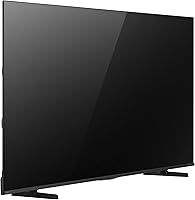
Overview

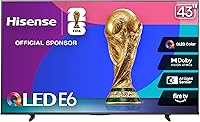
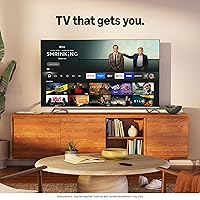
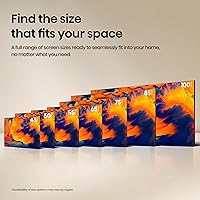
The Hisense 43″ E6 QLED 4K Smart TV makes a strong case for anyone who wants quantum dot color without a painful price tag. This 2025 model currently sits at the top of Amazon's QLED TV rankings, which says something about how much picture technology Hisense has packed into this tier. The E6 Fire TV runs on Amazon's own smart platform, tightening the connection to streaming and voice control considerably. Worth flagging upfront: the panel is native 60Hz — not the 120Hz hardware spec that the Motion Rate 120 label might suggest. Available in sizes from 43 up to 100 inches, the 43-inch version hits a practical sweet spot for bedrooms and compact living spaces.

Features & Benefits

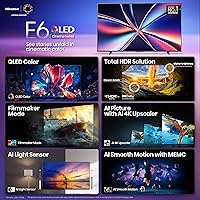
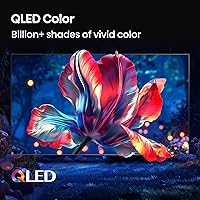
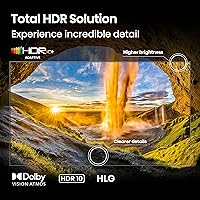
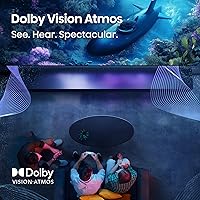
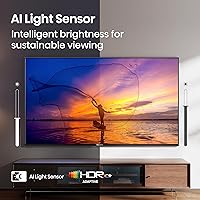
What the quantum dot layer actually delivers in everyday use is color grounded in reality — grass looks properly green, skin tones hold their warmth, and saturated reds don't bleed into orange. The HDR support is genuinely broad for this price: Dolby Vision, HDR10+ Adaptive, HDR10, and HLG are all covered, which most sets in this category don't offer. Filmmaker Mode quietly restores original frame rates and aspect ratios for films, a detail worth having. Dolby Atmos is listed, but be realistic about the onboard speakers — physical constraints don't disappear with certification. Game Mode Plus activates VRR and ALLM for console play, useful within the panel's native refresh limits. The AI Light Sensor handles brightness automatically all day, no manual tweaking needed.

Best For

This Hisense QLED makes the most sense for a few distinct buyer types. If you're outfitting a bedroom, guest room, or second TV spot and want real picture quality rather than a budget compromise, the color and HDR performance here will feel like a noticeable jump from an older 1080p set. Amazon ecosystem households will feel right at home with Fire TV — Alexa integration works without much setup. Casual console gamers get VRR support, which reduces tearing, though anyone serious about competitive play should look at a proper high-refresh panel instead. Apple users can AirPlay from any iPhone or iPad and fold the screen into HomeKit automations without any additional hardware required.

User Feedback

Buyers consistently call out the E6 Fire TV for its color performance — most note it looks significantly better than expected for a set at this price. Physical setup also earns good marks: the stand attaches without frustration, and the remote feels intuitive from day one. Where complaints cluster is motion handling during sports and fast-action content; the 60Hz native refresh is the honest explanation there. The Fire TV home screen has its own friction — ad placements are baked in and the interface can feel busy. Sound is described as acceptable for everyday watching, but owners who use this set for film nights often end up adding external speakers or a soundbar.

Pros

  • Quantum dot color produces noticeably richer, more accurate hues than standard LED panels at this price tier.
  • Dolby Vision, HDR10+ Adaptive, HDR10, and HLG support is a rare combination to find in a budget 43-inch set.
  • Fire TV gives instant access to every major streaming platform with a well-organized live TV channel guide.
  • Alexa integration works reliably for voice search, playback control, and smart home commands.
  • VRR and ALLM support makes this 43-inch set a solid casual gaming TV for console owners.
  • Filmmaker Mode preserves the original frame rate and aspect ratio of films without any manual adjustment.
  • AirPlay 2 and Apple HomeKit compatibility adds real value for households already using Apple devices.
  • The AI Light Sensor adjusts brightness throughout the day automatically, cutting energy use without sacrificing picture quality.
  • Setup is consistently described as straightforward — stand assembly, remote pairing, and initial calibration are all low-friction.
  • Available in sizes up to 100 inches, so upgrading to a larger version of the same platform is an easy decision later.

Cons

  • Native 60Hz panel limits motion clarity during sports and action sequences regardless of processing settings.
  • Motion Rate 120 is a marketing figure, not a hardware spec — buyers expecting true 120Hz performance will be disappointed.
  • Built-in speakers fall short for film watching; most users will want external audio within a few weeks.
  • Fire TV home screen displays ads prominently, which feels intrusive and cannot be fully disabled.
  • The Hi-View AI Engine chipset is mid-tier, so processing-heavy tasks like upscaling older content can look inconsistent.
  • No local dimming zone detail is specified, which means deep blacks may not hold up in dark room viewing conditions.
  • Remote control is functional but lacks backlit keys, making it awkward to use in a dim room.
  • The interface can feel cluttered and slow to navigate compared to more streamlined smart TV platforms.
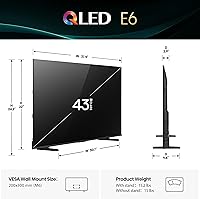
  • At 15 pounds, wall mounting is easy enough, but the included stand offers limited positioning flexibility.
  • Buyers sensitive to the Fire TV ecosystem lock-in may find the heavy Amazon branding throughout the interface off-putting.

Ratings

The scores below for the Hisense 43″ E6 QLED 4K Smart TV were produced by our AI rating system after analyzing thousands of verified global user reviews, with spam, bot-submitted, and incentivized feedback actively filtered out before any scoring was applied. Every category reflects the honest distribution of buyer experiences — the strengths that consistently earned praise and the pain points that came up repeatedly across independent reviewers. Nothing has been softened or inflated.

Picture Quality
88%
Buyers upgrading from standard LED sets consistently describe the color improvement as immediately noticeable — greens are richer, reds don't bleed, and HDR highlights pop without looking artificial. Dolby Vision content from Netflix and Apple TV+ in particular draws strong praise for depth and contrast.
In very dark room conditions, some users observe that blacks can look more like deep grey, suggesting the lack of advanced local dimming zones limits absolute contrast. A minority of viewers also report slight color uniformity inconsistencies toward screen edges.
Motion Handling
54%
46%
For slow-paced content like drama series, nature documentaries, and casual gaming, motion looks clean and stable without obvious judder or blur at the default settings.
Sports fans and action film watchers are the most vocal critics — the 60Hz native panel creates noticeable blur and judder during fast sequences that motion processing cannot fully resolve. This is the single most common complaint across verified reviews, and it is a hardware limitation with no software fix available.
HDR Performance
83%
Supporting Dolby Vision, HDR10+ Adaptive, HDR10, and HLG in a single budget set is genuinely uncommon, and users notice it — streaming HDR content renders with real highlight separation and color depth that cheaper sets in the same price range simply cannot match.
Peak brightness, while adequate for most rooms, falls short of what a premium HDR panel achieves, meaning some Dolby Vision highlights do not fully resolve in very bright living rooms. The overall HDR experience is strong for the price, but ceiling limitations are real.
Smart TV Interface
67%
33%
Fire TV is fast, well-organized, and deeply connected to the Amazon ecosystem — finding and launching streaming apps is quick, Alexa search works accurately across platforms, and the live TV channel guide is a practical feature for cord-cutters.
Persistent home screen ads are the most divisive aspect of the Fire TV experience, with many buyers expressing frustration that sponsored content cannot be fully removed from the interface. The layout can also feel cluttered compared to simpler smart TV platforms, and it leans heavily on Amazon Prime content in its recommendations.
Audio Performance
58%
42%
For casual daytime viewing — news, sitcoms, reality TV — the built-in speakers produce adequate volume and reasonably clear dialogue without obvious distortion at moderate levels.
The physical constraints of a slim 43-inch panel mean the onboard audio lacks bass, depth, and spatial presence even though Dolby Atmos decoding is supported. A meaningful portion of buyers mention adding a soundbar within weeks of purchase, which reflects the gap between the certification and the practical output.
Gaming Performance
71%
29%
VRR and ALLM support makes a real difference for casual PlayStation and Xbox users — screen tearing is visibly reduced in compatible games, and Game Mode input lag is responsive enough for everyday play.
The 60Hz native refresh rate is a hard ceiling that prevents this set from delivering the fluid, high-frame-rate experience that current-gen consoles are capable of producing. Competitive or performance-focused gamers will quickly feel the constraint.
Value for Money
91%
At its price point, buyers consistently describe this Hisense QLED as punching well above its weight — the combination of quantum dot color, full HDR format support, Fire TV integration, and AirPlay 2 compatibility in a single affordable package is hard to match in the current market.
The value proposition weakens if a buyer needs a primary living room TV for sports or competitive gaming, because the 60Hz panel limitation means the practical ceiling is lower than the feature list implies. Add the cost of a soundbar for good audio and the total spend starts to shift the value calculation.
Setup Experience
86%
Stand assembly is consistently described as tool-free and intuitive, the Fire TV onboarding process walks users through account setup clearly, and the Alexa remote pairs without friction straight out of the box.
A small number of users report inconsistent Wi-Fi connection stability during initial setup, requiring a router restart or manual reconnect before the TV holds the signal reliably. First-time calibration of picture settings is also left entirely to the user with minimal guidance.
Build & Design
74%
26%
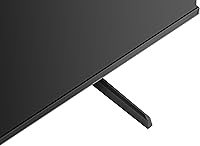
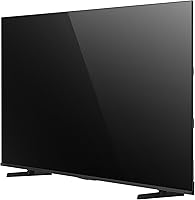
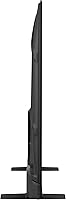
The slim profile and clean bezel design earn positive remarks — for a budget-tier set, the physical appearance reads as more premium than the price suggests, and the 15-pound weight makes solo wall mounting straightforward.
The stand design offers limited adjustability in terms of height or angle, which bothers buyers placing the TV on furniture with limited depth. Chassis materials feel noticeably lightweight under the hands compared to mid-range or premium TVs, which some users flag as a durability concern.
Remote Control
63%
37%
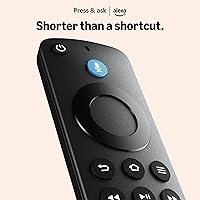
The included voice remote is ergonomically shaped, the Alexa button is well-positioned and responsive, and the overall layout is clear enough to navigate without consulting a manual.
The lack of a backlit keypad makes the remote genuinely frustrating to use in a dark bedroom or home theater setting. Several buyers also note that the button travel feels shallow and slightly cheap, which does not match the TV's otherwise reasonable build impression.
Alexa Integration
82%
18%
Voice commands for content search, playback control, and smart home device management work reliably without requiring a separate Echo speaker. Asking Alexa to find a specific show across platforms saves real time compared to manual browsing.
Alexa occasionally misreads content titles or launches the wrong app before correcting itself, which is a minor but repeated annoyance in reviews. Users outside the US also note that Alexa's language and service coverage is narrower, reducing the voice assistant's practical usefulness.
Energy Efficiency
79%
21%
The AI Light Sensor actively adjusts brightness throughout the day, and at 100 watts the set sits in a sensible efficiency range for its class — buyers in markets with high electricity costs specifically call out the ambient sensor as a useful real-world feature.
Power consumption increases noticeably when brightness and backlight are pushed to maximum in a bright room, and the TV does not ship with a particularly aggressive default energy-saving mode out of the box. Users have to enable eco settings manually if consumption is a priority.
Streaming Experience
87%
Fire TV's deep integration with all major streaming platforms — Netflix, Disney+, Prime Video, Apple TV+, HBO Max — means content discovery is fast and the live TV guide adds genuine value for households that mix streaming with antenna or cable channels.
Amazon Prime content and recommendations are prioritized prominently throughout the interface, which some users describe as feeling less neutral than other smart TV platforms. Non-Amazon services occasionally take an extra navigation step to reach compared to Prime-native content.
Apple Ecosystem Compatibility
81%
19%
AirPlay 2 mirroring from iPhone and iPad works reliably without any additional setup steps, and HomeKit integration allows the TV to participate in broader home automation routines alongside other Apple devices.
HomeKit control is functional but basic — advanced customization options available on some other smart TV platforms are not present here. Buyers with complex Apple Home setups occasionally report that TV automations lag slightly compared to dedicated smart home devices.

Suitable for:

The Hisense 43″ E6 QLED 4K Smart TV is a strong fit for buyers who want a meaningful picture quality upgrade without committing to a high-end budget. If you're furnishing a bedroom, college dorm, or guest room with a TV that actually looks good rather than merely functional, this 43-inch set delivers color richness and HDR range that far exceed what standard LED panels offer at this price. Households already running Amazon Echo devices or using Alexa regularly will find the Fire TV platform intuitive and genuinely useful from day one. Casual console gamers with a PlayStation or Xbox will appreciate VRR and ALLM support, which reduces screen tearing even if the panel itself is 60Hz native. Apple users can mirror content via AirPlay 2 and fold the TV into HomeKit routines without buying additional hardware. Anyone replacing an older 1080p set in a secondary room will notice a real, tangible jump in image quality here.

Not suitable for:

Buyers with high expectations around motion clarity should think carefully before purchasing this Hisense QLED — the panel runs at a native 60Hz, and no amount of motion processing fully compensates for that hardware ceiling when watching live sports or fast-paced action films. Competitive gamers who prioritize low input lag and high refresh rates will find this set limiting compared to dedicated gaming monitors or higher-tier TV panels. The built-in audio, while Dolby Atmos certified, operates within the physical constraints of slim TV speakers, so anyone treating audio quality as a priority should budget for a soundbar separately. The Fire TV interface ships with ads baked into the home screen, which some buyers find intrusive enough to be a dealbreaker, particularly those coming from cleaner smart TV platforms. Finally, if you need a large statement piece for a main living room, the 43-inch format may simply be too compact for comfortable viewing at typical sofa distances.

Specifications

  • Screen Size: The panel measures 43 inches diagonally, with overall dimensions of 37.9″ wide, 22″ tall, and 2.9″ deep including the stand.
  • Display Technology: Uses a QLED quantum dot layer over an LCD panel with Wide Color Gamut support for broader, more accurate color reproduction than standard LED sets.
  • Resolution: Native 4K UHD resolution delivers four times the pixel density of a 1080p panel, producing fine detail across the full screen area.
  • Refresh Rate: The native panel refresh rate is 60Hz; Motion Rate 120 refers to frame interpolation processing, not a hardware specification.
  • HDR Formats: Supports Dolby Vision, HDR10+ Adaptive, HDR10, and HLG, covering the full range of HDR formats used across streaming services and physical media.
  • Audio: Dolby Atmos decoding is supported, though output is delivered through the built-in TV speakers, which have the physical constraints typical of slim panel designs.
  • Smart Platform: Runs Amazon Fire TV OS, providing a unified home screen with access to all major streaming apps, a live channel guide, and Alexa voice control.
  • AI Chipset: Powered by the Hi-View AI Engine, which handles picture processing tasks including upscaling, color optimization, and motion compensation.
  • Gaming Features: Game Mode Plus activates Variable Refresh Rate and Auto Low Latency Mode for compatible consoles, reducing screen tearing and input lag during play.
  • AI Light Sensor: An ambient light sensor automatically adjusts screen brightness in response to room lighting conditions throughout the day to balance picture quality and energy use.
  • Filmmaker Mode: Filmmaker Mode disables post-processing and restores the original aspect ratio, color grading, and frame rate as intended by the content creator.
  • Smart Home: Compatible with Apple HomeKit and AirPlay 2, allowing screen mirroring from Apple devices and integration into existing HomeKit automation routines.
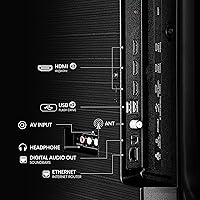
  • Connectivity: Includes HDMI, USB, Bluetooth, and dual-band Wi-Fi; exact port counts are not confirmed in the provided product data.
  • Voice Assistant: Alexa is built directly into the remote, enabling voice search, playback control, smart home commands, and general queries without a separate Echo device.
  • Weight: The TV weighs 15 pounds, making it manageable for solo wall mounting or placement on a furniture stand without additional support.
  • Power: Rated at 100 watts at 120 volts, placing it in a reasonable efficiency range for a 43-inch 4K panel in regular household use.
  • Remote Control: Includes a voice remote with a dedicated Alexa button and requires two AAA batteries, which are included in the box.
  • In the Box: Package includes the TV, stand, power cable, voice remote with batteries, and a quick setup guide.

Related Reviews
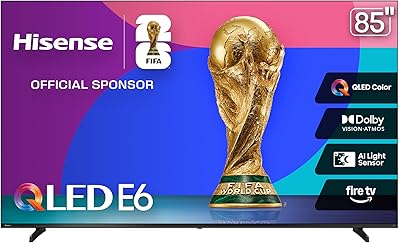
Hisense 85-inch E6 QLED 4K Smart TV
76%
84%
Picture Quality
91%
Value for Money
58%
Refresh Rate & Motion
63%
Gaming Performance
76%
Smart TV Platform
More
Hisense 43R7E 43-inch 4K Roku Smart LED TV
81%
87%
Picture Quality
92%
Value for Money
91%
Ease of Setup
85%
Streaming Performance
61%
Sound Quality
More
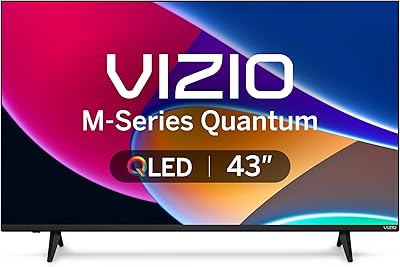
VIZIO 43-Inch M-Series 4K QLED Smart TV
84%
92%
Picture Quality
85%
Gaming Performance
89%
Ease of Use
91%
Color Accuracy
78%
Sound Quality
More
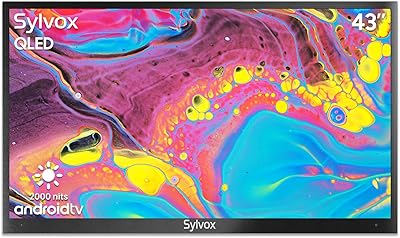
SYLVOX 43-Inch Outdoor Smart TV QLED 4K UHD
85%
93%
Display Quality
89%
Weather Resistance
74%
Ease of Setup
78%
Sound Quality
87%
Voice Control (Google Assistant)
More
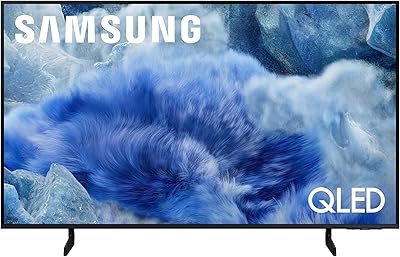
Samsung 43-Inch Class QLED Q8F 4K UHD Smart TV
85%
91%
Display Quality
88%
Gaming Performance
90%
Picture & Sound Enhancement
87%
Design & Build
79%
User Interface & Smart Features
More
VIZIO M43Q6M-K04 43-inch 4K QLED Smart TV
73%
83%
Picture Quality
79%
HDR Performance
58%
Smart TV Platform
88%
Value for Money
66%
Gaming Performance
More
Hisense 50-inch QD6 QLED 4K Smart TV
76%
83%
Picture Quality
78%
Color Accuracy
71%
Motion Handling
76%
Gaming Performance
81%
Smart Platform
More
Hisense 65-inch QD6 QLED 4K Smart TV
76%
81%
Picture Quality
78%
Brightness & HDR Performance
72%
Motion Handling
76%
Gaming Performance
69%
Smart TV & Interface
More
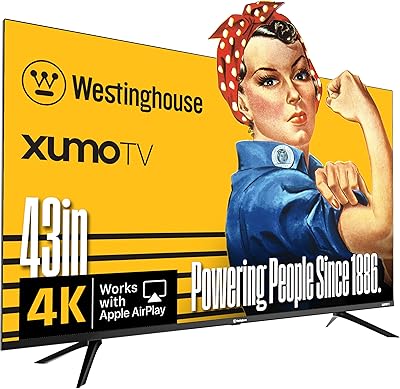
Westinghouse 43-inch 4K UHD Smart TV
83%
91%
Display Quality
92%
Value for Money
89%
User Interface & Smart Features
65%
Sound Quality
88%
Ease of Setup
More
Hisense 85U7H 85-inch QLED 4K Smart TV
74%
88%
Picture Brightness
66%
Contrast & Black Levels
83%
Color Accuracy
86%
Motion Performance
84%
Smart TV Platform
More

FAQ

The native panel refresh rate on this set is 60Hz. The Motion Rate 120 label refers to Hisense's motion processing and frame interpolation — it is not a hardware spec. If a true 120Hz panel matters to you, this TV does not offer that.

Yes, it connects via HDMI and Game Mode Plus activates VRR and ALLM for compatible consoles. That said, the 60Hz native panel means you are capped at 60 frames per second, so the full performance potential of those consoles is not unlocked here.

Yes, the Fire TV home screen does display sponsored content and ad placements by default, and they cannot be fully disabled. It is a known trade-off with this platform. Most users get used to it, but if a clean, ad-free interface is a priority, it is worth factoring that in before buying.

Absolutely. This 43-inch set supports both AirPlay 2 and Apple HomeKit, so you can mirror your iPhone or iPad to the screen and include the TV in HomeKit automations alongside your other Apple devices — no extra hardware needed.

The quantum dot layer makes a noticeable difference in color accuracy and saturation, particularly for greens and reds. Skin tones tend to look more natural, and the broad HDR support means Dolby Vision content from Netflix or Apple TV+ renders with proper highlight and shadow detail. The jump from a basic LED set is real, not subtle.

The built-in audio is adequate for casual daytime viewing, news, and dialogue-heavy shows. For films or anything with a serious soundtrack, the physical limits of the slim speaker enclosure become obvious quickly. Most users who care about audio at all end up adding a soundbar within a few months.

Setup is genuinely straightforward. The stand attaches without tools or much effort, the TV walks you through Fire TV account linking on first boot, and the Alexa remote pairs automatically. Most people have it running within 20 to 30 minutes.

It is a practical feature rather than a showpiece. In a room with shifting natural light throughout the day — morning sun, afternoon glare, evening dim — the sensor adjusts brightness without you needing to touch any settings. It also contributes to lower power consumption over time, which is a reasonable side benefit.

The E6 Fire TV supports Dolby Vision, HDR10+ Adaptive, HDR10, and HLG, which is the full spectrum of formats used across Netflix, Disney+, Apple TV+, and Amazon Prime Video. In practice, this means the TV can display the best version of HDR content from whichever platform you use, rather than falling back to a lower-quality format.

At typical living room seating distances of 8 to 12 feet, 43 inches feels on the smaller side for a primary viewing screen. It is well-suited for a bedroom, home office, kitchen, or smaller apartment living room where seating is closer to the screen. If you need it as the main TV in a large room, sizing up to the 55 or 65-inch version of the same model would be a better call.