Overview

The HIFIMAN HE1000 Stealth Planar Magnetic Headphones sit near the top of HIFIMAN's lineup, competing directly with other summit-fi open-back designs from Audeze, Focal, and Sennheiser. What separates this version from earlier HE1000 iterations isn't just incremental refinement — the Stealth Magnet redesign represents a genuine structural change to how the driver operates. The diaphragm used here is measured in nanometers of thickness, which isn't a marketing claim so much as a real materials engineering achievement that affects how quickly and accurately the driver responds to signal. This is a headphone aimed squarely at serious home listeners and studio reference users, and the luxury packaging — complete with both plug types included — sets the tone for what kind of experience you're buying into from the moment you open the box.

Features & Benefits

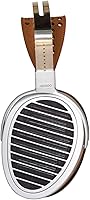
The defining engineering choice in the HE1000 Stealth is the magnet geometry itself. Conventional planar magnets sit directly in the acoustic path and scatter sound waves before they reach your ear — HIFIMAN's solution shapes the magnets so waves pass around them with minimal interference, reducing distortion that you'd otherwise never consciously notice but would absolutely feel as listening fatigue. The nanometer-thin diaphragm responds to transients with exceptional speed, which shows up as better separation between closely layered instruments. An asymmetrical magnetic circuit, refined over years of development, keeps imaging stable and centered. The Window Shade grille protects the driver without blocking airflow, and the CNC-milled chassis feels built for decades, not years. Both 6.35mm and 4-pin XLR plugs are included for flexible amp pairing.

Best For

This flagship planar is not a casual or portable headphone — it rewards a proper listening environment and dedicated source gear. If your setup includes a capable desktop amplifier or a quality DAC/amp stack, this is a headphone that will genuinely show you what that gear is capable of. Listeners upgrading from mid-tier planars like HIFIMAN's own HE400 series or Audeze LCD-2 will notice the difference in resolution and spatial precision almost immediately. It's also a credible studio reference tool for anyone who needs a full-range open-back response without colorization. That said, buyers who want passive isolation or portability should look elsewhere. This is a desk headphone, through and through.

User Feedback

With around 100 ratings and a 4.5-star average, the reception for HIFIMAN's open-back flagship is broadly positive but not universal. Consistent praise centers on the wide soundstage and the way the headphone renders acoustic instruments — strings and piano in particular get cited as sounding unusually natural and three-dimensional. Where buyers push back is predictable: at 458 grams, extended sessions can become physically tiring, and a few listeners note the headband pressure adds to that. Source matching also comes up frequently — underpowered setups produce noticeably flat results. Some owners of older HE1000 versions debate whether the Stealth Magnet update justifies the cost if upgrading from a previous generation, though first-time buyers at this tier seem largely satisfied.

Pros

  • Soundstage width and depth are among the strongest in its class for open-back listening.
  • Acoustic instruments — strings, piano, vocals — reproduce with an unusually natural, non-fatiguing timbre.
  • The Stealth Magnet design measurably reduces driver distortion compared to conventional planar layouts.
  • Nanometer-thin diaphragm delivers fast transient response, keeping complex passages clean and separated.
  • CNC-milled metal chassis with hand-polished surfaces feels genuinely premium and built to last.
  • Both 6.35mm and 4-pin XLR plugs are included, covering single-ended and balanced amp setups out of the box.
  • Detachable cable makes future replacement or aftermarket upgrades straightforward.
  • Low 32-ohm impedance means it is not power-hungry in terms of voltage, pairing well with a wide range of amps.
  • Window Shade driver protection adds durability without closing off the open-back acoustic design.

Cons

  • At 458 grams, fatigue sets in during extended listening sessions — this is not a lightweight headphone.
  • Fully open-back design offers zero passive isolation; completely impractical in shared or noisy environments.
  • Source gear dependency is real: underpowered setups produce flat, uninspiring results that misrepresent the headphone.
  • Existing HE1000 owners may find the Stealth Magnet upgrade difficult to justify purely on sonic improvement alone.
  • No carrying case included at this price tier is a notable omission for buyers who want storage protection.
  • The large earcup size and headband pressure can create fit issues for listeners with smaller head geometries.
  • Wired-only connectivity with no Bluetooth option limits flexibility for modern wireless-first setups.
  • Premium pricing places it in direct competition with well-regarded rivals from Focal, Audeze, and Sennheiser.
  • The rating pool of roughly 100 reviews is still relatively small, making long-term reliability trends harder to gauge.

Ratings

Our AI scoring for the HIFIMAN HE1000 Stealth Planar Magnetic Headphones was built by analyzing verified purchaser feedback from global markets, with spam, bot-generated, and incentivized reviews actively filtered out before any score was calculated. The result is a category-by-category breakdown that reflects both where this flagship planar genuinely excels and where real buyers have encountered friction — no score has been inflated to protect a premium price tag.
Soundstage & Imaging
94%
This is the category where owners consistently become advocates. The open-back architecture combined with the nanometer-thin diaphragm produces a spatial presentation that feels less like headphone listening and more like sitting in a well-treated room — instruments occupy distinct, stable positions across a wide arc, and that holds up even on complex orchestral passages.
A small number of listeners coming from electrostatic headphones like the Stax SR-009 found the absolute top-end air slightly less resolving, and a few noted that poorly mixed recordings expose the width in unflattering ways by making stereo artifacts more obvious than on a warmer headphone.
Tonal Accuracy
91%
Across acoustic recordings — jazz trios, solo piano, chamber strings — owners repeatedly describe the tonal balance as among the most natural they have heard from a headphone at any price. The midrange in particular draws praise for avoiding the slight dip or push that makes many planar magnetics sound either recessed or aggressive in the vocals.
The neutrality that makes this flagship planar so accurate for reference listening can also make it unforgiving with average-quality recordings or lossy streaming files. Listeners who came from warmer-tuned headphones sometimes describe the tonal balance as slightly lean until they adjust their source quality.
Detail Retrieval
92%
The ultra-thin diaphragm accelerates and stops fast enough to resolve low-level information that slower drivers smear into the background — reverb tails, breath sounds, fingernail contact on guitar strings. Owners who listen to live jazz recordings or acoustic folk specifically highlight how much textural information comes through that they had never noticed before.
That same resolving ability means the HE1000 Stealth is genuinely unkind to compressed or poorly mastered audio — Bluetooth streams, heavily limited pop masters, and older MP3 rips can sound brittle or harsh in a way that a more forgiving headphone would smooth over.
Bass Performance
83%
Low-end extension is strong and texture is a consistent highlight — double bass notes have body and definition, and kick drums have impact without bloat. Users upgrading from dynamic driver headphones often comment that the planar bass feels tighter and more controlled than anything they previously owned.
Sub-bass quantity sits on the leaner side of neutral, and listeners who prioritize physical bass impact or rumble in electronic and hip-hop music tend to find it underwhelming. This is an accurate low end, not an exciting one, and that distinction matters depending on your listening priorities.
Amplifier Dependency
61%
39%
The 32-ohm impedance keeps voltage requirements relatively modest, meaning a well-specified portable DAC/amp like the iFi hip-dac or similar mid-tier desktop amp can drive this headphone to satisfying levels without requiring a multi-thousand-dollar amplifier chain.
The 93 dB sensitivity rating means these headphones still demand real current to open up dynamically, and the gap between a mediocre source and a capable one is audible and significant. Plugging into a laptop headphone jack or a phone produces listenable but plainly flat results — buyers should factor amplifier cost into their total budget before purchasing.
Build Quality
88%
The CNC-milled metal framework and hand-polished surfaces communicate that this is a headphone built to be used for years, not replaced in a cycle. The wood accents on the earcups feel genuinely premium rather than decorative, and the yoke and adjustment mechanism have a satisfying solidity that cheaper headphones — even expensive ones — simply do not replicate.
A few owners noted that the faux leather ear pads, while comfortable initially, compress and degrade faster than expected at this price point, and the material can feel warm during extended summer use. The adjustment mechanism, while solid, lacks click-stop detents, so the fit position can shift slightly between sessions.
Comfort & Wearability
63%
37%
The wide earcups create a generous fit that works well for listeners with larger ears, and the faux leather pads have enough depth that ears rarely make contact with the driver grille. The adjustable headband distributes pressure reasonably well for sessions up to about 90 minutes.
At 458 grams, the weight becomes a real physical burden during sessions longer than two hours — crown fatigue and neck tension come up repeatedly in owner feedback, and this is not a minor caveat but a legitimate daily-use limitation. Listeners who prefer to wear headphones for three or four hours continuously should seriously consider whether the weight is manageable for them.
Cable & Connectivity
79%
21%
Including both a 6.35mm single-ended plug and a 4-pin XLR balanced connector out of the box is a genuine convenience at this tier — most competing flagships ship with only one termination. The detachable cable design also means owners can swap in aftermarket cables for balanced output or different lengths without modification.
The stock cable included is functional but considered underwhelming by many owners at this price level — it is on the stiffer side and generates some cable noise during movement. Most serious users end up replacing it with an aftermarket option relatively quickly, adding cost that buyers should anticipate.
Value for Money
71%
29%
For a first-time buyer entering flagship open-back territory, the HE1000 Stealth offers a genuinely competitive package — the engineering behind the Stealth Magnet design and the nanometer diaphragm represents real technology rather than cosmetic pricing, and the included accessories add practical value that some rivals skip.
At this price tier, buyers are comparing directly against Focal, Audeze, and Sennheiser flagships, and the value equation depends heavily on your sonic preferences and amp pairing. Owners upgrading from a previous-generation HE1000 specifically noted the Stealth Magnet revision alone felt like a narrow sonic gain relative to the outlay.
Isolation & Leakage
18%
82%
The complete acoustic openness of the design is intentional and is the primary reason the soundstage sounds as wide as it does — this is the trade-off buyers make knowingly, and within the intended use case of a quiet private listening room, the design performs exactly as designed.
Sound leaks freely in both directions, making shared offices, apartments with thin walls, late-night listening near sleeping partners, and any kind of commute completely impractical. This is an absolute constraint, not a minor inconvenience, and buyers who have any need for isolation should not purchase this headphone.
Packaging & Unboxing
84%
The luxury presentation box makes a strong first impression and reinforces the premium positioning from the moment it arrives. Replacement ear cushions and both plug types are included as standard, which buyers at this tier appreciate — it signals that HIFIMAN considered the full ownership experience, not just the headphone itself.
Despite the luxurious packaging, no dedicated carrying case or hard travel case is included, which is an omission that surprised some buyers given what competitors offer at similar price points. Storage and protection between listening sessions requires purchasing a separate solution.
Upgrade Value vs. Prior HE1000
67%
33%
For listeners coming from dynamic driver headphones or entry-level planars, the Stealth Magnet version represents a clear and meaningful step up that is immediately perceptible across a variety of music genres. The reduction in driver diffraction is a real and audible engineering improvement.
Owners already on a previous-generation HE1000 who upgraded specifically for the Stealth Magnet revision reported a more modest sonic delta than anticipated — the improvement is genuine but subtle enough that some felt it did not justify the cost of switching, particularly after accounting for resale loss.
Driver Protection & Durability
81%
19%
The Window Shade driver protection system addresses one of the most practical concerns with high-end open-back planar drivers — physical vulnerability. It keeps the diaphragm safe from accidental contact without sealing off the acoustic openness that defines the sound signature, and long-term owners report no driver degradation under normal home listening conditions.
The grille, while functional, is not user-replaceable if damaged, and some owners noted that dust accumulation on the inner surface of the protection system is difficult to clean thoroughly without risking damage to the driver itself.
Source Sensitivity & Pairing
73%
27%
When paired with well-matched source gear — a tube amplifier, a high-output solid-state desktop amp, or a quality balanced DAC/amp stack — this flagship planar rewards the investment in a way that is clearly audible across genres. Owners who run it balanced via the 4-pin XLR connection frequently describe a noticeable improvement in dynamic contrast.
The sensitivity to source quality is high enough that some owners found themselves upgrading their amplifier after purchasing the headphone — a cascading cost that was not always anticipated. The headphone essentially scales with the quality of your chain, which is a positive only if you have the budget to match it.

Suitable for:

The HIFIMAN HE1000 Stealth Planar Magnetic Headphones are built for a specific kind of listener: someone who treats music as a serious hobby rather than background noise, and who already has — or plans to invest in — a dedicated headphone amplifier and DAC. If your listening happens at a desk, in a quiet room, with lossless files or high-resolution streams, this headphone will reward that environment in ways that are immediately and consistently noticeable. Audiophiles upgrading from mid-tier open-backs will find a meaningful jump in imaging precision and tonal naturalness, particularly with acoustic instruments, jazz, classical, and well-recorded rock. Studio professionals who need a reference-grade open-back for mixing decisions — where an accurate, uncolored frequency response matters more than isolation — will also find this a credible tool. Buyers who care about physical build quality as much as sonic performance will appreciate the CNC-milled chassis and hand-polished surfaces, which genuinely feel like a premium object and not just a means to an end.

Not suitable for:

The HIFIMAN HE1000 Stealth Planar Magnetic Headphones are a poor fit for anyone expecting to use them portably, commute with them, or drive them from a phone or laptop headphone jack. At 458 grams, they are heavy by any standard, and listeners who plan on wearing them for three or four continuous hours should factor that in honestly — physical fatigue is a real and recurring complaint. The open-back design means sound leaks freely in both directions, so shared spaces, offices, and noisy environments are completely impractical use cases. Buyers who already own a previous-generation HE1000 and are considering an upgrade solely for the Stealth Magnet revision should approach that decision carefully, as the sonic delta may not justify the outlay depending on the rest of their chain. Anyone without a capable amplifier should budget for one before purchasing, because running this headphone underpowered will produce a noticeably flat and uninvolving result that undersells what the driver can actually do.

Specifications

  • Driver Type: Uses a planar magnetic driver with a nanometer-thickness diaphragm film for fast, accurate transient response.
  • Magnet Design: Stealth Magnet geometry is shaped to allow sound waves to pass through the magnetic array with minimal diffraction or scattering.
  • Magnetic Circuit: Asymmetrical magnetic circuit positions magnets on both sides of the diaphragm at differing configurations to improve imaging accuracy.
  • Impedance: Rated at 32 ohms, which is relatively low for a flagship planar and compatible with a broad range of dedicated headphone amplifiers.
  • Sensitivity: Sensitivity is rated at 93 dB, meaning adequate amplifier output is still required to drive these headphones to their full potential.
  • Frequency Response: Specified frequency response extends up to 65,000 Hz, covering the full audible range and well into the ultrasonic spectrum.
  • Weight: The headphone weighs 458 grams (1.01 lbs), which is substantial and a relevant comfort factor for extended listening sessions.
  • Design: Open-back, over-ear form factor with large, rounded earcups designed for maximum soundstage and acoustic transparency.
  • Driver Protection: Window Shade system provides a protective grille over the planar driver without restricting the open-back airflow that the design depends on.
  • Construction: Chassis is CNC-milled from metal and finished by hand polishing, with wood accents and faux leather earpads completing the build.
  • Materials: Primary materials are metal, wood, and faux leather, used across the headband, ear cups, and structural frame respectively.
  • Headband: Adjustable headband allows the fit to be customized across a range of head sizes, with the adjustment mechanism integrated into the metal yoke.
  • Cable: Cable is detachable, allowing for replacement or aftermarket cable upgrades without any modification to the headphone itself.
  • Included Plugs: Package includes both a 6.35mm single-ended plug and a 4-pin XLR balanced connector to support a wide range of amplifier output options.
  • Connectivity: Wired connection only; no Bluetooth, wireless, or active noise-cancellation circuitry is present in this headphone.
  • Water Resistance: No water or moisture resistance rating; the HE1000 Stealth is not designed for use in humid environments or outdoor conditions.
  • Packaging: Ships in a luxury presentation box intended to reflect the premium positioning of the product and protect the headphone during delivery.
  • Included Items: Box contains the headphone, detachable cable, replacement ear cushions, and both plug types as standard accessories.

Related Reviews

HIFIMAN Sundara 2020 Planar Magnetic Over-Ear Headphones

75%
91%
Sound Quality
88%
Value for Money
74%
Comfort & Fit
78%
Build Quality
54%
Cable Quality
More
HIFIMAN Ananda Nano Planar Magnetic Headphones
75%
93%
Sound Quality
94%
Soundstage & Imaging
91%
Treble & Detail
89%
Midrange Performance
87%
Bass Performance
More
HIFIMAN Arya Organic Planar Magnetic Headphones

71%
93%
Sound Quality
94%
Soundstage & Imaging
86%
Build Quality
71%
Comfort & Fit
74%
Bass Performance
More
BASN MTPro Planar Magnetic In-Ear Monitors
88%
93%
Sound Quality
87%
Comfort & Fit
90%
Noise Isolation
92%
Build Quality
85%
Cable Quality & Durability
More
7Hz Timeless II Planar Magnetic IEM
79%
93%
Sound Quality
88%
Treble Extension
91%
Soundstage & Imaging
74%
Bass Performance
69%
Tunable Nozzle System
More
KZ x HBB PR2 Planar Magnetic IEM
84%
91%
Sound Clarity
87%
Bass Performance
82%
Build Quality
75%
Comfort for Extended Listening
70%
Noise Isolation
More
Letshuoer S08 4th Gen Planar Magnetic IEMs

88%
94%
Sound Quality
91%
Bass Performance
89%
Build Quality
78%
Comfort & Fit
87%
Sound Isolation
More
BASN ASONE Planar Magnetic In-Ear Monitors

80%
88%
Sound Quality
79%
Bass Performance
91%
Soundstage & Imaging
67%
Fit & Comfort
84%
Build Quality
More
Wyze Headphones WNCH1 Noise Cancelling Bluetooth Over-Ear Headphones

83%
87%
Noise Cancellation
91%
Battery Life
85%
Comfort for Extended Use
78%
Bluetooth Connectivity
65%
Microphone Quality
More
Nothing Headphone (1)
82%
88%
Sound Quality
74%
Active Noise Cancellation
93%
Battery Life
91%
Comfort & Fit
89%
Design & Build Quality
More

FAQ

You can technically plug them in, but you almost certainly should not. While 32 ohms is a manageable impedance, the 93 dB sensitivity rating means these headphones need real current to perform properly. A laptop or phone output will drive them to audible volume but the dynamics will sound compressed, the bass will feel thin, and you will be missing most of what makes them special. Budget for a dedicated DAC/amp combination if you are buying the HE1000 Stealth.

At 458 grams, the weight is genuinely noticeable and worth taking seriously. For focused listening sessions of an hour or two, most people adapt quickly. For longer sessions, the combination of weight and headband pressure can become fatiguing, particularly at the top of the head. If you regularly listen for three or four hours at a stretch, try them on if possible before committing.

The core change is the magnet geometry. Earlier HE1000 versions used conventional planar magnet arrays that sit directly in the acoustic path, causing some degree of wave diffraction. The Stealth Magnet redesign uses a shaped magnet profile that allows sound waves to pass with less interference, reducing a specific type of distortion. If you own a pre-Stealth HE1000, the sonic difference is real but not transformative — it is a refinement, not a reinvention.

Yes, and they are genuinely well-suited for it. The open-back design and neutral tonal balance make them a credible reference tool for mixing decisions, particularly for tracking spatial placement, tonal balance, and low-level detail. They are not a substitute for monitor speakers when judging bass translation to consumer playback systems, but for detail-oriented work in a quiet room they perform at a high level.

Yes, replacement ear cushions are included in the box, and HIFIMAN sells replacements separately. The pads are made from faux leather, which can feel warm during longer sessions. Over time, the foam inside pads compresses, which affects both comfort and — to a degree — the sound signature, so replacing them when they start to flatten is worth doing.

It depends on your expectations. This flagship planar has excellent low-end texture and extension, but it prioritizes accuracy over warmth or bass emphasis. Listeners who prefer elevated sub-bass or a V-shaped sound signature may find it too neutral. If you want to hear electronic music with precise imaging and natural dynamics rather than added punch, it works well. If you want to feel the bass physically, you may prefer a closed-back or a warmer-tuned headphone.

Yes, clearly. Open-back headphones allow sound to pass freely in and out, which is exactly what gives them their wide, natural soundstage. In practice, anyone sitting nearby in a quiet room will be able to hear your music at moderate volumes. These are strictly a private, quiet-room headphone — not appropriate for offices, public transport, or anywhere you share space with others.

Yes. The cable is detachable and uses a standard connector that a wide range of third-party cable makers support. Many owners in the audiophile community do swap cables, though the sonic difference is a matter of ongoing debate. Practically speaking, aftermarket cables give you the option to choose a different length, plug configuration, or balanced termination than what ships in the box.

At this tier, the main competitors include the Audeze LCD-X and LCD-3, the Focal Clear Mg, and the Sennheiser HD 800 S, among others. The HE1000 Stealth tends to have a wider, more expansive soundstage than many of its rivals and a particularly natural midrange. The Sennheiser HD 800 S is often considered brighter and more analytical; the Focal Clear Mg is more forgiving of poor recordings. Which is best depends heavily on personal preference and the rest of your system.

Acoustic music, classical, jazz, and well-recorded vocal performances are where this flagship planar consistently gets praised. The resolution and soundstage make orchestral recordings sound genuinely expansive, and acoustic instruments reproduce with a natural tonality that is difficult to achieve at lower price points. Well-recorded rock, folk, and ambient music also translate very well. Highly compressed or low-bitrate audio will expose the headphone's resolving nature — in the sense that it will not flatter poor recordings the way a warmer or bassier headphone might.