HIFIMAN Ananda Nano Planar Magnetic Headphones


HIFIMAN Ananda Nano Planar Magnetic Headphones — image 1
HIFIMAN Ananda Nano Planar Magnetic Headphones — image 2
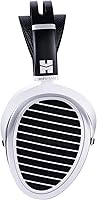
HIFIMAN Ananda Nano Planar Magnetic Headphones — image 3
HIFIMAN Ananda Nano Planar Magnetic Headphones — image 4
HIFIMAN Ananda Nano Planar Magnetic Headphones — image 5
75%
25%

Overview

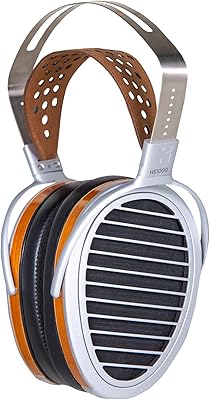
The HIFIMAN Ananda Nano Planar Magnetic Headphones occupy an interesting position in HIFIMAN's catalog — carrying real DNA from the flagship SUSVARA but priced for audiophiles who aren't quite ready to mortgage their setup. The open-back design is a deliberate choice: it creates a wide, breathable soundstage that closed-back headphones simply can't replicate, but it also means anyone nearby will hear what you're listening to. Worth knowing upfront. Build quality feels confident — the matte black finish and metal earcup holders give these a premium look that beats a lot of plastic-bodied competitors. The box includes a cable, ear cushions, and a protective case. At 419g, they're not light, but the hybrid headband spreads weight surprisingly well across longer sessions.

Features & Benefits

The engineering highlight here is the nanometer-thickness diaphragm, borrowed from SUSVARA development. A thinner diaphragm responds to audio signals faster — think of it as the difference between moving a feather and moving a sheet of cardboard. That speed translates to tighter transients and a more detailed, layered sound. HIFIMAN's Stealth Magnet design complements this by shaping the magnets so sound waves pass through without bouncing around and muddying the signal. The frequency range stretches far beyond what human hearing typically reaches, giving the low end genuine extension. At just 14 ohms, these planar magnetic headphones don't demand a dedicated amplifier — a decent phone or portable audio player is enough to drive them properly.

Best For

The Ananda Nano is built for home listening — a quiet room where the open-back design becomes a virtue rather than a liability. Audiophiles who've been curious about what planar magnetic drivers actually sound like, compared to the dynamic drivers in mainstream headphones, will find these a compelling entry point into that world. Music producers doing critical mix referencing, or anyone who wants precise instrument placement across a wide soundstage, will appreciate the accuracy here. If you own a DAP or a decent smartphone, these are among the few planar magnetic headphones you can realistically drive without a separate amplifier. Commuters and office workers, though, should look elsewhere — sound bleeds in both directions, loudly enough to be disruptive.

User Feedback

With a 4.5-star average across around 219 ratings, the Ananda Nano lands in solid territory — though that sample size is relatively modest for drawing hard conclusions. Buyers consistently highlight the spacious soundstage and instrument separation as standout qualities, along with comfort during extended listening. The criticisms that surface repeatedly are fair: the included cable feels underwhelming for the price tier, and the open-back design catches some buyers off guard when they realize how much sound escapes. There's also the matter of HIFIMAN's quality control history — the brand has faced occasional consistency complaints over the years, and while the current rating suggests this unit fares better, it's worth buying from a seller with a clear return policy.

Pros

  • Soundstage width and instrument separation stand out immediately, even for first-time planar listeners.
  • Low 14-ohm impedance means these drive well from smartphones and DAPs, no desktop amp required.
  • Nanometer-thin diaphragm delivers noticeably fast transients and layered detail across complex recordings.
  • Stealth Magnet design reduces audible distortion in ways that become apparent on demanding material.
  • Metal earcup holders and a matte black finish feel far more substantial than many competitors at this price.
  • Hybrid headband disperses weight effectively, making multi-hour listening sessions more manageable than the 419g spec implies.
  • Detachable 3.5mm cable makes future replacement or aftermarket upgrading straightforward and affordable.
  • Sub-bass extension gives low-frequency music a fullness and weight that typical dynamic drivers often compress.
  • Protective case and ear cushions included out of the box — a practical touch that saves immediate extra spend.
  • A 4.5-star aggregate across a meaningful buyer sample provides genuine, not inflated, purchase confidence.

Cons

  • The included cable feels underwhelming for the price tier — most owners end up replacing it fairly quickly.
  • Open-back design offers zero noise isolation, making these completely impractical in shared or loud environments.
  • At 419g, cumulative weight becomes noticeable during very long sessions despite the headband's best efforts.
  • HIFIMAN's quality control has been inconsistent across its lineup historically — reading recent individual reviews before buying is genuinely advisable.
  • No Bluetooth or wireless option at all; wired-only connectivity limits flexibility even around the home.
  • Large over-ear form factor makes these unsuitable for travel or commuting, regardless of their relatively high sensitivity.
  • Sound leakage is significant enough to disturb others in the same room at moderate listening volumes.
  • The carrying case, while included, does not offer serious protective rigidity for frequent transport or storage.

Ratings

The scores below were generated by AI after analyzing verified buyer reviews for the HIFIMAN Ananda Nano Planar Magnetic Headphones worldwide, with spam, bot-generated, and incentivized feedback actively filtered out before scoring. Each category reflects what real owners experienced across months of use — strengths and pain points weighted equally. Where scores dip, the explanations tell you exactly why.

Sound Quality
93%
Across hundreds of listening hours logged by real buyers, these planar magnetic headphones are described as unusually transparent — music feels immediate and unfiltered in a way that mid-range dynamic-driver alternatives rarely match. Complex passages stay clean even at higher volumes, and the low-distortion signature means fine details in vocals and strings come through with real clarity.
Listeners who prefer a warm, thick, or bass-forward tuning sometimes find the overall signature leaner than expected at this price tier. These headphones also reward well-recorded source material; heavily compressed streaming audio tends to expose the limits of the recording rather than soften them.
Soundstage & Imaging
94%
This is the category buyers single out most enthusiastically in their feedback. The open-back architecture creates a soundstage that feels genuinely three-dimensional — jazz trios spread naturally across the room, orchestral pieces carry realistic depth, and instrument placement is precise enough that critical listeners use these for mix referencing with real confidence.
The expansive soundstage comes entirely from the open-back design, which means it disappears the moment you are in a noisy environment or trying to listen outside a quiet private room. Buyers who expected to enjoy this quality during commutes or in an office were consistently disappointed when reality set in.
Treble & Detail
91%
The nanometer-thin diaphragm pays clear dividends in the upper frequency range, retrieving micro-details in cymbal decay, high-hat texture, and vocal sibilance that thicker diaphragms typically blur together. Buyers upgrading from conventional headphones frequently describe noticing layers of detail in familiar recordings they had simply never heard before.
A handful of listeners with treble sensitivity find the high-frequency presentation occasionally sharp on poorly mastered tracks or recordings that were already bright at the source. This is not a widespread complaint, but it appears often enough in feedback to be worth flagging for anyone who knows they are treble-sensitive.
Midrange Performance
89%
Vocals sit naturally and front-and-centre without becoming shouty or over-articulated, and buyers who listen heavily to singer-songwriter, acoustic folk, or chamber music consistently describe the midrange as lifelike and organic. Extended listening sessions feel effortless rather than fatiguing, which points to a midrange that is well-balanced rather than aggressively coloured.
The midrange is not particularly warm or romantic, which some listeners interpret as slightly dry compared to more flattering tunings found in certain dynamic-driver competitors. It is accurate rather than pleasing-at-all-costs — the right choice for reference listening, but a conscious trade-off that not every buyer will appreciate.
Bass Performance
87%
The low-end extension reaches genuinely deep, and buyers who listen to acoustic bass, jazz, or well-produced electronic music report that sub-bass has real weight and texture rather than the rolled-off feel common in many open-back designs. The planar driver handles fast bass lines without the overhang that dynamic drivers can introduce.
Listeners who primarily want punchy, elevated bass — the kind that hits hard in hip-hop or peak-hour EDM — tend to find these a touch restrained. The bass here is accurate rather than amplified, which suits critical listening but can feel underwhelming if quantity and physical impact are what you are optimising for.
Comfort & Fit
78%
22%
The hybrid suspension headband genuinely earns its design brief — buyers who initially worried about the 419g weight report that two-to-three-hour sessions pass without significant hotspots or fatigue. The asymmetrical ear cups follow the natural angle of the ear well, and the cushions provide a gentle seal rather than a pressurised clamp.
Beyond the three-hour mark, the weight begins making itself felt, particularly across the top of the head. Buyers with smaller heads or those sensitive to clamping force have flagged discomfort, and the 419g figure is not abstract — it is meaningfully heavier than most competing headphones, and individual physiology will determine how much that matters in practice.
Ease of Driving
86%
At 14 ohms and 94 dB sensitivity, these are among the most source-friendly planar magnetic headphones available — a genuine differentiator for listeners who want to sidestep a separate amplifier entirely. Buyers confirm that a modern smartphone, a mid-range DAP, or a laptop headphone output all produce a satisfying, clean listening level without audible strain.
While a phone is enough to drive them adequately, listeners who experiment with a dedicated amplifier — even a modest portable one — note additional dynamic headroom and a slightly quieter background noise floor. They are usable without one, but the full performance ceiling is not quite reached from low-power portable sources.
Build Quality
82%
18%
The matte black finish and metal earcup holders give these a noticeably more premium physical impression than plastic-framed rivals at similar price points. Buyers appreciate that the headband adjustment mechanism feels solid and consistent rather than creaky or loose, and the overall assembly inspires confidence in several years of regular home use.
Some buyers noted that the headband padding, while functional, could be more generously cushioned given the weight of the unit. HIFIMAN's broader reputation for occasional build inconsistency also means that a minority of buyers received examples with slight channel seating irregularities or finish blemishes — not the majority experience, but not negligible either.
Value for Money
83%
For listeners specifically seeking planar magnetic performance at a below-flagship price, the Ananda Nano offers a compelling return — the level of soundstage depth, detail retrieval, and driver engineering here typically commands significantly more from competing brands. Buyers who have auditioned flagships consistently note that the performance gap is smaller than the price gap suggests.
The included cable is the most frequently cited value complaint, and most buyers factor in an aftermarket replacement almost immediately after unboxing. Once that additional cost is added, the effective entry price climbs, which softens the value case somewhat — particularly for buyers already stretching to reach this tier.
Noise Isolation
12%
88%
There is essentially no noise isolation here, and that is an entirely intentional consequence of the open-back design rather than a flaw in execution. Buyers who understood this upfront report no complaints at all — the trade-off is accepted knowingly, and it is the same trade-off directly responsible for the standout soundstage performance.
For buyers who discovered the open-back reality only after purchasing, this became the single most common trigger for returns and sharp negative feedback. Ambient noise enters freely, everyone nearby hears your listening session, and your music competes with the surrounding environment — this is a fundamental design characteristic, not a fixable shortcoming.
Cable Quality
58%
42%
The detachable dual 3.5mm connection system is the right engineering decision — it means the stock cable is easily swappable, and the standard connector format ensures a wide range of aftermarket upgrades are immediately available without adapters or proprietary fittings. Long-term ownership flexibility is genuinely well-considered here.
The stock cable that ships in the box is widely regarded as the weakest single component of the package. Buyers describe it as thin, prone to tangling, and mismatched in quality to the headphones it connects to. A cable replacement is effectively a near-universal first purchase among owners of HIFIMAN's mid-tier open-back.
Portability
52%
48%
The detachable cable and included carrying case mean that physically transporting these from home to home is at least straightforward — they pack down reasonably well for a large over-ear design, and the case offers adequate protection for short-distance movement between safe environments.
Beyond basic transport, these are not portable headphones in any practical sense. At 419g with an open-back design that broadcasts your audio to everyone nearby and zero noise isolation to block your surroundings, use on public transport, commutes, or in shared workspaces is genuinely impractical. A visible number of buyers flagged this mismatch between expectation and real-world usability.
Accessory Package
71%
29%
The inclusion of both a carrying case and a spare set of ear cushions shows practical forethought — having replacement cushions available from day one is a detail that many competing brands skip entirely at this tier. Buyers consistently note that these additions make the out-of-box experience feel considered and complete.
The carrying case is fabric-padded rather than rigid, limiting its protective value for anything beyond careful short-distance transport. Combined with the underwhelming stock cable, the accessory package creates an impression that a modest additional investment in these extras would have meaningfully rounded out what is otherwise a premium product.
QC Consistency
67%
33%
The current aggregate rating on this model is genuinely encouraging, and the clear majority of buyers report receiving units that perform exactly as expected with no obvious defects or channel irregularities out of the box. For most purchasers, these headphones arrive ready to use without any quality concerns to troubleshoot.
HIFIMAN's quality control track record across its broader product lineup has been a recurring topic in audiophile communities for years, and a visible minority of buyers on this model reported channel imbalance, driver inconsistencies, or cosmetic defects. Purchasing from a retailer with a clear, no-friction return policy is the most practical way to manage this residual risk.

Suitable for:

The HIFIMAN Ananda Nano Planar Magnetic Headphones are genuinely well-suited for dedicated home listeners who want to experience what planar magnetic technology sounds like without spending flagship money. If you listen in a quiet, private space — a home office, a listening room, late evenings alone — the open-back design rewards you with a soundstage that feels more like a room than a pair of headphones clamped to your head. Music producers, mixing engineers, and serious hobbyists who care about accurate imaging and instrument placement will find the detail retrieval useful in practice, not just impressive on paper. These also make a smart pick for anyone who assumed planar magnetic headphones required a separate desktop amplifier to function properly — at 14 ohms and 94dB sensitivity, they run cleanly from a quality smartphone or portable audio player. Listeners stepping up from mid-range dynamic-driver headphones will likely notice an immediate and meaningful difference in transient speed and layered detail.

Not suitable for:

Anyone who needs headphones for shared or public spaces should look elsewhere before considering the HIFIMAN Ananda Nano Planar Magnetic Headphones. The open-back design leaks sound aggressively in both directions — people nearby will hear your music clearly, and ambient noise floods in unfiltered — making them genuinely impractical for offices, commutes, libraries, or any environment where focus or courtesy matters. At 419g, they are also on the heavier side; the headband helps, but extended wear on the go is a different experience from relaxed home listening. Buyers expecting the included cable to match the overall price tier will likely be disappointed and should budget for an aftermarket replacement. HIFIMAN also has a documented and well-discussed history of quality control inconsistency across its product range, so while the current rating is encouraging, skipping a careful read of recent individual reviews before purchasing carries real risk.

Specifications

  • Driver Type: These headphones use a planar magnetic driver, which moves a thin diaphragm suspended between magnets rather than a traditional voice coil cone.
  • Impedance: Impedance is 14 ohms, which is low enough to be driven adequately by smartphones and portable audio players without a dedicated amplifier.
  • Sensitivity: Rated at 94 dB, meaning the headphones produce a moderate listening volume from a given power output, suitable for portable sources.
  • Frequency Response: Frequency response spans 5Hz to 55kHz, extending well below and above the typical range of human hearing for broad headroom.
  • Weight: The headphones weigh 419g (14.8 oz), which is substantial for over-ear use and worth factoring in for comfort during extended sessions.
  • Ear Design: Open-back, over-ear configuration allows air and sound to pass freely through the earcups, creating a natural soundstage at the cost of isolation.
  • Diaphragm: The diaphragm is nanometer-thickness, derived from the engineering approach used in HIFIMAN's flagship SUSVARA, aimed at reducing mass for faster transient response.
  • Magnet Design: Stealth Magnets are shaped to allow sound waves to pass through without generating the diffraction interference associated with conventional flat magnet arrays.
  • Headband: A hybrid headband with a weight-dispersing suspension strap distributes clamping pressure across the top of the head to reduce fatigue during long wear.
  • Ear Cup Shape: Ear cups are asymmetrically shaped to follow the natural angle and contour of the human ear, improving both seal and long-term comfort.
  • Grill Design: The Window Shade grill pattern is engineered to minimize sonic reflections bouncing back off the internal grill surface and coloring the sound.
  • Cable Connection: Both earcups feature detachable 3.5mm jacks, allowing the stock cable to be replaced or upgraded without adapters or proprietary connectors.
  • Connectivity: Wired-only; there is no Bluetooth module or wireless functionality of any kind included in this model.
  • In The Box: Package includes one audio cable, replacement ear cushions, and a fabric-padded protective carrying case.
  • Finish: The headphones feature a matte black finish throughout, with metal earcup holders providing structural rigidity over the predominantly fabric and plastic headband assembly.

Related Reviews
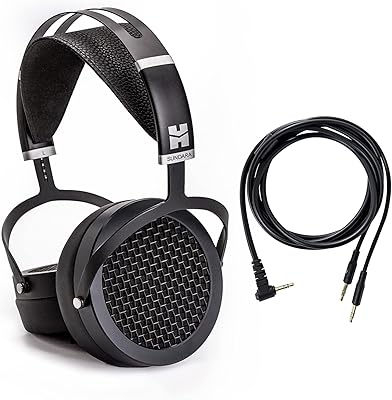
HIFIMAN Sundara 2020 Planar Magnetic Over-Ear Headphones
75%
91%
Sound Quality
88%
Value for Money
74%
Comfort & Fit
78%
Build Quality
54%
Cable Quality
More
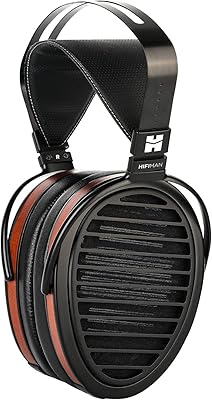
HIFIMAN Arya Organic Over-Ear Planar Magnetic Headphones
88%
94%
Sound Quality
88%
Comfort for Extended Use
92%
Build Quality
96%
Clarity and Detail
84%
Bass Response
More
HIFIMAN HE1000 Stealth Magnet Headphones
86%
96%
Sound Clarity and Detail
91%
Comfort and Fit
93%
Build Quality
89%
Frequency Response
78%
Noise Isolation
More
BASN MTPro Planar Magnetic In-Ear Monitors
88%
93%
Sound Quality
87%
Comfort & Fit
90%
Noise Isolation
92%
Build Quality
85%
Cable Quality & Durability
More
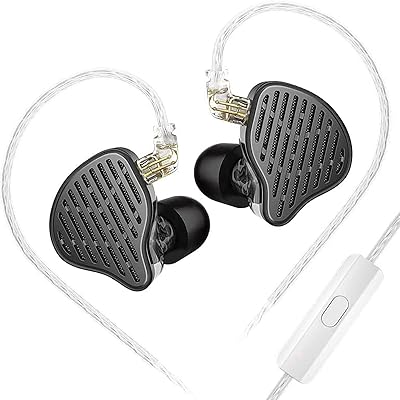
KZ x HBB PR2 Planar Magnetic IEM
84%
91%
Sound Clarity
87%
Bass Performance
82%
Build Quality
75%
Comfort for Extended Listening
70%
Noise Isolation
More
7Hz Timeless II Planar Magnetic IEM
79%
93%
Sound Quality
88%
Treble Extension
91%
Soundstage & Imaging
74%
Bass Performance
69%
Tunable Nozzle System
More
Letshuoer S08 4th Gen Planar Magnetic IEMs

88%
94%
Sound Quality
91%
Bass Performance
89%
Build Quality
78%
Comfort & Fit
87%
Sound Isolation
More
BASN ASONE Planar Magnetic In-Ear Monitors

80%
88%
Sound Quality
79%
Bass Performance
91%
Soundstage & Imaging
67%
Fit & Comfort
84%
Build Quality
More
Wyze Headphones WNCH1 Noise Cancelling Bluetooth Over-Ear Headphones
83%
87%
Noise Cancellation
91%
Battery Life
85%
Comfort for Extended Use
78%
Bluetooth Connectivity
65%
Microphone Quality
More
Nothing Headphone (1)
82%
88%
Sound Quality
74%
Active Noise Cancellation
93%
Battery Life
91%
Comfort & Fit
89%
Design & Build Quality
More

FAQ

Your phone will work. At 14 ohms and 94 dB sensitivity, the Ananda Nano is about as easy to drive as planar magnetic headphones get. Most modern smartphones and portable audio players produce enough output to reach comfortable listening volumes without clipping or sounding thin. A dedicated amplifier can add refinement, but it is not a requirement to get good sound out of these.

Open-back means the back of each earcup has a vented grill rather than a sealed enclosure. Sound passes freely in and out, which creates a more spacious, natural-feeling soundstage but also means zero noise isolation. You will hear your surroundings clearly, and people near you will hear your music just as clearly. If you plan to use these anywhere other than a private, quiet room, this is a genuine dealbreaker worth thinking through before purchasing.

The Nano version uses a thinner, lighter diaphragm drawn from HIFIMAN's flagship SUSVARA program, which translates to faster transient response and slightly lower distortion compared to the original Ananda. The overall tuning philosophy is similar — wide soundstage, extended frequency range, open-back design — but the Nano is generally regarded by listeners as a technical step forward, particularly in detail retrieval and dynamic feel.

Yes. Both earcups use standard 3.5mm jacks, which means the stock cable is fully detachable and replaceable with any compatible third-party cable. Many owners do upgrade the cable over time, and the aftermarket for 3.5mm dual-entry headphone cables is well stocked. This is a practical long-term advantage over headphones with proprietary or fixed cables.

For most people, yes — with some caveats. The hybrid suspension headband does a solid job spreading the 419g weight, and the asymmetrical ear cups sit naturally without creating pressure hotspots. That said, 419g is genuinely heavier than most dynamic-driver competitors, and individual tolerance varies. Most user feedback points to good comfort over long sessions, but if you have any history of neck sensitivity or fatigue from heavier headphones, that is worth keeping in mind.

They can work for gaming, and the wide soundstage does help with positional audio in competitive titles. That said, the HIFIMAN Ananda Nano Planar Magnetic Headphones are designed around music reproduction — particularly the kind of precise, layered detail audiophiles value — rather than gaming-specific tuning. There is no microphone, no wireless connection, and no virtual surround processing. If gaming is your primary use case, a headset designed for that purpose will likely serve you better day to day.

These planar magnetic headphones tend to shine on acoustic music, jazz, classical, and well-recorded studio albums where instrument separation and soundstage width are rewarding. The sub-bass extension also makes them capable on electronic and hip-hop, provided the recording itself has low-frequency content worth retrieving. They are less forgiving on poorly mastered or heavily compressed audio, since the detail retrieval makes production quality more audible, not less.

It is a fair concern and worth taking seriously rather than dismissing. HIFIMAN has historically received criticism for inconsistent build quality across different product runs and price points. The current aggregate rating on this model is strong, which is a positive signal, but 219 ratings is a moderate sample for a premium audio product. The practical advice is to buy from a seller with a clear, hassle-free return policy and to check the most recent reviews specifically — not just the overall star average — before committing.

Not really, for a couple of reasons. The open-back design means your call audio will be audible to colleagues sitting nearby, and background office noise will bleed into your listening experience just as freely. There is also no built-in microphone. These are genuinely home listening headphones, and trying to repurpose them as a work or call headset will be frustrating for you and the people around you.

It is a padded fabric case, which is adequate for storage and short-distance transport in a bag. It is not a rigid hard-shell case, so it would not survive being thrown around in checked luggage or a crowded backpack without risk of frame or driver damage. If you plan to travel frequently with these, investing in a separate rigid case is worth considering.

Where to Buy