Overview

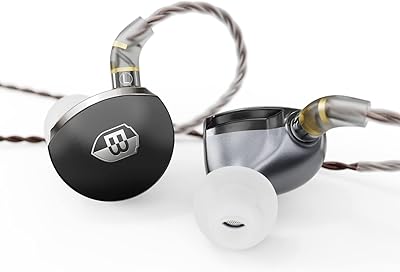
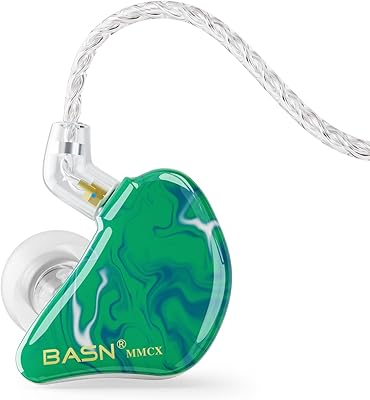
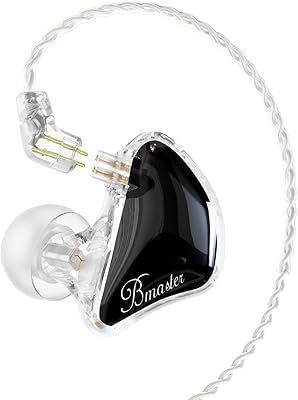
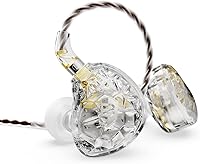
The BASN ASONE Planar Magnetic In-Ear Monitors occupy a genuinely interesting niche — priced for musicians and serious listeners who aren't ready to spend flagship money, but built around a driver technology that punches well above its bracket. Unlike the dynamic drivers found in most earphones, a planar magnetic design moves sound through a paper-thin membrane stretched between opposing magnets, producing more even, controlled vibration across the whole surface. The practical effect is a wider, more open soundstage with fewer of the peaks and dips that can make dynamic-driver earphones sound coloured. The clear shell design reads well on stage, and the dual-cable bundle makes the package genuinely practical from day one.
Features & Benefits

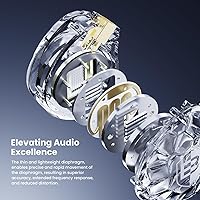
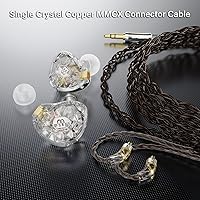
The 14.2mm diaphragm at the heart of the ASONE monitors is just 2 microns thick — roughly half the width of a human red blood cell — and it's driven by 14 N52 magnets arranged on both sides. That configuration keeps impedance at a low 16 ohms, which means you won't need a dedicated amplifier; a phone or laptop headphone jack drives them without complaint. The single crystal copper cable uses a Litz weave construction that helps preserve high-frequency detail rather than letting the signal degrade along the wire. Swapping to the bundled mic cable takes seconds via the MMCX connector, and the combination of silicone and memory foam ear tips means most people will find a seal that works for them.

Best For

These planar IEMs make most sense if you're a working musician who monitors in-ear live — drummers tracking a click, bassists checking low-end balance, singers wanting to hear themselves clearly without drowning in stage wash. They're also a solid choice for the home studio producer who's curious about planar sound without wanting to stretch to a higher-end option. The MMCX detachable connector matters here too: if you ever want to swap in a balanced cable or upgrade the wire, you can do that without buying a new pair. That said, listeners who strongly prefer a bright, analytical signature, or who find passive isolation limiting in very loud environments, may want to look at other options before committing.

User Feedback

With a 4.4-star average across over 120 ratings, the ASONE monitors land in a comfortable range — appreciated, but not universally loved. Recurring praise focuses on soundstage width, with many buyers noting that the low end feels controlled rather than bloated, which is exactly what a stage or studio listener needs. On the critical side, a noticeable portion of reviewers mention fit difficulties; planar IEMs tend to be a bit larger than single dynamic drivers, and ear canal geometry matters. A handful of users also report that the stock cable stiffens uncomfortably in cold conditions. Compared to similarly priced planar alternatives, most buyers feel this wired in-ear monitor holds its ground, though those with mid-heavy preferences sometimes find the tuning a touch bass-forward.

Pros

  • The 14.2mm planar driver produces a notably wide, open soundstage that most single dynamic-driver earphones in this price range simply can't match.
  • At 16 ohms impedance, the ASONE monitors run cleanly off a phone or laptop without needing a dedicated headphone amplifier.
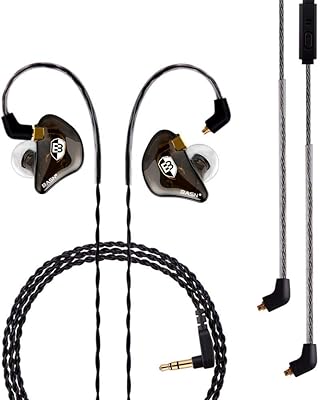
  • Two cables in the box — a high-quality monitoring cable and an inline mic cable — means you don't have to accessorize before you start using them.
  • The MMCX detachable connector makes future cable upgrades straightforward and protects your investment if a cable eventually wears out.
  • Memory foam and silicone ear tip options are both included, giving you a realistic shot at finding a comfortable, isolating fit.
  • The resin shell keeps weight low, which matters a lot during long rehearsals or multi-set gigs where ear fatigue adds up.
  • Frequency response stays smooth and relatively even, making these planar IEMs useful for critical listening, not just casual playback.
  • Build quality consistently earns positive comments from buyers, with the housing feeling solid relative to the price tier.

Cons

  • The larger-than-average shell size creates real fit problems for some listeners, and a poor seal ruins both isolation and bass response.
  • The stock cable has been reported to stiffen noticeably in cold conditions, which is a practical annoyance for outdoor or winter use.
  • There is no water or sweat resistance of any kind, making these risky for high-intensity live performances or outdoor environments.
  • Listeners who prefer a V-shaped or heavily bass-boosted sound signature may find the tuning too restrained for everyday enjoyment.
  • Passive isolation, while decent with a good seal, won't satisfy musicians performing on very loud stages where more aggressive isolation is needed.
  • Some users report the cable memory — the tendency of the wire to hold its coiled shape — can be bothersome during the first weeks of use.
  • Planar drivers can sometimes benefit from burn-in time before the sound fully settles, which means the out-of-box experience may not represent the peak performance.
  • Those stepping up from much higher budgets will notice limitations in micro-detail retrieval that more expensive planar IEMs handle more convincingly.

Ratings

Our AI rating system analyzed verified buyer reviews for the BASN ASONE Planar Magnetic In-Ear Monitors from across global markets, actively filtering out incentivized, duplicate, and bot-generated feedback to surface what real users actually experienced. The scores below reflect an honest cross-section of both the genuine strengths and the recurring frustrations that shaped the 4.4-star consensus. Nothing has been smoothed over — where buyers struggled, the scores reflect it.
Sound Quality
88%
The planar driver delivers a wide, open soundstage that consistently surprises buyers expecting a typical in-ear experience — musicians in particular note how clearly they can separate individual instruments during rehearsal and monitoring. The frequency response feels balanced and honest rather than artificially hyped, which studio users find genuinely useful for critical listening sessions.
Listeners coming from consumer earbuds tuned with heavy bass emphasis often find the sound signature too restrained and analytical at first. Those wanting excitement and color in their music rather than accuracy will likely feel underwhelmed, especially before any burn-in period has passed.
Bass Performance
79%
21%
The low end extends cleanly into sub-bass territory without the bloat or muddiness that plagues many budget dynamic drivers, making it genuinely useful for bassists checking their own mix on stage or producers referencing a track in the studio. The control and texture of the bass is a recurring positive across reviews from experienced listeners.
Casual listeners and those used to bass-boosted consumer earphones are frequently disappointed — the low end is accurate rather than impactful, and some buyers explicitly describe it as thin. If powerful, physical-feeling bass is a priority, these planar IEMs are likely to leave that expectation unmet.
Soundstage & Imaging
91%
This is the category where the ASONE monitors genuinely shine relative to their price tier — reviewers frequently describe the sense of space and separation as unlike anything they had experienced from a wired in-ear at this level. Drummers and multi-instrumentalists specifically praise how easy it is to place each element of a mix within the stereo field during live monitoring.
The advantage is most apparent on well-recorded, acoustically rich material; compressed streaming audio or low-bitrate files expose the limits of what any in-ear driver can resolve. A small number of users feel the imaging, while wide, lacks the pinpoint precision found in higher-end planar IEMs costing significantly more.
Fit & Comfort
67%
33%
Users who find the right ear tip combination — and many do after working through the included silicone and memory foam options — report comfortable extended wear over multi-hour sessions, with the lightweight resin shell avoiding the pressure fatigue common in heavier metal-bodied IEMs. Wearing the cable over the ear dramatically improves stability for most buyers.
Fit is the most polarizing aspect of these planar IEMs in real-world reviews: the housing is noticeably larger than single dynamic-driver earphones, and buyers with smaller or unusually shaped ear canals frequently report an unstable or uncomfortable seal regardless of tip size. A poor seal also directly degrades bass response and isolation, compounding the frustration.
Build Quality
84%
The resin shell feels solid and purposeful in hand, and reviewers consistently note that it holds up well through regular gigging and studio use without cracking or showing signs of structural weakness. The MMCX connector mechanism clicks into place firmly, with very few reports of loose or intermittent connections during normal use.
The stock cable, while made from quality copper, has attracted criticism for stiffening noticeably in cold conditions and retaining its coiled shape from packaging during early use. A handful of buyers also note that the transparent shell shows internal smudging and dust over time, which is more cosmetic than functional but still a minor annoyance.
Cable Quality
73%
27%
The inclusion of a Litz-shielded single crystal copper cable is a genuine materials upgrade over what most competitors bundle at this price point, and experienced listeners note a perceptible improvement in high-frequency clarity compared to generic braided cables. Having two cables included from the start — one for monitoring, one for everyday use — adds real practical value.
The cable memory is a recurring complaint, with the wire holding its coiled shape from the packaging box for several weeks before relaxing into more manageable form. Some users also find the cable somewhat microphonic when worn straight down rather than over-ear, transmitting movement noise directly into the earphones during active use.
Noise Isolation
71%
29%
With the right tip providing a solid seal, these monitors block out enough ambient noise to be genuinely useful in rehearsal rooms, home studios, and moderate stage environments — singers report hearing themselves clearly without needing excessive monitor volume. Memory foam tips in particular earn consistent praise for both isolation depth and seal comfort over time.
Passive isolation has a hard ceiling, and in genuinely loud live environments — heavy drum kits, loud guitar stages — several reviewers note that bleed from the room becomes disruptive. Users with irregular ear canal shapes who struggle to achieve a consistent seal get significantly less isolation than the majority of buyers, making their experience considerably worse.
Ease of Driving
93%
At 16 ohms, these planar IEMs are among the easier-to-drive examples of the technology — users consistently confirm that phones, laptops, and audio interfaces all push them to adequate listening volumes without a dedicated amplifier. This is a meaningful practical advantage over higher-impedance planar options that require additional hardware investment to perform properly.
While no amplifier is required, a small contingent of experienced listeners note that the sound quality does improve with a cleaner source — the gap between phone output and a proper DAC is audible on well-recorded material. Buyers expecting identical performance from a laptop headphone jack versus a dedicated audio interface may be slightly surprised.
Value for Money
82%
18%
For buyers who get a good fit and appreciate a flat, monitoring-oriented sound signature, the ASONE monitors represent one of the more compelling entry points into planar IEM technology available — the dual-cable bundle, MMCX upgradability, and quality copper cable add tangible out-of-box value without inflating the price. Musicians particularly feel the value proposition when comparing to dedicated stage IEMs in higher price brackets.
Buyers who struggle with fit or who expected a more mainstream consumer sound tuning tend to feel the value equation flips negatively — the return rate among those two groups is noticeably reflected in lower-star reviews. The lack of water resistance at this price tier is also flagged by some as a gap that competitors have started to close.
Cable Swappability
86%
The MMCX standard is well-supported by the third-party cable market, and buyers who want to run a balanced 2.5mm or 4.4mm connection for use with portable DACs can do so without replacing the earphones themselves — a future-proofing feature that audiophile-oriented buyers specifically highlight in reviews. The connector mechanism feels robust and shows no signs of loosening with repeated swaps.
MMCX connectors, by their rotating design, can occasionally develop a slight wobble over many hundreds of connection cycles, and a small number of long-term users report intermittent channel dropout after extended use. Buyers unfamiliar with MMCX may initially find the insertion and removal action less intuitive than a simple 2-pin connector.
Accessories & Packaging
81%
19%
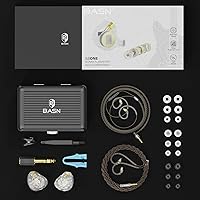
The included accessory set is meaningfully more complete than what budget IEM competitors typically offer — two quality cables, a rigid protective case, a 1/4-inch adapter, and multiple ear tip types cover most immediate needs without requiring any additional purchases. Several buyers specifically mention the carrying case as a practical daily asset rather than a throwaway inclusion.
The ear tip selection, while varied in material, is limited in size range compared to aftermarket options — buyers at the larger or smaller extremes of ear canal sizing sometimes find that none of the included tips achieves a fully satisfying seal. A cleaning tool or cable clip would also have been appreciated by working musicians managing gear on stage.
Microphonics
66%
34%
When worn with the cable routed over the ear — as intended for stage and studio use — cable noise transmitted to the earphones is minimal, and musicians report being able to move naturally during performance without distracting handling noise. The over-ear cable routing largely solves a problem that affects many wired IEMs.
Worn straight down rather than over-ear, the cable transmits movement noise clearly into the earphones, which becomes a real nuisance for commuters or anyone using the mic cable in a walk-and-talk scenario. The stiffer cable construction that contributes to signal quality also makes it a more effective conductor of physical vibration than softer, more flexible alternatives.
Aesthetic Design
77%
23%
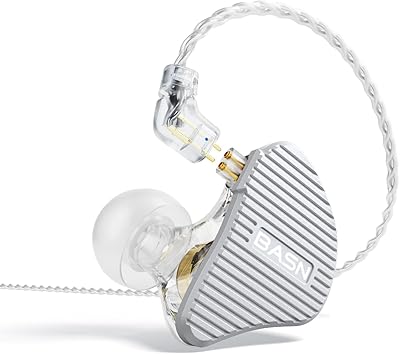
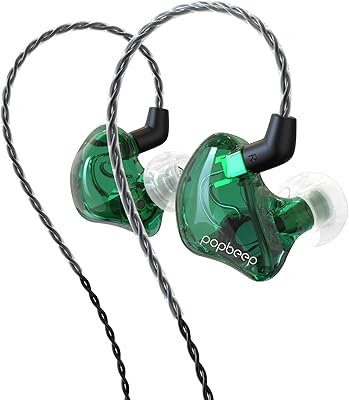
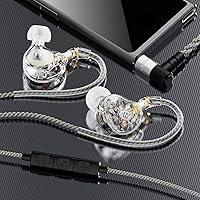
The clear resin shell has a clean, professional look that reads well on stage without drawing unnecessary attention, and several buyers note that the transparent housing gives it a distinctive appearance that sets it apart from the matte black designs dominating the budget IEM market. The overall form factor communicates quality without being ostentatious.
The clear shell shows internal smudging, dust, and fingerprint oils over time, requiring more frequent cleaning to maintain its appearance than an opaque alternative would. A small segment of buyers also feel the housing size makes the IEMs look bulky in the ear, which is a minor but real aesthetic consideration for image-conscious performers.

Suitable for:

The BASN ASONE Planar Magnetic In-Ear Monitors were clearly designed with working musicians in mind, and that focus shows. Drummers who need to hear a clean click track without outside noise bleeding in, bassists checking their low-end mix in real time, and singers who want natural vocal reproduction on stage will all find the controlled, wide-sounding presentation genuinely useful. Home studio producers who are tired of the colored sound that many budget dynamic-driver earphones produce will also appreciate the flatter, more honest frequency response these planar IEMs tend to deliver. The MMCX connector means the cable ecosystem stays open — if you want to run a balanced connection later, that upgrade path exists without buying a new pair. At this price tier, they represent a realistic entry point for anyone who has been curious about planar magnetic sound but hasn't been ready to spend significantly more to get there.
Not suitable for:

The BASN ASONE Planar Magnetic In-Ear Monitors are a harder sell for buyers whose priorities don't align well with what planar drivers actually do. If you primarily want deep, punchy, consumer-style bass — the kind that most popular earbuds and gaming headsets deliberately boost — the ASONE monitors may sound underwhelming or overly restrained by comparison. Fit is a genuine concern: the housing is larger than a typical single dynamic-driver IEM, and people with smaller or unusually shaped ear canals sometimes struggle to get a stable seal, which directly impacts both comfort and passive isolation. Those planning to use these in very loud live environments where passive isolation alone isn't enough should consider whether custom-molded IEMs or active isolation solutions would serve them better. The lack of any water resistance also makes these a poor match for sweaty stage performances or outdoor use in unpredictable conditions.
Specifications

  • Driver Type: These in-ear monitors use a planar magnetic driver, which moves sound through a thin membrane tensioned between opposing magnets rather than a conventional voice coil.
  • Driver Size: The planar diaphragm measures 14.2mm in diameter, which is large for an in-ear form factor and contributes to a wider perceived soundstage.
  • Diaphragm Thickness: The diaphragm is 2 microns thick, an ultra-thin construction that reduces moving mass and helps the driver respond quickly across the full frequency range.
  • Magnet Array: Fourteen N52-grade magnets are arranged in a double-sided array on both faces of the diaphragm, providing strong, even magnetic force across the membrane surface.
  • Impedance: Rated at 16 ohms, these monitors present a low-impedance load that most smartphones, laptops, and audio interfaces can drive to adequate listening levels without amplification.
  • Sensitivity: Sensitivity is rated at 100 dB, meaning the drivers produce a reasonable volume level from low-power sources while remaining quiet enough for controlled studio monitoring.
  • Frequency Range: The stated frequency response spans 20Hz to 20kHz, covering the full range of human hearing from deep sub-bass through upper-treble frequencies.
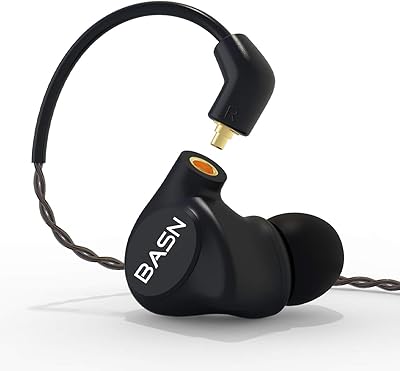
  • Cable Connector: Both included cables use MMCX (Micro-Miniature Coaxial) connectors, a standard rotating detachable format that allows cable swaps and third-party upgrades.
  • Cable Material: The primary monitoring cable is constructed from high-purity single crystal copper and uses a Litz shielding structure to reduce signal interference and oxidation over time.
  • Headphone Jack: Both cables terminate in a 3.5mm (1/8-inch) stereo jack, and a 6.35mm (1/4-inch) screw-on adapter is included for use with professional audio equipment.
  • Shell Material: The earphone housing is molded from high-strength resin, which keeps the overall weight low while providing adequate rigidity for regular stage and studio use.
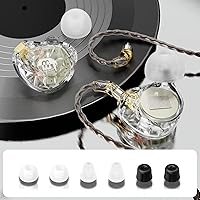
  • Ear Tip Types: The package includes multiple sizes of both silicone sleeves and memory foam ear tips, giving users flexibility to find a seal that suits their ear canal shape.
  • Noise Control: Isolation is achieved passively through a sealed in-ear fit rather than active noise-canceling circuitry, with effectiveness depending directly on ear tip selection and seal quality.
  • Included Cables: Two cables are included: a standard high-purity monitoring cable and a second cable with an inline microphone and volume control for everyday device use.
  • Included Accessories: The full package contains two MMCX cables, a 1/4-inch adapter, multiple sets of silicone and memory foam ear tips in various sizes, and a protective carrying case.
  • Water Resistance: These monitors carry no water or sweat resistance rating and are not designed to withstand moisture exposure during exercise or outdoor use in wet conditions.
  • Connectivity: Connection is fully wired via the 3.5mm jack; there is no Bluetooth or wireless functionality of any kind.

Related Reviews

BASN MTPro Planar Magnetic In-Ear Monitors
88%
93%
Sound Quality
87%
Comfort & Fit
90%
Noise Isolation
92%
Build Quality
85%
Cable Quality & Durability
More
BASN Bmaster5 In-Ear Monitors
85%
94%
Sound Quality
85%
Comfort and Fit
88%
Build Quality
91%
Noise Isolation
86%
Durability
More
BASN Bunique123 In-Ear Monitor Headphones
87%
91%
Sound Quality
88%
Noise Isolation
85%
Comfort for Long Sessions
89%
Build Quality
94%
Customization Options (Fit & Cables)
More
BASN MiX-PD In-Ear Monitor
88%
92%
Sound Quality
88%
Comfort & Fit
90%
Build Quality
85%
Noise Isolation
89%
Durability
More
BASN BSG-MC100 In-Ear Monitors
83%
89%
Sound Quality
85%
Comfort & Fit
91%
Noise Isolation
62%
Cable Durability
83%
Build Quality
More
BASN BC100 In-Ear Monitor Headphones
83%
88%
Sound Quality
91%
Comfort & Fit
85%
Noise Isolation
80%
Build Quality
87%
Durability
More
BASN Bsinger PRO
BASN Bsinger PRO
86%
91%
Acoustic Isolation
94%
Value for Money
88%
Mid-Range Clarity
86%
Cable Versatility
83%
Long-Term Comfort
More
BASN Metalen In-Ear Monitors with Hybrid Drivers
82%
91%
Audio Quality
87%
Build Quality
75%
Comfort & Fit
88%
Sound Isolation
82%
Durability
More
BASN Bmaster Triple Driver IEM
79%
88%
Sound Balance & Accuracy
83%
Driver Performance
79%
Build Quality
86%
Detachable Cable System
77%
Comfort & Ergonomics
More
HIFIMAN Arya Organic Over-Ear Planar Magnetic Headphones
88%
94%
Sound Quality
88%
Comfort for Extended Use
92%
Build Quality
96%
Clarity and Detail
84%
Bass Response
More

FAQ

No, the BASN ASONE Planar Magnetic In-Ear Monitors run at just 16 ohms, so a modern smartphone, tablet, or laptop headphone jack will drive them to comfortable listening levels without any additional hardware. That said, if you already own a DAC or audio interface, they will scale up noticeably with a cleaner source signal.
The MMCX connector clicks in and out with a firm push and pull — it takes only a few seconds once you are familiar with it. The connection is secure enough that accidental disconnection during movement is unlikely, but it is not something most people would swap mid-show; it is more of a before-and-after swap depending on whether you need the mic cable or the monitoring cable that day.

Yes, MMCX is a widely used standard in the IEM world, so you have plenty of third-party cable options including balanced 2.5mm and 4.4mm terminations. Just verify the cable is specifically MMCX-compatible before buying, since similar-looking connectors like 2-pin are not interchangeable.

Fit is the most common frustration with these planar IEMs because the housing is slightly larger than a typical single dynamic-driver earphone. Start by working through all the included tip sizes with both the silicone and memory foam options — the right tip makes a significant difference. Wearing the cable over the ear rather than straight down also improves stability for most people.

The low end is present, controlled, and extends cleanly into the sub-bass range, but it is not the boosted, consumer-friendly thump you get from popular earbuds tuned for entertainment. If you are used to heavy bass emphasis, these will initially sound bass-light; if you are monitoring a mix and need to hear what is actually in the recording, the honesty of the low end is exactly the point.

With a good seal from the right ear tips, these monitors provide a reasonable level of passive isolation — enough for rehearsal rooms, home studios, and moderate stage volumes. In genuinely loud environments like drum rooms or heavy live setups, you may want to consider additional hearing protection alongside them, since passive isolation alone has limits.

Some users report that the sound tightens and the high frequencies smooth out slightly after 30 to 50 hours of use, which is a common observation with planar drivers. It is not dramatic enough to justify delaying a return decision if you genuinely dislike the sound, but it is worth keeping in mind during the first few listening sessions.

Yes, the second cable in the box includes an inline microphone and volume control that works for calls on most smartphones over the 3.5mm connection. If your phone no longer has a headphone jack, you will need a Lightning or USB-C adapter, which is not included.

The resin shell is solid and handles regular handling well, and the MMCX connector design means a damaged cable can be replaced without discarding the earphones themselves — which is a real long-term durability advantage. The main caveat is moisture: sweat exposure over time can affect the cable connections, so drying them off after use and storing them in the included case is worth the habit.

At this price tier, the planar IEM space has grown noticeably, with a few Chinese audio brands offering competing options. The ASONE monitors tend to hold their own on soundstage width and build quality, while their low impedance gives them an edge in usability without amplification. Where buyers sometimes prefer alternatives is in tonal balance — some competing options offer slightly brighter or more mid-forward tuning, so personal preference in sound signature genuinely matters when comparing options at this level.