Overview

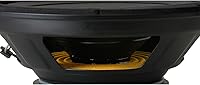
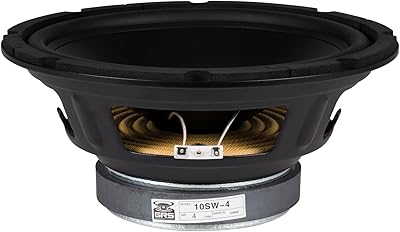
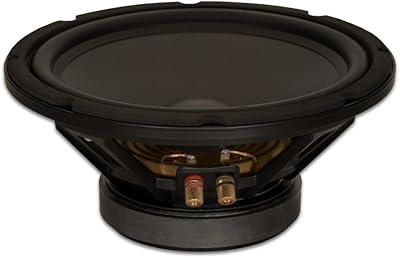
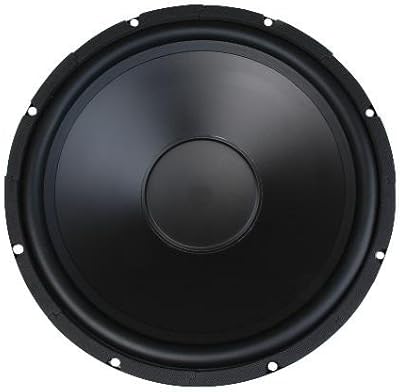
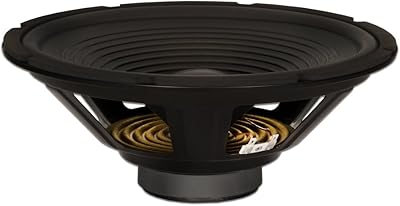
The GRS 8PR-8 8″ Poly Cone Woofer is a raw passive driver from GRS, the house brand of Parts Express, built specifically for DIY audio enthusiasts who want a capable component without spending heavily. This is not a complete speaker — you will need an enclosure, crossover planning, and some hands-on assembly know-how before any sound comes out. At 8 inches in diameter, this 8-inch woofer fits comfortably into a wide range of cabinet builds, from small sealed boxes to larger ported designs. Having been on the market since 2010, it has accumulated a track record that many newer budget drivers simply cannot match.
Features & Benefits

The polypropylene cone is one of this driver's stronger selling points — it strikes a practical balance between stiffness and self-damping that keeps mid-bass reproduction clean without adding unnecessary mass. The butyl rubber surround is worth noting too; unlike foam surrounds that degrade within a decade, butyl holds up far better over time and allows healthy excursion. A stamped steel basket keeps alignment tight under load, and the ceramic ferrite magnet with a vented pole piece helps reduce power compression during extended listening. GRS does not publish full Thiele-Small parameters publicly, which can make enclosure design trickier — plan on measuring the driver yourself if precision matters.

Best For

This 8-inch woofer is squarely aimed at the hands-on crowd — the hobbyist building a first 2-way cabinet, someone repairing a blown driver in an older home theater setup, or a student putting together a real speaker system for an acoustics class. It also works well as a test or prototyping driver when you do not want to risk damaging something expensive. The GRS driver is not the right choice for audiophiles chasing reference-grade performance, but for anyone working within a tight budget and comfortable with basic enclosure design, it delivers a lot of usable driver for the money.

User Feedback

With a 4.1 out of 5 rating across over 200 reviews, this budget woofer holds up well in the court of public opinion for its price tier. Buyers consistently praise the build quality — the rubber surround and basket feel solid relative to what you pay. The most common criticism is not about sound but about documentation: GRS provides minimal spec data, leaving builders to measure Thiele-Small parameters on their own. A handful of reviewers noted some unit-to-unit variation, which is not unusual at this price point. On balance, most buyers who went in with realistic expectations came away satisfied.

Pros

  • Butyl rubber surround resists aging far better than foam, keeping the driver serviceable for years.
  • Polypropylene cone delivers clean, controlled mid-bass without adding excessive mass.
  • Vented pole piece helps reduce power compression during longer listening sessions.
  • Stamped steel basket maintains solid voice coil alignment under real-world load conditions.
  • 8-inch format works across a wide variety of enclosure types, giving builders flexibility.
  • Flush-mount design integrates neatly into custom baffles and cabinets with minimal fuss.
  • The GRS driver has been on the market since 2010, giving it a longer proven track record than many budget alternatives.
  • Over 200 customer reviews with a 4.1 rating suggests consistent satisfaction at this price tier.
  • Excellent value as a prototyping or test driver when you cannot risk a more expensive unit.

Cons

  • GRS does not publish Thiele-Small parameters, forcing builders to measure the driver themselves before designing an enclosure.
  • The 600W power figure is a peak marketing spec, not a reliable continuous RMS rating — actual sustained power handling is lower.
  • Some buyers have reported minor unit-to-unit variation, which can be a problem for matched stereo or multi-driver builds.
  • The Amazon product listing includes inaccurate specs like Bluetooth connectivity, which creates confusion and erodes trust.
  • No bundled documentation or wiring guidance makes this a poor fit for complete beginners with no prior speaker-building experience.
  • Ceramic ferrite magnet is functional but not as efficient as neodymium alternatives at similar price points from competing brands.
  • Limited frequency response data makes it harder to plan crossover points without additional measurement equipment.
  • Packaging has been noted by some buyers as minimal, raising concerns about transit damage when ordering multiples.

Ratings

Our AI rating engine analyzed verified global buyer reviews for the GRS 8PR-8 8″ Poly Cone Woofer, actively filtering out incentivized, bot-generated, and low-effort feedback to surface what real builders and hobbyists actually experienced. Scores reflect a clear-eyed synthesis of both genuine praise and recurring frustrations across hundreds of verified purchases. Where this driver earns its stripes and where it falls short are both represented honestly below.

Value for Money
91%
This is consistently the category where the GRS driver wins the most converts. Buyers building first cabinets or replacing blown drivers in aging home theater setups repeatedly note that the performance-to-cost ratio is difficult to beat at this price tier. For a prototyping or learning build, it removes the financial anxiety entirely.
A small number of buyers who compared it directly against slightly pricier alternatives felt the gap in measurable performance was real enough to question the savings. If you are building something you intend to keep long-term, the value calculus shifts a little — the cost of a second, better driver later may outweigh the upfront savings.
Surround Durability
88%
The butyl rubber surround gets specific praise from buyers who have owned foam-surround drivers that rotted out within a decade. Several long-term owners report no degradation after years of regular use in home listening rooms, and the material holds up well across seasonal humidity changes that typically accelerate foam breakdown.
A handful of buyers who ordered multiple units noticed slight inconsistencies in surround seating between drivers, which suggests some variation in the assembly process. This is not a widespread complaint, but it does come up often enough in multi-unit purchases to be worth noting if you are matching drivers for a stereo build.
Build Quality
83%
The stamped steel basket feels solid for a driver at this price, and most buyers report that it arrives without visible alignment issues or obvious manufacturing defects. The overall fit and finish inspires more confidence than the cost might suggest, particularly for a component that will be hidden inside an enclosure once installed.
Stamped steel is a practical compromise, not a premium choice — experienced builders note that a cast basket would offer superior rigidity and better vibration control, especially at higher excursion levels. At this price point it is entirely expected, but buyers upgrading from higher-tier drivers may feel the difference during direct comparison.
Bass Performance
74%
26%
In well-matched enclosures — particularly modestly sized ported boxes — buyers consistently report clean, punchy low-frequency output that handles music and home theater content without obvious strain. The polypropylene cone contributes to a mid-bass character that is controlled rather than boomy, which suits mixed-use 2-way builds nicely.
Deep sub-bass extension is not this driver's strength, and buyers expecting thumping low-end from a sealed box may be disappointed without careful enclosure optimization. The absence of published Thiele-Small parameters makes it genuinely difficult to model the expected response curve before committing to a build, which has led to some mismatched enclosure projects.
Documentation & Specs
38%
62%
There is very little to praise here from a documentation standpoint, though some experienced GRS buyers have noted that the Parts Express community forums partially fill the gap with user-measured parameters and build notes shared over the years. For those already plugged into the DIY audio community, the missing data is a solvable problem.
The lack of published Thiele-Small parameters is a genuine obstacle for any builder trying to design an optimized enclosure before purchasing. Compounding this, the Amazon listing contains outright inaccurate specs — including Bluetooth connectivity claims that simply do not apply to a passive woofer — which erodes confidence and creates confusion for buyers who rely on that data.
Cone Material Quality
81%
19%
Polypropylene is a well-regarded cone material in budget and mid-range drivers for good reason — it dampens well, resists moisture better than paper, and maintains consistent stiffness across temperature variations in typical indoor listening environments. Buyers who have worked with paper-cone drivers at similar prices generally prefer the polypropylene behavior for bass-range applications.
Polypropylene can introduce a slightly colored midrange character that more discerning listeners notice when the driver is crossed over higher than ideal. For a pure woofer application this is rarely an issue, but builders using it in wider-range configurations without a steep crossover slope have occasionally flagged a mild upper-bass warmth that is not universally liked.
Excursion Capability
72%
28%
The butyl surround and vented pole piece together contribute to reasonably healthy linear excursion for a driver in this class, and buyers using it in ported enclosures report it handles moderate output levels without obvious bottoming out during normal listening volumes. For home audio use it behaves predictably within its range.
Without published Xmax figures, it is genuinely difficult to know exactly where the safe limits are until you push it — which is not ideal for buyers building to a specific output target. A few users who drove it hard with undersized amplifiers or poorly tuned boxes reported audible distortion at higher excursion demands.
Enclosure Compatibility
78%
22%
The 8-inch diameter and flush-mount flange give this budget woofer broad compatibility with standard baffle cutout dimensions, and buyers have successfully deployed it in sealed, ported, and bandpass enclosures across a range of cabinet volumes. Its flexibility for a first build is a genuine practical advantage.
Without Thiele-Small data from the manufacturer, finding the right enclosure volume and tuning frequency is a trial-and-error process for most buyers. Those without access to measurement software have reported spending as much time troubleshooting the box design as they did on the physical build itself.
Unit-to-Unit Consistency
61%
39%
The majority of single-unit buyers have no complaints about the driver they received, and most report that it performs in line with what they expected based on community reviews. For solo cabinet projects, consistency is rarely flagged as a concern.
Buyers who ordered two or more units for stereo or array builds have occasionally reported measurable differences in sensitivity or low-frequency behavior between drivers from the same order. This is a known trade-off with budget manufacturing tolerances and is worth factoring in if precise driver matching matters for your application.
Power Handling Clarity
44%
56%
For casual home audio use at moderate volumes, the driver handles typical amplifier outputs without issue, and most buyers who stay within reasonable power limits report no problems over extended periods of use.
The 600W peak rating on the listing is a source of real frustration for technically informed buyers, who recognize it as an inflated marketing figure rather than a usable continuous RMS spec. The absence of a clearly stated RMS rating forces builders to guess at safe amplifier pairing, which is a meaningful oversight for a component targeting DIY builders who need accurate data.
Ease of Installation
82%
18%
The flush-mount design drops cleanly into a standard 8-inch baffle cutout, and the basket mounting holes are evenly spaced in a way that makes alignment straightforward. Buyers with basic woodworking and wiring experience consistently report a clean installation with no surprises.
There are no installation instructions included with the driver, and no guidance on gasket sealing, screw sizing, or terminal wiring orientation. For a first-time builder this could be a stumbling block, though the information is readily available through community resources if you know where to look.
Magnet & Motor Performance
69%
31%
The ceramic ferrite magnet delivers adequate sensitivity for home audio applications, and the vented pole piece is a welcome design choice that helps manage thermal buildup during longer listening sessions. Buyers running it at moderate power levels generally report stable, consistent output without signs of thermal compression.
Ceramic ferrite is functional but less efficient than neodymium magnets found in some competing drivers at similar price points, meaning you will need a bit more amplifier power to reach the same output level. Buyers using low-powered amplifiers or battery-powered systems may notice the sensitivity limitation more acutely.
Packaging & Delivery
58%
42%
Most buyers report receiving the driver in functional condition, and for single-unit orders the packaging typically does the job of getting the driver from warehouse to doorstep without visible damage to the cone or surround.
The packaging has been described as minimal by a number of reviewers, and buyers who ordered multiple units have occasionally reported light transit damage to the surround or cone edge when drivers were packed loosely together. For a fragile component, slightly more protective packaging would be a meaningful improvement.
Long-Term Reliability
77%
23%
The product has been on the market since 2010, and some long-term owners have shared positive updates after years of regular use without surround or cone degradation. The butyl rubber choice pays dividends here over the full product lifespan compared to foam alternatives.
Long-term reliability data is limited given the modest documentation GRS provides, and there is no published warranty detail that covers specific failure scenarios. Buyers who have encountered defective units report the resolution process through the Parts Express channel is workable but not particularly fast.

Suitable for:

The GRS 8PR-8 8″ Poly Cone Woofer is an ideal pick for DIY audio hobbyists who already understand the basics of speaker building — people who know what an enclosure is, have at least a passing familiarity with crossover design, and are comfortable doing a bit of hands-on measurement work. It fits naturally into first-time cabinet builds, whether you are putting together a ported box for some extra low-end punch or a compact sealed enclosure for tighter bass. Budget-conscious makers replacing a blown driver in an aging home theater system will also find this 8-inch woofer to be a sensible, low-risk choice. Students and educators running acoustics lab exercises get genuine value here too — it is a real driver with real behavior, not a toy component. Anyone who needs a reliable test or prototyping unit without committing serious money will appreciate what the GRS driver brings to the bench.
Not suitable for:

If you are expecting to unbox this and plug it into something for instant audio gratification, the GRS 8PR-8 8″ Poly Cone Woofer is simply not built for you — it is a passive raw driver that requires an enclosure, wiring, and crossover work before it produces a single note. Audiophiles chasing precise, reference-quality bass reproduction will likely feel constrained here, especially given the lack of published Thiele-Small parameters, which makes proper enclosure modeling difficult without your own measurement rig. The 600W power figure listed on the product page is a peak marketing number, not a continuous RMS rating, so buyers expecting heavy-duty amplified output should calibrate expectations accordingly. Those purchasing multiple units for a matched array or stereo build should also be aware that some unit-to-unit variation has been reported, which can matter in critical listening applications. And despite what the Amazon listing suggests, this driver has absolutely no Bluetooth capability — it is a fully passive component, full stop.
Specifications

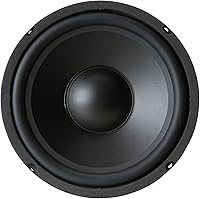
  • Driver Diameter: This woofer measures 8 inches in driver diameter, making it compatible with standard 8-inch baffle cutouts in custom enclosures.
  • Cone Material: The cone is constructed from polypropylene, a material chosen for its balanced combination of stiffness, low mass, and natural self-damping characteristics.
  • Surround Material: A butyl rubber surround is used in place of foam, providing improved longevity and allowing greater linear excursion during bass reproduction.
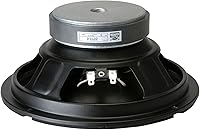
  • Frame Type: The driver uses a stamped steel basket that holds the voice coil, spider, and magnet assembly in precise alignment during operation.
  • Magnet Type: A high-energy ceramic ferrite magnet powers the motor structure, delivering sufficient flux density for consistent low-frequency output in home audio applications.
  • Pole Piece: The pole piece is vented, which helps manage heat buildup in the voice coil and reduces power compression during extended playback sessions.
  • Mounting Type: The driver is designed for flush mounting, allowing it to sit flat against a baffle board or cabinet panel for a clean, integrated installation.
  • Dimensions: Overall product dimensions are 8.66 x 8.39 x 4.41 inches, which should be accounted for when planning internal cabinet depth and baffle thickness.
  • Weight: The unit weighs 3 pounds, which is typical for a ceramic-magnet 8-inch driver and should be factored into cabinet and mounting hardware planning.
  • Peak Power: The listed peak power rating is 600W, a marketing-maximum figure that does not reflect continuous RMS handling capacity under normal listening conditions.
  • Driver Type: This is a dynamic woofer designed for passive operation, requiring an external amplifier and crossover network — it has no built-in amplification or wireless capability.
  • Audio Driver Size: The active audio driver element measures 8 inches in diameter, consistent with standard industry sizing for mid-bass and woofer applications.
  • Usage Environment: This driver is rated for indoor use only and is not weatherproofed or sealed against moisture, humidity, or outdoor conditions.
  • Shape: The driver has a circular form factor, which is standard for this type of dynamic woofer and compatible with round baffle cutout tooling.
  • Brand: Manufactured by GRS, the in-house driver brand of Parts Express, a well-established U.S.-based audio components distributor.
  • Items Included: The package contains one driver unit with no additional accessories, documentation, or hardware included in the box.
  • Availability Since: This driver has been commercially available since September 2010, giving it over a decade of real-world buyer feedback and community build history.
  • UPC: The product UPC is 844632088520, which can be used to verify authenticity or cross-reference the listing across retailers.

Related Reviews
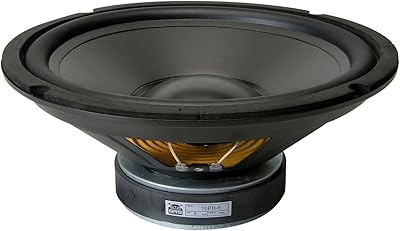
GRS 10PR-8 10″ Poly Cone Rubber Surround Woofer
86%
89%
Bass Performance
87%
Build Quality
91%
Durability
85%
Sound Clarity
90%
Excursion Capacity
More
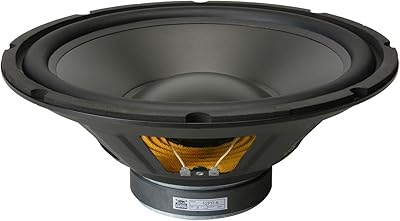
GRS 12PR-8 12″ Poly Cone Rubber Surround Woofer
81%
88%
Deep Bass Performance
90%
Build Quality and Durability
85%
Power Output
87%
Heat Dissipation and Longevity
75%
Ease of Installation
More
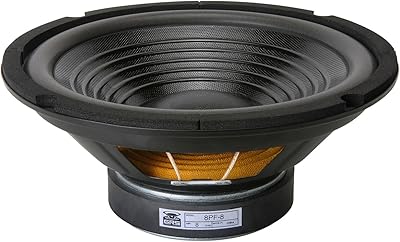
GRS 8PF-8 8-inch Woofer
85%
94%
Value for Money
91%
Ease of Installation
83%
Mid-Bass Response
87%
Performance in Sealed Enclosures
76%
Build Materials
More
GRS 10SW-4 10-inch Subwoofer
74%
83%
Build Quality
79%
Bass Performance
88%
Value for Money
86%
Surround Durability
78%
Voice Coil Reliability
More
Goldwood Sound GW-10PC-8 10″ Woofer 400 Watts 8 Ohm Replacement Speaker
87%
93%
Bass Performance
89%
Build Quality & Durability
88%
Ease of Installation
85%
Power Handling
90%
Sound Clarity
More
MCM Audio Select 15″ Woofer 200W RMS 8 Ohm
83%
94%
Bass Performance
88%
Build Quality
90%
Durability
87%
Sound Accuracy
82%
Ease of Installation
More
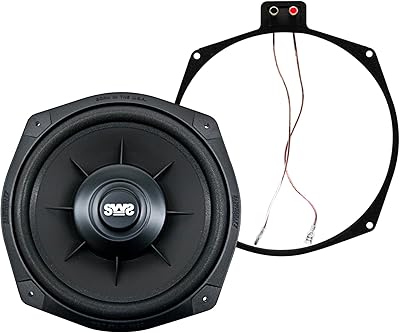
Earthquake Sound SWS-8X 8-Inch Shallow Woofer System
86%
88%
Bass Quality
92%
Installation Ease
85%
Sound Clarity
89%
Build Quality
87%
Power Handling
More
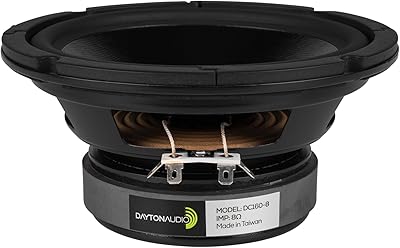
Dayton Audio DC160-8 6.5-Inch Woofer
80%
93%
Value for Money
78%
Bass Extension
84%
Midbass Clarity
81%
Build Quality & Materials
76%
Unit-to-Unit Consistency
More
Goldwood Sound GW-212/8 12-inch Replacement Woofer
77%
91%
Value for Money
78%
Bass Output
88%
Fitment Accuracy
72%
Build Quality
58%
Foam Surround Durability
More
Asustor Lockerstor 8 AS6508T 8-Bay NAS
77%
91%
Network Performance
84%
Value for Money
88%
Build Quality
62%
Software (ADM)
83%
SSD Caching
More

FAQ

This is a raw passive driver, so it does not work on its own. You will need an amplifier, an enclosure, and ideally a crossover network before it produces any sound. Think of it as one part of a larger speaker system that you build yourself.

No, it absolutely does not. The Bluetooth reference in the Amazon listing is a data error — this is a fully passive, wired dynamic driver with no electronics of any kind built in. Ignore those spec fields entirely; they were likely auto-populated incorrectly by the listing system.

It is flexible enough to work in both sealed and ported enclosures, which is one of its practical advantages. That said, GRS does not publish Thiele-Small parameters for this driver, so you will want to measure it yourself using a tool like DATS or REW before committing to a specific box design. A ported enclosure will typically give you more low-end extension, while sealed tends to offer tighter, more controlled bass.

Butyl rubber surrounds like the one on this 8-inch woofer are significantly more durable than foam. Foam tends to break down within 10 to 15 years even in good conditions, while butyl rubber can last several decades with normal indoor use. It is one of the more practical material choices at this price point.

Not really — treat that number with skepticism. The 600W figure is a peak marketing specification, not a continuous RMS rating. For safe, long-term operation, you will want to stay well below that ceiling. Without an official RMS spec from GRS, most experienced builders recommend conservative amplifier matching until you have had a chance to stress-test the driver yourself.

It can handle low-frequency duties in a modest home audio setup, but it is better described as a woofer or mid-bass driver than a true subwoofer. If you are building a dedicated subwoofer cabinet for serious bass output, a driver specifically engineered for subwoofer use — with higher Xmax and a more powerful motor — will serve you better. For general low-frequency support in a 2-way system, this budget woofer is a reasonable fit.

There is no guarantee of close matching between units, and a few buyers have noted minor variation between drivers purchased in the same order. For a casual stereo build this is unlikely to matter much, but if you are planning a critical listening application where precise driver matching is important, consider measuring each unit individually and budgeting for a possible swap-out if one deviates significantly.

Since GRS does not publish a firm RMS rating, a conservatively powered amplifier in the 30 to 80 watt range per channel is a safe starting point for home audio use. Avoid high-powered plate amps designed for subwoofers — those are overkill here and risk overdriving the voice coil. A modest class D amp or a receiver with moderate output will drive the GRS driver cleanly without stress.

It depends on the beginner. If you are willing to do some research on enclosure design, have access to measurement tools, and are comfortable with basic woodworking and soldering, then yes — the low cost makes it a low-risk learning project. But if you are expecting a guided or documented build experience, the lack of specs and instructions from GRS may be frustrating. Pair it with an active community like the Parts Express Tech Talk forum where experienced builders can guide your enclosure choices.

The driver sits flat against your baffle using its mounting flange, which you secure with screws through the pre-drilled holes in the basket rim. No special hardware is required beyond standard M5 or equivalent machine screws and a gasket or foam tape to seal the gap between the driver and the baffle. Most builders cut the baffle hole using a router circle jig to get a clean, snug fit.

Where to Buy