Overview

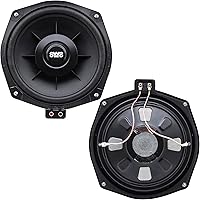
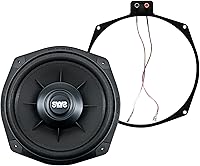
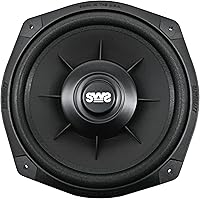
The Earthquake Sound SWS-8X 8-Inch Subwoofer is built for one specific problem: you want real low end in a vehicle that doesn't have room for a deep box. This is a single 4-ohm driver, which makes it straightforward to wire into most factory head units or a basic aftermarket amp without overthinking impedance matching. It sits in Earthquake's shallow woofer family, a lineup that also includes 6.5-inch, 10-inch, and 12-inch versions, so there's room to scale up or down depending on the vehicle. The whole point of this 8-inch car sub is giving up almost no cargo space while still delivering bass that actually moves air, rather than the thin, boomy output you get from cheap factory subs.
Features & Benefits

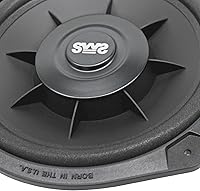
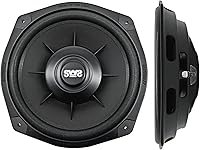
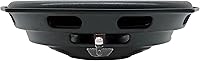
What stands out about the SWS-8X woofer is the mounting depth, just 2.04 inches, which opens up under-seat builds, thin door panels, and other spots a standard subwoofer would never fit into. Power handling sits at 150 watts RMS and 300 watts max, giving you enough headroom to run it confidently off a mid-size amp without constantly flirting with clipping. The ribbed, inverted polypropylene cone is tuned for a more articulate low end rather than the loose, one-note thump some shallow subs settle for, and the high-temp aluminum dust cap and voice coil help it shrug off sustained power over long drives. A pressed-foam surround and NOMEX/ROMEX spider add some long-term durability, though the recommended sealed enclosure range of 0.2 to 0.6 cubic feet means you still need to build or buy the right box to get proper results.

Best For

This shallow-mount subwoofer makes the most sense for daily drivers who want noticeably tighter bass without losing trunk space to a bulky enclosure. It's a natural fit for false-floor builds in trucks and SUVs, where a deep subwoofer simply wouldn't clear the floor pan or seat tracks. Anyone stepping up from factory audio and craving real low end, rather than the thin output most stock systems offer, will notice the difference immediately. Installers working with tight mounting depth in doors, kick panels, or custom enclosures also benefit, since this design solves a physical clearance problem first and a sound quality problem second. If your build revolves around space constraints as much as output, it's a sensible starting point rather than an afterthought.

User Feedback

Real-world feedback on the SWS-8X woofer tends to focus on how much output it produces for something this thin. Plenty of owners seem genuinely surprised that a sub this shallow can compete with deeper, bulkier designs, and several comparisons online favor it over larger subwoofers in similar price ranges. The recurring caveat is enclosure size: buyers who slap it into a random box or skip a properly sized sealed enclosure tend to come away less impressed, while those who follow the recommended volume report tighter, punchier bass. A few reviewers also note that it rewards a clean, well-matched amp setup rather than budget electronics, so pairing it with a decent amplifier seems to matter more here than with deeper, less space-constrained subwoofers.

Pros

  • Fits in spaces a standard subwoofer simply cannot reach, like under seats or thin panels
  • Delivers surprisingly strong, articulate bass for such a shallow design
  • 150W RMS and 300W max power handling leaves real headroom for most amps
  • Reviewers consistently compare its output favorably against larger, deeper subwoofers
  • Durable build with a high-temp voice coil and pressed-foam surround for long-term use
  • Single 4-ohm driver wiring keeps installation simple for most factory or aftermarket setups
  • Part of a wider Earthquake shallow woofer lineup, so sizing up later is straightforward
  • Sealed enclosure range is forgiving enough to fit into compact custom boxes

Cons

  • Output drops noticeably if the enclosure volume isn't built to spec
  • Some buyers report underwhelming bass when paired with weak or budget amplifiers
  • Still limited by being a single 8-inch driver, not a substitute for larger setups
  • No included enclosure, so buyers need to source or build one separately
  • Mounting hole diameter requires fairly precise cutting, which adds installation effort
  • Best results depend on a clean amp match rather than plug-and-play factory power
  • Only available as a single unit here, not as a matched pair
  • Shallow depth design likely trades off some of the deep-throw output larger subs offer

Ratings

These scores for the Earthquake Sound SWS-8X 8-Inch Subwoofer were generated by AI after analyzing verified user reviews from buyers worldwide, with spam, bots, and incentivized feedback filtered out. The goal is to reflect what real installers and daily drivers actually experience, strengths and frustrations included, rather than a polished marketing summary.
Bass Output & Punch
84%
Owners consistently mention being caught off guard by how much low end this thing produces given its slim profile. Daily commuters and weekend audio tinkerers alike describe it as noticeably punchier than factory subs, especially once paired with a sealed box built to spec.
It's still a single 8-inch driver, so a handful of users expecting deep, room-rattling output walked away underwhelmed. Without a properly sized enclosure, several buyers reported the bass coming across thin or boomy instead of tight.
Mounting Depth & Space Efficiency
91%
This is the category where it clearly earns its reputation, with a 2.04-inch depth that fits under truck seats, false floors, and thin door panels where standard subs simply won't go. Installers working tight builds repeatedly call this the deciding factor over deeper alternatives.
A few buyers note that while the depth is shallow, the overall mounting hole diameter still requires careful cutout planning. Anyone assuming it's a drop-in fit without measuring first risks a frustrating install.
Build Quality & Durability
85%
The high-temp aluminum dust cap, pressed-foam surround, and NOMEX/ROMEX spider give long-time owners confidence it can handle regular daily driving rather than occasional light use. Several reviewers mention years of use without any visible wear on the cone or surround.
A small number of buyers report the components feeling adequate rather than premium for the price point. It's solid, dependable hardware, but not the kind of build that wows audiophiles chasing boutique materials.
Power Handling
82%
18%
At 150W RMS and 300W max, most owners find the headroom comfortable for daily use without flirting with clipping or distortion. People running mid-size amps describe it as a confident match that doesn't feel maxed out under normal listening levels.
A few users pushing it harder with stronger amps mention wanting more ceiling for louder setups. It's solid for moderate power, but not built for buyers chasing extreme SPL numbers.
Sound Clarity & Articulation
80%
20%
The ribbed polypropylene cone gets praised for delivering tighter, more defined bass rather than the muddy one-note thump some shallow subs produce. Listeners upgrading from factory audio describe a clear, noticeable jump in detail during bass-heavy tracks.
Clarity drops off noticeably when paired with the wrong enclosure size or a weak amp, according to several reviews. It rewards a properly matched setup, which means sloppy installs can mute its real potential.
Value for Money
78%
22%
Given how much output it manages despite its shallow footprint, many buyers feel they're getting performance that punches above its price bracket. People comparing it to larger, bulkier subs often conclude it's worth the premium for the space it saves.
A handful of reviewers note the price feels steep once you factor in needing a properly built enclosure and a decent amp to get the best results. Budget-focused buyers sometimes find the total project cost higher than expected.
Ease of Installation
73%
27%
The single 4-ohm wiring keeps the electrical side of installation simple for most factory and aftermarket amp setups. DIY installers describe the wiring process itself as straightforward compared to more complex multi-driver configurations.
Building or sourcing the right sealed enclosure adds real complexity that some buyers underestimate going in. Several reviews mention the install taking longer than expected once enclosure work entered the picture.
Enclosure Flexibility
76%
24%
The recommended 0.2 to 0.6 cubic foot range gives installers reasonable room to design a compact box without sacrificing performance. Custom builders appreciate that this flexibility supports a variety of under-seat and trunk configurations.
Buyers who guess on enclosure volume instead of following the recommended range frequently report disappointing results. The flexibility is there, but it still demands attention to detail rather than a casual approach.
Amp Compatibility
77%
23%
Its 4-ohm impedance plays nicely with most factory head units and common aftermarket amplifiers, which simplifies shopping for compatible gear. Owners running mid-tier amps describe the pairing as smooth with no impedance headaches.
Several users specifically mention that cheap or underpowered amps hold this woofer back from its real potential. It performs best with a clean, well-matched amp, which can mean an extra purchase for buyers running budget electronics.
Vehicle Fit (Trucks & SUVs)
88%
Truck and SUV owners specifically call out false-floor and under-seat installs as ideal use cases, citing how well it tucks away without eating into cargo room. This makes it a popular pick for work trucks and daily-driven SUVs alike.
A few sedan owners with already-limited space mention it still required some trimming or panel adjustment to fit cleanly. Fit isn't universal across every vehicle type without some installation planning.
Long-Term Reliability
81%
19%
Reviewers running it daily over extended periods report consistent performance with no noticeable degradation in output or clarity. The durable voice coil and surround materials seem to hold up well to regular vibration and temperature swings inside a vehicle.
A small subset of buyers mention reduced output over time, though it's unclear how much stems from amp mismatches or enclosure issues rather than the driver itself. Long-term data beyond a few years remains limited in available feedback.
Overall Buyer Satisfaction
83%
Most buyers who took the time to build a proper enclosure and pair it with a decent amp walk away genuinely impressed by the output-to-size ratio. It's frequently recommended in installer communities specifically for tight-space builds.
Satisfaction drops noticeably among buyers who skipped enclosure research or expected plug-and-play results straight out of the box. Expectations matter here, and a few disappointed reviews trace back to skipped installation steps rather than the product itself.

Suitable for:

The Earthquake Sound SWS-8X 8-Inch Subwoofer makes the most sense for drivers who want a real low end without giving up the trunk or cargo area to a deep box. It's a strong fit for under-seat or false-floor builds in trucks and SUVs, where physical depth is the limiting factor rather than budget. Anyone upgrading from a stock factory system, frustrated by thin or muddy bass, should notice a clear jump in output and clarity. It also suits installers who regularly work around tight mounting depths in doors, kick panels, or custom enclosures and need a driver that performs despite the space constraints. Buyers willing to pair it with a sealed enclosure built to the recommended volume and a reasonably matched amp will get the most consistent results.
Not suitable for:

This shallow-mount subwoofer isn't a great match for anyone expecting deep, room-shaking output purely from the driver itself, since it's still a single 8-inch cone with real physical limits. Buyers hoping to skip building or buying a properly sized sealed enclosure will likely end up disappointed, as performance leans heavily on getting that part right. People looking to run it off weak factory power without any dedicated amplification may also find the results underwhelming compared to what reviewers describe. The Earthquake Sound SWS-8X 8-Inch Subwoofer is also not the right pick for anyone who specifically wants dual-subwoofer output or a pair setup, since this listing covers a single unit. Finally, those chasing maximum bass at minimum effort, with no interest in proper installation, are better served by a simpler all-in-one powered sub.
Specifications

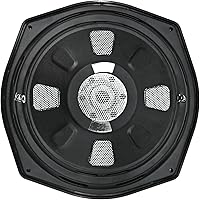
  • Driver Size: The driver measures 8 inches in diameter, fitting standard 8-inch subwoofer cutouts.
  • Impedance: It runs at a 4-ohm nominal impedance, which works with most factory and aftermarket amplifiers.
  • Power Handling: It handles up to 150 watts RMS continuous and 300 watts max power.
  • Sensitivity: Sensitivity is rated at 86.7dB, which affects how loud it plays for a given amp output.
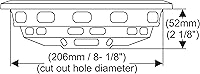
  • Mounting Depth: The shallow mounting depth of 2.04 inches (52mm) allows installation in tight spaces like under seats.
  • Mounting Hole: The mounting hole diameter measures 8.11 inches (206mm) for cutout planning.
  • Cone Material: The cone is made from ribbed, inverted polypropylene designed for clean low-end response.
  • Dust Cap: A high-temperature aluminum dust cap and voice coil help the driver handle sustained power.
  • Surround: A pressed-foam surround supports excursion while contributing to long-term durability.
  • Spider Assembly: A NOMEX/ROMEX spider assembly is used to maintain voice coil centering under load.
  • Magnet: A ferrite magnet provides the magnetic drive for the woofer.
  • Recommended Enclosure: Earthquake recommends a sealed enclosure with an internal volume between 0.2 and 0.6 cubic feet.
  • Connectivity: The subwoofer uses standard wired connections, not wireless or app-based control.
  • Item Weight: The unit weighs 4.33 pounds (1.96 kg).
  • Unit Count: This listing includes a single subwoofer, not a matched pair.

Related Reviews

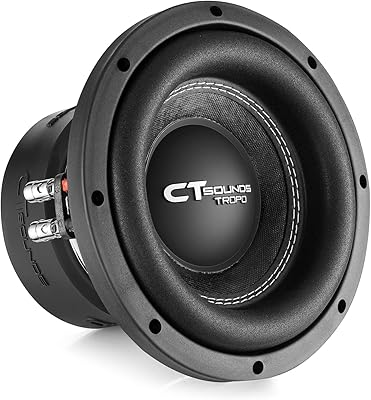
CT Sounds TROPO-8-D2 8-Inch Car Subwoofer
77%
91%
Value for Money
83%
Bass Quality
88%
Build Quality
67%
Enclosure Compatibility
71%
Amplifier Pairing
More
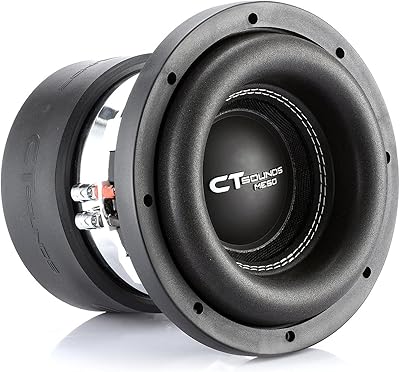
CT Sounds MESO-8-D4 8-Inch Car Subwoofer
79%
84%
Bass Output & Impact
88%
Build Quality
86%
Voice Coil Durability
91%
Value for Money
77%
Amplifier Compatibility
More
Earthquake Sound CP-8 Couch Potato 8″ Subwoofer
77%
83%
Bass Output for Size
93%
Space-Saving Design
88%
Ease of Setup
79%
Tuning Flexibility
67%
Build Quality
More
Earthquake Sound FF6.5 6.5-Inch Subwoofer
73%
62%
Bass Performance
79%
Sound Quality
73%
Build Quality
69%
Value for Money
87%
Ease of Setup
More
Pyle PLTB8 8-Inch Carpeted Subwoofer Tube Enclosure
71%
83%
Value for Money
88%
Ease of Installation
71%
Bass Output & Impact
58%
Sound Clarity at High Volume
66%
Build Quality
More
Audioengine S8 Subwoofer
84%
93%
Bass Accuracy & Musicality
94%
Build Quality
91%
Integration & Setup Ease
86%
Crossover Flexibility
89%
Low-Frequency Extension
More
Monoprice Premium Select 8-Inch Subwoofer
76%
91%
Value for Money
88%
Ease of Setup
76%
Bass Performance
89%
Input Versatility
62%
Build Quality
More
Planet Audio AC8D 8-Inch Car Subwoofer
71%
88%
Value for Money
74%
Bass Output & Sound Quality
63%
Build Quality
79%
Amplifier Compatibility
83%
Installation Ease
More
JBL BassPro SL 8-inch Powered Subwoofer
85%
88%
Bass Performance
94%
Ease of Installation
90%
Sound Quality for Size
82%
Build Quality
87%
Value for Money
More
MTX Audio RT8PT 8-Inch Powered Subwoofer Enclosure
75%
71%
Bass Output
78%
Installation Ease
82%
Build Quality
84%
Value for Money
74%
Amplifier Performance
More

FAQ

In most cases, yes, that is exactly what this 8-inch car sub is designed for. The 2.04-inch mounting depth is shallow enough for many under-seat and false-floor builds, but you should still measure your specific space before cutting anything, since seat tracks and floor pans vary by vehicle.

You can technically wire it to a factory system, but you will not get strong results without dedicated amplification. Most owners pair the SWS-8X woofer with even a modest aftermarket amp to actually take advantage of its power handling and get tight, controlled bass.

Earthquake recommends a sealed enclosure between 0.2 and 0.6 cubic feet of internal volume. Staying within that range matters a lot here, since going outside it is one of the most common reasons people end up disappointed with the output.

The manufacturer specifically recommends a sealed enclosure for this driver, so that is the safer route if you want predictable, accurate bass. A ported design isn't part of the documented spec, so straying from sealed introduces some guesswork.

It's genuinely one of the more pleasant surprises in the shallow-subwoofer category, with plenty of reviewers comparing it favorably to deeper, bulkier designs. That said, it's still a single 8-inch driver, so don't expect it to outmuscle a proper dual 10-inch or 12-inch setup in a large enclosure.

This particular listing is for a single subwoofer, not a matched pair. If you want stereo subs or more total output, you would need to purchase two.

The Earthquake Sound SWS-8X 8-Inch Subwoofer sits in the middle of Earthquake's shallow woofer lineup, which also includes 6.5-inch, 10-inch, and 12-inch versions. The 8-inch size is a common pick for buyers who want more output than the 6.5-inch but still need a compact footprint.
The components used, like the high-temp voice coil, aluminum dust cap, and pressed-foam surround, point to a driver built for sustained power rather than occasional light use. Most feedback suggests it holds up well under regular daily driving conditions.

It still matters, since power handling affects how cleanly the driver performs at moderate volumes, not just at max output. Running well under its 150W RMS rating generally gives you a more controlled, less strained sound overall.

It can technically work, but several owners specifically mention that results improve noticeably with a cleaner, better-matched amp rather than a budget unit. If bass quality matters to you, it's worth investing a bit more on the amp side rather than cutting corners there.