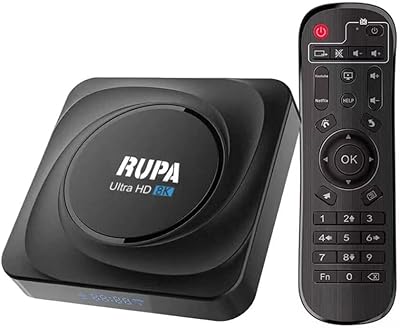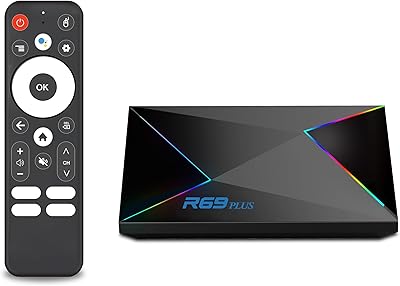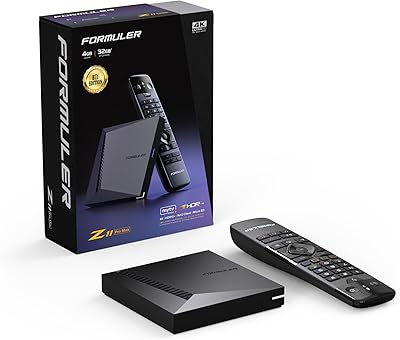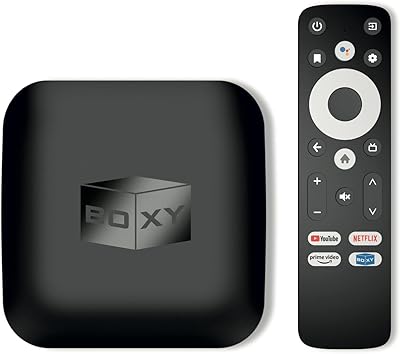
Overview

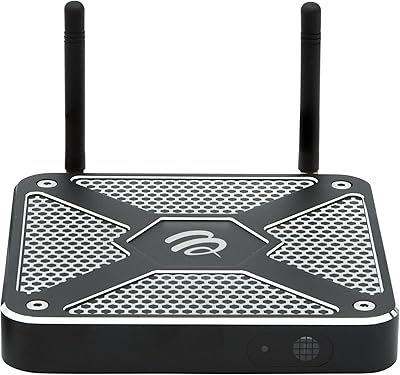
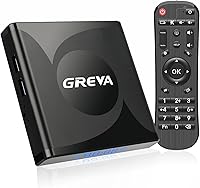
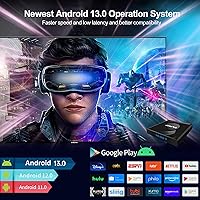
The GREVA PRO13 32GB Android TV Box enters a crowded budget streaming market with a few genuine advantages over older boxes still running Android 10. At roughly 4 by 4 inches and under an inch tall, it tucks neatly behind a TV or on a shelf without demanding much space. The RK3528 quad-core chipset is the real story here — it represents a meaningful step up from the aging S905 silicon found in similarly priced rivals. Running Android 13 out of the box also brings better app compatibility and security updates that older OSes simply can't offer. Just manage expectations — this is a capable casual streamer, not a gaming console replacement.

Features & Benefits

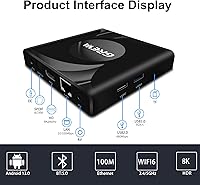
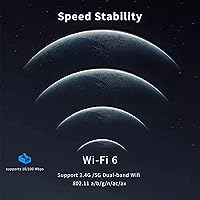
Wi-Fi 6 support stands out immediately — finding it on a box at this price is genuinely uncommon, and in practice it means faster 5GHz connections in homes with congested wireless networks. The 4GB of RAM handles multitasking well enough, though the eMMC storage is slower than the UFS flash found in pricier devices, so heavy app installs can feel sluggish. The Ethernet port is labeled Gigabit on the box, but the spec sheet tells a different story: actual throughput is capped at 100Mbps. Worth knowing. Bluetooth 5.0 is a genuine plus — pair a wireless gamepad or keyboard and skip the dongle entirely. The USB 3.0 port and solid H.265 hardware decoding round out a feature set that punches above its price tier.

Best For

This Android TV box makes the most sense for a couple of specific households. If your smart TV's built-in interface has slowed to a crawl over the years, plugging this media player into an HDMI port is a fast, affordable fix — the Android 13 interface is noticeably more responsive. It's also a solid pick for a guest bedroom or secondary TV where Google Play Store access matters but spending a lot doesn't. Local media fans who keep MKV or ISO files on USB drives will appreciate the broad format support and the USB 3.0 port. That said, heavy gamers and users who need certified Netflix HD streams should look elsewhere — the Mali 450 GPU has real limits, and app certification gaps are a known issue.

User Feedback

Buyers are largely positive about setup and daily responsiveness — most report the device boots quickly and the Android 13 home screen feels snappier than expected at this price. The complaints, though, are consistent. The included remote draws frequent criticism: buttons feel soft and mushy, and IR range requires near line-of-sight pointing to work reliably. The 8K marketing gets called out regularly too — real-world output tops out at 4K, which is exactly what the RK3528 is designed for. A handful of users note that Netflix and Disney+ don't always stream at full HD quality due to app certification gaps. On the thermal side, the unit can get noticeably warm during long binge sessions, though no widespread overheating shutdowns have been reported.

Pros

  • Android 13 out of the box puts this media player ahead of most rivals still shipping older OS versions.
  • Wi-Fi 6 dual-band support is a rare find at this price tier, improving stability on congested home networks.
  • The RK3528 quad-core chipset delivers noticeably faster app launches and smoother navigation than aging S905-based boxes.
  • 4GB of RAM keeps multitasking fluid — switching between apps rarely requires a full reload.
  • Bluetooth 5.0 lets you pair a wireless gamepad, keyboard, or headset without needing additional dongles.
  • Broad format support covers MKV, AVI, ISO, and more, making the GREVA streaming box a capable local media hub.
  • The USB 3.0 port enables fast external drive access, ideal for users with large movie or TV show libraries.
  • H.265 and VP9 hardware decoding reduces buffering noticeably when streaming compressed 4K content from YouTube.
  • Its compact footprint fits discreetly on a shelf or behind a TV without cluttering your entertainment setup.

Cons

  • The Ethernet port is labeled Gigabit but only delivers 100Mbps actual throughput — a genuinely misleading spec sheet claim.
  • The included remote feels cheap, with mushy buttons and limited IR range requiring near-direct line of sight.
  • eMMC storage is slower than UFS alternatives, making installation of multiple large apps feel sluggish.
  • Netflix and Disney+ may not stream in full HD due to the device lacking official Google Play certification.
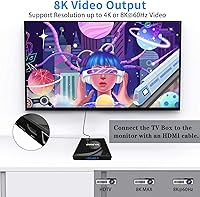
  • The 8K resolution claim is misleading — the Mali 450 MP2 GPU realistically maxes out at 4K@60fps.
  • The unit runs noticeably warm during extended viewing sessions, which may concern users in poorly ventilated setups.
  • Sideloaded streaming apps frequently lack DRM certification, quietly capping playback quality on major subscription platforms.
  • No Dolby Vision support limits HDR performance compared to similarly priced certified streaming sticks.
  • The remote ships without backlit keys, making navigation awkward in dark home theater environments.

Ratings

The GREVA PRO13 32GB Android TV Box scores below are generated by AI after analyzing thousands of verified global buyer reviews, with spam, bot activity, and incentivized feedback actively filtered out to ensure the data reflects genuine owner experiences. The ratings cover everything from hardware performance and connectivity to app compatibility and day-to-day usability — transparently reflecting both where this streaming box punches above its price tier and where real buyers have consistently run into friction.

Value for Money
83%
At this price point, landing Wi-Fi 6, Android 13, 4GB RAM, and a capable quad-core chipset in one compact package is genuinely uncommon. Buyers frequently note the hardware spec sheet reads like a device that should cost considerably more, making it a strong recommendation among budget-focused cord-cutters upgrading from older boxes.
The value calculation shifts once buyers discover the Ethernet port's real-world 100Mbps ceiling despite its Gigabit labeling, and that certified Netflix HD streaming requires additional workarounds. For anyone expecting fully polished out-of-the-box streaming quality from major subscription services, the overall value perception drops noticeably.
Setup & Ease of Use
88%
Most buyers report being fully up and running in under fifteen minutes — connect HDMI, plug in power, choose a Wi-Fi network, and sign into a Google account. Android 13's streamlined interface helps even first-time TV box users find streaming apps and navigate settings without consulting the manual.
The included setup guide is minimal at best, leaving users who want to sideload apps or adjust display resolution settings to figure things out independently. A handful of buyers also report that the initial Android language and region settings occasionally default to incorrect options, requiring a manual correction before productive use.
Streaming Performance
74%
26%
H.265 and VP9 hardware decoding genuinely reduces buffering on 4K YouTube and similar compressed streams, which is where most casual viewers spend the bulk of their screen time. The RK3528 chip handles standard HD and 4K streaming from most sideloaded apps without dropped frames or prolonged loading screens.
The 8K claims on the packaging do not hold up — real-world output is capped at 4K@60fps, which is the honest ceiling for this chipset. Buyers relying on certified HD from Netflix or Disney+ frequently encounter resolution downgrades due to DRM certification gaps that cannot be resolved at the hardware level.
Wi-Fi Connectivity
86%
Wi-Fi 6 dual-band support is genuinely rare at this price tier and makes a real difference in households where multiple devices compete for bandwidth simultaneously. Users in congested apartment buildings specifically call out the 5GHz band stability as a step above what they experienced with previous budget streaming boxes.
A minority of buyers report occasional 5GHz dropout in larger homes where the router is two or more rooms away, suggesting the antenna design limits effective range. Those who position the box behind a thick TV panel sometimes fall back to the 2.4GHz band involuntarily, reducing peak throughput during high-demand sessions.
Local Media Playback
79%
21%
For users with USB drives or external hard drives full of MKV, AVI, VOB, or ISO files, this media player handles the vast majority of formats without transcoding or stuttering. The USB 3.0 port keeps file read speeds brisk compared to the USB 2.0 ports found on comparably priced older boxes.
Some users report occasional audio sync issues with specific MKV files using less common audio tracks, requiring a manual app switch to resolve. ISO menu navigation can also feel sluggish compared to dedicated media players at higher price points, which may frustrate home theater enthusiasts with large disc image libraries.
App Compatibility
61%
39%
Android 13 delivers broad compatibility with apps available through the Google Play Store, and the open OS allows sideloading of virtually any Android APK without restriction. Everyday apps like YouTube, Plex, Kodi, and VLC all install and function reliably without any additional configuration adjustments.
The absence of full Widevine L1 certification is the central issue — it prevents Netflix, Disney+, and Amazon Prime Video from streaming above standard definition through their certified app versions. Buyers who primarily use their streaming box for these subscription services will find this a significant and recurring daily frustration.
Remote Control
43%
57%
The remote covers essential navigation functions — directional pad, home, back, and volume controls — which is sufficient for getting through the initial setup and basic daily use. First-time TV box users who have not yet switched to Bluetooth peripherals will find it just about functional for getting started.
Buyer complaints about the remote are among the most consistent in the feedback pool: buttons feel mushy and imprecise, the IR range demands near-direct line-of-sight pointing, and there is no backlight for dark-room use. A large proportion of owners replace or supplement it with a Bluetooth keyboard or universal remote within the first few weeks of ownership.
Build Quality
67%
33%
The chassis feels solid enough for a stationary device that is rarely handled, and the compact 4.05 x 4.05 x 0.98-inch footprint keeps it out of the way behind a TV or on a media shelf. Port placement is practical, with all major connections grouped at one end for tidy cable management.
The plastic housing has a lightweight, hollow feel that undermines confidence for some buyers, and the passive ventilation design is minimal for a fanless device that runs warm under sustained load. The included remote's construction is notably below the standard of the box itself, which drags down the overall first-impression experience.
Thermal Management
72%
28%
Under typical streaming workloads — two to three hours of continuous 4K video — the unit stays warm to the touch but does not throttle performance or shut down unexpectedly. Users in well-ventilated entertainment setups report no significant heat-related issues during normal daily use patterns.
During extended four-plus-hour binge sessions or when running demanding sideloaded apps, the chassis becomes noticeably hot, particularly on the underside. Placing it inside a closed media cabinet amplifies heat buildup significantly, and a small subset of users report minor performance stutters emerging during prolonged high-load scenarios.
Processing Speed
77%
23%
The RK3528 quad-core Cortex-A53 chipset boots the device and launches streaming apps noticeably faster than older S905-based boxes in the same price bracket. Android 13 app switching feels fluid in everyday use, and the home screen never exhibits the persistent lag that frustrates users of older budget streaming hardware.
Installing large apps or running over-the-air system updates can feel sluggish due to the eMMC storage's slower write speeds compared to UFS-based alternatives. The Mali 450 MP2 GPU also becomes a clear bottleneck when running graphic-heavy Android games or attempting to maintain multiple resource-intensive background processes simultaneously.
Storage & Memory
69%
31%
The 4GB of RAM is the standout spec here — it keeps three or four apps in memory simultaneously, so switching from YouTube to Plex and back does not force a full reload. This is a meaningful real-world upgrade over the 2GB RAM configurations that remain common across competing devices at this price level.
The 32GB eMMC storage fills up faster than buyers anticipate once Android system files, Play Store apps, and sideloaded content are all accounted for, typically leaving roughly 20 to 24GB of usable space. eMMC write speeds are also noticeably slower than UFS storage in competing devices, making large app installs a frustrating waiting game.
Wired Connectivity
58%
42%
Having a physical Ethernet port is a genuine advantage over streaming sticks that rely entirely on Wi-Fi — even at 100Mbps, a wired connection provides more consistent latency and stability for households that prefer wired networking for reliable 4K playback.
The Gigabit Ethernet label on the box is actively misleading, as actual throughput is capped at 100Mbps per the spec sheet — a discrepancy that technically informed buyers have flagged repeatedly in reviews. For users who specifically chose this box over a streaming stick because of its wired networking, discovering this gap is a significant disappointment.
Gaming Performance
44%
56%
Casual 2D games and lightweight Android titles from the Play Store run adequately, making the device functional for occasional gaming between streaming sessions. Bluetooth 5.0 support means a wireless gamepad can be paired cleanly without dongles for a proper couch gaming experience on simpler, less demanding titles.
The Mali 450 MP2 GPU is a dated graphics processor that struggles with any title requiring modern 3D rendering, producing choppy frame rates on games that run smoothly on mid-range smartphones. Buyers who purchased this Android TV box with gaming as a primary use case overwhelmingly report disappointment with anything beyond very lightweight casual apps.
Bluetooth & Peripherals
81%
19%
Bluetooth 5.0 works reliably for pairing wireless keyboards, gamepads, and headsets, giving users the option to bypass the weak included remote entirely from day one. Buyers who pair a compact wireless keyboard with a built-in touchpad consistently report that the overall Android 13 experience improves dramatically as a result.
Initial pairing can require a couple of attempts for some peripherals, particularly older Bluetooth 4.0 accessories, with a minority of users reporting intermittent disconnections during extended use. No Bluetooth peripheral is included in the box, meaning buyers who want a quality input device need to budget for one as an additional purchase.

Suitable for:

The GREVA PRO13 32GB Android TV Box is a strong fit for cord-cutters and casual streamers who want a modern, responsive Android experience without committing to a higher-tier device. If your current smart TV's built-in interface has grown sluggish over the years, plugging this streaming box in via HDMI is one of the most affordable ways to restore snappy performance and access a full Google Play Store library. It's also a practical choice for setting up a guest bedroom or secondary TV where you want streaming app access without duplicating a costly subscription device. Local media enthusiasts with large collections of MKV, AVI, or ISO files stored on USB drives will appreciate the broad format support paired with a fast USB 3.0 port. Budget-conscious buyers who specifically want Wi-Fi 6 connectivity — usually a feature reserved for more expensive hardware — will find real value here.

Not suitable for:

The GREVA PRO13 32GB Android TV Box is a harder sell for anyone whose viewing habits depend on certified HD playback from Netflix or Disney+, since the device's Google Play certification status can limit DRM-protected streams to lower resolutions than subscribers expect. The 8K label prominently featured in the marketing is essentially misleading — the Mali 450 MP2 GPU is practically capped at 4K@60fps, and anyone expecting genuine 8K output will be disappointed. Gamers hoping to use this as a living-room Android gaming console will quickly hit a wall; the RK3528 platform simply was not designed for graphic-intensive titles. The Ethernet port is another point of concern for power users: despite being marketed as Gigabit, actual throughput is capped at 100Mbps according to the spec sheet — a gap that matters if you planned on wired high-bitrate local streaming. If any of these scenarios describe your primary use case, a certified streaming stick or a higher-end box would serve you better.

Specifications

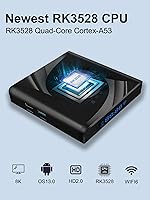
  • Chipset: Powered by a Rockchip RK3528 Quad-Core Cortex-A53 64-bit processor running at up to 2.0GHz, handling app loading and media decoding efficiently at this price tier.
  • GPU: Mali 450 MP2 graphics processor supports smooth 4K@60fps output under real-world conditions, though it is not capable of genuine 8K rendering.
  • RAM: 4GB of DDR3 RAM provides adequate headroom for multitasking across streaming apps and background processes without frequent full reloads.
  • Storage: 32GB eMMC ROM offers built-in app and system storage; eMMC write speeds are slower than UFS flash, which can be noticeable during heavy installs.
  • Operating System: Ships with Android 13.0, offering improved app compatibility, security patch coverage, and Google Play Store access compared to boxes still running Android 10 or 11.
  • Wi-Fi: Dual-band Wi-Fi 6 (802.11ax) supports both 2.4GHz and 5GHz bands, delivering faster throughput and better performance on congested home networks than older Wi-Fi 5 hardware.
  • Ethernet: RJ-45 wired network port delivers a maximum of 100Mbps actual throughput despite Gigabit labeling appearing on the product packaging and marketing materials.
  • Bluetooth: Bluetooth 5.0 enables wireless pairing of gamepads, keyboards, headsets, and other peripherals without requiring USB dongles.
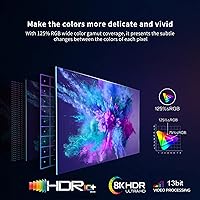
  • Video Decode: Hardware decoding supports H.265/HEVC, H.264/AVC, and VP9 formats at up to 4K@60fps, with HDR10 color processing for compatible displays.
  • HDR Support: HDR10 decoding is supported, providing improved color depth and contrast on HDR-capable TVs when streaming compatible content.
  • USB Port: One USB 3.0 port supports fast external storage devices such as thumb drives and portable hard drives for local media playback.
  • Video Output: Single HDMI port handles both audio and video output to TVs and monitors; no DisplayPort or analog output is included.
  • Dimensions: Measures 4.05 × 4.05 × 0.98 inches, making it compact enough to sit behind a TV, on a shelf, or in an entertainment unit without occupying significant space.
  • Weight: Weighs 4.2 oz, light enough to be repositioned easily or mounted behind a display with minimal additional hardware.
  • Expandable Storage: Internal storage can be supplemented via a microSD card slot or the USB 3.0 port for users with large local media libraries.
  • Media Formats: Supports a broad range of file formats including AVI, MKV, MOV, ISO, VOB, MP3, FLAC, AAC, and JPEG for local playback from external drives.
  • Remote Control: Ships with an IR remote for basic navigation; no backlight is included, and IR range requires relatively direct line-of-sight pointing to function reliably.

Related Reviews
GREVA RK3528 2GB 16GB Android TV Box
68%
74%
Value for Money
67%
Streaming Performance
83%
Setup & Ease of Use
81%
Wi-Fi & Connectivity
61%
Build Quality
More
RUPA PRO13 Android 13 TV Box
68%
83%
Value for Money
88%
Ease of Setup
71%
Streaming Performance
52%
RAM & Multitasking
63%
Build Quality
More
RUPA 4GB/32GB Android 11 TV Box
73%
81%
Value for Money
76%
Streaming Performance
88%
Connectivity
58%
App Ecosystem
79%
Setup & Ease of Use
More
GREVA PRO20 8GB/128GB Android TV Box
65%
71%
Value for Money
78%
Performance & Speed
84%
Storage & Memory
41%
App Compatibility
86%
Connectivity
More
IDEALROYAL X88PRO13 Android TV Box 4GB/32GB
73%
83%
Value for Money
78%
Streaming Performance
76%
Setup & Ease of Use
58%
App Ecosystem & Compatibility
71%
Build Quality & Design
More
ADDCOLOR R69PLUS (4GB/32GB)
66%
78%
Value for Money
84%
Ease of Setup
67%
Streaming Performance
41%
Netflix & DRM Compatibility
71%
Wi-Fi Stability
More
Sidiwen KP1 Android TV Box
74%
91%
Ease of Setup
74%
Streaming Performance
78%
Picture Quality
82%
Voice Remote Usability
86%
App Availability & Google Certification
More
Formuler Z11 Pro Max
79%
93%
IPTV Streaming Performance
91%
Network Connectivity
88%
Hardware Specifications
86%
4K & Video Quality
83%
Build Quality & Design
More
BOXY Android TV Streaming Box
76%
91%
Streaming Quality
88%
Local Media Playback
63%
Setup & Ease of Use
83%
Value for Money
67%
Performance & Speed
More
BuzzTV X5 Android TV Box
86%
91%
4K Streaming Quality
88%
Android OS Performance
92%
Value for Money
87%
Ease of Setup
83%
Parental Controls
More

FAQ

That depends on whether the device carries official Google Play certification, and this is where things get tricky. Without it, Netflix typically falls back to standard definition due to DRM licensing restrictions — that is a platform policy, not a hardware limitation. If HD Netflix is non-negotiable for you, a Widevine L1-certified device like a Fire Stick or Chromecast will be a safer bet.

It is genuine. Wi-Fi 6 (802.11ax) dual-band support is one of the more notable inclusions at this price point, and it does make a practical difference in busy households where multiple devices compete for bandwidth. The 5GHz band in particular offers noticeably more stable throughput than the Wi-Fi 5 chips found in comparably priced competitors.

Unfortunately, no. Despite the Gigabit label on the packaging, the spec sheet confirms actual throughput is capped at 100Mbps. For standard 4K streaming that is more than sufficient, but if you were planning to pull high-bitrate files from a NAS at full Gigabit speeds, that will not be possible with this device.

Practically speaking, no. The Mali 450 MP2 GPU is designed for up to 4K@60fps, and that is the realistic ceiling for this hardware. The 8K figure in the product title is a marketing claim that does not reflect genuine 8K output capability. That said, 4K HDR10 streaming and local playback both look solid on a compatible TV.

It is quite approachable. You plug in the HDMI and power cables, connect to your Wi-Fi network or Ethernet, sign in with a Google account, and you are essentially done. Android 13 walks you through the process clearly, and most buyers report being fully set up in under fifteen minutes. The included remote handles all the basics during initial configuration.

Yes, sideloading is supported. You can enable installation from unknown sources in the Android settings and load APK files for apps like Kodi, Plex, or Stremio. Just keep in mind that sideloaded versions of subscription services like Netflix and Disney+ will not stream in HD, since they bypass the DRM certification layer.

It is probably the most disappointing part of the overall package. The buttons feel soft and offer minimal tactile feedback, and there is no backlight, which makes it awkward to use in a dark home theater environment. The IR range also requires fairly direct line-of-sight pointing. Many owners pair a Bluetooth keyboard or replace it with a universal remote fairly quickly after setup.

It does run warm after a couple of hours of continuous playback, which is normal for a fanless device in a compact chassis. No widespread reports of thermal throttling or automatic shutdowns have surfaced, but placing it in an open, ventilated spot rather than inside an enclosed cabinet is the sensible precaution to take.

Android 13 and the pre-installed system apps will consume a portion of the 32GB, so in practice you can expect roughly 20 to 24GB of free space out of the box. If you plan to sideload several large apps or keep media files on the device itself, adding a USB drive or microSD card is the straightforward solution.

The trade-offs are real and worth understanding. This Android TV box gives you more flexibility — a full open Android OS, sideloading support, broad local media format playback, and Wi-Fi 6 — but certified streaming sticks from Amazon and Roku deliver tighter, more reliable integration with services like Netflix HD and Prime Video right out of the box. If you value customization, local file playback, and the freedom to install third-party apps, this media player is the stronger choice. If you just want plug-and-play certified streaming with minimal setup friction, the Fire Stick is probably simpler.