Overview

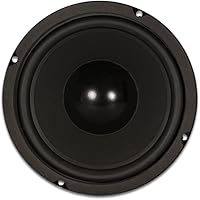
The Goldwood Sound GW-6024 6.5″ Replacement Woofer has been quietly earning its place in workshops and speaker cabinets since 2006 — a lifespan that says something real about its staying power in a crowded market. This isn't a driver chasing audiophile accolades; it's a practical, budget-conscious workhorse built for people who need a dependable replacement without overspending. With nearly 400 customer ratings averaging 4.4 stars, the GW-6024 has accumulated enough real-world feedback to paint a reliable picture. Expect solid mid-range performance at an accessible price point, not studio-grade transparency.
Features & Benefits

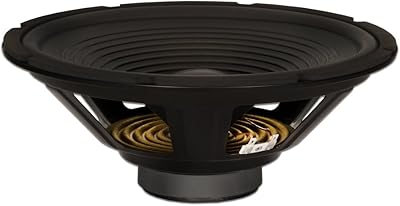
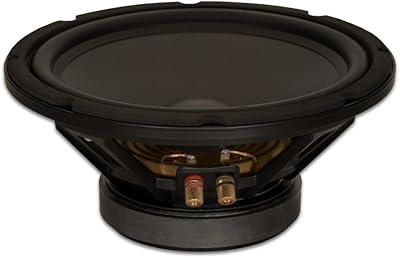
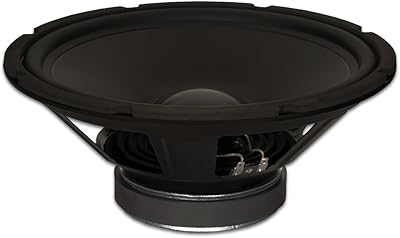
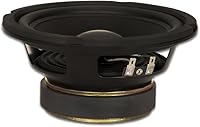
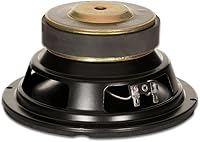
The butyl rubber surround is one of the GW-6024's most practical advantages — rubber simply outlasts foam over years of use and humidity cycles. The aluminum voice coil and hefty magnet assembly deliver the sensitivity and low-end punch you would want from a PA or DJ cabinet driver. Power handling sits around 90 watts continuous, which is the figure that actually matters day-to-day; the 170-watt headline is a momentary peak, not a sustained rating. The poly mica cone stays light without going floppy, helping maintain clean mid-bass clarity, while the vented pole piece does the unglamorous job of bleeding off heat during long sets.

Best For

This replacement driver is an obvious fit for anyone reviving a tired PA cabinet, karaoke system, or DJ rig without sinking serious money into the repair. DIY enclosure builders also have good reason to consider it — the specs are well-documented, the cutout diameter is predictable, and the mounting depth works for most standard boxes. Fixed-installation scenarios like background music in a retail space or rehearsal room are a natural home for it too. Where it falls short is in critical listening environments where tonal accuracy and imaging matter more than raw durability. This is a workhorse replacement, not a reference-grade transducer.

User Feedback

The drop-in fit consistently comes up as a highlight — buyers report that the published dimensions are accurate, which matters a lot when retrofitting an existing cabinet. Bass output earns real praise relative to price, with several users surprised by how much low end this 6.5-inch woofer can produce. That said, a recurring caution worth heeding is that the peak wattage is a ceiling, not a cruising altitude; pushing it hard and consistently will reveal its limits. Buyers building stereo pairs should also check sensitivity matching carefully, since individual units can vary slightly. Audiophile buyers tend to be less satisfied, though that crowd was never the intended audience.

Pros

  • Butyl rubber surround resists cracking and deterioration far longer than foam alternatives.
  • Published dimensions are accurate, making enclosure compatibility straightforward for repair and DIY work.
  • The GW-6024 has been on the market since 2006, giving it an unusually long and well-documented track record.
  • Bass output consistently impresses buyers relative to what this price tier normally delivers.
  • Vented pole piece helps manage heat during extended use, reducing the risk of voice coil damage over time.
  • Poly mica cone keeps the driver light and responsive without sacrificing structural rigidity.
  • Works across a wide range of applications — PA, karaoke, DJ, home audio, and fixed installation.
  • Nearly 400 real-world reviews provide a reliable picture of performance expectations before you buy.
  • Stamped steel frame keeps overall weight reasonable without compromising the mounting structure.

Cons

  • The headline 170-watt figure is a peak maximum, not a continuous rating — sustained high-volume use is more limited.
  • Sensitivity can vary slightly between individual units, complicating matched stereo pair builds.
  • Sold as a single unit, so stereo or multi-driver builds require separate orders and careful matching.
  • Not well-suited for detailed, accurate sound reproduction in critical listening or studio environments.
  • The stamped steel frame, while functional, lacks the rigidity of cast-frame alternatives in demanding pro applications.
  • Frequency response rolls off relatively early in the upper range, limiting usefulness as a full-range driver.
  • No bundled hardware or wiring accessories included, which adds a small extra step for first-time installers.
  • At 4 ohms impedance, compatibility should be confirmed carefully with amplifiers designed for 8-ohm loads.

Ratings

The scores below for the Goldwood Sound GW-6024 6.5″ Replacement Woofer were generated by our AI after analyzing verified purchase reviews from buyers worldwide, with spam, incentivized, and bot-flagged submissions actively filtered out. The results reflect a candid picture of where this replacement driver earns its reputation — and where it falls short — drawing equally from satisfied DIY builders and more critical buyers who pushed it harder than intended.
Value for Money
91%
Buyers consistently point to the GW-6024 as one of the better-performing drivers at this price tier, especially for cabinet repairs where spending significantly more than the cabinet itself is hard to justify. The output quality relative to cost surprises a lot of first-time buyers.
A handful of reviewers note that once you factor in the cost of a matching second unit for stereo builds, the per-pair value becomes slightly less compelling compared to some bundled alternatives. It remains strong value, but the single-unit pricing adds up.
Bass Response
78%
22%
For a mid-range replacement driver, the low-end output draws genuine praise from buyers restoring PA cabinets and karaoke rigs. The 20oz magnet assembly gives it enough punch to satisfy in moderate-volume environments where deep, clean bass is expected from a 6.5-inch driver.
At higher volumes, the bass can lose some tightness and definition, which is consistent with this driver's thermal and power limits. Buyers expecting the kind of controlled low-end punch associated with more expensive pro-audio drivers will notice the difference in a direct comparison.
Surround Durability
88%
The butyl rubber surround is one of the most frequently praised physical attributes across user reviews. Buyers who have owned foam-surround speakers before specifically call out how much more confident they feel about the long-term condition of this replacement driver holding up in garages, studios, and live venues.
There is limited long-term data from buyers using this driver in extreme outdoor temperature cycles. While butyl rubber outperforms foam in most conditions, a small number of users in very hot or humid climates report slightly accelerated surround softening after several years of heavy use.
Drop-in Fit Accuracy
93%
The published cutout and depth dimensions are consistently accurate according to buyers who dropped this replacement driver into existing enclosures — a detail that sounds minor but saves a lot of frustration during a repair job. Technicians and hobbyists alike flag this as one of the most trustworthy fitment specs they have encountered in this price range.
A small percentage of buyers with older or non-standard cabinets found that slight variations in their original enclosure's baffle thickness created minor fitment issues not related to the driver itself. This is an edge case, but worth measuring carefully before assuming a guaranteed fit.
Power Handling (Real-World)
67%
33%
At moderate listening levels — which covers most home audio, karaoke, and small-venue PA use cases — the GW-6024 handles its continuous power rating without strain. Users running it within sensible limits report consistent, stable output over long sessions.
The 170-watt headline creates expectations the driver cannot sustain continuously, and several reviewers who pushed their systems hard noticed audible compression and distortion before that ceiling was anywhere close to reached. The real-world ceiling is meaningfully lower than the marketing number implies.
Mid-Bass Clarity
74%
26%
The poly mica cone keeps the mid-bass response cleaner than many comparable drivers at this price point, which is noticeable on vocals and acoustic instruments when the driver is used as part of a properly crossed-over system with a tweeter handling the upper frequencies.
Used without a tweeter, the upper-midrange rolloff becomes apparent fairly quickly and vocals can sound noticeably muted. This is a woofer, not a full-range driver, and buyers who forget that distinction tend to be disappointed with the overall tonal balance.
Sensitivity
72%
28%
At 89dB SPL, this replacement driver produces a reasonable output level from a moderate amplifier, which works well in typical home audio and small-venue builds where amplifier power is not in excess. Buyers pair it successfully with affordable Class D amplifier boards without needing to push them hard.
For larger venues or systems where high efficiency is critical, 89dB sensitivity is on the lower end of what pro drivers typically deliver. Buyers comparing it against higher-sensitivity alternatives will need noticeably more amplifier power to reach equivalent loudness levels.
Heat Management
76%
24%
The vented pole piece does its job quietly and effectively during extended moderate-volume use. Several buyers who run fixed-installation backgrounds music systems report no issues with the driver running warm even after many hours of continuous operation.
During sustained high-output sessions — long DJ sets, for example — some users notice the driver running hotter than expected, suggesting the thermal management reaches its limits when the driver is consistently pushed toward its power ceiling. A brief cool-down period helps, but that is not always practical mid-event.
Build Quality
71%
29%
The stamped steel frame feels solid enough for typical installation use, and the overall assembly is consistent across units. For a budget replacement driver, the physical construction inspires confidence during handling and mounting.
The stamped steel frame is noticeably less rigid than the cast-frame alternatives used in higher-end pro drivers, and a few technically experienced buyers point this out as a meaningful limitation for demanding applications that involve heavy vibration or rough transport.
Sensitivity Matching (Pairs)
58%
42%
Buyers who ordered two units at the same time from the same seller generally report acceptable channel matching for home audio and moderate PA applications, particularly when the system is not optimized for critical stereo imaging.
Unit-to-unit sensitivity variance is a recurring complaint from buyers assembling matched stereo pairs. In systems where left-right balance matters — a home listening room or a vocal PA, for instance — small differences between individual units can require correction at the amplifier or processor level.
Installation Ease
87%
Standard speaker wire terminals and straightforward mounting hardware make installation accessible even for buyers without professional audio experience. The documentation is honest and clear, and the physical dimensions behave as listed, which removes most of the guesswork.
No mounting hardware or wiring accessories are included in the box, which catches occasional first-time installers off guard. It is a minor inconvenience, but buyers without a basic electronics toolkit nearby may need to make an extra trip before completing the installation.
Compatibility Range
83%
This replacement driver shows up in a genuinely wide range of applications across user reviews — PA columns, karaoke cabinets, custom home audio builds, car audio enclosures, and fixed retail installations. That breadth speaks to how flexible the standard dimensions and 4-ohm impedance are in practice.
The 4-ohm impedance does require attention when selecting an amplifier, and buyers using older or vintage equipment designed strictly for 8-ohm loads occasionally run into compatibility issues. It is a straightforward constraint, but one that catches inattentive buyers off guard.
Longevity & Track Record
86%
Having been available and continuously sold since 2006 gives the GW-6024 a credibility edge over newer, less-tested alternatives. Buyers who have used earlier units for years and are returning to order a replacement for a different cabinet specifically cite that prior experience as the reason they came back.
Long market presence also means the design has not been meaningfully updated to reflect advances in driver technology over nearly two decades. Buyers comparing it against modern drivers at a similar price may find that newer options offer improved specifications for the same outlay.
Suitability for Audiophile Use
39%
61%
Within the very narrow scope of buyers who explicitly acknowledge this is a budget utility driver and have calibrated expectations accordingly, satisfaction remains reasonable. A few technically savvy reviewers use it as a learning driver for crossover and enclosure experimentation where tonal accuracy is secondary.
For anyone prioritizing flat frequency response, precise imaging, or the kind of tonal transparency expected in reference listening environments, this replacement driver falls well short. Critical listening tests consistently expose its limitations in upper-midrange accuracy and dynamic resolution compared to drivers designed for audiophile applications.

Suitable for:

The Goldwood Sound GW-6024 6.5″ Replacement Woofer is a strong match for anyone whose primary goal is getting a reliable, compatible driver into an existing cabinet without a lot of fuss or expense. Repair technicians who regularly service PA columns, karaoke systems, or DJ monitors will appreciate how consistently the published dimensions hold up in real enclosures, making drop-in replacements genuinely straightforward. Home audio hobbyists building custom enclosures on a budget will find the GW-6024 a well-documented, proven starting point — the specs are honest and the driver has enough of a track record to plan around confidently. Fixed-installation scenarios like a rehearsal room, a small venue, or a retail background music system are also a natural fit, where durability and consistent output matter more than pinpoint tonal accuracy. If you need a workhorse 6.5-inch driver that will hold up over time without requiring a premium investment, this replacement driver checks the right boxes.
Not suitable for:

The Goldwood Sound GW-6024 6.5″ Replacement Woofer is not the right choice for buyers chasing audiophile-grade sound reproduction or critical listening accuracy. If you are building a high-fidelity bookshelf speaker, a studio reference monitor, or any system where tonal neutrality and imaging precision are priorities, this replacement driver will leave you wanting more. The 170-watt figure printed on the box is a momentary peak ceiling, not a sustained rating, so buyers who plan to run a system hard for extended periods — think long outdoor events or loud club environments — may find the driver working closer to its thermal limits than expected. Buyers assembling stereo pairs from scratch should also be aware that unit-to-unit sensitivity can vary slightly, which may require additional matching effort. This is fundamentally a practical, budget-tier driver, and asking it to perform like a component costing several times more will only lead to disappointment.
Specifications

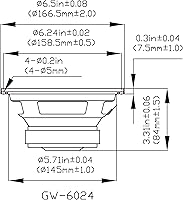
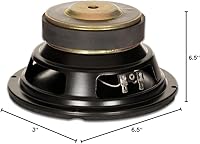
  • Driver Size: The woofer measures 6.5 inches in overall diameter, with a mounting cutout requirement of 5.71 inches.
  • Power Handling: Rated at 90 watts RMS for continuous use and 170 watts peak for brief transient bursts.
  • Impedance: Nominal impedance is 4 ohms, which should be confirmed compatible with your amplifier before installation.
  • Frequency Response: Covers a range from 29Hz up to 4,800Hz, making it suited for woofer and mid-bass duties rather than full-range use.
  • Sensitivity: Rated at 89dB SPL, meaning a moderate input signal will produce a reasonably loud output in a properly tuned enclosure.
  • Voice Coil: Features a 1.5-inch aluminum voice coil, which keeps moving mass low while offering good thermal conductivity during sustained playback.
  • Magnet Assembly: Uses a 20oz magnet with a bumper plate, providing solid motor strength for low-end output and driver control.
  • Surround Material: Butyl rubber surround offers superior longevity compared to foam, resisting cracking and stiffening across temperature and humidity extremes.
  • Cone Material: The cone is constructed from poly mica, balancing stiffness and low mass for cleaner mid-bass reproduction.
  • Frame Construction: Stamped steel basket keeps overall weight down while providing adequate rigidity for standard cabinet installations.
  • Pole Piece: Vented pole piece design allows heat to escape from the voice coil gap, reducing thermal compression during extended high-volume use.
  • Mounting Depth: Requires a minimum cabinet depth clearance of 3.01 inches behind the baffle for proper installation.
  • Item Weight: The driver weighs 3.3 pounds, which is typical for a woofer in this size and magnet class.
  • Connectivity: Connects via standard speaker wire terminals; no proprietary connectors or adapters are required.
  • Unit Count: Each listing covers a single driver; buyers needing stereo pairs or multi-driver arrays must order accordingly.
  • Warranty: Covered by a limited manufacturer warranty from Goldwood Sound, Inc.; specific terms should be confirmed directly with the manufacturer.
  • Origin: Designed and engineered in the USA by Goldwood Sound, Inc., a brand with a documented presence in the pro audio replacement market since 2006.

Related Reviews

Goldwood Sound GW-212/8 12-inch Replacement Woofer
77%
91%
Value for Money
78%
Bass Output
88%
Fitment Accuracy
72%
Build Quality
58%
Foam Surround Durability
More
Goldwood Sound GW-10PC-8 10″ Woofer 400 Watts 8 Ohm Replacement Speaker
87%
93%
Bass Performance
89%
Build Quality & Durability
88%
Ease of Installation
85%
Power Handling
90%
Sound Clarity
More
Audison AP6.5 Prima Series 6.5-inch Woofers
80%
93%
Midrange Sound Quality
54%
Bass Extension
88%
Sensitivity & Efficiency
91%
Build Quality & Materials
67%
Fitment & Compatibility
More
CT Sounds TROPO-6.5-D2 6.5″ Car Subwoofer
77%
83%
Bass Output for Size
88%
Value for Money
79%
Build Quality
76%
Thermal Management
84%
Installation Ease
More
CT Sounds Meso-6.5-D4 6.5 Inch Dual 4 Ohm Car Subwoofer
83%
90%
Bass Performance
85%
Power Handling
88%
Build Quality
65%
Installation Ease
92%
Cooling System Effectiveness
More
Goldwood GW-1244 12-inch Replacement Subwoofer
80%
88%
Build Quality
82%
Bass Performance
85%
Power Handling
86%
Value for Money
89%
Surround Durability
More
Goldwood GW-1248 12″ Replacement Subwoofer Speaker
79%
88%
Build Quality
91%
Surround Durability
86%
Value for Money
74%
Enclosure Compatibility
79%
Bass Performance
More
Earthquake Sound FF6.5 6.5-Inch Subwoofer
73%
62%
Bass Performance
79%
Sound Quality
73%
Build Quality
69%
Value for Money
87%
Ease of Setup
More
Pyramid WX65X 6.5-inch Car Woofer Speaker
70%
83%
Value for Money
74%
Bass Output
67%
Sound Clarity
88%
Installation Ease
62%
Build Quality
More
Pyle PLG64 6.5-inch Car Mid Bass Woofer
73%
91%
Value for Money
78%
Bass & Midrange Output
74%
Build Quality
88%
Installation Ease
63%
Durability Over Time
More

FAQ

In most cases, yes. The cutout diameter is 5.71 inches and the mounting depth is just over 3 inches, which aligns with the majority of standard 6.5-inch enclosures. That said, always measure your cabinet's baffle hole and internal depth before ordering, since cabinet dimensions can vary between manufacturers.

RMS wattage is the continuous power the driver can handle reliably over time — it is the number that matters for real use. The 170-watt figure is a momentary peak that the driver can absorb in short bursts, not something you should expect it to sustain. For most DJ monitors, PA cabinets, or home audio builds running a reasonably powered amplifier, 90 watts RMS offers plenty of headroom.

This replacement driver is a 4-ohm unit, so pairing it with an amplifier designed strictly for 8-ohm loads can cause the amp to run hotter than intended and may void its warranty. Check your amplifier's manual to see whether it supports 4-ohm operation before wiring this driver in. Many modern amplifiers handle both impedances fine, but it is worth confirming first.

For longevity, yes — noticeably so. Foam surrounds are prone to crumbling and delaminating within a decade, especially in humid environments. Butyl rubber holds up significantly longer without hardening or cracking, which is a meaningful advantage for a replacement driver you are expecting to last.

Not ideally. The Goldwood Sound GW-6024 6.5″ Replacement Woofer rolls off around 4,800Hz, so pairing it with a tweeter is strongly recommended for any build where you want to hear upper midrange and treble clearly. Used alone, voices and instruments will sound dull and lacking in clarity above the mid-bass region.
Ordering both at the same time from the same batch is the better approach when matching is important. A small amount of unit-to-unit variance in sensitivity is normal for drivers at this price tier, and buying from the same production run reduces — though does not eliminate — any differences. If sensitivity matching is critical for your build, testing each driver before final installation is a smart step.

Fairly straightforward, honestly. The driver uses standard speaker wire connections, the mounting dimensions are clearly documented, and the stamped steel frame accepts typical mounting screws without fuss. If you can handle a screwdriver and basic wiring, replacing a driver in a cabinet is a manageable weekend job.

It can work in those environments, but with realistic expectations. This replacement driver is not weatherproof and is not built to the same thermal or mechanical tolerance as purpose-built professional outdoor drivers. For occasional live use at moderate volumes it is reasonable, but sustained high-output outdoor events are better served by a more robust pro audio driver.

The GW-6024 is used across all three enclosure types by different builders, though a ported design tends to complement its low-frequency extension best given the driver's lower frequency response. Goldwood does not publish official Thiele-Small parameters for this specific model publicly, so if you need to run precise enclosure calculations, you may want to measure the driver directly or contact Goldwood's technical support.

This 6.5-inch woofer has been available since 2006, which is genuinely notable for a driver in its price bracket. Longevity in the market typically means the manufacturer has worked out early production issues and that a body of real-world user experience exists to draw on. The large number of reviews is a direct result of that time in market, and it gives buyers a much clearer picture of what to expect than a newer, less-tested product would.