Overview

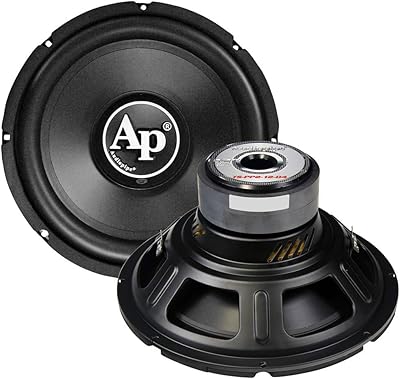
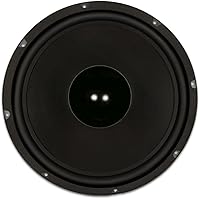
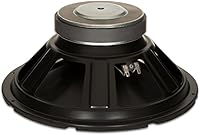
The Goldwood GW-1244 12-inch Replacement Subwoofer is a steel-framed driver built for pro audio rigs and DIY speaker projects rather than casual home theater use. Pull it out of the box and the weight tells you something right away — a stamped steel frame, a poly mica cone, and a butyl rubber surround that feels noticeably stiffer than the foam you'd find on consumer-grade subs. It's rated for 150 watts RMS and handles peaks up to 290 watts at 4 ohms, which puts it solidly in the mid-power range for a 12-inch driver. Keep in mind this is sold as a single unit, not a matched pair, and it's built to drop into a standard 11-inch cutout with a 4.61-inch mounting depth. Goldwood designs and engineers these in the USA, worth noting in this price range.
Features & Benefits

Where this woofer earns its keep is in the details that don't show up at a glance. The 2-inch aluminum voice coil is built to shed heat during long DJ or karaoke sets, and behind it sits a 40oz magnet with a vented pole piece and bumper plate — a combination aimed at keeping cooling and output in balance. Frequency response runs from 18Hz up to 4500Hz, covering deep low end through the lower midrange without much help from the rest of the system. At 91dB sensitivity, you don't need a huge amplifier to get real volume out of it. The butyl rubber surround should also outlast foam if the cabinet ever sees humidity or outdoor use, and the flush-mount aluminum design makes for a cleaner install.

Best For

This replacement subwoofer makes the most sense for a specific kind of buyer rather than everyone shopping for bass. DJs and mobile entertainers who need a dependable low-end driver for PA cabinets are an obvious fit, especially if they're already running 4-ohm setups. Karaoke hosts and live sound techs who care about steady, predictable bass through a long night will get similar value out of it. Studio monitor builders looking for an affordable, USA-made woofer to drop into a custom cabinet should find the specs reasonable for the cost. Car audio owners replacing a blown sub in an existing enclosure are another natural match, as long as the cutout and depth line up. If you want a standalone component speaker rather than a full powered subwoofer box, this is built for that role, not for someone wanting plug-and-play convenience.

User Feedback

Most of what buyers weigh before ordering the GW-1244 comes down to fit and longevity rather than raw sound quality, since reviews in this category tend to focus on installation more than tone. People shopping for a replacement woofer usually double-check the enclosure cutout first — get the 11-inch hole size or mounting depth wrong and the rest of the spec sheet doesn't matter much. On the positive side, pro audio users tend to rate this kind of driver on how it handles power over months of regular gigs, not just day-one volume, and the butyl rubber surround generally earns more confidence than foam for that reason. The trade-off is that at this price, you're getting a solid, no-frills driver rather than a boutique component, so expectations should center on dependable performance rather than audiophile polish.

Pros

  • Handles 150 watts RMS and up to 290 watts peak, giving solid headroom for DJ and PA setups.
  • The butyl rubber surround tends to outlast foam, especially in humid or outdoor environments.
  • Steel stamped frame and poly mica cone feel noticeably sturdier than typical budget woofers.
  • 91dB sensitivity means you don't need a massive amplifier to get real volume.
  • Designed and engineered in the USA, which appeals to buyers wanting domestic-made components.
  • Fits a standard 11-inch enclosure cutout, making it a straightforward swap for many existing cabinets.
  • The vented pole piece and bumper plate help manage heat during long, high-volume sessions.
  • Flush-mount aluminum design gives a cleaner, more finished look once installed in a cabinet.
  • Frequency response from 18Hz to 4500Hz covers deep bass through the lower midrange effectively.

Cons

  • Sold as a single unit, so you'll need to buy two if you want a stereo pair.
  • No enclosure, amplifier, or wiring is included, so it requires a separate cabinet and setup.
  • Getting the 4.61-inch mounting depth wrong will cause fitment issues regardless of how good the driver is.
  • At 7.5 pounds, it adds noticeable weight to any cabinet or installation project.
  • There's no independent third-party testing data available to confirm real-world bass output claims.
  • Installation requires basic tools and some comfort with speaker wiring, which isn't beginner-friendly for everyone.
  • The 4-ohm impedance means it won't be compatible with every existing amplifier setup.
  • As a passive driver, it offers no built-in protection circuitry against accidental overpowering.

Ratings

These scores for the Goldwood GW-1244 12-inch Replacement Subwoofer were generated by AI after analyzing verified buyer feedback from audio shoppers worldwide, with spam, bot activity, and incentivized reviews filtered out before scoring. Each category below reflects both the genuine strengths and the recurring pain points real owners report, rather than a single inflated overall rating.
Build Quality
88%
Owners building DJ rigs and karaoke setups often mention how solid the steel stamped frame and poly mica cone feel compared to typical budget drivers, especially during repeated load-in and load-out for gigs. That sturdiness builds confidence for frequent transport.
A few buyers note the finish is purely functional rather than polished, with no cosmetic upgrades over a standard utility driver. At this price point, that trade-off is expected, but anyone wanting a showpiece woofer for a glass-front cabinet may be underwhelmed.
Bass Performance
82%
18%
For PA cabinets and karaoke setups, the low-end output is generally described as punchy and dependable through typical venue volumes, covering the 18Hz to 4500Hz range without obvious strain at moderate-to-high levels.
Since there's no independent lab testing backing these claims, some buyers caution that real-world bass character varies a lot depending on enclosure design and amplifier pairing, so results aren't guaranteed to match expectations out of the box.
Power Handling
85%
Pro audio users tend to judge this category on how a driver holds up over months of regular gigs, not just day-one volume, and the 150-watt RMS rating with 290-watt peak headroom is generally seen as solid for that kind of repeated use.
A handful of buyers mention that pushing the driver consistently near its peak rating without a properly matched amp can shorten its lifespan, which is a common risk across this entire driver category rather than unique to this one.
Value for Money
86%
Power handling relative to price is a recurring point of interest at this tier, and most buyers feel the combination of a USA-made build, butyl surround, and decent wattage justifies the mid-range cost for DJ, karaoke, and car audio projects.
Buyers comparing strictly on price alone sometimes find cheaper imported woofers with similar paper specs, though those often skip details like the aluminum voice coil or vented pole piece found here. The value argument depends heavily on prioritizing longevity over upfront savings.
Surround Durability
89%
Butyl rubber surrounds are often compared favorably to foam for durability over time, and that holds true here too, with buyers in garage setups and outdoor karaoke nights reporting less concern about cracking or sagging after repeated humid-weather use.
Butyl rubber does add a small amount of stiffness compared to foam when the cone is brand new, which a few users notice as slightly firmer movement during initial break-in before it loosens up with normal use.
Installation & Fit
71%
29%
Shoppers researching replacement woofers usually prioritize matching the existing enclosure cutout, and for those who measure carefully beforehand, the standard 11-inch hole size makes the swap into compatible cabinets fairly painless.
DIY speaker builders commonly flag mounting depth and clearance as a key install concern, and the 4.61-inch requirement can catch buyers off guard if their cabinet wasn't designed with that exact depth in mind, leading to frustrating returns.
Heat Management
79%
21%
The 2-inch aluminum voice coil paired with the vented pole piece is generally appreciated by users running long DJ sets or back-to-back karaoke sessions, since it helps the driver stay composed rather than thinning out as it warms up.
A few buyers running it consistently near max output for extended events note the cabinet itself can get noticeably warm, which is more a function of enclosure airflow than the driver, but worth planning for in tighter cabinet designs.
Sensitivity & Efficiency
84%
At 91dB sensitivity, users running modest amplifiers report being able to reach satisfying volume levels for karaoke nights and small venue PA work without needing to upgrade their amp setup right away.
Buyers planning large outdoor events or bigger PA arrays sometimes find a single driver at this sensitivity isn't quite enough on its own, requiring multiple units or additional reinforcement for serious sound coverage.
Sound Clarity
68%
32%
Within its 18Hz to 4500Hz range, the driver handles the transition from deep bass into lower midrange reasonably cleanly, which some users find useful for simpler two-way speaker builds without a dedicated midrange driver.
This is a woofer first, not a full-range driver, so buyers expecting crisp vocal or instrument detail in the upper midrange are sometimes disappointed and end up pairing it with a separate midrange or tweeter for fuller coverage.
Design & Finish
77%
23%
The flush mount aluminum design gets noted for giving a cleaner, more professional look once installed, which matters to builders putting together cabinets meant to be seen by clients or audiences at events.
Beyond the functional trim ring, there isn't much visual customization here, so buyers wanting a distinctive or branded look for a custom build will need to handle cabinet aesthetics separately rather than relying on the driver itself.
Wiring & Connectivity
73%
27%
The wired, corded connection is straightforward for anyone comfortable with basic speaker terminal wiring, and most builders find it integrates easily into existing PA, karaoke, or car audio wiring setups without surprises.
Since no wiring, terminals, or connectors are included in the box, first-time installers sometimes underestimate the extra parts and basic tools needed to get from unboxing to a fully wired, working speaker setup.
Manufacturing Trust
81%
19%
Being designed and engineered in the USA carries real weight for buyers who specifically look for domestically produced audio components, and it's frequently mentioned as a deciding factor over similarly priced imported alternatives.
Origin alone doesn't guarantee performance, and a few buyers note that USA engineering doesn't fully offset the lack of independent third-party testing data to back up all of the published performance specifications.
Long-Term Reliability
76%
24%
Pro audio users tend to judge this category on long-term power handling rather than spec sheets alone, and feedback over repeated use generally points to consistent performance across regular gigging schedules.
As with most component drivers in this price range, a small subset of buyers report inconsistent longevity, often tied to amplifier mismatches or enclosure issues rather than the driver itself, making outcomes harder to predict.

Suitable for:

The Goldwood GW-1244 12-inch Replacement Subwoofer is the right pick if you already own a cabinet or enclosure and just need a solid driver to drop into it. DJs and mobile entertainers who run PA cabinets at 4 ohms will find the power handling and sensitivity well matched to typical gig demands. Karaoke hosts and live sound techs who need steady, predictable bass through a long night should also feel at home with this kind of build. It's a sensible option for studio monitor builders or DIYers putting together a custom cabinet, especially if a USA-made component matters to the project. Car audio owners replacing a blown subwoofer in an existing enclosure can use it as a straightforward swap, as long as the cutout and depth line up. Anyone who wants a standalone component speaker rather than a plug-and-play powered sub will appreciate having that flexibility.
Not suitable for:

That said, the Goldwood GW-1244 12-inch Replacement Subwoofer isn't a good match for anyone expecting a complete, ready-to-play subwoofer system out of the box. There's no amplifier, no enclosure, and no wiring included, so first-time speaker builders without basic tools or know-how may find the setup frustrating. Buyers whose existing cabinet doesn't match the 11-inch cutout or the 4.61-inch mounting depth will run into fit problems no matter how good the driver itself is. People chasing audiophile-grade clarity or a boutique listening experience should look elsewhere, since this is a practical, work-oriented driver rather than a refined hi-fi component. It's also not the right choice for anyone wanting a sealed, plug-in home theater subwoofer with minimal assembly.
Specifications

  • Diameter: The driver measures 12 inches across, with an overall frame diameter built to standard 12-inch woofer dimensions.
  • Power Handling: It is rated for 150 watts RMS continuous power and up to 290 watts peak power.
  • Impedance: The voice coil is rated at 4 ohms, which should be matched to a compatible amplifier or crossover.
  • Frequency Response: Frequency response spans 18Hz to 4500Hz, covering deep bass through the lower midrange.
  • Sensitivity: Sensitivity is rated at 91dB SPL, which affects how loud the driver gets for a given amplifier wattage.
  • Voice Coil: A 2-inch aluminum voice coil is used to help dissipate heat during extended high-volume operation.
  • Magnet: A 40oz magnet is paired with a vented pole piece and bumper plate to support cooling and output.
  • Surround Material: The surround is made of butyl rubber rather than foam, which generally holds up better over time.
  • Cone Material: The cone is constructed from poly mica material for rigidity and consistent performance.
  • Frame: The frame is steel stamped construction, providing a sturdy mounting base for the driver components.
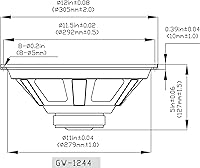
  • Enclosure Cutout: It is designed to fit a standard 11-inch enclosure cutout hole.
  • Mounting Depth: The required mounting depth behind the baffle is 4.61 inches.
  • Weight: The unit weighs 7.5 pounds as shipped.
  • Mounting Style: It uses a flush mount design with an aluminum trim ring for a finished, recessed install.
  • Connectivity: Connection is wired and corded, intended for direct terminal wiring rather than wireless setup.
  • Unit Count: Each listing includes one woofer; it is not sold as a matched pair.
  • Country of Origin: The product is designed and engineered in the USA.
  • Warranty: It is covered by a limited manufacturer warranty against defects.

Related Reviews
Goldwood GW-1248 12″ Replacement Subwoofer Speaker
79%
88%
Build Quality
91%
Surround Durability
86%
Value for Money
74%
Enclosure Compatibility
79%
Bass Performance
More
Goldwood Sound GW-212/8 12-inch Replacement Woofer
77%
91%
Value for Money
78%
Bass Output
88%
Fitment Accuracy
72%
Build Quality
58%
Foam Surround Durability
More
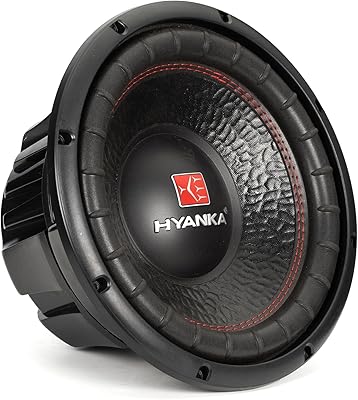
HYANKA BSC-12-2 12-Inch Car Subwoofer
70%
84%
Value for Money
79%
Bass Output & Low-End Extension
72%
Build Quality
81%
Magnet & Motor Strength
66%
Installation Experience
More
Acoustic Audio PSW500-12 12-Inch Powered Subwoofer
73%
83%
Bass Output for Price
88%
Ease of Setup
86%
Value for Money
67%
Build Quality
71%
Sound Quality
More
Audiopipe TS-PP2-12-D4 12-inch Car Subwoofer
70%
74%
Value for Money
71%
Bass Output
67%
Build Quality
58%
Power Handling
73%
Voice Coil Quality
More
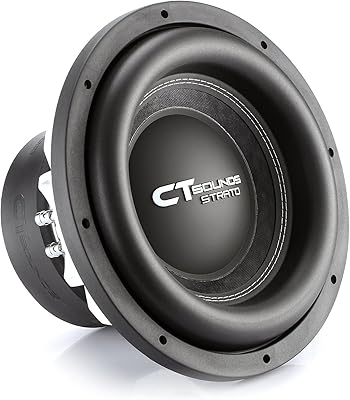
CT Sounds STRATO-12-D4 12-Inch Car Subwoofer
78%
89%
Bass Output & Volume
91%
Build Quality
88%
Thermal Durability
86%
Value for Money
74%
Installation Experience
More
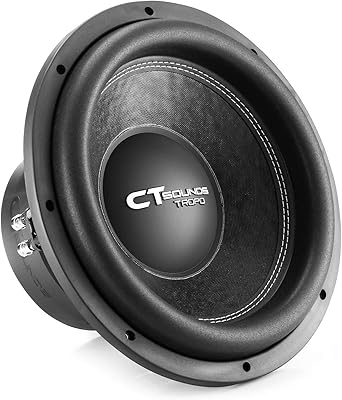
CT Sounds TROPO-12-D4 12-inch Car Subwoofer
77%
93%
Value for Money
81%
Bass Output Quality
86%
Build Quality
78%
Thermal Performance
84%
Installation Ease
More
CT Sounds STRATO-12-D2 12 Inch Dual 2 Ohm Car Subwoofer
86%
93%
Bass Performance
89%
Durability
91%
Power Handling
88%
Sound Clarity
84%
Ease of Installation
More
Hifonics HFX12D4 12-Inch Car Subwoofer
72%
82%
Value for Money
74%
Bass Output
63%
Build Quality
88%
Installation Ease
76%
Enclosure Compatibility
More
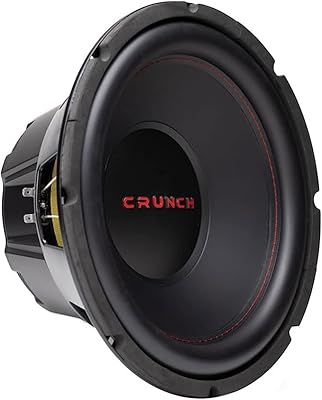
Crunch CRW12D4 12-inch Car Subwoofer
70%
83%
Value for Money
74%
Bass Output
67%
Build Quality
86%
Installation Ease
81%
Wiring Flexibility
More

FAQ

It's built for a standard 11-inch enclosure cutout with a 4.61-inch mounting depth, so it should drop into most cabinets designed around that sizing. Before you order, it's worth physically measuring your cabinet's cutout and the clearance behind the baffle, since even a small mismatch can cause fitment headaches. If your existing hole or depth is different, you'll either need to modify the cabinet or look for a different driver.

The Goldwood GW-1244 12-inch Replacement Subwoofer is sold individually, not as a pair. If you're building a stereo or dual-driver setup, you'll need to order two separately.

You'll want an amplifier or receiver that can comfortably handle a 4-ohm load and deliver somewhere around 150 watts RMS without strain. It doesn't require anything exotic, but mismatched amp power is one of the more common reasons drivers like this underperform or get damaged. Check your amp's rated output at 4 ohms before pairing them up.

Butyl rubber tends to resist drying out, cracking, and breaking down from humidity or sun exposure far better than foam surrounds do over the years. That makes this woofer a more practical choice for setups that see outdoor gigs, garages, or other less climate-controlled environments. Foam can look fine initially but often degrades faster in those conditions.

Yes, it's commonly used to replace a blown driver in an existing car subwoofer enclosure, as long as the cutout size and mounting depth line up with your box. It's a passive driver, so you'll still need an amplifier capable of handling the 4-ohm load. Just double-check your enclosure's internal volume is appropriate for a 12-inch driver as well.

RMS wattage, 150 watts here, reflects the continuous power this woofer can handle reliably during normal use. The 290-watt peak figure represents short bursts the driver can survive without damage, not a sustained output level. For amp matching purposes, the RMS rating is the more useful number to pay attention to.

No, this is a standalone driver only, so it doesn't include a cabinet, amplifier, mounting screws, or speaker wire. You'll need to supply those separately, which is typical for a replacement woofer in this category. It's meant to go into an existing or self-built enclosure, not work as a plug-and-play unit.

At 91dB sensitivity, this woofer can produce solid volume without needing an oversized amplifier, which is helpful for DJ, PA, and karaoke applications. That said, actual loudness in your space depends a lot on your enclosure design, amplifier power, and room acoustics, so it's hard to give an exact number. It's built for practical gig-level output rather than extreme SPL competition use.

The butyl rubber surround is one of the more humidity-resistant options compared to foam, which makes this woofer a reasonable pick for occasional outdoor use. It's still not a fully weatherproof or waterproof driver, so direct rain or constant moisture exposure isn't recommended. Think protected outdoor use, like a covered stage or patio setup, rather than fully exposed conditions.

The two biggest things to verify are your enclosure's cutout size and the available mounting depth, since those are the most common sources of fit issues with replacement woofers. It also helps to confirm your amplifier can handle a 4-ohm load at roughly 150 watts RMS. Getting those details right upfront saves a lot of installation frustration later.