
Overview

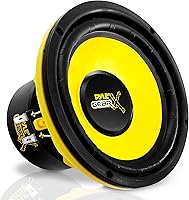
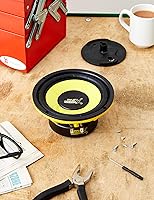
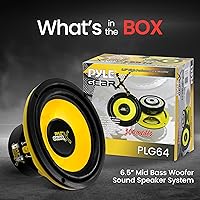
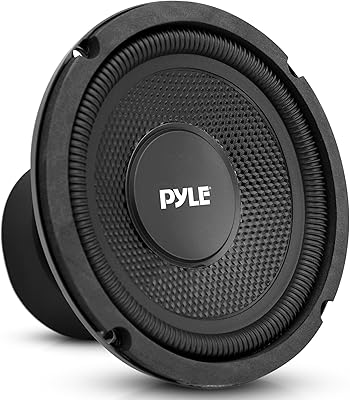
The Pyle PLG64 6.5-inch Car Mid Bass Woofer has been around since 2005, which says something about its staying power in a market that churns through products constantly. It occupies a clear niche: an affordable upgrade for anyone tired of flat, lifeless factory speaker sound but not ready to spend serious money on a boutique component set. That yellow polypropylene cone is immediately recognizable and has its own following among enthusiasts who run open or transparent grilles. One important note before buying — this Pyle woofer is sold as a single unit, so you will need to order two for a standard stereo installation. It drops into most standard 6.5-inch door cutouts without drama.

Features & Benefits

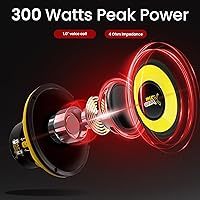
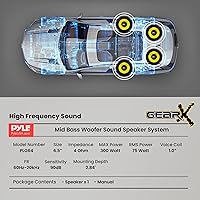
The PLG64 carries a 300-watt peak power rating, but the number that actually matters for everyday driving is the continuous RMS figure, which is considerably lower — so match it with a modest amplifier rather than trying to push it hard. What stands out mechanically is the 30-ounce magnet, genuinely heavy for a driver at this price point, and it translates to tighter, more controlled bass punch. The butyl rubber surround is a real advantage over foam; it resists cracking and aging far better over years of use. Frequency coverage runs from 60Hz up to 5kHz, making this mid-bass driver a complement to a tweeter rather than a standalone solution.

Best For

This mid-bass driver makes the most sense for DIY car audio builders who are stepping up from factory speakers for the first time and want real performance gains without a complicated installation. The shallow mounting depth — under three inches — means it fits comfortably in most door panels where space is genuinely tight. It works especially well as part of a component system alongside a dedicated tweeter and passive crossover, handling the punch in bass-heavy genres like hip-hop or EDM without straining. Buyers running a head unit or a modest amp with standard 4-ohm outputs will find it easy to drive and forgiving to configure.

User Feedback

Among the thousands of reviews the PLG64 has accumulated over nearly two decades, the clearest theme is that buyers feel they got more than they paid for. Installation ease comes up constantly — most people report a clean drop-in fit for standard door locations with no modifications needed. On the critical side, some owners who pushed the driver hard at high volume over extended periods have reported inconsistent longevity. A few reviewers note that used as a standalone full-range speaker without a crossover, it sounds thin at the top end. Used correctly within a component setup, though, the feedback tilts solidly positive.

Pros

  • Genuine mid-bass punch that far outperforms typical factory-installed speakers at a comparable price point.
  • The 30-ounce magnet delivers tighter, more controlled low-end response than lighter budget drivers usually manage.
  • Butyl rubber surround resists aging and cracking far better than foam surrounds found on similarly priced competitors.
  • Fits most standard 6.5-inch door locations without modifications, making installation straightforward for beginners.
  • The shallow 2.84-inch mounting depth works well in tight door panels where space is genuinely restricted.
  • Universal 4-ohm impedance plays nicely with virtually any aftermarket head unit or amplifier on the market.
  • The yellow cone is a genuine visual talking point for builds with open or transparent grilles.
  • Nearly two decades of real-world user reviews give buyers a reliable, honest picture of long-term performance.
  • Value-to-performance ratio consistently earns praise from first-time upgraders who are new to car audio builds.

Cons

  • Sold as a single unit, so buyers must remember to order two for a basic stereo setup — easy to overlook.
  • Peak power rating is heavily inflated relative to the actual continuous handling capacity, which can mislead newcomers.
  • Not well-suited as a standalone full-range speaker; sounds noticeably thin at higher frequencies without a tweeter.
  • Long-term durability at sustained high volume is inconsistent, with some owners reporting degradation over extended use.
  • This mid-bass driver does not extend low enough to replace a subwoofer in bass-focused audio systems.
  • The yellow cone aesthetic, while distinctive, is not for everyone and can clash with certain interior styles.
  • No crossover is included, so buyers running a component setup need to factor in that additional purchase separately.
  • Budget construction tolerances mean unit-to-unit consistency can vary slightly, which matters when matching a stereo pair.

Ratings

The Pyle PLG64 6.5-inch Car Mid Bass Woofer has accumulated a substantial body of real-world buyer feedback over nearly two decades, and our AI scoring engine has analyzed verified global reviews — actively filtering out incentivized, bot-generated, and spam submissions — to produce the category scores below. The results reflect an honest picture of where this driver genuinely delivers and where it falls short, so you can make a confident decision based on what actual owners experienced rather than marketing claims.

Value for Money
91%
Buyers across skill levels consistently describe this as one of the better-performing drivers they have found at its price tier. For someone upgrading a daily driver or a first car audio build, the improvement over factory speakers is tangible enough to feel like a smart spend.
The value equation works best when expectations are calibrated correctly. Buyers who approach it expecting performance closer to premium component drivers tend to feel let down, which skews a subset of otherwise reasonable reviews negatively.
Bass & Midrange Output
78%
22%
In practical listening scenarios — hip-hop on a highway commute or EDM during a road trip — the PLG64 delivers a satisfying punch in the mid-bass region that factory paper-cone drivers simply cannot match. The heavy magnet assembly gives the low end more grip and definition than competing budget options.
This is not a subwoofer, and buyers who forget that distinction are often disappointed. Below 60Hz the driver rolls off, so genres that rely on deep sub-bass need a dedicated woofer to complete the system. As a standalone speaker without a tweeter, the top end also sounds noticeably thin.
Build Quality
74%
26%
The butyl rubber surround is a genuine quality callout at this price — it outlasts foam surrounds in heat and humidity, which matters in a car environment. The 30-ounce magnet gives the unit a solid, substantial feel that instills more confidence than the price tag alone would suggest.
The plastic basket and budget-tier assembly tolerances mean this is not a driver built for abuse. A handful of long-term owners report that sustained high-volume use accelerates wear, and unit-to-unit consistency can vary enough that matching a stereo pair perfectly is not guaranteed.
Installation Ease
88%
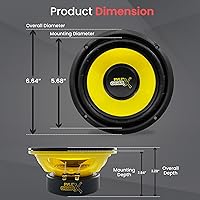
The 2.84-inch mounting depth and standard 5.68-inch cutout diameter mean this Pyle woofer drops cleanly into the vast majority of factory 6.5-inch door locations without any modification. First-time installers regularly call out how straightforward the process is, needing only basic trim tools and a screwdriver.
The one consistent frustration is that the product ships as a single unit, and buyers who do not notice that detail end up having to make a second order before they can finish the install. The wiring terminals are functional but not the most robust connection points for frequent removal or adjustment.
Durability Over Time
63%
37%
For casual to moderate listening habits, the majority of owners report no significant issues over the first year or two of ownership. The rubber surround holds up far better than foam-edged alternatives in hot car interiors, and most short-to-medium term users are satisfied with the longevity.
The long-term picture is less consistent. Owners who run the driver hard at high volumes over extended periods report performance degradation and occasional driver failure. The gap between peak power claims and real-world continuous handling capacity is where most durability complaints originate.
Sound Clarity
71%
29%
Within its intended operating range as a mid-bass driver in a component system, the PLG64 produces clean, low-distortion output that holds together well at moderate volume. Listeners running it with a crossover and a quality tweeter describe a coherent, enjoyable soundstage for everyday music genres.
Used without a crossover, the driver is asked to handle frequencies it is not optimized for, and the resulting sound is muddy at the low end and harsh at the high end. Even within its range, at very high amplifier output levels, some compression and distortion creeps into the audio.
Power Handling
58%
42%
For typical head unit or entry-level amplifier pairings — where output sits comfortably in the 40 to 75 watt RMS range — the PLG64 handles the load without complaint. It is an easy driver to get singing without a powerful amplifier, which suits budget builds well.
The 300-watt peak rating creates unrealistic expectations. The actual continuous power handling is a fraction of that number, and pairing this mid-bass driver with a high-powered amplifier and pushing it at full gain is a reliable path toward premature failure. Buyers unfamiliar with the peak versus RMS distinction are the most likely to make this mistake.
Compatibility
87%
The 4-ohm impedance and standard 6.5-inch mounting footprint give this driver near-universal compatibility with aftermarket head units, amplifiers, and vehicle door locations across virtually every major car brand. No special wiring adapters or custom brackets are needed for most common installs.
Compatibility concerns arise mainly in vehicles with unusual or shallow door cavity depths below 2.84 inches, which do exist in some compact cars and older imported models. Buyers in those edge cases need to confirm clearance before purchasing, as the driver is not adjustable for depth.
Aesthetics
76%
24%
The yellow polypropylene cone has carved out a loyal following among enthusiasts who want their install to look intentional and custom, especially under transparent or open speaker grilles. It photographs well and consistently draws positive comments from other car audio hobbyists who recognize the look.
The aesthetic is genuinely polarizing. Buyers who prefer understated or color-matched speaker setups have little option to adapt the look, since the cone color is fixed. In vehicles with solid grilles that fully cover the driver it is a non-issue, but it is worth considering before committing.
Frequency Range Coverage
67%
33%
The 60Hz to 5kHz operating window covers the core of where most music energy lives — kick drums, basslines, male and female vocals, and rhythm instruments all fall largely within this band. For a dedicated mid-bass slot in a component build, the coverage is appropriate and well-suited to the role.
The frequency window creates clear system design constraints. Buyers need a tweeter to cover anything above 5kHz and a subwoofer to handle anything below 60Hz, meaning the PLG64 is one piece of a larger puzzle rather than a complete audio solution on its own.
Noise & Distortion
69%
31%
At moderate listening volumes, the butyl rubber surround and aluminum voice coil combine to keep distortion impressively low for a budget driver. Listeners on daily commutes at reasonable volumes describe the sound as clean and free of the buzzing or rattling that cheaper foam-surround speakers often introduce over time.
Distortion becomes more noticeable as volume and amplifier output climb. The 60 dB signal-to-noise ratio is functional but not exceptional, and in a component system with a higher-quality tweeter, the PLG64 can occasionally be the weakest link in dynamic, complex passages at high playback levels.
Packaging & Presentation
61%
39%
The driver arrives in standard protective packaging that keeps it safe in transit, and the product itself is clearly labeled with its specifications. For buyers who just want the driver functional and installed quickly, the unboxing experience is entirely adequate.
No crossover, no installation hardware, and no documentation beyond the basics are included in the box. Buyers building a component system from scratch will need to source a crossover separately, which is not always obvious from the product listing — an omission that frustrates more than a few first-time buyers.
Brand Reliability
72%
28%
Pyle has a long enough track record in the consumer car audio space that sourcing replacement units, finding compatibility information, and getting basic warranty support is generally not a problem. The fact that this specific model has been available since 2005 provides a degree of confidence in supply continuity.
Pyle sits firmly in the budget segment of the audio market, and its brand reputation reflects that. Buyers with experience using mid-tier or premium component speaker brands often note that the quality control and customer service experience does not match what they are used to at higher price points.

Suitable for:

The Pyle PLG64 6.5-inch Car Mid Bass Woofer is a strong match for budget-conscious car audio enthusiasts who want a meaningful step up from dull, thin factory speakers without committing to a high-end component build. It fits naturally into a DIY component system alongside a separate tweeter and passive crossover, where it handles the mid-bass range with more authority than its price suggests. Listeners who favor bass-heavy genres like hip-hop, EDM, or rock will appreciate the punch this driver delivers when paired sensibly with a modest amplifier. The shallow mounting depth makes it a practical choice for vehicles with tight door panels where deeper drivers simply will not fit. Because it drops into any standard 6.5-inch cutout, first-time installers can swap it in without custom fabrication or advanced tools.

Not suitable for:

The Pyle PLG64 6.5-inch Car Mid Bass Woofer is not the right call for audiophiles chasing high-fidelity, reference-quality sound — the driver is built to a price, and critical listeners will notice its ceiling. It should not be treated as a full-range standalone speaker; without a crossover and a dedicated tweeter, the upper frequencies sound thin and incomplete. Anyone expecting the 300-watt peak figure to reflect real sustained power handling will be disappointed — the actual continuous rating is a fraction of that number, so pairing it with a high-powered amplifier risks stressing the driver over time. Buyers looking for deep, room-filling bass should understand this is a mid-bass driver, not a subwoofer replacement; it will not move the low-end air that a dedicated sub can. Those who need a matched stereo pair right out of the box should also note this is sold as a single unit, which means additional cost for a complete setup.

Specifications

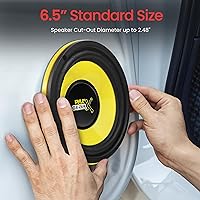
  • Driver Size: The woofer uses a 6.5-inch cone driver designed to fit standard car door and panel cutouts.
  • Peak Power: Rated at 300 watts peak, which reflects brief transient handling capacity rather than continuous operating power.
  • Voice Coil: A 1-inch aluminum voice coil is wound to tolerate elevated temperatures during demanding listening sessions.
  • Magnet Weight: The motor assembly uses a 30-ounce magnet, which contributes to stronger magnetic force and tighter bass control.
  • Impedance: Nominal impedance is 4 ohms, making it compatible with virtually all aftermarket head units and amplifiers.
  • Frequency Response: The driver covers 60Hz to 5000Hz, positioning it as a mid-bass unit rather than a full-range or subwoofer-class speaker.
  • Surround Material: The cone edge uses a butyl rubber surround, which resists aging, cracking, and moisture better than foam alternatives.
  • Cone Material: The cone is constructed from yellow-tinted polypropylene, which is lightweight, stiff, and resistant to humidity.
  • Mounting Depth: Mounting depth measures 2.84 inches, allowing installation in door panels where deep-mount clearance is not available.
  • Cutout Diameter: The required cutout diameter is 5.68 inches, fitting the majority of factory speaker locations designed for 6.5-inch drivers.
  • Dimensions: The overall unit measures 3″D x 6.53″W x 6.53″H as shipped and ready to mount.
  • Weight: Each unit weighs 1.88 pounds, which is typical for a woofer with a 30-ounce magnet assembly at this driver size.
  • Connectivity: The driver uses standard wired connectivity with push-type speaker terminals compatible with common car audio wiring.
  • Unit Count: Each purchase includes one single woofer; buyers who need a stereo pair must order two units separately.
  • Mount Type: Designed for car door panel or pillar mounting using a standard round flange with a 5.68-inch cutout.
  • Signal-to-Noise: Signal-to-noise ratio is rated at 60 dB, which is acceptable for a budget mid-bass driver in a mobile environment.
  • Warranty: Pyle provides a limited warranty with this product; the exact duration and terms should be confirmed with the seller at purchase.
  • Brand: Manufactured by Pyle, a U.S.-based consumer audio brand with an extensive catalog of car and home audio products.

Related Reviews
Pyramid WX65X 6.5-Inch Car Woofer Speaker
84%
88%
Sound Quality
90%
Installation Ease
85%
Bass Response
70%
Durability
86%
Power Handling
More
CT Sounds Meso-6.5-D4 6.5 Inch Dual 4 Ohm Car Subwoofer
83%
90%
Bass Performance
85%
Power Handling
88%
Build Quality
65%
Installation Ease
92%
Cooling System Effectiveness
More
CT Sounds TROPO-6.5-D2 6.5-inch Dual 2 Ohm Car Subwoofer
86%
88%
Bass Performance
85%
Durability & Build Quality
89%
Power Handling
91%
Size & Fit for Tight Spaces
84%
Cooling Performance
More
Pyle PLPW6D 6.5-inch Car Subwoofer
73%
88%
Value for Money
74%
Bass Output & Sound Quality
61%
Build Quality
91%
Installation Ease
83%
Amplifier Compatibility & Wiring Flexibility
More
Pyle PLMW63 6.5-Inch 150W Single Voice Coil Car Subwoofer
85%
88%
Bass Performance
85%
Build Quality
91%
Ease of Installation
92%
Value for Money
89%
Size & Portability
More
Pyle PL613BK 6.5-Inch 3-Way Triaxial Car Stereo Speakers
84%
86%
Audio Performance
91%
Ease of Installation
88%
Bass Quality
80%
Build Quality
85%
Compatibility with Vehicles
More
Power Acoustik MID-65 6.5-Inch 300-Watt Midrange/Bass Driver
83%
88%
Sound Quality
90%
Build Quality
85%
Value for Money
65%
Installation Ease
91%
Durability
More
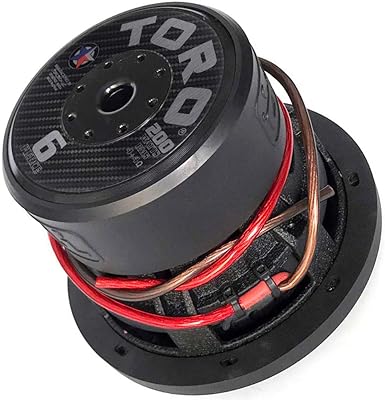
TORO TECH Fierce 6 6.5-Inch Car Audio Subwoofer
86%
90%
Bass Performance
87%
Build Quality
85%
Size and Compactness
88%
Ease of Installation
91%
Durability
More
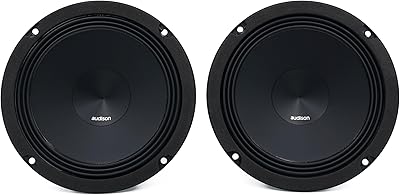
Audison AP 6.5 Prima Series 6.5″ Woofers - Pair
86%
88%
Bass Performance
85%
Sound Clarity
91%
Ease of Installation
90%
Durability
89%
Compatibility with OEM Systems
More
Pyle PLMRF65SB 6.5-inch Marine Speakers
67%
78%
Waterproof & Weather Resistance
63%
Sound Quality
74%
Build Quality & Durability
51%
Wireless RF Performance
86%
Installation & Fitment
More

FAQ

Yes, this driver is sold as a single unit, so you will need to order two if you want a stereo setup — one for each door. It is easy to miss on the product page, so double-check your cart before checking out.

You can, since the 4-ohm impedance is compatible with most stock and aftermarket head units. Just keep in mind that the power your head unit delivers is well below the peak rating on the driver, which is actually fine — you do not need to max out a speaker to get good sound from it.

It will technically produce sound without a tweeter, but the high-frequency response trails off above 5kHz, which means vocals and cymbals will sound dull and rolled off. For the best results, pair this mid-bass driver with a dedicated tweeter and a passive crossover to cover the full frequency range properly.

The 300-watt figure is a peak rating that reflects short burst tolerance, not what the driver can handle continuously. A clean 50 to 75 watts RMS is a realistic and safe everyday operating range. Pushing it with a high-powered amplifier at full throttle consistently is where longevity problems tend to show up in user reports.

That depends entirely on your setup. The yellow polypropylene cone has a dedicated following among enthusiasts who run open speaker grilles or transparent covers — it gives the install a custom, built-out look. If your door panels have solid grilles that cover the speakers completely, nobody will ever see it either way.

Most first-timers report it is very manageable. The 5.68-inch cutout diameter fits the majority of factory 6.5-inch speaker locations, and the 2.84-inch mounting depth clears tight door panels without modification. You will need basic trim removal tools and a screwdriver, but no drilling or custom fabrication is typically required.

No, and it is worth being clear on that. The Pyle PLG64 6.5-inch Car Mid Bass Woofer covers the mid-bass region starting at 60Hz, which adds punch and body to music, but it is not designed to move the deep, low-frequency air that a dedicated subwoofer does. If you are after genuine sub-bass, you will still need a separate subwoofer in the system.

General durability feedback from long-term owners is cautiously positive. The butyl rubber surround is a meaningful advantage over foam because it does not break down with age or heat. That said, a segment of reviewers who consistently drove the driver hard at high volume reported performance degradation over time, so moderate use tends to get the best long-term results.

No crossover is included in the box. If you are building a component speaker system, you will need to purchase a compatible passive crossover separately to properly split the signal between this mid-bass driver and your tweeter. Running it without a crossover will work but is not ideal for sound quality or driver longevity.

It is built for any vehicle that has a standard 6.5-inch speaker opening with at least 2.84 inches of mounting depth behind the panel. That covers a very wide range of cars, trucks, and SUVs from most major manufacturers. If you are unsure about your specific vehicle, checking a speaker fit guide using your year, make, and model will give you a definitive answer before you buy.