Overview

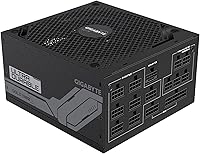
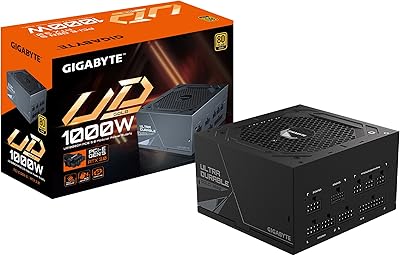
The GIGABYTE GP-UD1300GM PG5 1300W Power Supply sits firmly in the enthusiast tier, built for builders who aren't willing to compromise when pairing serious hardware. Launched in early 2023, it arrived alongside the ATX 3.0 standard and PCIe Gen 5.0 graphics cards — a deliberate move to future-proof high-end rigs without relying on bulky adapters. The 80 Plus Gold certification means roughly 87–90% efficiency under typical loads, translating to less heat generated and lower electricity draw over time. GIGABYTE's UD lineup has always prioritized reliability over flashiness, and this model continues that tradition without unnecessary RGB or aesthetic extras.
Features & Benefits

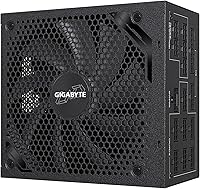
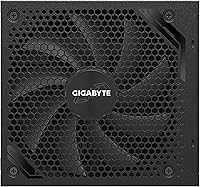
The single +12V rail design sounds technical but matters a lot in practice — it means all your power-hungry components pull from one unified source, reducing the risk of voltage imbalance under heavy load. The native 12+4 pin connector handles PCIe Gen 5.0 GPUs without clunky adapters, which is a genuine relief if you've ever wrestled with those. ATX 3.0 certification is worth understanding correctly: it helps manage sudden GPU power spikes, but only users running something like an RTX 4090 at full tilt will realistically notice the difference. The fully modular design and 140mm hydraulic fan round things out — quiet under moderate loads, with Japanese capacitors lending credibility to long-term durability.

Best For

This high-capacity PSU makes the most sense for builders going all-in on top-tier GPU hardware — think RTX 4090 or RX 7900 XTX territory, where power draw can spike aggressively. It also suits anyone who wants headroom for future upgrades without swapping out the PSU again in two years. If you're meticulous about cable routing in a mid-tower or full-tower case, the fully modular setup will make your life noticeably easier. That said, if your current build peaks around 700–800W, the 1300W rating is probably more than you need, and a less expensive 850W or 1000W Gold unit would serve you just as well.

User Feedback

Among buyers, stable power delivery and overall build quality come up most consistently as highlights, with many noting the cable management experience as genuinely better than competing units at similar price points. Comparisons to Seasonic and Corsair HX-series PSUs appear regularly in forum discussions, and most buyers feel the GP-UD1300GM PG5 holds its own. On the downside, a handful of users report occasional coil whine under sustained GPU loads, and a few mentioned the packaging could do a better job protecting the unit during shipping. Long-term failure rates seem low based on community reports, though it hasn't quite built the legendary track record that Seasonic commands.

Pros

  • Native 12+4 pin PCIe Gen 5.0 connector eliminates the need for risky or awkward GPU power adapters.
  • Single +12V rail design provides stable, unified power delivery to high-TDP components under heavy load.
  • Fully modular cabling makes clean builds noticeably easier, with no dead cables cluttering airflow paths.
  • Japanese capacitors back up the build quality claims with component-level credibility.
  • ATX 3.0 certification handles sudden GPU power spikes without tripping protection circuits unexpectedly.
  • The 140mm fan stays genuinely quiet during typical gaming sessions at moderate system loads.
  • Six-layer protection suite guards against a wide range of electrical faults without being overly trigger-happy.
  • 80 Plus Gold efficiency keeps waste heat low and long-term electricity costs reasonable for always-on builds.
  • The GP-UD1300GM PG5 holds its own against Corsair HX and Seasonic Prime alternatives at comparable wattage.
  • Solid voltage regulation keeps sensitive components happy even during demanding, sustained workloads.

Cons

  • Packaging has been reported as insufficient for transit, with some units arriving with cosmetic damage.
  • Coil whine under heavy GPU loads is a recurring complaint that varies unit to unit — it's a lottery.
  • The standard warranty period feels conservative given the premium price tier and target audience.
  • Included cables are stiffer than aftermarket braided alternatives, making tight routing more effort in compact cases.
  • Fan noise increases noticeably under sustained peak loads, which matters in quiet listening environments.
  • No additional PCIe cable is included, which is a frustrating omission for multi-GPU or power-heavy workstation builds.
  • Long-term reliability data is still limited compared to Seasonic's well-documented multi-year track record.
  • The modular port labeling is small and hard to read in poorly lit cases during installation.
  • Protection circuits have triggered unexpectedly for a small number of users during aggressive GPU transient events.
  • At this price, buyers running mainstream gaming builds are paying for wattage headroom they realistically will never use.

Ratings

The GIGABYTE GP-UD1300GM PG5 1300W Power Supply has been evaluated using AI analysis of verified global buyer reviews, with spam, bot-generated, and incentivized feedback actively filtered out. Scores reflect genuine user sentiment across enthusiast forums, retailer feedback, and hardware communities worldwide. Both the strengths that make this unit stand out and the friction points that give some buyers pause are represented transparently below.
Power Delivery Stability
91%
Users running RTX 4090 builds consistently report rock-solid voltage regulation with no drops or instability under sustained gaming loads. The single +12V rail configuration earns particular praise from overclockers who push components hard for extended sessions.
A small subset of users note that during extreme transient spikes — particularly with aggressive GPU power limits removed — the unit occasionally triggers protection circuits. This is rare but worth knowing for extreme overclocking scenarios.
Build Quality
88%
The physical construction feels premium in hand, with a solid chassis and tight tolerances on the modular connectors. Buyers frequently mention that the unit feels noticeably more substantial than similarly priced alternatives from other brands.
A handful of users reported cosmetic scuffs or minor dents on arrival, pointing to packaging that doesn't always survive rough shipping conditions. The exterior finish, while sturdy, does show fingerprints and dust more readily than matte alternatives.
Cable Management & Modularity
93%
Being fully modular is a genuine quality-of-life improvement here — builders consistently note how easy it is to route only the cables needed, keeping airflow clear in both mid-tower and full-tower cases. The cable quality and connector fitment are tight and reliable.
Some users find the included cables slightly stiffer than premium braided alternatives from Corsair or Seasonic, making tight routing in compact areas a bit more effort. A few wished for an additional PCIe cable in the box given the 1300W target audience.
Noise Level
79%
21%
Under light to moderate loads the 140mm hydraulic bearing fan is genuinely quiet — most users in standard gaming sessions report it as a non-issue, often inaudible over case fans and GPU coolers. Semi-passive behavior at low loads is a bonus for quiet builds.
Under sustained heavy loads, particularly when the GPU is hammering 400W-plus continuously, fan noise becomes noticeable. A minority of users also reported intermittent coil whine that varies unit to unit, which can be irritating in otherwise silent setups.
PCIe Gen 5.0 Compatibility
94%
The native 12+4 pin connector is a genuine advantage over older PSUs requiring adapters — users pairing this with RTX 40-series cards appreciate not dealing with the thermal and fit concerns that plagued early adapter solutions. It simply plugs in cleanly.
For anyone not yet running a PCIe Gen 5.0 GPU, this feature offers zero practical benefit today. Buyers on older platforms may feel they are paying a premium for a connector they won't use for another hardware generation or two.
ATX 3.0 Certification
82%
18%
Users running flagship GPUs under demanding workloads — rendering, AI tasks, heavy gaming — appreciate that the unit handles sudden power spikes without tripping protection circuits. It adds a layer of headroom confidence for demanding applications.
The honest reality is that most buyers will never notice a tangible difference from ATX 3.0 in typical gaming use. The certification matters on paper and at the margins, but it should not be the primary reason to choose this unit over a non-ATX 3.0 alternative.
Efficiency & Heat Output
86%
The 80 Plus Gold rating translates to real-world savings over time, and users in warm climates or small cases notice the unit runs cooler than less efficient alternatives they've used previously. At typical gaming loads the waste heat is minimal.
It does not reach the efficiency ceiling of 80 Plus Platinum or Titanium certified units, which matters for users running the PSU at near-peak wattage continuously, such as in cryptocurrency mining or intensive AI workloads. For gaming, the difference is modest.
Long-Term Reliability
77%
23%
Japanese capacitors give experienced builders confidence, and early failure reports are relatively rare based on community tracking threads. Users who have owned the unit for over a year generally report no degradation in performance or audible changes.
The UD lineup hasn't yet accumulated the multi-year reliability dataset that Seasonic's units enjoy, so long-term confidence is partly based on component pedigree rather than proven track record. A longer warranty would go a long way toward addressing this concern.
Value for Money
72%
28%
For a fully modular 1300W ATX 3.0 unit with native PCIe Gen 5.0 support, the price sits competitively within its category. Builders who actually need 1300W will find the feature-to-dollar ratio reasonable compared to equivalent Corsair HX or Seasonic Prime offerings.
For builders whose system realistically peaks at 700–900W, spending this much on excess wattage is hard to justify. At this price tier, buyers expect a slightly longer warranty period, and the standard offering feels conservative compared to what competitors provide.
Packaging & Unboxing Experience
63%
37%
The modular cables are organized and bagged separately, making initial setup straightforward. The included accessory kit covers most standard build configurations without needing to hunt for extras immediately.
Multiple buyers reported that the outer box provides insufficient cushioning for transit, resulting in cosmetic damage to the unit itself. For a premium-priced PSU, the packaging experience lags noticeably behind what brands like Seasonic and be quiet! deliver.
Modular Connector Variety
81%
19%
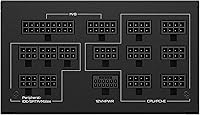
The connector selection covers typical high-end build needs well, with enough SATA and peripheral connectors for storage-heavy setups alongside the GPU-focused PCIe outputs. Builders with large drive arrays appreciate not having to daisy-chain excessively.
Users building especially GPU-dense workstations occasionally find themselves one PCIe connector short, requiring careful planning. The connector labeling on the modular panel, while present, is small and difficult to read in dimly lit cases during installation.
Installation Experience
84%
The ATX form factor fits standard cases without any clearance surprises, and the modular panel layout is logical enough that most builders complete installation without consulting documentation. Cable lengths are appropriate for full-tower builds.
In smaller mid-tower cases, the 160mm depth can be tighter than expected, and a few users with compact PSU shrouds noted the fit required some maneuvering. This is not unique to this unit but worth measuring before purchasing.
Protection Circuit Performance
89%
The six-protection suite covering over-voltage, over-power, short circuit, under-voltage, over-current, and over-temperature gives buyers genuine peace of mind in complex builds. Users report the protections respond appropriately without being overly sensitive during normal use.
The protection circuits have triggered unexpectedly for a small number of users during GPU power spike events, requiring a manual reset. While the hardware was protected, an unexpected shutdown mid-session is disruptive, particularly for content creators mid-render.
Fan Longevity Expectation
75%
25%
Hydraulic bearing fans occupy a solid middle ground — they outlast sleeve-bearing fans meaningfully and are quieter than ball-bearing alternatives. For most buyers using the PSU in a normal desktop environment, the bearing should comfortably outlast several GPU generations.
Hydraulic bearings are not at the top of the durability hierarchy — fluid dynamic bearing fans are generally considered superior for long-term, high-usage scenarios. Users running servers or workstations 24 hours a day may find the fan life a limiting factor over a five-plus-year horizon.

Suitable for:

The GIGABYTE GP-UD1300GM PG5 1300W Power Supply is built for a specific kind of builder — one who isn't cutting corners on hardware and doesn't want to revisit the PSU decision for the next several years. If you're running an RTX 4090 or RX 7900 XTX, the 1300W headroom and native PCIe Gen 5.0 connector mean you're covered today and almost certainly for whatever comes next. Workstation users juggling GPU-heavy tasks like 3D rendering, AI model training, or video production will appreciate the stable single +12V rail delivery that doesn't flinch under sustained, unpredictable loads. Enthusiasts who spend real time on cable management will also find the fully modular design genuinely rewarding to work with in a mid-tower or full-tower case. Essentially, if your build is pushing the upper limits of what consumer hardware demands, this high-capacity PSU is a rational, well-specified choice rather than an indulgent one.
Not suitable for:

The GP-UD1300GM PG5 becomes a harder sell the moment your system's realistic power ceiling drops below 900W — and for most mid-range or even upper-mid gaming rigs, that's exactly where they land. A builder pairing a Core i7 or Ryzen 7 with an RTX 4070 or RX 7800 XT simply doesn't need 1300W, and spending this much on excess capacity you'll never use is genuinely poor value. Budget-conscious builders will also find that an 850W or 1000W Gold-rated unit from Seasonic or Corsair offers comparable daily performance at a meaningfully lower price. Users sensitive to acoustic environments should be cautious too — while the fan is quiet at idle, coil whine reports are real enough to warrant concern in an otherwise silent system. Finally, if you're building in a compact ITX or mATX case with a tight PSU shroud, the physical dimensions and cable stiffness may create fitment frustrations that aren't worth the hassle.

Specifications

  • Wattage: This unit delivers a continuous 1300W of output power, sufficient for the most demanding single-GPU and multi-component enthusiast builds available today.
  • Efficiency Rating: Certified 80 Plus Gold, meaning the PSU operates at roughly 87–90% efficiency under typical loads, reducing waste heat and lowering long-term electricity consumption.
  • Form Factor: Standard ATX form factor measuring 6.29 x 5.9 x 3.38 inches, compatible with the vast majority of mid-tower and full-tower PC cases on the market.
  • Rail Config: Single +12V rail design consolidates all power delivery through one unified source, providing more stable voltage to high-TDP components like flagship GPUs and overclocked CPUs.
  • ATX Standard: Intel ATX 3.0 certified, meaning the PSU is engineered to handle sudden GPU transient power spikes without triggering protection shutdowns during demanding workloads.
  • GPU Connector: Includes a native 12+4 pin PCIe Gen 5.0 connector for direct compatibility with RTX 40-series and RX 7000-series graphics cards without requiring any adapter.
  • Modularity: Fully modular design allows builders to connect only the cables their system requires, reducing cable clutter and improving airflow inside the chassis.
  • Fan Size: Equipped with a 140mm fan, larger than the 120mm fans found on many competing units, allowing for lower RPM operation and quieter performance at equivalent cooling levels.
  • Fan Bearing: The 140mm fan uses a hydraulic bearing, offering a meaningful step up in longevity and noise performance compared to standard sleeve-bearing fans.
  • Capacitors: Uses Japanese-brand capacitors throughout, a component choice associated with tighter voltage tolerances and longer operational lifespan under sustained thermal stress.
  • Protection Suite: Six hardware protection circuits are built in — covering over-voltage (OVP), over-power (OPP), short circuit (SCP), under-voltage (UVP), over-current (OCP), and over-temperature (OTP).
  • Weight: The unit weighs 9.25 pounds, reflecting the dense transformer and component build typical of high-wattage PSUs in this output class.
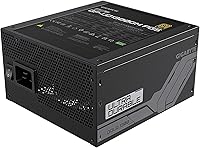
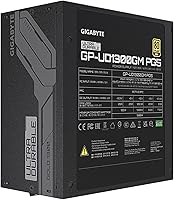
  • Color & Finish: Finished in matte black, consistent with a clean, tool-focused aesthetic designed to blend into standard builds without requiring a window-facing orientation.
  • Release Date: First made available in March 2023, timed to align with the widespread adoption of ATX 3.0 and PCIe Gen 5.0 GPU platforms in the enthusiast market.
  • Compatible Devices: Designed specifically for high-end gaming PCs and GPU-heavy workstations requiring stable, high-capacity power delivery above what 1000W units comfortably provide.

Related Reviews
GIGABYTE GP-UD750GM-A 750W Modular Power Supply
83%
88%
Value for Money
91%
Cable Management
89%
Power Stability
84%
Build Quality
79%
Noise Level
More
GIGABYTE GP-UD850GM 850W 80 Plus Gold Certified Fully Modular Power Supply
87%
92%
Energy Efficiency
89%
Cable Management
88%
Build Quality
85%
Noise Levels
90%
Ease of Installation
More
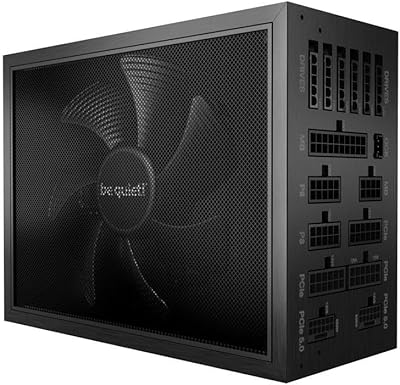
be quiet! Dark Power Pro 13 PSU
84%
96%
Voltage Stability & Regulation
93%
Noise Level
94%
Efficiency (80 Plus Titanium)
91%
PCIe 5.0 & 12VHPWR Compatibility
83%
Rail Configuration Flexibility
More
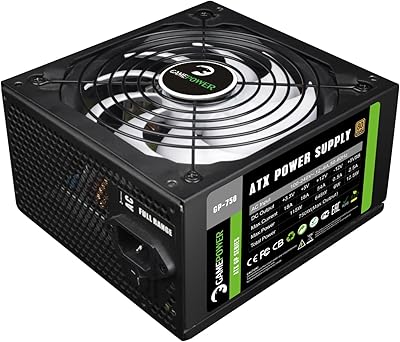
GamePower GP-750 750W Power Supply
83%
87%
Energy Efficiency
91%
Noise Levels
82%
Build Quality
89%
Power Stability
85%
Protection Features
More
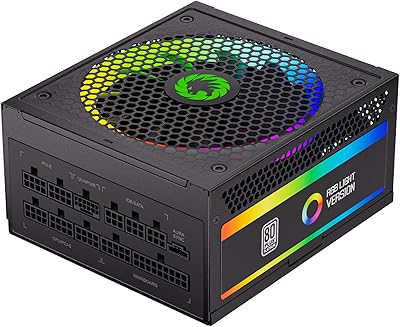
GAMEMAX RGB-1300 1300W Power Supply
82%
91%
Power Output Stability
88%
Build Quality
86%
Efficiency & Heat Management
89%
Cable Management & Modularity
87%
GPU Connector Compatibility
More
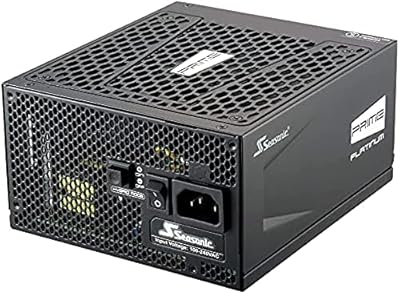
Seasonic Prime Ultra Platinum 1300W Power Supply
86%
94%
Build Quality
96%
Power Delivery Stability
91%
Noise Level
89%
Efficiency & Power Usage
88%
Cable Quality & Modularity
More
MSI MEG Ai1300P PCIE5 1300W Power Supply
85%
93%
Build Quality
91%
Power Delivery Stability
88%
Cable Management
84%
Noise Level
71%
Value for Money
More
ARESGAME 1300W ATX 3.0 Power Supply
81%
93%
Power Output & Headroom
91%
ATX 3.0 & PCIe 5.0 Compatibility
84%
Efficiency & Heat Management
88%
Noise Level
79%
Build Quality & Component Feel
More
GIGABYTE GP-UD1000GM PG5 1000W Power Supply
81%
93%
PCIe 5.0 Compatibility
88%
ATX 3.0 Certification
91%
Cable Management
84%
Build Quality
67%
Fan Noise
More
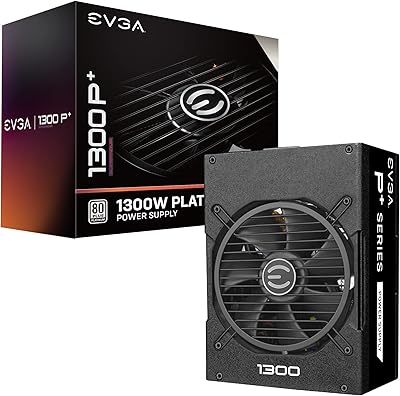
EVGA Supernova 1300 P+ 80+ Platinum 1300W Power Supply
89%
95%
Power Efficiency
88%
Quiet Operation
93%
Build Quality
90%
Ease of Installation
92%
Reliability & Durability
More

FAQ

Yes, and that's one of the main reasons builders choose this unit. It includes a native 12+4 pin PCIe Gen 5.0 connector that plugs directly into RTX 40-series cards, avoiding the melt-prone adapter concerns that affected earlier PSUs paired with these GPUs.

Honestly, for most gaming rigs it is more than needed. A system with an RTX 4090 and a high-end CPU typically peaks around 600–800W under load. The 1300W rating makes sense if you're running power-intensive workloads continuously, planning significant upgrades, or building a workstation where headroom matters. For mainstream gaming, an 850W or 1000W unit will do the job and cost less.

Yes, at low to moderate loads the fan can operate in a near-passive state, which keeps the unit very quiet during light desktop use or low-demand gaming. The fan spins up more assertively when the system is pulling significant wattage, as you'd expect.

At peak load the 140mm fan becomes audible, but it's generally not the loudest component in a high-end build — that distinction usually goes to GPU coolers pushing hard. That said, some users have reported coil whine on certain units, which is separate from fan noise and varies from one sample to another.

In most mid-towers, yes. The ATX dimensions are standard, but the depth of around 160mm is worth double-checking against your case's PSU bay specification, particularly if you have a compact shroud design. Full-tower cases will have no issues at all.

All three are credible options in this tier. Seasonic has the longest established reliability reputation in the enthusiast community, and Corsair HX units offer a longer warranty. This high-capacity PSU competes well on price and feature set — native PCIe Gen 5.0 and ATX 3.0 — but Seasonic edges ahead on long-term community trust built up over more years.

You get a full set of modular cables covering ATX 24-pin motherboard power, CPU EPS connectors, the PCIe Gen 5.0 GPU cable, SATA power cables, and peripheral connectors. The exact count per type is worth confirming against your specific build needs, since high-GPU builds occasionally want an extra PCIe cable that isn't included by default.

This is a fair criticism that comes up in buyer discussions. The warranty provided is functional but falls short of the 10-year coverage that Seasonic offers on comparable units. For a premium-priced PSU, a longer warranty period would better match the price expectation — it's one of the genuine trade-offs to consider before buying.

You can, and the 1300W headroom and Japanese capacitors are reassuring for continuous-use scenarios. That said, for truly 24/7 operation over multiple years, some builders prefer units with fluid dynamic bearing fans and a Platinum or Titanium efficiency rating to further reduce heat accumulation and electricity costs over time.

Document it immediately with photos before discarding packaging, then contact the retailer. A number of buyers have reported cosmetic issues on arrival, which points to a packaging limitation rather than a defect in the PSU itself. The internal components are typically unaffected, but having photo evidence makes the return or replacement process much smoother.