Overview

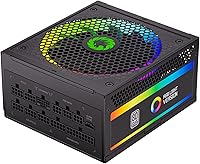
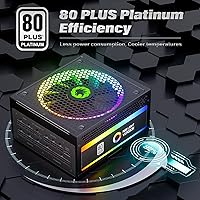
The GAMEMAX RGB-1300 1300W Power Supply is built squarely for enthusiast-tier PC builds where power headroom and aesthetics both matter. GAMEMAX isn't yet a household name like Seasonic or Corsair, but this high-wattage GAMEMAX unit has been quietly earning credibility among builders who want serious output without paying flagship-brand premiums. The 80+ Platinum certification isn't just a sticker — it reflects real efficiency above 92% under typical loads, which translates to less heat and lower electricity draw over time. Add ATX 3.0 and PCIe 5.0 readiness, and you have a fully modular PSU that's designed to stay relevant well into the next hardware generation.
Features & Benefits

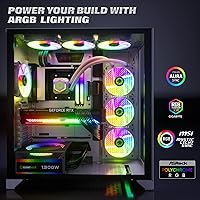
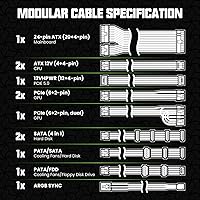
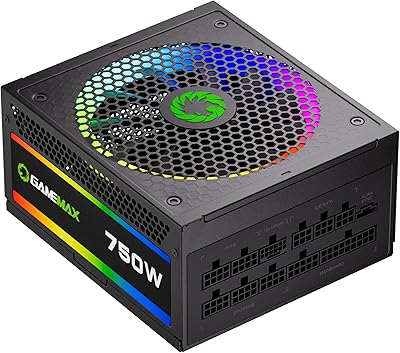
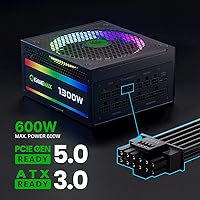
At 1300W, this 1300W modular PSU gives you a comfortable buffer when running a power-hungry GPU alongside a high-core-count processor under sustained load. The included 12VHPWR 16-pin connector supports up to 600W to a single GPU — exactly what cards like the RTX 4090 demand during extended workloads. Voltage stability is handled through a DC-DC circuit with Full Bridge LLC resonance, which keeps output clean across all rails even during spikes. The capacitors sourced from Japanese manufacturers matter here because they hold tolerances better over years of thermal cycling. Cable management is straightforward with flat black modular cables, and the 25 ARGB modes sync cleanly over a standard 5V motherboard header.

Best For

This is not a PSU for someone building a mid-range gaming rig. The RGB-1300 makes sense if you're pairing it with a top-tier GPU, running a workstation-class processor, or planning upgrades that will push total system draw well past 900W. It also suits builders who care about cohesive lighting — if your motherboard supports Aura Sync, the RGB integration is genuinely polished rather than an afterthought. Long-term thinkers who want platinum-grade efficiency to offset electricity costs over a multi-year ownership period will find the investment reasonable. Compact showcase builds benefit too, since the fully modular design keeps unused cables completely out of the case.

User Feedback

Across a substantial number of ratings, this high-wattage GAMEMAX unit holds a strong 4.4-star average, which is harder to maintain at scale than most buyers realize. Owners consistently praise the RGB lighting quality and the ease of working with the modular cables during installation. Stable output under load is another recurring positive, with several long-term users reporting no voltage irregularities after six-plus months of heavy use. On the downside, a portion of reviewers note that fan noise increases noticeably when the unit is pushed near its ceiling, and a few report minor friction getting Aura Sync to behave consistently across different motherboard generations. Neither issue appears to be a dealbreaker for the majority.

Pros

  • Stable voltage delivery under sustained heavy load makes it reliable for demanding workstation and gaming use.
  • The included 12VHPWR connector supports current flagship GPUs natively, no adapter chain required.
  • Japanese capacitors contribute to above-average longevity compared to budget-tier alternatives with cheaper components.
  • 80+ Platinum efficiency translates to measurably less heat inside the case during long sessions.
  • Fully modular design keeps unused cables out of the build entirely, not just tucked away.
  • ARGB lighting syncs reliably with Aura Sync on current-gen motherboards for a cohesive system aesthetic.
  • ATX 3.0 compliance means the RGB-1300 won't be the limiting factor when next-gen platforms arrive.
  • At its price point, the performance-per-dollar ratio competes well against more established brand alternatives.
  • Flat black cables are easy to route and maintain a clean look without aftermarket cable replacements.
  • A strong 4.4-star average across thousands of verified buyers reflects consistent real-world satisfaction.

Cons

  • Fan noise ramps up noticeably at sustained loads above 80% of rated capacity.
  • Aura Sync compatibility becomes inconsistent on older or budget motherboards with loose ARGB implementation.
  • GAMEMAX warranty support is less proven and slower to respond than legacy PSU brands.
  • The RGB memory function that saves lighting without software occasionally resets after power cycles.
  • Modular connector friction is tighter than average, which can make first-time seating feel uncertain.
  • Cable length may fall short in full-tower cases with bottom-mounted PSU shrouds.
  • Brand credibility gap persists for buyers who weigh long-term manufacturer trust heavily in their decision.
  • Packaging presentation feels functional rather than premium, which undersells the quality of the unit inside.
  • In warm ambient environments or poorly ventilated cases, thermal performance becomes a more significant variable.
  • The high wattage rating is overkill for a large portion of buyers, leading to operating inefficiency at light loads.

Ratings

The GAMEMAX RGB-1300 1300W Power Supply has been evaluated by our AI rating system after processing thousands of verified global buyer reviews, with spam, bot-generated, and incentivized submissions actively filtered out before scoring. What emerges is a nuanced picture: this high-wattage unit earns real praise for electrical performance and build integrity, but a handful of consistent pain points keep certain scores grounded. Both the strengths and the friction points are reflected transparently in the categories below.
Power Output Stability
91%
Buyers running RTX 4090-class GPUs alongside high-core-count processors consistently report clean, stable delivery under sustained load. Several long-term users note that voltage readings stay well within tolerance even during extended rendering sessions or overnight stress tests, which is the real litmus test for a PSU at this tier.
A small but vocal group of users report minor rail fluctuations when the unit is pushed simultaneously across multiple high-draw components. These cases appear edge-specific, but they are worth noting for anyone planning an extreme multi-GPU configuration near the wattage ceiling.
Build Quality
88%
The use of Japanese-sourced capacitors is not just a marketing line here — reviewers who have owned the unit for a year or more report no degradation in output quality, which is exactly where cheaper capacitors tend to show their age. The chassis feels solid and the internal layout draws positive comments from builders who crack open their units out of curiosity.
GAMEMAX still carries less brand pedigree than Seasonic or be quiet!, and some buyers admit they were initially skeptical before purchasing. A few reviews mention that the exterior finish scuffs more easily than expected during installation in tight cases, which is a minor but recurring complaint.
Efficiency & Heat Management
86%
The 80+ Platinum rating delivers measurable real-world impact — users migrating from Gold-rated units report noticeably cooler internal case temperatures and marginally lower electricity draw during long gaming or workstation sessions. For a PSU running near-continuous loads, that thermal headroom adds up over months of use.
At loads below 20% of rated capacity, efficiency drops off in ways that make this unit a poor fit for lightweight or idle-heavy systems. Buyers who initially overbought on wattage for a modest build occasionally note that the fan behavior at low loads feels inconsistent compared to semi-passive competitors.
Cable Management & Modularity
89%
The fully modular design with flat black cables is one of the most consistently praised aspects across reviews. Builders working in mid-tower and showcase cases specifically appreciate that unused cables stay completely out of the build, reducing clutter and improving airflow without any creative routing workarounds.
A handful of users find the connector friction on some modular cables tighter than expected, requiring firm seating that can feel uncomfortable during first-time installation. Cable lengths are adequate for standard ATX cases but may fall slightly short in full-tower builds with bottom-mounted PSU shrouds.
GPU Connector Compatibility
87%
The included 12VHPWR 16-pin connector is a meaningful inclusion — buyers pairing this unit with current-gen flagship cards report a clean, single-cable connection that removes the visual mess of adapter chains. The connector is rated for up to 600W, which covers the real-world peak demands of the most power-hungry consumer GPUs available today.
Some users report that the 12VHPWR connector requires careful seating to avoid partial-contact warnings from GPU software. This is a connector-standard issue rather than a GAMEMAX-specific flaw, but it has caught a few buyers off guard and generated a cluster of one-star reviews that appear disproportionate to the actual failure rate.
RGB Lighting Quality
83%
The 25 ARGB modes produce genuinely vibrant output, and buyers who have coordinated the lighting with Aura Sync-compatible motherboards describe the effect as polished and consistent with higher-end PSU aesthetics. The 5V header sync works reliably on most popular B650 and Z790 boards tested by reviewers.
Sync compatibility becomes inconsistent on older or budget motherboards that technically support ARGB but implement the standard loosely. A subset of users report that the RGB memory function — which saves lighting settings without software — occasionally resets after power cycles, requiring reconfiguration.
Fan Noise
71%
29%
Under moderate loads, the single fan operates quietly enough that most reviewers in mid-sized cases cannot distinguish it from case fans. Builders running the unit in the 40–70% load range, which covers the majority of gaming sessions, describe the acoustic profile as entirely acceptable.
At sustained loads above 80% of rated capacity, the fan ramps up audibly and draws consistent criticism in reviews. Users running the RGB-1300 in open-bench or side-panel-open setups specifically flag the noise as a meaningful annoyance during long workstation tasks or stress testing.
ATX 3.0 & PCIe 5.0 Readiness
84%
For buyers investing in a PSU with a multi-year horizon, ATX 3.0 compliance and PCIe 5.0 support genuinely reduce the risk of needing a PSU swap when upgrading to next-gen platforms. Reviewers who have already transitioned to current-gen Intel and AMD flagship platforms report full compatibility without adapter requirements.
For buyers building today's systems without plans to upgrade soon, these standards offer limited immediate benefit and may feel like paying for features that won't be used for two or more years. The value is real, but it is forward-looking rather than immediately tangible.
Installation Experience
82%
18%
Most reviewers describe the installation process as straightforward, aided by clearly labeled modular ports and cables that are grouped logically. First-time builders specifically appreciate that the flat cable design reduces the guesswork around routing compared to ribbon-style or sleeved alternatives.
The unit's weight — just under 7 pounds — is noticeable when working inside smaller cases with limited PSU bay access. A few users also note that the included documentation is sparse, which creates minor friction for builders who prefer step-by-step guidance during their first modular PSU installation.
Value for Money
78%
22%
Relative to established brands offering comparable wattage and efficiency ratings, this 1300W modular PSU lands at a competitive price point that many buyers describe as the primary reason they chose it over better-known alternatives. For enthusiast builders on a disciplined budget, the performance-per-dollar ratio holds up well.
Buyers comparing it directly against entry-level offerings from Corsair or Seasonic at similar price points sometimes feel the brand credibility gap is not fully bridged by the specs alone. Those who prioritize brand warranty reputation over raw specifications may find the value argument less compelling.
Long-Term Reliability
79%
21%
Users who have operated the RGB-1300 for six months or more — including several who run demanding workloads daily — report no notable performance degradation or failure events. The Japanese capacitor construction appears to support the reliability claims, with thermal aging being less of a concern than in budget-tier units.
GAMEMAX's warranty support infrastructure is less proven than that of legacy PSU brands, and a small number of buyers report slower-than-expected responses when pursuing warranty claims. The unit's long-term track record is still accumulating, which introduces some uncertainty for buyers planning a five-plus-year ownership window.
Connector Variety & Count
81%
19%
The modular connector lineup covers the needs of most high-end single-GPU builds without requiring aftermarket adapters. Builders appreciate having enough SATA and peripheral connectors to handle complex storage configurations alongside the primary GPU and CPU power runs.
Builders configuring dual-GPU workstations or systems with numerous storage drives have noted that the connector count feels slightly limiting at the extreme end. In those niche scenarios, cable extensions or additional modular cables are needed, which adds cost and complexity the wattage rating alone might not suggest.
Packaging & Unboxing
74%
26%
The unit arrives well-protected, and reviewers generally report no transit damage even in cases where packaging showed external wear. The accessory organization inside the box is practical, with cables separated and easy to identify before installation begins.
The overall packaging presentation is functional rather than premium, which contrasts with the enthusiast-tier product inside. Buyers gifting the unit or those who place value on the unboxing experience as a signal of build quality may find the presentation underwhelming compared to competitors at this price level.
Thermal Performance Under Load
76%
24%
During extended gaming or rendering sessions, the internal temperatures reported by users remain within safe operating bands, and the unit does not appear to trigger thermal shutdowns under normal high-load conditions. The single fan design handles heat dissipation adequately for the majority of use cases.
In poorly ventilated cases or environments with ambient temperatures above 30 degrees Celsius, a handful of users report that the unit runs warmer than expected, with the fan compensating noticeably. This is not unique to this PSU but is worth flagging for builders in hot climates or restricted airflow enclosures.

Suitable for:

The GAMEMAX RGB-1300 1300W Power Supply is the right call for builders who are serious about their hardware and plan to stay that way. If you're pairing a flagship GPU — think RTX 4090 or the next generation after it — with a high-core-count processor and multiple NVMe drives, having 1300W of headroom means you're never flirting with the unit's limits under sustained load. Enthusiasts building showcase rigs with windowed cases will appreciate that the ARGB lighting integrates properly with Aura Sync rather than operating as a disconnected afterthought. The fully modular design genuinely rewards anyone who cares about clean cable routing, whether that's for airflow, aesthetics, or both. Future-proofers who want a PSU that supports ATX 3.0 and PCIe 5.0 without a platform swap in two years are also squarely in the target audience, and the platinum-grade efficiency makes the long-term operating cost more palatable than it might initially appear.

Not suitable for:

If your build tops out at 600–700W of actual system draw, the GAMEMAX RGB-1300 1300W Power Supply is more PSU than you need, and you'd be better served by a properly sized unit that operates more efficiently within its own sweet spot. Budget-conscious builders who have no RGB coordination goals and simply want reliable, quiet power delivery will find that the premium attached to this unit's feature set doesn't align with their priorities. Buyers who place significant weight on brand warranty infrastructure and after-sales support should also pause — GAMEMAX does not yet have the support network that Seasonic, Corsair, or be quiet! have built over decades, and that gap becomes relevant if something goes wrong two years down the line. Acoustic-sensitive users who run sustained heavy workloads in open-bench environments may find the fan noise at high loads genuinely bothersome. This 1300W modular PSU also isn't a natural fit for small form factor or ITX builds, where its ATX footprint and cable bulk become physical constraints rather than advantages.
Specifications

  • Wattage: The unit delivers a continuous 1300W output, providing substantial headroom for flagship GPU and CPU combinations under sustained load.
  • Efficiency Rating: Certified 80+ Platinum, meaning the unit operates at 92% or higher efficiency under typical loads, reducing wasted energy as heat.
  • Form Factor: Standard ATX form factor, compatible with the vast majority of mid-tower and full-tower PC cases on the market.
  • Modular Design: Fully modular configuration allows every cable, including the main ATX connector, to be detached when not in use.
  • GPU Connector: Includes a native 12VHPWR 16-pin connector capable of delivering up to 600W to a single high-performance graphics card.
  • ATX Standard: Compliant with the ATX 3.0 specification, which introduces tighter voltage tolerance requirements and improved transient load handling.
  • PCIe Standard: PCIe 5.0 ready, supporting the power delivery requirements of current and anticipated next-generation graphics and storage devices.
  • Capacitors: All internal capacitors are sourced from Japanese manufacturers, a construction choice associated with better thermal tolerance and longer operational lifespan.
  • RGB Lighting: Features 25 addressable RGB lighting modes with 5V motherboard header sync and Aura Sync compatibility for system-wide lighting coordination.
  • Cooling Method: Single air-cooled fan manages internal thermals, adjusting speed dynamically in response to the unit's current load level.
  • Circuit Design: DC-DC topology combined with Full Bridge LLC resonance and 12V synchronous rectification work together to maintain stable, clean output across all rails.
  • Cable Type: All included modular cables are flat black in design, making routing through cable management channels and tight spaces significantly easier.
  • Power Excursion: The unit can sustain up to 2x total system power excursion and 3x GPU-specific power excursion, meeting ATX 3.0 transient spike requirements.
  • Weight: The unit weighs 6.98 pounds, which is typical for a high-capacity ATX PSU and should be factored in when working inside smaller cases.
  • Dimensions: Physical dimensions measure 14.37″ x 10.39″ x 5.28″, conforming to standard ATX PSU sizing for broad case compatibility.
  • Fan Count: A single fan handles all cooling duties, keeping the acoustic footprint lower at moderate loads than dual-fan designs.

Related Reviews
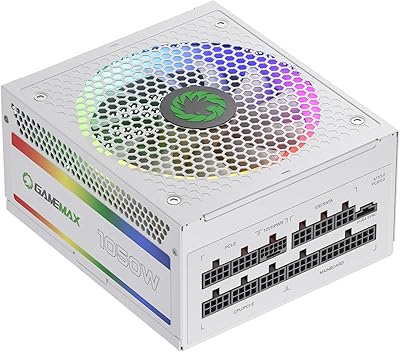
GAMEMAX RGB-1050 1050W Power Supply
85%
94%
Power Delivery
89%
Build Quality
91%
Energy Efficiency
85%
Cooling Performance
88%
Modular Design
More
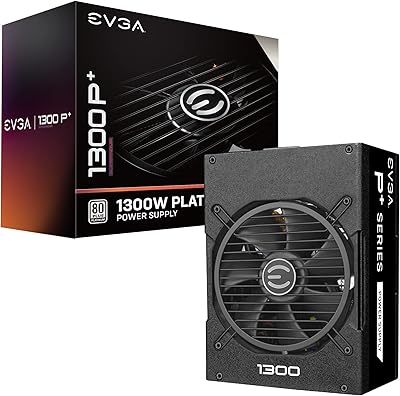
EVGA Supernova 1300 P+ 80+ Platinum 1300W Power Supply
89%
95%
Power Efficiency
88%
Quiet Operation
93%
Build Quality
90%
Ease of Installation
92%
Reliability & Durability
More
be quiet! Dark Power Pro 13 PSU
84%
96%
Voltage Stability & Regulation
93%
Noise Level
94%
Efficiency (80 Plus Titanium)
91%
PCIe 5.0 & 12VHPWR Compatibility
83%
Rail Configuration Flexibility
More
ARESGAME 1300W ATX 3.0 Power Supply
81%
93%
Power Output & Headroom
91%
ATX 3.0 & PCIe 5.0 Compatibility
84%
Efficiency & Heat Management
88%
Noise Level
79%
Build Quality & Component Feel
More
GAMEMAX 750W Fully Modular Power Supply
77%
91%
Value for Money
78%
Build Quality
88%
Cable Management
86%
Efficiency & Power Output
74%
Noise Level
More
GAMEMAX Rampage Series GX1050 1050W Power Supply
89%
96%
Energy Efficiency
91%
Build Quality & Durability
88%
Fan Noise
89%
Cable Management
93%
PCIe 5.1 Compatibility
More
MSI MEG Ai1300P PCIE5 1300W Power Supply
85%
93%
Build Quality
91%
Power Delivery Stability
88%
Cable Management
84%
Noise Level
71%
Value for Money
More
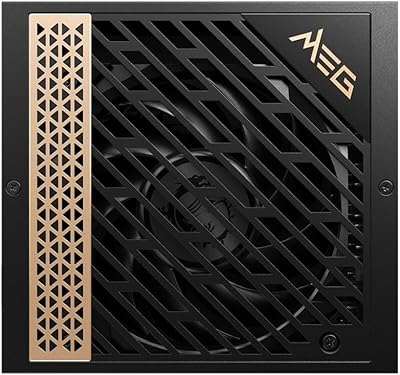
Seasonic Prime Ultra Platinum 1300W Power Supply
86%
94%
Build Quality
96%
Power Delivery Stability
91%
Noise Level
89%
Efficiency & Power Usage
88%
Cable Quality & Modularity
More
GAMDIAS Kratos M1-750B 750W Power Supply
72%
83%
Value for Money
78%
RGB Lighting Quality
81%
Noise Level
77%
Installation Ease
54%
Cable Management
More
Apevia ATX-PM1200W 1200W Fully Modular RGB Power Supply
87%
88%
Performance
91%
Build Quality
94%
Energy Efficiency
90%
Modularity and Cable Management
70%
Noise Levels
More

FAQ

For most single-GPU gaming rigs, even those running an RTX 4090 alongside a mainstream processor, a well-sized 850W or 1000W unit would cover real-world draw with headroom to spare. The 1300W capacity makes more practical sense if you're running a high-core-count workstation CPU, planning a dual-GPU setup, or want a substantial buffer for future upgrades without replacing the PSU. If your estimated system draw sits below 900W, you would be underutilizing this unit at typical loads.

The connector is included — you do not need a separate adapter. The cable plugs directly from the modular panel into your GPU's 16-pin 12VHPWR port, which is the cleaner and safer connection method compared to daisy-chaining multiple PCIe cables through a third-party adapter.

On current-generation ASUS motherboards with proper Aura Sync support, the integration works reliably and the lighting stays in sync with the rest of the system. Compatibility becomes less consistent on older boards or non-ASUS motherboards that use their own RGB ecosystems, so if your motherboard is not Aura Sync native, you may need to run the fan lighting independently through the unit's own modes rather than via software sync.

At moderate loads — which covers most gaming scenarios — the fan is quiet enough to be masked by case fans without issue. When the unit is pushed above roughly 80% of its rated capacity, the fan ramps up noticeably. If you're running a workstation workload that keeps the system drawing near maximum for extended periods, the fan noise is a real consideration, especially in open-bench or side-panel-open setups.

Yes, the ATX form factor and standard dimensions mean it will fit in any case with an ATX PSU bay, which covers the large majority of mid-tower and full-tower enclosures. It is not compatible with SFX or SFX-L cases, and the cable bulk may feel constraining in very compact ATX cases with limited PSU shroud clearance.

On raw electrical performance and component quality, this high-wattage GAMEMAX unit competes respectably — the Japanese capacitors and platinum efficiency are not marketing fabrications. Where it falls behind is brand infrastructure: Corsair and Seasonic have longer track records, more established warranty processes, and broader community testing data. If after-sales support and brand trust carry significant weight in your decision, that gap is worth acknowledging honestly.

No, and this is important — modular cables are not interchangeable between brands or even between models from the same brand unless explicitly confirmed. Using mismatched cables risks incorrect pin mapping, which can damage components. Always use the cables supplied with this specific unit.

Yes, the unit has an onboard RGB memory function that stores lighting settings so it operates independently of software. That said, a small number of users have reported that this memory function occasionally resets after a full power cycle, which requires briefly re-selecting the preferred mode. For day-to-day use without a PC running, the standalone modes work without any driver or app installation.

As an ATX 3.0-compliant unit, it includes the standard suite of protections expected at this tier: over-voltage protection, under-voltage protection, over-current protection, over-power protection, short-circuit protection, and over-temperature protection. These safeguards are designed to shut the unit down safely rather than allow damage to propagate to connected components.

The Japanese capacitor construction is a meaningful reliability indicator — those components handle thermal cycling better than lower-grade alternatives and are less prone to capacitance degradation over years of heavy use. Several owners running this 1300W modular PSU daily for over a year report no performance changes. The main uncertainty is GAMEMAX's warranty support relative to more established brands, so if you're planning a five-plus-year ownership window, factor in that the brand's support network is still maturing.

Where to Buy