Overview

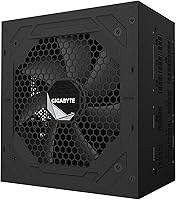
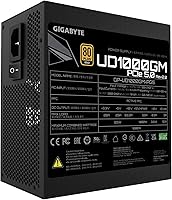
The GIGABYTE GP-UD1000GM PG5 1000W Power Supply sits comfortably in the mid-range enthusiast tier — capable enough to pair with today's most demanding GPUs, but priced without the premium tax of top-shelf units. What makes this modular power supply stand out is its PCIe Gen 5.0 readiness and full ATX 3.0 certification, two features that weren't common at this wattage when it launched. Add 80 Plus Gold efficiency, Japanese capacitors, and a fully modular cable setup, and you have a unit that punches above its weight on paper. It's not a flagship, but it doesn't pretend to be — and that honesty is part of its appeal.
Features & Benefits

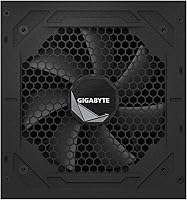
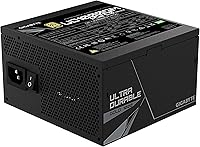
One of the GP-UD1000GM PG5's most practical upgrades over older PSUs is its native 12+4 pin connector. If you're running an RTX 4000 or RX 7000 series GPU, this eliminates the often-criticized adapter cables that have caused real headaches for some builders. Paired with ATX 3.0 certification, the unit is built to handle the sudden, sharp power spikes that modern GPUs demand — something earlier PSU standards genuinely struggled with. The fully modular design means you only route the cables you actually need, making cable management far less painful inside tight cases. The 120mm hydraulic bearing fan keeps things reasonably quiet under normal loads, though it spins up noticeably during sustained heavy use.

Best For

This GIGABYTE 1000W PSU is a natural fit for builders assembling a high-end gaming rig around a current-gen GPU. If your card uses the native 16-pin connector, you avoid the dongle situation entirely — a small thing that makes the whole build cleaner. It's also a smart upgrade for anyone still running a pre-ATX 3.0 supply who's noticed instability or crashes under GPU load. Cable-management-focused builders will appreciate the modular setup, especially inside mid-tower cases where routing space is tight. And if you want Japanese capacitors and Gold efficiency without paying flagship prices for a Seasonic or Corsair unit, this modular power supply lands in a genuinely practical sweet spot.

User Feedback

With roughly 103 ratings and a 4.0-star average, reception for the GP-UD1000GM PG5 is broadly positive — though the review pool is still growing, so treat recurring patterns as signals rather than verdicts. Buyers consistently praise the easy cable management experience and genuinely appreciate having a native PCIe 5.0 connector without adapter worries. Build quality also draws consistent approval, with the unit described as feeling solid and well-constructed. On the critical side, some users flag fan noise under load as noticeable, which matters if your build targets near-silence. A handful mention packaging concerns during shipping. Nothing rises to dealbreaker level, but it paints an honest picture of a dependable mid-tier unit.

Pros

  • Native 12+4 pin PCIe 5.0 connector means no adapter cables needed with current-gen GPUs.
  • ATX 3.0 certification handles modern GPU transient power spikes that trip up older PSU designs.
  • Fully modular design makes cable management noticeably cleaner inside most cases.
  • 80 Plus Gold efficiency keeps energy waste and heat output low under typical gaming loads.
  • Japanese capacitors are a meaningful quality signal for long-term stability and build confidence.
  • The GP-UD1000GM PG5 offers strong feature parity with pricier units at a more accessible price point.
  • Single +12V rail configuration simplifies power delivery to high-draw components.
  • 1000W of headroom gives plenty of room for high-end GPUs plus overclocked CPUs without stressing the unit.
  • 120mm hydraulic bearing fan keeps noise reasonable during light-to-moderate workloads.
  • Solid build quality is a consistent theme across buyer feedback, with the unit feeling well-constructed.

Cons

  • Fan noise becomes noticeable under sustained heavy load, which may bother noise-sensitive users.
  • Review pool of roughly 103 ratings is still relatively small, making patterns less statistically reliable.
  • Some buyers have reported packaging that left the unit vulnerable to shipping damage.
  • No Platinum or Titanium efficiency rating means slightly higher energy costs over time versus top-tier alternatives.
  • Warranty and customer support experience with GIGABYTE can be inconsistent based on region and case.
  • This modular power supply offers no significant advantage for modest builds that don't need 1000W headroom.
  • Voltage regulation and ripple performance under extreme load conditions has not been independently tested to flagship standards.
  • Heavier than some competing units at the same wattage, which can matter in compact or weight-sensitive builds.

Ratings

Our AI-generated scores for the GIGABYTE GP-UD1000GM PG5 1000W Power Supply were produced by analyzing verified global buyer reviews, with spam, incentivized feedback, and bot-generated content actively filtered out before scoring. The ratings reflect a balanced synthesis of real-world strengths and recurring pain points, so both what this unit does well and where it falls short are represented honestly. With a moderate but meaningful review pool, the scores carry reasonable confidence while acknowledging there is still room for the feedback base to mature.
PCIe 5.0 Compatibility
93%
Builders installing RTX 4000 or RX 7000 series GPUs consistently call out the native 12+4 pin connector as one of the most practically useful features at this price tier. Avoiding the adapter cable situation — which caused real headaches for early adopters of these cards — is something buyers genuinely appreciate once they've lived through an alternative.
This advantage is only meaningful if you're running a current-gen GPU that uses the new connector. Buyers pairing this PSU with older PCIe 4.0 or 3.0 cards get no benefit from the feature at all, which makes it a wasted selling point for a segment of potential buyers.
ATX 3.0 Certification
88%
Users upgrading from pre-ATX 3.0 PSUs who previously experienced GPU-related crashes or protection trips under load report noticeably more stable behavior after switching to this modular power supply. The ability to handle transient spikes without shutting down is a real-world benefit that's hard to appreciate until you've dealt with the alternative.
ATX 3.0's value is invisible when everything is working correctly, which makes it a difficult feature to evaluate from buyer reviews alone. Some users who didn't previously experience transient-related issues may not notice any improvement, making the certification feel like an abstract spec rather than a tangible upgrade.
Cable Management
91%
The fully modular design is among the most praised aspects of the GP-UD1000GM PG5 across buyer feedback, particularly from builders working inside mid-tower cases with limited routing space. Being able to leave unused cables out of the case entirely makes the build process cleaner and the finished result noticeably tidier.
A handful of buyers noted that the included modular cables are somewhat stiff, which can make routing in tighter spaces slightly frustrating during initial installation. Cable flexibility tends to improve with time, but during a first build it can add friction to what should be a straightforward process.
Build Quality
84%
The unit consistently earns positive remarks for feeling solid and well-constructed out of the box, with no reports of rattling internals or cheap-feeling connectors from the majority of reviewers. The presence of Japanese capacitors signals a level of internal component investment that goes beyond what you typically see in budget-tier units.
Japanese capacitors are a quality signal, not a performance guarantee, and no independent long-term stress testing data for this specific model has been widely published. Buyers looking for third-party validation of real-world ripple, regulation, and aging performance will find the evidence base thinner than for flagship competitors.
Fan Noise
67%
33%
During everyday gaming sessions and moderate workloads, most users report the fan is quiet enough to be a non-issue, blending into background noise alongside case and GPU fans. The hydraulic bearing design keeps idle and light-load noise lower than sleeve-bearing alternatives in comparable units.
Under sustained heavy loads — extended stress tests, demanding compute workloads, or prolonged gaming at maximum GPU utilization — the fan spins up noticeably and becomes audible. For builders targeting a near-silent system, this is a recurring frustration that multiple reviewers specifically flagged as a limitation.
Efficiency & Power Draw
86%
The 80 Plus Gold rating translates to real energy savings during the hours-long gaming sessions this PSU is designed for, keeping heat output and electricity costs lower than Bronze or unrated alternatives at the same wattage. Running a high-watt PSU at 50–70% load — a common scenario for most gaming builds — is exactly where Gold efficiency shines.
Buyers who were hoping for Platinum or Titanium efficiency will find this unit doesn't compete at that level, and over a multi-year ownership period the efficiency gap versus premium alternatives does add up in electricity costs. For users who run their systems many hours per day, that gap becomes more meaningful than it might first appear.
Value for Money
82%
18%
For the feature set offered — native PCIe 5.0, ATX 3.0, full modularity, Japanese capacitors, and Gold efficiency — the price positions this modular power supply as one of the more well-rounded options in its tier without requiring a step up to premium-brand pricing. Buyers consistently acknowledge that comparable units from Seasonic or Corsair often cost noticeably more for similar specs.
The value case weakens if you compare purely on voltage regulation and ripple performance data, where top-tier Seasonic and Corsair units still hold a measurable edge. If long-term system stability under extreme loads is your primary concern, the price delta to a premium unit might be worth it.
Installation Experience
81%
19%
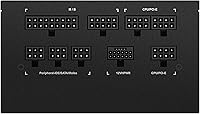
Most builders report a smooth and straightforward installation process, with the modular connectors seating firmly and the PSU fitting standard ATX bays without fitment issues. The clearly labeled modular ports reduce the chance of plugging in the wrong cable during a build, which is a small but appreciated usability detail.
Some users found the modular cables stiffer than expected, requiring extra effort to route cleanly behind the motherboard tray. This is a minor gripe in most reviews, but it's mentioned often enough across first-build accounts that it's worth flagging for builders working in particularly tight cases.
Packaging & Shipping Protection
61%
39%
The unit arrives in branded packaging that adequately protects against standard transit handling in most cases, and the majority of buyers receive their unit without incident. Accessories and modular cables are organized and easy to locate inside the box.
A recurring thread in negative reviews involves packaging that wasn't sufficient to protect the unit from rougher shipping handling, resulting in cosmetic or in rare cases functional damage on arrival. This isn't a universal problem, but it appears frequently enough to suggest the packaging margins are tighter than they should be for a relatively heavy unit.
Transient Load Handling
87%
For builders who have switched from older PSUs that would trip overcurrent protection during GPU load spikes, the ATX 3.0 design of this unit makes a tangible difference in day-to-day stability. Running demanding titles that stress both CPU and GPU simultaneously is where this benefit shows up most clearly.
The real-world improvement is hard to quantify without independent lab testing, and buyers who never experienced transient-related instability with their previous PSU may find the difference imperceptible. The benefit is real but situational, which means it's not equally valuable to every buyer.
Long-Term Reliability
74%
26%
Japanese capacitors and a hydraulic bearing fan are both components associated with better longevity compared to cheaper alternatives, and early buyers who have owned the unit for a year or more report no degradation issues. GIGABYTE's component selection here suggests an intent to build a unit that holds up over a multi-year lifespan.
The review pool of roughly 103 ratings is still relatively small, and long-term reliability data for a PSU typically requires three to five years of real-world ownership to become meaningful. Drawing strong conclusions about longevity from the current feedback base would be premature, and no major independent multi-year endurance reviews of this specific model have surfaced.
Single Rail Design
79%
21%
The single +12V rail configuration simplifies power delivery across the system, eliminating the rail-balancing concerns that can arise in multi-rail designs when high-draw components are unevenly distributed. For most gaming builds, this is the cleaner and more practical approach.
Users running highly specialized multi-component workloads — such as multiple high-power drives alongside a top-tier GPU and CPU — may prefer the added protection that a multi-rail design provides against localized overcurrent events. For the target gaming use case, this is rarely a concern, but it's worth noting for edge cases.
Compatibility Range
85%
The standard ATX form factor and broad connector set mean this PSU works with the overwhelming majority of mid-tower and full-tower cases and motherboards without any fitment or compatibility issues. Current-gen GPU users benefit from the native PCIe 5.0 connector, while the standard ATX peripheral and SATA connectors cover legacy storage devices without adapters.
The unit is explicitly incompatible with SFX and SFX-L compact cases, which rules it out for a growing segment of the small-form-factor builder market. Anyone building in a compact case should confirm ATX PSU support before considering this unit.

Suitable for:

The GIGABYTE GP-UD1000GM PG5 1000W Power Supply is a strong match for enthusiast PC builders who are installing a current-gen GPU like the RTX 4000 or RX 7000 series and want a native PCIe 5.0 connection without relying on adapter cables. If you're running a power-hungry flagship card — or planning an overclocked build where transient power spikes are a real concern — the ATX 3.0 certification here is genuinely useful, not just a checkbox feature. Builders who care about clean cable routing inside mid-tower or full-tower cases will appreciate the fully modular design, which lets you leave unused cables in the bag where they belong. It's also a smart and practical upgrade for anyone still on an older PSU that predates ATX 3.0 compliance, especially if they've experienced GPU-related instability under load. For value-focused enthusiasts who want reliable internal components and Gold-tier efficiency without spending up to a premium Seasonic or Corsair tier, this modular power supply hits a genuinely sensible price-to-quality point.
Not suitable for:

Buyers who demand the absolute highest voltage regulation, ultra-tight ripple suppression, or Platinum and Titanium efficiency ratings will find that the GIGABYTE GP-UD1000GM PG5 1000W Power Supply simply isn't competing at that level — and that's fine, as long as expectations are set correctly going in. Noise-sensitive builders targeting a near-silent workstation or HTPC build may be bothered by the fan behavior under sustained heavy loads, which some users describe as audible. If your GPU and CPU combination genuinely requires more than 1000W of sustained headroom — think extreme multi-GPU setups or heavily overclocked workstation rigs — this unit's capacity becomes a limiting factor. Buyers who have had poor experiences with GIGABYTE's product support or warranty handling may also want to research that angle before committing. And if you're building a modest mid-range system where a 650W or 750W Gold unit would cover your needs comfortably, the extra wattage here is wasted headroom that a better-matched PSU could cover for less money.
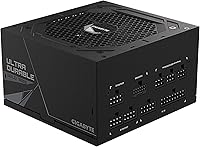
Specifications

  • Wattage: This unit delivers a continuous 1000W of power output, suitable for high-end single-GPU gaming and workstation builds.
  • Efficiency Rating: 80 Plus Gold certified, meaning it operates at roughly 87–90% efficiency under typical loads, reducing wasted energy as heat.
  • Form Factor: Standard ATX form factor, compatible with the vast majority of mid-tower and full-tower PC cases on the market.
  • Modular Design: Fully modular cabling allows users to connect only the cables required for their specific build, reducing clutter inside the case.
  • PCIe Connector: Includes a native 12+4 pin PCIe Gen 5.0 connector for direct compatibility with current-generation GPUs without requiring adapter cables.
  • ATX Standard: Intel ATX 3.0 certified, enabling reliable handling of sharp, short-duration GPU power transients that exceed the PSU's rated wattage momentarily.
  • Rail Config: Single +12V rail design simplifies power distribution to high-draw components like the CPU and GPU without requiring rail-balancing adjustments.
  • Capacitors: Equipped with Japanese brand capacitors, which are broadly considered a benchmark for long-term stability and reduced failure risk in PSU design.
  • Fan Size: A 120mm fan manages thermal output and internal airflow, spinning up based on load rather than running at full speed continuously.
  • Fan Bearing: Hydraulic bearing fan type offers a balance between noise levels and operational lifespan compared to sleeve-bearing alternatives.
  • Dimensions: The unit measures 5.9 x 5.51 x 3.38 inches, a standard ATX PSU footprint that fits most full-size PSU bays without modification.
  • Weight: Weighs approximately 6.16 pounds, which is within the normal range for a fully built 1000W ATX power supply.
  • Brand: Manufactured by GIGABYTE, a Taiwanese hardware company with a broad product line covering GPUs, motherboards, and PC peripherals.
  • Model Number: The official model designation is GP-UD1000GM PG5, part of GIGABYTE's PG5 power supply series targeting enthusiast builders.
  • Availability Date: This model was first made available in February 2023, positioning it as a launch-era ATX 3.0 and PCIe 5.0 compatible option.
  • Cooling Method: Air cooling via the integrated 120mm fan handles all thermal management; no liquid cooling or external airflow dependency is required.
  • Compatible Devices: Designed specifically for desktop PC builds, with particular focus on gaming systems running demanding discrete graphics cards.
  • BSR Ranking: Ranked #841 in Amazon's Computer Power Supplies category, reflecting a modest but established market presence since its release.

Related Reviews
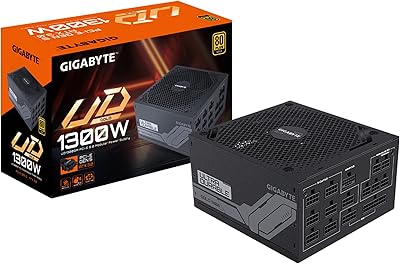
GIGABYTE GP-UD1300GM PG5 1300W Power Supply
82%
91%
Power Delivery Stability
88%
Build Quality
93%
Cable Management & Modularity
79%
Noise Level
94%
PCIe Gen 5.0 Compatibility
More
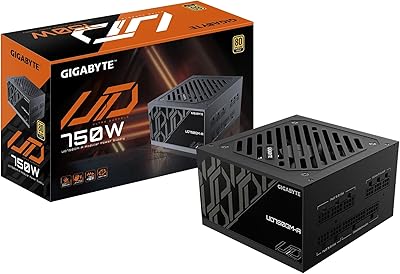
GIGABYTE GP-UD750GM-A 750W Modular Power Supply
83%
88%
Value for Money
91%
Cable Management
89%
Power Stability
84%
Build Quality
79%
Noise Level
More
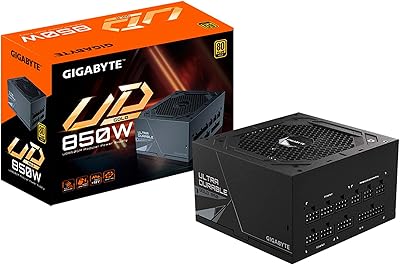
GIGABYTE GP-UD850GM 850W 80 Plus Gold Certified Fully Modular Power Supply
87%
92%
Energy Efficiency
89%
Cable Management
88%
Build Quality
85%
Noise Levels
90%
Ease of Installation
More
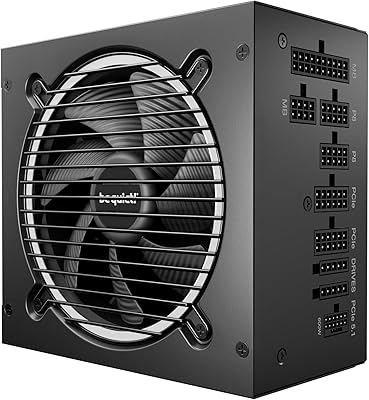
be quiet! Straight Power 12 1000W Power Supply
88%
94%
Quiet Operation
92%
Energy Efficiency
89%
Build Quality
90%
Modular Design and Cable Management
88%
Stability Under Load
More
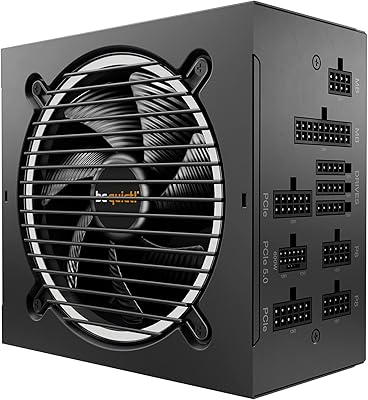
be quiet! Pure Power 13 M 1000W Power Supply
89%
92%
Performance
94%
Noise Level
89%
Build Quality
90%
Power Delivery Stability
88%
Cable Management
More
be quiet! Pure Power 12 M 1000W
85%
93%
Noise Level
89%
Efficiency & Power Delivery
91%
Build Quality
86%
Cable Quality & Flexibility
88%
Modular System Usability
More
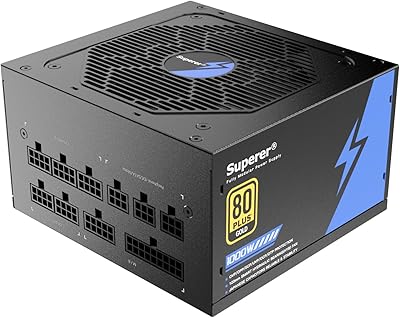
Superer ATX-1000GM 1000W ATX Power Supply
81%
88%
Value for Money
93%
Cable Management
89%
Noise Level
79%
Build Quality
84%
Power Stability
More
MYSWEETY 12V Power Supply 1000W
85%
88%
Performance
91%
Reliability
85%
Build Quality
92%
Cooling System
90%
Safety Features
More
GamePower GP-750 750W Power Supply
83%
87%
Energy Efficiency
91%
Noise Levels
82%
Build Quality
89%
Power Stability
85%
Protection Features
More
BOSYTRO 48V 1000W Switching Power Supply
85%
91%
Power Output
88%
Reliability
85%
Ease of Installation
83%
Thermals/Cooling
92%
Safety Certifications
More

FAQ

Yes, the GP-UD1000GM PG5 includes a native 12+4 pin PCIe 5.0 connector, so you can plug directly into an RTX 4090 or RX 7900 XTX without using the adapter cables that caused problems for some early adopters. That alone is a meaningful practical benefit if you're building around one of those cards.

ATX 3.0 is an updated power supply specification from Intel that requires the PSU to handle sudden, brief power spikes from your GPU — sometimes called transient loads — without shutting down or triggering overcurrent protection. Modern GPUs like the RTX 4000 series can momentarily draw significantly more power than their rated TDP during intense workloads, and older PSUs weren't designed to handle that gracefully. An ATX 3.0 unit like this one is built with that behavior in mind, which can translate to fewer unexplained crashes or shutdowns under load.

For a high-end build with an RTX 4090 or RX 7900 XTX paired with a power-hungry CPU, 1000W gives you comfortable headroom without pushing the PSU near its limits. That said, if your GPU is a mid-range card like an RTX 4070, you could likely get away with a 750W unit. Running a PSU at 50–70% of its capacity is actually where Gold-rated units tend to hit their efficiency sweet spot, so there's a real argument for sizing up if your components warrant it.

The unit itself is standard ATX size, so it won't physically fit in cases that require SFX or SFX-L form factor PSUs. For standard mid-tower or full-tower ATX cases, it fits normally. The fully modular design helps with routing in tighter cases since you only attach the cables you actually need, but the cable lengths are tuned for standard ATX builds rather than compact ones.

Under moderate loads — typical gaming sessions — the fan is relatively quiet and most users won't notice it over case fans or GPU fans. Under sustained, heavy loads like extended stress testing or running a demanding GPU at full throttle for long periods, the fan does spin up and becomes audible. It's not unusually loud for a PSU in this class, but if near-silence is a priority, it's worth noting.

GIGABYTE typically offers a warranty on their PG5 series PSUs, though the exact duration and terms can vary by region. It's worth verifying the warranty coverage directly with the retailer or GIGABYTE's regional support page before purchasing, since warranty service experience can vary by location.

They're a strong positive indicator, not a guarantee. Japanese capacitors from brands like Nippon Chemi-Con or Rubycon have a well-established reputation for holding their specifications over time and resisting heat-related degradation better than lower-grade alternatives. Using them is a sign that GIGABYTE invested in component quality, but no PSU is immune to failure, and real-world reliability also depends on operating conditions and build quality overall.

Yes, the fully modular design and 1000W capacity make it practical for builds with multiple storage drives, a high-end CPU, and a demanding GPU. The single +12V rail simplifies power distribution across components. Just make sure to account for the combined power draw of everything in your system using a PSU calculator before assuming 1000W is the right ceiling for your specific configuration.

Seasonic and Corsair's premium lines at this wattage tend to offer tighter voltage regulation, longer warranties, and more established reputations in independent PSU reviews. This modular power supply competes well on features — native PCIe 5.0, ATX 3.0, fully modular, Japanese caps — but doesn't necessarily match the top-tier build quality benchmarks of a Seasonic Focus GX or Corsair RM series. Whether that gap matters depends on how demanding your use case is and how long you plan to run the system.

The GP-UD1000GM PG5 does include a fan control mode that reduces fan activity at lower loads, though it may not be a fully passive zero-RPM mode like some competing units offer at higher price points. For everyday desktop use or light workloads, the fan will run at low speed or cycle down, keeping the unit quiet when your system isn't under significant stress.

Where to Buy