Overview

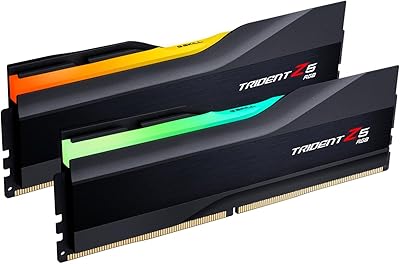
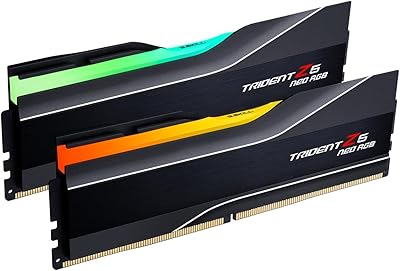
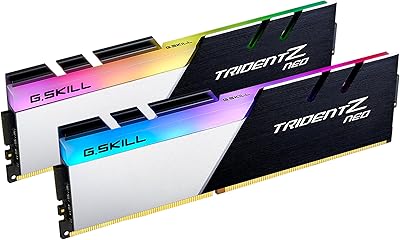
The G.SKILL Trident Z5 RGB DDR5-6400 64GB (2x32GB) sits firmly at the top end of what consumer DDR5 currently offers for desktop builds. Two matched 32GB modules running at 6400 MT/s give you a serious bandwidth advantage on compatible Intel platforms, particularly Z790 and Z890 boards. Getting that speed is straightforward — drop the kit in, enter your BIOS, and enable the Intel XMP 3.0 profile. That single step unlocks the rated speed without any manual tuning. For builders who want both high capacity and high frequency in a single matched dual-channel kit, this hits a combination that most DDR5 options simply don't offer at this density.
Features & Benefits

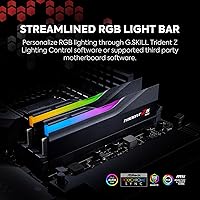
Running at DDR5-6400 with CL32 latency, this high-speed memory kit achieves something that higher-clocked DDR5 kits often sacrifice — tight timings alongside raw frequency. The 1.40V operating voltage is well within safe daily-use territory, so you are not pushing the modules hard to hit those speeds. It uses a standard 288-pin U-DIMM slot, meaning it fits any compatible desktop board without adapters or special slots. The heatspreader houses the RGB lighting, which integrates cleanly with popular motherboard lighting ecosystems. What matters more, though, is that the kit ships pre-tested as a matched pair, so dual-channel operation is reliable from the first boot without any fiddling.

Best For

This DDR5 kit is a strong fit for Intel platform enthusiasts — specifically those running 13th, 14th, or 15th gen processors on Z790, Z890, or B760 boards. If you are building a workstation for video editing, 3D rendering, or heavy multitasking, 64GB at this speed gives you headroom that smaller kits simply cannot. Gamers who want maximum memory bandwidth for titles that scale with it will also benefit. One important note: buy this as your complete memory solution. Mixing it with modules from another kit is unsupported and can cause instability or outright boot failures. If you need validated motherboard compatibility, G.SKILL's QVL lookup tool is worth checking before you order.

User Feedback

Owners of the Trident Z5 RGB consistently praise how little effort it takes to hit the rated speed — enable XMP, reboot, done. The overall satisfaction rating across hundreds of reviews is notably high for a premium kit. On the practical side, a number of buyers with large tower coolers flag the tall heatspreader as something to measure before purchasing; it is not a dealbreaker for most, but worth checking against your cooler clearance specs. RGB software compatibility draws positive mentions, particularly from those already in a compatible lighting ecosystem. The occasional complaint tends to relate to platform-specific quirks rather than any defect in the kit itself, which speaks well to build quality consistency.

Pros

  • Reaches rated DDR5-6400 speed with a single XMP 3.0 profile enable in BIOS — no manual tuning needed.
  • Ships as a factory-matched, pre-validated dual-channel pair for reliable stability from day one.
  • 64GB across two slots leaves remaining DIMM slots open for future configuration flexibility.
  • CL32 latency holds up well against higher-clocked alternatives that sacrifice timings for raw frequency.
  • 1.40V operating voltage is conservative enough for long-term daily use without stressing the modules.
  • RGB diffusion is smooth and even, integrating cleanly with major lighting ecosystems like ASUS Aura Sync.
  • G.SKILL maintains an active QVL database, making pre-purchase motherboard compatibility checks straightforward.
  • Strong track record of long-term stability reported by buyers running the kit for extended periods under heavy loads.
  • JEDEC default profile means the kit functions safely even on systems where XMP is not enabled.
  • Thermal management via the aluminum heatspreader is adequate for sustained workloads under normal airflow conditions.

Cons

  • Strictly limited to Intel Z890, Z790, and B760 platforms — AMD builders have no path to compatibility.
  • Heatspreader height can conflict with large tower CPU coolers, requiring a clearance check before buying.
  • Mixing this kit with modules from a different kit voids stability guarantees and risks boot failures.
  • B760 board users may need a BIOS update before the XMP profile is recognized at full speed.
  • Buyers outside major RGB ecosystems will find lighting customization options noticeably limited.
  • The price tier is hard to justify for users whose workloads would perform identically on a 32GB kit.
  • No printed installation guide is included, which can leave less experienced builders without a clear reference.
  • Incremental memory upgrades beyond 64GB require replacing the entire kit rather than simply adding modules.
  • RGB synchronization can occasionally desync after the system resumes from sleep, requiring a manual reset.
  • Platform dependency means this kit has reduced resale or reuse value if you switch to an AMD build later.

Ratings

The G.SKILL Trident Z5 RGB DDR5-6400 64GB (2x32GB) earns consistently strong marks across verified buyer reviews worldwide, and the scores below reflect an AI-assisted analysis that filtered out incentivized submissions and outlier bot activity to surface what genuine users actually experienced. This kit draws praise for its out-of-the-box speed consistency and build confidence, but real-world feedback also surfaces specific friction points around physical fitment and platform dependency that serious buyers deserve to know upfront. Both the strengths and the edge cases are reflected honestly in the scores that follow.
Rated Speed Accuracy
94%
An overwhelming share of buyers confirm the kit hits its advertised 6400 MT/s after a single XMP profile activation in BIOS, with no additional manual tuning required. For users who have dealt with DDR5 kits that require fiddling to reach rated specs, this consistency stands out as a genuine differentiator.
A small subset of users on B760 boards report the XMP profile required a BIOS update before the rated speed was recognized, which adds a step that less experienced builders may not anticipate. This is largely a platform caveat rather than a kit defect, but it does affect first-boot expectations.
Stability & Reliability
91%
Daily workloads including prolonged gaming sessions, video rendering, and heavy multitasking are handled without crashes or memory errors according to the bulk of long-term reviewers. The matched, pre-validated dual-channel configuration clearly contributes to how predictably stable the kit behaves across different supported builds.
Isolated reports mention instability when users attempted to combine this kit with a third-party module, which aligns with the manufacturer warning against mixing kits. While these cases are user-driven rather than product failures, they do appear in feedback and are worth noting for builders considering future expansion.
Compatibility Range
78%
22%
Validation across Intel Z890, Z790, and B760 platforms is well-documented, and G.SKILL maintains an active QVL database that buyers find genuinely useful for cross-referencing their specific motherboard before purchasing. For users building within those supported ecosystems, compatibility is rarely an issue.
The kit is strictly Intel-platform specific, which immediately excludes AMD Ryzen builders regardless of budget. Even within Intel's lineup, older platform users find no support, and a handful of B760 buyers report needing extra steps compared to Z790 and Z890 users who get a smoother experience.
Physical Fitment & Clearance
71%
29%
The heatspreader design is sleek and the overall module height is acceptable for mid-tower and full-tower builds running mid-profile CPU coolers. Buyers using popular air coolers in the 150–160mm height range generally report no interference with the nearest DIMM slot.
Builders running taller tower coolers — particularly those exceeding 165mm — flag clearance as a real concern, especially with the module seated in the slot closest to the CPU socket. This is a pre-purchase measurement check that the product listing does not emphasize strongly enough, catching some buyers off guard.
RGB Lighting Quality
83%
The RGB diffusion through the heatspreader is smooth and even, with no obvious dead zones or hotspots that cheaper kits often show. Users who are already invested in ASUS Aura Sync or MSI Mystic Light ecosystems report clean integration without needing third-party workarounds.
Buyers outside the major RGB software ecosystems find the lighting less flexible to customize, and a few users note that synchronization can occasionally desync after a system resume from sleep. It is a secondary feature for most buyers in this category, but when it does not work perfectly it draws disproportionate frustration.
Value for Money
69%
31%
For the specific combination of 64GB capacity and DDR5-6400 speed in a single matched kit, the pricing sits at a level that reflects genuine market positioning rather than brand inflation. Buyers who need this exact density and speed profile find that alternatives at a similar price point often require compromising on one dimension or the other.
For builders who do not specifically need 64GB or who are gaming on a system where 32GB would suffice, the cost is difficult to justify based on real-world performance gains. Budget-conscious buyers consistently note in reviews that the premium over slower or lower-capacity DDR5 kits is steep unless the full spec is truly necessary.
Thermal Performance
86%
The aluminum heatspreader keeps module temperatures well-managed during sustained workloads, and buyers running memory-intensive tasks like large dataset processing or 4K video exports report no thermal throttling under normal chassis airflow. Passive cooling is adequate for the voltage and speed this kit operates at.
In poorly ventilated cases or mini-ITX builds with restricted airflow, a small number of users have observed slightly elevated temperatures during prolonged stress scenarios. This is not a common complaint, but it is worth considering for compact builds where case airflow is already a limiting factor.
Ease of Setup
89%
The XMP 3.0 profile makes the initial configuration genuinely painless — install the modules, enter BIOS, enable XMP, save and reboot. For first-time DDR5 builders or those upgrading from DDR4, the lack of manual sub-timing adjustments needed to reach rated speed is a practical advantage most reviewers appreciate.
Users who are unfamiliar with BIOS navigation may not immediately know where to find XMP settings, and some boards label it differently (Intel XMP vs. A-XMP vs. DOCP). The kit itself offers no guidance on this, so complete beginners may need to consult a motherboard manual before getting the most out of it.
Packaging & Presentation
81%
19%
The retail packaging is sturdy and clearly reflects the premium positioning of the product, with modules secured in protective trays that prevent shipping damage. Buyers purchasing as a gift or for a high-end showcase build appreciate that the unboxing experience matches expectations for the price tier.
There are no printed quick-start guides or installation aids included in the box, which is a minor omission that budget kits sometimes handle better. A few buyers mention they expected more documentation given the price, though in practice most find setup intuitive enough without it.
Build & Component Quality
92%
The heatspreader construction feels solid and uniform, with no flex or loose sections reported across the reviewer base. Long-term buyers who have used the kit for over a year describe it as holding up exactly as expected, with no degradation in performance or physical condition.
There is very little to criticize here from a material standpoint. The only recurring mention is that the matte black finish, while clean, can show fingerprints during installation — a purely cosmetic observation that has no bearing on function.
Dual-Channel Performance
93%
As a factory-matched pair, the two modules operate in synchronized dual-channel mode reliably from the first boot without any manual intervention. Buyers running memory bandwidth benchmarks consistently report results that align with theoretical DDR5-6400 dual-channel throughput figures.
Dual-channel is only fully utilized when both slots are populated correctly per the motherboard manual, and a small number of reviewers initially seated the modules in the wrong slots and saw degraded performance. This is a user error rather than a kit limitation, but it appears in feedback often enough to be worth flagging.
Long-Term Stability
88%
Extended use cases — including machines left running under load for days — show no reported increases in instability over time according to buyers who have been running the kit for six months or more. The consistent voltage ceiling of 1.40V appears to support long-term component health well.
Long-term data is naturally limited for a kit introduced in late 2022, and the broader DDR5 ecosystem is still relatively young. A small number of users mention uncertainty about how DDR5 will age compared to the more established DDR4 generation, though this is a category-level concern rather than a product-specific one.
Software Ecosystem
76%
24%
RGB control through major platforms like ASUS Aura Sync and MSI Mystic Light works reliably for most users, and there are no reports of software conflicts with common monitoring tools like HWiNFO or CPU-Z. The kit is recognized correctly by memory diagnostic utilities without requiring driver installations.
G.SKILL's own lighting software receives mixed feedback for its interface design, and users outside the two or three dominant RGB ecosystems find fewer options for deep customization. It is not a core reason to buy or avoid this kit, but buyers heavily invested in a less common RGB platform should check compatibility first.
Module Density & Scalability
74%
26%
Having 64GB across just two slots leaves the remaining two DIMM slots open on a standard ATX board, which gives builders a clear upgrade path if memory needs grow — though G.SKILL recommends against mixing kits. For workstation use cases, starting at 64GB with room to expand is a practical configuration.
G.SKILL explicitly warns against mixing this kit with other modules, which effectively limits expansion to replacing the entire kit rather than supplementing it. For buyers who may want to reach 128GB incrementally, this is a real constraint that requires planning a full replacement rather than a gradual upgrade.

Suitable for:

The G.SKILL Trident Z5 RGB DDR5-6400 64GB (2x32GB) is purpose-built for enthusiast desktop builders who are not willing to compromise on either speed or capacity. If you are running an Intel Z790 or Z890 platform and doing work that genuinely taxes memory bandwidth — think 4K video editing, 3D rendering, large dataset processing, or streaming while gaming — this kit gives you headroom that 32GB configurations simply cannot match. Content creators who keep multiple heavy applications open simultaneously will notice the difference between being memory-constrained and not, and 64GB at this speed puts that concern to rest. Gamers building a flagship rig who want both high performance and a clean, RGB-lit aesthetic will find the Trident Z5 RGB checks both boxes without forcing any trade-offs. It is also a smart choice for anyone who wants to populate their DIMM slots with a single matched kit upfront rather than managing compatibility risks by mixing modules later.
Not suitable for:

If you are building on an AMD Ryzen platform, this DDR5 kit is simply not for you — full stop, no workaround. Buyers on older Intel platforms outside the Z890, Z790, and B760 ecosystem will hit the same wall. For anyone who genuinely only needs 32GB of memory, the premium attached to this level of capacity and speed is difficult to rationalize based on real-world performance differences in everyday tasks or even most gaming scenarios. Compact build enthusiasts running mini-ITX cases or pairing their memory with a tall tower cooler should measure clearance carefully before ordering, since the heatspreader height can conflict with certain CPU cooling configurations. Budget-conscious upgraders who are looking for a capable but more modest DDR5 kit will find that the cost difference between this and a mid-range DDR5 option outpaces the tangible gains for typical use cases. Finally, anyone hoping to expand their memory incrementally by adding more modules later should know that mixing this kit with other sticks is unsupported and risks system instability.

Specifications

  • Total Capacity: The kit provides 64GB of total memory across two matched 32GB DDR5 U-DIMM modules.
  • Memory Speed: Modules are rated to operate at 6400 MT/s under the Intel XMP 3.0 profile.
  • Latency Timings: Primary timings are set at CL32-39-39-102, delivering a competitive latency profile for the DDR5-6400 speed tier.
  • Operating Voltage: The kit runs at 1.40V under XMP, a conservative figure that supports long-term daily operation on supported platforms.
  • Memory Type: Non-ECC DDR5 SDRAM in U-DIMM form factor, designed exclusively for desktop PC motherboards.
  • Pin Configuration: Each module uses the standard 288-pin DDR5 interface compatible with desktop DIMM slots.
  • Profile Support: Includes both a JEDEC default profile for basic compatibility and an Intel XMP 3.0 profile for full rated performance.
  • Platform Support: Validated for Intel Z890, Z790, and B760 chipset-based motherboards; not compatible with AMD platforms.
  • Kit Configuration: Sold as a matched, factory-tested dual-channel pair intended to be used together as a complete set.
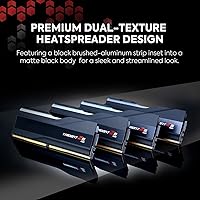
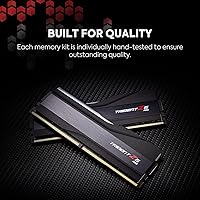
  • RGB Lighting: Each module features RGB lighting integrated directly into the aluminum heatspreader, compatible with major motherboard lighting ecosystems.
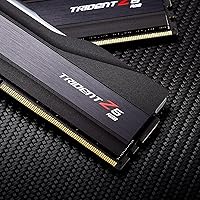
  • Heatspreader: An aluminum heatspreader covers both modules, providing passive thermal dissipation and housing the RGB diffuser.
  • Module Dimensions: Each module measures 1.1 x 9.7 x 6.5 inches (LxWxH), with heatspreader height being a relevant factor for CPU cooler clearance.
  • Kit Weight: The total kit weighs approximately 6.4 ounces including both modules and heatspreaders.
  • Model Number: The exact model identifier for this kit is F5-6400J3239G32GX2-TZ5RK, useful for QVL and motherboard compatibility verification.
  • Product Series: Part of G.SKILL's flagship Trident Z5 RGB family, positioned at the high end of the consumer DDR5 lineup.
  • Form Factor: U-DIMM desktop form factor only; this kit is not compatible with laptops, servers, or workstation RDIMM slots.
  • ECC Support: Non-ECC configuration means error-correcting code is not supported, which is standard for consumer desktop memory.
  • First Available: This kit was introduced to the market in October 2022, coinciding with the broader rollout of Intel DDR5 platform support.

Related Reviews
G.SKILL Trident Z5 RGB DDR5 64GB (2x32GB) 6000MT/s
87%
93%
Performance
89%
RGB Lighting
91%
Installation Ease
78%
Compatibility
87%
Value for Money
More
G.SKILL Trident Z5 RGB 32GB DDR5-7200 CL34
91%
95%
Overall Performance
93%
Overclocking Stability
94%
Speed & Latency
91%
Build Quality
88%
Thermal Management
More
G.SKILL Trident Z RGB DDR4 64GB (2x32GB) 3200MT/s CL16
87%
94%
Performance
90%
RGB Customization
88%
Installation and Setup
92%
Value for Money
86%
Compatibility with Intel & AMD
More
G.SKILL Trident Z5 Neo RGB DDR5 32GB (2x16GB) 6000MT/s
86%
91%
Performance in Gaming
88%
Overclocking Ease
84%
RGB Aesthetics
93%
Compatibility with Intel & AMD
89%
Multitasking Performance
More
G.SKILL Trident Z5 Neo RGB DDR5 32GB (2x16GB) 8000MT/s
88%
94%
Performance
92%
Gaming Performance
89%
Ease of Setup
90%
RGB Customization
88%
Stability
More
G.SKILL Trident Z5 RGB DDR5 96GB (2x48GB) 6400MT/s Memory Kit
88%
94%
Performance Boost for Gaming
91%
Ease of Installation (XMP Support)
85%
RGB Lighting Customization
90%
Overall Build Quality
88%
Capacity for Multitasking
More
G.SKILL Trident Z5 RGB DDR5 48GB (2x24GB) 8000MT/s Memory Kit
87%
92%
Performance
90%
Ease of Overclocking
87%
Build Quality
88%
Aesthetics/Design
93%
Compatibility with Intel XMP
More
G.SKILL Trident Z Neo 64GB (2x32GB) DDR4-3600 RAM
88%
94%
Performance
91%
Overclocking Stability
88%
Design & Aesthetics
89%
Compatibility with Intel/AMD Systems
87%
Ease of Setup
More
G.SKILL Ripjaws S5 DDR5 64GB (2x32GB) 6000MT/s RAM
86%
94%
Performance
88%
Ease of Installation
91%
Stability
89%
Overclocking Potential
86%
Energy Efficiency
More
G.SKILL Flare X5 DDR5-6000 64GB (2x32GB) CL30
79%
91%
EXPO Compatibility & Setup
88%
Performance at Rated Speed
83%
Capacity Value (64GB)
71%
Platform Compatibility Range
89%
Stability Under Sustained Load
More

FAQ

Yes, one step is required. After installing the modules, enter your motherboard BIOS, find the memory or overclocking settings, and enable the XMP profile. The exact label varies by board — some call it XMP, others use A-XMP or similar — but once enabled and saved, the system will boot at the rated speed automatically. Without this step, the kit defaults to a lower JEDEC speed, which is stable but not what you paid for.

Unfortunately, no. This kit is validated exclusively for Intel platforms using Z890, Z790, and B760 chipsets. AMD systems use a different memory overclocking standard and the XMP 3.0 profile here is Intel-specific. If you are on Ryzen, you will need to look at a DDR5 kit that supports AMD EXPO profiles instead.

It can, depending on your cooler. The modules stand approximately 6.5 inches tall including the heatspreader, which puts them in conflict with some tower coolers that extend over the first DIMM slot. Before ordering, check your CPU cooler's listed DIMM clearance specification, or simply measure the distance between your cooler's base and the nearest DIMM slot. Most standard mid-tower coolers in the 150–160mm height range clear it fine, but taller models are worth double-checking.

Technically the slots are there, but G.SKILL strongly advises against mixing this kit with modules from a different kit. Different lots, speeds, or brands can cause instability, POST failures, or force the system to run at a lower speed. If you need to reach 128GB down the line, the safest path is to replace this kit entirely with a matched 128GB configuration rather than supplementing it.

Yes, it does. The kit includes a JEDEC default profile that allows it to run at a lower, universally safe speed on any compatible platform right out of the box. This is useful if you are troubleshooting or if your board does not support XMP. Just keep in mind you will not be getting anywhere near the rated 6400 MT/s performance until you enable the XMP profile in BIOS.

This depends on your specific motherboard, so check your manual first. Most boards designate two slots for dual-channel operation — commonly labeled A2 and B2, though some boards differ. Installing both modules in the correct paired slots is important because using the wrong slots can force the system into single-channel mode, which significantly reduces effective memory bandwidth.

No, the RGB will light up by default without any software. However, if you want to synchronize the lighting with your motherboard or other components, you will need your motherboard's RGB control software — such as ASUS Aura Sync, MSI Mystic Light, or Gigabyte RGB Fusion. G.SKILL also offers its own lighting software if you prefer direct control, though user feedback on that interface is more mixed than the motherboard-native options.

It is genuinely well-suited for both. For content creation specifically — video editing, 3D rendering, large file processing — 64GB at DDR5-6400 speeds provides meaningful headroom that a 32GB kit cannot. Applications that load large assets into memory or process data in parallel benefit directly from both the capacity and the bandwidth this kit delivers. Gaming alone would not require this much memory, but for a dual-purpose workstation and gaming rig, it makes a strong case for itself.

G.SKILL maintains a QVL (Qualified Vendor List) database on their official website where you can search by memory model number and cross-reference compatible motherboards. You can also use their RAM Configurator tool, which lets you search by motherboard model to find validated kits. This is the most reliable way to confirm compatibility before purchasing, especially if you are on a B760 board where support can vary more than on Z790 or Z890.

Technically you could install a single module, but you would lose dual-channel operation and drop to half your total capacity. For a proper replacement, it is best to contact G.SKILL support directly and explain the situation. They may be able to supply a matching replacement module. That said, mixing a new stick with an old one from a different production batch can introduce instability, so a full kit replacement is generally the more reliable resolution if both modules are needed for your workload.