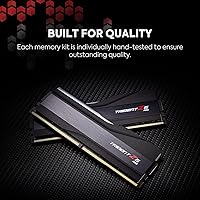
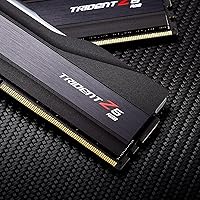
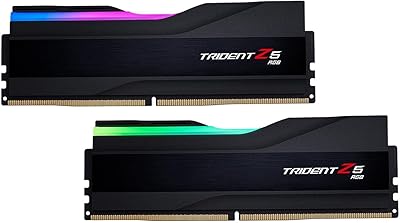
Overview

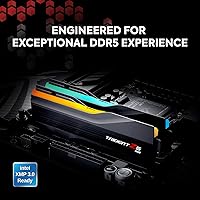
The G.SKILL Trident Z5 RGB 32GB DDR5-7200 RAM Kit sits firmly at the top end of what consumer DDR5 memory can currently offer for Intel desktop platforms. DDR5-7200 MT/s is a meaningful step above the more common 5600–6400 speeds found in mainstream kits — faster bandwidth translates to real gains in memory-intensive workloads, even if everyday browsing won't notice the difference. This DDR5-7200 kit ships as a matched 2×16GB pair, which matters more than many buyers realize; running mismatched modules can introduce instability or force the system to drop to slower speeds. The RGB lighting is tasteful rather than loud, and it's worth noting upfront that unlocking the rated speeds requires a compatible Intel motherboard through XMP 3.0 — specifically Z790 or Z890.
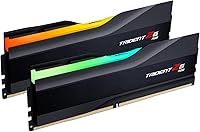
Features & Benefits

The headline spec here is the XMP 3.0 overclock profile, which lets you hit DDR5-7200 with a single BIOS toggle rather than manually tuning dozens of parameters — a genuine convenience for builders who want top performance without deep memory expertise. The CL34 primary latency is tighter than you typically see at this speed tier, meaning the memory not only moves data fast but responds quickly, which benefits CPU-bound scenarios. Running at 1.40V keeps thermals manageable for a high-frequency kit. The modules are non-ECC U-DIMMs built for desktop use, not servers, and the RGB integrates with popular lighting software ecosystems. One firm reminder: never mix modules — adding a different kit or a third stick can destabilize the entire system.

Best For

This DDR5-7200 kit makes the most sense for Intel platform enthusiasts — specifically those running Z790 or Z890 boards who want to push memory bandwidth as far as current mainstream hardware allows. It's also a strong fit for hybrid users: people who game but also run video exports, 3D renders, or large data sets where faster memory throughput produces measurable time savings. If you're coming from DDR4 and want a kit with real headroom that won't feel outdated in two or three years, this high-speed memory kit is a credible long-term choice. That said, if you're not comfortable entering the BIOS to enable XMP, plug-and-play expectations will lead to disappointment — modules default to JEDEC speeds straight out of the box.

User Feedback

Across roughly 277 ratings, the Trident Z5 RGB modules hold a 4.6-star average — a score built on consistent reports of stable XMP performance once that BIOS profile is enabled. Buyers frequently note that physical build quality feels solid and premium, and RGB uniformity earns positive remarks for a kit in this category. The recurring criticism involves BIOS compatibility friction — certain motherboard brands require a firmware update before the XMP profile loads cleanly, which catches first-time DDR5 builders off guard. A small number of reviewers also found the initial setup less straightforward than expected. Real-world feedback confirms tangible gains over DDR5-6000 kits in rendering and compression tasks, though the difference in casual gaming is considerably less pronounced.

Pros

  • Hits DDR5-7200 reliably once XMP 3.0 is enabled — no manual tuning required for most users.
  • CL34 primary latency is impressively tight for memory running at this speed tier.
  • The matched 2×16GB dual-channel configuration gives stable, consistent performance out of the box.
  • Build quality feels premium — modules are solid, well-finished, and free of the cheap-plastic feel some competitors have.
  • RGB lighting is bright and even across both sticks, a genuine plus for windowed builds.
  • Real-world gains over DDR5-6000 kits are noticeable in rendering, compression, and content creation workloads.
  • 1.40V operating voltage keeps the kit running cool enough for extended sessions without active cooling.
  • The Trident Z5 RGB modules carry a strong community reputation for long-term reliability on validated Intel boards.
  • At 32GB total, this high-speed memory kit covers gaming, multitasking, and moderate creative workloads without compromise.
  • G.SKILL provides a validated QVL and RAM configurator tool, making motherboard compatibility research straightforward.

Cons

  • Limited strictly to Intel Z790 and Z890 platforms — AMD users have no supported path here.
  • Defaults to slow JEDEC speeds without BIOS intervention, which can confuse buyers expecting automatic performance.
  • Some motherboards need a firmware update before the XMP 3.0 profile loads cleanly, adding unexpected setup steps.
  • The performance premium over mid-range DDR5 kits is workload-dependent — pure gaming gains are modest at best.
  • 32GB is a fixed ceiling; expanding capacity later means replacing the entire kit, not just adding sticks.
  • Price sits at the high end of the consumer DDR5 market, making value-per-dollar a tough argument for budget-focused builders.
  • RGB software compatibility can vary by motherboard ecosystem, occasionally requiring extra configuration effort.
  • No ECC support, so it is not a viable option for users who need error-correcting memory for professional workstation tasks.

Ratings

Our AI rating system analyzed verified buyer reviews for the G.SKILL Trident Z5 RGB 32GB DDR5-7200 RAM Kit from global sources, actively filtering out incentivized, duplicate, and bot-generated feedback to surface what real users actually experience. The scores below reflect both the genuine strengths that make this high-speed memory kit stand out and the friction points that some buyers encounter — nothing has been glossed over. Whether you're an enthusiast chasing maximum bandwidth or simply trying to figure out if this DDR5-7200 kit is worth the premium, these scorecards give you an honest picture.
Rated Speed Stability
91%
Once XMP 3.0 is enabled in the BIOS, the vast majority of buyers report that the Trident Z5 RGB modules hit DDR5-7200 and hold it without throttling or crashing during extended gaming sessions, rendering jobs, or overnight stress tests. That consistency at such a high frequency is exactly what enthusiast builders are paying for.
A minority of users — particularly those on certain ASUS and MSI Z790 boards — reported needing a motherboard firmware update before the XMP profile would post cleanly. Until that update is applied, the kit defaults to JEDEC speeds, which can confuse buyers into thinking something is defective.
XMP Setup Experience
74%
26%
For builders already comfortable navigating BIOS menus, enabling the XMP 3.0 profile is a one-toggle process that takes under two minutes. Most experienced users describe the process as painless, and once set, the profile persists reliably across reboots and power cycles.
First-time DDR5 builders frequently hit a frustrating wall where the system either ignores the XMP setting or boots into safe mode at JEDEC speeds without explanation. The kit offers no in-box guidance beyond a brief warning label, leaving newer users to troubleshoot via forums rather than documentation.
Real-World Performance
83%
Users doing video exports, large archive compression, and multi-application workloads report tangible time savings compared to their previous DDR5-6000 or DDR4 setups. In content creation pipelines specifically, faster memory bandwidth compounds with CPU performance in ways that show up on the stopwatch.
Pure gaming performance gains over a well-tuned DDR5-6000 kit are modest and workload-specific — most frame rate benchmarks show single-digit percentage differences in typical titles. Buyers expecting a dramatic in-game transformation may come away underwhelmed relative to the price premium.
Build Quality
93%
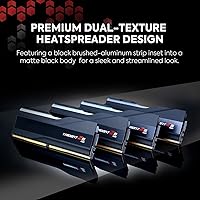
The aluminum heatspreader on this high-speed memory kit feels noticeably more substantial than competing kits in a similar tier — no flex, no hollow rattle, and the matte black finish holds up without visible scratching during installation. Multiple buyers specifically commented on how premium the modules feel compared to prior G.SKILL generations.
The tall heatspreader profile, while visually appealing, creates real clearance conflicts with large tower coolers that overhang the first DIMM slot. A handful of buyers had to temporarily remove or reposition their CPU cooler fan during installation, which is a minor but genuine inconvenience.
RGB Lighting Quality
86%
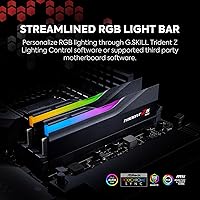
Lighting is bright, even across both modules, and the diffusion strip produces a smooth gradient without visible LED hotspots — something budget RGB kits frequently fail at. Builders with windowed cases and coordinated lighting setups consistently rate the visual output as a genuine highlight of their finished build.
Software synchronization with motherboard RGB ecosystems is not always automatic and can require additional driver or app configuration depending on the board brand. A few buyers on less common motherboard brands found that the lighting defaulted to a static color with no easy path to sync it without third-party tools.
Platform Compatibility
67%
33%
On validated Intel Z790 and Z890 boards from major brands like ASUS, Gigabyte, and MSI, the kit slots in and registers correctly without issue in the large majority of reported cases. G.SKILL also provides a publicly accessible QVL and RAM configurator tool that helps narrow down supported board pairings before purchase.
The kit is strictly limited to Intel Z790 and Z890 platforms, which immediately excludes AMD users entirely. Even within the Intel ecosystem, some Z790 boards required BIOS updates to recognize the XMP 3.0 profile, and Z690 users hoping to run this kit at rated speeds are largely out of luck.
Value for Money
69%
31%
For builders who genuinely push their systems through content creation, scientific simulation, or heavy multitasking, the premium over a DDR5-6000 kit buys real, measurable productivity over time. The kit's long-term headroom also means it is unlikely to become a bottleneck as software becomes more memory-hungry.
For the significant portion of buyers whose primary use is gaming, the price-to-performance ratio is difficult to defend against more affordable DDR5-6000 alternatives that close most of the gap in gaming benchmarks. The Trident Z5 RGB modules sit at a price point where the value argument is workload-dependent rather than universal.
Thermal Management
88%
Running at 1.40V, this DDR5-7200 kit generates noticeably less heat than earlier high-frequency DDR5 kits that pushed 1.45V or higher. Users with good case airflow report stable temperatures without needing to add dedicated memory cooling, even during prolonged stress testing.
In poorly ventilated cases or builds with obstructed airflow near the DIMM slots, temperatures can creep up during sustained workloads — not dangerously, but enough that a small number of users noticed thermal throttling artifacts in memory-intensive applications. Adding a case fan directed at the memory area resolved the issue in most reported cases.
Installation Experience
79%
21%
Physically installing the modules is straightforward — standard DDR5 U-DIMM slot insertion with a satisfying click. Buyers running mid-tower cases with reasonable clearance had no issues getting both sticks seated properly, and the matte black finish makes it easy to visually confirm correct orientation.
The tall heatspreader creates slot access difficulties in compact ITX cases and with certain all-in-one liquid cooler mounting arrangements. A few small-form-factor builders reported that the heatspreader height forced them to rethink their build layout, though this is a case compatibility issue rather than a flaw in the kit itself.
Matched Kit Reliability
89%
Buyers who followed G.SKILL's guidance and ran the kit strictly as a matched pair reported excellent long-term stability with no degradation in performance scores or system behavior over months of daily use. The matched-kit engineering approach shows consistent results across a wide range of Z790 builds.
The absolute prohibition on mixing modules is a real practical limitation — adding capacity later means replacing the entire kit rather than simply adding sticks. A handful of users who attempted to run this kit alongside a spare module from a previous build experienced intermittent crashes that only resolved after removing the mismatched stick.
Out-of-Box Documentation
52%
48%
The physical packaging is clean and protective, and the modules arrive well-secured. Enthusiast buyers who already know how DDR5 XMP works generally find everything they need without consulting any documentation at all.
The included documentation is minimal to the point of being unhelpful for newer builders — there is no clear printed guide explaining that XMP must be enabled manually or what to do if the system posts at JEDEC speeds. This gap in onboarding is a recurring source of frustration in buyer reviews from less experienced users.
Longevity & Future-Proofing
84%
DDR5-7200 with CL34 timings sits at the high end of what consumer platforms support today, giving this high-speed memory kit meaningful headroom as software and operating systems increasingly optimize for faster memory. Buyers who plan to keep their platform for three or more years will likely find this kit does not become the bottleneck anytime soon.
DDR5 is still evolving rapidly, and newer kits are already pushing toward DDR5-8000 and beyond on the same platforms, which means the performance ceiling here — impressive today — will feel less exceptional in two to three years. For buyers chasing the absolute bleeding edge, the upgrade cycle for premium memory has shortened considerably.
Aesthetic Design
87%
The matte black heatspreader with the clean RGB strip hits a balance that works equally well in all-black stealth builds and in colorful enthusiast rigs. Buyers consistently describe the Trident Z5 RGB modules as looking more intentional and refined than their previous RAM, which is a meaningful detail in a windowed build.
The design is only available in a small number of color variants, and buyers who want a white or silver heatspreader for white-themed builds need to look at a different Trident Z5 SKU rather than this specific kit. The tall heatspreader also means the RGB strip is partially hidden behind some CPU cooler configurations.

Suitable for:

The G.SKILL Trident Z5 RGB 32GB DDR5-7200 RAM Kit is built for a specific kind of buyer: someone on an Intel Z790 or Z890 platform who wants to extract every bit of memory bandwidth their system can handle. This is the kind of kit that makes sense for hybrid users — people who game seriously but also push their machines through video editing timelines, 3D rendering queues, or large file compression jobs where faster memory throughput produces real, measurable time savings. Builders coming from DDR4 who want a DDR5 kit with enough headroom to stay relevant for several years will find this DDR5-7200 kit a worthwhile long-term investment. It also suits the aesthetics-conscious builder who wants RGB that looks deliberate and clean rather than garish, without sacrificing performance for the sake of looks. If you are comfortable spending a few minutes in your BIOS enabling the XMP 3.0 profile, the setup process is straightforward enough for intermediate builders.
Not suitable for:

The G.SKILL Trident Z5 RGB 32GB DDR5-7200 RAM Kit is a poor fit for buyers on AMD platforms — it simply was not validated for them, and chasing XMP compatibility outside of Intel Z790 or Z890 boards is a recipe for frustration. Casual users who primarily browse, stream, or run office software will see no practical benefit over a mainstream DDR5-5600 kit that costs considerably less, making this high-speed memory kit difficult to justify on pure value grounds for light workloads. Anyone expecting true plug-and-play operation should also think carefully — modules default to slower JEDEC speeds out of the box, and enabling the rated DDR5-7200 profile requires navigating BIOS settings, which newer builders may find intimidating. Buyers who already own other DDR5 modules and want to add capacity should look elsewhere entirely, since mixing this kit with non-identical sticks risks instability or forces the system to run at reduced speeds. Finally, if budget efficiency is the priority, the performance delta between DDR5-7200 and a good DDR5-6000 kit does not justify the price gap for purely gaming-focused machines.
Specifications

  • Total Capacity: This kit provides 32GB of total memory across two 16GB modules configured for dual-channel operation.
  • Memory Type: Modules are DDR5 U-DIMM (non-ECC), designed exclusively for desktop PC use and incompatible with laptop or server sockets.
  • Speed Rating: The kit is rated at 7200 MT/s when operating under the included Intel XMP 3.0 overclock profile.
  • Primary Latency: CAS latency is CL34, with full primary timings of 34-45-45-115 — notably tight for memory operating at this speed tier.
  • Operating Voltage: Modules run at 1.40V under the XMP profile, which is within a safe and thermally manageable range for extended desktop use.
  • Profile Support: Each module carries both a JEDEC default profile for out-of-box compatibility and an Intel XMP 3.0 profile for rated-speed operation.
  • Pin Configuration: Standard 288-pin DDR5 U-DIMM layout, fitting all desktop motherboards with a DDR5-compatible memory slot.
  • Platform Support: Validated for Intel Z890 and Intel Z790 chipset platforms; AMD platforms and older Intel chipsets are not officially supported.
  • ECC Support: These modules are non-ECC, meaning they do not provide error-correcting functionality and are not suited for professional workstation tasks requiring data integrity guarantees.
  • RGB Lighting: Both modules feature addressable RGB lighting along the heatspreader, compatible with popular motherboard lighting ecosystems.
  • Heatspreader Color: The aluminum heatspreader finish is Matte Black, giving the kit a clean, understated look inside a windowed case.
  • Module Dimensions: Each module measures 6.3×5.4×0.59 inches, which is a standard tall-heatspreader profile that may conflict with large tower CPU coolers.
  • Kit Weight: The full kit weighs 6.2 ounces, consistent with dual-module DDR5 kits using full-height aluminum heatspreaders.
  • Model Number: The official G.SKILL model identifier for this exact kit is F5-7200J3445G16GX2-TZ5RK, useful for verifying QVL compatibility on motherboard manufacturer websites.
  • Module Count: This is a two-module kit; G.SKILL explicitly advises against mixing it with modules from other kits or adding a third stick.
  • Product Series: This kit belongs to the Trident Z5 RGB family, G.SKILL's flagship consumer DDR5 line oriented toward high-frequency enthusiast builds.
  • Release Date: This specific kit configuration first became available in November 2022, coinciding with the early expansion of the Intel DDR5 platform ecosystem.

Related Reviews
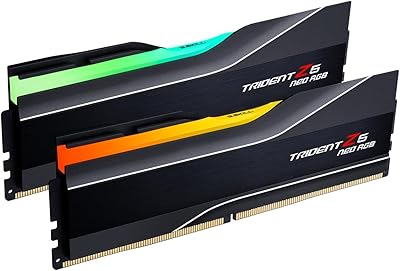
G.SKILL Trident Z5 Neo RGB 32GB RAM
84%
94%
Raw Memory Performance
89%
AMD EXPO Compatibility
86%
Stability Under Load
91%
Installation & Setup Experience
63%
Motherboard Compatibility Breadth
More
G.SKILL Trident Z5 Neo RGB DDR5 32GB (2x16GB) 6000MT/s
86%
91%
Performance in Gaming
88%
Overclocking Ease
84%
RGB Aesthetics
93%
Compatibility with Intel & AMD
89%
Multitasking Performance
More
G.SKILL Trident Z5 RGB 96GB DDR5 RAM
80%
91%
Raw Performance
93%
XMP Setup Experience
88%
System Stability
84%
Capacity Value
67%
Platform Compatibility
More
G.SKILL Trident Z5 RGB DDR5 48GB (2x24GB) 8000MT/s Memory Kit
87%
92%
Performance
90%
Ease of Overclocking
87%
Build Quality
88%
Aesthetics/Design
93%
Compatibility with Intel XMP
More
G.SKILL Trident Z5 RGB 64GB DDR5 Kit
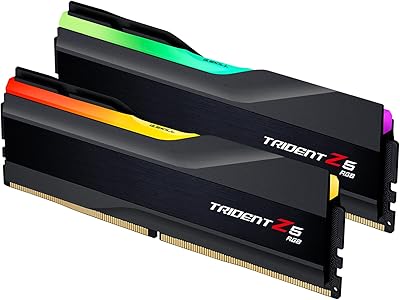
84%
93%
XMP & EXPO Activation
91%
System Stability
89%
Performance at Rated Speed
86%
RGB Lighting Quality
88%
Build & Heatspreader Quality
More
G.SKILL Trident Z5 RGB DDR5-6400 64GB (2x32GB)
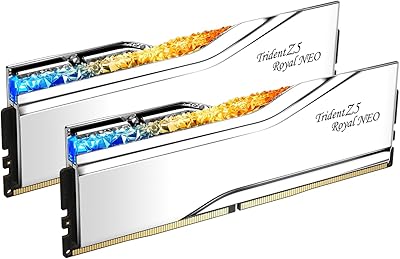
83%
94%
Rated Speed Accuracy
91%
Stability & Reliability
78%
Compatibility Range
71%
Physical Fitment & Clearance
83%
RGB Lighting Quality
More
G.SKILL Trident Z5 Royal Neo DDR5 6000MHz 32GB (2x16GB)
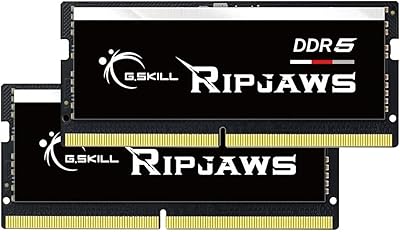
80%
88%
Out-of-Box Compatibility
91%
Performance at Rated Speed
93%
AMD EXPO Ease of Use
89%
Stability & Reliability
87%
Build Quality & Heatspreader
More
G.SKILL Ripjaws DDR5 SO-DIMM 32GB Laptop RAM
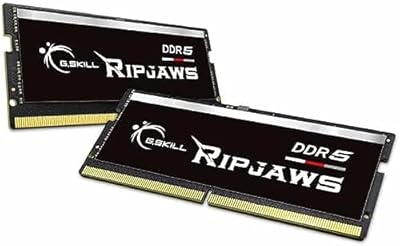
81%
92%
Installation Ease
88%
BIOS Compatibility
87%
Multitasking Performance
86%
Performance at Rated Speed
84%
Value for Money
More
G.SKILL Flare X5 Series DDR5 32GB (2x16GB) 6000MT/s RAM
85%
92%
Performance
89%
Ease of Installation
90%
Compatibility with AMD Systems
91%
Speed (6000MT/s)
85%
Latency (CL32-38-38-96)
More
G.SKILL Trident Z Neo 32GB DDR4 RAM Kit
84%
93%
Performance at Rated Speed
91%
XMP Setup Experience
89%
System Stability
84%
Compatibility Range
88%
RGB Aesthetics
More

FAQ

Yes — the modules will default to a slower JEDEC speed when you first boot. To unlock the rated DDR5-7200 performance, you need to enter your BIOS and enable the XMP 3.0 profile. It is usually a single setting toggle, but your motherboard needs to support Intel XMP 3.0, which means a Z790 or Z890 board. If your board needs a firmware update to recognize the profile cleanly, check the manufacturer's support page before assuming something is wrong.

Unfortunately, no. This DDR5-7200 kit is validated specifically for Intel Z790 and Z890 platforms. AMD uses its own memory overclocking standard called EXPO rather than Intel XMP, and G.SKILL does not list AMD boards on the supported QVL for this kit. Running it on an AMD system may result in the memory defaulting to base JEDEC speeds at best, or causing instability at worst.

This is one of the most common mistakes people make with high-frequency DDR5 kits — avoid it. G.SKILL specifically warns that mixing this kit with other modules, even identical-looking ones from a different purchase, can cause stability issues or force the system to run at reduced speeds. If you need 64GB eventually, the safer approach is to purchase a purpose-built 64GB (2×32GB) kit from the start.

Honestly, for pure gaming without any content creation mixed in, the difference is modest. Most games today are not particularly sensitive to memory speeds above DDR5-6000, so the gap in frame rates or load times will be small. Where this kit justifies itself is in workloads like video rendering, compression, or simulation — tasks that genuinely saturate memory bandwidth. If gaming is your only use case, a quality DDR5-6000 kit at a lower price point is a more rational choice.

Each module stands at a standard tall-heatspreader height, measuring 5.4 inches at its tallest point. Large tower coolers — especially those with wide fan shrouds that overhang the first memory slot — can be a problem. Check your cooler's official clearance specification against your motherboard's DIMM slot distance before purchasing. Some coolers that would otherwise conflict can be installed with the fan shifted upward temporarily during memory installation.

Yes, the modules will light up by default without any software installed — usually cycling through colors automatically. If you want to sync the lighting with the rest of your build or lock it to a specific color, you will need compatible motherboard lighting software or G.SKILL's own ecosystem tools. The level of software control depends on which motherboard you have and which RGB platform it supports.

That is completely normal behavior before enabling XMP. The system booted using the JEDEC default profile, which runs at a safe, conservative speed to ensure compatibility. Go into your BIOS, look for a setting labeled XMP, DOCP, or memory profile, and select the XMP 3.0 option. Save and reboot. Your speed should then show the full rated frequency in system monitoring tools.

G.SKILL validates this specific kit for Z790 and Z890 platforms, and Z690 is not on the official supported list. Some Z690 boards may run DDR5 memory at lower speeds without issue, but reaching DDR5-7200 on a Z690 is unlikely and potentially unstable. If you have a Z690 board and want to run high-frequency DDR5, check your motherboard's own QVL list carefully and consider kits rated specifically for that platform.

In most cases, the system will simply fail to boot and then automatically reset BIOS settings after a failed post, dropping back to default speeds — you will not damage your hardware. Some boards will display an error message on the next boot asking you to confirm the new settings or revert them. It is a frustrating experience, but not a dangerous one. Updating your motherboard firmware to the latest version before enabling XMP reduces the chances of this happening significantly.

For the vast majority of gaming and live streaming combinations, 32GB is comfortable headroom right now. Running a game, a streaming encoder like OBS, a browser, and Discord simultaneously typically lands in the 16–24GB range under real-world conditions. The Trident Z5 RGB modules give you that buffer without tipping into territory where the extra capacity goes completely unused. If you also do video editing or run virtual machines, 32GB remains workable, though heavier editing workloads with 4K footage can start pressing against that ceiling.

Where to Buy