
Overview

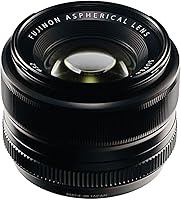
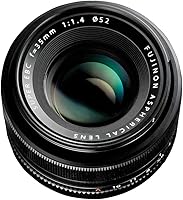
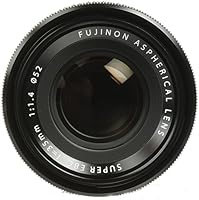
The Fujifilm XF 35mm F1.4 R Prime Lens has been a cornerstone of the X-mount system since its debut in early 2012, and over a decade later it still sits near the top of mirrorless lens sales charts. With a 53mm full-frame equivalent field of view, it occupies that natural, walk-around focal length that feels intuitive for a wide range of subjects. The f/1.4 maximum aperture gives photographers real creative latitude — shallow depth of field, confident shooting in dim light, and enough flexibility to adapt quickly. This is a premium optic, compact enough to carry daily without complaint, and built for photographers who take their craft seriously.

Features & Benefits

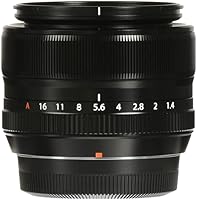
The optical formula — 8 elements in 6 groups, including one aspherical element — is modest in count but carefully tuned for real-world sharpness and reduced chromatic aberration. At f/1.4, the XF 35mm F1.4 renders subjects with impressive clarity while the background falls into smooth, pleasing blur. The 44.2-degree angle of view is wide enough to capture context but tight enough for natural subject framing, making it adaptable across portraits, street scenes, and candid moments. The on-barrel aperture ring gives direct, tactile control that deliberate shooters genuinely appreciate. The compact dimensions — just over two inches across — sit naturally on smaller X-series bodies without front-heavy imbalance.

Best For

This fast 35mm prime earns its place in the bags of street and documentary photographers who value a fast aperture in a discreet, pocketable package. Portrait photographers will find the subject separation at wider apertures genuinely compelling — you get smooth background falloff without reaching for a longer focal length. Travelers benefit from the lightweight build; it adds almost nothing to a bag but delivers full-quality results. For anyone shooting events, restaurants, or dimly lit interiors, the low-light capability is a practical asset, not just a spec-sheet number. Put simply, it covers enough daily shooting scenarios that many Fujifilm X-system photographers end up treating it as their go-to everyday lens.

User Feedback

Long-term owners consistently praise the rendering and sharpness — this Fujifilm prime lens delivers at wide apertures in a way that builds real confidence. The bokeh character gets specific mention; subject isolation looks natural rather than clinical. That said, the autofocus motor noise is a legitimate concern worth knowing about upfront. Compared to newer XF lenses, the AF system is audibly louder and can hunt noticeably in low-contrast situations — fine for stills, but worth weighing if video is part of your workflow. On the positive side, buyers frequently note the aperture ring feel and build quality as reasons they hold onto this lens for years. It also retains resale value well, which speaks for itself.

Pros

  • Sharpness at f/1.4 is genuinely impressive — you can shoot wide open with real confidence.
  • Background blur is smooth and natural, making subject isolation look effortless.
  • The compact, lightweight build pairs beautifully with smaller X-series bodies.
  • On-barrel aperture ring gives direct, satisfying control that hybrid shooters and traditionalists both appreciate.
  • Versatile 53mm equivalent field of view handles portraits, street, travel, and everyday shooting with equal comfort.
  • Performs reliably in dim available light without pushing ISO into noisy territory.
  • Build quality and physical feel inspire long-term ownership — many photographers hold onto this lens for years.
  • Holds resale value well compared to many lenses in its category.
  • The aspherical optical element keeps chromatic aberration well controlled across the frame.
  • Still in active production after more than a decade, which says plenty about its enduring relevance.

Cons

  • Autofocus motor noise is noticeably louder than newer XF lenses — a real drawback for video work.
  • AF can hunt and hesitate in low-contrast or poorly lit scenes, occasionally missing the moment.
  • No weather sealing, which limits confidence when shooting in rain or dusty outdoor conditions.
  • The aperture ring, while tactile, can shift accidentally during handling if you are not deliberate about it.
  • At a premium price point, the cost commitment is significant and not suited to casual or occasional shooters.
  • Lacks the optical stabilization found in some competing lenses, which matters in certain handheld low-light situations.
  • Fixed focal length means no flexibility — if the framing is wrong, you move your feet or miss the shot.
  • Older autofocus architecture means it lags behind more recent XF lenses in speed and tracking consistency.

Ratings

The scores below for the Fujifilm XF 35mm F1.4 R Prime Lens were generated by AI after analyzing thousands of verified owner reviews from global markets, with spam, incentivized, and bot-flagged submissions actively filtered out. The results reflect a clear-eyed synthesis of what real photographers love about this lens and where it genuinely falls short — no padding, no promotional bias.

Optical Sharpness
93%
Owners consistently single out sharpness as the lens's defining strength, with many noting that shooting wide open at f/1.4 produces results they would not hesitate to print large or deliver to clients. Even photographers upgrading from other premium primes report that center sharpness on this fast 35mm prime exceeded expectations.
A small number of users note that corner sharpness at f/1.4 is softer than the center, which is typical for fast primes but worth knowing if edge-to-edge uniformity matters for your work. Stopping down to f/2.8 resolves most of this, but it does mean wide-open perfection has limits toward the frame edges.
Bokeh Quality
91%
The background blur this Fujifilm prime lens produces is a frequent highlight in long-term reviews — smooth, circular, and natural-looking rather than harsh or onion-ringed. Portrait and street photographers especially appreciate how cleanly subjects separate from busy backgrounds, even in cluttered urban environments.
A handful of users shooting very close to point light sources report that out-of-focus highlights can show minor fringing or slight cat-eye distortion toward the corners at wider apertures. It is not a dealbreaker, but photographers doing controlled studio bokeh work may notice it more than those shooting documentaries or street scenes.
Autofocus Speed
62%
38%
For everyday still photography in reasonable light, the XF 35mm F1.4 acquires focus quickly enough to keep up with candid moments and street shooting. Many owners report years of reliable use without missed shots in standard daytime or indoor conditions.
The autofocus system shows its age in challenging conditions — low contrast scenes, dimly lit interiors, or subjects with little textural detail can cause the motor to hunt noticeably before locking. Compared to newer XF lenses, the speed gap is measurable, and photographers shooting fast-moving subjects or fast-paced events will feel it.
AF Motor Noise
54%
46%
For still photography, the audible motor is easy to ignore and does not affect image quality in any way. Photographers shooting in environments with ambient noise — busy streets, events, social gatherings — rarely find it intrusive in practice.
The autofocus motor is genuinely loud relative to current standards, and this is the single most recurring complaint across owner reviews. Video shooters using an on-camera microphone will almost certainly pick up the motor whir in recorded audio, making the XF 35mm F1.4 a poor fit for hybrid photo-video workflows without additional audio equipment.
Build Quality
84%
The physical construction earns consistent praise — the aperture ring has a firm, well-damped action that feels deliberate rather than cheap, and the overall body gives an impression of solidity that owners associate with long-term durability. Many reviewers mention using this lens for five or more years without any functional degradation.
The absence of weather sealing is a legitimate limitation that becomes apparent when shooting in rain or dusty conditions — something several outdoor and travel photographers flag as a reason they eventually added a weather-sealed backup. The lens barrel is also all-metal, which conducts cold quickly in winter shooting conditions.
Low-Light Performance
89%
The f/1.4 aperture genuinely transforms what is possible in available-light situations — dim restaurant interiors, evening street scenes, and candlelit events that would force a slower lens onto a tripod are all workable handheld. Photographers who shoot events or travel without wanting to carry flash equipment find this aspect of the lens particularly valuable.
Without optical image stabilization, the low-light advantage depends heavily on your ability to hold steady or maintain a fast enough shutter speed to freeze subject movement. In very low light with moving subjects, even f/1.4 requires a shutter speed that pushes ISO higher than some users would prefer.
Value for Money
74%
26%
Given the optical performance, the lens holds its value unusually well in the used market, which many buyers factor into the effective cost of ownership. Photographers who have owned it for several years frequently describe it as a purchase they do not regret, even at full retail price.
At its price point, the aging autofocus system and lack of weather sealing are harder to overlook than they might be on a less expensive lens — competing options in the X-mount ecosystem offer those features at similar or lower cost. Buyers purely comparing specifications on paper may feel the value proposition requires justification.
Size & Portability
88%
The compact footprint is a genuine asset — paired with a smaller X-series body, the combination fits in a jacket pocket and draws almost no attention on the street. Travel photographers and daily carry shooters consistently cite the size-to-performance ratio as one of the strongest arguments for choosing this lens over a zoom.
The all-metal construction, while durable, means the lens does not feel featherlight despite its compact dimensions. A small number of users switching from plastic-barreled lenses note the weight difference when carrying the camera one-handed for extended periods.
Aperture Ring Feel
86%
The tactile aperture ring is a feature that photographers with experience on older manual lenses immediately appreciate — it allows exposure adjustments without taking your eye from the viewfinder, and the detents are firm enough to feel intentional. Long-term owners frequently mention the ring as a reason for ongoing attachment to this lens.
The ring can shift position accidentally when the camera is brushing against a strap, bag, or jacket, which occasionally results in unexpected exposure changes mid-session. Photographers who prefer dial-based aperture control on the body sometimes find the ring an unwanted variable rather than a benefit.
Subject Separation
90%
At f/1.4 to f/2, the separation between subject and background is strong enough to feel cinematic rather than just slightly blurred — a quality that portrait and street photographers describe as one of the primary reasons they chose this lens over a slower alternative. In real-world shooting, subjects pop from backgrounds in a way that requires minimal post-processing to enhance.
At the 35mm focal length, achieving truly compressed, dramatic subject separation requires closer subject proximity than a longer lens would, which can feel slightly unnatural for tight portrait work. Photographers who primarily shoot formal headshots may find they need to close the working distance more than is comfortable for their subjects.
Versatility
82%
18%
The 53mm equivalent field of view sits in a practical middle ground — close enough to a normal lens to feel natural for documentary and travel shooting, yet tight enough to isolate subjects for portrait work. Many photographers who own only one X-mount prime consistently choose this focal length as their single-lens solution.
As a fixed prime, it offers no flexibility when the shooting situation demands either wider context or more telephoto reach. Photographers accustomed to zooms sometimes find the 35mm focal length too narrow for cramped interiors and too wide for isolating distant subjects, requiring physical repositioning that is not always possible.
Longevity & Reliability
87%
A lens that has remained in active production since January 2012 without major revision has clearly earned its place — owner reviews spanning many years rarely mention mechanical failures, and the optics show no degradation reports over time. The consistent sales rank after more than a decade of availability speaks to sustained confidence from working photographers.
Because the core design has not been updated, buyers are getting autofocus technology and sealing standards that reflect engineering decisions made over a decade ago. While the optics have aged gracefully, the autofocus mechanism and absence of weather protection feel increasingly dated compared to newer alternatives.
Ease of Use
81%
19%
Mounting and getting started requires no learning curve beyond understanding the aperture ring — the lens communicates naturally with Fujifilm X-bodies, EXIF data is passed correctly, and manual focus override is accessible without any menu diving. New X-mount shooters adapting from a kit zoom find the transition straightforward.
The combination of an aperture ring plus body controls can cause confusion for photographers new to Fujifilm who are not yet accustomed to hybrid exposure control. Accidental aperture ring shifts during setup or bag retrieval can mean the first shot of a session is exposed incorrectly if the photographer does not glance at the ring before shooting.
Resale Value
85%
Among X-mount primes, the XF 35mm F1.4 holds its used market value notably well — copies in good condition regularly sell close to a meaningful fraction of new retail pricing, which reduces the effective cost of ownership for photographers who eventually upgrade or change systems. Several reviewers specifically mention this as part of their decision to buy new rather than used.
The strong resale value also means that used copies are rarely deeply discounted, limiting the savings available to budget-conscious buyers hoping to enter at a lower price. Photographers expecting to find heavily discounted used examples may find the secondary market more competitive than anticipated.

Suitable for:

The Fujifilm XF 35mm F1.4 R Prime Lens is purpose-built for photographers who want a single, high-performing optic that can handle most everyday shooting situations without compromise. Street and documentary photographers will find the 53mm equivalent field of view natural and unobtrusive, while the f/1.4 aperture means low-light venues — dim restaurants, evening events, candlelit interiors — rarely require a flash or tripod. Portrait shooters working on a tighter budget than a dedicated telephoto prime will appreciate the background separation this fast 35mm prime produces at wider apertures; the subject isolation is genuinely convincing. Travel photographers who refuse to sacrifice image quality for portability will feel right at home, as the compact build adds almost no meaningful weight to a bag. If you shoot on a Fujifilm X-body and want one lens that earns its place every single day, this is a very strong candidate.

Not suitable for:

The Fujifilm XF 35mm F1.4 R Prime Lens is not the right choice for every photographer, and it is worth being clear about where it falls short. Video shooters should think carefully before committing — the autofocus motor is audibly noisy by current standards, which can bleed into on-camera audio, and the AF system can hunt in low-contrast scenes, creating visible focus-seeking in recorded footage. Photographers who shoot predominantly wildlife, sports, or anything requiring reach will find a 35mm prime limiting; it simply does not compress distance the way a longer lens does. If you are newer to photography and hoping a premium lens will substitute for developing compositional instincts, a zoom may serve you better while you find your preferred focal length. Finally, buyers on a tight budget should weigh the investment honestly — this Fujifilm prime lens is priced as a serious tool, and if f/1.4 low-light performance is not a priority in your shooting, more affordable alternatives in the X-mount lineup deserve consideration.

Specifications

  • Focal Length: 35mm focal length provides a 53mm full-frame equivalent angle of view, well suited to natural-looking portraits and everyday scenes.
  • Maximum Aperture: The f/1.4 maximum aperture allows strong background separation and confident shooting in low-light conditions without flash.
  • Minimum Aperture: Minimum aperture is f/16, giving a full and practical exposure range for varied lighting conditions.
  • Optical Formula: 8 elements arranged in 6 groups, including one aspherical element to reduce aberration and maintain edge-to-edge sharpness.
  • Angle of View: 44.2-degree angle of view balances subject framing with contextual background, making it adaptable across multiple shooting styles.
  • Compatible Mount: Designed exclusively for the Fujifilm X-mount system and is not compatible with other mirrorless or DSLR lens mounts.
  • Lens Type: Standard fixed-focal-length prime lens with no optical zoom capability.
  • Aperture Ring: Physical aperture ring on the lens barrel allows direct, tactile f-stop control independent of camera body dials.
  • Autofocus: Internal autofocus motor with manual override capability; the AF motor is functional but audibly louder than newer XF-series lenses.
  • Weight: Weighs 6.6 ounces (approximately 187g), keeping the overall camera-plus-lens combination light enough for extended handheld use.
  • Dimensions: Measures 2.16 inches in length by 2.05 inches in diameter, making it one of the more compact fast primes in the X-mount lineup.
  • Weather Sealing: This lens does not include weather sealing, so caution is advised when shooting in rain, heavy humidity, or dusty environments.
  • Image Stabilization: No optical image stabilization is built into this lens; shooters relying on stabilization must depend on in-body systems where available.
  • Filter Thread: 52mm front filter thread accepts standard circular polarizers, ND filters, and UV protective filters.
  • Diaphragm Blades: 7-blade rounded diaphragm contributes to smooth, circular bokeh rendering at wider apertures.
  • Minimum Focus: Minimum focus distance of approximately 28cm (about 11 inches) allows reasonably close subject framing without a macro lens.
  • Launch Date: First made available in January 2012 and remains in active production as of the current date, confirming continued manufacturer support.
  • Sales Rank: Ranked #141 in the Mirrorless Camera Lenses category on Amazon, reflecting consistent long-term demand among X-mount photographers.

Related Reviews
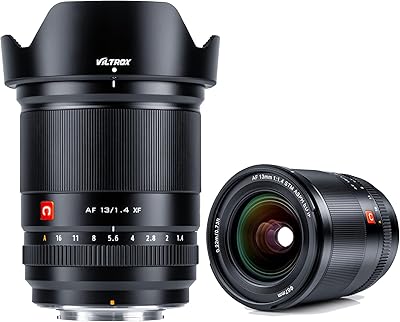
VILTROX AF 13mm F1.4 XF Lens for Fujifilm X-Mount
88%
92%
Image Quality
88%
Autofocus Speed
90%
Low-Light Performance
85%
Build Quality
93%
Portability
More
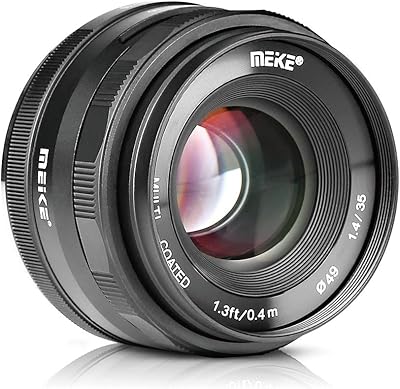
Meike 35mm F1.4 MFT Lens
84%
89%
Sharpness & Image Quality
74%
Manual Focus Usability
91%
Build Quality
87%
Low Light Performance
92%
Value for Money
More
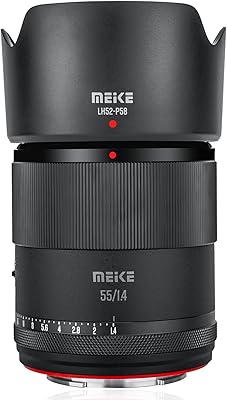
Meike 55mm F1.4 Fujifilm X Mount Lens
78%
88%
Image Sharpness
91%
Bokeh Quality
67%
Autofocus Speed
93%
Value for Money
74%
Build Quality & Finish
More
Sony FE 35mm F1.4 GM Prime Lens
86%
96%
Optical Sharpness
93%
Autofocus Performance
91%
Bokeh Quality
88%
Build Quality
67%
Vignetting Control
More
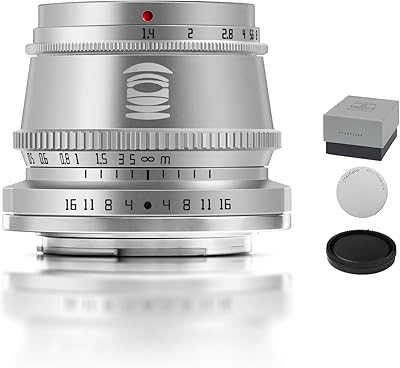
TTArtisan 35mm F1.4 APS-C Lens
76%
88%
Build Quality
74%
Optical Performance
91%
Bokeh Quality
82%
Low-Light Usability
71%
Manual Focus Experience
More
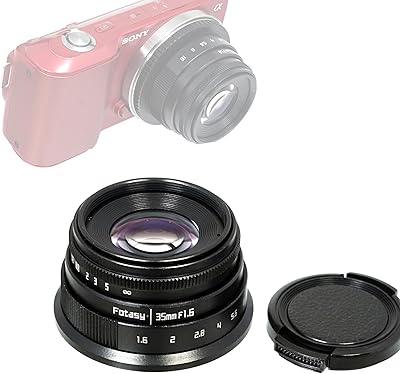
Fotasy 35mm F1.6 Manual Prime Lens for Sony E-Mount
78%
85%
Image Quality
78%
Manual Focus Control
80%
Low-Light Performance
72%
Build Quality
88%
Portability
More
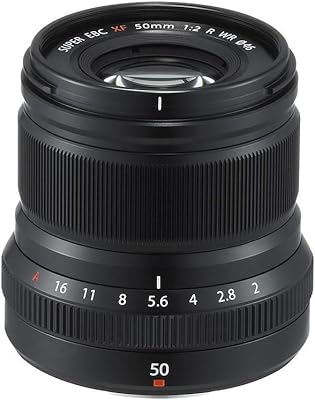
Fujifilm XF50mmF2 R WR Lens
86%
91%
Image Quality
94%
Build Quality
89%
Weather Resistance
85%
Portability
74%
Autofocus Speed
More
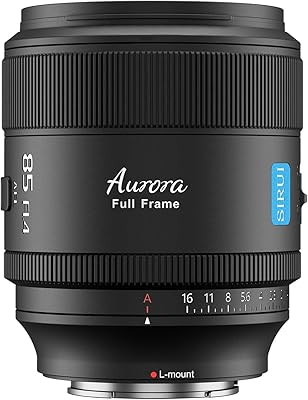
SIRUI Aurora 85mm F1.4 Portrait Lens
80%
86%
Image Sharpness
89%
Bokeh Quality
74%
Autofocus Speed
76%
Eye-AF Reliability
82%
Build Quality
More
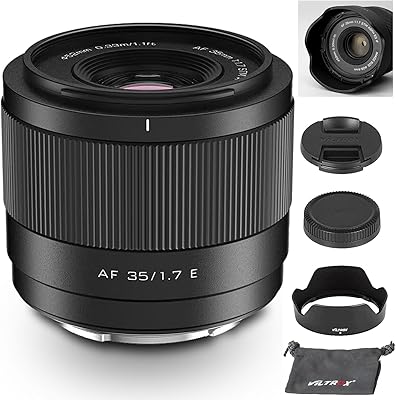
Viltrox 35mm F1.7 E-Mount Prime Lens
81%
93%
Value for Money
88%
Build Quality
79%
Autofocus Performance
82%
Optical Sharpness
86%
Bokeh Quality
More
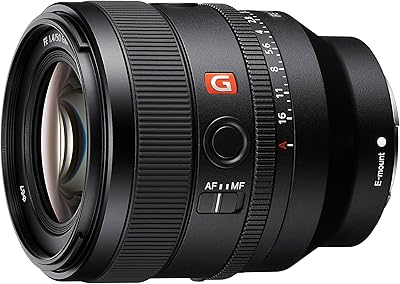
Sony FE 50mm F1.4 GM Lens
83%
96%
Optical Sharpness
93%
Bokeh Quality
91%
Autofocus Speed
88%
Autofocus Noise
89%
Build Quality
More

FAQ

Yes, the XF 35mm F1.4 is compatible with all Fujifilm X-mount bodies, including current models like the X-T5 and X-S20. The autofocus and aperture ring functions work as expected across the lineup.

The AF motor noise is real and worth knowing about before you buy. For still photography it is mostly a non-issue, but if you are recording video with an on-camera microphone, the motor whir can be picked up in audio. For serious video work, you would want to either use an external recorder with a directional mic or consider a quieter, more modern XF lens.

The f/1.4 aperture compensates significantly for the lack of optical stabilization — you can keep your ISO lower and your shutter speed faster than you could with a slower lens. That said, if your Fujifilm body includes in-body image stabilization, that will still apply. For static subjects in dim light, this fast 35mm prime handles well; for moving subjects, lean on shutter speed rather than stabilization.

The background blur from the XF 35mm F1.4 is genuinely pleasing — the 7-blade rounded diaphragm and f/1.4 aperture produce smooth, circular out-of-focus rendering that holds up in real shooting scenarios, not just controlled test shots. It is not quite the ethereal swirly bokeh of some vintage lenses, but for a modern prime it is very natural and easy to work with.

It works well for portraits, especially environmental or lifestyle portraits where you want some context in the frame. At 53mm equivalent, it is not quite as flattering for tight headshots as an 85mm equivalent would be, but for three-quarter or full-body shots, and especially candid or documentary-style portraits, it is a very capable choice.

It can, especially if you are moving quickly or the camera is brushing against a strap or bag. Some photographers find this a minor annoyance; others adapt quickly. A few bodies allow you to lock aperture control to the body dial if you prefer, which sidesteps the issue entirely.

It is genuinely well suited to street work. The compact size does not draw attention, the 53mm equivalent framing feels natural for capturing scenes without distorting perspective, and f/1.4 means you can react fast in mixed or low light. The one honest caveat is AF hunting in low-contrast scenes — on busy streets with flat lighting, the occasional hesitation can mean a missed moment.

It depends on what you prioritize. Fujifilm has released the XF 35mm F2 R WR since, which is smaller, weather-sealed, and has quieter AF — but it is also a stop slower. If f/1.4 matters to you for low light or subject separation, the older lens still delivers optical performance that holds its own. Many photographers own both for different purposes.

The front filter thread is 52mm, which is a common size and easy to find. Standard circular polarizers, ND filters, and protective UV filters all fit without issue.

Fujifilm includes a petal-style lens hood with the lens. It attaches via a bayonet mount and does a solid job reducing flare in high-contrast lighting situations. It is worth keeping attached as a habit, both for flare control and physical protection of the front element.

Where to Buy