

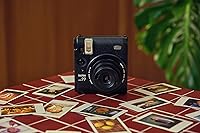
Overview

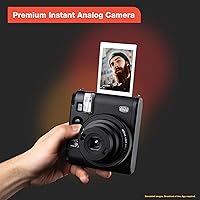
The Fujifilm Instax Mini 99 sits at the top of Fujifilm's Instax Mini lineup — and it looks the part. That matte black finish gives it a retro, almost rangefinder-like presence that stands well apart from the candy-colored cameras the brand is known for. Launched in early 2024, it produces the same credit-card-sized prints as every other Instax Mini camera, but brings considerably more shooting control to the table. The rechargeable lithium-ion battery is a welcome detail — no hunting for AA cells mid-event. This analog camera is clearly built for people who want something more considered than a point-and-shoot novelty.

Features & Benefits

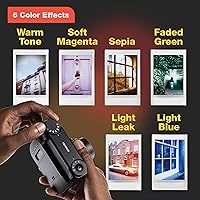
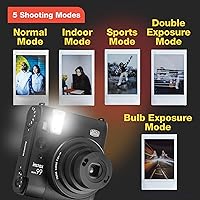
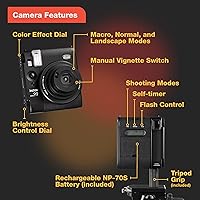
Where this instant camera really distinguishes itself is the range of creative tools packed into a compact body. Five shooting modes — Normal, Indoor, Sports, Double Exposure, and Bulb — give you real options, and the Bulb mode alone opens up light painting and slow-exposure shots that most instant cameras simply can't do. Six color effect settings let you dial in a warm, cool, or stylized tone before pressing the shutter. A five-level brightness dial puts intentional exposure control in your hands. Landscape and Macro focus modes add versatility across distances, and the built-in tripod mount means you can set up deliberate compositions rather than just snapping from the hip.

Best For

The Mini 99 makes the most sense for photography enthusiasts who want real creative input but aren't ready to commit to a fully manual film camera. If you're shopping for a gift — a teen, a college student, or a creative young adult — this analog camera is one of those rare options that feels genuinely premium to unwrap. Travelers love it for producing tangible mementos, and it fits naturally into weddings or parties where guests want something physical to take home. Already buying Instax Mini film regularly? The added shooting flexibility makes the upgrade worthwhile. It's less suited for casual users who just want the simplest possible experience.

User Feedback

Buyers consistently praise the build quality, noting the camera feels solid and well-constructed — a real step up from lighter plastic Instax models. The double exposure and bulb modes draw enthusiastic reactions, particularly from buyers who enjoy experimenting. That said, a recurring theme is the learning curve on the color effects; several reviewers mention wasting shots before getting comfortable with how each setting behaves in practice. The rechargeable battery earns steady appreciation over rivals that require disposables. The main frustration? Film cost. Most buyers go in knowing instant film adds up, but reviews frequently note it stings more when creative shots don't land the way you hoped.

Pros

  • The rechargeable built-in battery eliminates the frustration of dead AAs mid-event.
  • Double exposure and bulb modes produce artistic results no other Instax Mini camera can match.
  • Auto exposure handles mixed and tricky lighting reliably, reducing wasted shots.
  • The matte black build feels genuinely premium — solid, weighty, and well-assembled.
  • Six color effect settings let you shape the mood of a print before you even press the shutter.
  • Macro and Landscape focus modes add real shooting versatility for close-ups and wider scenes.
  • The tripod mount and self-timer combo makes solo portraits and group setups practical.
  • Print quality in good light is noticeably sharper and better-exposed than entry-level Instax models.
  • The design draws consistent compliments — it looks like a serious camera, not a fashion accessory.
  • Widely available Instax Mini film means you can resupply easily almost anywhere in the world.

Cons

  • Film runs roughly a dollar per shot, making trial-and-error with creative modes genuinely expensive.
  • The learning curve on color effects and bulb mode is steep enough to waste multiple packs early on.
  • No precise battery indicator — you get a low-power warning but no real gauge of remaining charge.
  • The two fixed-focus zones leave subjects at mid-range distances occasionally coming out soft.
  • Color effect results can be subtle or unpredictable depending on film stock and lighting conditions.
  • The flash cannot be adjusted independently from the main brightness dial, limiting fine control indoors.
  • Dials and labels are hard to read quickly in dim event lighting against the all-black housing.
  • The camera body shows fingerprints and light surface scratches without a protective case over time.
  • Self-timer delay is fixed with no option to choose between a short or extended countdown.
  • Casual shooters who ignore the advanced modes will find the price hard to justify versus simpler alternatives.

Ratings

The Fujifilm Instax Mini 99 scores here reflect AI-driven analysis of verified global buyer reviews, with spam, bot-generated, and incentivized feedback actively filtered out. Ratings capture both where this analog camera genuinely impresses and where real-world frustrations surfaced — nothing is glossed over. Across thousands of user experiences, a clear picture emerges: a premium, creatively capable instant camera with a few honest trade-offs worth knowing before you buy.

Build Quality
91%
Buyers consistently describe the Mini 99 as the most solid-feeling Instax camera they have owned. The matte black housing feels substantial in hand — more like a grown-up camera than a toy — and the dials and controls operate with satisfying resistance rather than a flimsy click.
A handful of reviewers noted that the film door and some external dials feel slightly less premium than the camera body itself. For a top-tier Instax model, a small number of users expected tighter tolerances throughout.
Print Quality
84%
Under good natural light, prints from this instant camera are noticeably sharp and well-exposed compared to entry-level Instax models. The auto exposure system does a reliable job of reading mixed lighting, and skin tones in particular come out warm and flattering.
In low-light interiors without deliberate flash use, prints can come out underexposed or flat. The fixed lens and small format also mean fine detail is lost at viewing distances — these are intimate, close-up prints, not showcase photos.
Creative Shooting Modes
78%
22%
The double exposure and bulb modes are genuine standouts that photographers get excited about. When they land, the results — layered portraits, light trails, moody long exposures — are unlike anything another Instax camera can produce straight out of the box.
There is a real learning curve here, and film is too expensive to treat trial-and-error casually. Several buyers admitted burning through half a pack before understanding how the bulb mode or color dial interacts with ambient light in practice.
Color Effects
73%
27%
The six color effect settings add a creative dimension most instant cameras completely lack. Warm and cool tones are the most consistently liked, with buyers using them to match the mood of events — golden-hour parties, moody winter gatherings, and the like.
Results from the more extreme color effects can be unpredictable, especially indoors. Some buyers found the shift subtler than expected on certain film stocks, while others felt a couple of the settings produced casts they never actually used after the first experiment.
Ease of Use
71%
29%
For standard shooting — just pointing and firing in Normal mode — the Mini 99 is approachable and quick. The auto exposure takes the guesswork out of everyday snapshots, making it accessible even to buyers with no photography background.
The more advanced controls are not particularly intuitive without reading the manual carefully. New users who dive straight into the color dials or double exposure mode without guidance tend to waste film, which feeds frustration given the ongoing cost of each pack.
Value for Money
67%
33%
For a buyer who will actively use the creative modes, the price difference versus a basic Instax model is justified. The rechargeable battery, build quality, and shooting versatility together represent a meaningful step up that dedicated users appreciate and reference in reviews.
For casual users who mostly shoot in Normal mode, the premium feels hard to justify when cheaper Instax cameras produce near-identical everyday prints. The hidden cost is the film itself — at roughly a dollar per shot, creative experimentation adds up fast.
Battery Life & Charging
88%
The switch to a rechargeable lithium-ion battery is one of the most praised practical upgrades on this camera. Buyers report lasting through full events or day trips on a single charge, and USB charging means no last-minute store runs for AAs before an occasion.
A small number of users noted the battery indicator is basic — there is no precise gauge, just a low-battery warning. If you forget to charge between infrequent uses, you may find it dead at an inconvenient moment without much advance notice.
Design & Aesthetics
93%
The matte black finish is almost universally praised — it photographs well, feels deliberately styled, and draws genuine compliments from people who see it in use. Buyers frequently mention it looks significantly more sophisticated than what they expected from an Instax camera.
The all-black design does make the dials and labels slightly harder to read in dim lighting. A few buyers with older eyes or less familiarity with the control layout mentioned squinting to identify settings at indoor events.
Flash Performance
76%
24%
The built-in automatic flash handles typical indoor party and event scenarios well, filling shadows without washing out faces at normal social distances. Buyers shooting at gatherings tend to report consistent, usable results without needing to think about flash at all.
At closer distances the flash can overexpose slightly, and there is no option to dial it down independently without adjusting the overall brightness control. In bright outdoor conditions, some buyers wished for more refined flash-off control.
Focus & Sharpness
74%
26%
The Landscape and Macro modes give this instant camera more focus flexibility than most of its competitors. Macro mode in particular gets positive reactions from buyers who like shooting flat lays, product details, or close portrait crops — areas where other Instax cameras simply blur.
There is no true autofocus; you are choosing between two fixed-focus zones. For subjects in the middle distance — not quite landscape, not quite macro — some shots land slightly soft, and there is no way to fine-tune beyond the two preset modes.
Size & Portability
82%
18%
At 12 ounces and a footprint small enough for a large coat pocket or small bag, the Mini 99 travels well. Buyers mention carrying it to concerts, markets, and travel destinations without it feeling burdensome alongside other gear.
It is noticeably bulkier than the slimmest Instax models, and the matte casing shows fingerprints and light scratches over time. A protective case is worth budgeting for if you plan to carry it loosely in a bag.
Film Cost & Availability
58%
42%
Instax Mini film is widely available — online, in big-box stores, and internationally — which makes resupply easy wherever you are. Multi-packs bring the per-shot cost down meaningfully if you shoot frequently and buy in bulk.
At roughly one dollar per frame even in bulk, this is the loudest recurring complaint across reviews. The creative modes encourage experimentation, but experimentation burns film, and that financial friction is a genuine barrier for buyers on a tighter ongoing budget.
Self-Timer & Tripod Use
79%
21%
The built-in self-timer and tripod mount combination opens up solo portraits and group shots that handheld cameras simply cannot do. Buyers using it at events as a photo-booth-style setup consistently highlight this pairing as a clever, practical touch.
The self-timer delay is fixed — there is no option to choose between a short or long countdown — which some buyers found limiting when trying to compose more deliberate shots before the shutter fires.
Gifting Appeal
94%
Among instant cameras at this tier, few arrive looking as gift-ready as the Mini 99. The packaging, the matte black body, and the included battery all contribute to an unboxing experience that buyers describe as feeling genuinely premium rather than plasticky or juvenile.
The price point means it is a considered gift rather than a casual one. Buyers purchasing for younger teens with no photography background also noted that the creative controls can initially overwhelm recipients who just wanted a simple, fun camera.

Suitable for:

The Fujifilm Instax Mini 99 is the right call for anyone who has outgrown the novelty of basic instant cameras and wants genuine creative input over their shots. Photography hobbyists who love experimenting — trying double exposures at a concert, dragging the shutter during a bonfire, or dialing in a warm tone for golden-hour portraits — will find this analog camera far more rewarding than any other Instax model. It also makes an outstanding gift for a creative teen or young adult who appreciates thoughtful gear over throwaway gadgets; the premium unboxing experience and the matte black design both punch well above what most people expect from an instant camera. Travelers who want tangible mementos rather than phone photos will appreciate the reliability of auto exposure across varied environments. And if you already buy Instax Mini film regularly, stepping up to the Mini 99 is a natural progression that unlocks tools you will actually use.

Not suitable for:

If you want the simplest, most affordable path to instant prints, the Fujifilm Instax Mini 99 is genuinely not the right fit. Casual users who plan to shoot exclusively in Normal mode and never touch the creative controls are paying a significant premium for features they will leave idle — and cheaper Instax cameras will produce near-identical everyday prints at a fraction of the cost. This analog camera also demands a degree of patience: the color effects and bulb mode are not pick-up-and-play features, and learning to use them well costs film, which costs money on every failed frame. Parents buying for young children who just want a fun, durable point-and-shoot should look elsewhere — the controls are nuanced enough to frustrate rather than delight a younger kid. Budget-conscious buyers should also factor in the ongoing film cost honestly; at roughly a dollar a shot, creative experimentation is a real financial commitment that does not suit everyone.

Specifications

  • Brand & Model: Manufactured by Fujifilm under the model name Instax Mini 99, released in early 2024.
  • Film Format: Uses Fujifilm Instax Mini film, producing credit-card-sized prints measuring approximately 2.4″ x 1.8″ (image area).
  • Dimensions: The camera body measures 2.6″ x 4.2″ x 4.6″ (W x D x H).
  • Weight: The camera weighs 12 oz (0.75 lbs) without film loaded.
  • Shooting Modes: Five shooting modes are available: Normal, Indoor, Sports, Double Exposure, and Bulb (maximum 10-second exposure).
  • Color Effects: Six color effect settings allow users to shift print tone and mood before shooting.
  • Brightness Control: A five-level brightness dial enables intentional adjustment from high-key to low-key exposures.
  • Focus Modes: Two fixed-focus modes are provided: Landscape (for standard and distant subjects) and Macro (for close-up subjects).
  • Shutter Speed: Programmatic electronic shutter operates from 1.8 to 1/400 seconds, with Bulb mode allowing manual exposures up to 10 seconds.
  • Exposure System: Built-in automatic exposure measures ambient light and sets exposure values without manual input.
  • Flash: Integrated automatic flash fires as needed and is governed by the camera's five-level brightness control.
  • Self-Timer: A built-in self-timer is included for hands-free and group shooting situations.
  • Tripod Mount: A standard tripod mount is built into the camera base, compatible with typical consumer tripods.
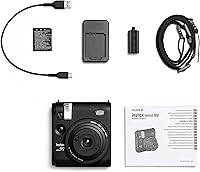
  • Battery: Powered by one rechargeable lithium-ion battery, which is included in the box.
  • Finish: The camera body features a matte black finish designed to evoke a retro, rangefinder-style aesthetic.
  • Film Capacity: Standard Instax Mini film packs hold 10 exposures; twin-packs and bulk packs are widely available separately.
  • Included Items: The box contains the camera body, accessories, and the rechargeable lithium-ion battery — film is sold separately.
  • Manufacturer: Fujifilm Corporation, a Japanese multinational imaging and photography company, manufactures and supports this product.

Related Reviews
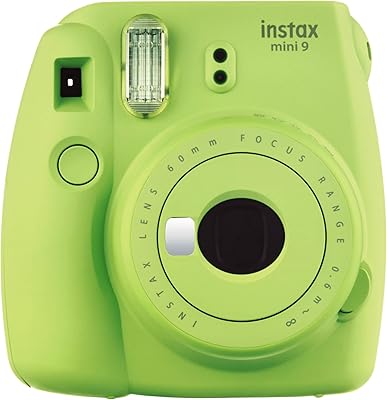
Fujifilm Instax Mini 9
75%
93%
Ease of Use
67%
Image Quality
74%
Build Quality
61%
Value for Money
71%
Selfie & Portrait Performance
More
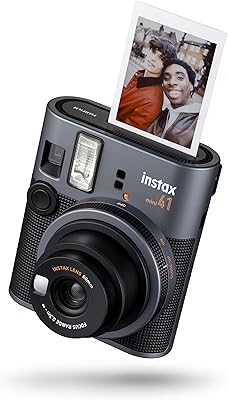
Fujifilm Instax mini 41 Instant Camera
85%
91%
Ease of Use
88%
Selfie Functionality
84%
Photo Quality
94%
Portability
86%
Build Quality
More
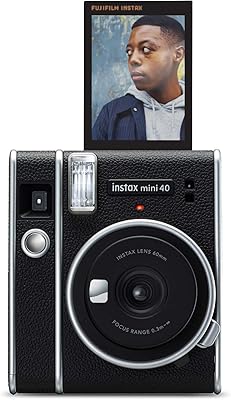
Fujifilm Instax Mini 40 Instant Camera
82%
85%
Photo Quality
92%
Ease of Use
88%
Selfie Functionality
80%
Build Quality
90%
Portability
More
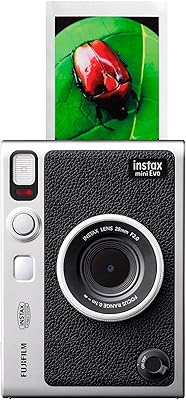
Fujifilm Instax Mini EVO
81%
88%
Image Quality
91%
Creative Effects & Versatility
83%
Smartphone Integration
86%
Build Quality & Design
71%
Value for Money
More
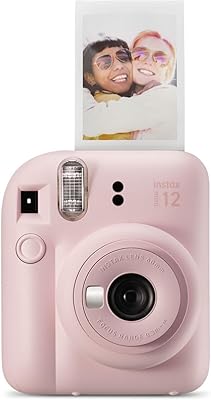
Fujifilm Instax Mini 12
78%
94%
Ease of Use
83%
Photo Quality in Good Light
61%
Low-Light Performance
81%
Selfie & Close-Up Capability
78%
Build Quality & Design
More
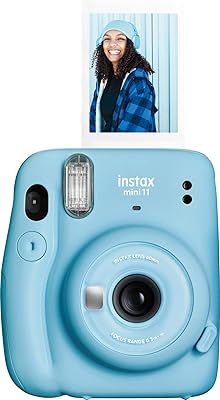
Fujifilm Instax Mini 11 Instant Camera
86%
92%
Ease of Use
89%
Portability
87%
Image Quality
90%
Selfie Mode
80%
Battery Life
More
Fujifilm INSTAX Mini LIPLAY Hybrid Instant Camera
85%
77%
Photo Quality
85%
Ease of Use
90%
Connectivity (Bluetooth)
82%
Editing Features
89%
Sound Feature
More
Fujifilm Instax Mini Link 3 Smartphone Printer
86%
91%
Ease of Use
89%
Print Quality
94%
Portability
87%
Bluetooth Connectivity
82%
Battery Life
More
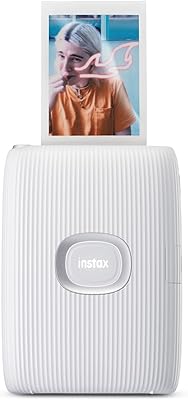
Fujifilm Instax Mini Link 2 Smartphone Printer
84%
91%
Print Quality
94%
Portability
89%
Ease of Use
85%
Connectivity
92%
Customization Options
More
Fujifilm Instax Link Wide Printer
84%
91%
Print Quality
88%
Ease of Use
85%
App Functionality
92%
Portability
78%
Print Speed
More

FAQ

No, film is not included in the box. You will need to purchase Instax Mini film packs separately. They are widely available at most electronics retailers, big-box stores, and online. Standard packs contain 10 exposures, and twin-packs are usually the most cost-effective way to stock up.

The battery charges via the included cable — no need to hunt down AA batteries before an event. Most users report comfortably getting through a full social occasion or a day of travel on a single charge. There is no precise battery level indicator, so it is worth making a habit of charging it the night before any planned use.

Any Fujifilm Instax Mini film will work, including standard color packs, black-and-white, and specialty editions. The color effect settings on this analog camera interact differently depending on which film stock you use, so experimenting with a twin-pack is a good way to find your preferred combination before buying in bulk.

Honestly, yes — the double exposure and bulb mode in particular take some practice to use consistently well. The color dial is more forgiving, but even that can produce unexpected results in tricky lighting. Budget a pack or two for experimentation before relying on those modes for an important event.

The Mini 40 is a simpler, more affordable camera with automatic exposure but none of the creative controls found here. The Mini 99 adds five shooting modes, six color effects, brightness control, Macro focus, a tripod mount, and a rechargeable battery. If you want more than basic snapshots, the upgrade is meaningful — but if you mostly shoot casually in auto mode, the Mini 40 covers that well for less.

Yes, and it works really well for that purpose. The standard tripod mount on the base fits most consumer tripods, and pairing it with the built-in self-timer and Bulb mode lets you set up deliberate long-exposure shots — light trails, low-light interiors, creative blurs — that handheld shooting simply cannot achieve.

Realistically, you are looking at roughly one dollar per shot when buying in bulk, and more when buying single packs. It is the most significant ongoing cost of owning this instant camera. If you plan to use the experimental modes regularly, that cost adds up quickly, so buying in larger quantities helps manage the per-shot price.

Instax Mini prints are reasonably durable for scrapbooking and journaling use — the surface is coated and handles normal handling well. They are not waterproof, though, and prolonged exposure to direct sunlight can fade them over time. Storing finished prints away from UV light will keep them looking good for years.

It handles event shooting very well. The automatic flash and auto exposure manage the typical indoor party environment reliably, and the self-timer plus tripod mount make it easy to set up as an impromptu photo booth. The color effects add a fun creative layer that guests tend to enjoy experimenting with throughout an event.

It is genuinely useful if you like shooting flat lays, food, flowers, or close portrait crops. Without switching to Macro, subjects closer than about 60 cm will come out blurry — so knowing when to flip that mode is important. A number of buyers specifically mention Macro as a feature they use more than they expected to when they first bought the camera.