

Overview

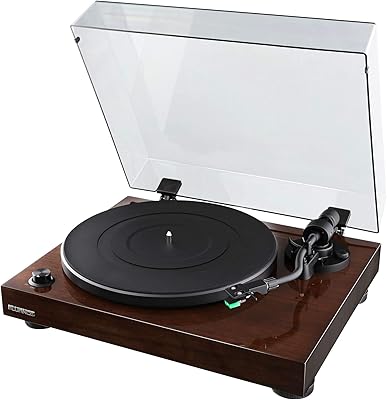
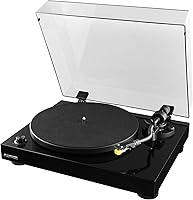
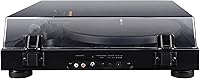
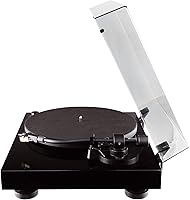
The Fluance RT80 sits at the entry point of Fluance's lineup, but it doesn't feel like a compromise. This is a belt-drive deck built with components that punch noticeably above the typical beginner tier — an Audio-Technica cartridge, a real wood plinth, and a built-in phono preamp that means you can plug straight into powered speakers without extra hardware. The piano black finish looks genuinely sharp; it's the kind of turntable that draws attention in a living room without trying too hard. That said, set expectations appropriately — this turntable is a strong performer at its price point, not a substitute for high-end separates.

Features & Benefits

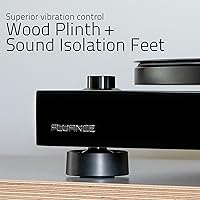
The AT91 cartridge is the headline component here — a diamond-tipped stylus that tracks record grooves with real precision, and the difference compared to cartridges on cheaper decks is audible from the first play. The belt-drive setup keeps motor noise away from the platter, so the noise floor stays notably clean. A balanced aluminum S-Type tonearm with an adjustable counterweight lets you dial in the right tracking force, which matters more than most beginners expect. Gold-plated RCA outputs and a grounding terminal keep hum out of the signal chain, while isolation feet on the plinth help manage vibration from whatever surface the deck sits on.

Best For

This belt-drive deck is an easy recommendation for anyone buying their first turntable and wanting a complete, ready-to-use setup — the built-in preamp removes the need for a separate phono stage, simplifying the process considerably. It also works well as a solid upgrade for someone coming from a cheap, all-plastic deck who wants noticeably better sound without jumping straight to a Pro-Ject Debut Carbon or Audio-Technica LP120X. Compact and clean-looking, it fits comfortably in apartment or desktop setups. For gift buyers, this turntable ships with everything needed to get started, backed by a brand with genuine customer support credentials.

User Feedback

Most owners are genuinely pleased with how the RT80 sounds out of the box, and the piano black finish earns consistent praise for looking more expensive than expected. Setup is straightforward enough that even first-timers rarely report confusion. On the critical side, a handful of users note that the dust cover hinges feel a bit flimsy relative to the rest of the build — a minor but fair point. Some listeners swap the stock felt mat for cork or rubber fairly early. The counterweight occasionally needs more patient calibration than the guide implies. Still, the two-year warranty and lifetime support give buyers solid long-term confidence.

Pros

  • The Fluance RT80 ships as a complete package — cartridge mounted, preamp built in, cables included.
  • Audio-Technica AT91 cartridge delivers noticeably cleaner sound than what budget plastic decks produce.
  • Belt-drive mechanism keeps motor noise away from the stylus, resulting in a quieter overall listening experience.
  • The piano black MDF plinth looks far more premium than the price tier would suggest.
  • Adjustable counterweight on the aluminum tonearm gives owners real control over tracking force.
  • Built-in phono preamp connects directly to powered speakers or any amplifier without extra hardware.
  • Two-year warranty and lifetime customer support are stronger guarantees than most competitors offer here.
  • Gold-plated RCA outputs and a ground terminal keep signal clean and hum-free in most home setups.
  • Isolation feet on the plinth handle moderate vibration well, reducing skip risk on standard shelving.
  • Cartridge is user-replaceable, so upgrading to a better stylus later is straightforward and affordable.

Cons

  • The stock felt platter mat generates static easily and is typically one of the first things owners replace.
  • Dust cover hinges feel noticeably flimsy compared to the quality of the plinth and platter.
  • No strobe or speed adjustment means there is no easy way to verify or correct pitch accuracy.
  • The included RCA cable is short enough to be limiting in many real-world speaker placement scenarios.
  • Anti-skate adjustment is basic and difficult to fine-tune, which can affect performance on older vinyl.
  • Counterweight calibration requires patience and ideally a stylus force gauge that is not included in the box.
  • The built-in preamp, while convenient, introduces a subtle flatness that a good external unit resolves.
  • Piano black finish shows fingerprints and dust constantly and needs frequent wiping to stay presentable.
  • No speed adjustment mechanism means belt degradation over time has no easy in-device compensation.
  • Buyers committed to the hobby long-term may outgrow the AT91 cartridge faster than the deck itself.

Ratings

Our scores for the Fluance RT80 are generated by AI after analyzing thousands of verified buyer reviews worldwide, with spam, bot activity, and incentivized feedback actively filtered out. The result is an honest, balanced picture of where this belt-drive deck genuinely excels and where real owners have run into friction. Both strengths and recurring pain points are reflected transparently in every category below.

Sound Quality
83%
For a deck at this tier, the audio performance surprises people. The AT91 cartridge resolves instrumental separation clearly, and the belt-drive mechanism keeps background noise low enough that quiet passages on jazz or acoustic records feel genuinely clean. Most users describe the sound as warm and engaging right out of the box.
Listeners coming from higher-end setups will notice the AT91 starts to show its limits on dynamic, complex recordings. Sibilance on female vocals can be slightly edgy, and the stock felt mat softens low-end definition in ways that only become obvious after an upgrade.
Build Quality
79%
21%
The MDF plinth with its piano black finish feels noticeably more solid than what you find on budget plastic decks. The aluminum platter has real heft to it, and the tonearm shows no obvious flex or wobble. Holding this turntable, you get a sense it was built to last several years of regular use.
The dust cover hinges are a weak point that comes up repeatedly in owner feedback — they feel plasticky and slightly misaligned on some units. A few buyers also noted minor finish inconsistencies on the plinth edges, which stand out more given how polished the rest of the deck looks.
Ease of Setup
91%
The setup process is genuinely straightforward. The built-in preamp means you run a single RCA cable to powered speakers or an amplifier and you are done — no phono stage research, no extra purchases. The quick-start guide covers counterweight installation clearly enough that most first-timers are playing records within 20 minutes.
Counterweight calibration is the one step where some beginners get stuck. The guide explains the process, but getting the tracking force right requires patience and ideally a stylus force gauge, which is not included. A small but consistent segment of users skips this step and ends up with suboptimal playback.
Value for Money
88%
When you weigh everything included — a genuine Audio-Technica cartridge, aluminum platter, Texas Instruments preamp, solid plinth, two-year warranty, and lifetime support — the overall package represents strong value at this price tier. Comparable decks from competing brands at a similar price often cut corners on the cartridge or skip the preamp entirely.
The Pro-Ject Debut Carbon and the Audio-Technica LP120X both hover in overlapping price territory and offer meaningful step-ups in tonearm precision and long-term upgradeability. Buyers who are already sure about the vinyl hobby may find it worth stretching slightly rather than buying this as a stepping stone.
Cartridge Performance
77%
23%
The AT91 is a legitimate Audio-Technica cartridge with a diamond stylus, and it handles most genres competently. Channel tracking is consistent, stereo imaging is stable, and the cartridge is forgiving enough on slightly worn records that casual listeners rarely complain about playback quality day to day.
The AT91 is widely considered an entry-level cartridge even within the Audio-Technica range. Upgrading to an AT95E or a Nagaoka MP-110 is one of the first things experienced vinyl listeners recommend after purchase. The stylus replacement cost is reasonable, but the upgrade path is a conversation worth having upfront.
Tonearm Quality
81%
19%
The aluminum S-Type tonearm is a real differentiator at this price point. It tracks grooves steadily, and the adjustable counterweight gives owners meaningful control over tracking force — something completely absent on cheaper fixed-weight arms. Users report it handles both 33 and 45 RPM records without any audible mistracking on well-pressed vinyl.
Anti-skate adjustment is basic and not easily fine-tuned, which can be a frustration for listeners with older or slightly warped records. The headshell connector is standard, which is good for upgrades, but the factory fit felt slightly loose to a minority of buyers on first inspection.
Built-in Preamp
74%
26%
Having a phono preamp built in is a genuine practical advantage for anyone who just wants to plug in and listen. The Texas Instruments-based circuit does its job cleanly — there is no obvious hum or thinness to the output, and it runs warm without distortion at normal listening volumes.
Audiophiles who already own a quality external phono stage will likely bypass the built-in preamp entirely, and the toggle to switch between preamp and line-out modes can feel fiddly. The onboard preamp is honest but not exceptional — it introduces a subtle flatness at the top end that a good outboard unit resolves noticeably.
Platter & Mat
68%
32%
The aluminum platter itself is a genuine positive — it has enough mass to spin steadily and maintain consistent speed, which directly benefits sound quality. Owners using it for classical or acoustic music appreciate the stable rotation. It looks handsome and feels appropriate for a deck in this class.
The stock felt mat is the most-replaced component on this turntable. It traps static easily, causes occasional surface noise on certain pressings, and deadens some of the platter's natural resonance properties. Switching to a cork or rubber mat is a cheap fix, but it is a fix that should not be necessary at this price.
Speed Accuracy
76%
24%
Speed consistency is generally reliable during normal listening sessions. Belt-drive mechanisms inherently resist the motor vibration that can plague direct-drive tables, and most users report no audible wow or flutter on standard 33-1/3 RPM playback during casual use.
A small number of owners report very slight speed drift after extended play sessions, particularly in warmer environments where the rubber belt softens slightly. The turntable lacks a built-in strobe or speed adjustment, so there is no easy way to verify or correct speed without third-party tools.
Vibration Isolation
78%
22%
The isolation feet do meaningful work here — placing this deck on a shelf near a subwoofer or in a room with floor vibrations, the rubber feet absorb enough feedback that skipping is not a chronic issue. The plinth material adds damping that cheaper hollow-chassis decks simply cannot match.
In high-vibration environments — heavy floor traffic, loud speakers placed very close to the turntable — the isolation has limits. Some users on thin-shelved IKEA-style furniture still experience occasional skip on heavily bass-driven tracks, suggesting a dedicated wall-mount shelf would be a worthwhile accessory investment.
Aesthetics & Design
86%
The piano black finish consistently earns compliments that go beyond what buyers expected at this price. It looks at home in a modern living room setup and photographs well. The overall proportions are clean, the platter is centered, and the dust cover sits flat without obvious gaps — small details that matter when a turntable is on display.
Piano black is a fingerprint and dust magnet that requires more upkeep than matte or wood-finished alternatives. The dust cover itself, while functional, has a utilitarian look that does not quite match the quality feel of the plinth below it. A smoked or tinted cover would suit the aesthetic better.
Accessories & Packaging
82%
18%
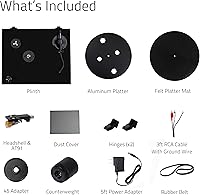
The included package is thorough — a 45 RPM adapter, RCA cable with grounding wire, AC power adapter, and dust cover all ship in the box. Packaging is protective enough that the vast majority of buyers receive their deck without transit damage, which matters for a product with a mounted cartridge.
The RCA cable included is functional but short, and buyers with components positioned more than a few feet away will need a replacement immediately. The quick-start guide covers setup adequately but does not explain cartridge alignment or anti-skate in enough depth for true beginners to feel confident.
Warranty & Support
89%
Fluance's two-year manufacturer warranty and lifetime customer support are points of genuine differentiation. Long-term owners report positive direct experiences with the support team — replacement parts like belts and styli are available, and email response times are consistently described as fast and helpful.
The warranty covers manufacturing defects but does not extend to stylus wear, which is expected but still worth noting for buyers who play records frequently. International buyers outside North America occasionally report slower support response times and limited regional parts availability.

Suitable for:

The Fluance RT80 is the right choice for anyone entering the vinyl hobby who wants a complete, ready-to-use setup without the research overhead of matching separate components. If you have a pair of powered speakers or a basic stereo receiver already, you can be playing records within half an hour of opening the box — no external phono stage required. It also makes a compelling upgrade for listeners currently on a cheap, all-plastic deck who are starting to notice the ceiling on their sound quality but are not yet ready to commit to a Pro-Ject or Rega at a significantly higher price. The clean piano black aesthetic and compact footprint make it practical for apartment setups, bookshelves, or desktop listening stations where the deck is on display. Gift buyers will appreciate that the package is self-contained, backed by a real warranty, and supported by a brand that actually answers its customer service emails.

Not suitable for:

Serious audiophiles who already own a quality external phono stage and a well-matched cartridge will find the Fluance RT80 redundant in capability and limiting in upgrade headroom compared to bare-bones decks at a similar price that let you put the full budget into the tonearm and cartridge instead. If your record collection skews toward demanding classical recordings, delicate acoustic pressings, or high-resolution audiophile pressings, the AT91 cartridge will eventually feel like the weak link — it is competent but not resolving enough to extract everything those records contain. Buyers who already know they want to upgrade the cartridge, swap the platter mat, and add an external preamp should honestly consider whether stepping up to the RT81 or even an Audio-Technica LP120X from the start makes more financial sense in the long run. This belt-drive deck also has no speed adjustment mechanism, so listeners who are particular about pitch accuracy and want verifiable consistency will need to invest in third-party tools or look elsewhere.

Specifications

  • Drive Type: Belt-drive mechanism using a rubber belt to isolate the AC motor from the platter, reducing vibration transfer to the stylus.
  • Cartridge: Audio-Technica AT91 moving magnet cartridge fitted with a diamond-tipped stylus for accurate groove tracking and channel separation.
  • Tonearm: Balanced aluminum S-Type tonearm with a user-adjustable counterweight for setting precise tracking force.
  • Platter: Aluminum platter paired with a felt mat, measuring appropriately for standard 12″ LP and 7″ single playback.
  • Plinth Material: MDF engineered wood construction with a piano black finish and rubber isolation feet to damp external vibrations.
  • Built-in Preamp: Texas Instruments-based phono preamplifier built into the deck, switchable between phono and line-level output modes.
  • Outputs: Gold-plated RCA stereo output jacks and a dedicated ground terminal post for connecting to amplifiers or powered speakers.
  • Playback Speeds: Supports 33-1/3 RPM and 45 RPM playback; a 45 RPM adapter is included for playing 7″ singles.
  • Motor: AC synchronous motor providing stable rotational speed during standard listening sessions.
  • Dimensions: The deck measures 13.75 x 16.5 x 5.5 inches, making it compact enough for bookshelf or desktop placement.
  • Weight: The fully assembled turntable weighs 9.9 pounds, giving it a stable footprint without being difficult to reposition.
  • Power Supply: Ships with a 100V–240V, 50/60Hz AC power adapter, making it compatible with standard outlets in most countries.
  • Included Accessories: Package includes a dust cover with hinges, 45 RPM adapter, 3ft RCA cable with ground wire, felt platter mat, rubber drive belt, and headshell with mounted AT91 cartridge.
  • Warranty: Covered by a 2-year manufacturer warranty against defects in materials and workmanship.
  • Customer Support: Fluance provides lifetime customer support, including assistance with setup, replacement parts, and troubleshooting.
  • Compatibility: Works with any amplifier or receiver featuring a phono input, or with any powered speakers or line-level input when the built-in preamp is engaged.
  • Anti-Skate: Basic anti-skate adjustment is included on the tonearm to help maintain even stylus pressure across the record groove.
  • Model Number: The official model designation is RT80, positioned as the entry-level deck in the Fluance Reference Turntable series.

Related Reviews
Fluance RT83
Fluance RT83
83%
91%
Sound Quality
88%
Cartridge & Stylus Performance
86%
Build Quality & Materials
89%
Speed Consistency & Motor Performance
84%
Tonearm Quality
More
Fluance RT81
Fluance RT81
84%
88%
Sound Quality
74%
Build Quality
83%
Ease of Setup
91%
Cartridge & Stylus Performance
86%
Vibration & Isolation
More
Fluance RT85
Fluance RT85
80%
91%
Sound Quality
94%
Included Cartridge Value
88%
Build Quality & Materials
79%
Speed Consistency & Motor Stability
62%
Setup & Ease of Use
More
Fluance XL8SW Bookshelf Speakers
87%
90%
Sound Quality
84%
Bass Response
91%
Clarity of Midrange
87%
Ease of Installation
88%
Design & Build Quality
More
Fluance Elite SX6WH Bookshelf Speakers
84%
87%
Sound Quality
91%
Build Quality
72%
Bass Performance
89%
Value for Money
82%
Ease of Setup
More
Fluance Ai41 Powered Bookshelf Speakers
82%
88%
Sound Quality
73%
Bass Performance
84%
Treble Clarity
91%
Build Quality
87%
Connectivity & Inputs
More
Fluance PA10 High Fidelity Phono Preamp
88%
89%
Sound Quality
92%
Build Quality
91%
Ease of Setup
85%
Noise Reduction
88%
Design & Aesthetics
More
Fluance Signature HiFi Bookshelf Speakers (HFSW)
89%
94%
Sound Clarity
87%
Bass Performance
90%
Build Quality
92%
Value for Money
85%
Ease of Setup
More
Fluance Ai81 Elite Powered Floorstanding Speakers
86%
94%
Sound Quality
90%
Bass Performance
88%
Ease of Setup
85%
Build Quality
93%
Connectivity Options
More
Fluance XL8F Reference High Performance Floorstanding Speakers
85%
94%
Sound Quality
90%
Bass Performance
85%
Build Quality
92%
Value for Money
88%
Design & Aesthetics
More

FAQ

No. The Fluance RT80 has a built-in phono preamp, so you can plug it directly into powered speakers or any amplifier with a standard line-level input. If you already own a dedicated external phono stage you prefer, there is a switch on the back to bypass the internal preamp entirely.

Any powered or active speakers with RCA inputs will work straight out of the box. If you have a passive speaker setup, you will need a stereo amplifier or receiver in between — either with or without its own phono stage, since the built-in preamp handles that job if needed.

The AT91 cartridge comes pre-mounted on the headshell, which saves a fiddly step for first-time buyers. You will still need to attach the counterweight and set the tracking force yourself, but the quick-start guide walks you through it clearly.

The counterweight screws onto the back of the tonearm, and you balance it to zero before dialing in the recommended tracking force for the AT91 — typically around 2 grams. A stylus force gauge is not included, but an inexpensive digital one costs very little and is worth having to get it right. Skipping this step can lead to dull sound or, over time, unnecessary record wear.

Yes, and many owners do exactly that. The headshell uses a standard half-inch mount, so swapping to a cartridge like an Audio-Technica AT95E or a Nagaoka MP-110 is straightforward and makes a noticeable difference. The tonearm is capable enough that an upgraded cartridge will actually show its improvement.

Plenty of owners swap it out fairly early. Felt mats can generate static on dry days and tend to soften the low-end slightly compared to cork or rubber alternatives. A cork or rubber mat is an inexpensive upgrade that many listeners find immediately worthwhile.

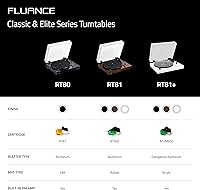
The RT81 steps up to an AT95E cartridge and a rubber platter mat instead of felt, which translates to a small but real improvement in detail and bass clarity. If you are buying as a casual listener or as a gift, the RT80 is a strong value. If you are planning to use it heavily and already know you enjoy vinyl, the RT81 is worth considering so you are not upgrading components shortly after purchase.

The isolation feet handle moderate vibration reasonably well, but heavy bass near the deck can still cause issues on resonant furniture. A wall-mounted shelf is the most reliable fix if skipping becomes a problem in your setup. Keeping the speaker and the turntable on separate surfaces also helps significantly.

A simple stylus brush swept front to back after every few sides keeps debris off the tip and extends its life noticeably. With regular cleaning and proper tracking force, an AT91 stylus can last between 500 and 1000 hours of play. Replacement styli are widely available and affordable when the time comes.

This belt-drive deck comes with a two-year manufacturer warranty covering defects, and Fluance offers lifetime customer support beyond that. Replacement belts, styli, and other consumable parts are available directly through Fluance, and their support team has a solid reputation for being responsive and practical about resolving issues.