Overview

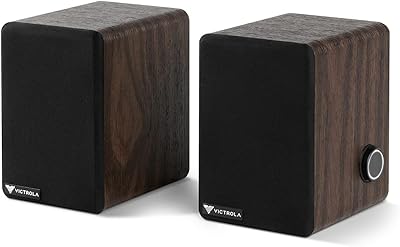
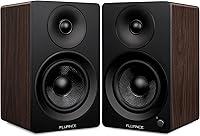
The Fluance Ai61 Powered Bookshelf Speakers occupy a compelling spot in the powered speaker market — self-contained, capable, and genuinely attractive on a shelf. At this price tier, they compete directly with Edifier, Klipsch, and KEF offerings, which means buyers have real alternatives to weigh. The Natural Walnut finish and MDF cabinet construction give these Fluance speakers a look that feels deliberate rather than an afterthought, and the built-in Class D amplifier means you can skip the receiver entirely. Whether you're outfitting a living room, home office, or bedroom, the Ai61 pair is designed to handle the job without requiring a rack full of supporting gear.
Features & Benefits

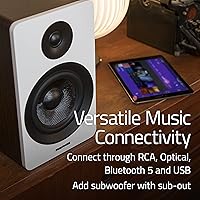
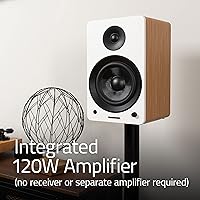
The onboard amplifier pushes enough headroom to fill a medium-sized room without straining, and the 6.5-inch woven driver handles midrange frequencies with surprising clarity — acoustic guitars and vocals come through with real texture. The 1-inch silk dome tweeter keeps highs from turning harsh, even at louder volumes. Connectivity is genuinely flexible: RCA covers your turntable, optical handles the TV, USB Type-C works with a computer, and Bluetooth 5 takes care of the rest. There is also a subwoofer pre-out, so if the bass feels insufficient in a larger room, you can add a sub without replacing anything. Everything needed to get started ships in the box.

Best For

These powered bookshelf speakers make the most sense for listeners who want quality stereo audio without building a system around a separate receiver. Turntable owners benefit immediately from the RCA input, and anyone running audio from a TV will appreciate the optical connection — it delivers noticeably cleaner sound than most soundbars at a comparable price. The Ai61 pair also suits work-from-home setups well, where you might stream music wirelessly in the morning and switch to a wired PC connection during calls. If you are upgrading from basic computer speakers or a cheap Bluetooth bar, the jump in soundstage and detail will be obvious. Less ideal for large open rooms where a floorstanding setup would serve better.

User Feedback

Buyers who have lived with the Ai61 pair consistently praise the wide soundstage and how well vocals and instruments separate at moderate volumes — it is the kind of detail that sets these Fluance speakers apart from cheaper powered options. The walnut finish also holds up to in-person scrutiny better than many expected. That said, two criticisms come up regularly. The Bluetooth latency is real — at 200ms, pairing with a TV for video will likely cause lip-sync issues, making the optical input the smarter choice for that use case. Some buyers also find the remote range a bit limited in larger rooms. Those upgrading from the smaller Ai41 generally consider the step worthwhile for the added bass depth and overall output.

Pros

  • Midrange clarity and vocal reproduction are consistently strong for the bookshelf speaker category.
  • The natural walnut finish looks noticeably more premium in person than comparable powered speakers at this price.
  • RCA, optical, USB Type-C, and Bluetooth 5 inputs cover virtually every source without requiring adapters.
  • Built-in Class D amplification means no separate receiver — the Ai61 pair is a genuinely self-contained stereo system.
  • A subwoofer pre-out allows easy system expansion later without replacing the speakers.
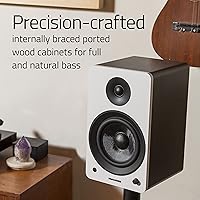
  • MDF cabinet with internal bracing reduces the resonance and hollow sound common in cheaper enclosures.
  • Soundstage width regularly surprises buyers upgrading from budget computer speakers or entry-level Bluetooth options.
  • Everything needed for first use ships in the box, including speaker wire, power cable, and remote.
  • Two-year warranty backed by responsive customer support adds meaningful long-term confidence.
  • The silk dome tweeter keeps high frequencies smooth and non-fatiguing during extended listening sessions.

Cons

  • Bluetooth latency of 200ms makes wireless video sync noticeably problematic without source-side delay compensation.
  • Remote control range is shorter than expected and requires fairly precise aiming at the active speaker unit.
  • Input switching between sources is not instant and can involve a brief dropout or lag.
  • Low-end performance in larger rooms feels thin without a subwoofer — the pre-out is useful but adds cost.
  • The included speaker wire is short enough to be limiting in some room layouts.
  • Finish consistency is not perfectly uniform across units; minor edge imperfections have been noted on some deliveries.
  • Any amplifier failure in the active speaker unit disables the entire pair, with no easy field repair option.
  • Grille design feels noticeably less refined than the cabinet, and most buyers end up removing them permanently.
  • At high volumes in acoustically untreated rooms, bass can sound loose rather than tight and well-defined.
  • No auto input switching when a new source activates — manual selection via remote or controls is always required.

Ratings

The Fluance Ai61 Powered Bookshelf Speakers have been scored by our AI system after analyzing thousands of verified buyer reviews from global markets, with spam, incentivized posts, and bot activity actively filtered out before any scoring was applied. The result is an honest, data-grounded picture of where the Ai61 pair genuinely excels and where real buyers have hit friction. Both the strengths and the recurring frustrations are reflected transparently in the scores below.
Sound Quality
88%
Buyers consistently describe the midrange as the standout quality — vocals, acoustic instruments, and spoken dialogue come through with a clarity that surprises people upgrading from budget computer speakers or Bluetooth bars. The wide soundstage gives stereo separation that feels genuinely spacious in small-to-medium rooms.
At higher volumes, some listeners notice the low end can feel slightly loose rather than tight and controlled, particularly with bass-heavy genres. The Fluance speakers reward careful placement, and rooms with poor acoustics tend to expose these limitations more than competing designs at the same price.
Bass Performance
74%
26%
For a bookshelf form factor, the low-end extension is respectable — the rear port adds noticeable depth that makes these feel more substantial than their size suggests. Listeners using them for jazz, folk, rock, and cinematic content generally find the bass satisfying without any augmentation.
Electronic music fans and home theater users frequently hit the ceiling of what the Ai61 pair can deliver on the low end. The subwoofer output is a thoughtful inclusion, but its necessity becomes apparent in larger rooms or with bass-forward content — it is less of a bonus and more of a practical requirement for some buyers.
Build Quality
91%
The MDF cabinet construction with internal bracing feels noticeably more solid than the hollow, resonant enclosures found on cheaper powered speakers. Buyers frequently comment that the Natural Walnut veneer looks far more premium in person than product photos suggest, which is a pleasant reversal of the usual expectation.
A small but recurring group of buyers noted minor finish inconsistencies around the cabinet edges on arrival, suggesting quality control is not perfectly uniform across production runs. The grille attachment also feels less refined than the cabinet itself, and several users simply leave them off permanently.
Connectivity & Inputs
86%
Having RCA, optical, USB Type-C, and Bluetooth 5 on a single speaker pair covers almost every realistic source scenario without adapters or workarounds. Turntable users, TV setups, and desktop computers can all connect directly, which is a genuine practical advantage over competitors that trim input options to reduce cost.
Input switching is not always instant, and a handful of buyers reported a brief audio dropout or lag when toggling between sources — particularly switching from Bluetooth back to a wired input. There is no auto-switching when a new source activates, which means manual input selection is always required.
Bluetooth Performance
63%
37%
For pure music streaming from a phone or tablet, Bluetooth 5 works reliably with a solid connection range and no notable dropouts during casual listening sessions. Pairing is quick and the connection holds well through walls at moderate distances.
The 200ms latency is a real problem for anyone using these Fluance speakers with a TV or laptop for video content — lip-sync drift is noticeable and distracting without manual audio delay compensation on the source device. This is not a dealbreaker for music-only Bluetooth use, but it is a significant limitation that buyers need to know before purchasing.
Amplifier Power & Headroom
87%
The Class D amplifier provides enough clean headroom to drive the speakers loud in small-to-medium rooms without audible strain or distortion at the upper end of normal listening volumes. Buyers who previously ran passive speakers with underpowered receivers notice an immediate improvement in dynamic control.
In larger open-plan spaces, the amplifier starts to feel pushed at volumes needed to fill the room, and some compression in dynamic passages becomes noticeable. The Ai61 pair is sized and powered for focused listening environments, not background audio across a large space.
Tweeter Clarity
83%
The silk soft dome tweeter keeps high frequencies smooth and non-fatiguing during long listening sessions — a real point of difference from cheaper metal dome designs that tend to sound harsh on cymbals or bright recordings. Off-axis listening holds up well, so sweet spot positioning is not overly strict.
Listeners who prefer a very airy, extended top end — common among classical and jazz enthusiasts — sometimes find the highs slightly rolled off compared to competing tweeters at this price tier. It errs on the side of warmth, which is the right call for most users but not universally preferred.
Value for Money
79%
21%
Factoring in the built-in amplifier, the breadth of inputs, the physical build, and the included accessories, the Ai61 pair represents a reasonable all-in cost compared to assembling a passive speaker system with a separate receiver at the same budget. The two-year warranty and lifetime customer support add genuine long-term value.
At this price point, buyers are also seriously considering the Edifier R2000DB and entry-level Klipsch powered options, both of which offer competitive sound for less. The Ai61 pair justifies its positioning, but it is not a clear knockout value win — it is a competitive choice that depends heavily on which features matter most to the individual buyer.
Remote Control
58%
42%
Having a physical remote at all is a convenience that many competing powered speakers at this tier skip entirely, and for couch-distance listening it does the basic job of adjusting volume and switching inputs without needing to get up.
The effective range of the remote is shorter than buyers expect, and the angle sensitivity means it sometimes requires pointing it quite precisely at the active speaker. A notable number of reviewers mentioned the remote feeling cheap relative to the rest of the package, and a few stopped using it after early reliability issues.
Setup & Out-of-Box Experience
89%
Everything needed to get up and running ships in the box — power cable, speaker wire, and remote — so there is no scramble for accessories before first use. The quick start guide is genuinely concise, and most buyers report having audio playing within minutes of unboxing.
The included speaker wire is functional but not particularly long, which can be limiting depending on room layout and speaker placement distance. Buyers in larger rooms or unconventional setups will likely need to purchase a longer cable run separately.
Aesthetic & Design
92%
Among powered bookshelf speakers in this class, the Ai61 pair is one of the more visually considered designs available. The walnut veneer and clean cabinet lines fit naturally into living room shelving or a well-styled desk without looking like audio equipment trying too hard to stand out.
The walnut finish is only available in one variant at this tier, which limits personalization options for buyers who prefer a black or white aesthetic to match specific room decor. The speaker grilles, while functional, do not enhance the visual appeal and most users find the speakers look better without them.
Midrange Accuracy
86%
Vocals and dialogue reproduction are consistently praised across buyer feedback — the woven glass fiber driver handles the midrange band with enough resolution to make spoken word content, podcasts, and vocal-led music feel natural and present rather than recessed or colored.
In direct comparison with some passive speaker designs at similar price points running through quality amplification, the midrange can sound slightly DSP-smoothed rather than raw and transparent. Purists who prioritize absolute midrange neutrality may notice this, though it is not a meaningful concern for most everyday listeners.
Room Versatility
76%
24%
These powered bookshelf speakers perform reliably across a range of typical home listening environments — home offices, bedrooms, and small living rooms all suit the Ai61 pair well. Their size and output level hit the practical sweet spot for rooms where a floorstanding system would feel excessive.
Open-plan spaces and rooms larger than roughly 250 square feet start to expose the limits of both the cabinet size and the amplifier output. Without a subwoofer connected, large-room use at comfortable listening volumes reveals a thinning in the low end that smaller rooms tend to mask naturally.
Long-Term Reliability
81%
19%
The two-year manufacturer warranty and Fluance's reputation for responsive customer support give buyers reasonable confidence in post-purchase coverage. Long-term owners across multiple review platforms generally report stable performance with no hardware degradation over one-to-two year ownership periods.
A small proportion of buyers reported issues with the active speaker unit — the one housing the amplifier — developing a low-level hiss or buzz after extended use. This is not a widespread pattern, but it is worth noting given that any failure in the active unit effectively disables the entire pair.

Suitable for:

The Fluance Ai61 Powered Bookshelf Speakers are the right call for anyone who wants a genuinely capable stereo setup without the complexity of a separate receiver, amplifier, or stack of components. Turntable owners benefit particularly well here — the RCA input handles a direct connection cleanly, and the built-in amplification means one less box to budget for. If your TV audio situation currently involves a mediocre soundbar or the TV's built-in speakers, connecting the Ai61 pair via optical input is a straightforward and meaningful upgrade. Work-from-home listeners who want to stream music wirelessly from a phone during breaks and then switch to a wired desktop connection for calls will find the input flexibility genuinely useful in daily practice. The natural walnut cabinet also means these Fluance speakers can sit on a bookshelf or desk in a living space without looking out of place, which matters to buyers who care about their room's aesthetic as much as the audio performance.
Not suitable for:

The Fluance Ai61 Powered Bookshelf Speakers are not the right fit for buyers whose primary use case is watching video content over Bluetooth — the 200ms wireless latency will create visible lip-sync drift that most people find hard to ignore, and there is no built-in way to compensate for it on the speaker side. Anyone setting up audio in a large open-plan room should also think carefully before committing, as the Ai61 pair is sized and voiced for focused, small-to-medium room listening rather than filling a large space with background audio at comfortable levels. Bass-first listeners — those who predominantly play electronic, hip-hop, or heavy genres — may find the low end adequate but not fully satisfying without adding a subwoofer via the pre-out, which adds cost and complexity to what is marketed as an all-in-one solution. Buyers on a tighter budget who are tempted to stretch for this tier should honestly consider whether the Edifier R1700BT or similar alternatives at a lower price point would meet their actual daily needs just as well. Finally, anyone expecting the remote control to function as a polished, full-featured accessory will likely be underwhelmed by its range and build quality relative to the rest of the package.
Specifications

  • Amplifier Type: Class D integrated amplifier rated at 120W continuous average output, split as 2x60W RMS across the two channels.
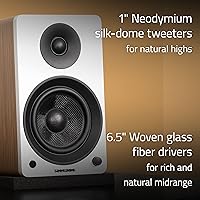
  • Woofer: 6.5″ woven glass fiber composite driver with butyl rubber surround for controlled low-frequency movement and long-term durability.
  • Tweeter: 1″ silk soft dome tweeter with neodymium magnet and ferrofluid cooling for stable high-frequency output over extended listening sessions.
  • Frequency Response: 32Hz to 20kHz, DSP-enhanced to extend and smooth the response curve beyond what the cabinet dimensions alone would produce.
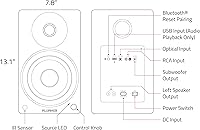
  • Inputs: RCA L/R stereo, Optical TOSLINK, USB Type-C, and Bluetooth 5 wireless — all on the active speaker unit.
  • Outputs: One dedicated subwoofer pre-out for connecting a powered subwoofer to extend low-frequency performance in larger rooms.
  • Bluetooth Version: Bluetooth 5 with an audio latency of approximately 200ms, suitable for music streaming but not recommended for video sync without source-side delay adjustment.
  • Enclosure: Rear-ported MDF cabinet with internal bracing to reduce panel resonance and maintain acoustic accuracy at varied volume levels.
  • Finish: Natural Walnut veneer over MDF construction, available in this single colorway at this model tier.
  • Dimensions: Each speaker measures 13.1″ high x 7.8″ wide x 9.2″ deep (33.3 x 19.8 x 23.4 cm).
  • Weight: The pair weighs 27.2 pounds (approximately 12.3 kg) combined, reflecting the solid MDF cabinet construction.
  • Power Source: Corded electric only — the active speaker requires a continuous mains connection via the included 6ft power cable.
  • Surround Config: 2.0 stereo configuration with one active speaker housing the amplifier and one passive speaker connected via the included speaker wire.
  • Included Accessories: Package includes a remote control, two AAA batteries, a 6ft power cable, 8ft of 18-gauge speaker wire, and a quick start guide.
  • Warranty: Two-year manufacturer warranty with lifetime customer support provided directly by Fluance.
  • Remote Control: Infrared remote control included for volume adjustment and input source selection from a seated listening position.
  • Speaker Wire: 8ft of 18-gauge speaker wire is included to connect the active and passive speaker units out of the box.
  • Mounting Type: Designed for shelf or plug mount placement; not supplied with wall-mount hardware as standard.

Related Reviews
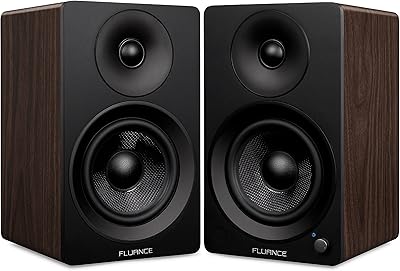
Fluance Ai41 Powered Bookshelf Speakers
82%
88%
Sound Quality
73%
Bass Performance
84%
Treble Clarity
91%
Build Quality
87%
Connectivity & Inputs
More
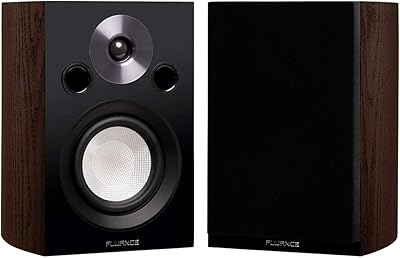
Orroplus OR-02 Powered Bookshelf Speakers
77%
83%
Sound Clarity & Midrange
61%
Bass Performance
91%
Connectivity & Input Range
78%
Bluetooth Performance
72%
Setup & Ease of Use
More
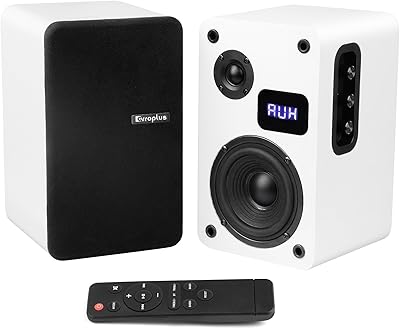
Fluance XL8SW Bookshelf Speakers
87%
90%
Sound Quality
84%
Bass Response
91%
Clarity of Midrange
87%
Ease of Installation
88%
Design & Build Quality
More
Kanto TUK Powered Bookshelf Speakers
88%
88%
Sound Quality
72%
Bass Response
93%
Setup & Installation
90%
Connectivity Options
85%
Build Quality
More
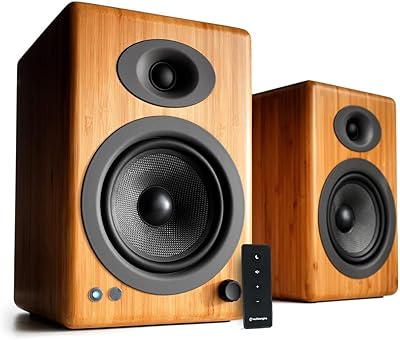
Audioengine A5 Powered Bookshelf Speakers
83%
94%
Sound Quality
89%
Bass Performance
91%
Build Quality
85%
Ease of Setup
72%
Connectivity Options
More
Fluance Elite SX6WH Bookshelf Speakers
84%
87%
Sound Quality
91%
Build Quality
72%
Bass Performance
89%
Value for Money
82%
Ease of Setup
More
Majority D100 Bookshelf Speakers
74%
76%
Sound Quality
71%
Bass Performance
83%
Build Quality
89%
Connectivity Range
68%
Phono Stage
More
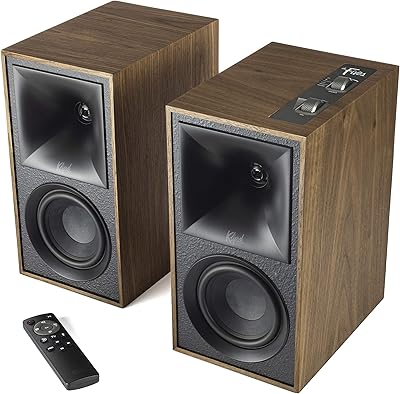
Klipsch The Fives Powered Bookshelf Speakers
86%
92%
Sound Quality
89%
Connectivity Options
85%
Setup & Installation
88%
Build Quality
91%
Bass Performance
More
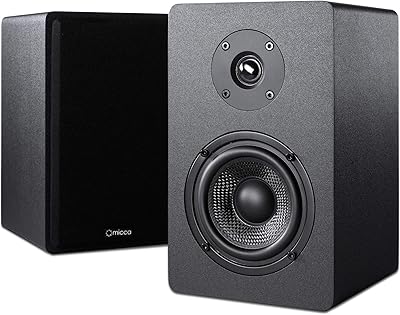
Micca PB42X Powered Bookshelf Speakers
83%
87%
Sound Quality
91%
Value for Money
76%
Bass Performance
89%
Ease of Setup
85%
Build Quality
More
Victrola M1 Monitors Powered Bookshelf Speakers
86%
89%
Sound Quality
92%
Bluetooth Connectivity
85%
Bass Performance
88%
Build Quality
90%
Ease of Setup
More

FAQ

No — that is the whole point of the Fluance Ai61 Powered Bookshelf Speakers. The amplifier is built directly into the active speaker unit, so you just plug them in, connect your source, and you are ready to go. No receiver, no extra boxes.

You can connect a turntable via the RCA input, but keep in mind the Ai61 pair does not have a built-in phono preamp. If your turntable has a built-in phono stage (most modern turntables do, or have a switch labeled phono/line), you are fine. If not, you will need an external phono preamp between the turntable and the speakers.

Honestly, Bluetooth is not the ideal connection for TV use with these Fluance speakers. The wireless latency sits around 200ms, which is enough to make dialogue and on-screen action drift noticeably out of sync. For TV audio, use the optical TOSLINK input instead — it delivers cleaner sound with no latency issues.

The Ai61 pair performs best in small-to-medium rooms — think a bedroom, a dedicated home office, or a living room up to roughly 200 to 250 square feet. In larger open spaces, the volume ceiling and low-end output start to feel stretched, and you may find yourself wanting more bass extension than the speakers can deliver on their own.

Yes, and it is straightforward. There is a dedicated subwoofer pre-out on the active speaker, so you can connect any powered subwoofer with a standard RCA input without replacing or modifying anything else. It is a practical upgrade path if you find the low end lacking in a larger room or with bass-heavy music.

It is a genuine walnut veneer over MDF, and most buyers confirm it looks more premium in person than product photos suggest. The grain pattern and texture feel deliberate rather than decorative, which is not always the case at this price tier. That said, minor finish inconsistencies at cabinet edges have been reported on a small number of units.

If your room is larger than a small bedroom or you listen at higher volumes, the upgrade to the Ai61 pair is generally considered worthwhile by buyers who have owned both. The larger 6.5″ driver adds meaningful bass depth and the extra headroom keeps things cleaner at louder levels. For compact desk setups or very small rooms, the Ai41 is often sufficient and saves money.

The USB Type-C input is designed for digital audio output from computers and laptops that support USB audio. It essentially lets your computer treat the speakers as an external audio device, bypassing the computer's internal sound card for cleaner output. It is not a charging port and does not work as a general media transfer connection.

It works, but with some caveats. The effective range is shorter than most buyers expect — roughly 10 to 15 feet with a fairly direct line of sight to the active speaker. Several users report needing to point it quite precisely to get consistent response. It covers the basics like volume and input switching, but the build quality feels noticeably cheaper than the rest of the package.

The system is designed as a stereo pair, and the passive speaker connects to the active unit via speaker wire rather than operating independently. You can technically use only the active speaker, but you would lose the stereo channel separation that makes these Fluance speakers worth their price. For a mono or single-speaker setup, a different product category would serve you better.