Overview

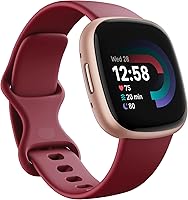
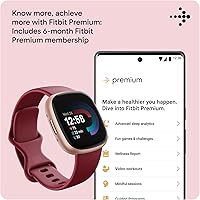
The Fitbit Versa 4 Fitness Smartwatch sits comfortably in the mid-range smartwatch space, offering genuine fitness depth alongside enough lifestyle features to make it a daily companion worth considering. What separates it from earlier Fitbit models is the addition of Google ecosystem tools — Alexa, Google Wallet, and Maps — bringing it closer to the connected experience Android users expect. The rectangular display is crisp and easy to read, and at just 60 grams, the watch disappears on your wrist after a few hours. Battery life stretching beyond six days is a real differentiator against rivals that need nightly charging. One honest caveat upfront: Fitbit Premium is a paid subscription, and without it, some of the most compelling insights — like the Daily Readiness Score and personalized Sleep Profile — stay locked behind a paywall.

Features & Benefits

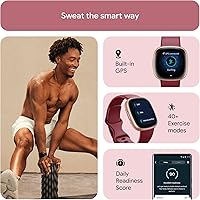
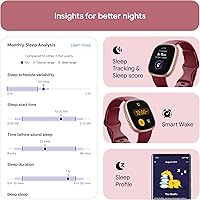
The Versa 4 brings a genuinely useful feature set, starting with built-in GPS that tracks your route and workout intensity without requiring your phone — something that matters most on early morning runs or rides when you would rather leave your phone at home. The Daily Readiness Score is one of the more practical tools here, factoring in your recent activity, sleep, and heart rate variability to tell you plainly whether your body is ready to push or needs rest. Sleep tracking is thorough, covering stages, oxygen saturation, and a nightly score. On the smartwatch side, Bluetooth calls and notifications work reliably, and contactless payments via Fitbit Pay add genuine convenience. Android users get a little more, with Google Wallet and Maps also in the mix.

Best For

This Fitbit smartwatch hits its sweet spot with fitness-focused adults who want more than a basic step counter but are not ready to pay Apple Watch prices. Runners who want to track outdoor workouts without strapping a phone to their arm will appreciate the reliable GPS. It is also a strong pick for anyone serious about improving their sleep, since the tracking tools here are among the most detailed in this price range. Android users will get the fullest experience, as Google Maps and Wallet integration works more completely on Android than iOS. And if you are upgrading from an older Fitbit, the jump in features is noticeable enough to feel like a meaningful step forward without a steep learning curve.

User Feedback

Owners of the watch consistently praise its battery longevity — getting through a full week without hunting for a charger is something Apple Watch and Galaxy Watch owners genuinely envy. GPS accuracy is decent for casual runners, though serious athletes have noted it falls short of dedicated running watches in precision. A recurring frustration is how much of the health insight experience depends on a Fitbit Premium subscription; some buyers feel caught off guard when the most interesting data turns out to be paywalled after setup. Android users tend to report a smoother notification and payment experience than iPhone users. A few long-term owners have also flagged band durability and minor screen scratching as concerns after extended daily wear.

Pros

  • Battery life comfortably exceeds six days, making weekly charging the norm rather than a nightly chore.
  • Built-in GPS means you can leave your phone at home on outdoor runs and still get solid route tracking.
  • Sleep tracking is genuinely detailed, covering stages, blood oxygen levels, and a nightly score in one place.
  • At just 60 grams, the watch is light enough to forget you are wearing it during workouts and through the night.
  • The Daily Readiness Score takes the guesswork out of training by factoring in recovery, not just activity.
  • Android users get a well-rounded connected experience with Google Wallet, Maps, and Alexa on the wrist.
  • Both small and large bands are included in the box, so fit is not an added expense out of the gate.
  • Water resistance rated to 50 meters means it handles swims, showers, and heavy rain without concern.
  • Over 40 exercise modes cover a wide range of workouts, with automatic detection for common activities.
  • Stress tracking with guided breathing sessions adds a mental wellness dimension beyond pure physical metrics.

Cons

  • The most useful health insights are locked behind a Fitbit Premium subscription, which costs extra after purchase.
  • GPS accuracy is solid for casual use but noticeably lags behind dedicated running and sports watches.
  • iPhone users miss out on Google Maps and Wallet functionality, making the feature set feel uneven on iOS.
  • Some owners have reported band degradation and minor screen scratching after several months of daily wear.
  • Bluetooth call quality on the wrist is passable but rarely impressive, and background noise is a real issue.
  • The app ecosystem is limited compared to Wear OS or watchOS, with fewer third-party options to customize.
  • Notification handling is more reliable on Android; iOS users occasionally experience sync delays or gaps.
  • There is no onboard music storage or streaming support, which may frustrate those who work out without a phone.
  • The display, while readable, lacks the brightness punch of some rivals in direct sunlight conditions.
  • Long-term software support and update cadence from Fitbit have historically been inconsistent post-acquisition.

Ratings

The scores below for the Fitbit Versa 4 Fitness Smartwatch were generated by our AI after analyzing thousands of verified global buyer reviews, with spam, incentivized submissions, and bot activity actively filtered out before any scoring was applied. Both the genuine strengths and the recurring frustrations are reflected honestly — nothing has been softened or inflated. The result is a realistic, category-by-category picture of what real owners actually experience over weeks and months of daily use.

Battery Life
91%
Owners consistently call out battery longevity as one of the watch's strongest real-world advantages. Getting through a full week of workouts, sleep tracking, and notifications without reaching for a charger is something most competing smartwatches simply cannot match, and buyers transitioning from Apple Watch or Galaxy Watch notice the difference immediately.
Heavy GPS users — those logging daily outdoor runs with continuous satellite tracking — report the battery draining closer to three or four days rather than the full-week estimate. It is still competitive, but the gap between advertised and real-world life under demanding conditions is noticeable enough to mention.
Sleep Tracking
86%
The depth of sleep data here stands out even among more expensive wearables. Tracking light, deep, and REM stages alongside overnight SpO2 readings gives a genuinely useful picture of sleep quality, and the nightly Sleep Score makes it easy to spot trends without digging through raw data every morning.
The most actionable layer — the personalized monthly Sleep Profile — sits behind a Fitbit Premium paywall, which frustrates buyers who assumed the full feature set was included at purchase. Without a subscription, some of the longer-term pattern insights simply are not accessible.
Fitness Tracking
83%
With over 40 exercise modes and automatic activity detection, the watch handles the vast majority of workouts most people actually do — running, cycling, strength training, swimming — without needing to manually log every session. The Active Zone Minutes metric is a practical motivator that goes beyond raw step counts.
Serious athletes who rely on advanced training metrics like lactate threshold estimates, VO2 max trends, or structured interval guidance will find the Versa 4 underwhelming compared to Garmin or Polar devices at a similar price point. It is built for fitness awareness, not performance optimization.
GPS Accuracy
71%
29%
For recreational runners and cyclists, the built-in GPS delivers reliable enough route tracking and distance measurement to make leaving the phone at home a genuinely comfortable option. The workout intensity map is a nice visual touch that helps users understand pace variation across a session.
Compared to dedicated running watches, GPS lock time can be slower and route precision on technical or tree-covered paths is noticeably inconsistent. Distance measurements can drift by a meaningful margin on longer runs, which is a real issue for anyone training to a specific weekly mileage target.
Heart Rate Monitoring
78%
22%
Continuous 24/7 heart rate monitoring works well enough for health trend tracking and zone-based workout guidance. Most buyers find the readings accurate enough during moderate-intensity activities like cycling, walking, and gym sessions, where wrist-based HR tends to perform at its best.
During high-intensity intervals or activities with significant wrist movement — like boxing or kettlebell work — readings can lag or spike inconsistently. Users who need reliable real-time HR for structured training are better served by pairing with a chest strap, though the watch does not support that natively.
Smartwatch Features
73%
27%
On-wrist Bluetooth calls, text replies, and app notifications cover the daily connected basics well enough for most people. Amazon Alexa integration is genuinely useful for quick hands-free queries, and Android users get the added convenience of Google Wallet for contactless payments during errands and post-workout stops.
iOS users get a noticeably stripped-back experience — Google Maps and Wallet are either absent or limited, which feels like a meaningful omission at this price. The third-party app selection is also thin compared to Wear OS or watchOS, so buyers expecting a rich on-wrist app ecosystem will be disappointed.
Value for Money
69%
31%
The hardware package — GPS, sleep tracking, heart rate, NFC payments, Alexa, six-plus day battery — represents a genuinely competitive bundle for the price tier. Buyers who want a capable all-rounder without crossing into flagship territory will find the feature-to-cost ratio reasonable.
The value calculation shifts once you factor in that Fitbit Premium is essentially required to unlock the insights that make this watch stand out from cheaper alternatives. Buyers who skip the subscription are left with a solid but unremarkable tracker that may not justify the asking price against lower-cost competition.
Build Quality
67%
33%
The watch feels solid and well-assembled on the wrist, with a weight and profile that reads as premium without being heavy. The rectangular case design looks clean and understated, and the included bands fit a wide range of wrist sizes comfortably out of the box.
Long-term durability concerns surface fairly regularly in owner feedback. Band cracking and surface wear after several months of daily use is a recurring theme, and the screen picks up fine scratches more readily than some buyers expect from a device worn during workouts. A screen protector is worth considering early.
Stress & Wellness Tools
74%
26%
The daily Stress Management Score and guided breathing sessions add a genuine wellness dimension that goes beyond what most fitness-first wearables offer. For buyers dealing with high-pressure work schedules or looking to build mindfulness habits, having a wrist-level prompt to pause and breathe proves more useful than expected.
The Stress Score is a passive metric with limited actionability on its own — it tells you stress is elevated but does not give you much context for why or what specifically to do. The guided sessions are also fairly basic, and buyers already using dedicated mindfulness apps may find the tools redundant.
Notification Handling
68%
32%
For Android users, notification delivery is fast, reliable, and covers the full range of apps most people actually care about — messages, calls, calendar alerts, and third-party apps all come through cleanly. Being able to glance at a wrist notification during a workout without breaking stride is genuinely practical.
iOS users frequently report notification delays and limited reply options compared to the Android experience. The gap is significant enough that iPhone owners sometimes feel like they are using a different — and lesser — version of the same product, which reflects a real platform disparity in how Fitbit prioritizes integration.
App Experience
63%
37%
The Fitbit mobile app presents health data clearly and makes it easy for new users to understand their stats without a steep learning curve. Dashboard customization is straightforward, and syncing between the watch and app is generally quick and reliable when Bluetooth behaves.
The app has a history of inconsistent updates and UI changes that frustrate longtime Fitbit users, and some features take longer to sync or display correctly than they should. Since Google's acquisition, several users have also noted shifts in app behavior and feature availability that feel unfinished or poorly communicated.
Comfort & Wearability
84%
At 60 grams, the watch is genuinely comfortable for all-day and overnight wear — a factor that matters a lot when you are trying to capture sleep data consistently. The low-profile case and soft band edges mean most owners forget it is on within the first few days of use.
A small portion of users with particularly sensitive skin or smaller wrists have noted mild irritation or pressure marks after extended wear, particularly in warm conditions where sweat accumulates under the band. Regular band rotation and keeping the wrist dry helps, but it is worth noting for those with skin sensitivity.
Water Resistance
88%
The 50-meter water resistance rating holds up well in real-world use — pool laps, open-water swims, showers, and rainy outdoor runs all fall comfortably within what the watch can handle. Swim tracking mode works reliably, and buyers who want a watch that genuinely does not need to come off during exercise will find it dependable.
A small number of owners who swim regularly in chlorinated pools have reported faster-than-expected band degradation, likely due to chemical exposure over time. Rinsing the watch and band thoroughly after pool sessions is recommended but not always mentioned clearly during setup.
Setup & Onboarding
77%
23%
Initial setup is quick and guided clearly through the Fitbit app, and most buyers are up and running with basic tracking within fifteen minutes. The learning curve for core features is low, which makes the Versa 4 accessible for first-time smartwatch owners and those coming from simpler fitness bands.
Some features — particularly the Google integrations and payment setup — require additional steps, permissions, and account linking that can feel fragmented. A handful of users have also experienced Bluetooth pairing hiccups on first setup that required restarting the process before things connected reliably.

Suitable for:

The Fitbit Versa 4 Fitness Smartwatch is built for the kind of person who takes their health seriously but does not want to manage a device that needs charging every night. If you are a recreational runner, cyclist, or gym regular who wants GPS tracking, heart rate data, and sleep insights all in one place without paying flagship smartwatch prices, this watch makes a strong case for itself. It suits Android users particularly well, since Google Wallet and Maps work more fully on Android than on iOS, making the connected experience noticeably richer. People who struggle with sleep and want detailed, night-by-night feedback on what is actually happening will find the sleep tools here more thorough than most competitors in this price range. It is also a natural fit for anyone coming from an older Fitbit model who wants a real step up in features while staying in an ecosystem they already know.

Not suitable for:

The Fitbit Versa 4 Fitness Smartwatch is not the right pick for serious endurance athletes or trail runners who need precise GPS mapping and advanced training metrics — a dedicated sports watch will serve those needs far better. iPhone users should also go in with lowered expectations, as several of the Google-powered features, including Maps and Wallet, are either limited or absent on iOS. If you are hoping to get the full value of health insights like the Daily Readiness Score and personalized Sleep Profile without paying an ongoing subscription fee, you will likely feel shortchanged, since these tools sit behind a Fitbit Premium paywall. Tech enthusiasts who want a rich app ecosystem, on-device streaming, or deep third-party integrations will find the Versa 4 thin on that front compared to Wear OS or Apple Watch options. Finally, buyers who have had durability concerns with wearables in the past should note that some long-term owners have flagged band wear and screen scratching after extended use.

Specifications

  • Display: The watch features a 1.58-inch rectangular screen with a clear, readable panel suited for quick glances during workouts or daily use.
  • Dimensions: The case measures 1.59 x 1.59 x 0.44 inches, keeping it compact enough for all-day wear without feeling bulky on the wrist.
  • Weight: At 60 grams (approximately 2.12 oz), the watch is light enough to wear overnight for sleep tracking without discomfort.
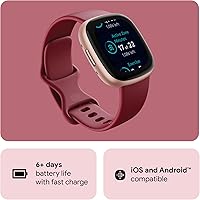
  • Battery Life: Fitbit rates battery life at six or more days on a single charge under typical usage conditions, well ahead of most competing smartwatches.
  • Water Resistance: The watch is water resistant to a depth of 50 meters, making it safe for swimming, showering, and heavy rain exposure.
  • GPS: Built-in GPS tracks outdoor routes and workout intensity maps independently, with no phone required during exercise.
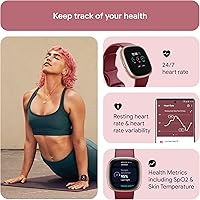
  • Heart Rate: A continuous optical heart rate sensor monitors beats per minute around the clock, feeding into fitness and recovery calculations.
  • Exercise Modes: Over 40 exercise modes are available, including automatic detection for common activities like running, walking, and cycling.
  • Connectivity: The watch connects via Bluetooth for calls, notifications, and syncing, and uses NFC for contactless payment support.
  • Payments: Both Fitbit Pay and Google Wallet are supported for contactless transactions, though Google Wallet availability depends on device platform.
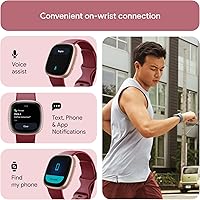
  • Voice Assistant: Amazon Alexa is built into the watch, allowing hands-free queries, reminders, and smart home controls directly from the wrist.
  • Health Tracking: The watch monitors SpO2, Stress Management Score, Sleep Profile, menstrual cycle tracking, and offers guided breathing sessions.
  • Smart Notifications: Incoming calls, text messages, and app alerts can be received and responded to directly on the wrist via Bluetooth connection.
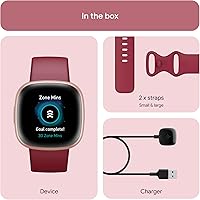
  • Band Sizing: Both a small and a large band are included in the box, so buyers do not need to purchase additional bands for fit adjustments.
  • Storage: The device includes onboard storage of 6,400 MB, used for firmware, app data, and clock face storage.
  • Compatibility: The watch pairs with both iOS and Android smartphones, though certain Google features like Maps and Wallet are more fully supported on Android.
  • Sensors: Onboard sensors include an accelerometer, gyroscope, altimeter, optical heart rate monitor, SpO2 sensor, and a skin temperature sensor.
  • Power Source: The watch is powered by a built-in rechargeable lithium polymer battery, which is included and not user-replaceable.

Related Reviews
Fitbit Versa Lite Smartwatch
77%
88%
Battery Life
84%
Sleep Tracking
79%
Heart Rate Monitoring
51%
GPS Performance
91%
Comfort & Wearability
More
Fitbit Sense Smartwatch
77%
88%
Heart Health Monitoring
67%
Stress Tracking & EDA Sensor
84%
Sleep Tracking
72%
Built-in GPS Accuracy
86%
Battery Life
More
Fitbit Versa Smart Watch
84%
93%
Battery Life
88%
Fitness Tracking Accuracy
90%
Water Resistance
85%
Design & Comfort
70%
Syncing & App Performance
More
Fitbit Ace LTE Kids Smartwatch
76%
88%
GPS Accuracy
91%
Parental Controls
84%
Battery Performance
61%
Value for Money
87%
Ease of Setup
More
Garmin vivoactive 4 GPS Smartwatch
88%
90%
Battery Life
94%
Fitness & Health Tracking
86%
Music Storage & Playback
88%
Build Quality
85%
Ease of Use
More
Fitbit Inspire 3 Fitness Tracker
85%
89%
Ease of Use
92%
Battery Life
88%
Heart Rate Monitoring
85%
Sleep Tracking Accuracy
91%
Water Resistance
More
Fitbit Versa 2 Special Edition Smartwatch
76%
88%
Sleep Tracking Accuracy
82%
Heart Rate Monitoring
71%
Battery Life
84%
Design & Build Quality
83%
Display Quality
More
Polar Pacer GPS Running Smartwatch
77%
83%
GPS Accuracy
91%
Battery Life
89%
Display Readability
71%
Heart Rate Accuracy
88%
Comfort & Wearability
More
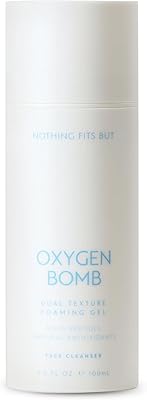
NOTHING FITS BUT Oxygen Bomb Dual Texture Pore Purifying Foaming Gel Facial Mask & Cleanser, 3.4 Fl Oz
88%
89%
Effectiveness as Cleanser
84%
Effectiveness as Mask
88%
Hydration
92%
Gentleness on Sensitive Skin
85%
Pore Minimizing Effect
More
Loma Dry Shampoo 4.4 oz
87%
90%
Effectiveness in Oil Absorption
88%
Scent Quality
83%
Volume and Texture Enhancement
94%
Suitability for Sensitive Skin
89%
Packaging and Ease of Use
More

FAQ

You can use the Fitbit Versa 4 Fitness Smartwatch without a Premium subscription and still get heart rate data, step counts, basic sleep stages, and GPS tracking. However, some of the more insightful features — like the Daily Readiness Score and the personalized Sleep Profile — are locked behind the paid Premium tier. It is worth knowing this upfront so you can factor that ongoing cost into your decision.

The GPS is reliable enough for recreational runners who want to track distance, pace, and route without carrying a phone. That said, if you are training seriously for races or need precision on technical trails, a dedicated running watch will outperform it. For most everyday athletes, the GPS is more than adequate.

It works with both platforms, but Android users get a noticeably fuller experience. Google Maps and Google Wallet are either limited or unavailable on iOS, so iPhone users will not have access to those features in the same way. Core fitness and health functions work fine on both, but if you want the complete connected package, Android is the better pairing.

The watch supports Bluetooth calls, meaning you can make and receive calls through the watch when your phone is nearby and connected. It does not have its own cellular connection, so you cannot leave your phone at home and still make calls. Call quality is decent but can struggle in noisy environments.

Most owners find the battery performance lands close to the advertised figure under normal use — meaning GPS is not running all day. If you do GPS-heavy outdoor workouts daily, expect that number to come down a bit. Still, getting through five to seven days between charges is a realistic expectation for most users.

Yes, the watch is rated water resistant to 50 meters, which covers swimming in pools or open water, showering, and exposure to heavy rain. It also has a swim tracking mode built in. Just rinse it with fresh water after saltwater or chlorine exposure to protect the band and sensors over time.

The sleep tracking breaks each night into light, deep, and REM stages, while also measuring blood oxygen levels throughout. You get a morning Sleep Score that gives you a quick read on how restorative the night was, along with longer-term trends if you check your Sleep Profile monthly. Many users find it one of the most practical features on the watch, especially if they are actively trying to improve their rest.

The silicone bands feel comfortable during workouts and casual daily wear, and the fact that both sizes are included is a nice touch. A portion of long-term owners have noted some wear and cracking of the bands after extended daily use, particularly around areas that flex most. If that happens, third-party replacement bands are widely available and affordable.

On Android, yes — Google Wallet is supported for contactless payments at NFC-enabled terminals, which is convenient for quick errands or post-workout grocery runs. On iOS, this feature is not available, so iPhone users are limited to Fitbit Pay, which works at a narrower range of participating merchants and banks.

If you are coming from a Versa 2 or similar, the jump feels meaningful — the Google integrations, improved GPS, and expanded health tools are all noticeable improvements. The Fitbit app experience stays familiar, so the learning curve is minimal. The main thing to consider is whether the features that require Premium are important to you, since older models may have included some of that data for free.

Where to Buy