Overview

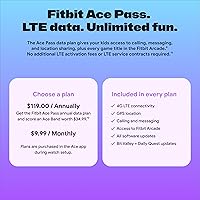
The Fitbit Ace LTE Kids Smartwatch sits in a genuinely interesting spot in the wearable market — it's not a toy watch, and it's definitely not a smartphone. Google and Fitbit have built something that addresses a real parental dilemma: keeping tabs on your child without handing them a device that opens the entire internet. The design is chunky and kid-friendly, with a rugged bumper included right out of the box. One thing to know upfront — this wearable for kids requires the Ace Pass data plan, a monthly subscription on top of the purchase price. That's not a dealbreaker, but it's something every buyer should factor in before checkout.

Features & Benefits

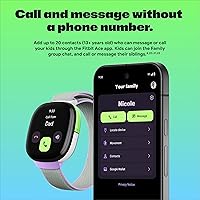
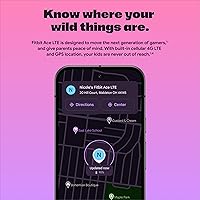
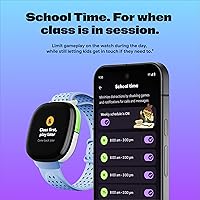
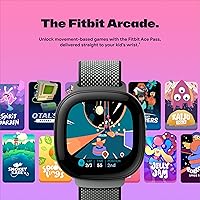
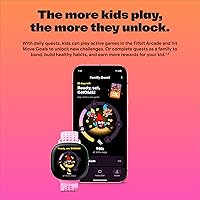
The built-in 4G LTE and GPS are where the Ace LTE genuinely earns its place. Kids can be tracked in real time without the watch needing to pair to a nearby phone — something basic GPS trackers simply can't offer. Parents approve up to 20 contacts for calls and messages, keeping communication controlled without feeling oppressive. The Fitbit Arcade is a smart touch: games are tied to physical movement, so kids essentially earn screen time by staying active. School Time mode quietly limits gameplay during class hours while still allowing emergency contact. The fast-charge feature — delivering 11 hours of battery from just 30 minutes of charging — is a practical win for forgetful kids.

Best For

This kids' smartwatch is the right call for parents of roughly 6-to-12-year-olds who want more than a GPS tracker but aren't ready to introduce a full phone. It fits naturally into the Google and Fitbit ecosystem, so if you're already using those apps, setup is relatively painless. Kids who need external motivation to stay active will take to the gamified activity system quickly — movement-based games reward physical effort in a way a plain step counter never could. That said, households need to be genuinely comfortable with a recurring data plan cost. This isn't a one-time purchase; it's a connected device with an ongoing subscription attached.

User Feedback

Parents consistently point to GPS accuracy as a standout strength — knowing exactly where their child is during after-school hours brings real peace of mind, and setup earns strong marks for being straightforward. The subscription cost, though, is the most common source of frustration; many buyers feel it wasn't clearly communicated at purchase. School Time mode works reliably for most families, though a handful report occasional inconsistencies. Durability feedback is mixed — the included bumper helps, but the watch feels light enough that some parents question its long-term resilience. The contact approval system lands positively overall, though kids apparently prefer messaging over actual calls.

Pros

  • Real-time GPS tracking works independently without a paired phone nearby, giving parents genuine location awareness.
  • The contact approval system keeps communication locked to up to 20 trusted adults, reducing exposure risks.
  • Movement-based games in the Fitbit Arcade make physical activity feel rewarding rather than like a chore.
  • School Time mode reliably limits gameplay during class hours while keeping emergency contact options open.
  • Fast charging delivers around 11 hours of battery life from just 30 minutes plugged in.
  • Setup process earns consistently strong marks from parents for being quick and straightforward.
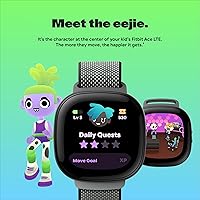
  • The Noodle activity ring gives kids a visual, fun way to track daily movement goals.
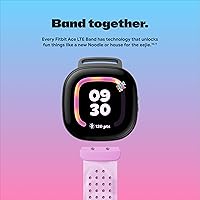
  • Interchangeable bands that unlock new in-app content add a collectible element kids genuinely enjoy.
  • At under 28 grams, the watch is light enough that most kids forget they are wearing it.

Cons

  • The mandatory Ace Pass data plan adds a recurring monthly cost that many buyers underestimate at purchase.
  • Kids cannot message each other directly, which frustrates socially active children quickly.
  • No support for third-party apps means the feature set is permanently limited to what Fitbit provides.
  • Some parents report occasional inconsistencies with School Time mode not activating or deactivating reliably.
  • The lightweight build raises legitimate long-term durability questions for active or accident-prone kids.
  • A Google account is required for setup, which may be a friction point for non-Google households.
  • The closed ecosystem offers no upgrade path — if a child outgrows the content, there is no way to expand it.
  • Call quality feedback from real users is mixed, with some kids abandoning voice calls in favor of messages.

Ratings

The scores below reflect AI-driven analysis of verified global user reviews for the Fitbit Ace LTE Kids Smartwatch, with spam, bot activity, and incentivized feedback actively filtered out before any scoring was applied. Each category captures both what real parents and kids genuinely appreciate and the friction points that come up repeatedly in honest feedback. Nothing has been softened — the numbers reflect the full picture.

GPS Accuracy
88%
Parents consistently describe checking their child's location during after-school hours and finding the GPS tracking to be reliably precise, even in suburban areas with mixed signal environments. The fact that it works over 4G LTE without needing a paired phone nearby is a recurring point of satisfaction.
A small portion of users report occasional lag in location updates in dense urban environments or when the child is indoors. It performs well overall, but it's not quite the real-time precision some parents expect from a premium connected device.
Parental Controls
91%
The contact approval system and School Time mode together give parents a meaningful degree of control that goes well beyond basic parental filters. Parents specifically praise the ability to lock gameplay during school hours while keeping emergency call access open — it works the way they need it to in real daily life.
Some parents find the controls slightly rigid; there's limited ability to fine-tune settings beyond the preset modes Fitbit provides. A few users wished for more granular scheduling options within School Time, such as different rules for different days of the week.
Battery Performance
84%
The 16+ hour battery life holds up well for a full school day plus after-school activities, and the fast-charge feature is a genuine relief for parents of forgetful kids — 30 minutes plugged in before bed typically delivers enough charge for the next day.
Heavy GPS and 4G usage can pull the battery down faster than the rated estimate, which some parents notice on particularly active days. A small number of users report battery degradation becoming noticeable after six to eight months of daily use.
Value for Money
61%
39%
For families who fully use the GPS, calling, and activity features, the hardware itself feels appropriately priced for what it delivers relative to competing kids' wearables. The Fitbit Arcade adds genuine engagement that helps justify the cost for active households.
The mandatory Ace Pass subscription is where value perception takes a significant hit. Many buyers feel the total cost of ownership — device plus ongoing plan — wasn't communicated clearly at purchase, and that frustration surfaces repeatedly in long-term user reviews.
Ease of Setup
87%
First-time setup through the Fitbit Ace app draws strong marks from parents across both Android and iOS, with most reporting the process takes under 15 minutes from unboxing to first use. The guided flow for adding contacts and configuring school schedules is described as intuitive even for less tech-savvy caregivers.
Users who don't have an existing Google account encounter an extra layer of friction during setup that can slow things down. A handful of parents also note that syncing issues occasionally arise after software updates, requiring a full re-pair.
Kid Engagement
89%
Kids' enthusiasm for the Fitbit Arcade is one of the most consistent positives across user feedback. The movement-based game mechanic means kids are genuinely motivated to stay active, and parents describe their children asking to go for walks specifically to earn in-game progress — a rare win.
Engagement does taper off for some children after the initial novelty period, particularly if the game library feels repetitive. Parents of older kids near the top of the target age range note their children outgrow the content faster than younger users.
Build Quality
72%
28%
The included bumper adds meaningful day-to-day protection, and the overall construction handles normal playground activity without obvious wear in the short term. At under 28 grams, the watch sits lightly on a child's wrist, which kids and parents both appreciate for comfort.
The lightweight build raises durability concerns over a longer ownership horizon. Several parents question whether the watch would survive a significant drop without the bumper, and a subset of reviewers report cosmetic wear on the band and casing after several months of active use.
Call & Message Quality
69%
31%
Voice calls work reliably in areas with solid 4G coverage, and parents describe being able to reach their children clearly during pickup delays or schedule changes. The contact whitelist keeps communication focused and free from unsolicited messages.
Call audio quality drops noticeably in weaker signal areas, and a recurring observation is that kids gravitate toward messaging over calls, partly because the speaker volume feels low in noisy outdoor environments. The inability for kids to message each other is also a noted friction point for social children.
Activity Tracking
78%
22%
The Noodle activity ring translates steps, jumps, and bounces into a visually rewarding format that resonates with younger kids far better than numeric step counts. Parents of less naturally active children specifically credit it with creating positive daily movement habits.
The activity tracking is not particularly granular — it doesn't distinguish between different activity types or provide the kind of detailed health metrics older Fitbit models offer. Parents looking for genuine fitness insights beyond basic movement counts will find it limited.
App Experience
74%
26%
The Fitbit Ace parent app provides a clean overview of location, activity, and communication logs, and most parents find the dashboard easy to navigate on a daily basis. Notifications for when a child leaves a known location are a frequently praised practical feature.
The app's functionality is ultimately constrained by the closed ecosystem — there's no meaningful customization beyond what Fitbit has built in, and app update rollouts have occasionally introduced temporary bugs that affect location reporting or School Time scheduling.
Comfort & Wearability
83%
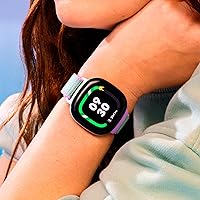
Children across the reported age range largely forget they are wearing it within a few days, which is a meaningful indicator of comfort for an all-day wearable. The single-size band fits most elementary-age wrists adequately, and the square case doesn't snag on clothing or sports equipment.
The one-size band approach does leave some parents of smaller or larger-wristed children wishing for more fit options. A few users also note that the bumper, while protective, adds slight bulk that some kids find less comfortable during sleep tracking.
Screen Quality
76%
24%
The 1.6-inch touchscreen is bright and responsive enough for kids to navigate the Arcade and check messages without frustration. Colors are vibrant for game content, which contributes to the engagement factor parents and kids both notice right away.
Outdoor visibility in direct sunlight can be a challenge at average brightness settings, requiring kids to manually adjust or shield the screen. At 320x386 resolution the display is functional but not notably sharp compared to what kids may be used to on tablets or phones.
Subscription Transparency
43%
57%
For buyers who research the Ace Pass requirement in advance, the plan's actual feature set — unlimited calling, messaging, GPS, and full Arcade access — feels like reasonable value relative to what it enables. Families who budget for it upfront report few ongoing surprises.
This category scores low because the mandatory subscription catches a disproportionately high number of buyers off guard post-purchase. It is the single most common source of negative reviews and buyer regret, particularly among those who treated the watch as a one-time purchase.
Band Unlock Feature
67%
33%
The collectible band mechanic is genuinely clever for the target age group — kids respond to the idea of unlocking new in-app content with a physical accessory, and it adds a secondary motivation layer that extends engagement beyond the base device.
Additional bands represent an extra cost on top of an already subscription-dependent product, and some parents feel the gamification of band purchases nudges toward unnecessary spending. The novelty also fades relatively quickly once a child has a few bands in rotation.

Suitable for:

The Fitbit Ace LTE Kids Smartwatch is built for parents of roughly 6-to-12-year-olds who want a meaningful middle ground between a basic GPS tracker and a full smartphone. If your child is old enough to want some independence but you're not ready to hand over a device with unrestricted internet access, this wearable hits that sweet spot well. Families already using Google or Fitbit services will find setup and day-to-day management genuinely straightforward through the Fitbit Ace app. It's also a strong fit for kids who are hard to motivate physically — the movement-based games give them a real reason to get up and move rather than just nagging from a step counter. Gift-givers looking for something more substantial than a novelty watch will find this a compelling choice, provided they communicate the ongoing data plan requirement to the recipient upfront.

Not suitable for:

Buyers who are uncomfortable with recurring monthly subscription costs should think carefully before purchasing, because the Ace Pass data plan is not optional — without it, the core connected features simply don't function. The Fitbit Ace LTE Kids Smartwatch also won't satisfy parents hoping to load third-party apps or expand functionality beyond what Fitbit and Google have built in; the ecosystem is intentionally closed. Teenagers are largely outside the target audience here, as the design language and game content skew noticeably younger. Parents expecting smartphone-level communication should note that kids cannot message each other directly through the watch, which can be a genuine frustration for social kids. If durability is a top priority for a particularly rough-and-tumble child, the lightweight build may warrant some hesitation despite the included bumper.

Specifications

  • Brand: Manufactured by Fitbit, a Google-owned wearable technology company with an established track record in consumer fitness devices.
  • Model: The Ace LTE is the first kids-specific Fitbit model to include built-in cellular connectivity and GPS.
  • Display: Features a 1.6-inch square touchscreen with a resolution of 320x386 pixels.
  • Dimensions: The watch body measures 1.62 x 1.77 x 0.52 inches, sized to fit comfortably on a child's wrist.
  • Weight: The device weighs 27.94 grams (0.986 oz), making it light enough for all-day wear without discomfort.
  • Connectivity: Supports 4G LTE cellular and Bluetooth wireless communication for calls, messages, and location sharing.
  • GPS: Includes built-in GPS for real-time location tracking that functions independently without a paired smartphone nearby.
  • Battery Life: Rated for 16+ hours of typical use, with fast charging capable of delivering approximately 11 hours of battery from a 30-minute charge.
  • Storage: Equipped with 32 GB of onboard storage running on an Android-based operating system.
  • OS: Operates on Android, managed and accessed through the Fitbit Ace companion app on a parent's device.
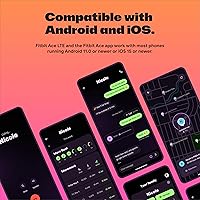
  • App Compatibility: Requires the Fitbit Ace app, compatible with Android 11.0 or newer and iOS 16 or newer on the parent's smartphone.
  • Contacts: Allows up to 20 approved contacts for calling and messaging; all contacts must be aged 13 or older.
  • Data Plan: Requires an active Ace Pass data plan subscription to access calling, messaging, GPS location sharing, and the full Fitbit Arcade game library.
  • Account Requirement: A Google account is required for device setup and ongoing use of connected features.
  • Special Features: Includes School Time mode, the Fitbit Arcade with movement-based games, the Noodle activity ring, and band-embedded tech that unlocks in-app content.
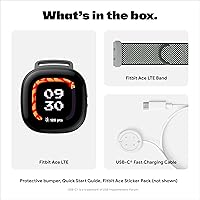
  • In the Box: Package includes the device, one standard-fit band, a protective bumper, and a proprietary charging cable.
  • Band Technology: Interchangeable bands contain embedded technology that unlocks new games, activity challenges, and customization options within the app.
  • Activity Tracking: The Noodle activity ring tracks steps, jumps, and bounces, and triggers a celebratory animation when a child's daily Move Goal is reached.

Related Reviews
Fitbit Sense Smartwatch
77%
88%
Heart Health Monitoring
67%
Stress Tracking & EDA Sensor
84%
Sleep Tracking
72%
Built-in GPS Accuracy
86%
Battery Life
More
Garmin Bounce Kids Smartwatch
85%
87%
Value for Money
92%
Ease of Use
90%
Messaging Features
88%
Durability
85%
Location Tracking
More
HENGTO Kids Smartwatch W99
85%
91%
Value for Money
88%
Ease of Use
89%
Fitness Tracking
87%
Durability
90%
Waterproof Performance
More
Fitbit Versa Lite Smartwatch
77%
88%
Battery Life
84%
Sleep Tracking
79%
Heart Rate Monitoring
51%
GPS Performance
91%
Comfort & Wearability
More
Accutime Bluey Kids Smartwatch
73%
93%
Bluey Theming & Character Appeal
82%
Value for Money
71%
Ease of Use for Young Children
78%
Battery Life
67%
Durability & Build Quality
More
DDIOYIUR 4G Kids Smartwatch
69%
78%
GPS Accuracy
54%
Battery Life
61%
Call & Audio Quality
57%
Setup Experience
74%
Build Quality
More
Fitbit Versa 4 Fitness Smartwatch
77%
91%
Battery Life
86%
Sleep Tracking
83%
Fitness Tracking
71%
GPS Accuracy
78%
Heart Rate Monitoring
More
cjc HD Touchscreen Smartwatch for Kids
83%
90%
Educational Value
88%
Battery Life
85%
Ease of Use
80%
Build Quality
75%
Camera Performance
More
Disney Stitch Kids Smartwatch LAS4026AZ
85%
91%
Design & Comfort
87%
Build Quality
88%
Screen & Display
84%
Camera Functionality
86%
Educational Features
More
Accutime Disney Princess PN4258AZ Kids Smartwatch
75%
91%
Disney Theming & Appeal
76%
Camera & Video Feature
84%
Ease of Use for Kids
61%
Build Quality
67%
Battery Life
More

FAQ

No, and that's actually one of the more practical aspects of the Ace LTE. It uses the Ace Pass data plan to handle calls and messages, so there's no separate phone number needed. All communication goes through the parent-managed contact list in the Fitbit Ace app.

It's required for the core features to work. Without an active Ace Pass subscription, the watch can't make calls, send messages, share location, or access the Fitbit Arcade. The device itself functions as a basic fitness tracker without the plan, but you'd lose most of what makes it worth buying.

Not exactly. Kids cannot message each other through the watch — all contacts must be adults aged 13 or older, and every contact must be individually approved by the parent through the app. It's designed for family communication rather than peer-to-peer socializing.

Yes. Because the Ace LTE has built-in cellular connectivity, GPS location sharing works over the 4G LTE network and doesn't rely on Wi-Fi or a nearby paired phone. That's a meaningful difference compared to basic GPS tracker watches.

Parents can set scheduled School Time windows through the Fitbit Ace app, during which gameplay on the watch is restricted. The watch still allows calls and messages during those hours so kids can reach a parent if needed. Most parents report it works reliably, though occasional glitches have been noted by a small number of users.

Fitbit rates the Ace LTE as swim-proof, so it can handle pool use and rain without issue. That said, it's worth checking the current official spec sheet for any depth or pressure limitations before letting your child wear it for diving or vigorous water activities.

The watch ships with a protective bumper that adds meaningful impact resistance for everyday bumps and drops. The overall build is lightweight, which some parents appreciate, though a few have expressed uncertainty about how it holds up over a year or more of active daily wear. It's not a ruggedized device, but it's built with kids in mind.

It works with both. The Fitbit Ace app is compatible with iOS 16 or newer as well as Android 11.0 or newer on the parent's phone. The watch itself runs Android internally, but parents don't need an Android phone to manage it.

No. The Ace LTE operates within a closed ecosystem managed by Fitbit and Google. You can't install third-party apps, and the feature set is limited to what Fitbit has built in. For most families this isn't a problem, but it's worth knowing upfront if you were hoping to expand functionality later.

The cellular features — calls, messages, GPS sharing, and the Fitbit Arcade — will stop functioning. The watch would essentially revert to a basic step-counting fitness tracker without those capabilities. If cost becomes a concern, it's worth thinking of this as a connected device with ongoing running costs rather than a one-time purchase.