Overview

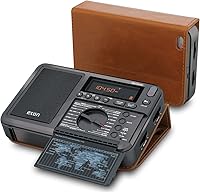
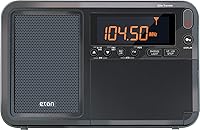
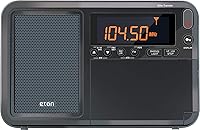
The Eton Elite Traveler Portable Shortwave Radio is a mid-range receiver built for people who actually want to use a radio on the road, not just own one. It covers AM, FM, Longwave, and Shortwave bands, which puts a surprising range of global broadcasts within reach. The unit is compact enough to slip into a jacket pocket, and it ships with a leatherette case that adds a touch of protection without much bulk. That distinctive orange LCD display makes it easy to read in dim hotel rooms or tent light. Just temper expectations slightly — this Eton traveler radio delivers solid performance for the price, but it is not competing with dedicated hobbyist receivers costing three times as much.
Features & Benefits

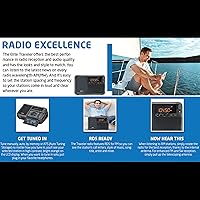
Where this portable shortwave set earns its keep is in day-to-day usability. The automatic tuning storage scans and locks available stations across all four bands without fuss, while manual fine-tuning lets you zero in on weak signals using the RF gain control — a feature you rarely see at this price. RDS on FM is a genuine convenience, pulling in station names and track info on a clear display. Storing up to 500 presets across bands means a frequent traveler can organize favorites by region or band and switch instantly. The built-in alarm and 120-minute sleep timer make it a practical bedside companion, especially with earphones plugged into the 3.5mm jack.

Best For

The Elite Traveler makes most sense for a particular kind of listener. If you travel internationally and want to catch BBC World Service, local FM stations in a new city, or regional AM news without hunting for a podcast app, this radio handles it well. It also suits someone just getting into shortwave who wants a capable receiver without drowning in a complex menu system. Campers and off-grid users will appreciate the battery-powered operation and slim profile. If your eyesight makes small displays frustrating, the large backlit screen is a real plus. It also works well as a travel alarm clock that happens to have excellent radio reception built in.

User Feedback

Owners of this Eton traveler radio are largely positive about shortwave reception, noting it pulls in stations that cheaper sets completely miss. The display gets consistent praise for readability, especially at night. Where opinions split is on the built-in speaker — at higher volumes it loses clarity, and most experienced listeners suggest earphones for serious listening. The leatherette case looks polished in photos, but some buyers feel the underlying plastic body does not quite match that premium impression. Longwave performance draws mixed reactions, which likely reflects geography as much as the radio itself. New users occasionally find the included documentation thin, wishing for clearer guidance on band scanning and preset management.

Pros

  • Covers AM, FM, Longwave, and Shortwave bands in a package small enough to pack in a jacket pocket.
  • Automatic band scanning saves time when arriving somewhere new and unfamiliar with local frequencies.
  • RF gain control meaningfully improves weak signal reception, a rare inclusion at this price point.
  • RDS on FM displays station name, artist, and track info without any extra app or hardware.
  • 500 memory presets across all bands let frequent travelers stay organized across multiple countries.
  • The high-contrast orange LCD is genuinely easy to read in low light, including tent or hotel-room conditions.
  • Built-in alarm clock and sleep timer make the Elite Traveler a practical bedside travel companion.
  • Battery-powered operation means it works reliably in locations where outlets or data connections are unavailable.
  • The leatherette case adds meaningful physical protection without adding noticeable bulk or weight.
  • Shortwave reception performance earns consistent praise from owners who have used competing sets at similar prices.

Cons

  • The built-in speaker loses clarity at higher volumes, making earphones effectively necessary for quality listening.
  • The plastic body feels noticeably cheaper than the leatherette case suggests, which can disappoint on first handling.
  • Longwave performance is inconsistent and largely depends on geographic location, limiting its usefulness in many regions.
  • The included documentation is thin, leaving first-time shortwave users without enough guidance for advanced tuning features.
  • No single sideband reception means it cannot decode a significant portion of serious shortwave and amateur radio transmissions.
  • There is no Bluetooth output, so wireless speaker pairing is not an option for those wanting a modern workflow.
  • The telescopic antenna is functional but fragile enough that frequent travelers should handle it with care over time.
  • Fine-tuning weak shortwave signals still requires patience and some trial and error, even with RF gain control available.

Ratings

The Eton Elite Traveler Portable Shortwave Radio has been evaluated by our AI rating system after analyzing a broad pool of verified global buyer reviews, with spam, incentivized submissions, and bot activity actively filtered out before scoring. The result is an honest, multi-dimensional scorecard that reflects where this portable shortwave set genuinely excels and where real-world ownership reveals meaningful trade-offs. Strengths and pain points are weighted equally so you can make a fully informed decision.
Shortwave Reception
83%
For its price tier, the Elite Traveler pulls in shortwave signals that comparable budget sets simply cannot capture. Travelers using it in European hotels and remote campsites consistently report locking onto BBC World Service and other international broadcasters with minimal effort, especially when the telescopic antenna is fully extended and angled correctly.
Reception quality drops noticeably in urban environments with high RF interference, and signal stability on higher shortwave bands can be inconsistent without careful RF gain adjustment. It is not a substitute for a dedicated receiver with a proper external antenna port when serious DX listening is the goal.
FM Performance
88%
FM reception on this Eton traveler radio is reliably strong across a wide range of environments, from city apartments to rural areas with weaker transmitters. The combination of a sensitive tuner and RDS support means travelers can identify unfamiliar stations in new countries quickly and without guesswork.
RDS data display occasionally lags or shows incomplete information depending on the station's broadcast quality, which can be mildly frustrating when scanning through a new city's FM lineup. There is also no FM stereo output through the speaker, only through the earphone jack.
AM Reception
79%
21%
The internal ferrite bar antenna performs well for AM, and the ability to physically rotate the entire radio to find the optimal reception angle is a practical touch that experienced AM listeners will appreciate. Nighttime AM reception in particular draws consistent praise from users who rely on it for news and talk radio.
In areas with significant electrical interference — near power lines, in modern hotels, or close to other electronics — AM reception degrades faster than on some competing sets. The lack of a fine-tuning indicator for AM makes it harder to confirm you are exactly centered on a station.
Longwave Reception
58%
42%
For listeners in Western Europe where longwave broadcasting remains active, the Elite Traveler handles LW stations adequately and with reasonable clarity on strong signals. The band is included and functional, which is more than many competing portables at this price can say.
Longwave performance draws the most geographically divided feedback of any band on this set, with North American and Asian users finding the LW band essentially useless due to the absence of active broadcasters in those regions. Even in Europe, weaker LW signals require patient antenna positioning and ideal conditions.
Display Readability
91%
The high-contrast orange backlit LCD is one of the most consistently praised aspects of this portable shortwave set across all user groups. Older listeners and those with reduced vision specifically highlight how easy it is to read frequency and RDS data in dim hotel rooms, tents, or bedside settings without straining.
Direct sunlight largely defeats the display, as the LCD washes out in bright outdoor conditions without any transflective or e-ink alternative. The backlight cannot be adjusted for brightness, which means in very dark environments it can feel slightly harsh at close range.
Build Quality
63%
37%
The included leatherette case is genuinely protective and gives the unit a polished first impression that punches above its actual price bracket. The buttons have a consistent tactile feel and have not drawn widespread complaints about premature failure even after extended daily use.
The plastic chassis underneath the case feels noticeably light and inexpensive when handled directly, creating a disconnect between the premium exterior and the budget-grade body. The telescopic antenna, while functional, requires careful handling during travel since it shows vulnerability to bending stress if packed carelessly.
Ease of Use
82%
18%
Automatic tuning storage makes the initial setup experience accessible even for listeners who have never owned a shortwave radio before, scanning and populating memory slots without requiring any frequency knowledge. The physical dial tuning system is intuitive and satisfying in a way that purely menu-driven radios are not.
The included manual does not adequately explain the more nuanced functions like RF gain optimization, band scheduling, or preset organization across multiple bands, leaving newer users to figure things out through trial and error. First-time shortwave listeners in particular report a steeper-than-expected learning curve despite the friendly interface.
Speaker Quality
54%
46%
At low to moderate volume in a quiet room, the speaker produces clear enough audio for casual news listening or background music from a strong FM station. It is adequate for a bedside radio where you are lying close to the unit and the environment is controlled.
Push the volume beyond about two-thirds and audio quality deteriorates quickly, with noticeable distortion and a thin, tinny character that makes extended listening uncomfortable. The speaker is arguably the single weakest component on the Elite Traveler, and most experienced owners treat earphones as effectively mandatory for any serious listening session.
Memory & Preset System
86%
Five hundred memory slots is a genuinely generous allocation that lets frequent international travelers store regional presets for multiple countries and bands without ever running out of space. Recalling a saved station is fast and requires no menu navigation once the preset system is learned.
The preset management interface lacks any labeling or naming capability, meaning stations are identified only by frequency and band rather than a custom name. Keeping track of which slot holds which station across different travel destinations requires external notes or a strong memory.
Alarm & Sleep Timer
84%
The alarm clock and 120-minute sleep timer turn this portable shortwave set into a genuinely practical travel companion beyond pure radio use, replacing a dedicated travel alarm for many owners. The snooze function works reliably and the alarm volume is loud enough to wake most users without being jarring.
The alarm can only trigger the radio itself rather than an external tone, which means a weak or absent signal at the set frequency could result in a quiet or missed wake-up call. There is no vibration option, which limits its usefulness for heavy sleepers in noisy environments.
Portability
89%
At under six ounces and with dimensions that fit a coat pocket, the Elite Traveler travels without inconvenience in carry-on bags, hiking packs, or jacket pockets. The leatherette case keeps it protected without requiring a separate bulky pouch, which is a meaningful convenience for travelers packing light.
Battery-only operation means carrying spare AAs adds to the load on longer trips, and there is no option to run the radio from a USB power bank or AC adapter when you have access to electricity and want to conserve battery. This limits its convenience as a stationary home radio.
Value for Money
81%
19%
Relative to what competing multi-band portables offer at a similar price point, the Elite Traveler delivers a convincing combination of band coverage, memory capacity, RDS support, and practical extras like the alarm and sleep timer. Buyers who compare it against its direct competitors generally feel the price is justified by the feature set.
The speaker quality and plastic build push the value proposition closer to its ceiling rather than exceeding it, meaning buyers hoping for a premium feel alongside the premium feature set will come away slightly disappointed. A small step up in price would get you meaningfully better build and audio performance from competing brands.
RDS Functionality
77%
23%
RDS data display works reliably on stations that transmit the signal properly, and seeing artist and track information without any app or Bluetooth dependency is a clean, self-contained experience that adds genuine convenience on FM. International travelers in Europe benefit most, as RDS adoption there is near-universal.
RDS is strictly limited to FM, leaving AM and shortwave listeners with no equivalent station identification feature. Data refresh rates lag on some weaker stations, and the display field is short enough that long station names or track titles get truncated in ways that can be hard to read at a glance.
Antenna System
74%
26%
The dual-antenna approach — internal ferrite for AM and telescopic for FM and SW — covers the practical needs of most casual to intermediate listeners without requiring any external accessories. The ability to rotate the body for AM optimization is a thoughtful design choice that makes a real difference in marginal signal environments.
The telescopic antenna has no locking mechanism at intermediate extension lengths, which means it can gradually retract during handling and subtly degrade signal quality without the user noticing immediately. Without an external antenna input, users who want to upgrade reception on shortwave have no clean wired path to do so.
Documentation & Setup
51%
49%
The physical setup process — inserting batteries, extending the antenna, and running an ATS scan — is intuitive enough that most users can start receiving stations within a few minutes of opening the box. Basic operation is accessible without consulting the manual at all.
The written documentation is widely considered insufficient for the radio's full feature set, particularly around RF gain control, frequency step configuration, and shortwave band scheduling. Users who want to maximize what this Eton traveler radio can do are largely left to seek guidance from online communities and third-party shortwave listening resources.

Suitable for:

The Eton Elite Traveler Portable Shortwave Radio is a natural fit for anyone whose lifestyle puts them in situations where reliable, broad-band radio access genuinely matters. International travelers will find real value in being able to scan local AM and FM stations in unfamiliar cities, or tune into shortwave broadcasts like BBC World Service when internet access is spotty or expensive. Shortwave hobbyists who are just moving beyond entry-level gear will appreciate the RF gain control and dual-mode tuning without needing to navigate the kind of complex menus that more advanced receivers demand. Campers and off-grid listeners get a battery-powered, lightweight option that does not depend on a data connection or power outlet. Older listeners or anyone with vision challenges will find the large, backlit orange display and physical dial tuning far more intuitive than touch-screen alternatives. If you also want a reliable travel alarm clock that pulls double duty as a capable radio, this Eton traveler radio handles that combination better than most competitors in its price range.
Not suitable for:

The Eton Elite Traveler Portable Shortwave Radio is not the right tool for serious radio hobbyists or DXers who need professional-grade sensitivity, single sideband reception, or the kind of selectivity that separates adjacent shortwave signals cleanly. The built-in speaker is adequate for casual listening in a quiet room but disappoints at higher volumes, which rules it out as a shared listening device in noisy environments like airport lounges or campsites with ambient noise. Buyers who associate the included leatherette case with an equivalently premium build quality may feel let down when they handle the plastic chassis directly. Longwave listeners in North America will find limited practical use, since longwave broadcasting has largely disappeared on that continent. Those who are new to shortwave and expect a detailed, hand-holding instruction manual may find the documentation frustratingly thin for learning the more nuanced tuning features. If your primary interest is audio fidelity rather than radio coverage, the speaker and tone controls here will not satisfy expectations shaped by even a modest Bluetooth speaker.
Specifications

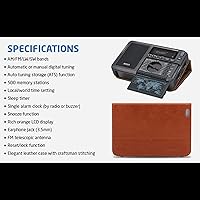
  • Bands: Covers four radio bands: AM, FM, Longwave (LW), and Shortwave (SW), enabling reception of both local and international broadcasts.
  • Dimensions: The unit measures 6.3″ long by 1.72″ wide by 4.76″ tall, keeping it compact enough for a jacket pocket or travel bag.
  • Weight: At 5.9 ounces without batteries, the Elite Traveler is light enough to carry daily without adding meaningful burden to luggage.
  • Display: Features a high-contrast orange backlit LCD that remains readable in dim environments such as hotel rooms or campsites at night.
  • Tuning Modes: Supports both automatic tuning storage (ATS), which scans and saves available stations, and manual digital tuning for precise frequency selection.
  • Memory Presets: Stores up to 500 station presets distributed across all supported bands, allowing quick recall of favorite frequencies without re-scanning.
  • RDS Support: Radio Data System (RDS) is available on FM only, displaying station name, music genre, song title, and artist information on the screen.
  • Antenna: Uses an internal ferrite bar antenna optimized for AM reception and an extendable telescopic antenna for FM and Shortwave signal capture.
  • RF Gain Control: An adjustable RF gain control allows the listener to reduce overload from strong local signals and improve selectivity on weaker distant ones.
  • Audio Controls: Includes independent treble and bass tone adjustment, enabling basic sound shaping to suit the listener's preference or earphone type.
  • Earphone Jack: Equipped with a standard 3.5mm earphone jack for private listening, compatible with most wired headphones and earbuds.
  • Sleep Timer: A built-in sleep timer can be set in intervals up to 120 minutes, automatically powering down the radio after the chosen duration.
  • Alarm Clock: Includes a built-in alarm clock with a snooze function, making the unit practical as a standalone bedside travel clock.
  • Power Source: Operates entirely on batteries, with no USB charging or AC adapter input, making it fully independent of wall outlets during travel.
  • Protective Case: Ships with a leatherette protective case that wraps the unit and guards against scratches and minor impacts during transport.
  • Station Spacing: Allows the user to configure station spacing and frequency steps to match regional broadcasting standards in different countries.
  • Model Number: Manufactured by Eton under the model designation NELITETRAVELLER, introduced commercially in mid-2019.

Related Reviews

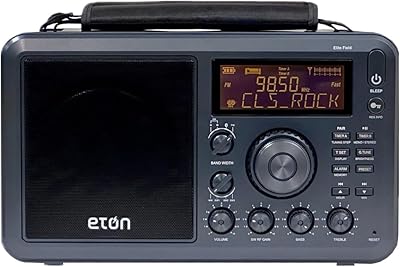
Eton Elite Field Shortwave Tabletop Radio
77%
88%
Shortwave Reception
83%
AM/FM Performance
71%
Build Quality & Materials
67%
Ease of Use & Controls
62%
Speaker Audio Quality
More
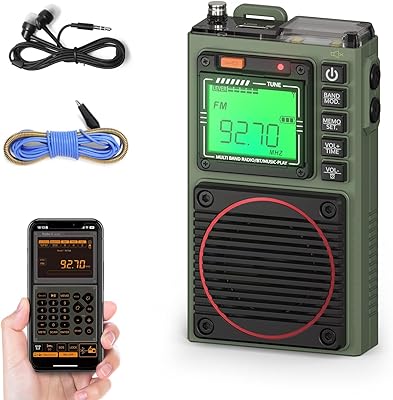
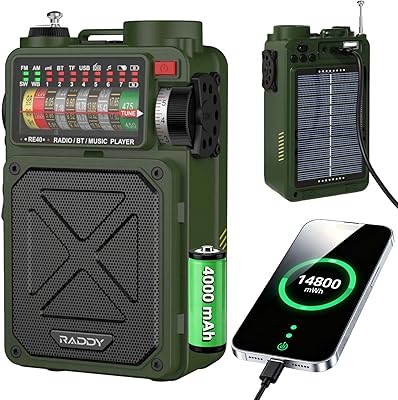
Raddy RE40 Portable Shortwave Radio
83%
88%
Battery Life
91%
Portability
85%
Charging Options
94%
Weather Alerts
62%
Bluetooth Performance
More
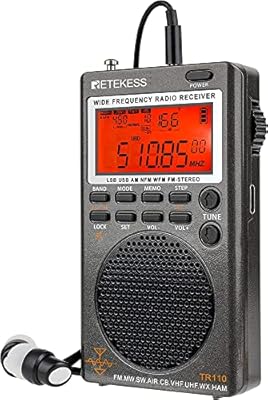
Retekess TR110 Portable Shortwave Radio
83%
88%
Reception Quality
91%
Portability
85%
Battery Life
83%
Ease of Use
89%
Weather Alert Functionality
More
Raddy RF75A Portable Shortwave Radio
84%
91%
Reception Quality
70%
Battery Life
95%
Portability
88%
Bluetooth Connectivity
84%
App Control Experience
More
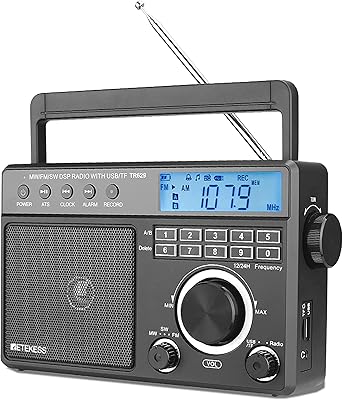
Retekess TR629 Portable Shortwave Radio
83%
88%
Reception & Signal Quality
83%
Ease of Use
91%
Portability & Design
85%
Recording Function
80%
Battery Life
More
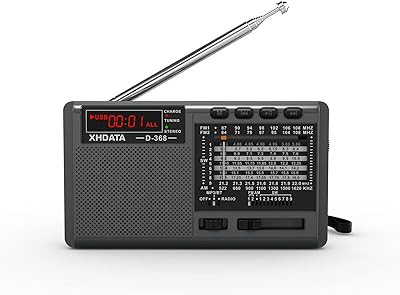
XHDATA D368 Portable Shortwave Radio
74%
84%
FM Reception Quality
71%
Shortwave Reception
58%
AM Reception Quality
66%
Build Quality & Durability
78%
Battery Life
More
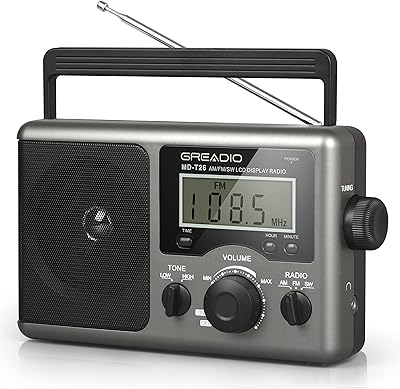
Greadio GR-T26 Portable AM FM Shortwave Radio
77%
93%
Ease of Use
88%
FM Reception
61%
Shortwave Reception
79%
AM Reception
72%
Speaker Quality
More
Eton Mini AM/FM/Shortwave Radio
71%
83%
FM Reception
58%
Shortwave Reception
71%
AM Reception
61%
Build Quality
89%
Portability
More
QODOSEN DX-286 Portable Shortwave Radio
76%
88%
Reception & Sensitivity
91%
Shortwave Band Performance
79%
AM & FM Everyday Usability
67%
Build Quality & Materials
62%
Battery Life
More
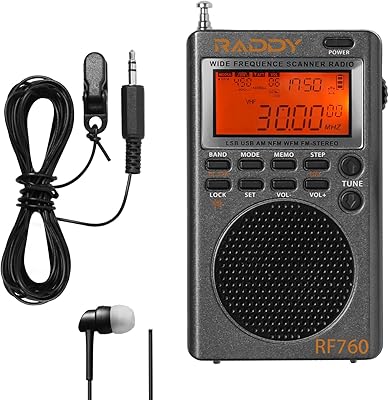
Raddy RF760 Portable Shortwave Radio Receiver
76%
83%
SSB Reception Quality
91%
Band Coverage Breadth
88%
NOAA Weather Alert
89%
Portability & Form Factor
52%
Audio & Speaker Quality
More

FAQ

Yes, the Elite Traveler is capable of receiving major international shortwave broadcasters including BBC World Service when conditions and frequency selection are appropriate. Shortwave reception quality also depends on your location, time of day, and local interference levels, so some patience with tuning is expected. Using the telescopic antenna fully extended and experimenting with positioning noticeably improves results.

The radio runs on standard AA batteries, which are widely available worldwide — a genuine advantage for travelers. Battery life varies based on volume level, band in use, and whether the backlight is active, but moderate use typically yields several hours of listening per set. Carrying a spare set of AAs is always a good idea when traveling off-grid.

The Eton Elite Traveler Portable Shortwave Radio does not have a dedicated external antenna port, so you cannot connect a proper coaxial antenna. However, some users report modest improvement by loosely draping a length of wire near or around the telescopic antenna to act as a passive coupler. For serious DXing with external antennas, a more advanced receiver would be the better investment.
RDS is genuinely useful on this Eton traveler radio if you listen to FM stations that broadcast RDS data, which most major stations in Europe and many in North America do. It displays the station name and currently playing track without any extra setup, which is a real convenience when scanning unfamiliar stations abroad. If you primarily listen to AM or shortwave, it will be irrelevant since RDS only functions on FM.

Storing presets is straightforward once you tune to the desired frequency manually or via scan. You then hold the memory button and assign the station to one of the 500 available slots. The process is not instant to learn from the manual alone, but it becomes second nature after a few attempts. Organizing presets by band or region makes retrieval much faster during travel.

The built-in speaker is adequate for quiet personal listening in a small room at moderate volume levels. At higher volumes, audio quality noticeably degrades, and the small driver simply cannot fill larger spaces. Most owners who use this portable shortwave set for extended listening sessions end up reaching for earphones, which significantly improves the experience.

Practically speaking, longwave radio broadcasting no longer exists in the United States or Canada, so the LW band will have very limited usefulness for North American listeners. Longwave is far more relevant in Europe, parts of Asia, and some African regions where broadcasters still actively use those frequencies. If longwave is a priority, verify active stations in your specific destination before relying on it.

The orange LCD display performs well in dim and indoor lighting, but direct outdoor sunlight can wash it out like most LCD screens of this type. Shading the display slightly with your hand usually makes it readable enough for a quick frequency check. It is not an e-ink or transflective display, so expecting perfect sunlight visibility would be unrealistic.

It is a reasonable choice for a newcomer, particularly because the automatic tuning storage takes care of scanning and saving stations without requiring manual frequency knowledge. That said, getting the most out of shortwave does involve a learning curve around band schedules, propagation, and signal conditions that no radio can eliminate on its own. The included manual is functional but not comprehensive, so supplementing it with online shortwave listening guides is worth doing.

Since the Elite Traveler runs entirely on AA batteries and has no power adapter, there are no voltage compatibility issues to worry about when traveling internationally. You can use it anywhere in the world as long as you have fresh batteries, which makes it genuinely hassle-free from a power standpoint compared to AC-powered radios.

Where to Buy