Overview

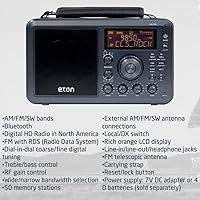
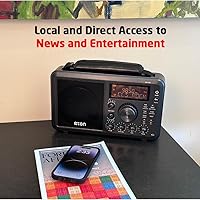
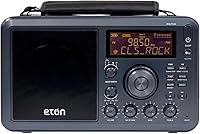
The Eton Elite Field Shortwave Tabletop Radio is one of the more serious home receivers you can buy without crossing into professional territory. Eton has long carried the torch for shortwave listening in North America — they inherited the Grundig line — and this set reflects that heritage with a mineral grey retro design and a warm orange LCD that looks right at home on a bookshelf or desk. It covers AM, FM with RDS, and shortwave bands, with Bluetooth streaming added for good measure. Since its 2019 launch, it has gathered over 1,200 ratings, which tells you it has found a real and loyal audience.
Features & Benefits

What separates the Elite Field from cheaper multi-band radios is the depth of tuning control it offers. The digital coarse/fine tuning system lets you lock onto weak or crowded signals with real precision, and the wide/narrow bandwidth toggle helps separate stations sitting close together on the dial. RF gain control is a feature you rarely see at this price tier — it lets you pull back strong local signals that would otherwise swamp weaker distant ones. Fifty memory presets cover AM, FM, and shortwave slots, which is plenty for most listeners. An alarm clock, 120-minute sleep timer, and a full set of antenna and audio connections round things out nicely.

Best For

This shortwave set makes the most sense for dedicated shortwave hobbyists who want a capable home receiver without assembling a rack of gear. If you enjoy tuning through international broadcasts from the BBC World Service or ham bands, the DX/Local switch and external antenna connections give you tools that entry-level portables simply lack. It also suits households that keep a multi-band radio as part of an emergency preparedness plan, since it runs on batteries. The retro aesthetic fits naturally in a study, workshop, or living room shelf. That said, the 12.4-inch footprint is real — this is a tabletop set, not something you slip into a bag.

User Feedback

Across more than a thousand reviews, owners consistently point to shortwave reception sensitivity as the standout strength — pulling in distant stations that cheaper radios simply cannot touch. Bluetooth gets a warm mention from casual users who appreciate the added flexibility, though it is clearly not why most people buy this set. On the downside, a fair number of buyers note the built-in speaker is adequate but not particularly loud or bass-heavy, which may disappoint anyone expecting room-filling audio. Some newcomers to shortwave also find the fine-tuning controls take time to learn. A handful of reviewers raise questions about long-term build quality, worth noting at this price point. The four-star average feels honest overall.

Pros

  • Shortwave reception sensitivity is a genuine strength — distant international stations lock in with impressive clarity.
  • RF gain control gives experienced listeners a level of signal management rarely found at this price tier.
  • Fifty memory presets span AM, FM, and shortwave bands, making it easy to organize a full listening routine.
  • External antenna ports let you attach a wire antenna and meaningfully improve DX performance over time.
  • The orange LCD is warm, readable, and genuinely distinctive — practical and good-looking at the same time.
  • Battery operation makes the Elite Field a reliable option when power outages hit and multi-band coverage matters most.
  • Bluetooth streaming adds everyday flexibility for listeners who want to switch to a phone source without cable fuss.
  • The built-in alarm and 120-minute sleep timer turn this shortwave set into a legitimate daily-use appliance.
  • Treble and bass controls give at least modest tonal shaping for different broadcast types and listening preferences.
  • Eton's lineage from the Grundig era carries real credibility in the shortwave community — this is not a generic import.

Cons

  • The built-in speaker rolls off noticeably in the bass and struggles to fill larger rooms at high volume.
  • Long-term build durability concerns appear regularly in owner reviews, particularly around buttons and tuning mechanisms.
  • Fine-tuning controls involve a real learning curve that can frustrate listeners new to shortwave reception.
  • Programming the 50 preset stations requires memorizing a non-obvious button sequence that is easy to forget.
  • Urban users with heavy electronic interference nearby may find background noise on shortwave bands hard to eliminate fully.
  • At over five pounds, relocating this tabletop radio between rooms or outdoor spaces is more of a chore than it should be.
  • No display brightness adjustment means the LCD can wash out in direct or very bright ambient lighting.
  • Bluetooth audio quality through the built-in speaker does not showcase the feature at its best — it is functional, not impressive.

Ratings

The Eton Elite Field Shortwave Tabletop Radio has been scored by our AI system after analyzing thousands of verified global buyer reviews, with spam, incentivized, and bot-generated feedback actively filtered out. The scores below reflect a candid, unbiased synthesis of what real owners experienced — covering everything this shortwave set does well and the areas where it falls short of expectations. Both the strengths that keep hobbyists coming back and the friction points that frustrated newcomers are represented here with full transparency.

Shortwave Reception
88%
Owners who regularly tune into international broadcasts — BBC World Service, Radio Habana Cuba, or amateur ham bands — consistently report that this tabletop radio locks onto distant signals with impressive clarity. The RF gain control and bandwidth selection make a real difference when chasing weak DX signals late at night.
A few experienced shortwave listeners note that dedicated standalone receivers at a similar or slightly higher price can edge it out on the very weakest signals. Occasionally, strong local AM stations create bleed-over that requires manual RF gain adjustment to manage.
AM/FM Performance
83%
Local and regional AM stations come in with solid clarity, and the RDS feature on FM is a genuinely useful touch — displaying station names and track info on the orange LCD. For everyday FM listening in a home or workshop, the tuner handles itself well without much fuss.
In dense urban environments with significant RF interference, FM sensitivity can feel slightly average compared to dedicated hi-fi tuners. The narrow/wide bandwidth toggle helps, but users in apartment buildings with a lot of competing signals may need the external antenna to compensate.
Build Quality & Materials
71%
29%
The overall fit and finish feel solid for a mid-tier tabletop set — the cabinet has some weight to it at 5.25 pounds and does not feel hollow or cheap on a desk. The control knobs have a satisfying tactile resistance that suggests reasonable longevity with regular home use.
A recurring thread in user reviews points to concerns about long-term durability, with some buyers reporting issues with buttons or tuning mechanisms after extended ownership. The plastic housing, while respectable at first, shows its material limits when compared to older Grundig-era metal-bodied sets that Eton inherited its lineage from.
Ease of Use & Controls
67%
33%
For experienced shortwave listeners, the coarse/fine tuning dial system feels intuitive and gives genuine control over signal acquisition. The large orange LCD is easy to read across a room, and the 50-memory preset system means regular stations are just a button-press away once set up.
New shortwave users frequently flag a real learning curve — the interaction between bandwidth selection, RF gain, and the Local/DX switch is not immediately obvious without reading the manual carefully. A handful of reviewers admitted it took several sessions before the fine-tuning controls felt natural.
Speaker Audio Quality
62%
38%
For spoken-word content — news, international broadcasts, talk radio — the built-in speaker delivers clear, intelligible audio with decent midrange presence. Treble and bass controls give a modest degree of tonal adjustment that helps tailor the sound for different listening environments.
The speaker is definitively adequate rather than impressive. Users expecting genuine bass weight or the ability to fill a living room with music will be disappointed — volume ceiling is limited, and bass rolls off noticeably at higher levels. For serious music listening, the headphone or line-out jack is a better route.
Bluetooth Streaming
74%
26%
The Bluetooth functionality is a welcome layer of versatility that lets users stream from a phone without running cables. Casual listeners appreciate being able to switch from a radio broadcast to a podcast or playlist without touching a wire.
Bluetooth is clearly secondary here — range is modest and audio quality through the built-in speaker does not showcase the feature at its best. Users who primarily want a Bluetooth speaker should look elsewhere; this is a radio first, and the wireless streaming is a convenience add-on, not a core strength.
Antenna & Connectivity Options
86%
The external antenna connection ports for AM, FM, and shortwave are a genuine asset that separates this set from sealed portable radios. Attaching a wire antenna to the shortwave input noticeably improves reception on weak international signals, and the telescopic FM antenna performs reliably indoors.
The supplied external antenna options are minimal out of the box — buyers serious about maximizing shortwave DX performance will need to source and install third-party wire antennas themselves. The Local/DX switch, while useful, requires some experimentation to understand its effect in different geographic locations.
Value for Money
77%
23%
At its price tier, this shortwave set packs in a genuinely broad feature set — multi-band reception, Bluetooth, 50 presets, external antenna ports, alarm, sleep timer, and audio outputs — that would cost more if assembled from separate components. For hobbyists stepping up from a basic portable, the value proposition is real.
At nearly 130 dollars, buyers have higher expectations for speaker quality and long-term build durability than the radio fully delivers. A subset of reviewers feel the asking price sits slightly above what the physical build quality justifies, especially when competing options from Tecsun and similar brands enter the comparison.
Display & Readability
81%
19%
The orange backlit LCD is one of the more visually distinctive features on this set — it gives the radio a warm, retro feel while remaining highly legible from across a desk or shelf. The display shows frequency, memory slot, signal strength, and RDS data in a layout that is practical rather than cluttered.
In very bright ambient light, the orange display can wash out slightly, requiring users to angle the set for optimal readability. A brightness adjustment control is notably absent, which some owners would appreciate given how varied home lighting conditions can be.
Memory Preset System
84%
Fifty memory slots spread across AM, FM, and shortwave bands is a genuinely useful allocation for active listeners who bounce between broadcast types. Programming a favorite BBC shortwave frequency alongside local FM stations and AM news stations into a single organized preset bank is quick once you understand the process.
The preset programming procedure, while functional, involves a few non-obvious button sequences that are easy to forget if you do not use the feature regularly. There is no visual grouping or labeling of presets by band on the display, which can make navigating a full bank of 50 stations slightly tedious.
Design & Aesthetics
89%
The mineral grey cabinet with orange LCD strikes a balance between retro homage and contemporary restraint that genuinely works on a bookshelf or desk. Shortwave hobbyists and older listeners in particular respond warmly to the tabletop form factor, which feels like a proper radio rather than a gadget.
The design is clearly a deliberate stylistic choice, and listeners who prefer modern minimalism may find the retro aesthetic a bit dated. At 12.4 inches wide and 5.25 pounds, it also commands a dedicated surface space that not every listener has available.
Alarm & Sleep Timer
78%
22%
The built-in alarm clock adds genuine daily utility — waking to a shortwave broadcast or local FM station is a feature that loyal users mention with real affection. The 120-minute sleep timer is generously long and covers most listening sessions comfortably.
The alarm configuration is functional but not elegant — setting it requires navigating through menus that are not always intuitively labeled in the manual. Users accustomed to smartphone alarm sophistication will find this a bare-bones implementation, though it does the job reliably.
Portability & Setup
58%
42%
Battery power capability means the set can be moved to a porch, garage, or used during a power outage without any infrastructure dependency. For emergency preparedness purposes, the ability to run off batteries on multiple bands is a practical and reassuring feature.
At over five pounds and with a 12.4-inch footprint, calling this radio portable is generous — it is a tabletop set designed to stay put. Travelers or users expecting something they can toss in a bag will be disappointed; the weight and size make casual relocation a minor effort every time.
Signal Interference Handling
79%
21%
The RF gain control and anti-interference circuitry make a real difference in suburban and semi-rural listening environments, where adjacent-channel interference and local transmitter overload are common frustrations. Users in those conditions report noticeably cleaner band separation compared to basic portables.
In dense urban cores with heavy electronic interference from buildings, LED lighting, and networking equipment, even the anti-interference circuitry has its limits. Some city-based users report persistent background noise on certain shortwave bands that the RF gain adjustment only partially resolves.

Suitable for:

The Eton Elite Field Shortwave Tabletop Radio was built for a specific kind of listener, and it genuinely delivers for them. Shortwave hobbyists who want to tune international broadcasts — Radio New Zealand, Voice of Turkey, ham bands, and similar — without assembling a custom receiver stack will find it handles that role with real competence. It also makes a lot of sense for households that keep a multi-band radio as part of an emergency preparedness kit, since battery operation and broad band coverage are exactly what you need when the power grid is unreliable. Retirees and older listeners who grew up with tabletop radios will appreciate the straightforward layout, the readable orange LCD, and the satisfying tactile controls that feel like a proper radio rather than a touchscreen gadget. Home office workers or workshop listeners who want a desk radio that handles both local FM and the occasional shortwave broadcast — without staring at a phone — will find this shortwave set fits that niche cleanly.
Not suitable for:

The Eton Elite Field Shortwave Tabletop Radio is the wrong purchase for several types of buyers, and it is worth being honest about that upfront. If you primarily want a music speaker for a bedroom or kitchen and shortwave reception is an afterthought, the built-in speaker will leave you underwhelmed — it is tuned for voice clarity, not musical depth, and the volume ceiling is modest. Buyers who live in dense urban environments with heavy electronic interference should also temper expectations, since the anti-interference circuitry has real limits in cities packed with LED lighting and wireless networks. Complete newcomers to shortwave who expect plug-and-play simplicity may find the learning curve around bandwidth selection and RF gain genuinely frustrating in the early weeks. If portability is a priority — camping trips, travel, or moving the radio between rooms regularly — the 5.25-pound weight and 12.4-inch footprint make this tabletop set a poor fit. And buyers on a tight budget comparing it against Tecsun portables at half the price will need to decide whether the extra tuning controls and desk presence justify the cost difference.

Specifications

  • Brand & Model: Manufactured by Eton under the model designation NELITEFIELD, a brand with a long heritage in shortwave receivers inherited from the Grundig line.
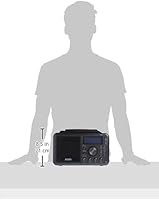
  • Dimensions: The cabinet measures 12.4″ long by 6.5″ wide by 3″ deep, designed for tabletop or shelf placement rather than portable use.
  • Weight: The unit weighs 5.25 pounds, giving it a solid desktop presence while still being movable between rooms when needed.
  • Radio Bands: Covers AM, FM with RDS data display, and shortwave bands; HD Radio reception is also supported in North America.
  • Tuning System: Uses a digital coarse/fine dual-dial tuning system with selectable wide and narrow bandwidth modes for precise signal acquisition.
  • Signal Controls: Includes an RF gain control knob and a Local/DX toggle switch to optimize reception sensitivity based on transmitter distance and local interference conditions.
  • Memory Presets: Stores up to 50 user-programmed memory stations spanning AM, FM, and shortwave frequencies for quick one-touch recall.
  • Antenna: Equipped with a built-in telescopic FM antenna and dedicated external antenna connection ports for AM, FM, and shortwave bands.
  • Connectivity: Features Bluetooth wireless streaming, a 3.5mm headphone jack, a line-in port, and a line-out port for integration with external audio equipment.
  • Display: Orange backlit LCD panel shows frequency, memory slot number, RDS station data, signal strength, and current operating mode.
  • Audio Controls: Provides dedicated treble and bass adjustment controls, allowing listeners to shape the tonal character of both broadcast and Bluetooth audio.
  • Speaker: Built-in single dynamic speaker delivers voice-optimized audio clarity suitable for news, talk, and international broadcast content.
  • Power Source: Operates on battery power, making it functional during power outages; an AC adapter option is also supported for standard home use.
  • Alarm & Timer: Includes a built-in alarm clock function and a 120-minute sleep timer that automatically powers down the radio after the set interval.
  • Color & Finish: Available in Mineral Grey with a retro-styled cabinet design intended to complement home office, study, or living room decor.
  • Date Available: First listed for sale in June 2019 and has since accumulated over 1,200 customer ratings on the Amazon marketplace.

Related Reviews
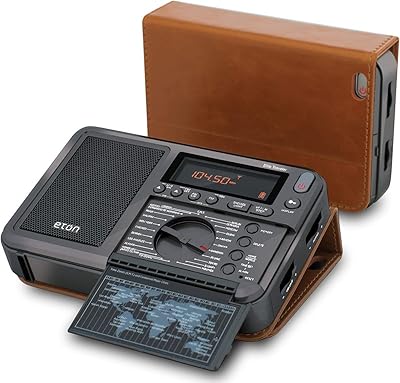
Eton Elite Traveler Portable Shortwave Radio
76%
83%
Shortwave Reception
88%
FM Performance
79%
AM Reception
58%
Longwave Reception
91%
Display Readability
More
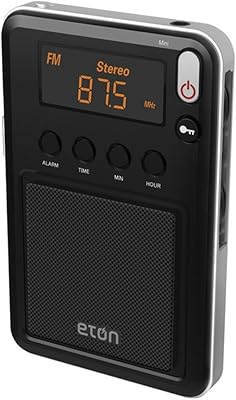
Eton Mini AM/FM/Shortwave Radio
71%
83%
FM Reception
58%
Shortwave Reception
71%
AM Reception
61%
Build Quality
89%
Portability
More
Retekess V115 Shortwave Radio
74%
88%
Value for Money
91%
Portability
79%
Battery Life
83%
AM & FM Reception
62%
Shortwave Reception
More
Eton Executive Satellite Radio
84%
92%
Reception Performance
88%
Portability and Design
84%
Ease of Use
75%
Sound Quality
70%
Battery Life
More
Retekess TR113 Full-Band Shortwave Radio
74%
93%
Band Coverage
81%
SSB Reception
78%
Reception Sensitivity
52%
Ease of Use
74%
Build Quality
More
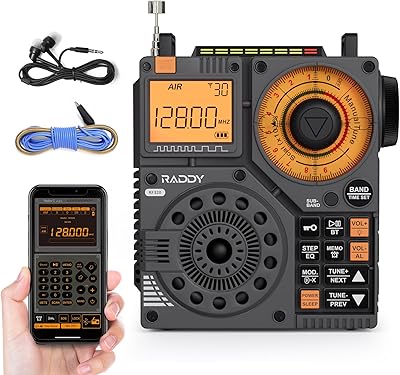
Raddy RF320 Portable Multiband Shortwave Radio
79%
88%
Band Coverage
67%
Shortwave Reception
86%
FM & VHF Reception
83%
Aviation Band (AIR)
71%
App & Bluetooth Integration
More
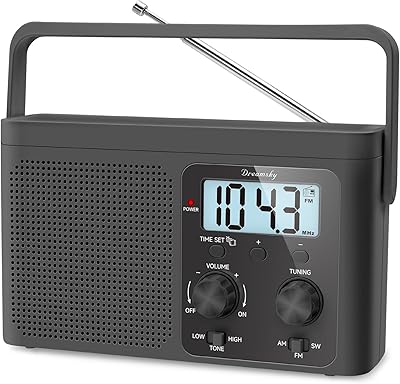
DreamSky AM/FM Shortwave Portable Radio
78%
93%
Ease of Use
86%
AM/FM Reception
61%
Shortwave Reception
74%
Speaker Quality
67%
Build Quality
More
Raddy RF919 SSB Shortwave Radio
85%
89%
Performance
85%
Battery Life
83%
Ease of Use
92%
Bluetooth Connectivity
88%
Reception Quality
More
Raddy RE40 Portable Shortwave Radio
83%
88%
Battery Life
91%
Portability
85%
Charging Options
94%
Weather Alerts
62%
Bluetooth Performance
More
ZHIWHIS ZWS-702 Shortwave Radio
84%
83%
Sound Quality
91%
Battery Life
88%
Portability
80%
Ease of Use
72%
Reception Quality
More

FAQ

It is a genuine shortwave receiver, not a token feature. The RF gain control and external antenna port are real tools that let you chase distant stations — listeners regularly report pulling in broadcasts from Europe, Asia, and Latin America with a simple wire antenna attached. That said, your location and local interference levels will always play a role in what you can receive.

A basic long-wire antenna — essentially a length of insulated copper wire strung out a window or across a room — makes a noticeable difference on shortwave. The radio has a dedicated external SW antenna jack, so you do not need anything fancy to start. Many hobbyists begin with a 10-to-20-foot wire and improve from there as their interest grows.

The Bluetooth and radio functions are separate input modes, so you switch between them rather than running both simultaneously. You can stream from your phone over Bluetooth, then switch back to a radio band whenever you want — it is a smooth toggle, just not a simultaneous mix.

It takes a little patience the first time. You tune to the station you want, then hold the memory button and select a slot number — the process works, but the button sequence is not immediately obvious without consulting the manual. Most users get comfortable with it after a session or two, and once your favorites are saved, day-to-day use becomes very easy.

It can work for a beginner, but expect a learning curve with the tuning controls. The coarse/fine dial system and bandwidth selection are powerful tools, but they require some experimentation to understand. If you go in knowing that shortwave takes a bit of exploration — and you read the manual — the experience will be rewarding rather than frustrating.

The radio is battery powered, though the exact battery type and runtime under normal listening conditions are not officially published by Eton for this model. For extended home sessions, most owners use the AC adapter to preserve battery life and rely on batteries as a backup for outages or relocation.

Honestly, it is a moderate-volume speaker suited for a quiet room or personal listening distance. In a noisy kitchen or workshop with tools running, it will struggle to cut through. For those environments, connecting external speakers through the line-out port is a much better solution than relying on the built-in driver.

The Local setting reduces the radio's front-end sensitivity, which prevents strong nearby transmitters from overwhelming the receiver and causing distortion or bleed across adjacent frequencies. DX mode opens up full sensitivity for chasing weak, distant signals. A simple rule: use Local if you are near a powerful AM transmitter, and switch to DX when hunting for faraway shortwave stations.

Yes — the line-out port lets you route audio directly to an amplifier, powered speakers, or a home stereo receiver. This is the best way to get genuinely good sound quality out of the radio, since the built-in speaker is the weakest link in the audio chain. The 3.5mm headphone jack also works well for private listening through quality headphones.

Eton acquired the Grundig consumer radio line and has continued developing sets in that tradition. The Elite Field shares the same design philosophy as classic Grundig tabletops — dedicated controls, proper shortwave coverage, and a focus on reception performance — but adds digital tuning and Bluetooth that the older sets obviously lacked. Longtime Grundig owners generally find the transition familiar, though some feel the older metal-bodied sets had a more robust physical build.

Where to Buy