Overview

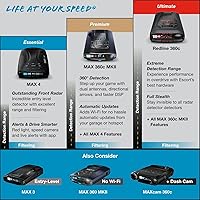
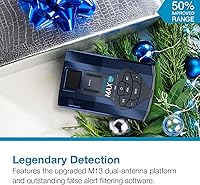
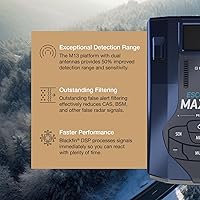
The Escort MAX 360 MKII Radar Detector is Escort's most refined windshield-mount unit to date, rebuilt on the new M13 platform with a claimed 50% increase in detection range over the original MAX 360. That is a meaningful jump, and the dual-antenna design — monitoring front and rear simultaneously rather than alternating — is a big part of why. It also integrates directly with Apple CarPlay and Android Auto, which puts it in rare company at this tier. This is a high-investment detector built for drivers who spend serious time on the highway and want every possible advantage without juggling separate devices.
Features & Benefits

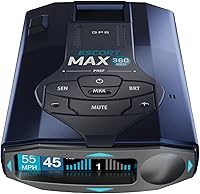
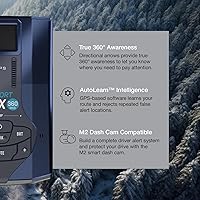
What separates the MAX 360 MKII from most of the competition starts with its directional threat arrows, which instantly tell you whether a signal is coming from ahead, behind, or either side — a genuinely useful detail when you need to decide whether to ease off the throttle. The Blackfin DSP chip makes this radar detector noticeably quicker at processing signals, and the GPS AutoLearn function earns its keep fast: after a few repeated drives, it quietly stops alerting you to the same K-band triggers at familiar intersections. The OLED display reads cleanly in direct sunlight, and the Drive Smarter alerts fold in crowd-sourced warnings from other drivers across the country.

Best For

This Escort unit makes the most sense for drivers with a regular long-distance routine — daily highway commuters or road-trip regulars who need real range at speed. The AutoLearn GPS function shines when you repeat the same routes, so occasional drivers who rarely take the same road twice will see less benefit from it. Urban drivers dealing with constant BSM and CAS noise from surrounding vehicles will appreciate the false-alert filtering more than almost anyone. Those stepping up from a basic detector with no directional awareness or app integration will notice a real difference in daily usability, and it remains one of very few detectors with native CarPlay support.

User Feedback

Across a large pool of verified buyers, the most consistent praise centers on detection range and the value of knowing exactly which direction a threat is coming from. Drivers upgrading from older Escort models frequently describe the false-alert reduction as a substantial improvement in real-world use. On the downside, the price is the most repeated hesitation — many reviewers agree the performance holds up but still question whether the gap over mid-range alternatives justifies the cost. A handful of users flag occasional Bluetooth hiccups with the companion app and slow GPS lock after a cold start. One honest industry-wide caveat worth noting: laser detection is inherently reactive, and this unit is no exception to that limitation.

Pros

  • Detection range is a genuine step up, giving highway drivers noticeably more reaction time at speed.
  • Directional arrows tell you exactly where a threat is coming from — front, rear, or either side.
  • GPS AutoLearn effectively silences repeat false-alert locations after just a few drives over the same route.
  • False-alert filtering is dramatically better than older Escort models, especially around modern vehicles with blind spot systems.
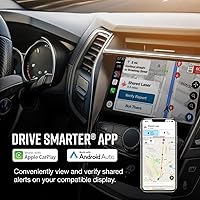
  • Apple CarPlay and Android Auto integration keeps alerts visible on your factory screen without extra mounts.
  • The OLED display reads cleanly in direct sunlight and adjusts well at night — no squinting required.
  • Drive Smarter community alerts add a crowd-sourced warning layer that hardware detection alone cannot replicate.
  • Setup is quick and intuitive out of the box — most drivers are up and running in under ten minutes.
  • Build quality feels solid and the windshield mount stays put at highway speeds without developing rattle over time.
  • The Blackfin DSP chip processes signals quickly enough that alerts arrive with meaningful time to respond.

Cons

  • Bluetooth connection with the companion app drops intermittently for a notable share of users.
  • GPS lock takes longer than expected after cold starts, leaving a brief coverage gap at the beginning of drives.
  • Out of the box, before AutoLearn kicks in, K-band false alerts can be frequent in suburban environments.
  • Community alert coverage thins out significantly on rural or less-traveled routes.
  • The power cord length is barely adequate for larger SUVs and trucks — some configurations require an extension.
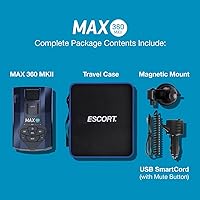
  • No alternate mounting option is included; buyers wanting a visor clip need to source one separately.
  • Advanced menu navigation has a steeper learning curve than the simple setup process implies.
  • Occasional lag reported when using wireless CarPlay, making the integration less reliable than the wired version.
  • The price is a hard ask for drivers who spend limited time on highways where the range advantage actually matters.
  • Laser detection is reactive across the entire detector category — this unit offers no practical advance warning for laser enforcement.

Ratings

The Escort MAX 360 MKII Radar Detector earns its reputation as one of the most capable windshield-mount detectors on the market, and the scores below reflect exactly that — with no flattery added. Our AI has analyzed thousands of verified buyer reviews from across the globe, actively filtering out incentivized and bot-generated feedback to surface what real drivers actually experience. Both the standout strengths and the recurring frustrations are reflected honestly in every category score.
Detection Range
91%
Highway drivers consistently report picking up Ka-band signals with enough lead time to comfortably react — often well before a speed enforcement zone comes into view. The dual-antenna setup means front and rear coverage runs simultaneously, which makes a noticeable difference at higher speeds.
A small number of users in mountainous or heavily built-up urban areas feel the range advantage is harder to appreciate when terrain blocks line-of-sight. In those specific environments, the gap over mid-range detectors narrows more than the specs might suggest.
False Alert Filtering
88%
Drivers who spend time in traffic-heavy areas — where blind spot monitors and collision avoidance systems from surrounding vehicles constantly trigger cheaper detectors — describe this Escort unit as dramatically quieter. The AutoLearn function compounds this over time, making repeat-route commutes significantly more tolerable.
Out of the box, before AutoLearn has had time to build a location history, some users find the alert frequency on K-band higher than expected. New owners in dense suburban areas may need a week or two of regular driving before the filtering settles into its stride.
Directional Awareness
93%
The 360-degree arrow system is one of the most praised features across the review pool. Knowing instantly whether a signal is ahead, behind, or to the side lets drivers make faster, more confident decisions rather than guessing based on signal strength alone.
A few users note that in situations where multiple signals arrive from different directions simultaneously, the display can feel busy. It is not a common complaint, but drivers in areas with overlapping radar sources occasionally find the arrow indicators harder to parse at a glance.
GPS AutoLearn Intelligence
86%
Regular commuters who take the same routes daily cite this as the feature that sets the MAX 360 MKII apart from static-filter competitors. After just a handful of repeat trips, familiar false-alert locations are quietly suppressed without any manual input needed.
Drivers who frequently vary their routes — road-trip travelers especially — get less mileage from AutoLearn since the system needs repetition to build confidence in a location. There are also occasional reports of the GPS taking longer than expected to lock on cold mornings.
Value for Money
67%
33%
Buyers who upgraded from an entry-level or mid-range detector almost universally acknowledge that the performance difference is real and noticeable. For high-frequency highway drivers, the combination of range, filtering, and directional alerts adds up to a meaningful reduction in risk.
The price remains the single most repeated concern across reviews. Several buyers admit they circled back to purchase after initially walking away, and a portion of reviewers explicitly question whether the performance delta over detectors at half the price justifies the premium for casual or occasional drivers.
App & Bluetooth Connectivity
72%
28%
Initial pairing is straightforward for most users, and the companion app offers useful customization — sensitivity settings, band toggles, and firmware updates — without requiring a visit to a service center. For those who want to tailor the detector to their specific driving environment, the app adds real flexibility.
Bluetooth connectivity draws a consistent stream of complaints about dropped connections and the need to re-pair after phone restarts or app updates. It is not a dealbreaker for most, but the wireless reliability does not quite match the premium positioning of the hardware itself.
Apple CarPlay & Android Auto Integration
81%
19%
Being able to view route overlays and interact with Drive Smarter alerts directly on a factory infotainment screen is a feature that tech-forward buyers specifically sought out. It removes the need for a secondary phone mount and keeps the driving experience tidier.
Users with older infotainment systems or those using wireless CarPlay report occasional lag and connectivity inconsistencies. The integration works well in ideal conditions but is not quite as rock-solid as drivers who rely on it heavily would prefer.
Drive Smarter Community Alerts
78%
22%
In well-populated driving corridors — major interstates and commuter routes near large cities — the crowd-sourced alert network adds a meaningful supplementary layer that hardware alone cannot provide. Several users specifically mention catching known speed traps through community alerts before their own detector triggered.
Coverage is inherently dependent on network density. Drivers in rural areas or on less-traveled routes report sparse or no community alerts, making this feature inconsistently valuable depending entirely on where you drive most.
OLED Display Clarity
84%
The display holds up well in direct sunlight, which is a real-world concern that cheaper LCD-based detectors frequently fail. Night readability is equally strong, and the brightness auto-adjusts smoothly without requiring manual intervention during mixed-light drives.
A handful of users mention the display can feel small for the amount of information it tries to show simultaneously — signal strength bars, directional arrows, band identification, and speed all compete for limited screen space. It is legible, but a larger display would be welcome at this price.
Build Quality & Hardware Feel
82%
18%
The unit feels solid and well-assembled in hand — not a lightweight plastic shell. The windshield mount is stable at highway speeds and does not develop the rattling or loosening that some buyers report with competing brands after extended use.
The overall aesthetic is functional rather than premium. At this investment level, a few reviewers express mild disappointment that the industrial design does not signal the same quality tier as, say, a high-end dash cam. Purely cosmetic, but worth noting for buyers who care about cabin aesthetics.
Ease of Setup
89%
Mounting, plugging in the 12V power cord, and getting the first alert takes most buyers under ten minutes. The out-of-box configuration is sensible enough for most driving environments without touching any settings, which is a real advantage for less tech-savvy buyers.
Advanced configuration through the app and the on-device menus involves more steps than some users expect. Buyers who want to fine-tune band sensitivity, AutoMute thresholds, or city versus highway modes should set aside time to learn the menu structure.
Laser Detection
58%
42%
The MAX 360 MKII covers all common laser frequencies, and in situations where laser is used at a distance, the alert can provide just enough time to react. Users in states where laser-based enforcement is uncommon find this a non-issue.
Like every consumer radar detector currently on the market, laser detection is fundamentally reactive — by the time the unit alerts you, an officer has already targeted your vehicle. This is a category-wide limitation, not specific to this unit, and buyers expecting laser protection comparable to radar detection will be disappointed.
Sensitivity & Band Coverage
87%
X, K, and Ka band coverage is thorough, and the sensitivity on Ka — the most commonly used band for speed enforcement in the U.S. — draws consistent praise. Buyers switching from older or cheaper units frequently note they are picking up signals they previously missed entirely.
Some users in areas with heavy K-band false-alert sources feel that even at the highest filtering settings, K-band sensitivity is still slightly over-aggressive. Tuning it down helps, but it requires a trade-off between sensitivity and quiet operation that not every buyer is comfortable making manually.
Mount & Placement Flexibility
74%
26%
The suction-cup windshield mount is secure and positions the unit at a functional height for most vehicle cabin configurations. Repositioning takes only seconds, which is convenient for drivers who occasionally move the detector between vehicles.
There is no included visor clip or alternate mounting option in the box, and the power cord length is just barely adequate for some larger SUV and truck configurations. Buyers with deep dashboards or unusual A-pillar layouts may need an extension cord, which is a minor but avoidable friction point.

Suitable for:

The Escort MAX 360 MKII Radar Detector is built for drivers who treat their time on the road as a serious daily investment — not the occasional weekend cruiser. It delivers the most value to highway commuters who repeat the same routes, because the GPS AutoLearn system genuinely improves with familiarity, quietly eliminating the false alerts that make cheaper detectors maddening over time. Road-trip regulars and long-haul drivers will appreciate the extended detection range and the real-time directional arrows, which together give a clearer, more actionable picture at speed than most competing units at any price. Tech-forward drivers who have already invested in a CarPlay or Android Auto head unit will find the integration genuinely useful — it reduces dashboard clutter and keeps alert information visible without a secondary device. Urban commuters who drive through radar-dense corridors packed with modern vehicles emitting BSM and CAS signals will also notice a real difference in daily noise reduction compared to mid-tier alternatives.
Not suitable for:

Buyers who drive infrequently or vary their routes constantly will find that this Escort unit does not fully justify its premium over more affordable options — the GPS AutoLearn advantage simply never has enough repetition to materialize. The Escort MAX 360 MKII Radar Detector is also a poor fit for anyone expecting meaningful laser protection; like every consumer detector on the market, laser detection here is reactive by nature, meaning the alert arrives after your vehicle has already been targeted. Drivers on a tight budget who are weighing this against detectors at a fraction of the cost should honestly ask how many hours per week they spend on highways, because the performance gap narrows considerably on short suburban trips. Anyone hoping for a wireless or battery-powered option will need to look elsewhere — this is a corded 12V unit, full stop. Finally, buyers who rarely update apps or engage with companion software will leave a meaningful portion of this detector's customization and community-alert capability unused.
Specifications

  • Brand: Manufactured by Escort Radar, a company with over 50 years of experience in driver awareness and vehicle detection technology.
  • Model: MAX 360 MKII, the second-generation version of the MAX 360 line, built on the revised M13 platform.
  • Dimensions: The unit measures 5.15″ in length, 3.25″ in width, and 1.38″ in height.
  • Weight: The detector weighs 1.65 pounds, making it a mid-weight windshield-mount unit suitable for standard suction cup installation.
  • Display Type: Features an OLED display that provides clear signal readout across a wide range of lighting conditions, including direct sunlight and low-light nighttime driving.
  • Antenna Design: Dual-antenna configuration enables simultaneous front and rear detection rather than alternating sweeps, improving real-time coverage at all speeds.
  • Frequency Bands: Detects X-band (10.525 GHz), K-band (24.150 GHz), Ka-band (34.700 GHz), and laser (infrared) signals across common law enforcement frequencies.
  • Directional Arrows: On-screen directional arrows indicate threat origin from all four directions — front, rear, left, and right — in real time.
  • Processing Chip: Powered by the Blackfin DSP chip, which accelerates signal processing speed and improves discrimination between legitimate threats and false alert sources.
  • GPS Function: Integrated GPS chip powers the AutoLearn system, which builds a location-specific false-alert profile and silences known nuisance sources on repeated routes.
  • Connectivity: Bluetooth enabled for pairing with the Escort companion app on iOS and Android devices for settings customization and firmware updates.
  • CarPlay Support: Compatible with Apple CarPlay and Android Auto, allowing alert information to be displayed and managed directly on a vehicle's factory infotainment screen.
  • Community Alerts: Supports Drive Smarter shared alerts, providing crowd-sourced real-time notifications from other users across the national network.
  • Power Source: Powered via a corded 12V connection using the vehicle's accessory or cigarette lighter socket — no internal battery or wireless charging.
  • Voltage: Operates at 12 volts DC, compatible with standard passenger vehicle and light truck electrical systems.
  • Platform: Built on the M13 hardware platform, which Escort states delivers approximately 50% improved detection range compared to the original MAX 360.
  • User Rating: Holds a 4.4 out of 5 star rating based on 3,562 verified Amazon ratings at the time of review compilation.
  • Market Rank: Ranked number 10 in the Radar Detectors category on Amazon, reflecting strong and sustained sales performance since its March 2023 launch.

Related Reviews
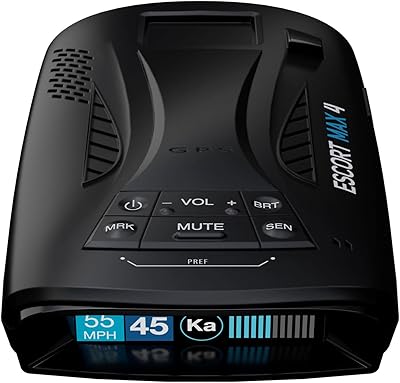
Escort MAX 4 Radar Detector
79%
88%
False Alert Filtering
91%
Detection Range
79%
CarPlay & Android Auto Integration
67%
Value for Money
63%
AutoLearn Setup & Learning Curve
More
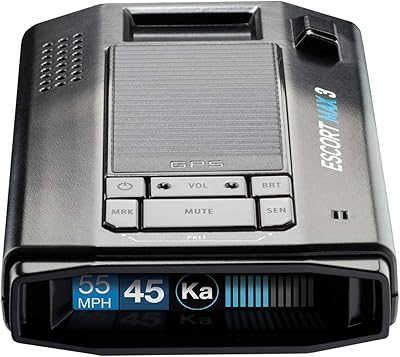
Escort MAX 3 Radar Detector
81%
91%
Radar Detection Range
88%
False Alert Filtering
61%
Laser Detection
74%
App Connectivity
72%
Value for Money
More
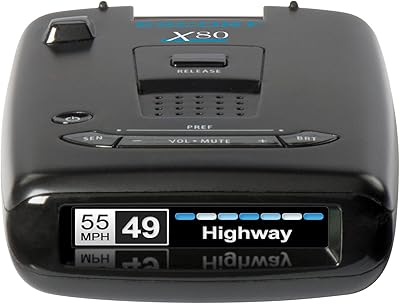
Escort X80 Radar Detector
84%
92%
Long-Range Detection
88%
Ease of Installation
84%
Voice Alert Customization
90%
App Integration (Escort Live)
80%
Accuracy of Alerts
More
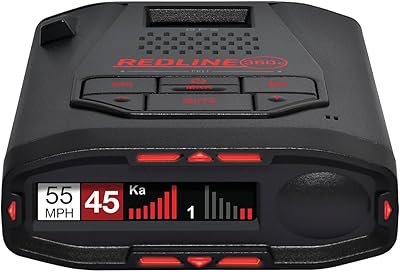
Escort Redline 360c Radar Detector
81%
93%
Detection Range
88%
False Alert Filtering
91%
360-Degree Coverage
89%
Stealth & RDD Invisibility
84%
CarPlay & Android Auto Integration
More
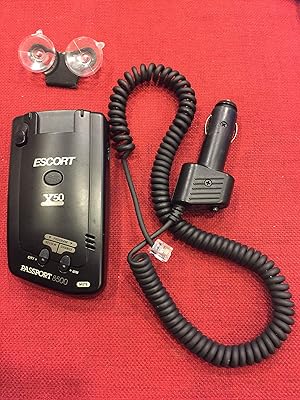
Escort Passport 8500 X50 Radar Detector
70%
91%
Highway Detection Range
67%
False Alert Filtering
88%
Instant-On Radar Response
86%
Build Quality & Durability
74%
Display Readability
More
XpacEbank Car Radar Detector
81%
85%
Detection Performance
90%
Ease of Setup
88%
Voice Alert Clarity
65%
False Alerts
89%
GPS Accuracy
More
GoPro MAX 360 Action Camera
76%
88%
360 Video Quality
91%
Dual-Mode Versatility
83%
Pole Removal & Stitching
54%
Battery Life
93%
Waterproofing
More
Uniden R3 Radar Detector
81%
96%
Detection Range
91%
GPS False Alert Filtering
93%
Radar Band Sensitivity
74%
Laser Detection
82%
BSM & False Alert Management
More
Cobra RAD 380 Radar Detector
71%
74%
Detection Range
78%
False Alert Filtering
93%
Ease of Setup
81%
Laser Detection Coverage
88%
Value for Money
More
Cobra RAD 480i
Cobra RAD 480i
83%
83%
Detection Range
88%
False Alert Filtering
92%
Ease of Setup
79%
App Integration
86%
CarPlay and Android Auto Support
More

FAQ

For drivers who spend significant time on highways or repeat the same commute daily, the jump in detection range and the AutoLearn false-alert filtering genuinely add up to a meaningfully different experience. If you drive infrequently or mostly on short suburban trips, the honest answer is that a mid-range detector will cover your needs for considerably less money.

Most drivers report noticeable improvements after about a week of regular commuting on the same routes. The GPS chip needs to log the same false-alert location a few times before it builds enough confidence to suppress it automatically, so the first few days tend to be noisier than normal operation.

It supports both wired and wireless CarPlay and Android Auto, but a handful of users have reported occasional lag with wireless connections. If reliable integration matters to you, a wired CarPlay setup tends to be more consistent in practice.

Yes — the MAX 360 MKII covers X, K, and Ka bands, which account for the vast majority of speed enforcement radar used across the U.S. Ka-band sensitivity in particular draws strong praise from buyers who switched from older detectors.

This is worth being straight about: laser detection on this — or any consumer radar detector — is fundamentally reactive. By the time the unit alerts you to a laser hit, an officer has already clocked your speed. Laser detection on the MAX 360 MKII is as good as it gets in this category, but it is not a practical defense against laser enforcement the way radar detection is.

Yes, the suction-cup windshield mount releases and reattaches in seconds, and the 12V corded power connection is standard across most vehicles. The main thing to check is cord length — in larger SUVs or trucks with deep dashboards, you may find the included cord just barely reaches, and a short extension cable might be worth keeping in the glovebox.

No — core radar and laser detection works entirely standalone without any app, phone, or data connection. The internet-connected features like Drive Smarter community alerts and app-based firmware updates require a paired phone, but the detector itself will still alert you to signals without any of that.

When your paired phone has a data connection, the unit pulls live alerts from other drivers using Escort and compatible apps in your area — speed traps, red light cameras, and enforcement zones reported by the community. It works well on busy corridors near major cities, but coverage drops off noticeably in rural or low-traffic areas where fewer drivers are contributing reports.

Yes, the Escort app provides access to some filtering settings, sensitivity adjustments, and band toggles that are harder or impossible to reach through the on-device menu alone. It also handles firmware updates, which is the main reason Escort recommends connecting periodically even if you do not use the app daily.

This is one of the areas where the MAX 360 MKII has a real edge. The Blackfin DSP chip combined with the AutoLearn GPS system is specifically tuned to identify and filter out BSM and CAS signals from surrounding traffic. Out of the box the filtering is already better than most competitors, and it improves further as AutoLearn maps your regular driving environment.

Where to Buy