Overview

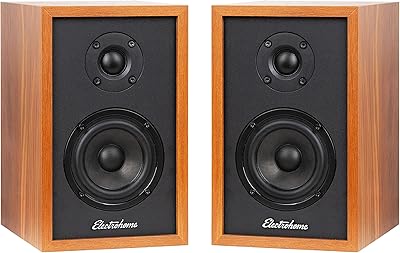
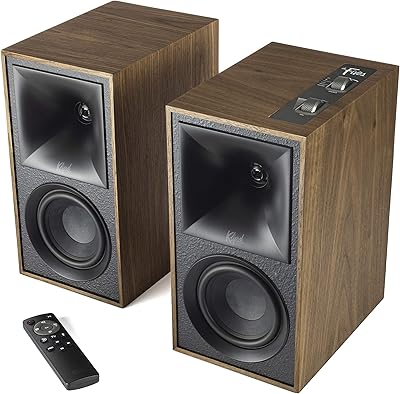
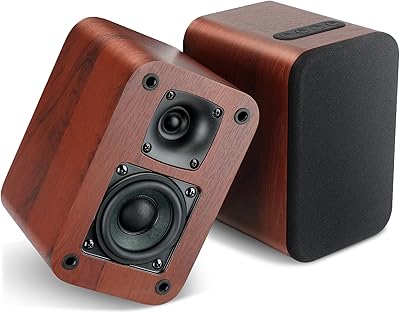
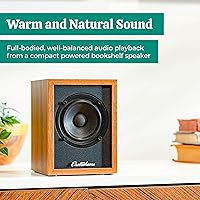
The Electrohome Huntley EB10 Powered Bookshelf Speakers enter a crowded budget market with something most competitors skip: a genuinely attractive wood cabinet. The teak finish and curved front look like they belong on a shelf rather than hidden behind a monitor. At this price tier, built-in Class D amplification means you skip the separate receiver entirely — plug in, pair up, and you are listening within minutes. The compact dimensions fit comfortably on a desk or bookshelf without dominating the space. For casual listeners stepping up from built-in laptop or TV speakers, the value proposition is straightforward and hard to argue with.
Features & Benefits

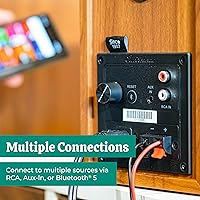
The heart of this powered speaker pair is a 3-inch polypropylene woofer with butyl rubber surrounds, tuned to produce warm, rounded low-mids rather than punchy bass. The rear-ported wood cabinet helps extend low-end presence, though the frequency response starts at 100Hz — so true sub-bass is off the table. There is no dedicated tweeter, which gives the sound a smooth, relaxed character that works well for vocals and acoustic instruments but softens high-frequency detail. Connectivity is practical: RCA inputs handle turntables and TVs, a 3.5mm aux covers everything else, and Bluetooth 5.0 adds wireless convenience for casual phone streaming without fuss.

Best For

The Huntley EB10 makes the most sense for vinyl listeners who want a plug-and-play active speaker without hunting down a separate amplifier. It is equally well-suited to desk setups where a compact, wood-finished speaker pair looks considerably better than a plasticky soundbar. Bedroom and dorm use are natural fits — the 20 watts total output is more than enough for near-field listening at considerate volumes, even if it will not fill a living room. Anyone upgrading from factory laptop speakers or a flat-screen built-in audio will notice an immediate improvement. Buyers who prefer warm, forgiving sound over hyper-detailed treble will feel right at home here.

User Feedback

Across more than 550 reviews and a 4.2-star average, the picture is fairly consistent. Buyers regularly highlight the build quality — the wood cabinet genuinely feels above what the price suggests, which earns real goodwill. The sound character earns praise for being non-fatiguing and flattering on vocals. On the critical side, listeners who enjoy jazz or classical sometimes note that cymbal detail and upper-register sparkle feel slightly muted — a predictable consequence of the tweeter-free design. A handful of users also wish for more volume headroom in larger rooms. Bluetooth pairing gets consistently positive marks for being quick and reliable across multiple devices.

Pros

  • Wood cabinet construction looks and feels well above the price tier — a genuine rarity in budget audio.
  • Built-in Class D amplifier means no separate receiver needed; unbox, connect, and listen.
  • Warm midrange flatters vocals, acoustic instruments, and podcasts without any tuning required.
  • Bluetooth 5.0 pairs quickly and holds a stable connection for casual wireless streaming.
  • RCA, aux, and Bluetooth inputs cover turntables, TVs, computers, and phones in one unit.
  • Compact dimensions fit comfortably on most desks or bookshelves without crowding the space.
  • Rear-ported cabinet design adds warmth and low-mid body beyond what the driver size alone would suggest.
  • Sound signature is smooth and non-fatiguing — easy to listen to for extended sessions.
  • One-year warranty and lifetime customer support add meaningful purchase confidence at this price.
  • Straightforward setup with all necessary cables included; no app, driver, or configuration required.

Cons

  • No dedicated tweeter means high-frequency detail, cymbal shimmer, and treble air are noticeably softened.
  • Low-end rolls off at 100Hz — bass-heavy genres like electronic or hip-hop will sound thin.
  • Twenty watts total output is not enough to fill a medium or large room at satisfying volumes.
  • No remote control included, which is a real inconvenience if the speakers are placed across the room.
  • The included speaker wire at 8 feet can feel restrictive for wider shelf or desk arrangements.
  • No optical input limits direct connection options for newer TVs that lack a headphone jack.
  • A subset of buyers report channel dropout or imbalance developing after several months of use.
  • Bluetooth is practical for casual listening but not optimized for high-resolution or lossless streaming.
  • Touch controls on the active speaker can be imprecise and are easy to trigger accidentally.

Ratings

The scores below for the Electrohome Huntley EB10 Powered Bookshelf Speakers were generated by AI after analyzing verified global user reviews, with spam, bot-submitted, and incentivized feedback actively filtered out. The results reflect a genuine cross-section of real buyer experiences — the consistent strengths and the recurring frustrations alike — so you can make an informed decision without wading through hundreds of individual opinions.
Sound Quality
74%
26%
The warm, mid-forward character wins over listeners who play a lot of vocals, folk, acoustic guitar, or classic rock. At typical desk or bedroom volumes, the sound is smooth and easy to listen to for hours without fatigue — something a lot of cheap plastic speakers simply cannot manage.
The absence of a tweeter and a frequency ceiling of around 16KHz means high-frequency detail is noticeably softened. Cymbal shimmer, violin harmonics, and breathy vocal air feel somewhat blunted compared to speakers with a dedicated tweeter, even at similar price points.
Bass Response
61%
39%
The rear-ported wood cabinet does meaningful work here — bass presence is warmer and fuller than you would expect from a 3-inch driver alone. Placed near a wall or in a corner, the low-end rounds out nicely for casual listening to pop or R&B at moderate volumes.
The roll-off begins at 100Hz, so true bass punch and sub-bass weight are simply not there. Electronic music, hip-hop, and film scores with deep low-end will feel thin, and no amount of placement adjustment fully compensates for the physical limits of a 3-inch woofer.
Build Quality
83%
The wood cabinet construction stands out sharply at this price. Multiple buyers noted that the teak-finished enclosures feel and look like they cost considerably more, with tight seams and a solid, resonance-free feel when you knock on the sides — not the hollow plastic rattle common in budget audio.
The speaker grille and internal wiring quality have drawn occasional criticism, with a small number of buyers reporting one channel cutting out within the first few months of use. It is not a widespread pattern, but it is worth noting for buyers who expect long-term durability.
Value for Money
82%
18%
For anyone upgrading from built-in laptop speakers or a flat-panel TV, the improvement is immediate and substantial. Getting a wood-cabinet powered speaker pair with Bluetooth, RCA, and aux inputs at this price bracket — with no separate amp required — represents genuinely competitive value in the active speaker category.
Buyers who compare these against slightly pricier competitors with dedicated tweeters may feel the audio quality gap is wider than the price gap. If your budget can stretch even modestly further, there are options that offer meaningfully better treble extension and overall clarity.
Design & Aesthetics
88%
The retro wood cabinet with teak finish is the single biggest visual differentiator in this price category. On a desk alongside a turntable, or on a bookshelf between records, these look intentional and considered — not like an afterthought audio purchase. Several buyers specifically mentioned aesthetics as the deciding factor.
The design is deliberately nostalgic, which will not suit minimalist or modern setups that favor all-black or brushed-metal finishes. The curved front and warm wood tones are a stylistic commitment, not a neutral choice, so they can feel out of place depending on the room.
Bluetooth Connectivity
77%
23%
Bluetooth 5.0 delivers consistent, quick pairing with phones, tablets, and laptops, and most users report it reconnects reliably when returning to a paired device. For casual background listening or streaming a podcast while working, the wireless connection performs exactly as needed.
This is not a setup built for high-resolution wireless audio. Audiophile streaming services and lossless formats are wasted here — the Bluetooth implementation is practical and stable, but not optimized for critical listening. Some users also noted a lack of multipoint pairing for switching between two devices.
Wired Input Versatility
81%
19%
Having both RCA and 3.5mm aux inputs on a speaker at this price is genuinely useful. Turntable owners get a direct connection path, while TV, gaming console, and computer users can all plug in without adapters. Switching sources is straightforward and does not require diving into menus.
There is no optical input, which limits direct TV connection for sets that have phased out the 3.5mm headphone jack. Users with newer smart TVs may need an additional adapter or DAC, which adds cost and a bit of setup friction that undercuts the plug-and-play appeal.
Volume & Power Output
63%
37%
Twenty watts total is more than sufficient for near-field desk listening or filling a standard bedroom at moderate volumes. For the core use cases — working at a desk, playing vinyl in a small room, background music in a dorm — the power output does the job comfortably.
Push the volume past around 70 percent in a medium-sized living room and the limitations become clear. The sound compresses and loses its composure, with some brightness creeping in. Anyone expecting these to serve a larger room or provide party-level output will be disappointed.
Ease of Setup
89%
The included speaker wire and power cord mean you can be listening within ten minutes of opening the box. There are no drivers to install, no app required, and no complicated input switching. Bluetooth pairing follows standard procedures, and the touch controls on the active speaker are intuitive from the first use.
The included 8-foot speaker wire can feel limiting if you want the passive speaker placed more than arm's reach from the active one. A few users wished for a longer cable run, especially for wider desk setups or shelf arrangements where the speakers need more separation.
Treble & High-Frequency Detail
57%
43%
For genres that live in the midrange — jazz vocals, classical guitar, folk, singer-songwriter — the treble rolloff is not a dealbreaker. The sound remains pleasant and coherent, and the lack of a tweeter means there is no harshness or sibilance to manage, which some listeners actively prefer.
Without a tweeter, the upper frequencies lack the clarity and extension that most competing speakers in this class offer. High hats, string overtones, and the fine texture of acoustic instruments all sound somewhat veiled. This is the single most consistent technical criticism across user reviews.
Midrange Clarity
79%
21%
The midrange is where these speakers genuinely shine. Vocals sit forward and clear in the mix, guitars have body and presence, and podcasts or spoken-word content sound natural and easy to follow. This tonal balance suits the casual listener far better than a hyped, V-shaped sound signature.
The midrange emphasis can occasionally make dense mixes feel slightly congested, particularly when multiple instruments occupy similar frequency ranges. Rock tracks with layered guitars and electronic music with busy arrangements can lose separation compared to more balanced speakers.
Compact Footprint
86%
At roughly 6 by 5 by 5 inches per cabinet, these fit comfortably on most desks without eating into monitor or workspace real estate. They also work well on bookshelves between books or records without looking oversized. The compact dimensions are a genuine practical advantage for small-space living.
The small cabinet size is directly connected to the acoustic limitations — there is no free lunch in speaker physics. Buyers expecting room-filling sound from cabinets this size will need to recalibrate expectations. The compact form factor is a trade-off, not a pure advantage.
Long-Term Reliability
68%
32%
The majority of buyers report consistent, trouble-free performance over months of regular use. The one-year manufacturer warranty and lifetime customer support add a meaningful layer of confidence, and Electrohome has a reputation for responding to warranty claims without excessive friction.
A small but notable minority of users report channel imbalance or intermittent dropout issues developing after several months. Whether this reflects a component quality control issue or isolated bad units is unclear, but it is frequent enough in reviews to warrant attention before purchase.

Suitable for:

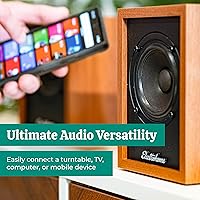
The Electrohome Huntley EB10 Powered Bookshelf Speakers are a natural fit for vinyl enthusiasts who want a complete, self-contained listening setup without the cost or complexity of a separate amplifier. They work equally well for anyone upgrading a home desk or bedroom from built-in laptop or monitor speakers — the improvement in warmth and soundstage is immediately noticeable in near-field use. Students in dorms or renters in small apartments will appreciate the compact footprint and the fact that 20 watts is more than enough volume for considerate listening without disturbing neighbors. The warm, mid-forward tonal character also suits listeners who primarily enjoy vocals, acoustic music, podcasts, or classic rock, where smooth playback matters more than surgical detail. Anyone who cares about how their audio gear looks — not just sounds — will find the teak wood cabinet a rare aesthetic win at this price.
Not suitable for:

The Electrohome Huntley EB10 Powered Bookshelf Speakers will frustrate buyers who need to fill a medium or large room with sound, since 20 watts of total output runs out of composure well before party or open-space volumes. Listeners who stream high-resolution audio or prioritize precise treble detail should look elsewhere — the absence of a dedicated tweeter and the frequency ceiling around 16KHz mean that cymbal shimmer, string overtones, and upper-register clarity are genuinely limited. Bass-heavy music genres like electronic, hip-hop, or cinematic scores will also feel thin and unsatisfying, since the 3-inch driver rolls off at 100Hz and cannot produce meaningful sub-bass regardless of placement. These are also not the right pick for a home theater secondary system or a living room where the speakers need to project across a larger listening distance. Buyers chasing the most audio performance per dollar from a purely technical standpoint will find that spending modestly more opens up options with better driver configuration and wider frequency response.
Specifications

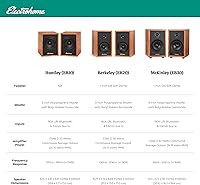
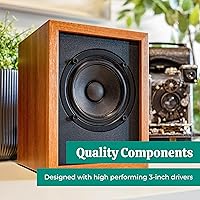
  • Driver Size: Each cabinet houses a 3-inch polypropylene woofer with butyl rubber surrounds for durable, warm low-to-mid frequency reproduction.
  • Amplifier: A built-in Class D amplifier delivers 20 watts of continuous average output, split evenly at 10 watts RMS per channel.
  • Frequency Response: The speakers reproduce audio from 100Hz to 16KHz at plus or minus 5dB, with no dedicated tweeter in the driver configuration.
  • Bluetooth: Bluetooth 5.0 is supported with a rated wireless range of up to 60 meters in open conditions.
  • Wired Inputs: Connectivity includes RCA left and right inputs, a 3.5mm aux-in jack, and Bluetooth for a total of three source options.
  • Cabinet Material: The enclosures are constructed from wood with a rear-ported design acoustically tuned to extend bass response and reduce resonance.
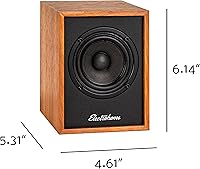
  • Dimensions: Each speaker cabinet measures 6.14 inches wide by 4.61 inches deep by 5.31 inches tall (15.6 x 11.7 x 13.5 cm).
  • Weight: The total combined weight of both speakers is approximately 4.08 pounds (1.85 kg).
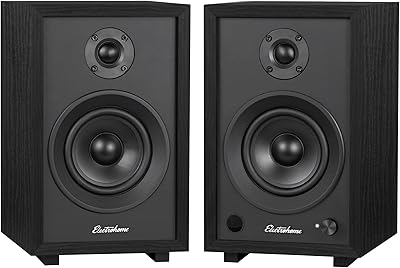
  • Color & Finish: Available in a Black and Teak two-tone finish that pairs a dark enclosure body with a warm wood-toned front baffle.
  • Control Method: Volume and input selection are managed via touch controls located on the active speaker cabinet.
  • Power Source: The active speaker is powered via corded electric connection using the included 6-foot power cord; no battery operation is supported.
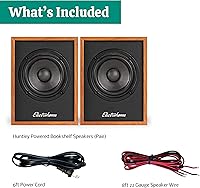
  • Included Accessories: The package includes a 6-foot power cord, 8 feet of 22-gauge speaker wire, and a quick start guide.
  • Channel Config: The system operates in a 2.0 stereo configuration with one active powered speaker and one passive satellite speaker.
  • Tweeter: No tweeter is included in either cabinet; high-frequency reproduction is handled entirely by the single full-range woofer per speaker.
  • Remote Control: No remote control is included with the speakers; all adjustments must be made directly via the touch controls on the active unit.
  • Warranty: Electrohome provides a one-year limited manufacturer warranty alongside a lifetime customer support commitment.
  • Mounting Type: The speakers are designed for shelf mounting on a flat horizontal surface and are not supplied with wall-mount brackets.
  • Surround Config: The system does not support surround sound; it outputs standard two-channel stereo audio only.

Related Reviews

Electrohome Berkeley EB20
81%
83%
Sound Quality
61%
Bass Performance
84%
Build Quality
87%
Bluetooth Connectivity
88%
Value for Money
More
Electrohome McKinley EB30B
75%
78%
Sound Quality
74%
Build Quality
81%
Value for Money
83%
Connectivity & Inputs
71%
Bluetooth Performance
More
Orroplus OR-02 Powered Bookshelf Speakers
77%
83%
Sound Clarity & Midrange
61%
Bass Performance
91%
Connectivity & Input Range
78%
Bluetooth Performance
72%
Setup & Ease of Use
More
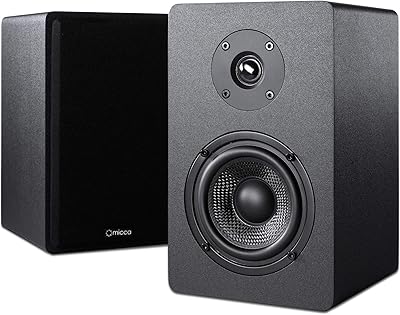
Micca PB42X Powered Bookshelf Speakers
83%
87%
Sound Quality
91%
Value for Money
76%
Bass Performance
89%
Ease of Setup
85%
Build Quality
More
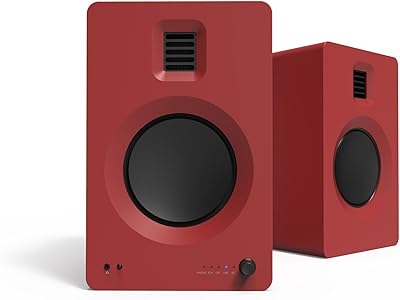
Kanto TUK Powered Bookshelf Speakers
88%
88%
Sound Quality
72%
Bass Response
93%
Setup & Installation
90%
Connectivity Options
85%
Build Quality
More
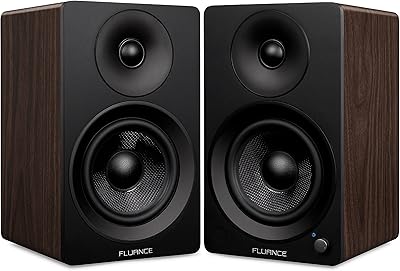
Fluance Ai41 Powered Bookshelf Speakers
82%
88%
Sound Quality
73%
Bass Performance
84%
Treble Clarity
91%
Build Quality
87%
Connectivity & Inputs
More
Audioengine A5+ Powered Bookshelf Speakers
80%
91%
Sound Quality
93%
Build Quality
88%
Amplifier Performance
67%
Connectivity & Inputs
78%
Value for Money
More
Klipsch The Fives Powered Bookshelf Speakers
86%
92%
Sound Quality
89%
Connectivity Options
85%
Setup & Installation
88%
Build Quality
91%
Bass Performance
More
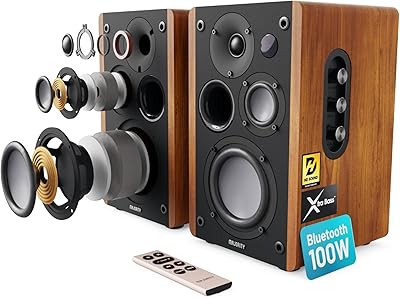
Majority D100 Bookshelf Speakers
74%
76%
Sound Quality
71%
Bass Performance
83%
Build Quality
89%
Connectivity Range
68%
Phono Stage
More
Rockville HD5B 5″ Bookshelf Speakers
74%
74%
Sound Quality
88%
Volume & Power Output
51%
Bass Performance
91%
Connectivity & Inputs
83%
Bluetooth Performance
More

FAQ

Not directly. The Huntley EB10 does not include a built-in phono preamp, so if your turntable outputs a raw phono-level signal, you will need an external phono preamp between the turntable and the RCA inputs. Most modern entry-level turntables include a preamp and a line-level switch, so check your turntable specs before buying a separate unit.

Yes, as long as your TV has a 3.5mm headphone output or RCA audio outputs. Use the aux input for a 3.5mm connection or the RCA inputs for a left-right analog signal. If your TV only has optical or HDMI ARC outputs, you would need an external DAC or audio converter to bridge the connection.

Honestly, not really. At a desk or in a bedroom they perform well and get plenty loud for comfortable listening. In a larger living room, though, 20 watts total starts to feel limited — the sound compresses and loses its balance at higher volume levels. Think of these as near-field speakers rather than room-fillers.

It is warm and present for the driver size, but it has real limits. The frequency response starts at 100Hz, which means deep bass below that threshold simply is not reproduced. The rear-ported wood cabinet helps round out the low-mids, so the sound does not feel completely thin, but listeners who love electronic music, hip-hop, or cinematic low-end will likely be underwhelmed.

No, the Electrohome Huntley EB10 Powered Bookshelf Speakers do not support multipoint Bluetooth pairing. Only one device can be actively connected at a time. You would need to disconnect the current device before pairing and playing from a second one.

Yes, in most cases the speakers will reconnect to the last paired device automatically when powered back on, provided that device has Bluetooth enabled and is within range. Most users find the reconnection quick and reliable.

They are a solid choice for desk use. The compact footprint leaves plenty of workspace, the warm sound signature is easy to listen to for hours, and the Bluetooth connection makes switching between a laptop and a phone straightforward. If you do a lot of video calls or voice work, the clear midrange reproduction also helps with speech intelligibility.

For most standard desk setups it is fine, especially if the speakers sit relatively close together. If you are placing them on a wider shelf or want significant separation between the active and passive cabinet, 8 feet can feel restrictive. Standard 22-gauge speaker wire is easy to find at any hardware store if you need a longer run.

No, there is no dedicated subwoofer output on these speakers. The inputs are source-side only — RCA in, aux in, and Bluetooth. There is no line-level output or bass management to facilitate adding a sub, so the low-end you hear is the low-end you get.

The touch controls are located on the active speaker and handle volume adjustment and input switching. They work fine for basic operation, though a few users find them slightly imprecise — easy to tap accidentally or overshoot when adjusting volume incrementally. There is no remote, so if the speakers are placed out of arm's reach, you will be getting up to make adjustments more often than you might like.