Overview

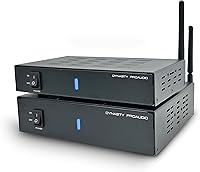
The Dynasty ProAudio WSA-5RP Plus exists to solve a problem most surround sound enthusiasts know well: getting audio to your rear speakers without snaking cables across a room. This wireless surround kit targets the middle ground between cheap single-band adapters and premium whole-home audio systems, and it shows — the metal chassis construction alone sets it apart from the flimsy plastic boxes that dominate this category. Running on selectable 5.2 or 5.8GHz bands, it sidesteps the congestion that plagued older 2.4GHz designs. If you are retrofitting a room where cable routing is genuinely impractical, this rear speaker transmitter system is worth a serious look.
Features & Benefits

The dual-band wireless system automatically scans 106 RF channels to find the clearest signal — a practical advantage if you live somewhere where the airwaves are cluttered with neighboring Wi-Fi networks. The built-in Class D amplifier is genuinely useful: it drives passive bookshelf speakers directly, so there is no separate power amp to buy or find shelf space for. Power output scales with your speakers' impedance, delivering more headroom with 4-ohm loads than 8-ohm ones, so check your speaker specs before assuming maximum output. Audio travels as uncompressed PCM at CD-quality resolution, and the sub-17ms latency means lip sync issues should not be a concern in normal viewing.

Best For

This wireless surround kit makes the most sense for anyone stuck between wanting proper surround sound and not wanting to tear up baseboards or fish wire through finished walls. Renters especially benefit — nothing to patch when you move out. It is also a solid path forward if your A/V receiver predates built-in wireless support, which covers a lot of hardware still in active use. Pair it with budget-to-mid-range passive bookshelf speakers and the built-in amp handles the rest. Where it falls short: genuinely large rooms, heavily obstructed spaces, or listeners who require studio-grade audio fidelity. The rated 100-foot range assumes clear line of sight, which most living rooms do not offer.

User Feedback

With around 99 ratings and a 4.2-star average, the WSA-5RP Plus has a decent but not exhaustive track record. Buyers consistently highlight straightforward initial setup and a reliable connection once the system locks onto a clear channel — the improvement over having no rear speakers at all is the most commonly cited win. On the other side, some users in densely populated areas report occasional dropouts, suggesting auto-channel selection is not always sufficient in heavily congested RF environments. A handful of reviewers note the pairing instructions could be clearer for less technical users. Amplifier output seems adequate for typical listening levels, though a few buyers flagged volume ceiling concerns with less efficient speakers.

Pros

  • Eliminates the need to run long speaker cables for rear surround channels entirely.
  • Built-in amplifier drives passive bookshelf speakers directly — no extra hardware needed.
  • Dual-band wireless design sidesteps the congestion issues that plagued older single-band kits.
  • Metal chassis construction feels noticeably more robust than plastic competitors at a similar price.
  • Works with virtually any existing A/V receiver through speaker-level or RCA line inputs.
  • Sub-17ms latency keeps dialogue and on-screen action in sync during everyday movie watching.
  • Subwoofer pass-through lets you insert this kit without disrupting an existing bass setup.
  • Remote control lets you trim rear channel levels from the couch without touching the receiver.
  • Uncompressed PCM audio keeps the signal clean for standard home theater listening.

Cons

  • Dropout risk increases meaningfully in apartments with heavy 5GHz Wi-Fi congestion nearby.
  • Printed setup instructions are terse and poorly worded, frustrating less experienced users.
  • The 100-foot range rating assumes clear line of sight that most real rooms do not provide.
  • Amplifier headroom feels limited when paired with less efficient 8-ohm speakers at higher volumes.
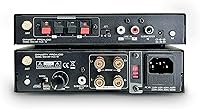
  • The receiver unit is bulky and requires both a power outlet and a clear surface near the rear seating area.
  • No online support resources or detailed troubleshooting guides exist for edge-case setup problems.
  • The included remote has inconsistent response and is not practical to use reliably in a dark room.
  • Pairing can require multiple reset attempts before achieving a stable wireless link.
  • Subwoofer path offers no level or crossover control, limiting integration flexibility for complex bass setups.

Ratings

Our AI rating engine analyzed verified buyer reviews for the Dynasty ProAudio WSA-5RP Plus from multiple global sources, actively filtering out incentivized, bot-generated, and duplicate feedback to surface what real users actually experienced. Scores reflect both the genuine strengths that keep buyers satisfied and the friction points that surface repeatedly in honest post-purchase accounts. Nothing has been smoothed over — the numbers below tell the full story.
Wireless Stability
78%
22%
Most users in typical suburban homes report a rock-solid connection after the system auto-selects a clean RF channel. The dual-band design gives it a meaningful edge over older single-band kits that would falter the moment a neighbor fired up a new router.
In dense apartment buildings where the 5GHz spectrum is already saturated, dropouts surface more often than the spec sheet would suggest. Auto-channel selection helps but does not always fully resolve the problem in worst-case RF environments.
Amplifier Performance
74%
26%
For buyers pairing this with standard 8-ohm bookshelf speakers, the built-in Class D amp delivers clean, sufficient output at moderate listening volumes — enough to fill a mid-sized living room without a separate power amplifier in the chain.
Users with less efficient speakers or those who push volume levels find the headroom thinner than the wattage rating implies. The amp performs better into 4-ohm loads, so buyers with 8-ohm speakers should temper expectations at higher output levels.
Ease of Setup
71%
29%
The majority of buyers with basic A/V experience report getting the transmitter and receiver paired and producing audio within 20 to 30 minutes. The variety of input options means most existing receivers slot right in without adapters.
The included instructions draw consistent criticism for being terse and poorly translated in places. Less experienced users frequently report confusion during the initial pairing sequence, and a few needed to reset and start over before achieving a stable link.
Audio Quality
76%
24%
Uncompressed PCM transmission means the signal is not squeezed through a lossy codec before reaching your speakers — for movie watching and general home theater use, most buyers find the rear channels sound clean and well-matched to their front stage.
This is CD-quality digital audio, not true hi-res lossless, and trained listeners will notice the ceiling. The wireless path adds a layer of processing that purists can detect under critical listening conditions, so audiophile-grade expectations will go unmet.
Latency & Lip Sync
82%
18%
Sub-17ms latency is low enough that the overwhelming majority of users report no perceptible sync issues during films or TV viewing. For a wireless audio link, this is a genuinely competitive result that holds up well in everyday home theater use.
A small number of reviewers note that certain A/V receivers do not offer enough manual audio delay adjustment to compensate if any drift occurs over time. It is not a widespread issue, but it is worth confirming your receiver has flexible sync controls before purchasing.
Build Quality
83%
The metal chassis on both transmitter and receiver units feels noticeably more substantial than the plastic-bodied competitors at a similar price point. Buyers frequently comment that the units look and feel like proper audio equipment rather than afterthought accessories.
The overall footprint of the receiver unit is larger than some buyers anticipate, and finding a clean place to mount or place it near the rear seating area requires some planning. Connector placement on the rear panel is functional but not particularly ergonomic.
Transmission Range
67%
33%
In open-plan spaces with minimal obstructions, the kit performs well across distances that comfortably cover most living rooms and media rooms. For the standard surround sound use case — transmitter near the TV, receivers behind the seating — range is rarely a limiting factor.
The 100-foot rating is a line-of-sight figure that real homes rarely replicate. Through two walls and a doorway, several buyers report the effective range dropping significantly, and concrete or brick construction shortens it further still.
Input Flexibility
86%
Speaker-level, RCA line-level, and subwoofer mono inputs cover virtually every A/V receiver configuration a buyer is likely to encounter, including older units without dedicated preamp outputs. This breadth is a genuine practical advantage that reduces the chance of a compatibility mismatch.
The speaker-level input sensitivity requires a reasonably strong signal from the source receiver to perform well — users with lower-output vintage receivers occasionally report having to run the source louder than ideal to get adequate volume from the rear channels.
Subwoofer Integration
69%
31%
Having a pass-through subwoofer connection built into the transmitter is a thoughtful addition that lets buyers insert this kit into an existing subwoofer chain without losing that connection or adding a separate splitter.
The mono subwoofer handling is functional but basic. Users running more complex bass management setups or multiple subwoofers find the single in and out limiting, and there is no level or crossover control on the subwoofer path.
Remote Control Usability
62%
38%
Having a dedicated remote to adjust the rear channel levels without walking to the receiver unit is a convenience most buyers appreciate once they have lived with the system for a few weeks, especially in fixed seating home theater arrangements.
The remote itself is basic in design and does not inspire confidence in long-term durability. Range and response are reported as inconsistent by a subset of users, and the button layout is not intuitive enough to operate reliably in a dark room.
Interference Resistance
72%
28%
The 106-channel auto-scan does a reasonable job of finding workable spectrum in moderately crowded environments. Switching between 5.2 and 5.8GHz bands manually gives users an additional tool for troubleshooting when one band is particularly congested.
In urban high-density housing where dozens of networks compete for the same 5GHz channels, the auto-selection algorithm does not always land on a stable channel on first attempt. Manual band switching helps, but it requires a level of comfort with RF troubleshooting that not all buyers possess.
Value for Money
73%
27%
The combination of a built-in amplifier, dual-band wireless, and metal construction at this price tier represents genuine value if you factor in what a comparable separate amplifier and wireless adapter would cost purchased individually. Most buyers feel the kit earns its asking price.
Buyers who encounter connectivity issues or need to return the unit cite the experience as a frustrating contrast to the price paid. For those in problematic RF environments, the effective value drops considerably once the wireless reliability problems surface.
Documentation & Support
54%
46%
The core connection diagram included in the box is clear enough that users with prior A/V experience can get oriented quickly. Basic troubleshooting steps are present and cover the most common setup failure points.
Dynasty ProAudio does not appear to have a robust customer support infrastructure, and buyers who hit edge-case issues report difficulty finding help beyond the printed guide. Online resources for this specific model are thin, which compounds the frustration for users who encounter problems.
Physical Footprint & Placement
66%
34%
The transmitter unit is slim and unobtrusive enough to sit on an equipment shelf or AV rack without demanding significant space. The clean black finish blends with most home theater equipment without drawing attention.
The receiver unit that sits near the rear speakers is bulkier and needs both a power outlet and a clear surface nearby, which complicates placement in rooms where outlet access behind seating is limited. Cable management around the receiver end can get untidy quickly.

Suitable for:

The Dynasty ProAudio WSA-5RP Plus is a strong fit for anyone who wants genuine surround sound but faces a real obstacle getting cables to the rear of the room — think renters in finished apartments, homeowners with concrete floors, or anyone who simply does not want to tear up baseboards for a home theater project. It works particularly well as an upgrade path for owners of older A/V receivers that predate built-in wireless speaker support, since the multiple input options mean almost any receiver can feed it a signal without adapters or workarounds. Open-plan living spaces and converted rooms where cable runs would be long and unsightly are exactly the environments this rear speaker transmitter system was designed around. Pair it with a decent set of passive bookshelf speakers and the built-in amplifier handles the rest, keeping the overall system cost and complexity manageable. If your listening habits are mostly movies, TV, and casual music, the audio quality will satisfy without any caveats.
Not suitable for:

The Dynasty ProAudio WSA-5RP Plus is not the right tool for listeners who demand audiophile-grade fidelity from their surround channels — the wireless transmission path and CD-quality audio ceiling will fall short of what a dedicated high-resolution wired setup can deliver. Buyers in dense urban housing, such as apartment buildings where dozens of competing 5GHz networks are active simultaneously, should go in with realistic expectations about dropout risk, as the auto-channel system does not always find clean spectrum in genuinely saturated environments. If the space you are working with exceeds a typical living room in size, or involves thick concrete or brick walls between transmitter and receiver, the effective wireless range will likely disappoint. This wireless surround kit also leans on the buyer having at least basic A/V familiarity — the setup instructions have drawn repeated criticism for being unclear, and users without prior experience connecting receivers and speakers may find the pairing process frustrating. Anyone expecting plug-and-play simplicity on par with a consumer streaming device should adjust their expectations accordingly.
Specifications

  • Wireless Bands: Operates on selectable 5.2GHz (5157–5243MHz) or 5.8GHz (5727–5848MHz) dual-band frequencies to avoid interference from standard home Wi-Fi networks.
  • RF Channels: Automatically scans and selects from 106 available RF channels to maintain the most stable wireless connection available in the current environment.
  • Amplifier Type: Built-in Class D stereo amplifier drives two passive speakers directly from the receiver unit without requiring any external amplification.
  • Amplifier Output: Delivers 2x100W RMS into 4-ohm speaker loads, or 2x50W RMS into 8-ohm loads, with output scaling based on the impedance of connected speakers.
  • Audio Encoding: Transmits uncompressed PCM digital audio, avoiding the signal degradation associated with lossy compression codecs used in lower-cost wireless systems.
  • Audio Resolution: Operates at 24-bit depth and 48kHz sampling rate, equivalent to full CD-quality resolution across the wireless transmission path.
  • Latency: End-to-end audio latency is rated at under 17 milliseconds, which is low enough to avoid perceptible lip sync issues during standard film and TV playback.
  • Transmission Range: Rated operational range is up to 100ft (30 meters) under clear line-of-sight conditions between transmitter and receiver units.
  • Signal-to-Noise Ratio: Signal-to-noise ratio is rated at 90dB, indicating a clean audio signal with minimal audible background hiss at normal listening levels.
  • Distortion Rating: Total harmonic distortion is specified at -90dB, reflecting a low level of unwanted harmonic artifacts in the amplified output signal.
  • Inputs: Accepts three input types on the transmitter: speaker-level (up to 9V sensitivity), stereo RCA line-level (500mV sensitivity), and a mono subwoofer RCA input (500mV sensitivity).
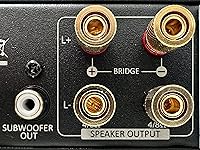
  • Outputs: Receiver unit provides two speaker binding post outputs for passive speakers plus a mono subwoofer RCA output for passing the bass signal to a separate subwoofer or amplifier.
  • Connector Type: All line-level and subwoofer connections use standard RCA connectors; speaker outputs use binding post terminals compatible with standard bare wire or banana plugs.
  • Transmitter Size: Transmitter unit measures 175mm x 100mm x 30mm (approximately 6.9 x 3.9 x 1.2 inches), designed for placement on an AV shelf or rack.
  • Receiver Size: Receiver unit measures 175mm x 150mm x 45mm (approximately 6.9 x 5.9 x 1.8 inches) and requires a flat surface and nearby power outlet for placement near rear speakers.
  • Weight: Transmitter unit weighs approximately 1.1 lbs and the receiver unit weighs approximately 2.7 lbs; combined shipping weight is around 5.27 lbs.
  • Chassis Material: Both transmitter and receiver units feature a metal chassis construction, providing greater rigidity and heat dissipation compared to all-plastic enclosures in the same category.
  • Included Remote: A handheld remote control is included for adjusting receiver settings and volume levels without physically accessing the unit behind the seating area.
  • Color: Both units are finished in matte black, designed to blend with standard home theater equipment aesthetics.
  • Channel Config: Supports 2.0 stereo or 2.1 stereo-plus-subwoofer output configurations depending on whether the subwoofer pass-through connection is used.

Related Reviews
Dynasty ProAudio WSA-5TR-V2
90%
93%
Signal Stability
91%
Audio Fidelity
96%
Setup Simplicity
89%
Latency Performance
84%
Physical Design
More
Dynasty ProAudio UA2D
87%
88%
Audio Signal Clarity
94%
Ease of Installation
86%
Build Quality & Durability
82%
Connectivity Options
91%
Value for Money
More
BuddyPhones Explore Plus
90%
94%
Comfort & Fit
91%
Build Quality
88%
Sound Clarity
97%
Volume Limiting Safety
90%
Portability
More
TourBox Elite Plus
TourBox Elite Plus
87%
94%
Ergonomics & Comfort
91%
Workflow Efficiency
88%
Software Integration
90%
Programmability & Customization
85%
Build Quality
More
Calibrite Display Plus HL
88%
93%
Calibration Accuracy
89%
Ease of Setup
88%
Software Functionality
91%
Portability & Size
87%
Build Quality
More
ART USB Phono Plus
ART USB Phono Plus
84%
89%
Ease of Use
91%
Setup & Installation
86%
Sound Quality
78%
Software Experience
82%
Build Quality
More
Bellroy Toiletry Kit Plus
87%
91%
Spacious Design
93%
Magnetic Toothbrush Shelf
88%
Water Resistance
94%
Eco-Friendliness
85%
Ease of Access
More
Glyph BlackBox Plus 5TB
89%
88%
Performance
90%
Build Quality
85%
Portability
89%
Ease of Use
91%
USB-C Connectivity
More
Quican IDW208 Plus Smartwatch
84%
88%
Battery Life
91%
Waterproofing
84%
Fitness Tracking Accuracy
92%
Ease of Setup
80%
Display Quality
More
Sennheiser AMBEO Soundbar Plus
86%
94%
Sound Quality
91%
Bass Performance
88%
Ease of Setup
90%
Streaming & Connectivity
93%
Build Quality
More

FAQ

Yes, and this is actually one of the strongest use cases for the WSA-5RP Plus. The transmitter accepts a speaker-level signal directly from your receiver's rear surround speaker terminals, so any receiver with physical speaker outputs can feed it — no special wireless output needed. Just connect the transmitter where you would normally run the cable to your rear speakers, and it handles the rest wirelessly.

It depends on how saturated your 5GHz spectrum actually is, and this is worth being honest about. The auto-channel scan across 106 frequencies gives it a reasonable chance of finding a clean slot, and the option to manually switch between 5.2 and 5.8GHz bands is a useful fallback. In a typical suburban home or lightly congested building it performs well, but in a dense urban building where the 5GHz band is genuinely packed, some users do experience occasional dropouts. It is not guaranteed to be immune in worst-case RF environments.

This is a transmitter and amplifier kit only — it does not include speakers. The receiver unit has a built-in amplifier that connects directly to any passive bookshelf speakers you already own or purchase separately. Standard 4-ohm or 8-ohm passive bookshelf speakers are the right pairing; just note that rated power output is higher into 4-ohm loads than 8-ohm ones.

Under 17ms is genuinely low for a wireless audio link, and in practice the vast majority of users report no perceptible sync issue during movies or TV. Your A/V receiver may also have a manual audio delay or lip sync adjustment that can fine-tune any minor offset. It is not something most buyers end up noticing in everyday use.

You will not lose your subwoofer connection. The transmitter includes a mono subwoofer input and the receiver has a corresponding subwoofer output, so you can insert this rear speaker transmitter system into the signal path between your receiver and your subwoofer without adding any extra splitters. Just note there is no built-in level or crossover adjustment on the subwoofer path — it passes the signal through without processing it.

Realistically, yes for most standard home configurations, but the 100-foot figure is line-of-sight and will shrink with obstructions. One standard drywall interior wall typically reduces effective range moderately and most buyers in that scenario report stable performance. Concrete, brick, or metal-reinforced walls are a more serious obstacle. If the distance involved is 30 to 40 feet through a single interior wall, you should be fine in most cases.

The physical connections are straightforward — plug the transmitter into your receiver, run speaker wire from the receiver unit to your passive speakers, and power both units. The pairing process is where some users hit friction. The included instructions have been criticized for being unclear in places, and the initial pairing sequence can require a reset or two if it does not lock on the first attempt. If you have connected speakers to a receiver before, you will likely manage fine. If this is your first time working with A/V equipment, set aside extra time and patience for the initial setup.

Standard passive bookshelf speakers in the 4 to 8-ohm impedance range work well. The built-in amplifier delivers more headroom with 4-ohm speakers than 8-ohm ones, so if your speakers are 8 ohms and on the less efficient side, you may find the volume ceiling lower than expected at high listening levels. For typical surround duty at normal home theater volumes, most mid-range bookshelf speakers will perform well.

No. It transmits uncompressed PCM audio at CD-quality resolution, which is solid and avoids lossy compression artifacts, but it is not the same as bitstream lossless formats like Dolby TrueHD or DTS-HD Master Audio. For rear surround channels in a typical home theater setup the audible difference is minimal for most listeners, but if bit-perfect lossless is a hard requirement for you, this system will not meet that standard.

In principle, running two separate kits — one for side surrounds and one for rear surrounds — could work if the two transmitters can find non-conflicting RF channels, which the 106-channel auto-scan is designed to handle. However, this is not an officially documented configuration and Dynasty ProAudio does not explicitly support or guarantee it. If you plan to try it, make sure your A/V receiver has enough independent amplified output zones to feed both transmitters distinct signals.