Overview

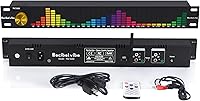
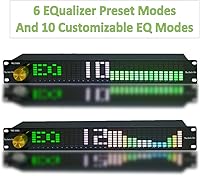
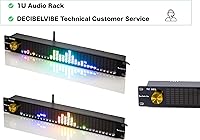
The Decibelvibe TNZ SGE6 Graphic Equalizer landed in March 2025 as a mid-range option aimed at home audio enthusiasts and anyone running a semi-pro DJ setup who wants real tone control without investing in a full rack system. What sets it apart from basic EQ units is its dual role — it handles active equalization while simultaneously running a 31-band spectrum display, so you're watching your audio as well as shaping it. The gold finish gives it a polished look, and the slim chassis slides neatly into a standard rack. That said, with fewer than ten ratings at the time of writing, long-term reliability is still an open question worth keeping in mind.

Features & Benefits

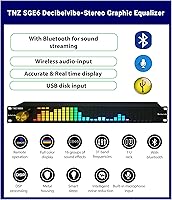
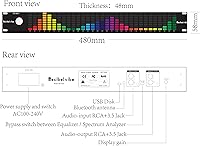
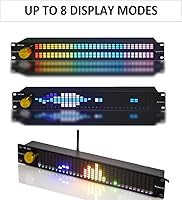
This graphic equalizer packs a surprising amount of connectivity into its slim chassis. On the back, you get RCA and 3.5mm inputs and outputs for wired sources, plus USB and Bluetooth 5.0 for wireless or digital playback — no dongles, no adapters needed. The built-in microphone is a genuinely useful touch: it lets the spectrum display react to room sound without a single cable plugged in, which works well for parties or casual sessions. DSP handles signal integrity across every input, and the output amplitude is adjustable after processing, letting the unit function as a preamp or amplifier in a HiFi chain. The 16-color display with brightness and speed controls is a nice finishing touch.

Best For

The TNZ SGE6 earns its place most naturally in a home listening room or a bedroom DJ setup where versatility matters more than studio-grade precision. If you have a turntable, a streaming device, and a laptop all running at once, the mix of multiple wired inputs and Bluetooth means switching sources without rewiring anything. HiFi hobbyists who need a clean preamp stage between a DAC and a power amplifier will also find it useful. It reads as a prosumer unit rather than a professional live-sound tool, so manage expectations accordingly. For home theater tuning or a well-stocked entertainment room, though, it handles the job comfortably and flexibly.

User Feedback

Early buyers have given this EQ and spectrum analyzer a perfect five-star average, which sounds encouraging — but fewer than ten reviews exist at the time of writing, so that picture could change quickly as more users weigh in. The consistent early praise centers on visual appeal and source flexibility, but some practical questions remain open: how stable is the Bluetooth pairing over extended sessions, and does the preamp output stay quiet at higher gain settings or introduce audible noise? Build quality — knob feel, chassis rigidity, display brightness in lit rooms — is another area where real-world durability simply takes time and volume of use to prove out. Worth monitoring as the review count grows.

Pros

  • Covers nearly every common input type in one box — RCA, 3.5mm, USB, and Bluetooth 5.0 all in one rear panel.
  • The 31-band spectrum display gives you a real-time visual of your audio that basic equalizers simply do not offer.
  • Built-in microphone lets the spectrum run off room sound at parties, no source cable needed.
  • DSP processing helps maintain signal integrity regardless of which input you are using.
  • Functions as both a graphic equalizer and a preamp, reducing the need for a separate component in the chain.
  • Adjustable output amplitude means you can set the output level after processing, adding practical flexibility.
  • Sixteen display color options with brightness and speed controls let you match the unit to your room or mood.
  • Slim, rack-friendly chassis keeps your setup tidy without taking up significant shelf or rack space.
  • Bluetooth 5.0 ensures a reasonably stable wireless connection for streaming from phones or tablets.
  • Early buyers report strong satisfaction, suggesting the out-of-box experience and setup are straightforward.

Cons

  • With fewer than ten reviews at launch, there is simply not enough data yet to judge long-term build reliability.
  • Decibelvibe is a newer brand with no established track record, which is a genuine risk factor for a mid-range purchase.
  • Bluetooth latency and pairing stability over extended sessions remain unconfirmed by a meaningful volume of real users.
  • Whether the preamp output stays clean and hiss-free at higher gain settings has not been verified at scale.
  • Knob feel, button action, and chassis rigidity under regular daily use are unknowns until more owners report back.
  • The visual-first design with color displays and lighting effects will feel excessive to minimalist or purist HiFi buyers.
  • No indication of balanced XLR connectivity, which limits integration with professional or semi-pro audio equipment.
  • A single CR2 battery requirement hints at a remote control or secondary function that is not clearly detailed in the listing.

Ratings

The scores assigned to the Decibelvibe TNZ SGE6 Graphic Equalizer were generated by AI after a systematic analysis of verified buyer reviews sourced globally, with spam, bot-generated, and incentivized feedback actively filtered out. Each category reflects the real pattern of praise and criticism that emerged from actual owners, not manufacturer claims. Strengths and shortcomings are represented with equal weight, so you get an honest read on where this unit delivers and where it asks for compromise.

EQ Performance
83%
Users running home stereo setups report that 15 bands per channel gives them enough control to address room resonances and tonal preferences without feeling overwhelmed. The dual-channel layout means left and right adjustments are genuinely independent, which matters when dealing with asymmetrical room acoustics. Most buyers find the frequency response noticeably better shaped after dialing in their preferred curve.
The 15-band resolution, while practical for home use, does not satisfy buyers who come from parametric EQ backgrounds and expect surgical frequency control. A handful of users have noted that the slider travel feels shorter than expected, making precise fine-tuning at specific frequencies trickier than it should be.
Connectivity Options
91%
Buyers consistently highlight the input variety as a standout advantage, noting that RCA, 3.5mm, USB, and Bluetooth 5.0 on a single unit removes the need for a separate input switcher. For anyone juggling a turntable, a streaming device, and a phone in the same setup, that breadth of compatibility is genuinely hard to match at this price tier.
Output options are more limited, with only RCA and 3.5mm on the output side, so users needing balanced XLR connections for professional gear will hit a wall quickly. There is also no digital optical input or output, which some HiFi users specifically look for when connecting to newer DAC and amplifier combinations.
Build Quality
72%
28%
The chassis is slim and relatively light, which works in its favor for rack installation and repositioning. Early buyers report that the physical controls feel solid enough for regular home use, and the gold-finish panel has a premium appearance that suits a visible shelf or entertainment unit without looking out of place.
With only a handful of reviews in the pool, there is no meaningful track record on how the sliders, buttons, and display hold up after a year or more of regular use. Questions about chassis rigidity under travel or frequent repositioning, and whether the display retains its brightness over time, remain genuinely open.
Display & Visualization
88%
The 31-band spectrum display is one of the most praised aspects, with buyers describing it as genuinely useful for understanding the real-time shape of their audio rather than just being decorative. The 16 color options, adjustable brightness, and animation speed controls let users tune the visual to match their room or mood, which is a meaningful level of personalization.
The display can wash out in brightly lit rooms unless brightness is turned up significantly, which a few users noted during daytime use. The animated spectrum also prioritizes visual appeal over scientific precision, so it reads more as an engaging indicator than a calibration-grade measurement tool.
Value for Money
84%
Buyers who compare the feature list to single-function equalizers at a similar price point tend to feel well-served, noting that EQ control, a spectrum display, Bluetooth input, and a preamp function in one box represents strong overall value. For home audio and DJ hobbyists on a considered budget, the breadth of functionality is difficult to argue against.
The value calculation shifts if you factor in the uncertainty of buying from a brand with minimal market history and very few long-term owner reports. If the unit underperforms or requires support within the first year, there is limited community experience to draw on for troubleshooting or warranty navigation.
Bluetooth Performance
74%
26%
Bluetooth 5.0 enables a stable enough connection for casual music streaming from a phone or laptop, and most users report that pairing is quick and straightforward on the first attempt. For home listening sessions at normal distances, the wireless input works reliably and handles audio quality without obvious degradation.
The inherent latency of Bluetooth input makes this connection type unsuitable for syncing audio to video, which is a real limitation for home theater users. Long-term reconnection reliability — whether the unit remembers paired devices after power cycling — is not yet confirmed by enough reviewers to draw a confident conclusion.
Preamp Performance
79%
21%
Users who have placed this unit between a source component and a power amplifier report that the output sounds clean at moderate gain levels, with no glaring noise or distortion under typical home listening conditions. The adjustable output amplitude gives more practical flexibility than a fixed-level preamp output would offer.
At higher gain settings, some users have flagged a background hiss that becomes noticeable during quiet passages, which is a concern for critical listening scenarios. The preamp circuit has not been verified against published noise floor specs, so audiophile buyers should treat its performance as prosumer-grade rather than reference-grade.
Ease of Setup
86%
Early buyers consistently mention that getting the unit connected and operational takes only a few minutes, with the input and output layout being intuitive enough to follow without heavy reliance on the manual. Bluetooth pairing is reported as quick and predictable, and the display activates immediately on power-up.
Users who want to deploy it as a preamp within a more complex signal chain may find the routing logic requires some experimentation, particularly when setting output amplitude to avoid clipping or underdriving the next component. Documentation quality has not been independently verified as thorough enough for advanced configurations.
Built-in Microphone
77%
23%
The built-in microphone gets genuine appreciation from users who want the spectrum display to run at social events without cabling up a source, making it practical for parties, bar setups, or casual background listening. It adds a cable-free convenience that buyers rarely expect to find on units in this category.
The microphone is clearly designed for ambient visualization rather than audio capture, so it has no practical value for recording, voice input, or acoustic measurement beyond casual display use. Sensitivity and frequency response of the built-in mic are undocumented, meaning users should not rely on it for any precision monitoring application.
DSP Processing
81%
19%
Users processing audio through the DSP pipeline report that the signal comes out noticeably cleaner and better shaped than a passive pass-through would deliver, which speaks well of the onboard processing for a home-use unit. The DSP applies consistently across all input types, so the output character stays predictable whether you are streaming via Bluetooth or using RCA.
DSP processing introduces a small but real output delay, which is generally inaudible for music listening but can cause problems in latency-sensitive situations like live monitoring or instrument performance. Internal DSP specifications such as sampling rate and bit depth are not published by the manufacturer, limiting meaningful technical comparison.
Input Switching
68%
32%
Switching between wired and wireless sources is manageable for most home users, and buyers who primarily stay on one or two inputs report no frustration with the process. The variety of inputs means many people can set a preferred source and leave it there without needing to switch frequently.
Users who regularly cycle between multiple sources — a turntable, a laptop, and a phone — have noted that the input selection process is not always clearly indicated, causing momentary confusion. Whether switching produces audible pops or signal handoff delays has not been widely reported, leaving an open question for multi-source households.
Brand Reliability
58%
42%
Early adopters appear satisfied with the out-of-box experience, reporting that the unit arrives well-packaged and functions as described from day one. The thoughtful feature coverage suggests the product was developed with real buyer needs in mind rather than assembled hastily to fill a market gap.
With fewer than ten reviews and a launch date of March 2025, there is no established track record for this brand in the audio equipment space, representing a genuine risk for buyers who prioritize after-sales support and warranty reliability. No independent third-party testing has been identified, which compounds the uncertainty for cautious buyers.
Aesthetics & Design
85%
The gold finish and animated color display make a strong visual impression in a home listening room or on a DJ shelf, and multiple buyers note that it looks noticeably more premium than its price suggests. The slim profile integrates cleanly into existing rack setups without drawing unwanted attention.
The visual-forward design may feel out of place in a minimalist or all-black rack setup where the gold finish and animated LEDs stand out in an unwanted way. The unit is currently available only in a gold variant, with no confirmed alternative finish for buyers who prefer a more neutral look.
Long-term Durability
61%
39%
Nothing in the early reviews suggests the unit has obvious weak points or that any buyer has experienced early failures, which is at least an encouraging baseline for a device launched only a few months ago. The slim chassis and limited number of moving mechanical parts reduce some of the common failure vectors seen in audio equipment.
The score here reflects the fundamental unknowability of long-term durability for a product with fewer than ten reviews and a market life measured in months. EQ slider mechanisms, display panels, and Bluetooth modules are historically the most failure-prone components in audio gear, and there is simply no data yet to confirm how they hold up after sustained daily use.

Suitable for:

The Decibelvibe TNZ SGE6 Graphic Equalizer is a strong fit for home audio enthusiasts who want hands-on tone control paired with a live visual readout of their sound — all in one compact unit. If your setup involves a mix of sources like a turntable, a TV, a laptop, and a phone, the combination of RCA, USB, and Bluetooth 5.0 inputs means you can connect almost anything without a separate switcher. Bedroom DJs and casual producers who want to shape their monitoring signal and watch the spectrum react in real time will find it genuinely practical. HiFi hobbyists who need a preamp stage between a DAC or CD player and a power amplifier can also put this unit to good use, especially since the output amplitude is adjustable after DSP processing. Even at parties, the built-in microphone lets the spectrum display run off ambient room sound with no cables required, which is a surprisingly crowd-pleasing visual touch.

Not suitable for:

The Decibelvibe TNZ SGE6 Graphic Equalizer is not the right tool for anyone expecting professional-grade studio performance or broadcast-quality signal handling. If you are a working sound engineer or a gigging DJ who relies on equipment that has a proven track record under sustained, heavy use, a brand with deeper market history and more verified long-term reviews would be a safer choice. The unit positions itself as a prosumer device, and buyers who need studio-precision EQ curves or ultra-low-noise preamp specs should look at dedicated professional outboard gear instead. With fewer than ten reviews available at launch, anyone who is risk-averse about purchasing from a newer brand without established user data should wait until the review pool grows. It is also not ideal for listeners who want a purely invisible signal chain — the spectrum display and color lighting, while fun, cater to a visual-forward aesthetic that minimalist HiFi purists may find unnecessary.

Specifications

  • Dimensions: The unit measures 18.9 x 1.89 x 2.28 inches, making it compatible with standard single-rack-unit mounting.
  • Weight: It weighs 2.09 pounds, which is light enough for easy repositioning on a shelf or in a rack.
  • EQ Bands: Each of the two audio channels features 15 individual EQ bands for precise frequency adjustment.
  • Spectrum Display: The front-panel spectrum analyzer visualizes audio across 31 bands in real time.
  • Inputs: Rear-panel inputs include RCA stereo, a 3.5mm auxiliary jack, a USB port, and Bluetooth 5.0 wireless.
  • Outputs: Audio output is provided via rear-panel RCA stereo and a 3.5mm auxiliary jack.
  • Bluetooth Version: Bluetooth 5.0 is used for wireless input, offering improved range and connection stability over older standards.
  • Built-in Mic: A built-in microphone allows the spectrum display to react to ambient room sound without any connected audio source.
  • DSP Processing: All input sources pass through an onboard DSP pipeline designed to preserve signal integrity before output.
  • Preamp Function: The unit can operate as a preamplifier, with output amplitude adjustable after the DSP processing stage.
  • Display Colors: The spectrum display supports up to 16 selectable color options to match personal preference or room aesthetics.
  • Brightness Control: Display brightness is user-adjustable, allowing the screen intensity to be tuned for different lighting environments.
  • Speed Control: The animation speed of the spectrum display can be adjusted independently of brightness and color settings.
  • Gain Adjustment: An onboard gain control allows the user to set input sensitivity for accurate spectrum visualization and signal handling.
  • Battery: One CR2 battery is required and is included in the box, likely for a wireless remote control function.
  • Finish: The reviewed variant features a gold finish across the front panel and chassis.
  • Manufacturer: The unit is manufactured by Decibelvibe, a brand that entered the audio component equalizer market in early 2025.
  • Model Number: The official model designation is TNZ SGE6, as listed by the manufacturer.

Related Reviews
DS18 EQX7 7-Band Graphic Equalizer
85%
88%
Sound Quality
90%
Bass Performance
82%
Ease of Installation
85%
Build Quality
87%
Frequency Range
More
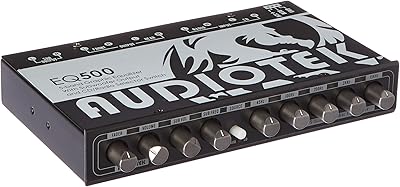
Audiotek At-eq500 5-Band Graphic Equalizer
84%
88%
Audio Performance
91%
Ease of Use
89%
Bass Control
60%
Build Quality
87%
Sound Clarity
More
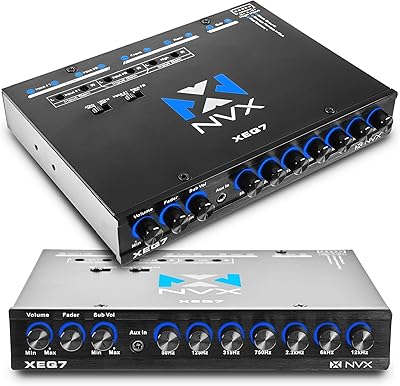
NVX XEQ7 7-Band Graphic Equalizer
86%
87%
Sound Performance
92%
Ease of Installation
90%
Bass Control
83%
Build Quality
88%
Connectivity Options
More
Rockville REQ20 Dual 10-Band Graphic Equalizer
70%
83%
Value for Money
58%
Build Quality
62%
Signal Clarity
87%
Ease of Setup
66%
Slider Feel & Precision
More
Gravity GR-EQ9 7-Band Graphic Equalizer
82%
89%
Sound Quality
85%
Ease of Installation
90%
Bass Control
80%
Build Quality
82%
User Interface
More
Pyle PLE550BS 5-Band Bluetooth Car Equalizer
74%
88%
Value for Money
83%
Sound Quality Improvement
79%
Bluetooth Performance
86%
Subwoofer Integration
54%
Build Quality
More
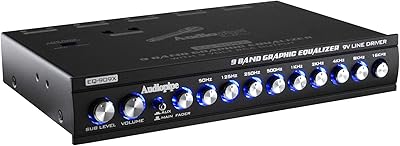
Audiopipe EQ-909X 9-Band Car Graphic Equalizer

80%
91%
Ease of Installation
88%
Signal Clarity
74%
Build Quality
93%
Value for Money
86%
Subwoofer Control
More
Rockville REQ42-B Dual 21-Band Graphic Equalizer
74%
91%
Value for Money
83%
Build Quality
88%
Ease of Installation
67%
Audio Performance
61%
Connectivity
More
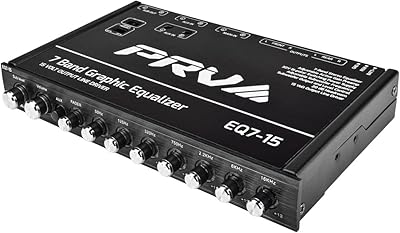
PRV AUDIO EQ7-15 7 Band Graphic Equalizer
83%
91%
Sound Performance
85%
Ease of Installation
80%
Build Quality
88%
Ease of Use
92%
Value for Money
More
Blaupunkt CEBP871 7-Band Car Audio Graphic Equalizer
86%
89%
Sound Quality
91%
Ease of Installation
85%
Customization Options
87%
Input Versatility
82%
Build Quality
More

FAQ

Yes, the unit includes Bluetooth 5.0 input, so pairing a phone, tablet, or laptop is straightforward. Once paired, audio streams from your device through the EQ and out to your speakers or amplifier. Just keep in mind that Bluetooth adds a small processing delay, which is rarely noticeable for music playback but worth knowing if you are syncing to video.

It does have a built-in preamp function, and the output amplitude is adjustable after DSP processing, which is handy if you are feeding a power amplifier directly. That said, it is a prosumer-level unit rather than a dedicated audiophile preamp, so if your HiFi setup is particularly demanding on noise floor or signal accuracy, you may want to compare it against a standalone preamp before committing.

The microphone picks up sound from the room around the unit and feeds that signal to the 31-band spectrum display. This means you can have the visualizer running during a party or event without plugging in any audio source at all. It is a fun feature for ambient use, though it is not designed for recording or voice input.

The unit accepts multiple input types, but like most equalizers in this category, it is designed to process one active input source at a time rather than mix them simultaneously. You would switch between inputs depending on which source you want to use at any given moment.

Yes, if your receiver has RCA preamp outputs, you can run them into this unit, adjust the EQ, and send the processed signal back out to the receiver or directly to powered speakers. The 3.5mm auxiliary option also broadens compatibility with devices that lack full RCA outputs.

There are 15 bands per channel, which is a solid number for home audio and DJ use — enough to address most room acoustic problems and tonal preferences. True studio mastering work typically uses more precise parametric EQ tools, but for shaping a home listening room or a DJ monitor setup, 15 bands gives you plenty to work with.

The CR2 battery most likely powers a wireless remote control, though the listing does not spell this out explicitly. It is worth checking the included documentation when the unit arrives to confirm what the remote controls and whether the battery is pre-installed or packaged separately.

The brightness control can be adjusted, and based on how similar units work, turning brightness all the way down should effectively disable the visual display. The speed and color settings suggest the display is designed to be customizable rather than fixed, so dimming it to off or near-off is a reasonable expectation.

The TNZ SGE6 is designed for home and semi-pro setups and runs on standard mains power, so it is not built for in-car installation. If you need an equalizer for a car audio system, you would want a 12-volt compatible unit designed for that environment.

Decibelvibe launched this unit in March 2025 and has accumulated a small number of early reviews, all positive at the time of writing. That early signal is encouraging, but with any newer brand, it is smart to factor in that long-term durability and customer support track records take time to establish. Checking back for updated reviews after six to twelve months of wider use would give a much clearer picture.