



Overview

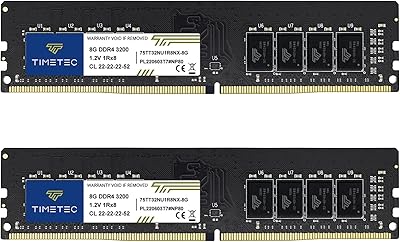
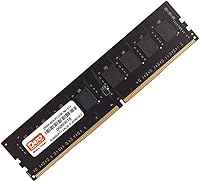
The DATO 8GB DDR4 3200MHz Desktop RAM is a straightforward, no-frills memory upgrade from DATOTEK, a brand that has been quietly building a presence in the budget memory space. DDR4 remains the dominant standard for a huge swath of desktop platforms — from mid-range Intel builds to older AMD rigs — so there is still plenty of reason to shop in this tier. At 8GB, this DDR4 module hits a practical capacity for everyday computing and light multitasking. If you are chasing benchmark scores on a high-end rig, look elsewhere. This is built for budget upgraders, plain and simple, and also comes in 16GB and 32GB kit configurations for those who want room to scale.

Features & Benefits

Running at 3200MHz, this DDR4 module covers a broad compatibility range — it will drop down to 2133MHz on older boards without any fuss, which is genuinely useful if you are upgrading a machine that predates 3200MHz support. The CL22 latency deserves an honest mention: it sits on the looser end compared to premium kits running CL16 or CL18, but for everyday productivity tasks the real-world gap is minimal. Operating at 1.2 volts, it runs efficiently through long work sessions. The standard 288-pin UDIMM format drops into virtually any compatible desktop slot without BIOS gymnastics. There is no heatsink, which is perfectly fine at stock speeds — this module simply does not run hot enough to need one. The 3-year warranty is a reassuring backstop given the unfamiliar brand name.

Best For

This desktop RAM upgrade makes the most sense for anyone upgrading from 4GB, where the jump in usable memory is immediately noticeable in day-to-day use. Office workers and students who live in browsers, spreadsheets, and document editors will not miss tighter latency figures. It is also a sensible pick for reviving an older DDR4-compatible machine that feels sluggish — adding capacity often does more good than swapping other components. What it is not built for: overclocking enthusiasts, gamers who obsess over memory timings, or anyone expecting XMP profiles and RGB. No heatsink, no flashy design. If simplicity and cost efficiency are your priorities, this DDR4 module checks the right boxes. Just confirm your board supports DDR4 and cross-reference the manufacturer QVL before purchasing.

User Feedback

With around 170 ratings and a 4.5-star average, this DATO memory stick has earned solid marks for a budget module from a relatively unknown manufacturer. The most consistent praise centers on installation — buyers report the stick is recognized by the motherboard immediately, with no manual BIOS adjustments needed in most cases. Long-term stability also comes up often, with few accounts of crashes or unexpected system behavior under normal workloads. That said, 170 reviews is a moderate sample, so the overall picture deserves tempered confidence. A small number of users flagged mixed kit issues when pairing this with modules from other brands, which is a standard DDR4 caution rather than a flaw unique to this stick. For its price tier, the feedback is notably consistent.

Pros

  • Installs without fuss — most motherboards recognize this DDR4 module immediately with no BIOS changes needed.
  • Backward compatible down to 2133MHz, making it usable across a wide range of older Intel and AMD desktops.
  • Runs at a conservative 1.2V, keeping power draw low during long work sessions.
  • Standard 288-pin UDIMM form factor fits virtually every DDR4 desktop slot on the market.
  • The 3-year limited warranty adds meaningful peace of mind for a lesser-known brand.
  • Available in single and dual-channel kit configurations, so you can scale capacity as your needs grow.
  • Earns a 4.5-star average across 170 ratings — consistently strong for a budget-tier module.
  • No heatsink keeps the physical profile low and avoids clearance conflicts with large CPU coolers.
  • Long-term stability reports are encouraging, with very few accounts of crashes or system errors under normal use.

Cons

  • CL22 latency is on the looser side — buyers who care about memory responsiveness will find better-tuned options elsewhere.
  • DATO is a relatively unknown brand with limited community track record compared to established names like Crucial or Kingston.
  • No XMP profile means manual overclocking is off the table for users who want to push beyond rated speeds.
  • The 170-review sample size is moderate, so long-term reliability data is still thinner than for more established modules.
  • Mixing this stick with existing RAM from a different brand or spec can cause instability — a real constraint for partial upgrades.
  • No heatsink could be a concern in poorly ventilated cases where ambient temperatures run consistently high.
  • Single-rank 8GB may feel limiting sooner than expected if workloads grow heavier over the next year or two.
  • No official support documentation or compatibility database beyond a vague offer to contact the seller directly.

Ratings

The scores below are generated by AI after analyzing verified global buyer reviews for the DATO 8GB DDR4 3200MHz Desktop RAM, with spam, bot activity, and incentivized feedback actively filtered out before any scoring took place. Each category reflects recurring patterns drawn from real-world user experiences across a range of desktop setups and use cases. Both what this DDR4 module does well and where it falls short are represented transparently.

Value for Money
88%
For the price tier this module occupies, buyers consistently report feeling like they got more than they bargained for. Upgrading from 4GB to 8GB on a tight budget delivers a noticeable improvement in day-to-day responsiveness — fewer slowdowns when juggling browser tabs, documents, and background apps — and this stick delivers that result without drama.
The value calculation gets murkier when CL16 kits from established brands occasionally land within a few dollars of this price point. Some buyers who later discovered those alternatives felt the CL22 trade-off was not something they fully weighed beforehand, making the value proposition slightly less clear-cut at the margins.
Installation Ease
92%
Across the bulk of reported installs, this DATO memory stick is recognized by the motherboard on the very first boot, with no manual BIOS configuration needed for basic operation. Home users with little technical background describe the experience as genuinely plug-and-play — slot it in, power on, and the system comes up without any additional steps.
A subset of users found they needed to manually set the memory frequency to 3200MHz in the BIOS, since no XMP profile exists to automate that step. It is a mild inconvenience rather than a real obstacle, but buyers unfamiliar with BIOS navigation may find it a more stressful task than they anticipated.
Compatibility Range
84%
The ability to negotiate down to 2133MHz makes this DDR4 module usable across a wide swath of older Intel and AMD desktop platforms that top out below 3200MHz. Buyers refreshing machines from 2016 through 2019 routinely report clean compatibility, extending the practical appeal of this stick well beyond newer-build scenarios.
A handful of users ran into instability when pairing this module with an existing stick from a different brand — a common DDR4 hazard rather than a flaw unique to this product. Buyers who skipped checking their motherboard's Qualified Vendor List beforehand were more likely to encounter these edge-case conflicts.
Long-term Stability
86%
Stability over weeks and months of sustained use is where this desktop RAM upgrade earns some of its most consistent praise. The majority of buyers who reviewed after extended periods reported zero blue screens, no errors flagged on memory diagnostics, and no unexplained reboots — a reassuring signal for a module from a brand many had never heard of.
Confidence in long-term stability is modestly tempered by the review volume — 170 ratings provides a useful directional signal, but it is not comparable to the depth of data behind more established brands. Specific board-and-RAM pairings that happen to conflict are harder to surface and predict with a sample this size.
Latency Performance
58%
42%
For general-purpose workloads — browsing, office suites, media playback, and casual multitasking — CL22 does not create any perceptible lag. Users operating in these scenarios tend not to notice any slowness attributable to memory response times, keeping this module perfectly functional for its intended everyday audience.
For latency-sensitive tasks like competitive gaming, real-time audio processing, or memory-bound simulations, CL22 is a tangible disadvantage against CL16 or CL18 alternatives. Enthusiast users who ran comparative benchmarks noted measurable gaps in memory-bound workloads and a few openly expressed regret at not spending slightly more upfront for tighter timings.
Memory Speed
74%
26%
At 3200MHz, this DDR4 module sits at the practical ceiling of what many mainstream DDR4 platforms officially support, which means budget builds get access to a reasonable top-end frequency. For most day-to-day desktop workloads, this bandwidth ceiling is rarely the limiting factor in system performance.
Without an XMP profile, reaching the rated 3200MHz requires a manual BIOS adjustment that some users either overlook or feel uncertain about making. On boards that default conservatively, this module can silently run at 2133MHz from day one — significantly below its rated speed — until the user actively investigates and corrects it.
Power Efficiency
83%
Operating at 1.2V puts this stick in line with standard DDR4 low-voltage specifications, and users running systems through long work-from-home or office sessions report no heat-related complaints under sustained loads. The kind of reliability that goes completely unnoticed is precisely what good power efficiency looks like in practice.
There is very little to criticize here under normal conditions, but in continuously running systems housed in very warm or poorly ventilated enclosures, the absence of any thermal solution — passive or active — could become a marginal concern over years of uninterrupted operation. This applies to a small minority of setups rather than the typical use case.
Brand Reliability
67%
33%
DATO may not carry the recognition of Crucial or Kingston, but the user feedback so far reflects a product that consistently performs as advertised. Buyers who took a calculated risk on an unfamiliar name largely came away satisfied, and the 4.5-star average lends real-world credibility that the brand name alone cannot supply.
The absence of brand history creates a genuine hesitation that user reviews alone cannot fully overcome. Limited public documentation, sparse community discussion, and a lack of third-party stress-test coverage make it harder to feel fully confident before purchasing — particularly for buyers putting this into a machine they rely on heavily every day.
Warranty Coverage
79%
21%
A 3-year limited warranty from a lesser-known manufacturer is a meaningful commitment and compares favorably against some competitors in the same price bracket. It signals that DATOTEK is willing to stand behind the product for a reasonable window, reducing some of the inherent risk of buying from a brand without a long public track record.
The warranty claims process is not well documented in any publicly accessible way — there is no self-service portal, no clear return merchandise authorization process, and support appears to run primarily through direct seller messaging. Buyers accustomed to the structured warranty experiences offered by larger brands may find this process noticeably less polished.
Kit Scalability
81%
19%
The availability of matched 16GB and 32GB dual-channel kit options within the same product family gives buyers a clear and logical upgrade path without needing to switch brands mid-build. Several buyers explicitly planned their purchase around starting with the single 8GB stick and adding a matching module later as their budget allowed.
Buying a single stick now with the intent to add another later from a separate purchase reintroduces the same mixed-kit timing risks present with any unmatched DDR4 pairing. Purchasing the dual-channel kit from the outset is always the safer and more predictable approach, even if the larger upfront cost is not always practical.
Thermal Management
77%
23%
At stock 1.2V and 3200MHz, this desktop RAM upgrade runs cool enough that the absence of a heatsink is a non-issue for the vast majority of users. Buyers in standard mid-tower cases with basic airflow report that the bare module stays cool to the touch even after extended sessions of continuous use.
Users in compact or thermally compromised builds — small form-factor cases or systems where RAM slots sit directly beside a warm GPU — occasionally noted that bare modules in those conditions run warmer than they would prefer. It is a niche concern, but worth considering for anyone planning an install in a cramped or heat-retaining chassis.
Build Quality
73%
27%
Physical construction is consistent and functional — no reported cases of damaged connectors, warped PCBs, or defective contact pins on arrival across the reviewed units. Early failure rates among buyers appear to be low, and the ICs show no unusual behavior under standard operating conditions according to the available user data.
The bare PCB presentation with no heatsink shroud or visual styling is purely utilitarian, and buyers used to reinforced slots or premium memory aesthetics will find this stick unremarkable in hand. It does not indicate a structural weakness, but the overall feel communicates entry-level rather than durability-first manufacturing philosophy.
Documentation & Support
53%
47%
For the straightforward installs that represent the majority of use cases, most buyers never need to consult documentation at all. The product listing does mention a direct seller contact option for compatibility queries, and a portion of buyers who used it before purchasing reported getting useful, timely responses to their specific board questions.
Beyond the basic spec sheet and a brief note about avoiding mixed kits, there is very little in the way of setup guidance, troubleshooting steps, or accessible support resources. Buyers who encountered edge cases — unusual post-install behavior or failed diagnostic results — found support options noticeably thinner compared to what larger memory brands typically provide.

Suitable for:

The DATO 8GB DDR4 3200MHz Desktop RAM is a practical pick for anyone whose desktop is limping along on 4GB and needs a straightforward capacity boost without a complicated upgrade process. Students running a browser with a dozen tabs open alongside a word processor, office workers juggling spreadsheets and email, and home users doing light photo editing or casual streaming will all feel a noticeable improvement from this DDR4 module. It is also a solid choice for anyone refreshing an older Intel or AMD desktop that still runs DDR4 — the broad backward compatibility means it will clock down gracefully on boards that top out below 3200MHz. Budget-conscious builders who need to fill a second memory slot without spending heavily will find it fits that role cleanly. If your priority is stable everyday performance at a sensible price, this desktop RAM upgrade delivers exactly what it promises.

Not suitable for:

The DATO 8GB DDR4 3200MHz Desktop RAM is not the right tool for anyone building or upgrading a performance-focused gaming or workstation rig. The CL22 latency — which measures how quickly the module responds to data requests — is noticeably looser than the CL16 or CL18 kits that enthusiasts typically target, and in latency-sensitive workloads like competitive gaming or video rendering, that gap can matter. There is no XMP profile support for easy overclocking, and with no heatsink, this DDR4 module is not designed to run beyond its rated specs. Buyers who already have a different brand or spec of RAM installed should also think twice — mixing kits with different timings or voltages is a known source of instability, and DATO themselves advise against it. If you need RGB aesthetics, brand prestige, or the flexibility to push memory speeds beyond the factory spec, this desktop RAM upgrade will leave you wanting more.

Specifications

  • Brand: Manufactured by DATOTEK and sold under the DATO brand, a value-oriented memory label.
  • Model Number: The official model designation for this module is DT8GB4DU32.
  • Capacity: This module provides 8GB of DDR4 SDRAM memory in a single stick.
  • Memory Type: Uses DDR4 SDRAM technology, the current standard for most mid-range and legacy desktop platforms.
  • Speed: Rated to operate at 3200MHz, corresponding to the PC4-25600 bandwidth standard.
  • CAS Latency: Ships with a CAS latency of CL22, reflecting a balance between cost and acceptable response timing for general workloads.
  • Voltage: Operates at 1.2V, meeting the standard low-voltage specification for DDR4 desktop memory.
  • Form Factor: Built on a 288-pin UDIMM (Unbuffered DIMM) form factor, the universal standard for consumer desktop motherboards.
  • ECC Support: This module is Non-ECC, meaning it does not include error-correcting code functionality — standard for consumer desktops.
  • Heatsink: No heatsink is included; the module relies on passive airflow for cooling at its rated stock speeds.
  • Compatibility: Designed exclusively for desktop systems; it is not compatible with laptops or small-form-factor SO-DIMM slots.
  • Backward Speeds: Automatically negotiates backward-compatible speeds at 3000MHz, 2933MHz, 2666MHz, 2400MHz, and 2133MHz on older boards.
  • Configurations: Available as a single 8GB stick, a 16GB dual-channel kit (2x8GB), or a 32GB dual-channel kit (2x16GB).
  • Dimensions: Physical dimensions measure 5.24 x 1.18 x 0.04 inches, consistent with the standard DIMM form factor.
  • Weight: The module weighs 0.529 ounces, typical for a bare DDR4 stick without a heatsink.
  • Warranty: Backed by a 3-year limited warranty provided directly by DATOTEK.

Related Reviews
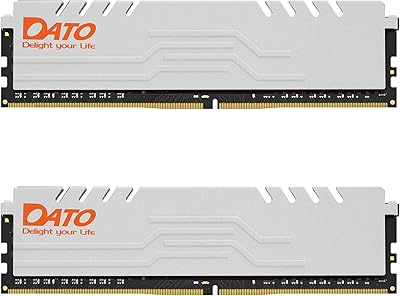
KingSpec 32GB DDR4 3200MHz Desktop RAM
80%
91%
Value for Money
93%
Installation Ease
84%
Compatibility
87%
Stability & Reliability
78%
Performance at Rated Speed
More
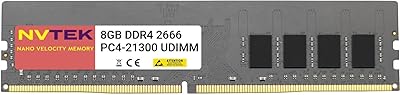
DATO DDR4 Extreme 16GB Desktop RAM Kit
80%
91%
Value for Money
93%
Installation Ease
78%
Performance at Rated Speed
74%
Thermal Management
81%
Build Quality
More
Samsung 8GB DDR4 3200MHz SO-DIMM Laptop RAM
83%
86%
Performance
79%
Compatibility
91%
Value for Money
93%
Installation Ease
89%
Reliability
More
NVTEK 8GB DDR4 2666MHz Desktop RAM
71%
83%
Value for Money
78%
Compatibility
88%
Ease of Installation
71%
Reliability & Stability
74%
Performance at Rated Speed
More
Transcend JM3200HLB-8G 8GB DDR4 Desktop RAM
74%
91%
Value for Money
88%
Compatibility
86%
Installation Ease
74%
Memory Speed
61%
Latency Performance
More
Crucial 16GB DDR4 3200MHz Desktop RAM
78%
93%
Ease of Installation
88%
Compatibility Range
79%
Real-World Performance
91%
Long-Term Reliability
74%
Value for Money
More
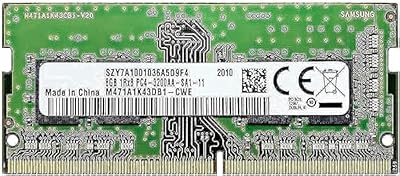
KingBank DDR4 8GB 3200MHz Desktop RAM
75%
88%
Value for Money
84%
Installation Ease
83%
XMP Performance
73%
Compatibility
57%
Brand Reliability
More
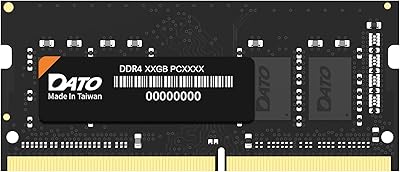
Timetec Pinnacle 8GB DDR4 3200MHz Laptop RAM
83%
93%
Value for Money
78%
Compatibility
91%
Ease of Installation
86%
Performance Gain
88%
Build & Reliability
More
KLEVV DDR4 8GB 3200MHz SODIMM Laptop RAM
87%
88%
Performance
90%
Compatibility
94%
Ease of Installation
92%
Value for Money
85%
Stability during Regular Use
More
Timetec 16GB KIT DDR4 3200MHz Desktop RAM
81%
88%
Value for Money
93%
Installation Ease
82%
Compatibility
86%
Stability & Reliability
62%
Latency Performance
More

FAQ

It might, but proceed carefully. Mixing RAM from different brands, speeds, or timings is a known cause of boot failures and system instability. DATO themselves advise against mixing kits. If you already have a stick installed, the safest approach is to either replace it entirely or buy a matched 2x kit from the start rather than pairing mismatched modules.

In most cases, no. This DDR4 module does not carry an XMP profile, so it will not auto-configure to 3200MHz through XMP like some enthusiast kits do. Your motherboard may default to a lower speed like 2133MHz or 2400MHz on first boot. To reach 3200MHz, you may need to manually set the memory speed in your BIOS — it is a straightforward one-time change on most boards.

For casual or older titles, 8GB can still get you by, but many modern games now recommend 16GB as a baseline. If gaming performance is a priority, you would be better served by going straight to the 16GB dual-channel kit. Single-channel 8GB also leaves performance on the table compared to a dual-channel setup, particularly in CPU-bound scenarios.

No. This is a 288-pin UDIMM module built specifically for desktop systems. Laptops use a smaller 260-pin SO-DIMM format, which is physically and electrically incompatible. Make sure you are shopping for SO-DIMM DDR4 if your target machine is a notebook.

CAS latency (CL) is essentially a measure of how quickly the memory responds to a data request — lower numbers mean faster response. CL22 is on the higher end for DDR4 at 3200MHz; tighter kits run CL16 or CL18. In practical terms for browsing, office work, or casual use, you will not notice the difference. If you are doing latency-sensitive work like competitive gaming or audio production, a lower-latency kit may be worth the extra spend.

That depends on your current setup and goals. The single 8GB stick is fine for a simple capacity upgrade on a tight budget. The 16GB dual-channel kit (2x8GB) is a smarter buy for most users since running two matched sticks in dual-channel mode improves bandwidth noticeably. The 32GB kit makes sense if you do heavy multitasking, video editing, or virtual machines. Check how many DIMM slots your motherboard has before deciding.

DATO (DATOTEK) is not a household name like Crucial or Kingston, but the available user data is encouraging — over 170 ratings at a 4.5-star average is a decent signal for a budget-tier brand. The 3-year warranty also suggests the manufacturer stands behind the product. That said, with a smaller track record, it is reasonable to approach with measured expectations rather than blind confidence.

It depends on your board. Most modern motherboards will recognize the stick and boot at a safe default speed, such as 2133MHz, without any manual input. To run at the rated 3200MHz, you will likely need to enter the BIOS and set the frequency manually. Always cross-reference your motherboard's Qualified Vendor List (QVL) to confirm supported memory speeds and modules before installing.

Not under normal conditions. DDR4 running at stock speeds and stock voltage generates relatively little heat, and most desktop cases with reasonable airflow handle bare modules without any issues. A heatsink matters most when memory is overclocked or running in a hot, poorly ventilated enclosure. At 1.2V and 3200MHz rated speeds, this DDR4 module is well within safe operating temperatures for the vast majority of home and office setups.

You would need to contact DATOTEK directly to initiate a warranty claim under their 3-year limited warranty. Before reaching out, document the issue — note any error codes, blue screen messages, or diagnostic test results, as these will help speed up the process. Keep your purchase receipt as proof of purchase, since most warranty claims require it.