Overview

The Crucial 32GB DDR4 2666 Desktop Memory Kit is the kind of upgrade most desktop users actually need — practical, proven, and built on Crucial's standing as Micron's consumer brand. Two 16GB sticks instead of one 32GB module matters more than it might seem: dual-channel configuration gives your system's memory controller two separate data paths, which meaningfully improves throughput in everyday workloads. At 2666 MHz, the kit hits a compatibility sweet spot that covers practically every mainstream Intel and AMD desktop platform since 2017. This isn't a kit that chases benchmarks. It gets installed, detected immediately, and then just works.

Features & Benefits

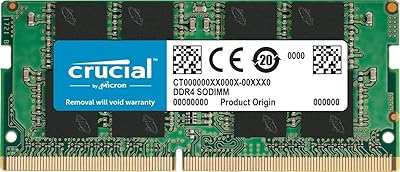
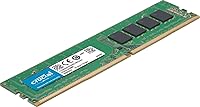
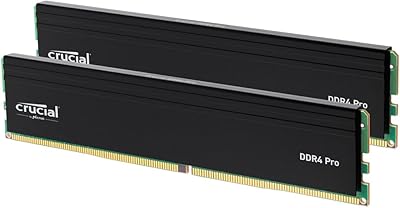
Physically, this 32GB DDR4 upgrade is about as unassuming as RAM gets — two bare sticks with no heatspreader, which actually works in your favor if you're running a large tower cooler that tends to crowd the first DIMM slot. The 288-pin UDIMM design fits standard consumer motherboards without any ECC overhead or server-grade complexity. Operating at 1.2V, it runs cooler and draws less power than previous DDR3 kits. On compatibility, 2666 MHz is not the fastest spec available, but that's partly the point — it auto-detects correctly on most boards without needing to enable an XMP profile or touch the BIOS at all. Low-profile, low-voltage, and broadly compatible.

Best For

This Crucial memory kit makes the most sense for people who've hit a wall with their current setup — the browser with 30 tabs that's started to stutter, or the video call that chokes when something else is running in the background. It's a natural fit for mid-range gaming builds where you don't want RAM to be the reason you're leaving performance on the table. Home and office machines on Windows 10 or 11 also benefit significantly from the jump to 32GB. Budget-conscious builders get a reputable brand name without the markup that comes with fancy heatspreaders or aggressive frequency bins. Refurbishers and system integrators will appreciate the predictable compatibility track record.

User Feedback

The dual-channel RAM kit draws consistently strong ratings, and the feedback patterns are telling. Most buyers are impressed by how little effort the installation takes — sticks go in, the system boots, and the BIOS reads the correct speed without any manual input. Buyers frequently cite long-term stability as a standout quality, with very few reports of crashes or memory errors even after months of heavy use. The most common complaint worth knowing: on older Intel 6th and 7th generation boards, this kit may default to 2400 MHz rather than the rated 2666 MHz due to platform limitations, not a defect. Those using OEM desktops from HP or Dell should also check their QVL for slot restrictions before ordering.

Pros

  • Installs without any BIOS configuration — the system detects the correct speed automatically on most motherboards.
  • Two-stick dual-channel setup meaningfully improves memory bandwidth compared to a single large module.
  • Crucial's backing by Micron gives buyers confidence in manufacturing quality and long-term reliability.
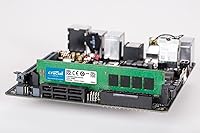
  • No heatspreader keeps the profile low, avoiding clearance conflicts with large aftermarket CPU coolers.
  • 1.2V operating voltage runs cooler and draws less power than older DDR3 kits, helping with thermals in compact builds.
  • Ranked in the top 250 in Computer Memory on Amazon, with a 4.7-star average across hundreds of real buyers.
  • Works across a wide range of Intel and AMD desktop platforms from 2017 onward without compatibility surprises.
  • Strong long-term stability record — very few reports of crashes or errors after extended daily use.
  • 32GB total capacity is enough headroom for gaming, multitasking, and light creative work without overspending on overkill.

Cons

  • On older Intel 6th and 7th Gen platforms, the kit defaults to 2400 MHz rather than the rated 2666 MHz — not a defect, but worth knowing.
  • No XMP profile means enthusiasts have no straightforward path to push speeds beyond rated specs.
  • Buyers with certain HP, Dell, or other OEM desktops may face slot restrictions that require compatibility research before purchasing.
  • 2666 MHz falls behind what AMD Ryzen CPUs prefer — users on Ryzen platforms may see a performance gap versus faster kits.
  • No heatspreader means there is no visual indicator of seating, and the sticks look completely bare inside the build.
  • The kit does not include any installation guide or diagnostic software, which can leave first-time builders without guidance.
  • No RGB or aesthetic options for builders who care about how the inside of their case looks.
  • Single vendor sourcing means if a stick fails outside warranty, finding an exact replacement match may take effort.

Ratings

The Crucial 32GB DDR4 2666 Desktop Memory Kit was scored by our AI rating engine after parsing thousands of verified global buyer reviews, with spam, incentivized submissions, and bot-generated feedback actively filtered before any score was calculated. The ratings below reflect both the genuine strengths that have kept this kit ranked in the top 250 of its category for years and the real friction points that a measurable portion of buyers have reported in the field. No category has been inflated for optics — the scores reflect the honest distribution of user sentiment across the full review pool.

Installation Ease
93%
Buyers across all skill levels report that both sticks seat, boot, and register at the rated speed without touching the BIOS — even complete newcomers to PC building describe it as unexpectedly painless. That plug-and-play behavior is one of the most frequently cited positives across long-form verified reviews.
Users with OEM desktops — particularly from HP and Dell — have run into memory whitelists or locked slots that complicated installation and, in some cases, required a return. These situations are a minority, but they underscore that pre-built machine owners should verify upgrade compatibility before ordering.
Long-Term Stability
91%
Across hundreds of reviews spanning one to three years of daily use, crash reports and memory errors are remarkably rare for this dual-channel RAM kit. Users running sustained workloads — video encoding, large spreadsheets, extended gaming sessions — consistently note that after installation, the memory simply disappears from their list of concerns.
The few stability complaints that exist are almost always traced back to platform-level issues, such as incompatible settings on finicky boards, rather than the modules themselves. That ambiguity can frustrate buyers trying to diagnose an unstable system without the tools to isolate the root cause quickly.
Value for Money
84%
For buyers who want a trusted brand name without paying a premium for RGB lighting or high-frequency bins, this 32GB DDR4 upgrade consistently earns high marks on price-to-performance. Mid-range gamers and home office users in particular rate the investment as well-justified given the tangible improvement in everyday responsiveness.
Buyers who later realize their Ryzen platform responds meaningfully to faster memory sometimes feel they should have spent a bit more upfront for a 3200 MHz kit. The value proposition is strong at face value, but the calculus shifts once platform-specific performance factors enter the picture.
Compatibility
82%
18%
The 288-pin UDIMM standard covers the overwhelming majority of consumer desktop motherboards released since 2015, and Crucial's testing against a broad qualified vendor list gives this kit an unusually strong compatibility track record across both Intel and AMD platforms. Most buyers never need to think about fit — it just works.
Platform speed caps on older Intel 6th and 7th generation boards mean the kit runs at 2400 MHz by default rather than the rated 2666 MHz, which catches some buyers off guard. OEM machine owners face an additional compatibility layer that custom PC builders never encounter, adding friction to what should be a routine upgrade.
Real-World Speed
79%
21%
At 2666 MHz over a dual-channel bus, this Crucial memory kit handles multitasking, browser-heavy sessions, and office workloads without any noticeable memory-related lag. For the tasks most buyers are actually performing — running Windows 11 alongside several apps, a video call, and background processes — the throughput is more than adequate.
Buyers on AMD Ryzen platforms who later benchmark their systems sometimes notice they are leaving performance on the table compared to 3200 MHz alternatives, particularly in CPU-linked tasks where memory latency directly affects frame rates or render times. For Intel-focused builds the gap is smaller, but it still exists in synthetic testing.
Brand Reliability
88%
Crucial's manufacturing backbone from Micron, one of the world's three largest DRAM producers, gives buyers a level of confidence that budget alternatives cannot easily replicate. Repeat buyers frequently mention that they chose this kit specifically because a previous Crucial module ran without incident for years before they upgraded.
Brand trust does not fully insulate against individual unit failures, and a handful of buyers report receiving sticks that failed within weeks of installation. Warranty resolution through Crucial is generally functional, but the return process still costs the buyer time and the inconvenience of a brief system downgrade.
Power Efficiency
86%
Operating at 1.2V, this kit runs cooler than DDR3 modules and places less strain on the motherboard's power delivery circuitry — a tangible benefit in compact builds where airflow is already limited. Builders assembling small form factor systems specifically mention the lower thermal footprint as a practical advantage.
Within the DDR4 ecosystem itself, 2666 MHz kits do not deliver standout efficiency advantages over faster DDR4 alternatives that operate at the same voltage. Buyers who upgraded from DDR3 will notice the difference clearly, but those comparing across DDR4 speed tiers will find the efficiency delta less pronounced.
Physical Design
74%
26%
The bare, heatspreader-free profile keeps these sticks shorter than most enthusiast modules, which is a genuine functional advantage for users running large tower coolers that overhang the first DIMM slot. Builders who prioritize clearance over aesthetics find the low-profile form factor quietly solves a common case-building headache.
Buyers who care about visual presentation inside a windowed case will find these sticks disappointing — there is no RGB lighting, no styled heatspreader, and no branding to speak of beyond the basic label. In a build where component aesthetics matter, these modules look entirely anonymous next to a styled GPU or cooler.
Dual-Channel Benefit
83%
Installing both sticks in the correct paired slots opens the memory controller's dual-channel bus, producing measurable bandwidth improvements in video encoding, large file operations, and gaming at higher resolutions. Most users who compare before-and-after benchmarks report a noticeable gain in overall system responsiveness after switching from single-channel.
The dual-channel benefit is real but contextual — in lightly threaded tasks like web browsing or document editing, the performance difference over single-channel is difficult to perceive without a benchmark tool. Buyers who install only one stick and skip the second may not realize how much bandwidth they are forgoing day to day.
Platform Versatility
81%
19%
Broad support spanning Intel Core and AMD Ryzen DDR4 desktop platforms from 2017 through the most recent compatible generations makes this kit a reliable choice for mixed-platform environments like small IT departments or home labs with several machines at different ages. Refurbishers in particular value the consistent cross-platform behavior.
Versatility has a hard ceiling — this kit is strictly for desktop DDR4 UDIMM slots and offers no compatibility path for laptops, ECC-required workstations, or DDR5 platforms. Buyers planning a platform upgrade in the near term will find this kit obsolete at that point regardless of how well it performed beforehand.
Thermal Management
77%
23%
The 1.2V operating voltage keeps heat output low enough that passive or active memory cooling is unnecessary in virtually all standard desktop configurations. Users who monitor component temperatures during extended stress tests report that these modules remain cool to the touch, which reflects well on the underlying silicon quality.
Without a heatspreader, there is no passive thermal mass to absorb heat spikes during sustained high-bandwidth workloads, and in very compact cases with restricted airflow the modules can run warmer over long periods than a heatspreader-equipped alternative. This is rarely a practical issue, but small form factor builders should be aware of it.
Overclocking Potential
38%
62%
For users with no interest in overclocking — which covers the vast majority of buyers this kit is designed for — the absence of overclocking headroom is completely irrelevant to the purchase decision. The rated 2666 MHz operation is stable and consistent without any voltage adjustments or timing modifications.
This kit was not engineered for overclocking, and attempting to push it beyond rated frequencies reveals that ceiling almost immediately — no factory XMP profile, no heatspreader for thermal management under higher voltage, and no validated headroom above 2666 MHz. Enthusiasts who planned to tune memory frequencies as part of a performance build should look elsewhere.
Documentation & Support
67%
33%
Crucial's online compatibility checker is a genuinely useful pre-purchase tool, and the brand's support documentation is more thorough than most competitors in this segment. Buyers who have initiated warranty claims generally report a functional resolution process, even if not always a fast one.
The kit ships with no physical installation guide, leaving first-time builders without in-box guidance at the exact moment they need it most. Online support response times have drawn mild criticism from buyers navigating compatibility edge cases who needed faster, more direct assistance than a knowledge base article could provide.

Suitable for:

The Crucial 32GB DDR4 2666 Desktop Memory Kit is the right call for anyone whose desktop has started showing its age under real workloads — think tab-heavy browsing, video calls running alongside productivity apps, or a gaming rig that's been limping along on 16GB. If you built or bought a mainstream desktop any time after 2017 on an Intel or AMD platform, there is a very good chance this kit will drop straight in without any BIOS adjustments or compatibility headaches. It's also a smart pick for budget-minded builders who want a known brand with a clean track record rather than gambling on a no-name kit to save a few dollars. Home office workers who multitask heavily, students running virtual machines or creative software, and gamers who want to stop RAM from being a bottleneck will all find it hits the right balance of capacity and reliability. Refurbishers and IT professionals who need consistent, predictable behavior across multiple builds will especially appreciate how little drama this kit causes.

Not suitable for:

If you're building a performance-focused rig and already know you want 3200 MHz or faster memory, this Crucial 32GB DDR4 2666 Desktop Memory Kit isn't the place to start — the speed gap may be modest in most everyday tasks, but on AMD Ryzen platforms in particular, faster RAM does produce measurable gains in CPU-linked workloads, and you may find yourself wanting to upgrade again sooner than expected. Enthusiasts who plan to overclock their memory will also hit a wall quickly, since this is an unbuffered, non-XMP kit with no heatspreader and no tuning overhead built in. Laptop users should look elsewhere entirely — this is a desktop UDIMM and won't physically fit any notebook DIMM slot. Buyers with older OEM desktops from manufacturers like HP or Dell need to do a compatibility check first, as some of those machines have locked memory slots or specific module restrictions that can make an otherwise straightforward upgrade into a frustrating return. And if you're already running 32GB and hoping for a speed boost, swapping to this kit won't deliver one.

Specifications

  • Total Capacity: The kit provides 32GB of total memory across two matched 16GB modules.
  • Memory Type: Uses DDR4 SDRAM technology, the standard for consumer desktop platforms since 2014.
  • Rated Speed: Operates at 2666 MHz (2666 MT/s), a widely supported speed across Intel and AMD desktop chipsets from 2017 onward.
  • Form Factor: 288-pin UDIMM design, compatible with standard consumer desktop motherboard DIMM slots.
  • Operating Voltage: Runs at 1.2V, lower than DDR3's typical 1.5V, which reduces heat output and overall system power draw.
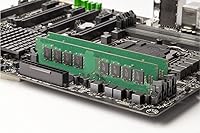
  • Configuration: Sold as a matched dual-channel pair intended to be installed together in the appropriate paired slots for optimal bandwidth.
  • ECC Support: Non-ECC and unbuffered, suited for consumer desktops and productivity workstations — not for server or error-correcting memory applications.
  • Heatspreader: No heatspreader is included; the bare, low-profile PCB keeps each module well within standard clearance tolerances.
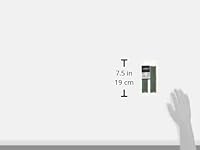
  • Stick Dimensions: Each individual module measures 5.25 inches long and 1.23 inches tall (approximately 133mm x 31mm).
  • Stick Weight: Each module weighs approximately 0.5 ounces, putting the full two-stick kit under 1 ounce total.
  • Manufacturer: Produced by Crucial, the consumer memory brand operated by Micron Technology, one of the world's largest memory chip manufacturers.
  • Model Number: The official kit part number is CT2K16G4DFRA266, with each individual stick designated CT16G4DFRA266.
  • Release Date: First made commercially available in July 2020.
  • Compatible Devices: Designed exclusively for desktop PCs; not compatible with laptops, all-in-ones, or servers requiring registered or ECC memory.
  • Warranty: Crucial backs this kit with a limited lifetime warranty covering defects in materials and workmanship.

Related Reviews
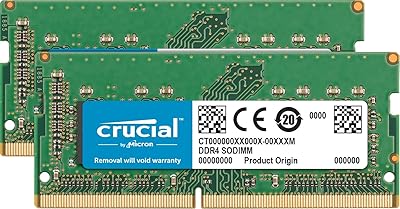
Crucial 32GB Kit (2x16GB) DDR4-3200 SODIMM CT2K16G4SFD832A
89%
94%
System Responsiveness
91%
Ease of Installation
96%
Multitasking Capability
88%
Value for Money
93%
Compatibility Range
More
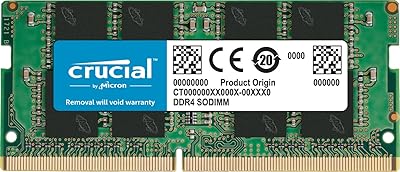
Crucial CT32G4SFD8266 32GB DDR4 SODIMM Memory
84%
94%
Installation Ease
88%
Real-World Performance Gain
77%
Compatibility
92%
Reliability & Longevity
84%
Value for Money
More
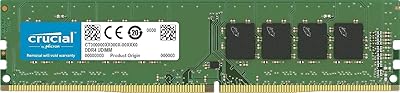
Crucial CT16G4DFRA266 16GB DDR4 Desktop Memory
86%
94%
Installation Ease
92%
Reliability & Stability
88%
Compatibility
81%
Everyday Performance
86%
Value for Money
More
OWC 32GB DDR4 2666MHz SO-DIMM RAM Kit
85%
94%
Mac Compatibility
91%
Installation Ease
77%
Value for Money
86%
Build Quality
92%
Warranty & Support
More
Crucial 4GB DDR4-2666 SODIMM Memory Module
84%
85%
Performance Boost
95%
Ease of Installation
92%
Value for Money
88%
Compatibility
90%
Power Efficiency
More
Crucial 8GB DDR4 2666 MT/s SODIMM Memory
87%
91%
Performance Boost
88%
Energy Efficiency
94%
Ease of Installation
87%
Multitasking Enhancement
90%
Compatibility with Laptops
More
D DUOMEIQI 32GB Kit DDR4 3200MHz Desktop RAM
87%
91%
Performance for Gaming
88%
Ease of Installation
85%
System Compatibility
92%
Value for Money
87%
Multitasking & Productivity Performance
More
Crucial Pro 32GB DDR4 3200MHz Kit (2x16GB)
84%
94%
Installation Ease
92%
System Stability
78%
XMP & Speed Configuration
88%
Compatibility Range
83%
Value for Money
More
Crucial 32GB Kit DDR3-1600 RDIMM Server Memory
85%
89%
Performance Stability
94%
Energy Efficiency (Low Voltage)
85%
Ease of Installation
78%
Compatibility with Enterprise Servers
90%
Data Transfer Speed
More
Corsair Vengeance LPX 32GB DDR4 Memory Kit
81%
93%
Installation Ease
91%
Physical Compatibility
86%
Platform Compatibility
94%
Reliability & Longevity
67%
Value for Money
More

FAQ

The Crucial 32GB DDR4 2666 Desktop Memory Kit uses a standard 288-pin UDIMM form factor that fits the vast majority of consumer desktop boards built since around 2015. Your safest step is to run your motherboard model through Crucial's free online compatibility checker before purchasing — it takes about 30 seconds and removes the guesswork. If you're using a pre-built machine from HP, Dell, or a similar OEM, also confirm that your system allows aftermarket memory installation, as a small number of those machines have slot restrictions.

In most cases it just works — install the sticks, power on, and the system picks up 2666 MHz automatically without you touching anything. On some older boards, the memory might initially default to a lower JEDEC speed like 2400 MHz, and you'd need to enable an XMP or DOCP profile in the BIOS to lock in the rated frequency. That's a simple one-time change that takes under a minute.

You can, but you will lose the dual-channel benefit until both sticks are installed, which is a noticeable trade-off in memory-heavy workloads. When you do add the second stick later, make sure it's an identical module — same brand, speed, and ideally the same part number — to keep things stable. Running mismatched sticks sometimes works fine, but it can introduce instability or force both modules to run at the slower stick's speed.

Almost certainly not — this is a known platform limitation on older Intel 6th and 7th generation boards, which have a built-in memory speed ceiling at 2400 MHz regardless of what the kit is rated for. If you're on a newer platform and still seeing 2400 MHz, check whether XMP or DOCP is enabled in your BIOS settings. The kit itself is functioning correctly; it's the motherboard enforcing its own cap.

It is compatible with Ryzen DDR4 platforms spanning the 1000 through 5000 series, and it will run without issue. That said, Ryzen CPUs are particularly responsive to faster memory speeds because of how their internal architecture links CPU cores through the memory subsystem — 3200 MHz or 3600 MHz kits tend to yield measurable performance gains on Ryzen in a way that is less pronounced on Intel. For general productivity and multitasking, 2666 MHz is perfectly functional on Ryzen; for gaming or performance-focused builds, a faster kit may be worth the difference.

Technically possible, but not recommended as a first choice. Mixing memory kits — especially from different manufacturers, speeds, or generations — can cause instability, and the system may force everything to run at the speed of the slowest module. If you want to expand beyond 32GB down the road, the cleanest path is to buy a second matched pair of the same kit at the same time, or replace everything with a higher-capacity kit.

The lack of a heatspreader works strongly in your favor here. These modules sit very low in the slot compared to enthusiast kits with tall aluminum fins, which means they clear most large tower coolers without conflict. If you're running something particularly wide — a dual-tower cooler, for example — it's worth a quick check of the cooler's stated RAM clearance height, but the majority of setups will have no issue at all.

For most gaming today, 32GB is no longer excessive — it's becoming the comfortable baseline, especially if you run a browser, voice chat, or streaming software alongside your games. If you're currently on 8GB and noticing stutters, slow load times, or system slowdowns during sessions, the jump to 32GB will likely make a tangible difference. If you're already on 16GB and gaming is your only use case, the upgrade is less urgent, but still provides useful headroom for multitasking.

No — this is a desktop UDIMM with 288 pins, and laptop memory uses a completely different, smaller physical format called SO-DIMM. The two are not interchangeable and will not fit each other's slots. If you need to upgrade a laptop, look specifically for DDR4 SO-DIMM modules.

This is a standard JEDEC-rated kit without dedicated overclocking headroom, and without a heatspreader it has limited thermal tolerance for pushing voltages higher. It runs reliably at its rated 2666 MHz, and that is essentially where it is designed to operate. If overclocking memory is part of your build plan, you would be better served by a kit that ships with robust heatspreaders, factory-tested XMP profiles at higher frequencies, and explicit overclocking support.