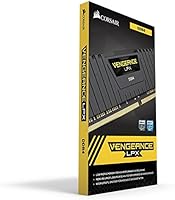
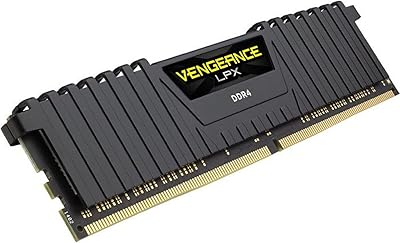
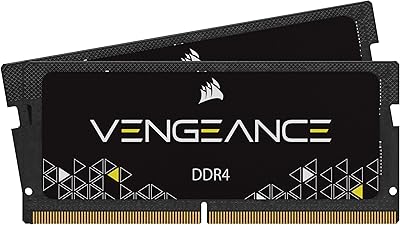
Overview

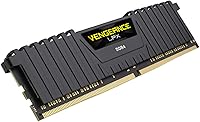
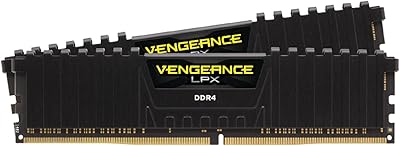
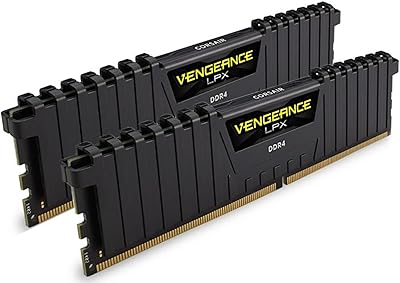
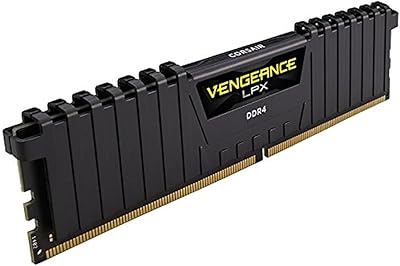
The Corsair Vengeance LPX 16GB DDR4 4000MHz RAM is a specialist memory kit built specifically for enthusiast builders who want to push AMD platforms to their frequency limits. This isn't a kit you pick up for a budget office rig — it targets a deliberate audience. The hand-sorted chip selection process means each module is individually vetted for stability headroom, which matters when you're running at the edge of what DDR4 can do. At just 34mm tall, the low-profile design is a genuine advantage in cramped cases or builds with large tower coolers. That said, you're paying a premium for performance, and you should go in knowing exactly what this kit was built for.
Features & Benefits

Running at 4000MHz with CL18 timings means there's a genuine trade-off to understand: the higher frequency improves raw throughput, but the looser latency compared to slower, tighter kits means gains depend heavily on what you're doing. For Ryzen processors, bandwidth typically matters more than raw latency, so 4000MHz tends to pay off in the right workloads. The kit carries XMP 2.0 profiles, which is technically an Intel standard — on AMD boards, this same profile shows up under a different name in BIOS, and most modern X570 motherboards handle it cleanly. The aluminum heatspreader does real thermal work under sustained loads, and running at just 1.35V keeps heat production relatively modest for such a high-frequency kit.

Best For

This high-speed memory kit makes the most sense for AMD Ryzen builders on X570 boards who are deliberately targeting the top end of DDR4 performance. It's also a strong pick for small-form-factor builds — the 34mm height clears even the bulkiest air coolers without issue, which is something a lot of RGB-heavy alternatives simply can't claim. If you're a content creator or gamer on a Ryzen platform, tighter coupling between memory frequency and the CPU's internal fabric can yield real frame-rate and render improvements. Overclockers will appreciate the headroom beyond the rated profile. It's less compelling if you're building a multi-purpose system on a budget or using an Intel platform where similar performance options are more widely available.

User Feedback

Buyers have rated the Vengeance LPX 4000MHz kit very well, and the satisfaction largely comes down to it delivering what it promises on compatible hardware. The XMP setup process on X570 boards gets frequent praise — most users report a clean first boot after enabling the profile in BIOS. On the critical side, compatibility at 4000MHz is genuinely dependent on your specific board and CPU silicon; some users needed a BIOS update or manual tuning before hitting the rated speed. The low-profile fit in tight cases is a recurring positive. A minority of buyers ran into POST issues on older or budget boards, which is worth factoring in before purchasing if your motherboard is not on the higher end.

Pros

  • Rated at 4000MHz, this high-speed memory kit delivers top-tier DDR4 bandwidth specifically tuned for Ryzen platforms.
  • The 34mm low-profile height fits in tight builds where most high-speed kits physically cannot.
  • Hand-sorted chips provide genuine overclocking headroom well beyond the rated XMP specification.
  • Dual-channel 2x8GB layout maximizes memory bandwidth on AMD Ryzen processors.
  • Operating at just 1.35V, the Vengeance LPX 4000MHz kit runs cooler than many competing high-frequency alternatives.
  • Solid aluminum heatspreader handles sustained thermal loads without contributing to instability.
  • XMP 2.0 profile enables quick and straightforward setup on most modern X570 motherboards.
  • Backed by a limited lifetime warranty, offering solid long-term peace of mind.
  • Consistently high buyer ratings reflect strong real-world satisfaction across a demanding audience.
  • Clean, understated black aesthetic suits both windowed and closed-panel builds equally well.

Cons

  • Not all AMD boards POST reliably at 4000MHz — some require BIOS updates or careful manual tuning.
  • At 16GB total, capacity may feel limiting for heavy video editing or large-dataset professional workloads.
  • CL18 latency is looser than what slower-frequency kits can achieve, which matters in latency-sensitive use cases.
  • XMP 2.0 is an Intel standard; AMD boards interpret it differently, which can cause first-boot confusion for new builders.
  • Priced at the enthusiast tier, it is difficult to justify for casual users or general-purpose budget builds.
  • Real-world gains over a well-optimized 3600MHz CL16 kit are measurable but modest in most non-specialist workloads.
  • Only two sticks leave no path for incremental memory expansion without replacing the entire kit.
  • Reaching the rated speed is not guaranteed — CPU silicon quality and board quality both play a role.
  • No RGB lighting will disappoint builders aiming for a visually coordinated windowed-case build.
  • Requires thorough motherboard compatibility research before purchasing to avoid stability headaches post-install.

Ratings

Our rating scores for the Corsair Vengeance LPX 16GB DDR4 4000MHz RAM are generated by an AI system trained to analyze verified global buyer reviews, actively filtering out incentivized submissions, duplicate accounts, and bot-driven feedback to surface the most reliable signal from real-world users. Each score reflects a synthesis of genuine purchase experiences weighted by recency and regional distribution across enthusiast and mainstream builder communities. Both the standout strengths and the legitimate pain points are represented transparently — nothing has been softened or inflated.
Performance
88%
On AMD Ryzen platforms, the step up to 4000MHz makes a tangible difference in bandwidth-sensitive workloads — gaming frame rates, video rendering, and simulation tasks all show measurable improvements over standard 3200MHz kits. Users running Ryzen 5000 series processors consistently reported smooth, high-throughput output once the XMP profile was correctly enabled.
The performance gains are most pronounced on Ryzen systems where memory frequency is tightly coupled to the CPU's internal fabric; on Intel platforms or in purely latency-sensitive applications, the advantage over slower, tighter-timed kits narrows considerably. A meaningful portion of users found that real-world differences versus 3600MHz alternatives were smaller than anticipated.
Compatibility
73%
27%
Most X570 and 400-series AMD motherboards handle this high-speed memory kit well once the DOCP or EOCP profile is enabled in BIOS. Builders pairing it with a Ryzen 5000 chip and a reputable X570 board from ASUS or MSI frequently reported clean first boots with no additional manual tuning required.
Compatibility at 4000MHz is genuinely board and CPU dependent — not every combination will POST reliably at the rated speed, and some users needed one or two BIOS updates before achieving stability. Budget-tier AMD boards in particular showed a noticeably higher rate of instability at this specific frequency.
Value for Money
76%
24%
For builders specifically targeting the AMD X570 platform ceiling, this DDR4 kit represents a focused investment — you are paying for validated high-frequency performance and hand-sorted chips rather than a generic speed bump. Users who needed 4000MHz specifically found the pricing reasonable relative to the alternatives with comparable validation.
General-purpose builders or those upgrading from standard 3200MHz kits may find the price premium difficult to justify, given that real-world gains in everyday tasks are modest. Several buyers noted that a well-tuned 3600MHz CL16 kit often delivers the majority of the performance at a noticeably lower cost.
Build Quality
91%
The solid aluminum heatspreader feels genuinely premium — it sits flush and firm on each module without any flex or rattle, and users noted that modules ran measurably cooler under extended stress tests than bare or plastic-covered alternatives. The PCB quality is consistent with what experienced builders expect from a flagship Corsair product.
There is little to fault in terms of physical construction, though a handful of users noted that the all-black minimalist look gives no visual cue of the kit's high-performance nature. The heatspreader cannot be safely removed for custom cooling without voiding the warranty.
Overclocking Headroom
87%
The hand-sorted chip selection pays off directly here — users who pushed beyond the rated XMP profile found stable headroom at 4133MHz and even 4266MHz on favorable silicon, which is uncommon in consumer DDR4 kits. Enthusiasts specifically praised this kit for providing a reliable and well-validated starting point for manual tuning.
Overclocking results are inherently variable and depend significantly on your CPU's memory controller quality alongside the board's power delivery. A portion of users hit the 4000MHz ceiling and could not push further, particularly on budget X570 boards that constrain sustained overclocking capability.
Thermal Management
84%
Running at 1.35V, this kit generates less heat than competing options that push 1.4V or higher to reach similar frequencies. The aluminum heatspreader handles heat dissipation effectively during sustained gaming sessions and multi-hour rendering workloads without contributing to instability.
In very cramped small-form-factor cases with poor airflow, module temperatures can climb faster than expected under prolonged full-load conditions. Users with near-passive cooling setups occasionally noted noticeable warmth to the touch after extended sessions, though no thermal-related failures appeared in buyer feedback.
Installation & Setup
79%
21%
For experienced PC builders on modern AMD boards, setup is clean and predictable — install the sticks, enter BIOS, enable DOCP or EOCP, save, and reboot. Most users on X570 boards running recent firmware reported a successful first boot at the rated speed with minimal effort.
Builders new to high-frequency memory or on older board revisions sometimes encountered a wall when the system refused to POST at 4000MHz immediately. Diagnosing whether the issue was a BIOS version, a timing profile, or a CPU memory controller lottery proved frustrating without prior enthusiast experience.
Low-Profile Design
94%
At 34mm tall, this DDR4 kit genuinely solves a physical problem that plagues high-frequency memory in compact builds — it clears large tower coolers like the Noctua NH-D15 where many competing kits simply cannot. SFF builders repeatedly cited the profile height as a primary deciding factor over alternatives.
The low-profile constraint leaves no room for RGB lighting or decorative shrouds, which will disappoint builders who want a visually coordinated windowed build. The understated appearance can also make individual module identification more difficult during troubleshooting inside a fully assembled system.
Stability & Reliability
82%
18%
Once the correct BIOS settings and memory profile are in place on a compatible board, the Vengeance LPX 4000MHz kit holds stable across demanding workloads — extended memtest passes, overnight stress tests, and long gaming sessions without errors or crashes were consistently reported by satisfied buyers.
The path to that stability is not always smooth on the first attempt, particularly on AMD platforms where 4000MHz sits near the effective frequency ceiling. Users occasionally encountered intermittent instability that required loosening secondary timings manually before achieving a fully reliable configuration.
Bandwidth & Throughput
89%
Measured bandwidth at 4000MHz in dual-channel mode delivers some of the highest DDR4 throughput numbers available on consumer platforms, which translates directly into tangible gains in Ryzen workloads where memory bandwidth is a real bottleneck. Content creators reported meaningful reductions in export and render times compared to 3200MHz configurations.
Maximum bandwidth is only fully realized when both sticks are installed in the correct dual-channel slots, and the kit offers no expansion path beyond 16GB without a full replacement. Users needing more capacity will need to step up to a different kit rather than supplementing existing modules.
Latency Profile
67%
33%
In absolute nanosecond terms, the CL18 latency at 4000MHz is not as punishing as the raw number suggests — it computes to roughly 9 nanoseconds, comparable to many tighter-timed kits at lower speeds. For bandwidth-dominated workloads, buyers found the latency trade-off largely invisible in practice.
Buyers coming from a 3600MHz CL16 kit specifically for latency-sensitive tasks like competitive gaming or real-time audio production may not notice the improvement they were expecting. The CL18 timings are a genuine limitation for those scenarios, and the gap to tighter alternatives at this frequency is difficult to close manually.
Platform Optimization
86%
This kit was built around AMD Ryzen compatibility from the ground up, and on X570 boards paired with Ryzen 5000 CPUs the memory-to-fabric coupling at 4000MHz is where the performance story fully comes together. AMD builders running memory-intensive workloads consistently felt a real difference compared to their previous slower configurations.
Outside of AMD X570 and a narrow range of Intel high-end desktop boards, the platform optimization advantage fades quickly. Builders on mainstream Intel Z490 or budget B-series boards are unlikely to extract the same level of system-level synergy that this kit was designed to deliver.
Warranty & Support
83%
Corsair's limited lifetime warranty provides genuine long-term reassurance for a premium-priced purchase — users reported relatively smooth warranty claim experiences when modules were verified as defective, with replacements processed without excessive friction through the brand's established support infrastructure.
The warranty covers manufacturing defects but does not extend to damage caused by overvolting during overclocking attempts or incompatible system configurations. A small number of users found that determining whether their issue qualified for warranty coverage required multiple rounds of back-and-forth with support before reaching a resolution.
Aesthetic Design
72%
28%
The clean matte black finish is versatile and understated, complementing nearly any build color scheme without clashing. Builders who prefer a minimalist look — particularly in all-black or dark-themed systems — appreciated that the kit looks deliberate rather than plain, with the aluminum heatspreader adding a sense of machined quality.
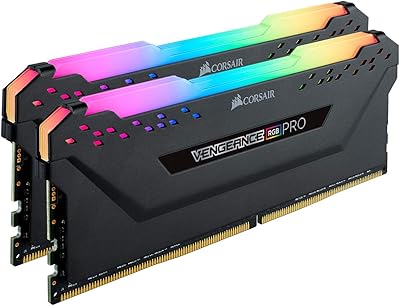
The complete absence of RGB lighting is a dealbreaker for a meaningful portion of enthusiast builders who want their memory to contribute to a windowed build's visual identity. Compared to Corsair's own Vengeance RGB Pro line or competing kits from rival brands, the visual appeal of this variant is noticeably limited.

Suitable for:

The Corsair Vengeance LPX 16GB DDR4 4000MHz RAM is purpose-built for AMD Ryzen enthusiasts on X570 and compatible motherboards who want to extract every bit of memory bandwidth their platform can handle. Ryzen processors are particularly sensitive to memory frequency because of how the CPU's internal interconnect scales with it, so hitting 4000MHz can translate into tangible real-world gains in gaming frame rates and content creation throughput. Builders working in compact or small-form-factor cases will find this kit uniquely practical — at just 34mm tall, it physically fits where many competing high-speed kits simply don't, without sacrificing performance. Overclockers who want validated silicon with genuine headroom beyond the rated XMP profile will appreciate the hand-sorted chip selection process. This is also a smart upgrade path for anyone currently running DDR4 at 2666MHz or 3200MHz who wants a meaningful, measurable step up in bandwidth-sensitive workloads.
Not suitable for:

If your build is centered on an Intel platform, the Corsair Vengeance LPX 16GB DDR4 4000MHz RAM loses much of its specific appeal — Intel systems at these speeds face stiffer competition from kits offering tighter timings at comparable prices. Budget-conscious builders should look elsewhere too; this is an enthusiast-tier kit priced accordingly, and the real-world performance delta over a well-tuned 3600MHz CL16 kit will be modest in most everyday computing tasks. It is also worth being direct: not every AMD board will POST reliably at 4000MHz out of the box, even with the XMP profile enabled, and some older or entry-level X570 boards may require manual BIOS tuning or a firmware update to reach the rated speed. Anyone unwilling to spend time troubleshooting memory settings should approach this kit with caution. Finally, those who need more than 16GB — video editors working with large raw files or professionals running memory-heavy virtual machines — will find the capacity limiting and should consider a higher-capacity kit instead.
Specifications

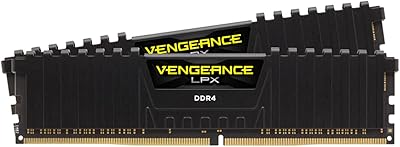
  • Capacity: This kit provides 16GB of total memory across two 8GB DDR4 DIMM modules, configured for dual-channel operation.
  • Memory Speed: Rated at 4000MHz (PC4-32000), placing it among the fastest DDR4 kits validated for consumer desktop platforms.
  • CAS Latency: Operates at CL18 primary timings, a standard trade-off for sustaining such a high clock frequency on DDR4.
  • Voltage: Each module runs at 1.35V, which is lower than several competing high-frequency DDR4 kits that require 1.4V or above.
  • Form Factor: Standard DIMM form factor, fitting full-size ATX, mATX, and mini-ITX motherboards equipped with DDR4 memory slots.
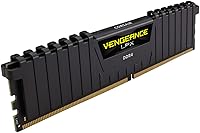
  • Profile Height: Each module stands just 34mm tall, qualifying as low-profile and designed to clear most large tower CPU coolers.
  • Heatspreader: A solid aluminum heatspreader covers each module to efficiently draw and dissipate heat during sustained or overclocked workloads.
  • PCB Design: Built on a high-performance multi-layer PCB engineered to maintain signal integrity at extreme DDR4 frequencies.
  • XMP Support: Carries an Intel XMP 2.0 profile, enabling single-setting speed activation in BIOS on compatible Intel and many AMD boards.
  • Compatibility: Validated for AMD X570, Intel 300 Series, Intel 400 Series, and Intel X299 platform motherboards.
  • Color: Finished in matte black with no RGB lighting on this specific variant.
  • Model Number: Official model identifier is CMK16GX4M2Z4000C18, useful for cross-referencing motherboard QVL compatibility lists.
  • Weight: The complete two-module kit weighs 3.53 oz total, which is negligible within the context of overall system assembly.
  • Dimensions: Each module measures 5.31″ in length, 1.32″ in height, and 0.28″ in width, consistent with the standard DIMM footprint.
  • Warranty: Covered by Corsair's limited lifetime warranty, protecting against manufacturing defects for the life of the product.

Related Reviews
Corsair Vengeance LPX 32GB DDR4 Desktop Memory
78%
83%
Performance at Rated Speed
91%
Installation & Setup
88%
Physical Compatibility
47%
AMD Platform Compatibility
72%
Value for Money
More
Corsair Vengeance LPX 16GB (2x8GB) DDR4 3200MHz
87%
98%
Air Cooler Clearance
94%
XMP/DOCP Stability
96%
Motherboard Compatibility
89%
Gaming Performance
87%
Multitasking & Audio Production
More
Corsair Vengeance LPX 16GB DDR4 Desktop RAM
81%
93%
Ease of Installation
88%
Compatibility
84%
Value for Money
67%
Memory Speed & Performance
89%
Build Quality
More
Corsair Vengeance RGB Pro 16GB DDR4 RAM
81%
88%
Memory Performance
71%
Compatibility
91%
RGB Lighting Quality
67%
iCUE Software Experience
93%
Installation Ease
More
Corsair Vengeance LPX 64GB DDR4 RAM Kit
82%
91%
Ease of Installation
78%
Compatibility
88%
Performance Consistency
93%
Physical Design & Clearance
84%
Thermal Management
More
Corsair Vengeance LPX 8GB DDR4 RAM
80%
93%
Installation Experience
91%
Long-Term Reliability
84%
Compatibility Range
88%
Value for Money
86%
Physical Build Quality
More
Corsair Vengeance LPX 8GB DDR4 RAM
80%
93%
AMD Ryzen Compatibility
91%
Installation Experience
89%
Low-Profile Clearance
88%
Long-Term Reliability
82%
Value for Money
More
Corsair Vengeance RGB RS 16GB DDR4 Desktop Memory
80%
83%
Value for Money
88%
RGB Lighting Quality
91%
Installation Ease
78%
Gaming Performance
92%
Stability & Reliability
More
Corsair Vengeance LPX 64GB DDR4-3200 (2x32GB)
87%
91%
Ease of Installation
88%
Compatibility
93%
Physical Fit & Form Factor
86%
Thermal Performance
89%
Performance at Rated Speed
More
Corsair Vengeance 16GB DDR4 2400MHz SODIMM Memory
82%
74%
Compatibility
93%
Installation Experience
88%
Performance Gain
86%
Value for Money
91%
Long-Term Stability
More

FAQ

It is specifically validated for X570 boards and that is a genuine selling point, not just marketing language. That said, reaching 4000MHz depends on your specific board's memory trace quality and sometimes on your CPU's individual memory controller capability. Always cross-check your motherboard's QVL before buying to avoid surprises.

You will need to enable the XMP profile manually in your BIOS — DDR4 always defaults to a lower speed (usually 2133MHz) until you tell it otherwise. On AMD boards, look for DOCP or EOCP in your memory settings rather than XMP; it is the same function under a different name. The process takes under a minute and is a one-time step.

It is a fair concern, but context matters here. At 4000MHz, CL18 translates to roughly 9 nanoseconds of absolute latency, which is actually competitive with many tighter-timed kits running at lower speeds. On Ryzen platforms specifically, memory bandwidth tends to have a bigger impact on real-world performance than raw latency, so the high frequency generally wins out in gaming and creative workloads.

It lists compatibility with Intel 300 and 400 Series and X299 boards, so it is not locked to AMD. However, this kit was clearly tuned with Ryzen in mind, and at 4000MHz you are operating at the edge of what many Intel consumer boards can handle. If you are on Intel, it is worth verifying your specific board supports this speed before committing.

Almost certainly not. At 34mm tall, this high-speed memory kit is shorter than the vast majority of standard DDR4 modules, and substantially shorter than any RGB-equipped kit. Even large tower coolers with wide heatsink fins that hang over the first DIMM slot should clear these sticks without issue.

Start by updating your motherboard BIOS to the latest version — manufacturers regularly push memory compatibility improvements through firmware updates, and this alone fixes the issue for many users. If that does not resolve it, try enabling the XMP profile and then manually relaxing one of the secondary timings, or test at 3800MHz which is often a more stable frequency on AMD platforms with very similar real-world performance.

Physically, yes, but you would be running in single-channel mode, which cuts available memory bandwidth roughly in half. On a Ryzen system that is a meaningful performance drop, not just a theoretical one. If budget is the concern, it is worth waiting until you can run both sticks together — that dual-channel configuration is a core part of what makes this kit worth its price.

No, the Vengeance LPX line is Corsair's non-RGB memory family. If you want lighting, the Vengeance RGB Pro series is the upgrade path within Corsair's lineup. The lack of RGB is not a compromise here — it is precisely what allows the module to stay at that low 34mm profile height, which is a real advantage in tight builds.

XMP 2.0 is Intel's memory overclocking profile format, and this kit is certified for it. AMD EXPO is AMD's own newer equivalent, introduced alongside Ryzen 7000 series and DDR5. This DDR4 kit predates EXPO and does not carry that certification, but modern AMD DDR4 motherboards can still load the XMP profile via DOCP or EOCP — you just see a different label in BIOS.

For most gaming scenarios and everyday productivity, 16GB remains workable, though some newer open-world titles are beginning to brush that ceiling. If your workload is gaming paired with light content work, you will be fine. If you regularly work with large video files, run multiple virtual machines, or do professional 3D rendering, moving to 32GB would be a smarter long-term investment.

Where to Buy