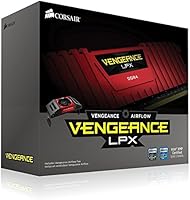
Overview

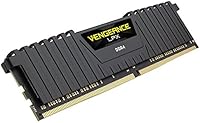
The Corsair Vengeance LPX 32GB DDR4 Desktop Memory sits in an interesting spot — fast enough to satisfy enthusiasts who want meaningful headroom over standard 3200MHz kits, but well short of the exotic territory where stability becomes a daily negotiation. At 4000MHz, you're pushing DDR4 toward its practical ceiling, and Corsair's hand-sorted chip selection is what makes that viable for everyday builders rather than just hardcore overclockers. The 34mm low-profile height is a genuine advantage — it means this kit fits cleanly under large tower coolers and inside compact SFF cases where taller sticks simply won't clear. XMP 2.0 support means reaching rated speeds requires exactly one BIOS toggle, nothing more.
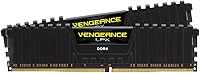
Features & Benefits

Running at 4000MHz with CL19 timings, this 32GB DDR4 memory kit trades some latency tightness for raw clock speed — a tradeoff worth understanding before you buy. CL19 at this frequency is not the sharpest timing profile available, but in bandwidth-heavy workloads like video encoding or large asset loading, the throughput gain tends to outweigh the looser latency. The solid aluminum heatspreader pulls heat away efficiently during sustained loads, and the multi-layer PCB helps maintain signal integrity where lesser boards start to wobble at edge-case frequencies. On Intel platforms with XMP 2.0 enabled, setup is genuinely one-step — no sub-timing adjustments, no voltage hunting. AMD users should verify their specific board and CPU memory controller tolerance at 4000MHz before committing.

Best For

This Vengeance LPX kit is the right call for a specific type of builder. If you're on an Intel platform and want to extract real bandwidth gains — whether for gaming, streaming, or creative workloads — without spending hours manually tuning BIOS sub-timings, this is a genuinely practical pick. The low-profile form factor also makes it one of the few 4000MHz options that works inside tight SFF enclosures without clearance headaches next to large coolers. It suits anyone stepping up from a standard 3200MHz kit who wants a noticeable upgrade without chasing exotic pricing. The lifetime warranty adds meaningful reassurance for a long-term build, not just a short-term spec bump.

User Feedback

With a 4.7 out of 5 rating across roughly 94 reviews, early buyers of this Corsair RAM kit are largely positive — but that sample size is small enough that it pays to read carefully. Praise clusters around easy XMP activation, consistent stability during extended sessions, and the clearance benefits of the low-profile design in builds where every millimeter counts. On the downside, a handful of AMD users have noted that hitting 4000MHz reliably isn't always guaranteed — some boards simply won't cooperate at that frequency without additional tuning, which is a known DDR4 ceiling challenge rather than a product flaw. A few buyers also flagged that competing kits with similar specs occasionally come in at a lower price, making a quick comparison worthwhile before purchasing.

Pros

  • Reaches 4000MHz with a single XMP 2.0 toggle — no BIOS sub-timing work required on compatible Intel boards.
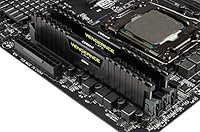
  • The 34mm low-profile design fits under virtually any tower cooler, even in tight small-form-factor cases.
  • Hand-sorted chips provide more consistent overclocking headroom compared to binned kits with looser selection tolerances.
  • Dual-channel 2x16GB configuration delivers real bandwidth gains for content creation and memory-hungry applications.
  • Solid aluminum heatspreader keeps module temperatures in check during sustained workloads, not just light desktop use.
  • Corsair's lifetime warranty is a meaningful long-term safety net, particularly for a component sitting inside a high-value build.
  • Early buyers report stable, reliable operation once XMP is enabled on a compatible platform.
  • The multi-layer PCB contributes to signal integrity at edge-case frequencies where cheaper boards often introduce instability.

Cons

  • CL19 timings at 4000MHz are on the loose end — latency-focused buyers will find tighter kits at lower frequencies more responsive.
  • AMD Ryzen compatibility at rated speed is genuinely unreliable and depends heavily on individual CPU silicon quality.
  • With only around 94 ratings at time of writing, the feedback pool is too small to draw firm long-term reliability conclusions.
  • Competing 32GB DDR4 kits at similar speeds occasionally undercut this Corsair RAM kit on price, making it worth comparing before committing.
  • The black colorway without RGB lighting may not suit builders whose cases are designed to show off illuminated components.
  • 4000MHz DDR4 is near the practical ceiling of the standard, leaving little headroom for further manual overclocking beyond rated specs.
  • Buyers on platforms that do not support XMP 2.0 natively will need to manually configure timings to reach rated speed.
  • At this frequency tier, BIOS updates on some motherboards are sometimes required for stable operation — an extra step casual builders may not anticipate.

Ratings

The scores below for the Corsair Vengeance LPX 32GB DDR4 Desktop Memory were generated by our AI system after analyzing verified buyer reviews sourced from multiple global markets, with spam, bot activity, and incentivized submissions actively filtered out before any scoring took place. Every category reflects both the real-world strengths that genuine buyers consistently praise and the specific pain points that surface across different build configurations and use cases. No scores have been softened — if a category underperforms for a meaningful portion of buyers, that is reflected directly in the number and the commentary.
Performance at Rated Speed
83%
On a compatible Intel platform with XMP 2.0 enabled, this Vengeance LPX kit delivers genuine throughput gains that show up in video encoding timelines, game asset streaming, and multi-threaded workloads. Builders stepping up from 3200MHz kits report a perceptible improvement in bandwidth-sensitive tasks, and the dual-channel configuration amplifies that effect further.
The CL19 timing at 4000MHz means raw latency is on the softer side — in benchmarks that prioritize response time over throughput, tighter-timed lower-frequency kits occasionally edge this one out. The performance ceiling is also platform-dependent, so the headline speed is not universally achievable across all systems.
Installation & Setup
91%
The XMP 2.0 profile makes reaching 4000MHz on a supported Intel board a genuine one-BIOS-step process — enable the profile, save, reboot, and the kit runs at full speed. Builders who specifically want to avoid manual overclocking gravitate toward kits like this, and feedback consistently confirms that the process works as advertised on compatible hardware.
On motherboards that require a BIOS update to properly support high-frequency XMP profiles, first-time builders may hit an unexpected extra step before the kit runs at its full rated speed. AMD users face a substantially different setup experience, as XMP on Ryzen platforms frequently requires manual sub-timing adjustments to achieve stable operation.
Physical Compatibility
88%
The 34mm module height is the feature SFF and HEDT builders mention most often in their feedback. When a large tower cooler overhangs the first DIMM slot — a common situation in both ITX and mid-tower ATX builds — this 32GB DDR4 memory kit clears without forcing a cooler swap or requiring any physical compromise to the build.
While the low-profile design resolves cooler clearance issues, it effectively eliminates any future visual customization since aftermarket heatspreader upgrades or RGB add-ons are not realistically compatible with this module height. Builders who later migrate to a windowed case may find the plain matte black aesthetic less compelling than they initially expected.
AMD Platform Compatibility
47%
53%
The kit is technically listed as compatible with AMD DDR4 motherboards, and some Ryzen users do report stable operation after carefully working through memory training settings in their BIOS. For those with a specific board and CPU combination that cooperates, the kit can run at a reduced but still functional frequency.
A recurring theme in AMD user feedback is that stable 4000MHz operation on Ryzen systems is highly unreliable — many boards and CPU memory controllers simply will not hold that frequency without extensive manual intervention or may refuse to post at all. Buyers on AMD platforms should realistically plan to run this kit below its rated speed or budget significant BIOS troubleshooting time.
Value for Money
72%
28%
For Intel enthusiasts who specifically need the combination of 4000MHz speed, low-profile clearance, and a lifetime warranty from a reputable brand, the pricing sits in a defensible range with few direct alternatives that check all three boxes simultaneously. Buyers building for the long term often view the warranty coverage as a meaningful part of the overall value equation.
Competing 32GB DDR4 kits at 3600MHz with tighter CL16 timings are frequently available for notably less, and in most real-world workloads they perform comparably or better on a latency basis. Early buyers note that the price premium over strong alternatives is difficult to justify unless 4000MHz at this specific profile is a firm requirement rather than a preference.
Thermal Management
79%
21%
The aluminum heatspreader keeps module temperatures in a manageable operating range during extended gaming sessions and sustained rendering workloads. Builders running memory-intensive applications for hours at a stretch report that the modules remain stable without requiring dedicated airflow directed specifically at the RAM slots.
Running at 1.35V to sustain 4000MHz, the modules do generate more heat than standard DDR4 kits operating at the JEDEC baseline of 1.2V, which matters in cases with constrained airflow. In fully enclosed SFF builds with minimal ventilation, a handful of users report slightly elevated sustained temperatures compared to lower-frequency alternatives.
Build Quality
86%
The modules feel solid and well-constructed out of the box — the heatspreader sits flush without any wobble, and the PCB shows no visible flex during installation even in tight DIMM slots. Corsair's manufacturing consistency across units is something builders specifically cite as a reason they return to the brand for memory components.
The utilitarian heatspreader design, while fully functional, lacks the refined fit-and-finish of higher-tier Corsair memory lines such as the Dominator Platinum. Some buyers note that the gold contact fingers create a minor visual contrast against the all-black aesthetic, which is a small but occasionally mentioned cosmetic inconsistency.
Overclocking Headroom
76%
24%
The hand-sorted chip selection process pays off for builders who want to push beyond the rated 4000MHz spec — some users on strong Intel platforms report achieving meaningfully tighter sub-timings or modest frequency gains with additional manual BIOS tuning. The high-performance multi-layer PCB contributes to this stability when operating near the margins.
At 4000MHz, this kit is already sitting near the practical ceiling of mainstream DDR4, leaving limited additional headroom for further frequency increases in most systems. Any gains beyond the rated speed depend heavily on individual CPU silicon quality and the memory trace routing quality of the specific motherboard being used.
Latency Profile
58%
42%
Within the 4000MHz frequency tier, CL19 is an expected and accepted tradeoff — the kit delivers the bandwidth-over-latency profile that benefits content creation pipelines directly. Users doing sustained video rendering or large file manipulation report that the throughput advantage compensates adequately for the looser timing in their specific workflows.
For workloads where memory latency directly matters — competitive gaming at very high frame rates, CPU physics simulations, or cache-sensitive compilation tasks — CL19 is a meaningful disadvantage compared to kits offering CL14 or CL16 at 3200–3600MHz. Buyers who investigate this tradeoff carefully sometimes conclude that raw frequency was not the right priority for their particular use case.
Long-term Stability
84%
Early buyers of this Corsair RAM kit generally report stable, consistent operation over months of continuous use, with no sudden frequency instability or memory errors appearing after the initial setup period. The combination of hand-sorted chips and a quality PCB appears to contribute meaningfully to reliable day-to-day behavior under sustained loads.
With a relatively modest review pool of around 94 ratings, long-term reliability data remains limited — firm multi-year conclusions are harder to draw compared to kits that have accumulated thousands of verified reviews. A small number of users have reported needing to initiate RMAs, though Corsair's warranty service process generally receives positive feedback when engaged.
Brand Reliability & Warranty
89%
Corsair's limited lifetime warranty on memory genuinely stands out against the 3-to-5-year coverage typical of many competing brands. Buyers regularly cite Corsair's established track record and responsive RMA process as a primary reason they chose this kit over similarly specced alternatives from less proven manufacturers.
The lifetime warranty covers manufacturing defects only and explicitly does not apply to damage resulting from overclocking beyond rated specifications or improper installation. Some international buyers have noted that warranty claims processed outside North America can involve longer turnaround times when routed through regional distribution partners.
Dual-Channel Efficiency
82%
18%
Running both sticks in the correct paired slots immediately delivers the full dual-channel bandwidth benefit, which is directly measurable in rendering, game asset loading, and compilation tasks where the CPU frequently stalls waiting on memory throughput. Most DDR4 motherboards clearly label the correct slot pairing, making this configuration straightforward even for first-time builders.
If one module fails and the system falls back to single-channel mode, the performance drop is substantial and immediately noticeable until a replacement arrives — there is no graceful intermediate state. Buyers who accidentally install only one stick and benchmark before adding the second sometimes report unexpectedly disappointing results that create initial confusion about kit performance.

Suitable for:

The Corsair Vengeance LPX 32GB DDR4 Desktop Memory is purpose-built for enthusiast desktop builders who want to push memory speeds well beyond standard 3200MHz without diving into the deep end of manual overclocking. It is especially well-matched for Intel platform builds — whether Z490, Z590, or Z690-era boards — where XMP 2.0 support means you get rated speeds with a single BIOS toggle and no further tinkering required. Content creators working with video timelines, large Photoshop files, or multi-track audio sessions will notice real throughput benefits from the dual-channel 4000MHz configuration, where memory bandwidth directly affects how quickly assets load and process. The 34mm low-profile height makes this kit a rare practical choice for small-form-factor builders who need high-frequency RAM that physically clears compact CPU coolers — a constraint that eliminates most taller kits outright. Anyone upgrading from a 3200MHz or 3600MHz kit on a compatible Intel board who wants a meaningful step up without chasing exotic hand-binned modules will find this a logical and well-supported landing spot.
Not suitable for:

Buyers on AMD Ryzen platforms should approach this 32GB DDR4 memory kit with real caution — AMD CPUs rely on the Infinity Fabric clock, which is tightly coupled to memory frequency, and achieving stable 4000MHz operation is highly dependent on the specific CPU's memory controller quality and the board's trace routing. Many AMD users will find that 4000MHz simply does not post stably, and they may end up running the kit at 3600MHz or lower anyway, negating the core reason to buy it. The Corsair Vengeance LPX 32GB DDR4 Desktop Memory also carries CL19 timings at its rated speed, which means this is not the right pick for buyers who prioritize tight latency over raw frequency — kits like 3600MHz CL16 or 3200MHz CL14 will often feel snappier in latency-sensitive workloads. Budget-focused builders who need reliable everyday RAM without overclocking ambitions are likely overpaying for headroom they will never use. And if your primary workload is casual web browsing, office applications, or light gaming at standard settings, the performance delta between this and a quality 3200MHz kit is essentially imperceptible in daily use.
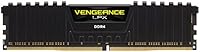
Specifications

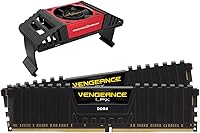
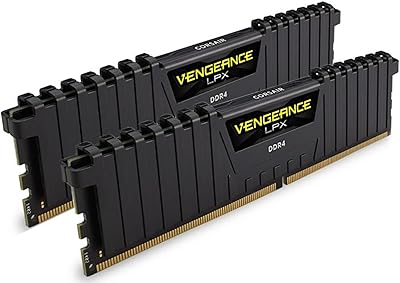
  • Kit Capacity: This kit ships as two 16GB modules for a combined 32GB of total system memory in a dual-channel configuration.
  • Memory Type: Both modules use DDR4 SDRAM, the standard desktop memory technology compatible with Intel and AMD DDR4 platforms.
  • Rated Speed: The kit is rated to operate at 4000MHz (PC4-32000) when XMP 2.0 is enabled in a supported BIOS.
  • CAS Latency: At rated speed, the primary CAS latency is CL19, which reflects the tradeoff between high frequency and timing tightness at this DDR4 ceiling.
  • Operating Voltage: The modules run at 1.35V, which is slightly elevated above the DDR4 JEDEC baseline of 1.2V to sustain stability at 4000MHz.
  • Heatspreader: Each module is fitted with a solid aluminum heatspreader that actively dissipates heat during sustained, bandwidth-intensive workloads.
  • Module Height: The low-profile design measures just 34mm in height, allowing clearance under most tower CPU coolers and inside compact SFF enclosures.
  • XMP Support: Intel XMP 2.0 is supported, enabling one-setting BIOS activation of the rated 4000MHz speed without manual sub-timing adjustments.
  • Form Factor: Both sticks are standard unbuffered DIMMs designed exclusively for desktop motherboards; they are not compatible with laptops or servers.
  • PCB Quality: The modules are built on a high-performance multi-layer PCB engineered to maintain signal integrity at the upper frequency range of DDR4.
  • Chip Selection: Memory chips are hand-sorted during production to ensure consistent overclocking headroom and reduce variance between individual modules.
  • Module Dimensions: Each stick measures approximately 133mm x 34mm x 7mm (L x H x W), keeping the physical footprint compact across the motherboard.
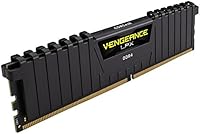
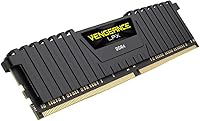
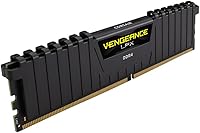
  • Color: The heatspreader finish is matte black with no RGB lighting, making it visually neutral across most build aesthetics.
  • Compatibility: The kit is designed for Intel and AMD DDR4 desktop motherboards, with most reliable rated-speed performance on Intel XMP 2.0 certified platforms.
  • Warranty: Corsair covers this kit with a limited lifetime warranty, which applies to manufacturing defects under normal operating conditions.

Related Reviews
Corsair Vengeance LPX 32GB DDR4 Memory Kit
81%
93%
Installation Ease
91%
Physical Compatibility
86%
Platform Compatibility
94%
Reliability & Longevity
67%
Value for Money
More
Corsair Vengeance LPX 64GB DDR4 Desktop Memory
81%
89%
Platform Compatibility
92%
XMP Setup Ease
88%
Workstation Performance
91%
Physical Design
83%
Quad-Channel Bandwidth
More
Corsair Vengeance 32GB DDR4 SO-DIMM Memory
82%
92%
Installation Ease
71%
Compatibility
84%
Performance Uplift
74%
Auto-Overclocking Reliability
91%
System Stability
More
Corsair Vengeance 32GB DDR4 SO-DIMM RAM
75%
71%
Compatibility Accuracy
89%
Installation Ease
86%
Multitasking Performance
78%
Value for Money
82%
Long-term Reliability
More
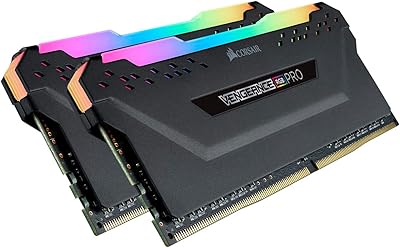
Corsair Vengeance LPX 16GB DDR4 Desktop RAM
81%
93%
Ease of Installation
88%
Compatibility
84%
Value for Money
67%
Memory Speed & Performance
89%
Build Quality
More
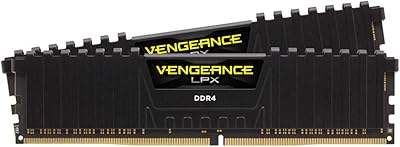
Corsair Vengeance RGB Pro 32GB (2x16GB) DDR4 3000 MHz Memory
87%
89%
Performance
94%
RGB Lighting Customization
88%
Ease of Installation
87%
Overclocking Potential
90%
Compatibility with Intel and AMD Systems
More
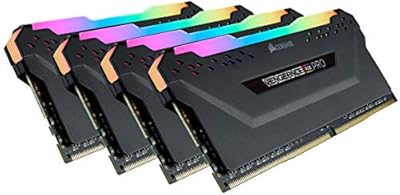
Corsair Vengeance LPX 64GB DDR4 Desktop RAM
82%
93%
Installation Experience
91%
Long-Term Stability
88%
Platform Compatibility
89%
Physical Fit & Clearance
67%
Raw Memory Speed
More
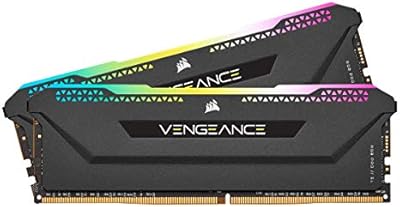
Corsair Vengeance LPX 16GB DDR4 4000MHz RAM
82%
88%
Performance
73%
Compatibility
76%
Value for Money
91%
Build Quality
87%
Overclocking Headroom
More
Corsair Vengeance RGB Pro 128GB DDR4 Memory
80%
88%
Memory Performance
91%
Stability & Reliability
93%
Build Quality
86%
RGB Lighting Quality
74%
iCUE Software Integration
More
Corsair Vengeance RGB PRO SL 64GB (2x32GB) DDR4 3200MHz C16 Desktop Memory
87%
91%
Performance
88%
Ease of Installation
93%
RGB Customization
86%
Value for Money
84%
Compatibility
More

FAQ

It depends heavily on your platform. On a recent Intel board with XMP 2.0 support, you simply enable XMP in the BIOS and the kit runs at 4000MHz without further configuration. On AMD Ryzen systems, reaching 4000MHz stably is much less predictable — it depends on your specific CPU's memory controller quality and your motherboard's trace layout, and many AMD users end up running the kit at 3600MHz or lower instead.

Boot into your BIOS and look for an XMP or DOCP setting, usually found under memory or overclocking options. Select the XMP 2.0 profile, save, and reboot. That single step activates all the rated timings and voltage automatically — no manual tweaking required on a compatible Intel board.

In most gaming scenarios, the difference between CL19 at 4000MHz and a tighter CL16 kit at 3600MHz is negligible in practice. Where CL19 matters more is in latency-sensitive benchmarks or specific competitive titles that are unusually memory-bound. For the vast majority of gamers, raw bandwidth at this frequency will either match or slightly edge out a tighter-timed lower-frequency kit.

The 34mm module height is specifically what sets this kit apart from standard-height RAM. Most full-size tower coolers clear around 40mm above the first DIMM slot, so this kit fits comfortably where taller sticks might not. If you are building in a very compact ITX case with an ultra-low-profile cooler, double-check your specific clearance, but for the majority of builds this low-profile design resolves the issue entirely.

For pure gaming on a budget, 16GB is still adequate in most titles. But if you also do any video editing, run virtual machines, stream while gaming, or keep dozens of browser tabs open alongside creative applications, 32GB provides real breathing room. The cost difference has narrowed considerably over time, making 32GB a practical choice for any build expected to last several years.

During manufacturing, memory chips come off the production line with natural variance in how well they perform at higher frequencies. Hand-sorting means Corsair selects chips that have demonstrated better stability and headroom at elevated speeds, rather than binning them randomly into high-frequency kits. In practice, this tends to mean more consistent performance across units and slightly better overclocking potential beyond the rated spec, though results still vary.

Technically yes, but running a single stick disables dual-channel mode, which meaningfully reduces memory bandwidth. You would effectively be using slower memory than the kit is rated for in real-world throughput terms. It is worth installing both sticks from the start to get the full performance benefit the kit is designed to deliver.

There is no RGB lighting on this kit — the heatspreader is a straightforward matte black aluminum finish. If your build relies on illuminated components for aesthetics, you would need to look at Corsair's Vengeance RGB Pro or similar alternatives. For builders who prefer a clean, understated look or are building inside a closed case, the plain finish is actually a practical advantage.

Corsair covers this 32GB DDR4 memory kit with a limited lifetime warranty against manufacturing defects, which is a meaningful long-term assurance for a core system component. If a module fails under normal use, you can contact Corsair support to initiate an RMA. Keep your purchase receipt as proof of purchase, since warranty claims typically require it.

On an Intel platform where XMP locks it in effortlessly, the answer is a qualified yes for bandwidth-sensitive workloads like video encoding, large file processing, or high-refresh gaming that stresses memory throughput. For pure everyday desktop use or casual gaming, the gap versus a well-tuned 3600MHz CL16 kit is small enough that the price premium may not translate to noticeable gains. It comes down to your specific workload and how much headroom you want in the build long-term.

Where to Buy