Overview

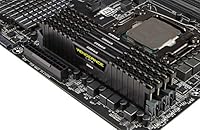
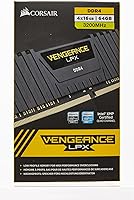
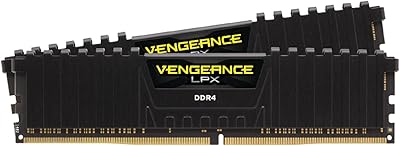
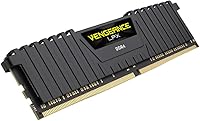
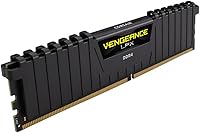
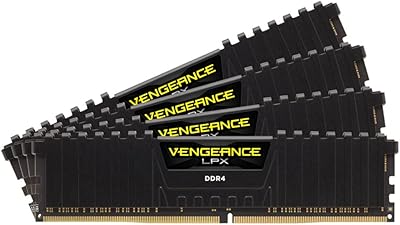
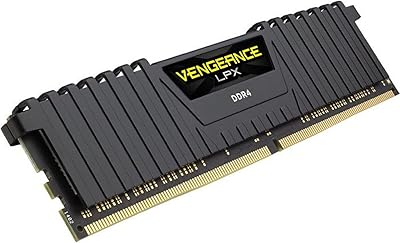
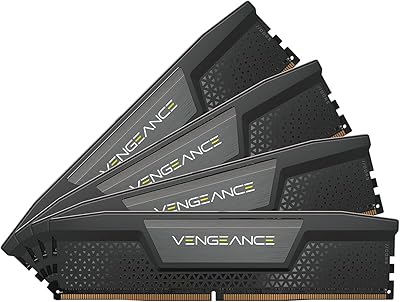
The Corsair Vengeance LPX 64GB DDR4 RAM Kit arrives as a four-stick, 4x16GB configuration running at 3200MHz — a setup built for users who genuinely push their machines hard. What immediately distinguishes it physically is the 34mm low-profile heatspreader, which keeps clearance requirements modest compared to taller kits. Corsair pairs a solid aluminum spreader with a high-performance PCB underneath, both pointing to build quality that prioritizes signal stability over visual flair. A limited lifetime warranty rounds out the package, offering real reassurance for a component you expect to outlast several GPU generations.

Features & Benefits

The most practical feature here is XMP 2.0 support, which lets you hit the rated 3200MHz speed with a single BIOS toggle rather than fiddling manually with timings. That alone saves builders significant frustration. Running at 1.35V rather than the standard 1.5V also means the modules tend to run slightly cooler under sustained load — useful in closed cases with limited airflow. The low-profile form factor earns its place too; a 34mm stick simply clears most large tower coolers without contact. Hand-sorted chips give the kit consistent overclocking headroom, though actual results still depend on your specific chip batch and motherboard.

Best For

This 64GB kit is not for everyone — and that honesty matters. If you work in video editing, 3D rendering, or run multiple heavy virtual machines simultaneously, 64GB stops feeling excessive very quickly. Large Premiere Pro or DaVinci Resolve timelines with high-resolution footage will genuinely use it. The low-profile design also makes this a strong pick for small-form-factor builds where standard-height DIMMs simply cannot fit under cooler overhangs. Pair it with a high-core-count Ryzen or Intel platform and the capacity pulls real weight. Casual users browsing and gaming, though, will find 32GB more than sufficient.

User Feedback

Buyers consistently praise how straightforward installation is on mainstream motherboards — enable XMP, reboot, done. The plug-and-play experience comes up repeatedly in positive reviews, particularly from Ryzen builders. That said, a smaller number of users report needing a BIOS update before the kit runs at rated speed, which is common with high-density quad-channel configurations rather than unique to this kit. A handful of DOA reports surface occasionally, though Corsair's warranty process handles those reasonably well according to buyers. Overall satisfaction runs high among those who actually need the capacity; most complaints are platform-specific rather than product flaws.

Pros

  • XMP 2.0 makes hitting 3200MHz as simple as enabling one BIOS setting — no manual timing adjustments needed.
  • The 34mm low-profile height clears virtually all large tower CPU coolers without physical conflict.
  • Running at 1.35V means slightly lower heat output compared to standard-voltage DDR4 under sustained load.
  • Hand-sorted chips provide more consistent behavior across all four sticks, which matters for stable quad-channel operation.
  • Broad Intel and AMD DDR4 motherboard compatibility reduces compatibility research before purchasing.
  • A lifetime warranty gives long-term confidence that most RAM kits at this tier do not match.
  • The solid aluminum heatspreader keeps thermals stable during extended high-frequency workloads.
  • Content creators and professionals running memory-hungry applications will feel the capacity difference immediately in workflow speed.
  • Four matched sticks from one kit avoids the instability risks that come with mixing modules from different batches.

Cons

  • Some motherboards require a BIOS update before the kit will post at its rated 3200MHz speed.
  • At CL16, the latency is functional but not class-leading for DDR4-3200 — tighter kits exist at this frequency.
  • 64GB is significant overkill for the vast majority of home and gaming PC builds, making it hard to justify for general use.
  • Occasional DOA reports appear in user feedback, and replacing a single stick from a matched quad-channel kit can be logistically frustrating.
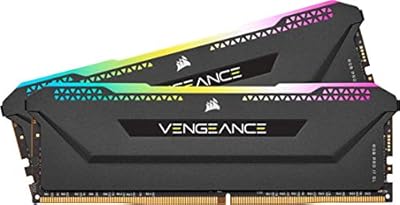
  • No RGB lighting option exists for this variant, which may disappoint builders who prioritize aesthetic cohesion in windowed cases.
  • The price premium over a 32GB kit is substantial, and the real-world performance delta for most users is essentially zero.
  • High-density quad-channel configurations can be finicky on some AMD 400-series boards even with a current BIOS.
  • The black colorway, while clean, limits styling flexibility for builders working with non-black or themed aesthetics.

Ratings

The scores below reflect AI-driven analysis of verified global user reviews for the Corsair Vengeance LPX 64GB DDR4 RAM Kit, with spam, bot-generated, and incentivized feedback actively filtered out before scoring. Each category captures the honest consensus — what real buyers praised after weeks or months of use, and where frustrations genuinely emerged. Nothing is smoothed over to look better than it is.

Ease of Installation
91%
The vast majority of buyers report that getting this kit running at rated speed is as close to effortless as desktop RAM gets. Enabling XMP 2.0 in BIOS is a one-toggle process, and users across both Intel and AMD platforms consistently describe the initial setup as straightforward and confidence-inspiring.
A meaningful minority of users — particularly on certain AMD 400-series boards — encountered a failure to post at XMP speeds until a BIOS update was applied first. For less experienced builders, troubleshooting that initial boot failure can be stressful and time-consuming.
Compatibility
78%
22%
Across a wide range of mainstream Intel and AMD DDR4 motherboards, the Vengeance LPX quad-channel set slots in and runs reliably. Builders using popular boards from ASUS, MSI, and Gigabyte in the mid-to-high tier report very few compatibility headaches after ensuring BIOS firmware is current.
High-density quad-channel configurations inherently push memory controllers harder than dual-stick setups, and this kit is no exception — some older or budget AMD boards struggle to maintain stability at 3200MHz even after BIOS updates. Compatibility research against the motherboard QVL list is genuinely necessary, not optional.
Performance Consistency
88%
Hand-sorted chips mean the four sticks behave predictably as a matched set, and users running sustained workloads — long Blender renders, extended VM sessions, overnight video exports — report stable operation without unexpected crashes or throttling. That consistency matters more than peak numbers in real professional use.
CL16 latency is not class-leading for DDR4-3200, and users who compare it directly against tighter-timed kits at the same frequency will notice slightly lower benchmark scores. For productivity tasks the gap is negligible, but enthusiasts who prioritize raw latency figures may feel underserved.
Physical Design & Clearance
93%
The 34mm low-profile form factor is genuinely one of this kit's most practical advantages, and buyers with large tower coolers — Noctua NH-D15, be quiet! Dark Rock Pro, Deepcool Assassin — consistently highlight that these sticks cleared overhangs that standard-height DIMMs could not. SFF builders echo the same relief.
The plain aluminum heatspreader, while functional, offers nothing for builders who care about aesthetics in windowed cases. There is no RGB option in this variant, and the flat black finish can look visually underwhelming next to more styled components in a showcase build.
Thermal Management
84%
Running at 1.35V rather than the higher end of DDR4 voltage tolerance means these modules stay noticeably cooler during extended high-frequency sessions. Users in warmer cases or compact enclosures with restricted airflow report that temperatures remain manageable without active cooling over the memory.
The aluminum heatspreader does its job adequately but is not exceptional — some competing kits at this tier use larger or more aggressive spreader designs. Users running aggressive manual overclocks beyond XMP report the spreader reaches warm-to-touch territory under sustained load.
Overclocking Headroom
72%
28%
Because the chips are hand-sorted before binning, there is a reasonable population of users who report successfully pushing beyond 3200MHz with manual BIOS tuning. On cooperative platforms with strong memory controllers — particularly Ryzen 5000 and Intel 12th Gen — some builders report stable operation at 3400MHz or beyond.
Actual overclocking results vary considerably depending on chip batch, motherboard memory trace quality, and CPU memory controller luck — and Corsair makes no guarantees beyond XMP. Buyers expecting consistent headroom above rated speeds will find the experience inconsistent and occasionally frustrating.
Value for Money
69%
31%
For content creators and professionals who genuinely saturate 32GB regularly, this 64GB kit represents a practical investment rather than an indulgence. The lifetime warranty adds long-term value that cheaper kits at similar capacities often cannot match, making the total cost of ownership more defensible.
For users who do not work in memory-intensive professional applications, the price premium over a quality 32GB kit is hard to justify given that the extra capacity will rarely be touched. Casual users and gamers consistently note in reviews that they feel they overbought in hindsight.
Build Quality
89%
The physical construction of each module feels solid — the aluminum heatspreader sits flush without flex, and the PCB shows no signs of cheap manufacturing shortcuts. Users who have handled multiple generations of Corsair memory describe the LPX line as consistently well-assembled with no visible quality regressions.
While the build quality is solid, the heatspreader attachment is adhesive-based rather than mechanically fastened, which some enthusiasts who remove spreaders for custom cooling note can be tricky to reapply cleanly. It is a minor detail but comes up occasionally in hardware community discussions.
Warranty & Support
82%
18%
A limited lifetime warranty on desktop RAM is a genuine differentiator, and buyers who have gone through Corsair's RMA process for DOA modules generally describe the experience as reasonably smooth. The brand's established support infrastructure means replacement requests are handled with more predictability than smaller memory vendors.
Replacing one defective stick from a matched quad-channel kit is more complicated than a standard two-stick replacement, because the replacement must match the original binning to maintain stability. A few users report delays in getting a matched single-stick replacement rather than a full kit swap.
Documentation & Setup Guidance
74%
26%
Corsair includes basic setup documentation and the XMP profile handling is intuitive enough that most technically confident builders do not need to consult it. The company's online support resources and community forums fill in gaps effectively for those who encounter platform-specific issues.
The included documentation does not address platform-specific nuances — particularly around AMD memory controller behavior at quad-channel high density — which leaves some first-time builders without guidance when the kit does not immediately post at XMP. More proactive compatibility documentation would reduce avoidable support requests.
Packaging & Delivery Condition
86%
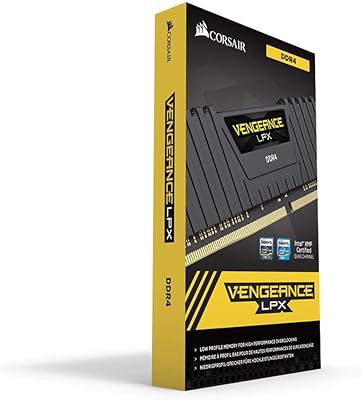
Buyers consistently report that modules arrive well-protected in anti-static packaging with no bent pins or physical damage. The retail packaging is functional without being excessive, and the sticks are held securely in individual molded slots that prevent contact during shipping.
A small but recurring segment of reviews mentions DOA modules that passed visual inspection but failed to initialize correctly during first boot. While not widespread, the pattern suggests occasional quality control inconsistencies that the packaging itself cannot prevent at the chip level.
Capacity Satisfaction
81%
19%
Among buyers who genuinely needed high-capacity memory — video editors, architects, ML engineers, heavy virtualization users — satisfaction with the 64GB total is consistently high, with many noting it resolved workflow bottlenecks they had lived with for years on 32GB systems.
A recurring theme in lower-rated reviews is buyer regret from users who purchased expecting a noticeable performance improvement in everyday tasks and found no difference. The capacity only delivers value in specific, demanding workflows, and that nuance is not always clear at the point of purchase.

Suitable for:

The Corsair Vengeance LPX 64GB DDR4 RAM Kit is purpose-built for users whose workloads genuinely demand high memory capacity — not those who just want headroom on paper. Video editors cutting 4K or 6K timelines in DaVinci Resolve or Premiere Pro will notice the difference immediately, as large projects can cache more footage in RAM and reduce reliance on slower scratch drives. 3D artists rendering complex scenes in Blender or Cinema 4D, software developers running multiple Docker containers or virtual machines simultaneously, and data professionals working with large in-memory datasets all fall into the category where 64GB stops being a luxury. The low-profile 34mm design makes this kit especially practical for builders using large tower coolers with wide fan overhangs, or for anyone working inside a compact case where standard-height DIMMs would create clearance conflicts. Paired with a modern AMD Ryzen or high-core-count Intel platform via XMP 2.0, setup is straightforward and the rated 3200MHz speed is typically achievable in a single BIOS step.
Not suitable for:

For most everyday PC users, the Corsair Vengeance LPX 64GB DDR4 RAM Kit is more memory than will ever be utilized, and spending on unused capacity rarely makes sense. Gamers — even those playing the most demanding AAA titles — will find that 32GB is more than sufficient, and 16GB remains perfectly capable for the majority of gaming scenarios. Users primarily browsing the web, managing documents, or running light productivity software would see zero real-world benefit from this capacity tier. Budget-conscious builders should also be aware that this is a premium-capacity kit priced accordingly, and that money might be better directed toward GPU or storage upgrades that would yield more tangible performance gains. Additionally, buyers with older or budget motherboards should verify QVL compatibility before purchasing, as quad-channel high-density kits can occasionally require a BIOS update to run at rated speeds, which may be inconvenient for less experienced builders.
Specifications

  • Total Capacity: The kit provides 64GB of total system memory across four individual 16GB DDR4 modules.
  • Speed Rating: Modules are rated for DDR4-3200 operation, equivalent to a PC4-25600 bandwidth designation.
  • CAS Latency: The primary latency timing is CL16, which is typical and functional for DDR4-3200 in mainstream desktop builds.
  • Operating Voltage: Each module runs at 1.35V, slightly below the conventional 1.5V DDR4 standard, which can reduce heat output under sustained workloads.
  • Module Count: The kit ships as four matched DIMMs intended for use together in a quad-channel or dual-channel configuration depending on the platform.
  • Form Factor: All modules use the standard full-size DIMM form factor designed exclusively for desktop motherboards.
  • Module Height: Each stick measures 34mm in height, qualifying as low-profile and providing clearance for most large tower CPU coolers.
  • Heatspreader: A solid aluminum heatspreader covers each module to help dissipate heat generated during high-frequency operation.
  • PCB Quality: Corsair uses a high-performance PCB on each module designed to maintain signal integrity and stability during overclocking.
  • XMP Support: The kit supports Intel XMP 2.0, allowing automatic configuration to rated speeds via a single BIOS setting.
  • Platform Support: Modules are compatible with modern Intel and AMD DDR4 desktop motherboards that support DDR4 memory slots.
  • Model Number: The official Corsair part number for this kit is CMK64GX4M4E3200C16.
  • Warranty: Corsair covers this kit with a limited lifetime warranty, providing long-term protection against defects under normal use.
  • Release Date: This kit was first made available in March 2020 and targets the mainstream high-capacity desktop memory segment.
  • Product Dimensions: Each individual module measures approximately 5.31 x 0.28 x 1.32 inches and the full kit weighs around 5.29 ounces total.

Related Reviews
Corsair Vengeance LPX 64GB DDR4-3200 (2x32GB)
87%
91%
Ease of Installation
88%
Compatibility
93%
Physical Fit & Form Factor
86%
Thermal Performance
89%
Performance at Rated Speed
More
Corsair Vengeance LPX 32GB DDR4 Memory Kit
81%
93%
Installation Ease
91%
Physical Compatibility
86%
Platform Compatibility
94%
Reliability & Longevity
67%
Value for Money
More
Corsair Vengeance LPX 16GB DDR4 Desktop RAM
81%
93%
Ease of Installation
88%
Compatibility
84%
Value for Money
67%
Memory Speed & Performance
89%
Build Quality
More
Corsair Vengeance LPX 64GB DDR4 Desktop RAM
82%
93%
Installation Experience
91%
Long-Term Stability
88%
Platform Compatibility
89%
Physical Fit & Clearance
67%
Raw Memory Speed
More
Corsair Vengeance LPX 64GB DDR4 Desktop Memory
81%
89%
Platform Compatibility
92%
XMP Setup Ease
88%
Workstation Performance
91%
Physical Design
83%
Quad-Channel Bandwidth
More
Corsair Vengeance RGB PRO SL 64GB RAM
86%
88%
Performance
91%
RGB Lighting
93%
Build Quality
94%
Cooler Compatibility
67%
Software Experience
More
Corsair Vengeance LPX 8GB DDR4 RAM
80%
93%
AMD Ryzen Compatibility
91%
Installation Experience
89%
Low-Profile Clearance
88%
Long-Term Reliability
82%
Value for Money
More
Corsair Vengeance LPX 8GB DDR4 RAM
80%
93%
Installation Experience
91%
Long-Term Reliability
84%
Compatibility Range
88%
Value for Money
86%
Physical Build Quality
More
Corsair Vengeance LPX 32GB DDR4 Desktop Memory
78%
83%
Performance at Rated Speed
91%
Installation & Setup
88%
Physical Compatibility
47%
AMD Platform Compatibility
72%
Value for Money
More
Corsair Vengeance LPX 16GB (2x8GB) DDR4 3200MHz
87%
98%
Air Cooler Clearance
94%
XMP/DOCP Stability
96%
Motherboard Compatibility
89%
Gaming Performance
87%
Multitasking & Audio Production
More

FAQ

Yes, the kit is designed to be compatible with AMD DDR4 motherboards. That said, high-density quad kits like this one sometimes require a BIOS update to post reliably at 3200MHz, so it is worth checking that your board is on a recent firmware version before installing.

Out of the box the sticks will likely default to JEDEC speeds, which is slower than rated. To hit 3200MHz you just need to enter your BIOS and enable XMP 2.0 — it takes about thirty seconds and the settings populate automatically. No manual timing adjustments are required.

Honestly, for general use and gaming it is overkill. Where it genuinely earns its place is in workloads that are memory-hungry by nature — 4K video editing, large Blender renders, running multiple virtual machines, or working with large datasets. If your work does not involve those kinds of tasks, a 32GB kit will serve you just as well at a lower price.

That is exactly the scenario this low-profile design was built for. At 34mm tall, these modules clear the vast majority of large tower coolers, including wide dual-tower designs that would block standard-height DIMMs. It is still worth measuring your specific cooler overhang if you are unsure, but clearance conflicts are rare with this kit.

Technically you can, but it is not ideal. These four sticks are binned and tested as a matched set, and splitting them up — or later mixing them with modules from a different kit — can introduce instability, especially at XMP speeds. If you need 32GB to start, purchasing a 2x16GB kit and upgrading later is a cleaner approach.

Compatibility depends on whether the board supports DDR4 slots, since newer Intel platforms like Z790 shipped in both DDR4 and DDR5 variants. If your board has DDR4 slots, this kit should work fine — just verify on the motherboard manufacturer's QVL list to be sure.

No, the Vengeance LPX line does not include RGB. The heatspreader is a clean, flat aluminum design available in a few colors. If you want lighting on your memory, Corsair offers the Vengeance RGB Pro series as an alternative, though those modules are taller.

Corsair's limited lifetime warranty covers defective modules. Contact their support team with proof of purchase and they will typically arrange a replacement. The inconvenience is that replacing a single stick from a matched quad-channel kit means getting the right matching module rather than a generic stick.

Some users do push it further since Corsair hand-sorts the chips for overclocking headroom. However, how far you can go depends on your specific chip batch, your motherboard's memory controller, and your CPU's integrated memory controller tolerance. There is no guarantee of hitting a particular speed above XMP, and results vary noticeably from one build to another.

Yes, and the low-profile height makes it one of the more practical choices for tight SFF builds. Mini-ITX boards generally have only two DIMM slots, though, so you would only be able to use two of the four sticks — giving you 32GB rather than the full 64GB in that scenario.