
Overview

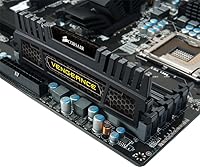
The Corsair Vengeance 4GB DDR3 Desktop Memory has been a quiet staple of the budget memory market since its October 2010 launch, and the fact that it still holds a top-1000 ranking in Computer Memory says something real about its staying power. This is a single-stick DDR3 module built for people keeping older desktops alive, not enthusiasts chasing benchmarks. DDR3 platforms are aging hardware at this point, and the buyers reaching for this Corsair DDR3 stick are almost always looking for a practical, low-cost way to squeeze more usable life out of a machine they are not ready to replace.

Features & Benefits

Running at 1600MHz with 9-9-9-24 timings, the Vengeance 4GB module sits comfortably in the mainstream DDR3 performance range — a meaningful step up from the 1333MHz sticks many older boards shipped with. The 1.5V operating voltage stays within standard DDR3 spec, which matters on aging motherboards where pushing higher voltages can shorten component life. For boards that support it, the Intel XMP profile makes enabling the rated speed a simple BIOS toggle rather than manual tweaking. The aluminum heat spreader handles passive cooling well for everyday workloads. One honest caveat: running in single-channel mode leaves bandwidth on the table compared to a matched pair.

Best For

This memory upgrade makes the most sense for a specific situation: you have an older AMD or Intel desktop that is bottlenecked by insufficient RAM, and you want the cheapest practical fix without sourcing a matched kit. Think the kind of machine gathering dust in a home office or handed down to a family member for basic tasks. Web browsing, streaming, document work — this Corsair DDR3 stick handles all of it without complaint. It also works well for anyone building out a cheap secondary PC or lab machine where extracting performance from a tight budget is the whole point. Heavy gaming, though, is outside its realistic comfort zone.

User Feedback

With over 1,200 ratings averaging 4.5 stars, this memory upgrade has earned its reputation steadily over more than a decade — that kind of long-term buyer satisfaction is not trivial. Most praise focuses on easy installation, consistent everyday stability, and confidence in a brand people have trusted for years. The critical reviews deserve a closer look, though: a solid chunk trace back to compatibility mismatches with specific motherboards rather than any inherent defect. Some buyers also flag that single-channel bandwidth falls short under heavier workloads — a legitimate limitation. Judged against what it actually promises to do for an aging desktop, the consensus holds up well.

Pros

  • Corsair is a well-established memory brand with a long track record of reliable, consistent DDR3 modules.
  • The 1600MHz speed is a genuine step up over the 1333MHz stock memory many older desktops shipped with.
  • A 1.5V operating voltage stays within safe DDR3 tolerances, reducing strain on aging motherboards.
  • Intel XMP support lets compatible boards automatically enable the rated speed with a single BIOS setting.
  • Installation is straightforward, and the module is widely reported to work right out of the box.
  • The Vengeance heat spreader provides passive thermal dissipation without requiring any additional cooling.
  • Over 1,200 long-term buyer ratings averaging 4.5 stars reflect sustained real-world satisfaction.
  • Compatible with both AMD and Intel platforms, covering a wide range of older desktop configurations.
  • For light productivity and everyday computing tasks, this Corsair DDR3 stick delivers exactly what it promises.

Cons

  • Single-channel operation limits memory bandwidth, which becomes noticeable under any moderately demanding workload.
  • 4GB is a tight ceiling; multitaskers and anyone running several apps simultaneously will hit that wall quickly.
  • DDR3 as a platform is aging, and replacement or expansion options will only grow harder to find over time.
  • Buyers on boards without XMP support will need to manually set timings and speed in BIOS to hit rated specs.
  • Some users have encountered compatibility issues with specific older motherboards, requiring extra pre-purchase research.
  • A single-module kit means you cannot take advantage of dual-channel bandwidth without purchasing a second matching stick.
  • Not a viable option for any form of gaming beyond the most minimal, browser-based titles.
  • There is no upgrade path within this kit itself; future capacity increases require buying additional hardware.

Ratings

The Corsair Vengeance 4GB DDR3 Desktop Memory was scored by our AI review engine after processing verified buyer feedback from global markets, with bot activity, incentivized submissions, and spam accounts actively filtered before analysis began. Scores reflect the honest distribution of real buyer satisfaction — both where this memory upgrade genuinely delivers and the limitations that repeatedly surface in critical feedback are transparently captured. Every category is calibrated against the actual upgrade context: giving an aging desktop a second life, not competing against modern memory standards.

Value for Money
88%
For buyers trying to extend the life of an older desktop without spending much, this Corsair DDR3 stick consistently earns its keep. Owners report that the price-to-impact ratio feels genuinely fair when the alternative is replacing an entire aging system rather than just its memory.
A portion of buyers felt underwhelmed after realizing the capacity ceiling limits how much practical improvement they actually notice, particularly on machines already running a lean operating system. The value equation also weakens if you later find you need to buy a second stick to reach dual-channel performance.
Installation Ease
93%
Nearly universal agreement across buyer reviews: the module drops in, the machine boots, and it works. Users with no prior hardware experience reported completing the upgrade in under ten minutes, often without touching the BIOS at all on boards that auto-detect memory speed.
The handful of installation complaints typically trace back to boards requiring a BIOS update before recognizing higher-speed memory, or slots needing reseating. These are not module defects, but they can catch first-time upgraders off guard if they are not expecting any troubleshooting step at all.
Compatibility
74%
26%
Corsair's broad DDR3 platform coverage means the Vengeance 4GB module works with a wide range of AMD and Intel desktop boards from the DDR3 era, and the model number appears on many official motherboard QVLs. For mainstream platforms, compatibility is rarely a serious concern before purchase.
A consistent thread in negative reviews involves specific older AMD platforms and budget motherboards that either refuse to train at 1600MHz or require manual BIOS timing adjustments. Some boards with outdated firmware also struggle to recognize the module until updated, adding friction for buyers expecting a plug-and-play experience.
Everyday Performance
79%
21%
For the tasks this module is realistically used for — browser sessions with multiple tabs, streaming video, office applications, light document editing — buyers consistently describe a tangible improvement over their previous 2GB configurations. The step from barely usable to reliably functional is the experience most users come away with.
Buyers who expected a more dramatic transformation in system responsiveness, particularly on machines with slow mechanical drives, note that RAM alone does not solve every bottleneck. Some Windows 10 users also found that 4GB fills up faster than expected once background processes, antivirus software, and a browser are all running simultaneously.
Capacity Adequacy
58%
42%
As a straight upgrade from 2GB, four gigabytes does restore a machine to a usable daily-driver state for light workloads. Users primarily running a single application at a time — word processing, email, or video streaming — generally find the capacity workable without constant page file thrashing slowing things down.
In practice, 4GB is a tight ceiling by current operating system standards, and buyers who move beyond basic single-app use quickly discover its limits. Multiple browser tabs, a background antivirus scan, and a media player running together can consume the full allocation, leading to sluggishness that undercuts the point of upgrading.
Single-Channel Bandwidth
47%
53%
For light productivity tasks that are not memory-bandwidth-sensitive, the single-channel configuration is not a limitation that users notice in everyday operation. Workloads like document editing and standard web browsing rarely push memory bandwidth hard enough for the single-channel penalty to become a felt experience.
Buyers who attempted light gaming or ran more demanding applications quickly encountered the bandwidth ceiling that single-channel DDR3 at this capacity imposes. Compared to a matched dual-channel kit, measurable throughput is left unused, and that gap compounds particularly with integrated graphics workloads that rely on shared system memory.
Thermal Management
82%
18%
The aluminum Vengeance heat spreader keeps operating temperatures stable during sustained use, and buyers running the module in systems with modest airflow report no heat-related instability. For light-to-moderate workloads this module is designed for, the passive cooling approach is more than adequate in well-ventilated cases.
There are virtually no reported thermal complaints under everyday use conditions, but users running the module in very poorly ventilated or sealed enclosures under sustained loads occasionally noted reduced stability over long sessions. Passive-only cooling without meaningful airflow across the slot is a minor but real risk in cramped builds.
Build Quality
86%
Corsair's track record for producing well-constructed memory modules carries over here — the PCB feels solid, the heat spreader is properly adhered, and buyers consistently note the module looks and feels like a quality component. Long-term owners report no physical degradation even after years of continuous everyday use.
At this capacity and price tier, there is no meaningful differentiation in physical construction — buyers are not getting premium ICs or anything that sets this module apart at a component level from comparable alternatives. A small number of early buyers reported bent or misaligned pins on arrival, though these appear to be isolated incidents.
XMP and BIOS Integration
77%
23%
On Intel boards with XMP support, enabling the 1600MHz rated speed is a one-setting BIOS change, and buyers consistently describe the process as fast and trouble-free. The profile works as advertised on most mainstream Intel chipsets from the DDR3 era without any manual timing input required.
AMD platforms do not natively support XMP, meaning buyers on those boards must manually configure timings and speed in the BIOS — a step that trips up less experienced users. A handful of Intel boards with older firmware also failed to correctly load the XMP profile without a firmware update applied first.
Brand Reliability
91%
Corsair's name carries real weight among buyers who have experienced instability with cheaper no-name modules, and that brand trust is consistently cited in positive reviews as a key deciding factor. The lifetime warranty backing adds meaningful confidence for buyers putting this memory upgrade into a machine they depend on daily.
Brand trust only carries so far when compatibility issues arise and buyers reach Corsair support — some users reported that troubleshooting responses were slow or too generic to be immediately actionable. Corsair's positioning also occasionally creates warranty and RMA process expectations that individual buyers find harder to navigate than anticipated.
Long-Term Stability
84%
Buyers who have run this Corsair DDR3 stick for multiple years consistently report no errors, crashes, or performance degradation during everyday use. The module's ability to run stably under sustained light loads is one of the more frequently praised attributes in long-term owner reviews dating back several years.
A small cluster of reviews mentions memory errors surfacing after extended periods, though these cases are difficult to separate from general motherboard aging or power supply degradation in older systems. Long-term stability also depends heavily on the ambient thermal environment and overall build condition of the host machine.
Gaming Suitability
39%
61%
For browser-based casual games or very old titles with modest memory requirements, the Vengeance 4GB module can technically keep up, and some buyers with minimal gaming expectations reported acceptable performance on legacy titles from the early 2010s running at reduced settings.
Any modern gaming workload exposes the combined handicap of insufficient capacity and single-channel bandwidth simultaneously, and buyer reviews reflect genuine disappointment from those who hoped for a gaming boost. Most titles released in the last five or six years run poorly or not at all under these memory constraints, especially with integrated graphics.

Suitable for:

The Corsair Vengeance 4GB DDR3 Desktop Memory is the right call for a narrow but very real group of buyers: people with an aging AMD or Intel desktop that is still running fine mechanically but has been choking on 2GB or less of RAM. If your machine crawls when you open a handful of browser tabs, lags switching between a spreadsheet and your email client, or stutters through basic media playback, a single-stick DDR3 upgrade at this price point is genuinely one of the most cost-effective fixes available. It also suits home office setups where the PC handles light document work and communication tools rather than anything demanding. System builders piecing together an inexpensive secondary or backup machine from older parts will find this Corsair DDR3 stick a reliable, no-fuss memory option. The Corsair brand carries real credibility in this space, and for buyers who just want something that works without extensive research or configuration, that peace of mind has practical value.

Not suitable for:

Anyone putting together a modern PC build should stop here — the Corsair Vengeance 4GB DDR3 Desktop Memory runs on a platform generation that current motherboards simply do not support, and no amount of budget savings changes that fundamental incompatibility. Gamers hoping to breathe new life into even a mid-tier older rig will likely find the single-channel configuration a meaningful bottleneck, since bandwidth-hungry titles expose the limits of this setup quickly. Four gigabytes also represents a hard ceiling for multitasking; if you regularly run multiple applications simultaneously, video conferencing alongside other software, or any creative tools, this memory upgrade will not be enough on its own. Content creators, video editors, or anyone running memory-intensive workloads should be looking at higher-capacity kits rather than a single 4GB module. If your goal is a noticeable performance transformation rather than a basic stability fix, the Vengeance 4GB module is likely to leave you underwhelmed.

Specifications

  • Capacity: This module provides 4GB of memory in a single-stick configuration, making it a straightforward one-slot upgrade for compatible desktop systems.
  • Memory Type: The module uses DDR3 technology, which is compatible with motherboards designed for the DDR3 memory standard only — it will not physically seat in DDR4 or DDR5 slots.
  • Speed: It operates at a rated clock speed of 1600MHz, corresponding to the PC3-12800 standard with a peak bandwidth of 12,800 MB/s.
  • Timings: The primary latency timings are 9-9-9-24, representing CAS Latency, RAS to CAS Delay, RAS Precharge, and Row Active Time respectively.
  • Voltage: Operating voltage is 1.5V, which falls within the standard DDR3 specification range and is safe for the vast majority of DDR3-compatible motherboards.
  • Channel Mode: When installed as a single stick, this module operates in single-channel mode; dual-channel operation requires a second compatible module installed in the appropriate paired slot.
  • XMP Support: The module includes an Intel Extreme Memory Profile (XMP) that allows supported motherboards to automatically configure it to its rated 1600MHz speed via a BIOS setting.
  • Compatible Platforms: Corsair rates this module for use with both AMD and Intel desktop platforms that support DDR3 memory, covering a wide range of consumer motherboards from the DDR3 era.
  • Form Factor: The module uses the standard full-size DIMM form factor designed exclusively for desktop systems and is not compatible with laptop SO-DIMM slots.
  • Heat Spreader: A low-profile aluminum Vengeance heat spreader is factory-installed on the module to assist with passive thermal dissipation during sustained operation.
  • Dimensions: The module measures 4 x 3 x 1 inches (approximately 101.6 x 76.2 x 25.4 mm), which is consistent with standard full-height DDR3 DIMMs.
  • Weight: The module weighs 0.8 ounces (approximately 22.7 grams), typical for a heat-spreader-equipped single desktop DIMM.
  • Model Number: The manufacturer model number is CMZ4GX3M1A1600C9, which can be used to verify cross-compatibility with motherboard QVL (Qualified Vendor Lists).
  • Manufacturer: This module is designed and sold by Corsair, a memory and PC components brand founded in 1994 and headquartered in Milpitas, California.
  • Launch Date: The module was first made available in October 2010 and has remained in continuous commercial availability since then.

Related Reviews
Corsair Vengeance 8GB DDR3 Desktop RAM
76%
91%
Installation Ease
93%
Reliability & Longevity
83%
Value for Money
44%
Platform Longevity
63%
XMP Configuration
More
Corsair Vengeance 16GB DDR3 Desktop Memory
81%
93%
Installation Ease
91%
Long-Term Reliability
84%
Compatibility
82%
Value for Money
77%
Performance at Rated Speed
More
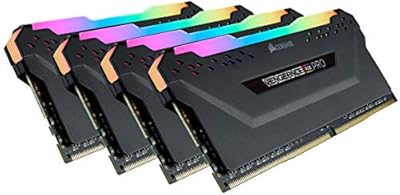
Corsair Vengeance LPX 64GB DDR4 Desktop Memory
81%
89%
Platform Compatibility
92%
XMP Setup Ease
88%
Workstation Performance
91%
Physical Design
83%
Quad-Channel Bandwidth
More
Corsair Vengeance RGB Pro 128GB DDR4 Memory
80%
88%
Memory Performance
91%
Stability & Reliability
93%
Build Quality
86%
RGB Lighting Quality
74%
iCUE Software Integration
More
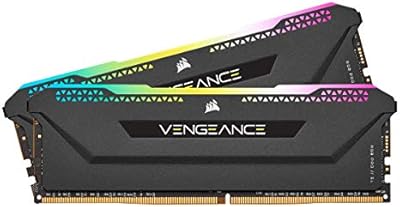
Corsair Vengeance RGB PRO SL 64GB (2x32GB) DDR4 3200MHz C16 Desktop Memory
87%
91%
Performance
88%
Ease of Installation
93%
RGB Customization
86%
Value for Money
84%
Compatibility
More
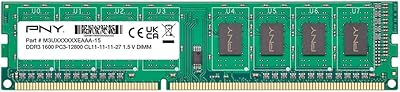
PNY Performance 8GB DDR3 Desktop RAM
76%
88%
Compatibility
93%
Ease of Installation
86%
Value for Money
79%
System Performance Impact
84%
Long-Term Reliability
More
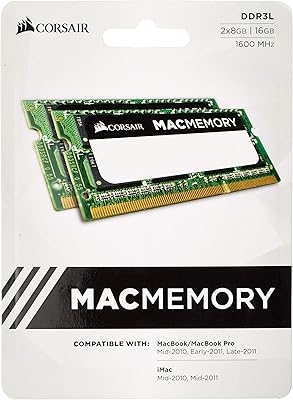
Corsair CMSA16GX3M2A1600C11 16GB DDR3 1600MHz Laptop Memory
88%
90%
Performance Boost
88%
Energy Efficiency
93%
Ease of Installation
85%
Compatibility with Mac Models
89%
Reliability & Stability
More
Corsair Vengeance 32GB DDR4 SO-DIMM Memory
82%
92%
Installation Ease
71%
Compatibility
84%
Performance Uplift
74%
Auto-Overclocking Reliability
91%
System Stability
More
Corsair Vengeance 32GB DDR5 4800MHz Desktop RAM
80%
93%
Installation Ease
89%
XMP Compatibility
91%
System Stability
82%
Value for Money
74%
Gaming Performance
More
SK Hynix HMT41GU6BFR8A-PB 16GB DDR3 Desktop RAM
85%
88%
Compatibility
91%
Reliability & Stability
93%
Plug-and-Play Setup
84%
Value for Money
87%
Build & IC Quality
More

FAQ

In most cases, yes — but it is worth checking your motherboard manual or manufacturer website for a QVL (Qualified Vendor List) before purchasing. The model number CMZ4GX3M1A1600C9 is what you want to search for. Most DDR3-era Intel boards have no issue with it, but specific chipset combinations can occasionally be finicky, which accounts for a portion of the negative reviews you might see online.

Potentially yes. Many older boards default to a lower speed like 1333MHz even when faster memory is installed. If your board supports Intel XMP, you can enable the XMP profile in BIOS and it will automatically configure the module to run at 1600MHz with the correct timings. If your board does not support XMP, you can manually set the speed and timings to 1600MHz and 9-9-9-24 in the BIOS memory settings.

Yes, you can add a matching stick later for dual-channel operation, but there are a few caveats. For the best chance of stable dual-channel performance, buy an identical module with the same model number rather than just any 4GB DDR3 1600MHz stick. Paired kits sold together are pre-tested for compatibility, so two individually purchased sticks occasionally need some BIOS coaxing to cooperate.

For very light use — browsing a few tabs, running Office applications, watching video — 4GB can get the job done on Windows 10, though you will notice things getting tight if you multitask much. Windows 11 officially recommends a 4GB minimum, but in practice it runs more comfortably with 8GB. Think of this upgrade as bringing an unusable 2GB system back to a functional baseline, not as a comfortable long-term ceiling.

Only for very light or older titles. Modern games routinely require 8GB as a practical minimum, and running in single-channel mode limits the memory bandwidth available to the GPU. You might get playable performance in older or less demanding games, but do not expect smooth results in anything released in the last several years. If gaming is your main goal, a higher-capacity kit or a platform upgrade is the more realistic path.

For most everyday tasks like web browsing, email, and document editing, the difference is not dramatic or immediately obvious. Where the 1600MHz speed provides a more meaningful benefit is in applications that are sensitive to memory throughput, like media encoding or working with larger files. For a system that was previously constrained by 2GB of RAM, the jump in capacity will feel far more significant than the speed difference between 1333MHz and 1600MHz.

The heat spreader adds a modest amount of height compared to a bare module, but this Vengeance variant is considered low-profile relative to some of Corsair's larger desktop memory lines. It should clear standard air coolers without issue in most mid-tower and full-tower cases. If you have a very compact mini-ITX build with a large cooler, it is worth measuring clearance first, though conflicts are uncommon.

Corsair officially lists compatibility with both AMD and Intel DDR3 platforms. That said, AMD boards can sometimes be more particular about memory compatibility than Intel boards of the same era, so checking your specific motherboard QVL is still a good idea. The XMP profile is an Intel specification, so on AMD boards you would set the speed and timings manually if needed.

A small number of DOA reports exist for virtually every memory module on the market, and this Vengeance module is no exception. However, most reported recognition issues trace back to motherboard incompatibility, a BIOS that needs updating, or a module not seated fully in the slot rather than a defective stick. Corsair backs its memory with a lifetime warranty, so a confirmed defective unit can be replaced through their support process.

No. This is a full-size desktop DIMM and it will not physically fit in a laptop, which uses a smaller SO-DIMM form factor. The two connector types are physically different and incompatible. If you are upgrading a laptop, you need to specifically look for DDR3 SO-DIMM modules sized for portable systems.