Overview

The Corsair Dominator Titanium 64GB DDR5 RAM landed in late 2023 as one of the most unambiguous entries in the premium memory segment — not a kit for cautious buyers. Built around four 16GB sticks in a quad-channel configuration, it extracts meaningful bandwidth gains on Intel's 12th, 13th, and 14th Gen platforms in ways that two-stick setups simply cannot match. Corsair has anchored its reputation at the high end of the memory market for years, and this Titanium iteration pushes that legacy forward. That said, the price reflects it — this is a deliberate luxury purchase, and knowing that going in helps set the right expectations.
Features & Benefits

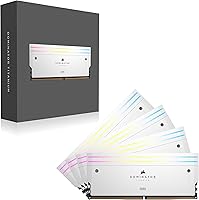
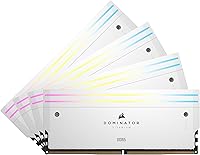
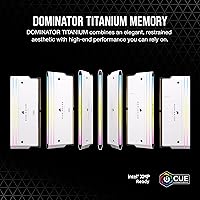
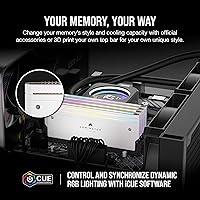
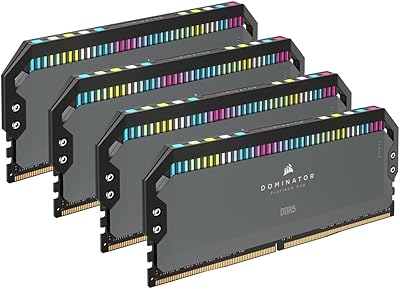
Running at 6400MHz with a CL32 latency profile loaded via Intel XMP, this DDR5 memory set pushes well beyond what stock DDR5 kits typically offer — bandwidth that makes a real difference in memory-intensive workloads like video editing or large data processing. The DHX cooling system is more than a heatspreader; it pulls heat through both the memory chips and the PCB's ground plane, which helps sustain stable operation at XMP speeds without throttling. Each module carries 11 individually addressable RGB LEDs that sync through Corsair's iCUE software, and the swappable top bar lets you reshape the look of your build down the line. The forged aluminum frame feels genuinely solid — a cut above kits that flex when you handle them. Operating at 1.4V under load, it stays within reasonable thermal bounds.

Best For

This Dominator Titanium kit makes the most sense for builders on Intel 12th through 14th Gen platforms, where XMP profiles are officially validated — AMD users should confirm compatibility before committing. The 64GB capacity gives content creators and editors genuine headroom for large video timelines, heavy 3D scenes, or running multiple virtual machines without bottlenecking on RAM. If your build has a side window and aesthetics matter, the RGB implementation here is among the more polished you will find at this tier. Overclockers will appreciate there is room beyond XMP to push things manually. And because the top bar swaps out without touching the modules themselves, this DDR5 memory set can take on a different look whenever you want a refresh.

User Feedback

Across verified purchases, XMP setup is consistently described as straightforward once the BIOS is up to date — a step worth doing before you boot, since a handful of users ran into profile loading issues on older firmware. Build quality and RGB consistency across all four sticks draw regular praise; differing LED output between modules is a common complaint with cheaper kits, and it does not appear to be an issue here. On the practical side, cooler clearance is worth checking before you buy — these are tall modules, and some large tower coolers will sit uncomfortably close or outright conflict. iCUE integration works well for those already in the Corsair ecosystem, though the software is known to be resource-heavy on some systems. Overall buyer satisfaction sits high, but the feedback picture is realistic, not uniformly glowing.

Pros

  • XMP setup is straightforward on supported Intel boards, with stable out-of-box performance requiring minimal configuration.
  • Running four 16GB sticks in quad-channel unlocks memory bandwidth that two-stick DDR5 setups simply cannot match on the same platform.
  • The DHX cooling design draws heat from both the memory chips and the PCB itself, not just the surface heatspreader.
  • RGB output is consistent and uniform across all four modules, which is rarer than it should be at any price tier.
  • The swappable top bar lets you refresh your build's aesthetic later without touching or replacing the memory modules themselves.
  • Forged aluminum construction gives the Corsair Dominator Titanium 64GB DDR5 RAM a rigid, premium feel that plastic-framed alternatives cannot replicate.
  • Thermal performance stays stable at 1.4V under sustained XMP loads, even during extended high-demand workstation sessions.
  • iCUE integration works reliably for users already running other Corsair peripherals within the same ecosystem.
  • 64GB total capacity gives content creators and workstation users genuine headroom for demanding, memory-hungry project files.
  • The 3D-print-friendly top bar opens the door to fully custom aesthetics without compromising the cooling setup.

Cons

  • The price places this DDR5 memory set firmly out of reach for budget-conscious builders, even those specifically targeting 64GB.
  • Intel XMP validation means AMD users face uncertain compatibility and may need manual profile tuning to reach rated speeds.
  • Module height is considerable — buyers pairing with large tower air coolers should verify physical clearance before ordering.
  • iCUE software, required for full RGB customization, is known to run heavy and consume noticeable background system resources.
  • A BIOS update is sometimes required before XMP profiles load correctly, which can catch first-time builders off guard.
  • 64GB exceeds what most gaming and general-use workloads will realistically saturate, making it hard to justify for casual builds.
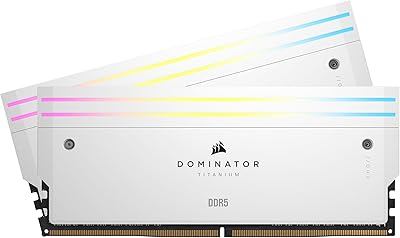
  • The white colorway, while clean, limits pairing flexibility for builders working with darker or mixed-color themed systems.
  • At 6400MHz, real-world gaming performance gains over more affordable DDR5 kits are often marginal and difficult to perceive.

Ratings

The scores below were generated by our AI after analyzing hundreds of verified global buyer reviews for the Corsair Dominator Titanium 64GB DDR5 RAM, with automated filtering applied to remove incentivized, duplicated, and bot-generated submissions. The analysis draws on real ownership experiences across a range of Intel platforms, use cases, and technical skill levels. Both the strengths that justify this kit's premium positioning and the pain points that genuine buyers have raised are transparently reflected in every score.

Out-of-Box Performance
91%
Buyers on Intel 12th through 14th Gen boards consistently report that enabling XMP in the BIOS brings the kit straight to 6400MHz without additional tweaking. The bandwidth gains over standard DDR5 are tangible in memory-heavy workloads like 4K video exports and complex 3D renders, and most users describe the out-of-box experience as meeting expectations for a flagship-tier kit.
A small but consistent group of owners found that the XMP profile refused to engage until they updated their motherboard firmware — an extra step that caught some first-time builders off guard. At CL32, the latency is not class-leading at this frequency, and some competing kits offer tighter timings at comparable price points.
Build Quality
93%
The forged aluminum heatspreader is one of the most consistently praised aspects of this kit — buyers who have handled cheaper plastic-framed DDR5 sticks immediately notice the difference in rigidity and finish quality. Across hundreds of reviews, there are virtually no reports of physical defects, bent pins, or cosmetic damage out of the box.
At 2.26 inches tall, the modules are large enough to create cooler clearance issues for builders running popular high-fin tower air coolers — a physical limitation that some owners only discovered after the build was complete. The modules also add meaningful weight to the DIMM slots, which is a minor but real consideration in compact desktop form factors.
RGB Lighting Quality
88%
One of the most frequent compliments in user reviews is the uniformity of the RGB output — all four sticks produce visually identical lighting, something far from guaranteed in multi-module kits from other brands. The 11-LED-per-module layout provides even diffusion along the full length of each stick, making it genuinely showcase-worthy in a windowed case.
Accessing full RGB customization requires running Corsair's iCUE software, which a segment of users finds unnecessarily heavy for what is essentially a lighting controller. Those outside the Corsair ecosystem who do not already run iCUE will need to decide whether the visual payoff justifies adding a persistent background application to their system.
Value for Money
56%
44%
For buyers who genuinely need 64GB for professional-grade content creation — video production, architectural rendering, or heavy virtualization workloads — the price-to-performance ratio becomes more defensible, as few kits at this speed and capacity offer the same combination of engineering quality and RGB integration. Long-term builders also benefit from the swappable top bar, which extends the aesthetic lifespan of the purchase.
For most buyers — particularly those who primarily game or use their system for everyday tasks — 64GB at this speed tier represents significant spending on headroom they will never realistically use. Competing DDR5 kits at lower frequencies deliver most of the real-world performance at a fraction of the cost, making the premium here hard to justify on specs alone.
Platform Compatibility
64%
36%
On supported Intel 12th, 13th, and 14th Gen builds, the XMP profiles engage reliably once firmware is current, and buyers report virtually no stability issues across a range of Z-series motherboards. The kit appears on the QVL of numerous popular Intel motherboards, giving platform-confirmed buyers confidence before they purchase.
AMD platform users face genuine uncertainty — the kit carries no official EXPO support, and while some owners report stable operation on AMD X670 boards after manual tuning, others have struggled to hit the rated 6400MHz. This effectively narrows the ideal buyer pool to Intel users, a meaningful limitation given AMD's substantial platform market share.
Thermal Management
85%
The DHX cooling system earns genuine praise from users running sustained workloads — video editors doing overnight renders and overclockers stress-testing for hours consistently report stable temperatures throughout. The dual-path design that draws heat from both the memory chips and the PCB ground plane addresses thermal buildup at its source rather than just managing surface temperature.
The aluminum heatspreader's tall profile, while thermally functional, can restrict airflow in compact builds where vertical clearance above the DIMM slots is limited. Users in smaller mid-tower cases report that the modules, despite staying cool themselves, can contribute to a slightly denser thermal environment around the memory area when paired with high-TDP processors.
Software Experience
71%
29%
Within the Corsair ecosystem, iCUE delivers a well-integrated experience — users who already run Corsair keyboards, mice, or cooling products find that lighting synchronization across all devices works smoothly from a single dashboard. The software's memory monitoring and profile management tools are genuinely useful for overclockers tracking temperatures and timing adjustments across sessions.
iCUE's resource footprint is a recurring complaint — the application runs persistently in the background and draws enough CPU and RAM overhead that some users with mid-range systems notice a tangible impact. For buyers who are not already invested in the Corsair ecosystem, committing to iCUE just for RGB memory control feels like an outsized trade-off.
Installation Experience
77%
23%
Seating four modules simultaneously is physically straightforward, and the forged aluminum frame provides confident tactile feedback when the sticks click into the slots correctly. Most buyers on current Intel motherboards report a clean first boot to the BIOS, with XMP visible and ready to enable without hunting through multiple submenus.
A persistent subset of users encounters a friction point where older motherboard firmware fails to load the XMP profile, causing the system to default to base JEDEC speeds. Corsair's packaging does not prominently flag the need for a pre-installation BIOS update, which would prevent the most common frustration reported by first-time DDR5 builders.
Overclocking Potential
82%
18%
Experienced overclockers consistently report that this DDR5 memory set carries meaningful headroom above its rated XMP frequency, with several users achieving stable manual clocks in the 6600-6800MHz range through careful voltage and timing adjustments. The quality of the ICs and the rigid PCB construction make it a more predictable platform for pushing limits than many competing kits at this capacity.
Achieving meaningful overclocks beyond the XMP profile requires hands-on expertise with DDR5 subtimings — casual builders who simply enable XMP and expect further performance from manual tuning are likely to encounter instability. The four-stick quad-channel configuration also places more stress on the CPU's memory controller than a two-stick setup, which can further narrow the practical overclocking ceiling for some platforms.
Aesthetic Design
89%
The clean angular heatspreader profile and bright white finish photograph exceptionally well in windowed builds, and the uniform look across all four installed modules is something buyers frequently highlight in their reviews. The swappable top bar concept is rare in the memory market and genuinely extends visual flexibility across the life of the build without requiring new modules.
The white colorway, while clean, commits you to a specific color scheme that can be difficult to complement if other components are replaced in a different direction over time. The official top bar selection from Corsair is limited in variety, meaning builders who want a truly unique look are reliant on community-made 3D-printed designs of unpredictable quality.
Workload Capacity
84%
For video editors working with multi-layer 4K timelines and workstation users handling large datasets or virtual machines, 64GB of fast DDR5 is a genuine productivity asset that reduces swap file reliance and prevents application slowdowns during complex tasks. Buyers in creative fields consistently rate the raw capacity as one of the most impactful aspects of this DDR5 memory set.
For the significant portion of buyers who primarily game, stream, or use general productivity applications, 64GB represents more than double the capacity they will ever actively saturate, making the cost premium for this tier difficult to rationalize. Even in gaming benchmarks that stress memory bandwidth, the real-world advantage of 64GB over a well-tuned 32GB kit is negligible.
Module Consistency
87%
One of the more quietly appreciated aspects of this Dominator Titanium kit is how consistent the four modules are — RGB brightness, color temperature, and electrical behavior are essentially identical across all sticks, reflecting careful binning at the manufacturing stage. Buyers who have experienced mismatched LED output between modules in cheaper kits cite this uniformity as a standout highlight.
While module consistency across all four sticks is excellent, anyone hoping to expand memory capacity later will find that mixing this kit with modules from other manufacturers is essentially unreliable in practice. Expanding beyond 64GB on the same platform would require replacing the entire set rather than supplementing it — a real-world limitation worth factoring in at purchase time.
Long-term Durability
86%
The forged aluminum heatspreader is built to outlast multiple PC generations, and Corsair's lifetime warranty provides meaningful assurance that manufacturing defects encountered years down the line will be covered. Buyers who have held onto Corsair Dominator kits across previous DDR generations consistently report that the physical condition of the modules holds up well over years of sustained use.
The RGB LEDs represent an additional point of potential failure over very long ownership periods compared to non-lit modules of equivalent electrical specification. Given that DDR5 as a platform is still relatively young, there is also limited historical aging data on how these modules perform across extended multi-year use cycles under sustained high-speed operation.

Suitable for:

The Corsair Dominator Titanium 64GB DDR5 RAM is the right call for builders fully committed to a high-end Intel platform — specifically those running 12th, 13th, or 14th Gen processors on a motherboard with XMP support — who want memory that performs at the upper end without compromise. Content creators working with large video files, complex 3D renders, or heavy multitasking will genuinely use all 64GB, making this a practical choice rather than speculative overkill for their workflow. Overclockers who want a quality starting point for manual tuning will find the kit holds up reliably beyond its XMP defaults. If your build lives inside a windowed case and RGB lighting is part of the design language, the per-module LED implementation here is consistent and well-executed across all four sticks. Anyone planning a long-term build who wants flexibility in how their system looks down the road will also appreciate the swappable top bar — a small but genuinely useful design decision that avoids lock-in.

Not suitable for:

The Corsair Dominator Titanium 64GB DDR5 RAM is not the right fit for buyers on a tighter budget who need 64GB but want maximum performance per dollar — competent DDR5 kits at lower speeds close a much smaller real-world gap than the spec sheet implies. AMD platform users should proceed carefully, as this kit is validated specifically for Intel XMP and compatibility on AMD boards is not guaranteed without manual profile configuration. Anyone running a small form factor build or pairing their system with a large tower air cooler should measure clearance before purchasing, since these modules are tall and physical conflicts are a documented complaint. If 32GB covers your actual workload — which it genuinely does for most gamers and casual creators — spending this much on 64GB is difficult to justify on raw performance grounds alone. Users who prefer a lean system free of background software will also find iCUE a non-trivial overhead, given its known resource consumption on some configurations.
Specifications

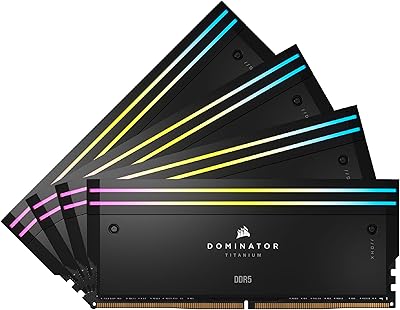
  • Kit Config: This kit ships as four individual 16GB modules designed to populate all four DIMM slots for a true quad-channel memory configuration.
  • Total Capacity: The complete kit provides 64GB of total system memory, suitable for demanding creative workloads, multitasking, and memory-intensive professional applications.
  • Memory Type: All four modules use DDR5 SDRAM, the current generation of desktop memory standard, offering improved bandwidth and efficiency over DDR4.
  • Clock Speed: The rated operating speed is 6400MHz via Intel XMP, which is significantly above the base JEDEC DDR5 speed of 4800MHz.
  • Latency: The XMP profile runs at a CL32 primary latency, which is appropriate for DDR5 operating at this frequency range.
  • Voltage: Under the XMP profile, each module operates at 1.4V, which sits within acceptable DDR5 voltage tolerances for sustained high-speed use.
  • RGB Lighting: Each module features 11 individually addressable RGB LEDs that can be customized and synchronized through Corsair's iCUE software.
  • Cooling Design: Corsair's patented DHX system dissipates heat through both the memory ICs and the PCB's ground plane, providing more thorough thermal management than a standard surface heatspreader.
  • XMP Support: Speed and timing profiles are delivered via Intel XMP, requiring manual activation in the motherboard BIOS after installation.
  • Software: Full RGB customization and lighting synchronization with other Corsair products requires the free iCUE application, available directly from Corsair's website.
  • Top Bar: The decorative top bar on each module is tool-free removable and swappable, with support for official Corsair accessories and custom 3D-printed designs.
  • Construction: The heatspreader body is machined from forged aluminum, providing structural rigidity and a noticeably premium tactile quality compared to stamped or plastic-framed alternatives.
  • Form Factor: All four sticks use the standard DIMM form factor, making them compatible with full-size ATX, micro-ATX, and EATX desktop motherboards with DDR5 support.
  • Color: This specific variant ships in white, covering both the heatspreader body and the top bar to suit light-themed or white-accented builds.
  • Module Dimensions: Each individual module measures 5.24″ long, 0.28″ wide, and 2.26″ tall, with the height being the most critical measurement for CPU cooler clearance planning.
  • Kit Weight: The complete four-module kit weighs 10.2 oz total, which is typical for aluminum-constructed DDR5 memory sets of this class.
  • Release Date: This kit first became available in September 2023, placing it within the early mainstream phase of the DDR5 platform adoption cycle.
  • Warranty: Corsair backs the Dominator Titanium line with a limited lifetime warranty against manufacturing defects, which is standard for their premium memory products.

Related Reviews
Corsair Dominator Titanium DDR5 96GB (2x48GB) 6600MHz RAM
89%
94%
Performance
91%
Build Quality
88%
Installation Ease
87%
RGB Customization
89%
Cooling Efficiency
More
Corsair Dominator Titanium RGB 96GB DDR5 RAM
81%
93%
Performance at Rated Speed
91%
Capacity & Configuration
89%
XMP Setup Experience
88%
RGB Lighting Quality
94%
Build Quality
More
Corsair Dominator Titanium DDR5 48GB (2x24GB) 7200MHz
88%
95%
Performance
82%
Value for Money
91%
Build Quality
88%
Ease of Installation
90%
Aesthetic Customization
More
Corsair Vengeance DDR5 64GB 6000MHz Desktop RAM
83%
93%
Performance at Rated Speed
91%
XMP Setup & Ease of Use
94%
Stability & Reliability
67%
Platform Compatibility
62%
Value for Money
More
Corsair Dominator Platinum RGB 64GB DDR5 RAM
82%
88%
Performance at Rated Speed
93%
Build Quality
91%
RGB Lighting Quality
58%
Value for Money
89%
XMP Setup Experience
More
Corsair Vengeance DDR5 64GB Desktop Memory
81%
93%
Stability & Reliability
88%
XMP Setup Experience
81%
Real-World Performance
67%
Value for Money
79%
Compatibility
More
Corsair Dominator Platinum RGB 64GB DDR5 RAM
80%
91%
Build Quality & Aesthetics
89%
RGB Lighting
88%
Platform Compatibility
87%
Stability & Reliability
86%
Thermal Performance
More
Corsair Dominator Titanium 48GB DDR5 RAM
83%
93%
Raw Performance
96%
Build Quality
91%
RGB Lighting
89%
XMP Setup Experience
74%
Thermal Management
More
Corsair Dominator Platinum RGB 64GB DDR5 RAM
82%
91%
Performance at Rated Speed
93%
Build Quality & Aesthetics
88%
RGB Lighting Quality
67%
iCUE Software Experience
86%
Thermal Management
More
Corsair Dominator Platinum RGB 64GB DDR5 RAM
81%
88%
Raw Performance
93%
Build Quality
84%
Cooling Efficiency
91%
RGB Lighting Quality
63%
Software Experience (iCUE)
More

FAQ

This DDR5 memory set is officially validated for Intel XMP on 12th, 13th, and 14th Gen platforms, which is where you will get the smoothest out-of-box experience. Many AMD X670 and B650 boards support EXPO profiles or allow manual memory tuning, so it may work at or near rated speeds on AMD, but Corsair does not officially certify that. If you are on an AMD build, checking community forums for your specific board and CPU combination before purchasing is a smart move.

Yes — XMP does not activate automatically. After you install the modules, you will need to enter your BIOS and enable the XMP profile manually, which is usually a single toggle found in the memory or overclocking section. On most modern Intel-compatible motherboards, this is quick and straightforward. Once enabled, the kit should boot at the full rated speed without any additional configuration.

It is strongly recommended to update your motherboard firmware to the latest version before installing the Corsair Dominator Titanium 64GB DDR5 RAM. A consistent minority of buyers have found that XMP profiles fail to engage on older firmware, leaving the kit running at default JEDEC speeds instead. Check your motherboard manufacturer's support page for the latest BIOS revision and apply it before you seat the modules for the best experience.

Possibly, but it is worth verifying before you buy. Each module stands 2.26 inches tall, which can conflict with the lower fin stacks on popular tower coolers like the Noctua NH-D15 or certain be quiet! models. Most cooler manufacturers publish a memory clearance specification — measure that against the 2.26-inch module height. If clearance is tight, an AIO liquid cooler sidesteps the issue entirely since there is no heatsink sitting over the DIMM slots.

iCUE is purely optional for performance — the memory runs at full speed without it installed. You only need the software if you want to customize the RGB colors or synchronize the lighting with other Corsair peripherals. It is free to download, but it does run as a background process, and some users notice a measurable system overhead. If lighting is not a priority for you, skipping iCUE entirely is a perfectly reasonable choice.

Mixing memory kits is generally not a great idea, even when the specs look identical on paper. Differences in the underlying ICs and PCB design can cause instability or force all sticks to run at a lower, more conservative speed. This Dominator Titanium kit is designed to run as a complete four-module set and performs best that way. If you need more than 64GB down the road, the cleaner path is to replace the entire kit with a higher-capacity one rather than mixing.

For pure gaming, 64GB is honestly more than current titles require — most modern games comfortably run within 16GB to 32GB, and the performance delta between 32GB and 64GB in that context is negligible. Where the extra capacity earns its place is in content creation, 3D rendering, video editing at high resolutions, or running virtual machines alongside your other tasks. If gaming is your sole focus, a fast 32GB kit would likely serve you better at a noticeably lower cost.

Yes, it is entirely cosmetic, but it is a thoughtfully implemented feature. The top bar clips onto each module without tools and changes the silhouette and style of the memory. Corsair sells official replacement bars in different finishes, and the design is open to 3D-printed custom versions as well. It does not affect cooling or performance in any meaningful way, but for builders who care about the look of their system, it adds useful long-term flexibility without requiring new memory entirely.

There is headroom available for experienced overclockers, though how far you can push it depends heavily on your specific motherboard and CPU memory controller. The kit's build quality and ICs provide a solid foundation to work from. Realistically, results vary — some users report stable operation above the rated speed, others find 6400MHz is close to their system's ceiling. If you go this route, patience with voltage and timing adjustments, followed by thorough stability testing, is essential.

Not necessarily — this depends on your motherboard. Running four DDR5 sticks at high speeds puts more load on the CPU's integrated memory controller than a two-stick setup, and some boards are validated for fewer sticks at maximum speeds. The safest check is your motherboard's QVL, or qualified vendor list, which most manufacturers publish on their support pages. It lists which memory configurations are tested and stable at which speeds, so you can confirm four-stick 6400MHz operation before committing.

Where to Buy