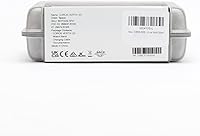
Overview

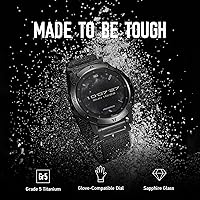
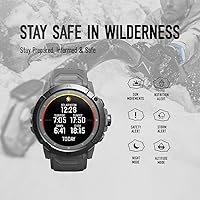
The COROS VERTIX 2S Adventure GPS Watch is built for one type of person: someone who spends multiple days in the backcountry and needs a wrist instrument that can keep up. COROS is a younger brand than Garmin or Suunto, but they have earned serious credibility in the ultra-endurance community over the past few years. This watch, released in April 2024, pushes that reputation further with upgraded sensors, improved navigation, and a PVD-coated titanium bezel paired with a sapphire screen that genuinely holds up to abuse. It is not a smartwatch. No third-party apps, no contactless payments. What you get instead is a precision outdoor instrument priced firmly at the top of the category.

Features & Benefits

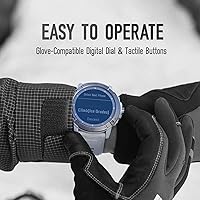
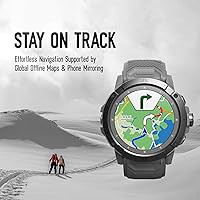
The standout spec is battery life. Under real conditions — GPS enabled, heart rate polling every second, temperature swings in the mountains — you may not consistently hit the advertised ceilings, but most users report figures well above any competing watch. The dual-frequency GNSS chipset locks satellites faster and holds signal tighter in narrow canyons or under a dense forest canopy where single-frequency units visibly struggle. Offline global maps stored directly on the watch mean you can navigate a remote ridge with no phone signal at all. The large dial and tactile button interface are a small but meaningful detail — anyone who has tried swiping a touchscreen in thick mountaineering gloves will immediately appreciate it. HRV and SpO2 monitoring add useful health context, particularly at altitude.

Best For

This expedition-grade wearable was clearly designed around a specific user, and it shows. Trail runners and ultramarathoners covering 100-mile events over multiple days can keep GPS running the entire time without anxiety about battery life at mile 80. Technical alpine climbers benefit from the glove-friendly controls and tough bezel when temperatures fall well below freezing. Backcountry skiers get offline maps in areas where cell coverage simply does not exist. Multi-sport endurance athletes — cyclists, triathletes, obstacle racers — also get solid value from consolidated training data without nightly charging. That said, if your workouts are mostly indoors or your tracking needs are modest, this is likely overkill. The 50.3mm case and weight up to 87g will not suit every wrist physically.

User Feedback

With 84 ratings and a 4.2 average at the time of writing, the review pool for the VERTIX 2S is still relatively thin for a watch at this price point, so take the consensus with some caution. Buyers consistently praise GPS lock speed, the premium hardware feel, and battery life that tracks closely to advertised figures under moderate conditions. Recurring complaints center on the COROS app, which has a steeper learning curve than Garmin Connect, and the watch's physical size — some users with smaller wrists find it too bulky for everyday wear. A handful of reviewers flagged higher-than-expected battery drain when all sensors run simultaneously in cold conditions. On balance, COROS earns consistent goodwill for responsive firmware updates and reliable post-purchase customer support.

Pros

  • Battery life holds up across multi-day expeditions in ways most competing GPS watches simply cannot match.
  • Dual-frequency GNSS locks satellites quickly and maintains accurate positioning in canyons, forests, and mountain terrain.
  • The sapphire screen and titanium bezel feel genuinely rugged, not just marketed that way.
  • Offline global maps work reliably with no phone or cell signal required.
  • Glove-friendly tactile buttons are a practical advantage that touchscreen rivals cannot offer in cold conditions.
  • HRV monitoring and SpO2 tracking provide useful health data for athletes training or racing at altitude.
  • 10 ATM water resistance handles submersion well beyond what most outdoor adventures require.
  • COROS has a strong track record of meaningful firmware updates that improve the watch after purchase.
  • The VERTIX 2S covers a wide range of sport modes, from rock climbing to skiing to open-water swimming.
  • Two-year warranty provides reasonable peace of mind for a premium-priced piece of gear.

Cons

  • The 50.3mm case is large and heavy enough to be genuinely uncomfortable on smaller wrists during daily wear.
  • The COROS app has a notable learning curve compared to the more polished Garmin Connect experience.
  • Battery performance can drop meaningfully in cold temperatures with all sensors running simultaneously.
  • The third-party app ecosystem is thin, limiting customization options that Garmin users take for granted.
  • With only 84 ratings at this price point, the review pool is too small to draw firm reliability conclusions.
  • No contactless payment or meaningful smartwatch features make it a poor choice as an everyday wearable.
  • Navigation Mirroring requires a paired phone to set up complex routes, which adds a dependency some buyers will find frustrating.
  • The premium price puts it in direct competition with deeply established Garmin and Suunto models that have larger user communities and more mature software.

Ratings

Our AI-generated scores for the COROS VERTIX 2S Adventure GPS Watch were produced by analyzing verified buyer reviews from global markets, with spam, bot-submitted, and incentivized feedback actively filtered out before scoring. Each category reflects both the genuine strengths and the recurring frustrations that real users reported across endurance sports, alpine, and backcountry use cases. Nothing has been softened — where the watch underdelivers for certain buyers, the scores reflect that honestly.

Battery Life
93%
For multi-day expeditions, the battery performance is the single most praised aspect of this adventure GPS watch. Ultramarathon runners and thru-hikers consistently report finishing week-long trips with charge to spare, and GPS tracking hours hold up well above most competitors in the same category.
Running all sensors at maximum polling frequency in freezing alpine conditions does reduce real-world GPS hours noticeably compared to the advertised ceiling. A small number of users also reported faster-than-expected drain after certain firmware updates, though COROS typically addresses these through patches.
GPS Accuracy
91%
The dual-frequency all-satellite chipset earns consistent praise for fast satellite acquisition and reliable track fidelity in difficult terrain. Hikers in narrow canyon systems and trail runners under dense tree cover report far fewer GPS drift incidents compared to single-frequency watches they had used previously.
In a handful of edge cases — particularly deep slot canyons or heavily built-up urban environments — some users noted brief signal interruptions, though these are infrequent. The gap between this watch and top-tier Garmin units in ideal open terrain is negligible, which means the premium is harder to justify for users who never leave open country.
Build Quality
94%
The PVD-coated titanium bezel and sapphire glass combination genuinely hold up to the kind of punishment expedition athletes inflict on gear. Users returning from rock climbing trips, glacier crossings, and desert ultras frequently comment on how the watch looks and functions as if new despite heavy contact with rock and ice.
A few users noted that the watch body itself, while the bezel and screen are excellent, showed minor cosmetic wear on the case sides after prolonged exposure to abrasive rock surfaces. The watch is not indestructible despite its premium materials, and a hard direct impact can still cause damage.
Navigation & Maps
88%
Having global offline maps stored directly on the watch is a genuine practical advantage for backcountry users who cannot rely on a phone signal. Navigation Mirroring, which lets you follow a complex route built on your phone directly on your wrist, is a feature that experienced route-planners find immediately useful on technical terrain.
Initial route setup through the COROS app requires more learning investment than most users expect, particularly for those coming from Garmin or Suunto ecosystems. The map rendering on the 1.4-inch display can feel cramped on highly detailed topographic sections, making it harder to read quickly at a glance while moving.
Comfort & Wearability
61%
39%
Users with larger wrists or those accustomed to big expedition watches report that the VERTIX 2S sits naturally and does not feel excessively cumbersome during long days on the trail. The band options provide reasonable adjustability, and the overall ergonomics during actual outdoor activity — rather than desk work — are rated positively by most target users.
This is one of the most consistently raised pain points in user feedback. At 50.3mm wide and up to 87g, the watch is genuinely large and heavy for everyday wear, and buyers with smaller wrists frequently describe it as uncomfortable or prone to sliding. Several reviewers specifically noted it was too bulky to wear comfortably in professional or social settings.
Heart Rate Monitoring
79%
21%
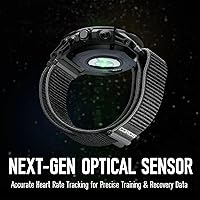
During steady-state aerobic efforts like long trail runs, extended hikes, and cycling, the optical heart rate sensor tracks reliably and the data aligns well with chest strap readings for most users. The addition of HRV monitoring and SpO2 is genuinely useful for athletes managing altitude acclimatization or tracking recovery quality between hard efforts.
At high intensities with significant wrist movement — sprint intervals, technical climbing, or aggressive skiing — the optical sensor occasionally lags or spikes briefly, a limitation common to wrist-based optical HR across all brands. For precision interval training where accurate real-time HR data matters every second, a chest strap pairing is still recommended.
Software & App Experience
67%
33%
The COROS app has matured considerably since the brand launched, and regular firmware updates show the company is actively improving the platform. Users who invest time in learning the training analysis and route planning tools generally find them capable and well-organized once the initial learning curve is cleared.
The app learning curve is one of the most frequently cited frustrations, especially among users switching from Garmin Connect. New users often struggle with navigation between training metrics, and the interface logic is not immediately intuitive. The third-party app ecosystem is nearly nonexistent compared to Garmin Connect IQ, which limits customization significantly.
Glove-Friendly Interface
89%
The physical button and large rotating dial design is a practical advantage that gets specific praise from alpine climbers, skiers, and winter runners who find touchscreen watches nearly unusable with thick gloves. Being able to scroll through menus and start or pause an activity without removing handwear is a small detail that matters enormously at altitude in cold conditions.
Users transitioning from touchscreen-first watches occasionally find the button navigation less intuitive at first, particularly when trying to access nested menus quickly. The dial can also feel slightly stiff in extreme cold according to a small number of alpine users, though this is not a widely reported issue.
Sleep & Recovery Tracking
72%
28%
Sleep stage tracking and the morning recovery readiness metrics are useful additions for endurance athletes who treat sleep as part of their training load. Users doing back-to-back hard training days or recovering from high-altitude exposure find the HRV-based recovery scores align reasonably well with how they actually feel.
Sleep tracking accuracy is inconsistent for some users, with occasional misclassified stages or missed sleep periods reported when the watch fits loosely. The stress analysis feature, while interesting, is seen by most buyers as a secondary feature rather than a primary selling point, and its data sometimes feels disconnected from perceived exertion.
Water Resistance
92%
A 10 ATM water resistance rating means the watch handles swimming, river crossings, heavy rain, and even snorkeling without any concern. Open-water swimmers and triathlon competitors appreciate not having to think about water exposure at all, and no user feedback surfaced any water ingress issues under normal use conditions.
The rating is more than sufficient for the intended audience, so this is rarely a source of complaints. The only minor note is that some users feel the watch lacks dedicated pool swimming metrics depth compared to Garmin Swim-focused models, though that is not its primary target use case.
Value for Money
74%
26%
For serious expedition athletes who will genuinely use the battery life, offline maps, and rugged construction across multi-day events, the price-to-capability ratio holds up reasonably well against Garmin Fenix and Suunto Vertical competitors at similar or higher price points. The hardware quality alone — sapphire, titanium, dual-frequency GPS — justifies a premium over mid-range GPS watches.
For any buyer who does not regularly push into multi-day wilderness scenarios, the value proposition weakens considerably since they are paying for capabilities that will sit unused. The limited review count at this price tier also means buyers have less collective data to draw confidence from compared to more established Garmin models with thousands of reviews.
Sport Mode Breadth
83%
The VERTIX 2S covers a genuinely wide range of disciplines, from trail running and road cycling to rock climbing, skiing, swimming, and multisport race modes. Multi-sport athletes who move between disciplines throughout the year can consolidate all their training data in a single device without compromise on any individual activity type.
While the breadth is strong, the depth of analytics in some individual sport modes — particularly cycling and swimming — does not quite match dedicated Garmin sport-specific models. Users whose primary sport is road cycling, for example, may find the power meter integration and cycling dynamics data less refined than they would like.
Customer Support & Updates
81%
19%
COROS has built a solid reputation for pushing meaningful firmware updates that add features and fix reported issues after purchase, which several reviewers specifically credit as a reason for their brand loyalty. Customer support response times are generally praised, with most warranty or defect cases resolved without significant friction.
As a younger and smaller brand than Garmin, COROS has a less extensive global service network, which can mean slower resolution times for buyers in some regions. A handful of users noted that complex technical support cases required multiple back-and-forth exchanges before reaching a resolution.

Suitable for:

The COROS VERTIX 2S Adventure GPS Watch was built for people who spend serious time in serious terrain, and that focus shows in every design decision. Ultra-endurance runners tackling 100-mile races, thru-hikers on week-long routes, and alpinists on multi-day ascents all share one common problem: most GPS watches die before they do. This watch addresses that directly with battery life that holds up across extended expeditions under real conditions, not just lab benchmarks. Technical climbers and backcountry skiers will also appreciate the glove-compatible button interface and offline global maps, which work reliably when cell coverage is nonexistent. Multi-sport athletes — cyclists, triathletes, adventure racers — benefit from having a single device that consolidates training metrics, recovery data, and navigation without needing a nightly charge. If your outdoor pursuits regularly take you beyond cell towers and beyond one-day trips, this expedition-grade wearable makes a genuinely compelling case for itself at this price tier.

Not suitable for:

The COROS VERTIX 2S Adventure GPS Watch is a poor fit for anyone whose fitness routine lives primarily indoors or within city limits. At 50.3mm wide and up to 87g, it is a large, heavy watch by any standard — people with smaller wrists often find it physically uncomfortable for all-day wear, and it draws attention in professional or formal settings where a discreet profile matters. Buyers expecting a full smartwatch experience will be disappointed: there are no third-party apps, no contactless payment, and notification handling is minimal compared to an Apple Watch or even a Garmin Venu. Casual gym-goers or weekend joggers tracking basic steps and heart rate are paying a significant premium for navigation and durability features they will rarely, if ever, use. The COROS app also has a steeper learning curve than competing platforms, which can frustrate users who want quick, intuitive access to their data right out of the box.

Specifications

  • Case Size: The watch measures 50.3 x 50.3 x 16mm, placing it firmly in the large-case category typical of expedition-grade GPS watches.
  • Weight: Depending on the band selected, the watch weighs between 70g and 87g on the wrist.
  • Display: A 1.4-inch circular display runs at 280 x 280 resolution and is protected by scratch-resistant sapphire glass.
  • Bezel Material: The bezel is machined from titanium and finished with a PVD coating for corrosion and scratch resistance in harsh environments.
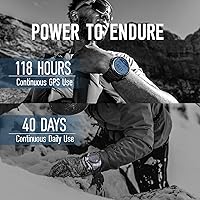
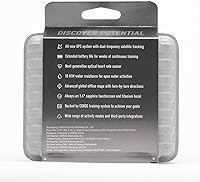
  • Battery Life: Rated at 40 days in daily-use mode and up to 118 hours with full GPS active, though real-world figures vary with sensor load and temperature.
  • GNSS System: An all-satellite dual-frequency chipset supports GPS, GLONASS, Galileo, BeiDou, and QZSS for precise positioning across global terrain.
  • Water Resistance: Rated to 10 ATM, meaning the watch is suitable for swimming, snorkeling, and exposure to heavy rain or surf.
  • Navigation: Global offline maps are stored directly on the watch, with a built-in route planner and Navigation Mirroring for following complex routes from a paired phone.
  • Sensors: Onboard sensors include an optical heart rate monitor, SpO2 blood oxygen sensor, HRV index tracker, barometric altimeter, compass, and gyroscope.
  • Connectivity: The watch connects to smartphones via Bluetooth for app syncing, notifications, and firmware updates through the COROS app.
  • Interface: All inputs are handled via physical tactile buttons and a large rotating digital dial, with no touchscreen reliance.
  • Sport Modes: Supported activities include trail running, road running, cycling, skiing, rock climbing, swimming, and numerous other outdoor and multisport disciplines.
  • Health Tracking: Beyond activity metrics, the watch monitors sleep stages, real-time stress levels, breathing rate, and heart rate variability for recovery insights.
  • Warranty: COROS provides a 2-year limited manufacturer warranty covering defects in materials and workmanship from the date of purchase.
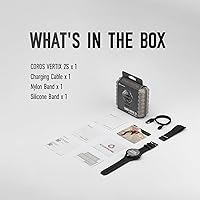
  • In the Box: Each unit ships with the watch, a magnetic charging cable, and a printed instruction manual.
  • Platform: The COROS app is available for iOS and Android and serves as the central hub for route planning, training analysis, and firmware management.
  • Availability: The watch became available in April 2024 as the successor to the original COROS VERTIX 2, with updated sensors and navigation hardware.

Related Reviews
SUUNTO Vertical Solar GPS Adventure Watch
79%
93%
Battery Life & Solar Efficiency
91%
GPS Accuracy & Signal Acquisition
88%
Offline Maps & Navigation
89%
Build Quality & Durability
67%
Comfort & Wearability
More
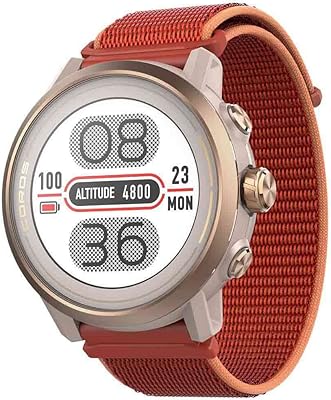
COROS APEX 2 Outdoor GPS Watch
83%
96%
Battery Life
92%
Build Quality
88%
GPS Accuracy
84%
Navigation & Maps
89%
Comfort & Wearability
More
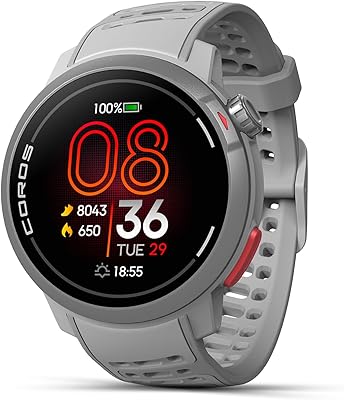
COROS PACE Pro GPS Sport Watch
84%
93%
GPS Accuracy
88%
Battery Life
91%
Display Quality
84%
GPS Tracking Software
89%
Training Metrics
More
COROS PACE 3 GPS Sport Watch
79%
91%
GPS Accuracy
94%
Battery Life
93%
Comfort & Wearability
83%
Build Quality
88%
Training Features
More
Spodus G50002 Kids Watch with GPS Tracker 4G Smart Watch
84%
88%
GPS & Location Accuracy
81%
Battery Life
78%
Voice & Video Call Quality
90%
Ease of Use
85%
Build Quality
More
Izzo Golf Swami GPS Watch
84%
88%
Ease of Use
91%
Battery Life
85%
Display Quality
89%
Course Recognition
82%
Water Resistance
More
CANMORE TW411 Golf GPS Watch
71%
78%
GPS Accuracy
86%
Course Database
63%
Battery Life
89%
Value for Money
84%
Ease of Use
More
Suunto Race GPS Sports Watch
80%
93%
Display Quality
91%
GPS Accuracy
74%
Battery Life
89%
Navigation & Maps
67%
Touchscreen Usability
More
SUNROAD FR510 Altimeter GPS Watch
83%
88%
Performance in GPS Accuracy
90%
Durability and Build Quality
85%
Battery Life
80%
Ease of Use
87%
Weather Tracking (Barometer)
More
CANMORE TW410G GPS Golf Watch
70%
74%
GPS Accuracy
83%
Course Database
88%
Value for Money
79%
Ease of Use
71%
Display Readability
More

FAQ

Real-world results are generally close to advertised figures under moderate conditions, but expect some reduction when running all sensors simultaneously, using the backlight frequently, or operating in cold temperatures below freezing. On a typical multi-day hiking trip with GPS active and heart rate polling at normal intervals, most users report comfortably exceeding 100 hours. If you push every sensor to maximum frequency in alpine winter conditions, that number comes down noticeably.

Yes, the global maps are stored directly on the watch itself, so you do not need a phone or any data connection to navigate once the maps are loaded. You can plan routes in advance through the COROS app at home, sync them to the watch, and then head into the wilderness with full turn-by-turn guidance on your wrist. Navigation Mirroring is a separate feature that lets you mirror a complex route from your phone screen to the watch display in real time, but that does require your phone to be present.

Honestly, it depends on your wrist size and what you are used to wearing. At 50.3mm wide and up to 87g, it is a substantial watch by any measure. People with wrists under about 165mm in circumference frequently describe it as feeling bulky or sliding around during daily wear. If you plan to use it primarily for outdoor expeditions and can tolerate the size in daily life, it works fine, but it is not a discreet everyday watch by any stretch.

Both watches use multi-band GNSS technology, and in open terrain the difference is minimal. Where the VERTIX 2S tends to pull ahead is in challenging environments like deep canyons, dense forest canopy, or urban gorges where single-frequency GPS systems lose track more easily. The dual-frequency chipset processes two signal frequencies simultaneously, which reduces the multipath interference that causes GPS drift. In straightforward conditions, both are excellent.

Absolutely, and that is actually one of its core strengths. The watch operates fully independently for tracking, navigation, and health monitoring. You only need the phone to sync data to the app, receive firmware updates, or set up new routes before a trip. During the activity itself, the phone can stay home.

Most switchers describe a moderate adjustment period of a few weeks. The COROS app is well-designed and genuinely useful, but it organizes data differently from Garmin Connect, and the training analysis tools have their own logic. Newer users often find it intuitive enough, while experienced Garmin users sometimes miss the depth of Connect IQ or the familiarity of the Garmin interface. COROS has improved the app substantially through updates, so it is worth checking recent user feedback for the current state.

Sapphire glass is genuinely one of the hardest materials used in watch displays, rating a 9 on the Mohs hardness scale, just below diamond. In practice, everyday scratches from rock, gravel, and gear contact that would visibly mark a standard mineral glass screen typically leave sapphire unmarked. It can still crack under a sharp, direct impact, but for surface abrasion resistance it is the best option currently available on wrist-worn devices.

Not in a meaningful way. The VERTIX 2S runs on COROS proprietary firmware and does not support open app platforms like Garmin Connect IQ or Wear OS. Custom watch faces are limited to what COROS provides, and you cannot sideload external apps. If a rich third-party ecosystem matters to you, this is a genuine limitation worth factoring into your decision.

The optical heart rate sensor on this expedition-grade wearable performs reliably during steady-state cardio and moderate-intensity efforts. At very high intensities with significant wrist movement, like interval sprints or technical climbing, optical HR can occasionally lag or show brief spikes, which is a known limitation of wrist-based optical sensors across all brands. For altitude use, the SpO2 sensor provides blood oxygen readings that are genuinely useful for monitoring acclimatization, though it is not a medical-grade device.

COROS covers the watch with a 2-year limited warranty against manufacturing defects. Physical damage from impacts or drops is not covered, as is standard across the industry. COROS has a reasonable reputation for customer support responsiveness, and several user reviews specifically mention positive experiences resolving issues through their support team. Registering your watch through the COROS app after purchase is the recommended first step to ensure your warranty is on file.

Where to Buy