Overview

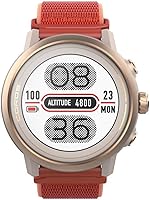
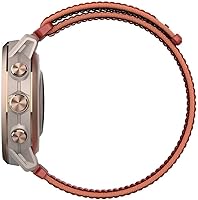
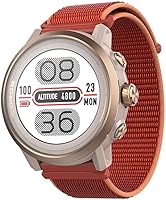
The COROS APEX 2 Outdoor GPS Watch sits at an interesting position in the market — built for serious endurance athletes who want premium materials without the bulk or price of a top-tier Garmin. At roughly 42 grams, the watch punches well above its weight class in build quality, sporting a sapphire glass display and a Grade 5 titanium bezel that should hold up to years of trail abuse. It covers a wide range of outdoor disciplines — running, cycling, skiing, and climbing among them. One honest caveat worth noting upfront: if you live inside the Garmin or Suunto app ecosystem, the COROS platform, while capable, isn't quite as deep.
Features & Benefits

The standout feature that separates this outdoor training watch from most competitors at this price point is its battery life — up to 45 hours in full GPS mode and 17 days with regular daily use. That's not a typo, and for ultramarathon runners or multi-day hikers, it changes how you think about charging. The offline topographic maps with on-wrist navigation mean you can leave the phone behind on longer trail runs. Recovery tracking is genuinely useful too: overnight HRV monitoring combined with sleep stage breakdowns (deep, light, and REM) gives a clearer picture of readiness than basic step-counting watches. Platform integrations with TrainingPeaks, Strava, and Stryd work reliably, and the COROS Training Hub lets coaches push structured workouts directly to the watch.

Best For

This GPS watch makes the most sense for athletes who spend real time in the backcountry — trail runners logging big weekly mileage, ultramarathoners who can't afford a dead watch mid-race, or ski tourers who want reliable altitude and speed data without carrying extra gear. It's also a smart pick for cyclists and climbers who bounce between disciplines and want one device that handles all of them competently. Athletes already using TrainingPeaks or Stryd will find the platform integration refreshingly tight. Worth mentioning: the watch's design is understated enough for everyday wear, so you're not obviously strapping on a piece of sporting equipment every morning.

User Feedback

Across more than 500 ratings, owners consistently highlight two things: battery endurance and how comfortable the watch feels after hours of wear. The lightweight build never becomes an annoyance, even on long race days. On the flip side, a notable group of users — particularly those coming from Garmin — find the companion app somewhat limiting. It's functional and improving with updates, but the data visualization and customization options aren't quite on par with Garmin Connect yet. A practical gripe worth knowing: the touchscreen responsiveness can drop noticeably with wet or gloved hands, which matters if you run in cold or rainy conditions.

Pros

  • Battery life of 45 hours in GPS mode is a genuine advantage for ultra-distance athletes and multi-day adventures.
  • The sapphire glass display resists scratches exceptionally well, holding up to daily trail and outdoor use.
  • At roughly 42 grams, this outdoor training watch sits comfortably on the wrist even during the longest efforts.
  • Offline topographic maps mean you can navigate confidently in remote areas without relying on your phone.
  • Overnight HRV monitoring and detailed sleep stage tracking add meaningful recovery data beyond basic step counts.
  • Integrations with Strava, TrainingPeaks, and Stryd work reliably and suit athletes with structured training programs.
  • The Grade 5 titanium bezel with PVD coating keeps the watch looking clean despite heavy outdoor use.
  • Broad sport mode support makes the COROS APEX 2 a practical single-device solution across multiple disciplines.
  • The 5 ATM water resistance handles rain, sweat, and open-water swimming without any issues.
  • At its price point, the combination of premium materials and GPS performance is difficult to match from competing brands.

Cons

  • The COROS companion app still trails Garmin Connect in data depth, customization, and training analytics.
  • Touchscreen responsiveness drops noticeably with wet hands or gloves, which is a real issue in cold or rainy conditions.
  • No music storage or playback means you'll still need a separate device or phone for audio on the run.
  • The app ecosystem of third-party watch faces and widgets is limited compared to more established platforms.
  • Single-frequency GNSS, while reliable in most conditions, can be less precise than dual-frequency chipsets in dense canopy or urban canyons.
  • Buyers coming from a Garmin or Suunto background may face a learning curve adjusting to COROS software logic.
  • There is no onboard voice navigation or turn-by-turn audio cues, which some trail runners prefer.
  • Software updates, while generally positive, have occasionally introduced minor bugs that take a patch cycle or two to resolve.

Ratings

The scores below for the COROS APEX 2 Outdoor GPS Watch were generated by our AI system after analyzing verified buyer reviews from multiple global markets, with spam, incentivized, and bot-flagged submissions actively filtered out before scoring. Each category reflects the full spectrum of real owner experiences — strengths and friction points alike — so you get an honest picture rather than a curated highlight reel. Where this watch genuinely stands out, the scores show it; where buyers have run into consistent frustrations, those are reflected too.
Battery Life
96%
This is the category where the COROS APEX 2 pulls decisively ahead of most competitors in its price range. Owners running multi-day ultras or back-to-back training weekends consistently report that the real-world GPS endurance matches or exceeds the advertised figures, which is not always the case with rival brands.
A small number of users noted that enabling all sensors simultaneously — GPS, heart rate, and SpO2 — can reduce battery life noticeably below the headline number. This is a minor caveat in normal training use but worth knowing for anyone planning extended expeditions.
Build Quality
92%
The combination of sapphire glass and a Grade 5 titanium bezel gives this outdoor training watch a genuinely premium feel that holds up under daily trail abuse. Owners who have worn it for a year or more frequently comment that the case and display remain scratch-free where other watches would show clear signs of wear.
A handful of users reported that the nylon band on the standard variant can show fraying after extended heavy use, particularly in wet conditions. The watch body itself draws very little criticism, but band durability is a mild recurring note worth factoring in if you train in harsh environments regularly.
GPS Accuracy
88%
The all-satellite single-frequency chipset locks on quickly and tracks reliably across a wide range of terrain types, from open ridgelines to technical singletrack. Cyclists and trail runners frequently cite GPS accuracy as a strong point, with distance and pace data holding up well against foot pod and known course measurements.
In dense forest canopy or deep canyon settings, some users report minor GPS drift that occasionally shows up as slightly inflated distance figures. This is a known limitation of single-frequency receivers across all brands, not a flaw unique to this watch, but buyers heading into heavily shaded terrain should have realistic expectations.
Navigation & Maps
84%
Offline topographic map support is a genuine differentiator here, and hikers and trail runners who have used it in areas without cell coverage consistently praise how reliable and readable the on-wrist navigation feels. The ability to load routes from Komoot or similar platforms and follow them without a phone nearby is a practical advantage that gets mentioned repeatedly in positive reviews.
The map rendering resolution and interface responsiveness are functional but not as polished as dedicated navigation devices. Some users find route re-routing to be slower than they'd like, and the map detail in very remote regions can be thinner than what you'd get with a dedicated hiking GPS unit.
Comfort & Wearability
89%
At 42 grams in its lightest configuration, this GPS watch barely registers on the wrist even during long efforts. Owners who wear it around the clock for sleep tracking and daily monitoring rarely mention comfort issues, and the low profile fits under jacket sleeves without bunching during ski or cycling sessions.
The 43mm case size suits most wrists, but users with smaller wrists have noted that the watch can feel slightly wide when worn casually. This is a minor ergonomic consideration rather than a functional problem, and the majority of owners across body types report the fit as excellent.
Heart Rate Accuracy
76%
24%
During steady-state aerobic efforts like long trail runs and cycling, the optical heart rate sensor performs reliably and produces data that aligns reasonably well with chest strap readings. For the majority of training sessions where zone accuracy over several minutes matters more than beat-to-beat precision, it does the job competently.
At high intensity intervals or during activities with significant wrist movement — like aggressive trail descents or ski turns — some users report heart rate lag or momentary spikes that don't reflect actual effort. Athletes who require precise real-time heart rate data for structured interval work may still prefer pairing a chest strap for those sessions.
App & Software Experience
63%
37%
The COROS app is clean, loads quickly, and handles basic training data presentation well enough for athletes who primarily use external platforms like TrainingPeaks or Strava for deeper analysis. Firmware updates have steadily added features since launch, and the COROS Training Hub is a genuinely useful tool for coach-athlete communication.
Buyers who are used to the depth of Garmin Connect will notice the gap fairly quickly. Customization of data screens, training load analytics, and third-party widget support all fall short by comparison. This is the most consistently cited frustration across longer-term owners, and while improvements are happening, the software still lags the hardware quality by a visible margin.
Touchscreen Usability
68%
32%
In dry, warm conditions the touchscreen is responsive and intuitive, and most users find the combination of touch and the physical dial easy to navigate during workouts. The always-on display remains readable at a glance, which is exactly what you need when checking pace mid-effort without breaking stride.
Cold temperatures and wet hands are where the touchscreen noticeably underperforms. Winter runners, ski tourers, and athletes who train through wet weather report frustrating moments where swipes fail to register or require multiple attempts. The physical dial provides a workaround, but it's a real-world limitation that buyers in cold climates should factor into their decision.
Sleep & Recovery Tracking
79%
21%
The sleep stage breakdown — covering deep, light, and REM cycles — combined with overnight HRV monitoring gives athletes a useful consolidated picture of recovery without needing a separate wearable. For endurance athletes managing training load, having this data on the same device they train with keeps the workflow simple.
The sleep detection algorithm occasionally misidentifies late-night reading or rest periods as light sleep, which can skew nightly totals slightly. It's accurate enough for trend-based recovery decisions, but users expecting clinical-grade sleep data may find the granularity falls short of dedicated sleep trackers or more advanced recovery platforms like WHOOP.
Sport Mode Coverage
86%
The range of supported activity types is broad enough to serve genuinely multi-sport athletes without requiring workarounds or missing core metrics. Trail running, road cycling, skiing, swimming, and climbing all have dedicated modes with relevant data fields, making this outdoor training watch a credible single-device solution across seasons.
Some niche activities have more limited metric sets compared to Garmin's sport mode depth, and a few users noted that transition modes for triathlon are less developed than on competing platforms. For pure trail and mountain sports athletes, this is rarely an issue, but multi-sport racers doing full triathlons may find the options a bit thin.
Third-Party Integrations
82%
18%
Syncing with Strava, TrainingPeaks, Stryd, and Komoot works reliably and automatically once set up, which matters a lot to athletes who have built their training ecosystem around these platforms. The Stryd integration in particular is well-implemented for power-based runners, and the automatic sync removes a common friction point from the daily training routine.
The overall ecosystem breadth still trails Garmin's, and a few niche integrations that serious athletes might expect — certain running dynamics tools or specific coaching platforms — require workarounds or are simply unavailable. Users who need very specific third-party connections should verify compatibility before committing to the purchase.
Value for Money
83%
Relative to what comparable hardware costs from Garmin or Suunto, the COROS APEX 2 delivers titanium construction, sapphire glass, and genuine multi-day GPS battery life at a price that represents strong value for the materials and performance on offer. Athletes who prioritize hardware over software depth consistently rate the value proposition highly.
Buyers who place high value on software sophistication and a mature app ecosystem may feel the price is harder to justify when the companion app experience doesn't match the hardware quality. If deep analytics and customization are core requirements, the effective value drops somewhat relative to the asking price.
Setup & Pairing
85%
Initial setup is straightforward — pairing with the COROS app takes only a few minutes, and the watch walks you through the process without requiring technical knowledge. Loading maps and syncing training platforms is handled within the app in a logical sequence that most users complete without consulting any documentation.
A small number of users reported Bluetooth pairing drops after iOS or Android system updates, requiring a re-pair process to restore sync. This appears to be an intermittent rather than widespread issue, but it shows up often enough in reviews to be worth noting for anyone who values a consistently low-maintenance setup.
Durability Over Time
91%
Long-term owners — many of whom have had the watch for a year or more across varied outdoor conditions — consistently report that the hardware holds up exceptionally well. The sapphire display, in particular, attracts nearly universal praise for remaining unmarked despite repeated contact with rocks, branches, and trail debris.
A small cluster of reports mentions issues with the charging port becoming harder to seat securely over many months of repeated use, particularly for owners who charge frequently due to heavy training loads. It's not a common failure mode, but it's worth keeping an eye on as the watch ages.

Suitable for:

The COROS APEX 2 Outdoor GPS Watch was clearly built with one type of buyer in mind: the dedicated outdoor athlete who trains hard, ventures far, and needs a watch that keeps up without constant babysitting. Trail runners and ultramarathoners will find the multi-day GPS battery life genuinely liberating — no more rationing screen-on time during a 30-hour race or a back-to-back training weekend. Cyclists, ski tourers, and climbers also benefit from the broad sport mode coverage, meaning one watch handles the full range of outdoor pursuits without compromise. Athletes who have structured their training around TrainingPeaks, Stryd, or Komoot will appreciate how tightly the platform integrations work in practice. Hikers and travelers heading into remote terrain without reliable cell service will find the offline topographic maps far more useful than a basic breadcrumb trail on a cheaper device.
Not suitable for:

If your primary use case is casual fitness tracking or you're mainly interested in smartwatch features like notifications, music playback, or app-store breadth, the COROS APEX 2 Outdoor GPS Watch is probably not the right fit. Buyers who are deeply invested in the Garmin Connect ecosystem — and rely on its extensive data analytics, training load visualizations, or third-party widget library — will likely find the COROS app underwhelming by comparison, at least for now. This watch also isn't the best choice for athletes who frequently train in cold, wet, or snowy conditions and rely heavily on touchscreen navigation, since the screen can become less responsive with gloves or wet fingers. If paying close to three hundred dollars feels like a stretch and your training doesn't demand serious GPS accuracy or navigation tools, a more entry-level option would serve just as well for the money.
Specifications

  • Display: The watch features a 1.2-inch always-on LCD touchscreen with a resolution of 240 x 240 pixels, remaining legible in bright sunlight.
  • Screen Material: The display is protected by sapphire glass, one of the hardest materials used in consumer watches, offering strong resistance to scratches and surface damage.
  • Bezel Material: The bezel is machined from Grade 5 titanium alloy and finished with PVD coating for added corrosion and wear resistance.
  • Dimensions: The watch case measures 43.0 x 42.8 x 12.8mm, providing a substantial but not oversized wrist presence suited to outdoor use.
  • Weight: Depending on the band selected, the watch weighs between 42g and 53g, making it one of the lighter options in the premium GPS watch category.
  • Battery Life: The watch delivers up to 45 hours of continuous GPS tracking and approximately 17 days of standard daily use on a single charge.
  • Water Resistance: Rated at 5 ATM, the watch can handle rain, sweat, and surface swimming without risk of water ingress.
  • GNSS Chipset: An all-satellite single-frequency chipset provides positioning support across GPS, GLONASS, Galileo, and BeiDou systems for reliable tracking in varied terrain.
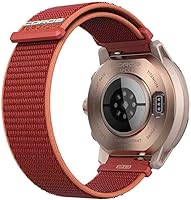
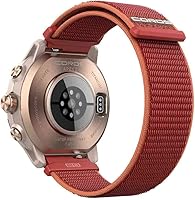
  • Heart Rate: An optical sensor on the underside of the case continuously monitors heart rate directly from the wrist during workouts and daily wear.
  • SpO2 Monitoring: The watch includes blood oxygen saturation (SpO2) measurement, useful for altitude awareness and general health monitoring.
  • HRV Tracking: Overnight heart rate variability (HRV) monitoring runs passively during sleep and feeds into the watch's recovery assessment.
  • Sleep Tracking: The watch automatically tracks sleep stages — deep, light, and REM — providing a nightly breakdown through the COROS app.
  • Navigation: Offline topographic and landscape maps can be loaded onto the watch for on-wrist navigation without requiring a phone connection.
  • Connectivity: The watch connects to smartphones via Bluetooth for app syncing, notifications, and firmware updates.
  • Sport Modes: Supported activity types include trail running, road running, cycling, skiing, climbing, swimming, and several additional outdoor disciplines.
  • Platform Integrations: The watch syncs with Strava, TrainingPeaks, Komoot, Stryd, Apple Health, Adidas Running, and several other third-party training platforms.
  • Warranty: COROS covers the watch with a 2-year manufacturer warranty against defects in materials and workmanship.
  • Connectivity Standard: Bluetooth is the sole wireless protocol used for data transfer and smartphone pairing; there is no Wi-Fi radio included.
  • Operating System: The watch runs COROS proprietary firmware and is managed via the COROS app, available for both iOS and Android devices.
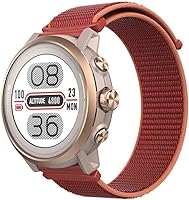
  • Band Material: The standard band on the Core variant is nylon, chosen for durability and breathability during extended outdoor activity.

Related Reviews
Garmin Enduro 2 GPS Running Watch
81%
93%
Battery Life
91%
GPS Accuracy
89%
Build Quality & Durability
82%
Comfort & Fit
88%
Navigation & Mapping
More
COROS PACE 3 GPS Sport Watch
79%
91%
GPS Accuracy
94%
Battery Life
93%
Comfort & Wearability
83%
Build Quality
88%
Training Features
More
COROS VERTIX 2S Adventure GPS Watch
82%
93%
Battery Life
91%
GPS Accuracy
94%
Build Quality
88%
Navigation & Maps
61%
Comfort & Wearability
More
COROS PACE Pro GPS Sport Watch
84%
93%
GPS Accuracy
88%
Battery Life
91%
Display Quality
84%
GPS Tracking Software
89%
Training Metrics
More
Spodus G50002 Kids Watch with GPS Tracker 4G Smart Watch
84%
88%
GPS & Location Accuracy
81%
Battery Life
78%
Voice & Video Call Quality
90%
Ease of Use
85%
Build Quality
More
Google Pixel Watch 2
86%
88%
Health Tracking Accuracy
85%
Battery Life
74%
Display Brightness
91%
Charging Speed
89%
Build Quality
More
CANMORE TW410G GPS Golf Watch
70%
74%
GPS Accuracy
83%
Course Database
88%
Value for Money
79%
Ease of Use
71%
Display Readability
More
Soundcore Boom 2 Portable Bluetooth Speaker
80%
91%
Bass Performance
88%
Volume & Loudness
86%
Battery Life
93%
Water & Weather Resistance
82%
Build Quality
More
SkyCaddie LX5 GPS Golf Watch
76%
93%
Course Map Accuracy
91%
Green Detail & IntelliGreen
74%
Touchscreen Responsiveness
88%
Display Quality
82%
Battery Life
More
SUNROAD FR510 Altimeter GPS Watch
83%
88%
Performance in GPS Accuracy
90%
Durability and Build Quality
85%
Battery Life
80%
Ease of Use
87%
Weather Tracking (Barometer)
More

FAQ

In full GPS mode, you can expect up to 45 hours of continuous tracking, which covers most ultramarathon distances and multi-day hiking stints comfortably. If you switch to a lower GPS frequency setting to conserve power, that number climbs further. In practice, users report the stated battery figures hold up well in real conditions.

Yes, that is one of its genuine strengths. You can pre-load offline topographic and landscape maps onto the watch through the COROS app, then navigate entirely from your wrist. It works reliably in areas without cell service, which is exactly the scenario it was designed for.

On hardware, the two are competitive — sapphire glass, titanium construction, and GPS accuracy are all comparable. Where Garmin pulls ahead is in software depth: Garmin Connect offers richer data visualization, a broader third-party ecosystem, and more customization options. If you're heavily invested in Garmin's platform, switching carries a real trade-off. If you're starting fresh or care more about battery life and build quality than app features, this watch holds up well.

Not consistently, which is worth knowing before you buy. Users who run or ski in cold, wet conditions report noticeable drops in touchscreen responsiveness. The watch does have a physical dial and button for navigation, so you're not entirely stuck, but heavy glove users may find that workflow less intuitive than they'd like.

Generally yes. The all-satellite single-frequency chipset pulls from multiple GNSS systems simultaneously, which improves accuracy across most terrain types. It performs well in open areas and on trails. Very dense forest or deep urban canyons can introduce minor drift, as is common with single-frequency receivers, but for most outdoor use cases the tracking is solid.

Yes, both platforms integrate directly with the COROS ecosystem and sync automatically whenever the watch connects to the app via Bluetooth. If you're coached through TrainingPeaks, your coach can push structured workouts to your watch through the COROS Training Hub, and completed sessions flow back to the platform without manual intervention.

The design is understated enough that most owners wear it daily without issue. The titanium bezel and clean round face read more like a casual sport watch than a chunky GPS unit. It won't pass as a dress watch, but it's far from conspicuous in an office or social setting.

It tracks deep, light, and REM sleep stages alongside overnight HRV, which gives a reasonable picture of recovery quality. It's not as granular as something like a WHOOP, but for an athlete who wants consolidated data in one device rather than wearing multiple gadgets, it's more than adequate for day-to-day training decisions.

COROS offers a 2-year warranty against manufacturing defects, and their customer support is generally well-regarded in the endurance sports community. The process involves contacting COROS directly rather than going through a retailer. Most users report straightforward experiences, though turnaround time can vary depending on your region.

It syncs with Apple Health, so your activity and health data can flow into Apple's ecosystem automatically. On Android, the COROS app handles data management, though native integration with Google Fit is more limited. For most serious athletes, the direct integrations with Strava, TrainingPeaks, and similar platforms matter far more than smartwatch ecosystem compatibility.

Where to Buy

Backcountry.com
In stock $299.00
Competitive Cyclist
In stock $299.00
The Runner's Edge
In stock $300.00
Portland Running Company
In stock $349.00
Trisports.com
In stock $349.00
Neptune Mountaineering
In stock $349.00