Overview

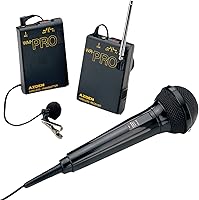
The Azden WMS-PRO Wireless Microphone System has been a familiar name in the budget wireless audio space for nearly two decades, and its staying power says something real about its appeal to indie filmmakers and content creators. The kit ships with a belt-pack transmitter, a receiver, a lavaliere mic, and a handheld condenser — everything you need to get wire-free audio into your camera in one box. The receiver connects directly to your camera's external mic jack, which keeps the setup refreshingly simple. It operates on the VHF frequency band, which works fine in quieter environments but can pick up interference in signal-heavy locations like urban events or busy venues.

Features & Benefits

One of the more practical things about this wireless mic kit is that it doesn't make you choose between mic types. The included lavaliere handles hands-free interview work while the handheld condenser covers presentations or stand-up commentary — both in a single purchase. LED indicators on the transmitter and receiver let you confirm a solid signal lock before you start rolling, which matters more than people realize when you're working alone. There's also an earphone monitoring jack on the receiver, a feature often missing at this price point, so you can actually hear what's being recorded in real time. Both units run on standard 9V batteries, easy to find anywhere.

Best For

This camera mic system makes the most sense for solo content creators — YouTube vloggers, interview-style podcasters who shoot on camera, or educators recording walkthrough videos — who want wireless freedom without wading into multi-component audio rigs. It's also a solid pick for students learning the basics of location audio, since the kit covers enough ground to handle real shoots without requiring extra purchases. Where it starts to struggle is outdoors in crowded RF environments, like festivals or conference halls packed with wireless devices. Broadcast and professional documentary work will likely outgrow it fast. Indoors, in controlled settings, it genuinely earns its keep.

User Feedback

Buyers who use the Azden system for indoor interviews and talking-head videos tend to come away pretty satisfied — setup is fast, signal locks reliably, and the lavaliere mic gets surprisingly positive marks for its clarity on dialogue. The criticism that surfaces most consistently centers on VHF interference in busy locations, where competing signals can cause dropout or noise that's hard to predict. Battery life also draws complaints from users on longer shoots, with some reporting faster drain than expected. A few long-term owners have flagged concerns about the plastic housing holding up over time. Not broadcast-grade, but honest value for the right use case.

Pros

  • Ships with both a lavaliere and a handheld condenser mic, covering two common shooting scenarios out of the box.
  • The receiver plugs directly into a camera's 3.5mm mic jack — no extra cables or adapters needed.
  • LED indicators on both units make it easy to confirm a solid signal lock before you start recording.
  • The earphone monitoring jack on the receiver lets you catch audio problems in the field before they ruin a take.
  • Both transmitter and receiver run on standard 9V batteries, which are easy to find and cheap to replace anywhere.
  • Lightweight and compact enough for run-and-gun shooting styles where carrying extra gear isn't realistic.
  • Setup is straightforward — most users report being up and running within a few minutes of unboxing.
  • The lavaliere mic capsule consistently earns praise for sounding better than buyers expect at this price point.
  • Has maintained a steady presence on the market for years, suggesting reliable enough performance to keep moving units.

Cons

  • VHF frequency operation makes this wireless mic kit vulnerable to interference in crowded or urban RF environments.
  • Battery drain under heavy use is faster than many users expect, which can be a real problem on longer shoots.
  • The plastic housing raises durability concerns for shooters who put their gear through regular, demanding field use.
  • Audio quality is acceptable for casual dialogue but falls noticeably short of broadcast or professional production standards.
  • Connector ports on the units have drawn complaints about wear and reliability over extended periods of use.
  • No rechargeable battery option means ongoing consumable costs that add up over time.
  • VHF band limitations make the Azden system a poor fit for outdoor events where wireless interference is unpredictable.
  • The all-in-one value proposition breaks down if you already own a lavaliere mic and only need one component.

Ratings

Our AI-generated scores for the Azden WMS-PRO Wireless Microphone System are built on a thorough analysis of verified buyer reviews collected globally, with spam, bot-generated, and incentivized feedback actively identified and removed from the dataset. The ratings cover thirteen specific performance categories, reflecting both the areas where this wireless mic kit earns genuine buyer loyalty and the real trade-offs that surface in the field. Nothing has been softened — strengths and pain points are scored and explained transparently so you can make a fully informed purchase decision.

Value for Money
83%
Buyers frequently single out the all-in-one bundle as a standout value proposition — getting a belt-pack transmitter, receiver, lavaliere, and handheld condenser in a single purchase saves real money compared to sourcing components separately. For content creators just starting out, this wireless kit delivers functional wireless audio without demanding a significant financial commitment.
As budgets grow and production standards rise, buyers often find themselves outgrowing this camera mic system faster than expected. The cost savings feel less compelling if you end up replacing it within a year or two because your needs have moved beyond what a VHF-based system can reliably deliver.
Audio Quality
67%
33%
For capturing clean spoken dialogue in a controlled indoor setting — a YouTube interview, a classroom lecture, a sit-down product walkthrough — this wireless kit delivers audio that is clear and usable without heavy post-production work. The lavaliere capsule in particular earns consistent praise for sounding better than its price tier would suggest.
Step outside the dialogue-recording sweet spot and the limitations show up quickly. Background noise handling is modest at best, and the overall fidelity does not hold up against dedicated broadcast microphones or higher-end wireless systems, which becomes apparent when you listen back on quality monitors or headphones.
Ease of Setup
88%
This is one of the most consistently praised aspects of the Azden system. Users report that the receiver plugs directly into the camera mic jack, the LED indicators confirm signal lock immediately, and the whole rig is ready to shoot within minutes — a real advantage for solo operators who cannot afford to troubleshoot before a take.
The simplicity that makes initial setup fast can also mask issues that only emerge mid-shoot. Without a more granular signal display, there is limited feedback if interference begins creeping in, and newer users may not immediately recognize the signs of a degrading signal until they review their footage afterward.
Signal Reliability
62%
38%
In quiet indoor environments with minimal competing wireless traffic — a home studio, a small classroom, a private office — this camera mic system locks onto signal quickly and holds it steadily. Users shooting in these controlled conditions regularly report clean, dropout-free takes that fully meet their production needs.
Put this wireless kit in a conference center, a wedding venue, or anywhere with dense RF traffic, and dropout becomes a genuine problem. The VHF frequency band is inherently more vulnerable to interference than UHF alternatives, and there is no channel-hopping capability to escape a crowded frequency when conditions deteriorate.
Build Quality
57%
43%
The units are compact and light enough to clip onto a belt or slide into a bag pocket without adding noticeable bulk. For users who handle their gear carefully and store it properly between shoots, the build holds up adequately through regular, low-intensity use over a reasonable timeframe.
The plastic housing and connector ports are the most commonly flagged durability concerns in long-term user feedback. Several owners report connector loosening or physical wear on the housing after sustained heavy use, and the overall tactile feel of the units does not inspire confidence that they would survive rough treatment on location.
Battery Life
59%
41%
Using widely available 9V batteries keeps this wireless kit practical in the field — no proprietary chargers, no waiting for a power bank to top off, just a quick swap and you are back recording. For shorter shoots or casual users not running the system continuously for hours, the runtime is workable.
Under heavy, sustained use, battery drain is faster than most buyers expect going in. A number of users report needing to swap batteries mid-event on longer shoots, which is disruptive and adds ongoing consumable costs over time. The lack of any rechargeable battery option is a notable gap for frequent users.
Microphone Versatility
79%
21%
Shipping with both a lavaliere and a handheld condenser in the same box is a genuine differentiator at this price tier. A solo shooter can clip the lav onto an interview subject and switch to the handheld for on-camera narration within the same session, covering two distinct recording scenarios without any additional investment.
Neither microphone is truly specialist-grade, and users who upgrade to a quality XLR lavaliere or a purpose-built handheld will feel the difference immediately. The included electret condensers are competent but not adaptable for music, ambient recording, or any use case that demands more than basic dialogue capture.
Camera Compatibility
86%
The direct 3.5mm receiver plug-in is one of the most practically useful design choices on this camera mic system. It eliminates adapter and cable clutter, connecting cleanly to the external mic jacks found on most DSLRs, mirrorless cameras, and camcorders from major brands including Canon, Sony, and Panasonic.
Compatibility is limited to cameras that actually have a dedicated 3.5mm external mic input — an important caveat for entry-level camera owners whose bodies may lack that port entirely. Smartphone and tablet users will also hit a wall, as the receiver output is not designed for consumer TRRS audio jacks without additional workarounds.
Signal Monitoring
77%
23%
Having an earphone monitoring jack on the receiver is a meaningful feature that separates this wireless kit from cheaper alternatives that omit it entirely. Being able to plug in earphones and hear the live audio feed while shooting lets you catch a loose lavaliere clip, handling noise, or early signal dropout before it ruins a take.
The monitoring output is a basic headphone jack with no visual level metering, so there is no way to see whether the signal is hitting a good recording level or clipping at the camera input. Users who want more granular monitoring control will find this setup falls short of dedicated field recorders or higher-end wireless systems.
Portability
84%
At just 12 ounces for the complete kit, this wireless mic system is genuinely easy to carry without adding meaningful weight to a camera bag. The compact receiver and belt-pack transmitter fit neatly into small pouches, suiting run-and-gun operators who prioritize mobility over a fully-loaded audio rig.
While the lightweight design is practical, it comes partly as a consequence of the plastic construction rather than any engineering achievement using premium materials. Users who prefer the reassurance of solid metal housing on their field equipment will likely find the overall feel of this kit underwhelming compared to more robustly built competitors.
Range Performance
71%
29%
For typical indoor shooting scenarios — interview setups, classroom recordings, small venue coverage — the operational range is adequate. Users who keep the transmitter and receiver within a reasonable line of sight generally report stable, uninterrupted signal, making range a non-issue for the core use cases this system is built around.
The effective range shrinks noticeably when walls, furniture, or other obstructions enter the path between transmitter and receiver. Outdoor use compounds the issue, as the VHF band is more susceptible to environmental interference, and users attempting to cover larger spaces or longer distances run into reliability problems more frequently.
Interference Resistance
43%
57%
In truly low-traffic RF environments — a rural location, a private home studio, or a small private office — the VHF system performs without issue. Users who consistently shoot in these quieter settings tend not to encounter the interference problems that more urban or event-based shooters report, giving the system a clean track record in the right context.
This is the most glaring technical weakness of the Azden system. VHF is an older frequency band with limited channel flexibility that competes with a broad range of everyday wireless devices. In any environment with moderate to heavy wireless traffic — which describes most public venues today — dropout and noise become real, ongoing problems with no straightforward fix.
Long-term Durability
54%
46%
Users who treat this wireless kit with care — storing it in a padded case, avoiding connector stress, keeping it away from moisture — tend to report acceptable longevity for the price point. For occasional or moderate use, the components hold together well enough to justify the investment across a reasonable service life.
Under frequent, demanding use, physical wear on connector ports and housing becomes a recurring complaint. Several long-term owners describe the build degrading noticeably within one to two years of regular use, and the plastic casing provides minimal protection against the incidental rough handling that is common on busy location shoots.

Suitable for:

The Azden WMS-PRO Wireless Microphone System was built for a specific kind of shooter — one who needs to cut the cable without cutting a large chunk of their budget. Solo videographers producing YouTube content, interview-based videos, or event coverage will find it covers most of what they actually need: a body-pack transmitter to clip on a subject, a lavaliere to hide under a collar, and a receiver that plugs straight into the camera's mic jack with no fuss. Educators and presenters who record lectures or walkthroughs will appreciate the hands-free freedom the lavaliere setup provides, while the included handheld condenser gives flexibility for on-camera narration or quick interviews. Students entering audio-for-video production get a complete, functional kit without having to source components separately, which is genuinely useful when you're still figuring out your workflow. Small crews on tight budgets will also find it works well as a reliable backup wireless system for controlled indoor shoots.

Not suitable for:

If you're working in professional broadcast, documentary production, or any environment where audio quality is non-negotiable, the Azden WMS-PRO Wireless Microphone System is going to leave you wanting more. The VHF frequency band it operates on is more susceptible to interference than modern UHF systems, meaning outdoor shoots, conference halls, or any location with heavy wireless traffic can introduce unpredictable dropout and noise that's difficult to troubleshoot mid-shoot. Audio purists will also notice that the microphones, while decent for dialogue, don't deliver the clarity or low-noise floor that a dedicated broadcast lav or a quality XLR condenser would provide. Long-form shoots are another weak spot — battery life under sustained heavy use has drawn consistent criticism, and swapping 9V batteries mid-event isn't always practical. Anyone planning to use this system outdoors regularly, or in demanding production environments, would be better served investing in a UHF-based system with a stronger build quality.

Specifications

  • Frequency Band: This wireless mic kit operates on the VHF (Very High Frequency) band, which provides reliable signal transmission in low-interference indoor environments.
  • Transmitter Type: The kit includes a belt-pack body-pack transmitter designed to clip onto clothing or a belt, keeping the talent wire-free during recording.
  • Included Mics: Two microphones are bundled in the kit: a lavaliere electret condenser for hands-free use and a handheld electret condenser for interview or on-camera narration.
  • Receiver Output: The receiver connects to a camera via a 3.5mm mini-jack, designed to plug directly into a standard external microphone input without additional adapters.
  • Power Source: Both the transmitter and the receiver are each powered by one 9V battery, which are not included in the package.
  • Signal Indicators: LED status lights are mounted on both the transmitter and receiver units to provide a quick visual confirmation of connection and system status.
  • Monitor Output: An earphone monitoring jack on the receiver allows the operator to listen to the live audio feed in real time during recording.
  • Kit Weight: The complete kit weighs 12 ounces, making it one of the lighter wireless mic systems available for camera-mounted use.
  • Package Dimensions: The packaged kit measures 11.5 x 6.25 x 2.6 inches, compact enough to fit into a standard camera bag accessory pouch.
  • Model Number: The official model number for this system is WMSPRO, as designated by the manufacturer Azden.
  • Manufacturer: This camera mic system is manufactured by Azden, a brand with a long-standing focus on audio equipment for videography and broadcasting.
  • Color: The transmitter, receiver, and accessories are finished in black, which suits most on-location and on-camera shooting environments.
  • Hardware Platform: The system is designed specifically for camera use, with the receiver output and form factor optimized for DSLR and camcorder integration.
  • Year Introduced: This wireless mic kit was first made available in November 2006, giving it a notably long track record in the consumer videography market.

Related Reviews
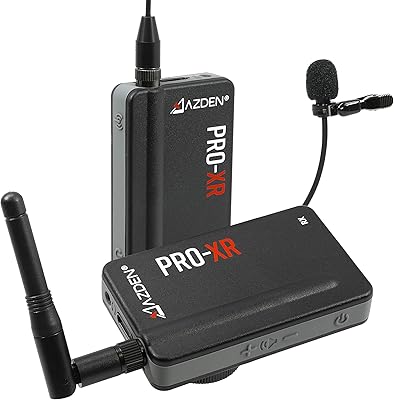
Azden PRO-XR Wireless Microphone System
81%
88%
Signal Reliability
83%
Audio Quality
91%
Battery Life
86%
Interference Resistance
74%
Operating Range
More
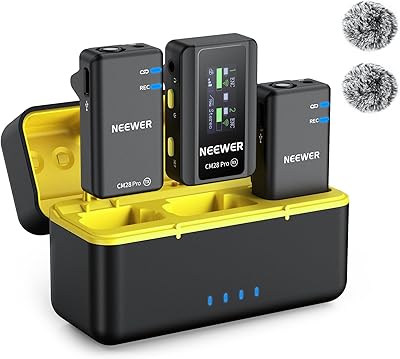
Neewer CM28 Pro Wireless Lavalier Microphone System
79%
88%
Audio Clarity
91%
Standalone Recording
67%
Wireless Range & Stability
86%
Battery Life
83%
Charging Case Design
More
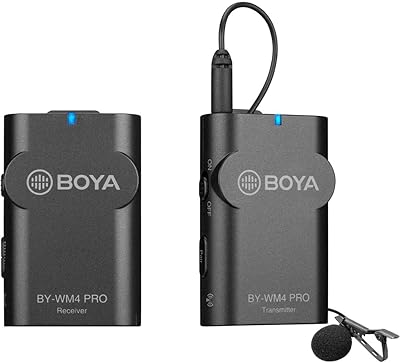
BOYA BY-WM4 Pro K2 Wireless Lavalier Microphone
65%
58%
Audio Quality
54%
Wireless Stability
83%
Ease of Setup
67%
Value for Money
51%
Build Quality
More
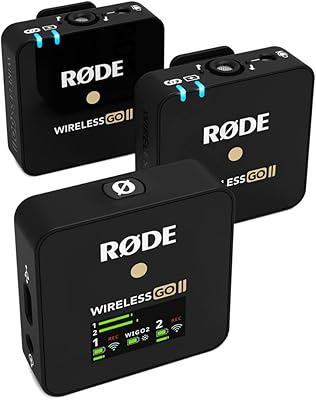
RØDE Wireless GO II
RØDE Wireless GO II
84%
92%
Audio Clarity
86%
Signal Reliability
97%
Internal Backup Recording
94%
Portability & Weight
91%
Setup Speed & Ease of Use
More
BOYA BY-XM6-S2
BOYA BY-XM6-S2
87%
93%
Ease of Setup
91%
Visual Interface Quality
86%
Battery Endurance
82%
Wireless Range Stability
94%
Portability & Weight
More
Shure BLX1288/CVL Wireless Microphone System
85%
92%
Audio Quality
88%
Ease of Setup
90%
Battery Life
85%
Range/Signal Strength
87%
Build Quality
More
Shure BLX288/B58 Dual-Channel Wireless Microphone System
81%
91%
RF Performance
84%
Audio Quality
88%
Build Quality
82%
Battery Life
86%
Ease of Setup
More
Sennheiser AVX Digital Wireless Microphone System
81%
94%
Ease of Setup
89%
Audio Quality
91%
Interference Resistance
83%
Build & Portability
72%
Receiver Fit & Compatibility
More
Shure BLX14/P31-H10
Shure BLX14/P31-H10
83%
94%
Setup & Ease of Use
88%
Wireless Range & Stability
91%
Battery Life
86%
Audio Clarity for Speech
78%
Headset Comfort & Fit
More
Behringer ULM302MIC Dual-Channel Wireless Microphone System
72%
78%
Value for Money
91%
Ease of Setup
63%
Audio Quality
59%
Wireless Stability
62%
Wireless Range
More

FAQ

Yes, in most cases. The Azden WMS-PRO Wireless Microphone System is designed to plug directly into a camera's 3.5mm external microphone jack, which is a standard input found on most DSLRs, mirrorless cameras, and camcorders from Canon, Sony, Panasonic, and others. Just double-check that your specific camera model has a dedicated mic input port, as some entry-level bodies omit it.

No, batteries are not included. Both the transmitter and the receiver each require one 9V battery, so you will need to pick up two 9V batteries before your first shoot. The good news is that standard 9V batteries are widely available and inexpensive.

VHF (Very High Frequency) and UHF (Ultra High Frequency) refer to the radio bands these systems use to transmit audio. VHF systems like this one work well in quieter RF environments, but they are more prone to interference in crowded spaces — think conference centers, music venues, or busy urban areas packed with other wireless devices. UHF systems generally handle those environments better. If you shoot mostly indoors in controlled settings, VHF is fine; if you work in busy public spaces regularly, a UHF system would be a safer long-term choice.

The effective range depends heavily on your environment, but under typical indoor conditions with a clear line of sight, most users report reliable performance in the range of 100 feet or so. Walls, other wireless devices, and RF interference can shorten that distance noticeably, so treat the range as a practical guideline rather than a guaranteed ceiling.

Absolutely. The two microphones are interchangeable on the transmitter — you simply plug in whichever one suits the shoot. Most users clip the lavaliere onto their subject for interview work and stow the handheld until they need it for a different scenario. There is no requirement to use both at the same time.

For dialogue-heavy content like interviews, tutorials, talking-head videos, and vlogs, the audio quality from this wireless kit is more than acceptable. Viewers watching on standard devices will not notice anything lacking. That said, this system is not going to compete with professional broadcast equipment — the noise floor and overall fidelity have real limits, so if pristine studio-quality audio is your priority, you will want to look at higher-end options.

Battery runtime varies based on usage, but a meaningful number of users report that under continuous heavy use, the 9V batteries can drain faster than expected — sometimes in just a few hours. Carrying spare batteries to any important shoot is strongly recommended. Lighter or intermittent use will stretch the life further.

It can work outdoors in a pinch, but it is not the ideal setup for regular outdoor use. The VHF frequency band is more susceptible to interference from other wireless signals, which tend to be more concentrated and unpredictable outdoors at events or in populated areas. For controlled outdoor environments with minimal RF traffic, you should be fine; for festivals, weddings, or busy public spaces, interference dropout becomes a real risk.

Not directly. The receiver outputs audio via a 3.5mm mini-jack designed for camera microphone inputs, which carry a different signal level than consumer headphone or TRRS jacks used on phones and tablets. You may be able to get it working with an appropriate adapter and a third-party app that adjusts input levels, but this system is genuinely built for cameras and is not optimized for mobile device recording.

The general build quality is adequate for the price tier, but it is worth being realistic: the housing is plastic, and the connector ports can show wear after extended, heavy use. Users who handle the kit carefully and store it properly tend to get solid longevity out of it. It is not the kind of rugged, tour-grade hardware that shrugs off rough treatment, so a bit of care goes a long way.

Where to Buy