Overview

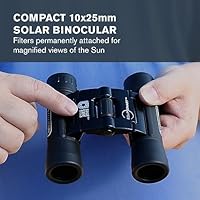
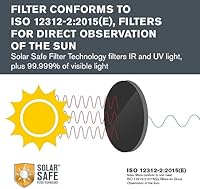
The Celestron EclipSmart 10x25 Solar Binoculars are purpose-built for one thing most binoculars simply cannot do safely — let you look directly at the sun. Unlike standard optics that would destroy your vision in seconds, these solar binoculars come with non-removable glass solar filters on both lenses, certified to ISO 12312-2 standards. That certification matters. It means an independent body has verified the filters block the harmful radiation that makes direct sun-gazing dangerous. Celestron is a brand with decades of optics experience, and the EclipSmart 10x25 sits at an accessible price point, making it a natural first step for anyone planning to watch an eclipse or simply track daily sunspot activity over time.
Features & Benefits

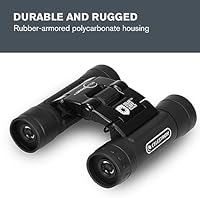
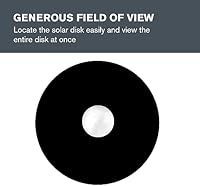
At 10x magnification with 25mm objectives, the EclipSmart 10x25 delivers a 5.7-degree field of view — wide enough that finding and framing the full solar disk feels effortless, even without a tripod. The BK-7 prisms and multi-coated lenses do a solid job for a solar-specific optic; don't expect the same crispness as a premium all-purpose binocular, but the image is clear and bright enough to make out sunspot clusters without straining. The interpupillary distance adjusts from 58 to 72mm, which covers virtually all adult users comfortably. At just 11.5 ounces with a rubber-armored aluminum shell, these solar binoculars are compact enough to toss in a bag, and the water-resistant body means a bit of overcast drizzle won't ruin your viewing session.

Best For

This Celestron solar viewer makes the most sense for people attending a solar eclipse who want more magnification and context than flat eclipse glasses provide, but don't want to haul a telescope. It's equally useful for the casual skywatcher who wants to check in on sunspot activity on a regular basis — something that's easy to overlook but genuinely fascinating once you start doing it. Families bringing kids to astronomy events will appreciate having something safe and purpose-built rather than improvised. If you're expecting a versatile binocular that doubles for birdwatching or sports, look elsewhere — the fixed solar filters make that impossible. But for dedicated solar observation, it hits a practical sweet spot between disposable glasses and expensive solar telescopes.

User Feedback

Across nearly 600 ratings, the EclipSmart 10x25 holds a 4.2-out-of-5 average — a score that reflects genuine satisfaction rather than hype. Buyers frequently highlight how quickly and easily they could center the sun in the field of view without fussing around. The build quality draws positive comments too, with most people noting it feels more solid than the price suggests. On the critical side, a few buyers point out that no carrying case is included, which feels like a small but frustrating omission for a travel-oriented product. The most recurring complaint, however, is one that's inherent to the design: because the filters are fixed, the optics are single-purpose. That's a fair point — just go in knowing that upfront.

Pros

  • ISO 12312-2 certified filters provide genuine, verified eye safety — not a marketing claim.
  • Non-removable filter design eliminates any risk of accidentally using the optics without protection.
  • The wide 5.7-degree field of view makes locating and framing the sun fast and stress-free.
  • At 11.5 ounces, these solar binoculars slip into a jacket pocket without a second thought.
  • The rubber-armored aluminum body handles outdoor conditions and accidental drops with confidence.
  • Adjustable interpupillary distance from 58 to 72mm fits virtually all adult users comfortably.
  • Useful well beyond eclipse events — sunspot tracking gives these optics genuine long-term purpose.
  • Multi-coated optics deliver a noticeably brighter solar image than cheaper, uncoated alternatives.
  • Water-resistant construction means a passing cloud burst won't cut your viewing session short.
  • Celestron's brand reputation provides meaningful peace of mind when buying safety-critical optical gear.

Cons

  • No carrying case or protective pouch is included, leaving the optics vulnerable during transport.
  • The 11mm eye relief is genuinely limiting for users who wear prescription glasses.
  • No tripod adapter means arm fatigue becomes a real problem during sessions longer than 20 minutes.
  • The fixed solar filters make these completely useless for any non-solar observation.
  • Edge sharpness softens noticeably, which is a known limitation of BK-7 prisms at this price point.
  • The hinge adjustment has no click-stop positions, making it hard to return to a dialed-in setting.
  • 25mm objective lenses limit light-gathering compared to larger solar binoculars in a higher tier.
  • Buyers in frequently hazy climates may find the image noticeably dim on overcast days.

Ratings

The Celestron EclipSmart 10x25 Solar Binoculars have been evaluated across hundreds of verified global purchases, with our AI systematically analyzing authentic buyer feedback while filtering out incentivized reviews, duplicates, and bot-generated ratings. The scores below reflect a transparent picture of where these solar binoculars genuinely excel and where real users have encountered friction. Strengths and shortcomings are weighted equally — nothing is glossed over.
Solar Filter Safety
94%
The non-removable ISO 12312-2 certified filters are the single most important reason buyers choose the EclipSmart 10x25 over improvised solutions. Users consistently report feeling confident observing the sun without anxiety, which is exactly the reassurance that separates a purpose-built solar optic from a risky workaround.
A small number of users unfamiliar with solar optics initially found the permanently fixed filters surprising, expecting removable ones. There is no practical safety concern here, but the lack of clear upfront communication in some retail listings occasionally created confusion at unboxing.
Optical Clarity
78%
22%
For a solar-specific binocular at this price tier, the multi-coated lenses and BK-7 prisms deliver noticeably sharp views of the solar disk. Sunspot clusters show up with satisfying definition, and buyers tracking active sun regions over multiple days report that detail reproduction is more than adequate for casual to intermediate observation.
Compared to premium all-purpose binoculars, chromatic fringing appears at the edges of the solar disk under high-contrast viewing conditions. Users with experience using higher-end optics note the image softens slightly toward the periphery, which is typical of BK-7 glass at this magnification and price point.
Ease of Use
91%
The wide 5.7-degree field of view makes centering the sun fast and frustration-free, even for first-time solar viewers. Multiple buyers noted they could locate and frame the full solar disk within seconds, which matters a lot during fast-moving eclipse events when you don't want to waste viewing time fumbling with alignment.
The eye relief at 11mm is on the shorter side, which means eyeglass wearers sometimes struggle to see the full field of view comfortably. A handful of users with corrective lenses mentioned having to remove their glasses entirely for a satisfying view, which is a real inconvenience for some.
Build Quality
83%
The rubber-armored aluminum body feels noticeably more solid than the price might lead you to expect. Buyers who brought these solar binoculars to outdoor eclipse events in varying weather conditions reported zero issues with the chassis, and the grip provided by the rubber coating gets specific praise for use while wearing gloves or in light rain.
The hinge tension on the central bridge feels slightly loose to some users out of the box, leading to concerns about long-term durability with repeated adjustments. A few reviewers also noted that the rubber armoring around the eyepieces showed minor wear after a season of regular use.
Portability & Form Factor
89%
At 11.5 ounces and compact enough to fit in a jacket pocket, these solar binoculars are genuinely easy to bring to viewing events without the bulk of a telescope or a full-size binocular. Festival-style astronomy events and eclipse travel trips are where this portability pays off most — just slip them in a bag and go.
No carrying case or pouch is included in the box, which is a recurring complaint from buyers who paid a fair amount and expected basic protection for transport and storage. Without a case, tossing them in a bag risks scratching the eyepieces or the body finish over time.
Value for Money
86%
Relative to the cost of eclipse glasses plus a separate solar viewer, the EclipSmart 10x25 consolidates both functions in one durable package at a price that most buyers consider fair. Users who have used it across multiple solar events, not just a single eclipse, consistently rate it as a worthwhile long-term purchase.
Buyers who are purely one-time eclipse chasers sometimes feel the price is harder to justify compared to a pack of disposable certified eclipse glasses. The single-use nature of the fixed solar filters means anyone hoping to repurpose these for nighttime astronomy or birdwatching will be disappointed.
Comfort During Extended Viewing
71%
29%
The adjustable interpupillary distance spanning 58 to 72mm fits the vast majority of adult users without discomfort. For casual 10 to 15-minute solar observation sessions, most buyers report no significant eye strain or neck fatigue, particularly when the wide field of view reduces the need for constant re-aiming.
Extended sessions beyond 20 to 30 minutes reveal limitations — the lack of a tripod adapter means arm fatigue becomes a real factor, and the short eye relief compounds discomfort during longer observations. Users tracking the sun over a full afternoon event noted they had to take frequent breaks, which disrupts the experience.
Field of View
82%
18%
The 5.7-degree field is genuinely one of the more practical aspects of the EclipSmart 10x25. Being able to see the entire solar disk with room to spare at 10x magnification gives users confidence that they won't accidentally drift into an unsafe viewing angle, and it makes tracking partial eclipse phases much less stressful.
Compared to competing solar binoculars with slightly wider fields — some offering up to 7 degrees — the EclipSmart 10x25 feels marginally narrower, which becomes noticeable during fast-moving partial eclipse phases. It's not a dealbreaker, but buyers who have used wider-field solar optics notice the difference.
Accessories & Packaging
47%
53%
The included instruction manual is clear and helpful, particularly for buyers who have never used dedicated solar optics before. The basic lens caps provide minimal protection during storage, and Celestron's branding and packaging presentation conveys a sense of legitimacy that reassures buyers about product authenticity.
The absence of a carrying case is the loudest complaint in this category, and rightly so. For a product designed for travel and outdoor events, shipping it with nothing more than lens caps feels like a cost-cutting decision that actively undermines the user experience — and several buyers flagged this as a notable omission.
Durability Over Time
74%
26%
The aluminum core of the body provides reassuring structural integrity, and buyers who have owned the EclipSmart 10x25 through multiple solar events report no degradation in filter performance or optical alignment. The water-resistant coating has held up well for users who encountered unexpected rain during outdoor events.
Long-term durability data is limited by the product's inherently occasional use pattern — most owners only use these solar binoculars a handful of times per year at most. A few users noted the rubber grip coating beginning to peel at stress points after two or more years of storage and handling.
Interpupillary Adjustment
81%
19%
The 58 to 72mm adjustment range covers essentially every adult user comfortably and the hinge moves smoothly enough for quick adjustments mid-event. Parents who shared the binoculars with older children during eclipse events appreciated being able to swap users rapidly without losing the solar disk in the field of view.
The adjustment mechanism lacks any click-stop detents, so users cannot reliably return to a saved setting after handing the binoculars to another person. For shared use at group events, this means every new user has to spend a few seconds re-dialing the fit, which adds up during time-sensitive eclipse viewing windows.
Image Brightness
77%
23%
The multi-coated optics do a competent job of maximizing light transmission through the solar filters, resulting in a bright and well-defined solar image even on days when atmospheric haze is present. Buyers comparing these to lower-cost solar viewers consistently note the image feels more vivid and easier to interpret.
On days with high thin cloud cover, the combination of the solar filters and the modest 25mm aperture can produce a noticeably dimmer view that makes sunspot detail harder to pick out. Users in regions with frequently hazy skies report more frustration with image brightness than those in clear, high-altitude locations.
Sunspot Observation Performance
76%
24%
For casual sunspot tracking, the EclipSmart 10x25 delivers more than enough resolution to identify major active regions on the solar surface. Amateur skywatchers who incorporate daily solar checks into their routine praise the optics for making sunspot groups visible and distinguishable without requiring any specialized knowledge or equipment setup.
Fine detail within individual sunspot umbra and penumbra regions is beyond what the 25mm aperture can resolve at 10x. Users who graduate to solar telescopes after using these solar binoculars consistently remark that the binoculars hint at detail without fully resolving it, which can feel limiting for more serious observers.

Suitable for:

The Celestron EclipSmart 10x25 Solar Binoculars are the right call for anyone who wants to observe the sun safely without committing to the cost and complexity of a dedicated solar telescope. Eclipse chasers who travel to viewing events will appreciate the compact, pocketable form factor — these solar binoculars take up almost no space and weigh next to nothing compared to telescope setups. They also make excellent sense for amateur astronomers who want to develop a habit of checking daily sunspot activity, since the optics are more than capable of revealing active solar regions on a regular basis. Families bringing curious kids to astronomy events will find these a far safer and more engaging option than improvised eclipse glasses, and the wide field of view makes it easy for younger users to find and hold the solar disk without frustration. If you're the kind of person who wants a tool built specifically for the job — with certified filters and a trusted brand behind it — this Celestron solar viewer delivers exactly that without unnecessary complexity.
Not suitable for:

The Celestron EclipSmart 10x25 Solar Binoculars are a poor fit for anyone expecting a multi-purpose binocular that can pull double duty for birdwatching, hiking, or stargazing — the fixed solar filters make non-solar use physically impossible, full stop. Serious solar observers who have outgrown casual sunspot viewing and want to resolve fine umbral detail or track solar prominences will quickly bump into the limits of a 25mm aperture and will need to step up to a dedicated solar telescope. Eyeglass wearers may also find the 11mm eye relief frustrating during longer sessions, as seeing the full field of view comfortably without removing glasses is a genuine challenge. Anyone hoping to share these solar binoculars across a wide age range should note that younger children with narrower interpupillary distances may find the adjustment range a poor fit. And if your only use case is a single solar eclipse with no plans to use the optics again, a pack of certified eclipse glasses covers the safety requirement at a fraction of the investment.
Specifications

  • Magnification: These solar binoculars provide 10x magnification, bringing the solar disk significantly closer for detailed observation of sunspots and surface activity.
  • Objective Diameter: Each objective lens measures 25mm in diameter, balancing light transmission with the compact form factor required for a portable solar viewer.
  • Field of View: The optical field of view spans 5.7 degrees, equivalent to 294 feet at 1,000 yards, making it straightforward to center and track the full solar disk.
  • Lens Coatings: All optical surfaces are multi-coated to maximize light transmission through the solar filters and reduce internal reflections for a cleaner image.
  • Prism Type: BK-7 borosilicate crown glass prisms are used internally, a standard choice for binoculars in this price tier that delivers adequate brightness and contrast.
  • Filter Type: Dual non-removable glass solar filters are permanently integrated into both objective lenses, meeting ISO 12312-2 certification for direct sun observation.
  • Eye Relief: Eye relief measures 11mm, which provides a comfortable viewing distance for most users but may feel restrictive for those wearing prescription eyeglasses.
  • IPD Range: The interpupillary distance adjusts from 58mm to 72mm, accommodating the full range of typical adult eye spacing without tools.
  • Dimensions: The body measures 5.7 x 3.7 x 2.7 inches, making it compact enough to fit in a jacket pocket or a small bag without dedicated storage.
  • Weight: The complete unit weighs 11.5 ounces, light enough for extended handheld use at outdoor viewing events without significant fatigue during short sessions.
  • Body Material: The chassis is constructed from aluminum and covered in a rubber armor coating that improves grip, absorbs minor impacts, and protects against surface scratches.
  • Water Resistance: The binoculars carry a water-resistant rating suitable for light rain and humid outdoor conditions, though they are not rated for full submersion.
  • Tripod Compatibility: No tripod adapter is included or supported on this model, meaning all observation must be handheld without an optional stabilization accessory.
  • Safety Certification: The integrated solar filters are certified to ISO 12312-2, the internationally recognized standard for safe direct viewing of the sun.
  • Close Focus: Close focus is set at 1 astronomical unit, meaning the optics are optimized exclusively for observing the sun rather than nearby terrestrial subjects.
  • Eyecups: Folding rubber eyecups are included on both eyepieces, allowing users to adjust the eye-to-lens distance based on personal preference or eyewear use.

Related Reviews

Celestron TrailSeeker 8x42 Binoculars
82%
91%
Optical Clarity
93%
Field of View
88%
Build Quality
74%
Focusing Mechanism
78%
Eyecup Comfort & Usability
More
Hontry 10x25 Compact Binoculars
74%
91%
Value for Money
78%
Optical Clarity
93%
Portability & Size
54%
Low-Light Performance
82%
Build Quality
More
Celestron Nature 10x25 Monocular
85%
93%
Portability
88%
Optical Clarity
90%
Build Quality
85%
Ease of Use
91%
Waterproof & Fogproof Performance
More
Celestron SkyMaster 25x70 Binoculars
75%
84%
Optical Clarity
91%
Light Gathering
79%
Magnification Performance
72%
Build Quality
58%
Collimation Consistency
More
Celestron SkyMaster 25x100 Binoculars
76%
88%
Optical Brightness
79%
Image Sharpness & Clarity
53%
Optical Alignment Out of Box
67%
Chromatic Aberration
82%
Build Quality & Durability
More
Aurosports 10x25 Binoculars
75%
74%
Optical Clarity
67%
Build Quality
61%
Low-Light Performance
88%
Value for Money
91%
Ease of Use
More
Celestron Nature DX 10x42 Binoculars
82%
86%
Optical Clarity
83%
Build Quality
89%
Weather Resistance
91%
Value for Money
88%
Ease of Focus
More
Celestron Outland X 10x50 Binoculars
81%
88%
Optical Clarity
83%
Low-Light Performance
86%
Build Quality
84%
Weather Resistance
91%
Value for Money
More
Celestron Nature DX 8x32 Binoculars
80%
83%
Optical Clarity
81%
Build Quality
86%
Weather Resistance
88%
Field of View
67%
Low-Light Performance
More
Celestron Outland X 8x25 Binoculars
84%
92%
Portability
89%
Image Quality
90%
Waterproof Performance
87%
Ease of Use
83%
Magnification
More

FAQ

Yes, provided you use them as designed. The filters built into the Celestron EclipSmart 10x25 Solar Binoculars are ISO 12312-2 certified, which is the same international safety standard applied to certified eclipse glasses. The key difference here is that the filters are permanently attached — you cannot accidentally remove them and expose your eyes, which is a meaningful safety advantage over filter accessories that attach and detach.
No, and that's worth being clear about before you buy. The solar filters block the overwhelming majority of light entering the lenses, which is exactly what makes them safe for sun observation. That same property makes them completely useless for low-light or standard daytime subjects. These are a single-purpose tool, and the best ones usually are.

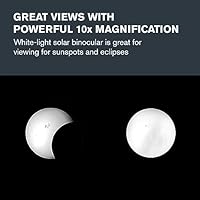
Eclipse glasses give you a naked-eye view of the sun, which is safe but doesn't reveal much detail. These solar binoculars magnify the sun 10 times, which means you can actually see sunspot groups and track changes over time. For a solar eclipse specifically, the magnified view of the moon's edge crossing the solar disk is considerably more dramatic than what flat glasses provide. The trade-off is cost and portability — glasses are lighter and cheaper, but they're also a much less interesting experience.

Absolutely. In fact, for partial and annular eclipses these solar binoculars are arguably more useful than for totality, since the sun is never fully blocked and you need proper filtering throughout. They're also great for the contact phases leading up to and following a total eclipse when the sun is partially covered.

Older children and teenagers should have no trouble using them safely with adult supervision. The main practical issue with younger children is the interpupillary distance — the adjustment range starts at 58mm, which may be too wide for small children whose eyes are set closer together. It's worth checking before handing them over, as a poor fit means the child might not be looking through both filters properly.

Basic lens care applies — use a soft brush or lens cloth to remove dust from the eyepieces and keep the lens caps on when not in use. Since no carrying case is included in the box, it's worth picking up a small padded pouch to protect them during travel. Avoid storing them in a hot car or in direct prolonged sunlight when not in use, as extreme heat can degrade rubber components over time.

It depends on your prescription. The 11mm of eye relief is on the shorter side, and many eyeglass wearers find they need to remove their glasses to see the full field of view comfortably. If your vision correction is mild, you may be fine — but if you have a significant prescription or rely on glasses for distance, plan on testing the fit carefully when they arrive.

Unfortunately no — this model does not include a tripod adapter and is not compatible with standard tripod mounting accessories. All viewing is handheld. For most casual solar sessions this isn't a problem, but if you plan on extended observation sessions of 20 minutes or more, arm fatigue becomes a real consideration.

The glass filters used in these solar binoculars are significantly more durable than film-based filter alternatives. Glass does not stretch, warp, or develop pinholes from handling the way mylar-film eclipse glasses can. With normal care — keeping the lens caps on and avoiding physical impact directly to the objective lenses — the filters should maintain their performance for years of regular use.

More than just a circle. At 10x magnification you can clearly see the overall shape and size of the sun's disk, and on days with active solar weather you can identify sunspot groups as dark patches against the solar surface. Large sunspot clusters are visible fairly easily; finer umbral detail within individual spots is at the edge of what 25mm lenses can resolve, but the experience is meaningfully richer than what eclipse glasses alone provide.