Overview

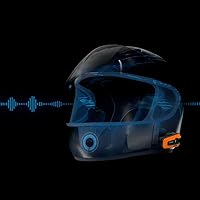
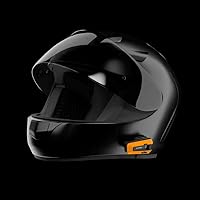
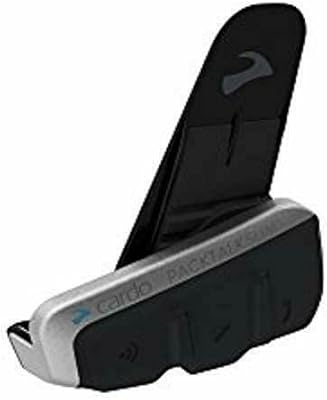
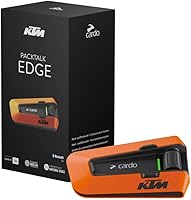
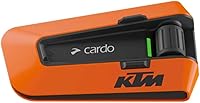
The Cardo Packtalk Edge KTM Helmet Intercom is the orange-accented, KTM-co-branded variant of Cardo's flagship Edge unit, built for adventure and off-road riders who want a premium communication system that holds up in demanding conditions. Beyond the colorway, the hardware is identical to the standard Edge — so if you're not a KTM loyalist, the core appeal is the same either way. What sets this helmet communicator apart from most of the competition is its buttonless design philosophy, relying entirely on voice commands rather than physical controls. The Air Mount magnetic system is another genuine differentiator, snapping on and off far faster than any screw-based alternative. One critical caveat: Cardo has discontinued this model, which matters if long-term firmware support and parts availability factor into your decision.
Features & Benefits

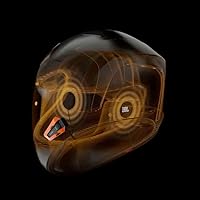
The Dynamic Mesh Communication network is where the Packtalk Edge KTM earns its place in a group-riding setup. With up to 15 riders connected across a total range of 8 km, the mesh is self-healing — if one rider drops out, the network reroutes automatically without anyone needing to re-pair manually. Saying 'hey CARDO' to skip a track or answer a call works well at moderate speeds, though strong wind at highway pace can occasionally trip up the voice recognition. The 45 mm JBL speakers produce noticeably fuller, warmer audio than the thin sound typical of budget intercoms. Tack on a 13-hour battery with fast charge support, cross-brand Bluetooth pairing with Sena devices, built-in FM radio, and passive crash detection, and the feature set is genuinely hard to argue with.

Best For

This KTM intercom makes the most sense for a specific type of rider. If you run with a large group on regular tours or adventure routes, the mesh networking pays real dividends — no fumbling to reconnect when someone rejoins mid-ride. Riders who own KTM bikes or build their kit around the orange colorway will appreciate the visual cohesion, though it is worth being honest: the KTM branding is cosmetic, and the underlying unit is the same as the standard Edge. Anyone stepping up from a basic, single-channel intercom will notice an immediate difference in audio quality and overall range. Solo riders, however, will find the premium harder to justify, and those concerned about discontinued support may want to factor that into their thinking before committing.

User Feedback

Owners consistently praise the audio quality as a clear step above their previous intercoms, and most find the magnetic mount genuinely convenient once they dial in the helmet placement. Where opinions split is on the voice command system — it performs reliably in controlled conditions, but several riders report frustrating misrecognition at motorway speeds or inside open-face helmets with higher wind exposure. The mobile app experience gets mixed marks; firmware updates are straightforward for tech-comfortable users but feel unnecessarily fiddly to others. A handful of buyers raise concerns about Air Mount stability during aggressive off-road riding, so checking compatibility with your specific helmet is wise. The discontinued status is a recurring thread in longer reviews, with some owners noting growing difficulty sourcing units at normal retail pricing.

Pros

  • 45 mm JBL speakers deliver a noticeable audio upgrade over most competing intercoms in this category.
  • DMC mesh networking handles up to 15 riders and self-heals when someone drops off the network mid-ride.
  • Hands-free voice control works reliably at urban and moderate road speeds without button interaction.
  • The magnetic Air Mount makes swapping the unit between helmets genuinely fast and hassle-free.
  • 13-hour battery life with fast charge covers full touring days without anxiety about running out mid-route.
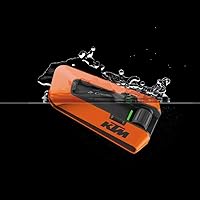
  • Waterproof and dustproof construction holds up across rain, mud, and variable adventure conditions.
  • Cross-brand Bluetooth pairing allows basic connectivity with Sena-equipped riders in mixed groups.
  • Crash Detection adds passive safety reassurance, particularly useful for solo adventure riders.
  • Auto On/Off removes a small but appreciated daily friction from the pre-ride routine.
  • The KTM orange colorway offers a cohesive aesthetic match for riders already running KTM kit.

Cons

  • Discontinued by the manufacturer, raising legitimate concerns about future firmware support and parts availability.
  • Voice command recognition degrades noticeably at motorway speeds, especially in open-face helmets.
  • Cross-brand connectivity with Sena units works at a reduced feature level — full DMC mesh requires all-Cardo groups.
  • The mobile app has a documented history of instability on Android and occasionally fails during firmware updates.
  • Air Mount security on rough off-road terrain has generated recurring complaints about unexpected detachment.
  • The KTM edition offers no functional advantage over the standard Packtalk Edge — it is a cosmetic variant only.
  • Large group mesh initialization can require multiple pairing attempts, particularly with mixed Cardo firmware versions.
  • Battery capacity noticeably degrades over two or more years of regular use with no straightforward replacement path.
  • Retail pricing has become inconsistent as stock dwindles, making fair-value comparisons harder for new buyers.
  • False positives from crash detection on technical off-road sections can disrupt a ride unnecessarily.

Ratings

The Cardo Packtalk Edge KTM Helmet Intercom earns strong marks across most categories, and the scores below reflect AI analysis of verified buyer reviews collected globally — with spam, bot submissions, and incentivized feedback actively filtered out. Ratings are based on patterns in real rider experiences, covering everything from daily commutes to multi-day group tours. Both the genuine strengths and the recurring frustrations are reflected honestly, so you can make a well-informed call before buying.
Audio Quality
91%
The 45 mm JBL drivers are the most consistently praised aspect of this helmet communicator. Riders who previously owned budget or mid-tier intercoms describe the difference as immediately obvious — music sounds full and detailed even at highway speeds, and voice calls come through clearly without requiring volume at maximum.
A smaller segment of users with noise-isolating helmets or in-ear setups find the over-ear speaker format less immersive than expected at that price point. Wind roar above 120 km/h can still overpower audio on open-face helmets regardless of JBL hardware quality.
Voice Command Reliability
74%
26%
In calm conditions or at moderate urban speeds, the Natural Voice Operation works confidently — riders report skipping tracks, making calls, and adjusting volume without ever taking a hand off the bars, which is exactly the use case it was designed for.
Wind noise at motorway speeds is a real obstacle for the wake-word detection, and open-face helmet wearers report noticeably higher misrecognition rates. Several reviewers note they fall back to app controls more often than expected on long highway stretches, which undermines the core hands-free premise.
Mesh Network Performance
88%
DMC stands out in large group rides — the self-healing mesh means that when one rider drops a signal in a tunnel or valley, the group reconnects automatically without anyone stopping to re-pair. Riders who regularly tour in groups of six or more cite this as the single most compelling reason they chose the Packtalk Edge KTM over a Sena alternative.
At the far edges of the stated 8 km total range, audio quality degrades before the connection fully drops, which can create confusion about whether a rider is still on the network. Some users also note that mixing firmware versions across a large group occasionally causes pairing hiccups.
Mounting System
82%
18%
The Air Mount magnetic attachment is genuinely faster and more satisfying to use than any screw-in bracket system. Swapping the unit between helmets takes seconds, and most riders report it holds firm under normal road and light off-road conditions without any wobble.
On aggressive off-road terrain with sustained vibration, a minority of users report the unit shifting or detaching at the worst moments. Compatibility also depends heavily on helmet geometry — some full-face models require careful placement to avoid the mount sitting at an awkward angle.
Battery Life
89%
Thirteen hours of real-world intercom use covers most full touring days without needing a charge, and the fast charge feature means a short stop can add meaningful runtime. Riders on multi-day rallies describe the battery as one less thing to worry about compared to older Cardo models.
Battery performance degrades noticeably when FM radio, mesh intercom, and active noise processing run simultaneously for extended periods. A handful of longer-term owners also note capacity reduction after two or more years of regular use, which is harder to address given the discontinued status.
Build Quality & Durability
86%
The unit handles rain, mud, and dust well in line with its waterproof and dustproof rating — adventure riders who tour in variable conditions consistently report no degradation in performance after exposure to wet weather or trail grime.
The plastic housing, while functional, draws occasional comments about feeling slightly less premium than the price suggests when held next to comparable Sena hardware. A few users in warmer climates report minor discoloration of the orange KTM accents after prolonged UV exposure.
Cross-Brand Compatibility
71%
29%
Connecting with Sena units via Bluetooth works in practice and is a legitimate selling point for mixed-brand groups. Riders who have one or two Sena-equipped friends describe the cross-brand pairing as functional and stable enough for regular use.
Cross-brand connectivity works at a reduced feature level — full mesh networking and some DMC functions only operate between Cardo-to-Cardo units. Riders who assumed full feature parity across brands report feeling misled by marketing language that undersells this limitation.
Ease of Setup & Pairing
78%
22%
Initial pairing via the Cardo app is straightforward for most users, and the auto on/off feature reduces the daily friction of getting the unit ready before a ride. First-time intercom users tend to find the setup process manageable within the first 30 minutes.
Pairing within a large group of five or more riders can require multiple attempts, especially when mixing older Cardo models with the Edge. A few users describe the mesh initialization process as inconsistent between rides, needing occasional manual resets.
Mobile App Experience
67%
33%
The Cardo Connect app provides useful controls for customization — equalizer settings, voice sensitivity tuning, and firmware updates are all accessible without needing to interact with the unit directly. Tech-comfortable riders appreciate having a visual interface for settings management.
The app receives recurring criticism for being unintuitive and occasionally unstable on Android devices. Firmware update failures mid-process are reported with enough frequency to make some users hesitant to update at all, which is a real concern for a product that can no longer receive manufacturer support.
Noise Cancellation
76%
24%
Adaptive noise cancellation meaningfully improves call clarity for the person on the other end — companions report hearing riders far more cleanly than on previous devices, even when calling from open highways. Music listening benefits noticeably at speeds below 100 km/h.
The noise cancellation does not fully compensate for the acoustic challenges of open-face or modular helmets. Riders using this helmet communicator in those configurations report that the technology does its best but cannot overcome the fundamental wind exposure those helmet styles create.
KTM Branding Value
59%
41%
For KTM bike owners who have invested in coordinated orange riding gear, the visual match is a genuine source of satisfaction. The co-branding adds a sense of cohesion to a full kit that standard black intercom units simply cannot replicate.
The majority of buyers acknowledge the KTM edition is functionally identical to the standard Packtalk Edge, and many feel the branding premium is difficult to justify on a unit that has since been discontinued. Riders who do not own KTM hardware describe the orange colorway as a neutral-to-minor positive at best.
Value for Money
68%
32%
When evaluated against the feature set — JBL audio, full DMC mesh, voice operation, crash detection, and waterproofing in a single unit — the pricing sits within a defensible range for serious group touring riders who will actually use all of those capabilities regularly.
The discontinued status meaningfully weakens the value proposition. Paying a premium for hardware with no guaranteed future firmware support or spare parts pipeline is a legitimate concern, and buyers can now often find the standard Packtalk Edge at a more competitive price with the same underlying technology.
Intercom Range (Real-World)
83%
The 1.6 km unit-to-unit range holds up well in open rural or coastal roads, and in open terrain the total 8 km mesh span across a group is realistic rather than a best-case lab figure. Touring riders on straight stretches describe the range as genuinely reliable.
Urban environments with dense buildings, tunnels, and underpasses cut range noticeably. Hilly or forested adventure routes — precisely the terrain KTM riders frequent — can reduce effective unit-to-unit range to under a kilometer in the worst cases.
Crash Detection & Safety Features
77%
23%
The automatic crash detection feature adds a real layer of passive reassurance for solo adventure riders, triggering an alert if a significant impact is detected without manual input. Auto on/off is a small but consistently appreciated convenience that experienced riders quickly take for granted.
Some users report false positives from the crash detection sensor on particularly rough off-road sections, triggering unwanted alerts during technical riding rather than actual incidents. There is currently no third-party monitoring integration, limiting the safety feature to alerting riding companions only.

Suitable for:

The Cardo Packtalk Edge KTM Helmet Intercom is built for a specific kind of rider, and it delivers best when that rider actually shows up. If you regularly tour in groups of four or more, the DMC mesh networking alone justifies serious consideration — the self-healing network means you spend less time troubleshooting dropped connections and more time riding. KTM owners or riders who run orange gear will get genuine visual satisfaction from the co-branded colorway, though it is worth knowing the hardware underneath is identical to the standard Packtalk Edge. Riders upgrading from a basic single-channel intercom will notice an immediate and meaningful improvement in audio quality thanks to the JBL speakers. Anyone who finds fumbling for buttons while riding irritating will appreciate a voice-first interface, provided they primarily ride at moderate urban or rural speeds rather than sustained motorway paces. Adventure tourers who need a waterproof, dust-resistant unit that can handle variable conditions without babying will also find this helmet communicator a practical and capable choice.
Not suitable for:

The Cardo Packtalk Edge KTM Helmet Intercom is harder to recommend without reservation for buyers who weigh long-term support heavily in their decision — this unit has been discontinued by Cardo, meaning no new firmware updates and a thinning supply of units at standard retail pricing. Solo commuters or riders who rarely connect with a group will struggle to extract value from the mesh networking and group intercom features that make up most of the price premium. Riders who spend significant time at motorway speeds, particularly those using open-face or modular helmets, should go in with realistic expectations about voice command performance — wind noise genuinely degrades wake-word detection at high speeds, and some users end up reaching for the app more than they expected. Buyers on a tighter budget who only need basic point-to-point intercom functionality would be better served by a lower-tier Cardo model or a comparable Sena unit with active manufacturer support. Aggressive off-road riders should also note that the Air Mount, while convenient, has generated enough complaints about stability on rough terrain that a secondary check of helmet compatibility is strongly advisable before buying.
Specifications

  • Brand & Model: Manufactured by Cardo Systems under the model designation PT200020, sold as the Packtalk Edge KTM Edition.
  • Bluetooth Version: Uses Bluetooth 5.2 for device pairing, phone calls, music streaming, and cross-brand intercom connectivity.
  • Intercom Protocol: Operates on Cardo's proprietary DMC (Dynamic Mesh Communication) for self-healing group networks independent of a fixed master device.
  • Group Size: Supports intercom groups of 2 to 15 riders simultaneously within a single DMC mesh network.
  • Unit Range: Achieves up to 1.6 km (1 mi) of direct unit-to-unit intercom range under open, unobstructed conditions.
  • Total Mesh Range: The full DMC mesh network can span up to 8 km (5 mi) from the first to the last rider in a chain.
  • Speakers: Equipped with 45 mm JBL dynamic drivers tuned specifically for helmet audio reproduction with a 2-ohm impedance rating.
  • Battery Life: Rated for up to 13 hours of continuous intercom use on a full charge, with fast charge support included.
  • Mounting System: Uses Cardo's Air Mount magnetic attachment system, which snaps the unit onto a helmet-mounted base plate without screws or clamps.
  • Voice Assistant: Natural Voice Operation is activated by saying 'hey CARDO' and supports hands-free commands for calls, music, intercom, and volume.
  • Water Resistance: Rated waterproof and dustproof, suitable for riding in rain, mud, and dusty off-road environments without protective covers.
  • Noise Control: Incorporates Adaptive Noise Cancellation to reduce ambient wind and road noise during calls and intercom communication.
  • FM Radio: Includes a built-in FM radio tuner accessible via voice command or the Cardo Connect companion app.
  • Special Features: Ships with Crash Detection, Auto On/Off, and cross-brand Bluetooth intercom connectivity as standard active features.
  • Item Weight: The complete unit weighs 1.23 pounds (approximately 0.56 kg) including the mounting hardware.
  • Product Dimensions: Physical dimensions measure 9.45 x 27.17 x 0.98 inches, reflecting the full clip and speaker assembly in packaged form.
  • Audio Driver Type: Uses a dynamic driver configuration, which prioritizes warmth and volume output suitable for high-noise riding environments.
  • Availability Status: This unit has been officially discontinued by Cardo Systems and is no longer part of the active product lineup.

Related Reviews
EJEAS V7 Motorcycle Helmet Bluetooth Intercom 2-Pack
78%
83%
Audio Clarity
71%
Intercom Range
91%
Battery Life
86%
Pairing & Setup
63%
Build Quality & Durability
More
Wipeeyes E1 Motorcycle Helmet Intercom Headset
71%
84%
Value for Money
71%
Sound Quality
62%
Microphone & Call Clarity
58%
Intercom Range & Reliability
83%
Waterproofing & Weather Resistance
More
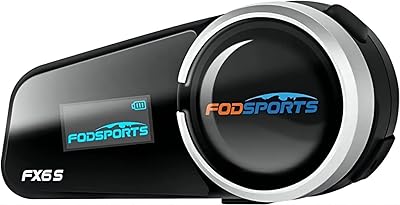
Fodsports FX6S Motorcycle Helmet Communication System
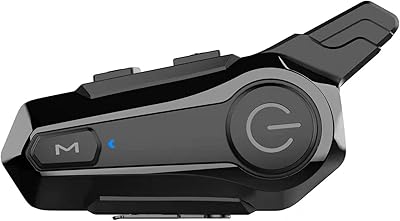
74%
83%
Sound Clarity
61%
Intercom Range
78%
Battery Life
88%
Ease of Use & Controls
57%
Cross-Brand Pairing
More
Khptop Y80 Bluetooth Motorcycle Helmet Intercom Headset
86%
88%
Communication Range
91%
Noise Cancellation
95%
Battery Life
86%
Waterproof Durability
89%
Ease of Installation
More
JZAQ A13 Bluetooth Helmet Intercom System
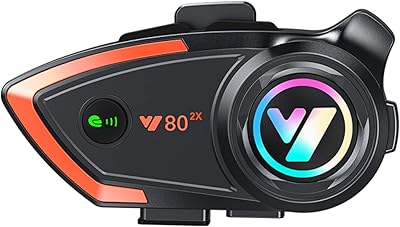
70%
84%
Value for Money
58%
Intercom Range
81%
Speaker Fit & Comfort
63%
Noise Cancellation
67%
Battery Life
More
Cardo PACKTALK Slim Duo Motorcycle Bluetooth Headset
81%
93%
Mesh Connectivity Reliability
89%
Audio Quality
91%
Battery Life
62%
Glove-Friendly Controls
71%
App Experience
More
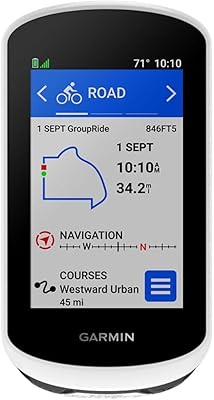
Garmin Edge Explore 2 GPS Cycling Computer
82%
93%
Ease of Setup
91%
Screen Visibility
88%
Navigation Accuracy
84%
eBike Integration
86%
Safety Features
More
Garmin Edge 1030 Plus GPS Cycling Computer
80%
93%
Navigation Accuracy
91%
Display Quality
88%
Battery Life
72%
Touchscreen Usability
89%
Training Features
More
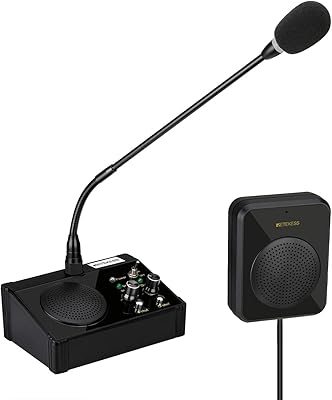
Retekess TW106 Window Intercom
87%
94%
Audio Clarity
88%
Microphone Sensitivity
91%
Ease of Installation
86%
Build Quality
85%
Durability
More
Fire Cam 1080p Helmet Camera
87%
94%
Build Quality & Durability
88%
Video Quality
72%
Battery Life
90%
Mounting System & Compatibility
92%
Waterproof Performance
More

FAQ

Functionally, the two units are identical — same hardware, same DMC mesh, same JBL speakers, same firmware. The KTM edition is distinguished solely by its orange colorway and KTM co-branding. If you are not a KTM rider or do not care about the aesthetic match, the standard Packtalk Edge offers the same riding experience.

This is a legitimate concern worth taking seriously. Cardo has discontinued the Cardo Packtalk Edge KTM Helmet Intercom, which means no new firmware development is planned for this model. Existing firmware remains usable, but do not expect bug fixes or new feature rollouts. Warranty claims would depend on your retailer and regional consumer protection laws, so check those terms carefully before purchasing remaining stock.

At speeds up to around 80–90 km/h, the Natural Voice Operation works reliably for most riders in full-face helmets. Above that, and particularly in open-face or modular helmets, wind noise becomes a genuine obstacle — the wake-word detection misses commands more frequently, and you may find yourself reaching for the Cardo Connect app instead. It is a strong feature, but the hands-free experience is more consistent at urban or country road speeds than on sustained motorway runs.

Yes, cross-brand pairing with Sena devices is possible via standard Bluetooth intercom mode. It works well enough for basic communication, but you lose the DMC mesh features — those only function between Cardo units. Think of the cross-brand connection as a fallback for mixed groups rather than a full-featured link.

On paved roads and light gravel, the magnetic Air Mount holds firm without issue. On sustained rough off-road terrain — rocky trails, hard enduro, sustained washboard sections — a minority of riders have reported the unit shifting or detaching under vibration. If serious off-road riding is your primary use, check that your helmet has a compatible flat mounting area and consider how aggressively you plan to ride before relying on the magnetic attachment alone.

The DMC mesh supports up to 15 riders simultaneously. Setup for smaller groups of two to four is straightforward, but larger groups can sometimes require a few pairing attempts, especially if riders are running different firmware versions on older Cardo hardware. Once the mesh is established, the self-healing behavior is one of the strongest practical advantages — riders rejoining the network after a signal drop reconnect automatically without manual intervention.

For most riders doing normal touring — intercom on, music playing intermittently — the 13-hour figure holds up reasonably well in real-world use. Running FM radio, full mesh intercom, and active noise processing simultaneously over extended periods will pull that number down somewhat. For a standard full-day ride it is generally sufficient, and the fast charge capability means a lunch stop can add meaningful runtime.

The standard retail pack includes the Air Mount base plates and the hardware needed to fit the unit to a helmet. You do not need to purchase a separate mount for basic installation. However, if you plan to swap the unit between multiple helmets regularly, buying additional Air Mount bases for each helmet separately makes the transition much faster.

You do not need the app for core functions — the intercom, calls, and music all work independently through voice commands. The app is useful for customizing EQ settings, adjusting voice sensitivity, managing contacts, and running firmware updates. That said, the app has a mixed reputation, particularly on Android, where some users report occasional crashes and unreliable update behavior. Use it for setup and customization, but do not expect a polished software experience.

Honestly, it is hard to make a strong case for it if group riding is not part of your regular routine. The standout capabilities of this helmet communicator — the DMC mesh, multi-rider range, and group intercom — only pay off when you are riding with others. Solo riders who primarily want music, calls, and GPS navigation audio would find a lower-tier Cardo or Sena model covers those needs just as well at a considerably lower cost, and without the discontinued-product caveat to worry about.