Overview

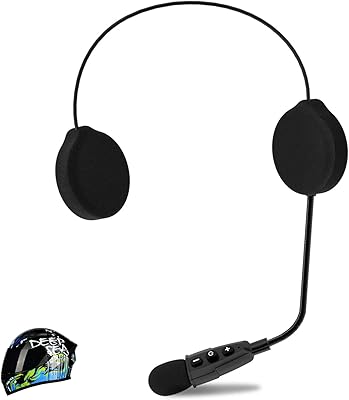
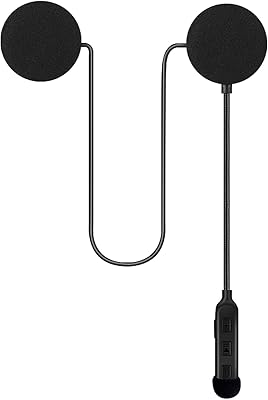
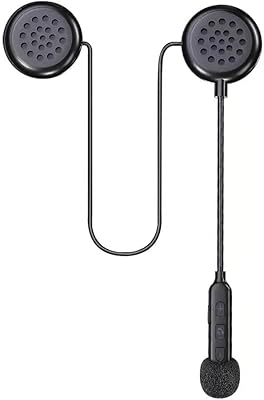
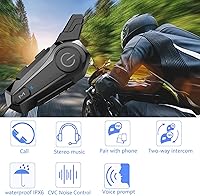
The Wipeeyes E1 Motorcycle Helmet Intercom Headset enters a crowded market dominated by household names like Cardo and Sena, and it does so at a price point that makes those rivals look like serious investments. That gap in cost comes with trade-offs, but for a rider who wants one device handling calls, music, GPS audio, voice assistant access, and basic rider-to-rider communication, the E1 headset covers the essentials without overcomplicating things. It sits on the ear rather than inside it, keeping the profile low and the weight down at just 44 grams — a practical choice for full-face helmet users who want minimal bulk.
Features & Benefits

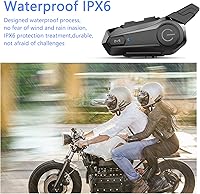
A lot of budget intercoms throw around the term noise cancellation loosely, so it is worth clarifying what CVC actually does here: it filters noise on the microphone side, helping the person on the other end of a call hear you more clearly in wind and traffic. Your listening experience is unaffected by it. The IPX6 waterproofing is genuinely useful — this helmet intercom can handle a soaking downpour without issue, though you would not want to submerge it. Battery life holds up well at around 12 hours of use on a single two-hour charge, and the physical button layout is straightforward enough to operate wearing gloves, which matters more than most spec sheets acknowledge.

Best For

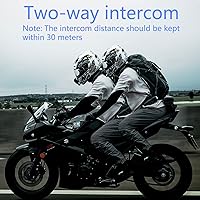
The Wipeeyes E1 is a strong fit for casual weekend riders who ride in pairs and want a way to stay connected without committing to a premium system. The two-way intercom works well for riding alongside a friend on familiar roads where you stay close together. Commuters who want hands-free calling and GPS audio in rainy conditions will also get solid value here. It is particularly well-suited to new riders who are not yet sure how much they will rely on helmet audio — this is a low-risk way to find out. Those doing long highway tours or group rides with multiple bikes will likely outgrow it quickly.

User Feedback

Across more than 2,300 ratings, this helmet intercom lands at 3.8 stars — a score that reflects genuine satisfaction among casual users alongside honest frustrations from more demanding ones. Riders consistently praise how easy it is to pair and set up, and most find the music quality acceptable for riding. The waterproofing holds up well in real commutes, which earns it credit. Where things get mixed is the intercom range: the advertised 30 meters rarely materializes at speed, and call microphone clarity drops noticeably on faster roads despite the CVC claims. A handful of reviewers also note that button responsiveness can degrade over time. Those who later upgrade to premium alternatives tend to look back at this as a useful stepping stone, not a long-term solution.

Pros

  • Covers calls, music, GPS audio, and two-way intercom in one affordable package.
  • IPX6 waterproofing holds up reliably through real commuting rain without any fuss.
  • At just 44 grams, the E1 headset adds virtually no noticeable weight inside a full-face helmet.
  • Twelve hours of battery life is plenty for full-day leisure rides on a single charge.
  • Bluetooth pairing is quick and straightforward, even for first-time intercom users.
  • Physical button controls are accessible with gloves on, which matters on the road.
  • CVC microphone filtering keeps call audio reasonably clear for the person on the other end in city traffic.
  • Two-hour charge time means a quick top-up before a ride is entirely realistic.
  • A solid entry point for new riders who want to test helmet audio before committing to a premium system.

Cons

  • Real-world intercom range falls well short of the advertised 30 meters once you factor in speed and obstacles.
  • Microphone performance on calls drops off significantly at highway speeds despite the CVC technology.
  • No battery level indicator makes it hard to know when a charge is actually needed.
  • Button tactile feedback is not distinct enough, leading to accidental mis-presses while riding.
  • Mounting hardware and button responsiveness have been reported to degrade after several months of daily use.
  • Brand support and warranty service are difficult to access compared to established competitors.
  • Bluetooth phone range is limited to around 10 meters, causing signal drops if the phone is stored far from the helmet.
  • Wind noise intrusion at higher speeds reduces audio quality in ways no software setting can fix.
  • Riders who later upgrade to premium systems consistently describe this helmet intercom as a stepping stone, not a keeper.

Ratings

The Wipeeyes E1 Motorcycle Helmet Intercom Headset has been scored across multiple performance categories by our AI rating system, which analyzed thousands of verified global buyer reviews while actively filtering out incentivized, bot-generated, and outlier feedback. The scores below reflect where the E1 headset genuinely delivers for everyday riders — and where it falls short — giving you a transparent, balanced picture before you decide.
Value for Money
84%
At its price point, the feature-to-cost ratio is hard to argue with — riders get Bluetooth streaming, two-way intercom, waterproofing, and hands-free calling in a single lightweight unit. Most buyers who purchased it as a first helmet intercom felt they got more than expected for the spend.
Riders who have used premium alternatives from Cardo or Sena tend to reassess the value once they experience the difference in range, clarity, and build durability. The E1 headset feels like a solid deal right up until you know what more money buys.
Sound Quality
71%
29%
For music playback at lower speeds or in urban traffic, the dynamic drivers produce a reasonably full sound that most casual riders find satisfying. Podcasts and GPS voice guidance come through clearly enough to be genuinely useful on daily commutes.
Wind intrusion at highway speeds noticeably degrades the listening experience, and the dynamic drivers lack the detail and warmth that audiophiles or long-haul tourers would expect. It is adequate for background music but not for anyone who takes audio quality seriously.
Microphone & Call Clarity
62%
38%
In stop-and-go city riding or at lower speeds, the CVC microphone filtering does a reasonable job of reducing wind noise on the caller-side, making conversations intelligible without shouting. Short calls at traffic lights or in slow-moving traffic generally go without complaint.
At highway speeds above 60 mph, the microphone pickup becomes inconsistent and callers frequently report struggling to understand the rider. CVC helps with microphone-side noise but does nothing for wind roar picked up acoustically, which remains a real limitation in fast-riding conditions.
Intercom Range & Reliability
58%
42%
For casual two-up riding in urban areas or on quiet backroads, the intercom connection between paired riders holds reasonably well at close distances. Couples and riding buddies who stay within 15 to 20 meters report a mostly stable connection for casual chat.
The advertised 30-meter range is rarely achieved in real-world conditions — obstacles, helmet orientation, and speed all degrade signal noticeably. At anything resembling highway pace, the intercom becomes unreliable, which limits its usefulness for the exact riding scenarios where communication matters most.
Waterproofing & Weather Resistance
83%
The IPX6 rating translates well to actual commuting conditions — multiple buyers confirmed using the E1 headset through sustained rain without any performance issues or water ingress. It holds up well in the wet weather scenarios most commuters realistically encounter.
IPX6 covers rain and spray but not submersion or pressure washing, so riders should not mistake waterproof for indestructible. A small number of users reported issues after extended exposure to very heavy rain over multiple consecutive rides, suggesting the seal may degrade over time.
Battery Life
79%
21%
Twelve hours of continuous use on a single two-hour charge is more than enough for most day rides or a week of daily commuting without needing to top up. The standby duration is generous, so occasional riders do not return to a dead unit after a few days off the bike.
Battery performance seems to drop more noticeably than average after several months of regular use, with some owners reporting closer to eight or nine hours by the time their unit has been in rotation for half a year. There is no battery indicator, which makes it harder to anticipate when a charge is needed.
Ease of Setup & Pairing
82%
18%
First-time Bluetooth pairing is consistently described as quick and frustration-free, even by riders who are not particularly tech-savvy. The initial helmet mounting process is manageable, and most users had the unit up and running within a few minutes of opening the box.
Re-pairing after a firmware interruption or when switching between phones can be less intuitive, and the manual does not always clarify the button-hold sequences clearly. A few users reported the intercom pairing between two units being harder to establish than the Bluetooth phone connection.
Button Controls & Usability
74%
26%
The physical button layout is one of the more practical aspects of this helmet intercom — with gloves on, riders can generally find and press the right control without fumbling excessively. Volume, playback, and call functions are accessible without removing your hand from the handlebar for long.
The tactile differentiation between buttons is not as pronounced as it could be, leading to occasional mis-presses at speed when feel alone has to guide you. A number of longer-term owners also noted that button responsiveness softens with extended use, requiring firmer presses over time.
Build Quality & Durability
63%
37%
For the price bracket, the unit feels acceptably solid out of the box — the plastic housing does not flex excessively, and the speaker grilles sit firmly within the mounting assembly. Riders using it seasonally rather than daily tend to have fewer complaints about wear.
Daily commuters report that the mounting clips and speaker housings show wear faster than expected, with some units developing rattles or loosening their helmet attachment after a few months of regular use. The overall construction reflects the cost — functional, but not built to last years of hard riding.
Helmet Fit & Installation
76%
24%
Designed with full-face helmets in mind, the on-ear profile keeps the unit low enough to avoid creating uncomfortable pressure points against the helmet padding for most riders. The lightweight 44-gram build means you rarely notice it is there once mounted.
Fit compatibility is not universal across helmet brands and internal geometries — some riders find the speaker positioning requires adjustment to align properly with the ear cavity. Those with tighter-fitting helmets occasionally report noticeable pressure after longer rides.
Noise Isolation (Passive)
66%
34%
As an on-ear design, it provides enough passive isolation to keep music and call audio audible in typical city traffic and at moderate speeds. Riders using it for urban commuting generally find they can follow GPS prompts and calls without difficulty.
At motorway speeds, wind and engine noise overwhelm the passive isolation, requiring higher volume levels that some riders find uncomfortable over long stretches. The on-ear form factor simply cannot compete with in-ear or sealed over-ear designs when it comes to blocking road noise.
Bluetooth Stability
72%
28%
For the primary phone connection, Bluetooth holds well throughout typical city and suburban rides, with few spontaneous disconnections reported during regular use. Reconnection after stopping and restarting is generally automatic and quick.
The 10-meter Bluetooth range to a phone is on the shorter side, meaning a phone stored in a tail bag rather than a jacket pocket can occasionally cause signal drops. Simultaneous intercom and Bluetooth phone use sometimes introduces audio stuttering that disrupts both channels briefly.
Brand Trust & Support
55%
45%
The product has accumulated over 2,300 ratings on Amazon, which provides a meaningful baseline of real-world feedback that helps prospective buyers make an informed call. Within that volume, the proportion of satisfied users is solid enough to indicate a functional, reasonably consistent product.
Wipeeyes lacks the brand recognition and established customer support infrastructure of competitors like Sena or Cardo, making warranty claims or troubleshooting guidance harder to navigate. Several buyers noted difficulty getting responsive support when issues arose, which is a real risk with lesser-known brands.

Suitable for:

The Wipeeyes E1 Motorcycle Helmet Intercom Headset is a practical choice for casual and recreational riders who want a single device that handles music, calls, GPS guidance, and basic rider-to-rider communication without a steep financial commitment. Weekend riders who typically cruise with one companion on familiar local routes will find the intercom range sufficient for relaxed, close-proximity riding. Daily commuters navigating city traffic in variable weather will appreciate the IPX6 waterproofing and hands-free calling, which cover the essentials without overengineering the experience. New riders who are not yet sure how much they will rely on helmet audio make an ideal fit here — the E1 headset is a low-risk way to discover what features actually matter to you before spending significantly more. Full-face helmet users looking for a lightweight, unobtrusive setup that does not create uncomfortable pressure against helmet padding will also find it a sensible option.
Not suitable for:

Riders who spend significant time at highway speeds will quickly run into the core limitations of the Wipeeyes E1 Motorcycle Helmet Intercom Headset — the intercom range degrades considerably above 40 to 50 mph, and microphone clarity on calls becomes inconsistent when wind noise is a factor. Touring riders who need reliable multi-rider group communication beyond two people should look elsewhere, as the two-way-only intercom cannot scale to larger riding groups the way premium mesh-network systems can. Anyone who prioritizes audio fidelity — whether for long-distance music listening or crystal-clear phone conversations on open roads — will likely find the dynamic drivers and CVC microphone underwhelming compared to what a proper flagship intercom delivers. Riders who push their gear hard across multiple seasons of daily use should also be cautious, as the build quality and button durability reflect the budget price tier and may not hold up to prolonged heavy use. If you already own or have used a Cardo or Sena system, stepping down to this helmet intercom will feel like a noticeable regression rather than a sensible swap.

Specifications

  • Brand & Model: Manufactured by Wipeeyes under the model designation E1.
  • Connectivity: Connects to smartphones and devices via standard Bluetooth wireless technology.
  • Bluetooth Range: Maintains a stable Bluetooth connection to a paired phone at distances up to 10 meters.
  • Intercom Range: Supports two-way rider-to-rider intercom communication at a manufacturer-stated range of up to 30 meters.
  • Battery Life: Delivers up to 12 hours of continuous music playback or talk time on a single full charge.
  • Standby Time: Retains charge for up to 120 hours in standby mode when not actively in use.
  • Charge Time: Reaches a full charge from empty in approximately 2 hours via the included cable.
  • Water Resistance: Rated IPX6, meaning it withstands heavy rain and directional water jets but is not designed for submersion.
  • Noise Cancellation: Equipped with CVC (Clear Voice Capture) technology, which filters noise on the microphone side to improve outgoing call clarity.
  • Audio Driver: Uses dynamic driver technology to produce stereo sound for music playback and call audio.
  • Earpiece Shape: On-ear form factor designed to sit against the ear rather than inserting into the ear canal.
  • Helmet Compatibility: Designed and optimized for installation inside full-face motorcycle helmets.
  • Weight: The unit weighs 44 grams (1.55 oz), keeping helmet balance and comfort impact minimal.
  • Package Dimensions: Ships in a box measuring 7.52 x 3.98 x 1.73 inches.
  • Control Type: All functions — including volume, playback, call management, and intercom switching — are operated via physical buttons.
  • Compatible Devices: Compatible with any Bluetooth-enabled smartphone or device capable of standard audio and call profiles.
  • Included Components: Package includes the E1 headset unit and a charging cable; no headphone jack or wired connection is supported.
  • Use Cases: Designed for music streaming, hands-free calling, GPS audio guidance, voice assistant access, and two-way intercom between riders.
  • UPC: Universal Product Code for retail identification is 609755003245.
  • Availability Date: First made available for purchase on September 27, 2021.

Related Reviews

EJEAS E1+ Motorcycle Helmet Bluetooth Headset
70%
88%
Value for Money
91%
Battery Life
83%
Bluetooth Connectivity
61%
Noise Reduction
74%
Audio Quality
More
Khptop Y80 Bluetooth Motorcycle Helmet Intercom Headset
86%
88%
Communication Range
91%
Noise Cancellation
95%
Battery Life
86%
Waterproof Durability
89%
Ease of Installation
More
EJEAS V7 Motorcycle Helmet Bluetooth Intercom 2-Pack
78%
83%
Audio Clarity
71%
Intercom Range
91%
Battery Life
86%
Pairing & Setup
63%
Build Quality & Durability
More
JZAQ BT40 Helmet Bluetooth Headset
71%
83%
Value for Money
71%
Battery Life
78%
Waterproof Performance
61%
Sound Quality
67%
Helmet Compatibility & Fit
More
Khptop X7 Motorcycle Helmet Bluetooth Headset
87%
88%
Audio Quality
94%
Battery Life
90%
Ease of Installation
82%
Noise Cancellation
87%
Build Quality
More
JZAQ BT30 Motorcycle Helmet Bluetooth Headset
74%
88%
Battery Life
84%
Value for Money
54%
Wind Noise & Noise Cancellation
83%
Waterproofing & Weather Resistance
86%
Ease of Installation
More
Fodsports FX6S Motorcycle Helmet Communication System
74%
83%
Sound Clarity
61%
Intercom Range
78%
Battery Life
88%
Ease of Use & Controls
57%
Cross-Brand Pairing
More
LEXIN G2P Motorcycle Helmet Bluetooth Headset
78%
83%
Audio Clarity
61%
Intercom Range
88%
Battery Life
66%
Noise Cancellation
81%
Build Quality
More
Moman RS-S Motorcycle Helmet Bluetooth Headset
74%
78%
Sound Quality
58%
Noise Cancellation
84%
Battery Life
82%
Bluetooth Connectivity
67%
Helmet Compatibility & Fitment
More
FreedConn FG Motorcycle Bluetooth Helmet Headset
75%
86%
Ease of Setup
57%
Intercom Range
78%
Call Audio Quality
61%
Music Audio Quality
83%
Battery Life
More

FAQ

Yes, helmet brand does not affect intercom compatibility — what matters is that both riders have an E1 unit and that the two headsets are paired with each other using the intercom pairing process described in the manual. The intercom function is a direct device-to-device connection independent of helmet make or model.

CVC noise cancellation on the Wipeeyes E1 Motorcycle Helmet Intercom Headset works exclusively on the microphone side — it is designed to reduce the background noise that the person calling you hears on their end. It does not filter wind or road noise from your listening experience, so what you hear during music or calls is determined by the passive isolation of the on-ear design and your helmet itself.
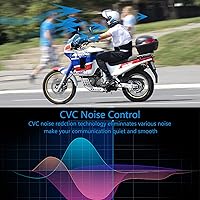
In practice, 30 meters is the upper limit under ideal open-air conditions with no obstructions and both riders stationary or moving slowly. At highway speeds, with buildings, vehicles, or terrain between you and your riding partner, the reliable working range is noticeably shorter — closer to 15 to 20 meters in many real-world situations. For tight, close-proximity riding it works well; for keeping in touch across a long gap on a fast road, do not count on it.

The E1 headset is designed and marketed specifically for full-face helmets, and the mounting hardware is optimized for that interior geometry. While some riders do manage to fit it into modular or open-face helmets, the speaker and microphone positioning may not align correctly, and wind exposure to the microphone will be significantly worse without the full-face shell as a windbreak.

All functions are handled through physical buttons rather than touch controls, which makes gloved operation feasible. Volume, play and pause, previous and next track, and call answer and reject are all button-based. The main caveat is that the buttons are relatively close together, so there is a learning curve before you can reliably press the right one by feel alone while riding.

The IPX6 rating means this helmet intercom is built to handle heavy, sustained rain without water ingress, so you do not need to remove it or cover it up when the weather turns. Just keep in mind that IPX6 does not mean it is waterproof under pressure or immersion — you would not want to ride through a flooded road with it submerged. For normal commuting rain, it is well covered.

The button controls allow you to switch between music and intercom mode, but running both simultaneously at full quality is not a design feature of this unit. When an intercom call comes in, music typically pauses or drops to the background. This is standard behavior for this class of budget intercom and not unique to the Wipeeyes E1.

Out of the box, the 12-hour claim holds up reasonably well for most users. After regular use over several months, some owners report the effective battery life dropping to around eight to nine hours, which is a normal degradation pattern for lithium batteries in this product tier. There is no on-device battery indicator, so it is worth building a charging habit rather than relying on running it to empty.

Yes, since the E1 headset pairs to your smartphone via standard Bluetooth, triggering your phone's built-in voice assistant — whether that is Google Assistant, Siri, or another service — works through the headset's microphone and speaker. You would activate the assistant the same way you normally would on your phone, using whatever wake word or button shortcut your device supports.

Honest answer: it is a mixed experience at higher speeds. In city traffic or at slower urban speeds, callers can hear you clearly enough for a normal conversation. Once you are cruising above 60 mph, wind noise picked up by the microphone becomes a real issue, and callers frequently struggle to understand you despite the CVC filtering. If clear highway calling is a priority, this is one area where the E1 headset shows its budget limitations most clearly.