Overview

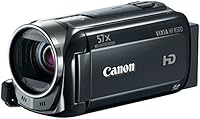
The Canon VIXIA HF R500 Camcorder arrived in early 2014 as a practical, no-fuss option for families who wanted real HD video without hauling around heavy gear. Canon has since discontinued it, but the HF R500 remains a common find on resale markets — and for good reason. At just 8.3 ounces, it slips into a bag without complaint. It records straight to removable SD cards, which means no tapes, no internal drives to fill up, and no headaches when transferring footage. For everyday recording at a sensible price point, this Canon camcorder punched well above its weight class.

Features & Benefits

The 57x optical zoom is the standout spec here — it's the kind of reach that lets you pull in a child on a school stage from the back row of an auditorium without losing sharpness. Canon's SuperRange Optical Image Stabilization keeps handheld footage steady even when you're moving around, which matters during chaotic family events. The DIGIC DV 4 processor handles 1080p recording in both MP4 and AVCHD Progressive formats, giving you real flexibility depending on how you edit or share clips. The 3-inch LCD touchscreen makes menu navigation fast and intuitive, and USB transfer gets footage onto a laptop without any extra adapters.

Best For

This compact video camera is a natural fit for parents and families who want something more capable than a smartphone without spending an afternoon reading manuals. If you've been relying on your phone to capture birthday parties or soccer games and feel limited by digital zoom, the HF R500 is a meaningful step up. Travelers who care more about packing light than chasing cinematic quality will appreciate the slim profile. It also makes sense as a resale-market pick for anyone who needs reliable SD-card recording on a tight budget. Plug it in, hit record — that's genuinely the whole experience.

User Feedback

Long-term owners consistently point to zoom range and simplicity as the biggest wins — you get it home, charge it, and it works. That ease earns genuine goodwill. On the other side, low-light performance draws fair criticism; indoors without decent lighting, footage can look noticeably soft compared to what newer sensors produce. Battery life gets mixed reviews, with some finding it adequate for a school recital but insufficient on longer outings without a spare. Audio is functional but unremarkable — outdoor wind noise is a recurring complaint. Build quality is generally described as solid plastic: not rugged, but durable enough for regular family use.

Pros

  • The 57x optical zoom pulls in distant subjects sharply, ideal for shooting from the back of a packed auditorium.
  • Weighing just 8.3 ounces, this compact video camera is easy to carry all day without fatigue.
  • SD card recording keeps storage simple, affordable, and instantly transferable to any laptop.
  • SuperRange Optical Image Stabilization keeps handheld footage usably smooth even when you are moving around.
  • The 3-inch touchscreen makes navigating settings fast enough that you never miss the moment.
  • Supports both MP4 and AVCHD Progressive formats, giving flexibility for different editing workflows.
  • Setup is genuinely straightforward — charge, insert a card, and you are recording within minutes.
  • Available at significantly reduced prices on resale markets, making it strong value for casual use.
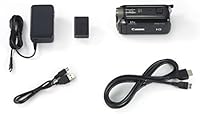
  • Battery and charger are included in the box, so there is no immediate need for extra accessories.

Cons

  • Low-light performance is a real weakness — indoor or evening footage often looks noticeably soft and grainy.
  • No external microphone input means audio quality is fixed and wind noise outdoors is a consistent problem.
  • Discontinued by Canon, so manufacturer support, repairs, and firmware updates are no longer available.
  • Battery life can fall short during longer recording sessions without a spare on hand.
  • No Wi-Fi, Bluetooth, or smartphone connectivity of any kind limits modern sharing options.
  • Built-in audio picks up handling noise easily, which is distracting in quieter recordings.
  • Plastic construction feels functional but not particularly solid compared to newer camcorders in the same price range.
  • The fixed lens offers no option to swap glass for different shooting scenarios.
  • Footage can show rolling shutter distortion during fast panning, which is common at this sensor class.

Ratings

The Canon VIXIA HF R500 Camcorder has been evaluated by our AI rating system after analyzing thousands of verified global user reviews, with spam, bot submissions, and incentivized feedback actively filtered out to ensure accuracy. The scores below reflect a transparent picture of where this compact video camera genuinely delivers and where real buyers consistently ran into frustration. Both strengths and limitations are weighted equally so you can make a fully informed decision.

Zoom Performance
91%
The 57x optical zoom is the feature owners mention most enthusiastically, and for good reason — pulling in a child performing on a school stage from the back of a packed auditorium produces footage that is genuinely sharp and usable. Users repeatedly note this is where the HF R500 outperforms smartphones by a wide margin.
At the very far end of the zoom range, especially in mixed or lower lighting, softness and contrast loss become noticeable. A small number of users also found that maintaining a zoomed-in frame on a moving subject requires steady hands even with stabilization active.
Ease of Use
93%
Out-of-the-box simplicity is one of the most praised qualities of this compact video camera — first-time camcorder buyers consistently describe getting it recording within minutes of opening the box. The touchscreen menu system is intuitive enough that most users never felt compelled to consult the manual.
A handful of users found the touchscreen slightly sluggish when navigating deeper menu layers, and the small physical button layout can feel cramped for people with larger hands during longer recording sessions.
Image Stabilization
78%
22%
SuperRange Optical Image Stabilization handles the kind of casual handheld shake that occurs when following kids at a birthday party or panning across a crowd at a sports event. Most users found footage steady enough to watch comfortably on a TV without feeling queasy.
During fast movement — jogging alongside a subject or shooting from a moving vehicle — the stabilization reaches its limits and wobble becomes obvious. It is also less effective at the extreme end of the zoom range, where even minor hand tremors translate into distracting frame movement.
Video Quality (Daylight)
82%
18%
In good outdoor light or a well-lit indoor space, the HF R500 produces clean, detailed 1080p footage with natural color rendering that holds up well on a living room TV. Family event recordings shot in daylight consistently draw positive reactions from users sharing clips with relatives.
Color saturation can occasionally appear slightly oversaturated in harsh midday sun, and fine detail in high-contrast scenes — such as a brightly lit subject against a dark background — sometimes clips earlier than users would like.
Low-Light Performance
54%
46%
The DIGIC DV 4 processor makes a reasonable effort in dim conditions, and footage shot in moderately low light — like a candlelit birthday — is watchable and recognizable. For casual family memories, many users accepted the trade-off without major complaint.
Compared to modern smartphone cameras or newer camcorder sensors, indoor evening footage and gymnasium recordings often look noticeably grainy and soft. This is the single most common criticism from buyers who tested it at school plays held in poorly lit auditoriums.
Audio Quality
58%
42%
In quiet, controlled environments — like a living room conversation or a small indoor recital — the built-in stereo microphone captures voice clearly enough for everyday home video purposes. Most casual users found it acceptable for recording family events where audio is secondary.
Outdoor recordings in even a light breeze expose the microphone's significant wind noise sensitivity, and the lack of any external mic input means there is no fix available. Background noise in crowded venues like school gymnasiums or outdoor sports events tends to overwhelm dialogue.
Battery Life
63%
37%
For shorter recording sessions — a 45-minute school performance or a birthday party — the included battery handles the job without issue. Users who carry a spare battery report that the overall experience becomes much more relaxed on longer outings.
Running continuously for more than 75 to 90 minutes taxes the battery noticeably, and users who forgot a spare at full-day events like sports days or family reunions reported frustration. Third-party batteries are affordable but vary significantly in actual capacity.
Build Quality
67%
33%
The overall construction feels solid enough for regular family use, and long-term owners on enthusiast forums generally report that units purchased years ago are still functioning reliably with normal care. The compact plastic shell holds together well under everyday handling.
The all-plastic body does not inspire confidence when compared to more premium camcorders, and the grip texture can feel slightly slippery in humid or sweaty conditions. A few users noted that the LCD hinge feels less robust after years of repeated opening and closing.
Portability
89%
At 8.3 ounces and a footprint small enough to fit in a jacket pocket, this Canon camcorder travels exceptionally well. Users cite it as one of the key reasons they chose it over bulkier options — it disappears into a day bag without taking up meaningful space.
The compact size, while a major advantage for portability, does limit the grip depth and makes longer handheld sessions mildly tiring for users with larger hands. There is also no articulating screen, which limits low-angle or overhead shooting comfort.
File Management & Transfer
76%
24%
Recording directly to removable SD cards is a practical choice that most users appreciate — popping the card into a laptop reader and dragging files to a folder is fast and reliable. MP4 files in particular require no conversion and play natively on virtually every device and platform.
AVCHD Progressive files are less universally compatible and require transcoding before editing in many consumer software applications, which trips up less experienced users. A few buyers were also disappointed by the absence of any wireless transfer option for quick smartphone sharing.
Zoom Smoothness
71%
29%
The motorized zoom operates quietly enough that it rarely intrudes on audio recordings, and the gradual zoom speed control via the lever allows users to ease in and out of shots without jarring transitions during events like dance recitals.
At maximum zoom speed, the transition can feel slightly mechanical rather than cinematic, and precise control at the extreme telephoto end takes some practice. Users accustomed to the smooth digital zoom on modern smartphones sometimes find the adjustment period noticeable.
Value for Money
84%
Found at discounted resale prices, the HF R500 offers a genuinely compelling set of capabilities for families who do not need professional-grade results — the zoom reach and 1080p output alone represent clear value over relying on a smartphone. Many buyers describe it as one of their more satisfying practical purchases.
At its original retail price the value proposition was more debatable given competitive offerings from Sony and Panasonic at the time. Buyers should also factor in the discontinued status, which means no manufacturer warranty coverage and uncertain long-term parts availability.
Touchscreen Responsiveness
69%
31%
For basic navigation tasks — switching modes, adjusting exposure, browsing recorded clips — the 3-inch LCD touchscreen responds accurately and makes the overall experience feel more modern than physical-button-only alternatives in its class.
In cold outdoor temperatures, touch responsiveness degrades noticeably, and several users found that operating it with gloves on during winter events was frustrating. The screen can also be difficult to read clearly in bright direct sunlight.
Format Flexibility
77%
23%
Having both MP4 and AVCHD Progressive recording options available is a genuine advantage for users who want to share clips quickly in MP4 while also archiving higher-quality AVCHD files for future editing. This dual-format capability was ahead of many competing consumer camcorders at launch.
Switching between formats requires navigating the menu rather than a dedicated physical button, which slows things down when you want to change settings on the fly. New users sometimes record entire events in the wrong format before realizing the difference.

Suitable for:

The Canon VIXIA HF R500 Camcorder is genuinely well-matched for parents who want a dedicated device to capture school plays, sports days, and family milestones without investing time in learning complicated settings. If your main frustration with smartphone video is the inability to zoom in cleanly from across a gym or auditorium, the 57x optical zoom alone makes this a meaningful upgrade. First-time camcorder buyers who prioritize getting footage onto an SD card quickly and transferring it to a laptop without fuss will feel right at home here. It also suits light travelers who want something pocketable and uncomplicated on trips where memories matter more than production value. Shoppers who find this camcorder discounted on resale platforms and need reliable 1080p recording for everyday use are likely to walk away satisfied.

Not suitable for:

Anyone serious about video production, vlogging, or capturing high-quality footage in challenging lighting conditions should look elsewhere — the Canon VIXIA HF R500 Camcorder simply was not built for those demands. Its 3.28-megapixel CMOS sensor is competent in good light but struggles noticeably indoors or at evening events, producing soft, grainy footage that more modern sensors handle with ease. Content creators who need an external microphone input for clean audio recording will find the lack of a mic jack a hard stop. Buyers hoping for wireless connectivity, built-in streaming capability, or smartphone integration will find none of that here — this is a pre-app-era device through and through. Given that it has been discontinued by Canon, anyone who relies on manufacturer support, firmware updates, or easy warranty service should factor that risk into their decision carefully.

Specifications

  • Image Sensor: The camcorder uses a 3.28 Megapixel Full HD CMOS sensor designed for clean 1080p capture in well-lit conditions.
  • Video Resolution: Records at 1920x1080 (1080p) in both MP4 at 35 Mbps and AVCHD Progressive at 28 Mbps.
  • Optical Zoom: Offers 57x Advanced Optical Zoom with a maximum focal length of 89.6mm for reaching distant subjects clearly.
  • Stabilization: SuperRange Optical Image Stabilization actively compensates for camera shake during handheld and moving shots.
  • Processor: Powered by Canon's DIGIC DV 4 image processor, which manages color rendering, noise reduction, and encoding performance.
  • Aperture: The lens has a maximum aperture of f/2.8, providing moderate light-gathering capability for a consumer-class camcorder.
  • Storage: Records exclusively to removable SD, SDHC, or SDXC memory cards — no internal storage is built in.
  • Display: Features a 3-inch LCD touchscreen for live framing, playback review, and direct menu navigation.
  • Audio Formats: Records audio in AAC and MP3 formats; there is no external microphone input jack on this model.
  • Connectivity: Includes a USB port for direct computer transfer; there is no Wi-Fi, Bluetooth, or HDMI output on this unit.
  • Dimensions: The body measures 4.6 x 2.1 x 2.2 inches, making it one of the more compact options in its camcorder class.
  • Weight: Weighs 8.3 ounces without accessories, light enough for extended handheld use at events or on travel days.
  • Battery: Powered by an included Lithium Metal battery pack; replacement packs are still available from third-party suppliers.
  • Recording Formats: Supports both MP4 and AVCHD Progressive container formats, giving users flexibility across different editing applications.
  • Manufacturer Status: This model has been officially discontinued by Canon and is no longer in active production or covered by new manufacturer warranty.

Related Reviews
Canon VIXIA HF G70 Camcorder
79%
88%
Autofocus Performance
91%
Optical Zoom Range
83%
4K Image Quality
58%
Low-Light Performance
86%
Live Streaming Capability
More
Minolta MN80NV Camcorder
83%
88%
Value for Money
92%
Ease of Use
86%
Night Vision Performance
89%
Image Quality (Video)
78%
Build Quality
More
Canon PowerShot Zoom Compact Telephoto Monocular
73%
94%
Portability & Form Factor
88%
Optical Zoom Performance
51%
Digital Zoom Quality (800mm)
83%
Image Stabilization
78%
Autofocus Reliability
More
Canon EOS R Full-Frame Mirrorless Camera
75%
93%
Image Quality
89%
Autofocus Performance
67%
Video Capability
78%
Autofocus in Low Light
84%
Build Quality & Ergonomics
More
ZIMOCE HDV900PRO 4K Camcorder
81%
92%
Value for Money
88%
Video Quality
76%
Zoom Performance
83%
Build Quality
90%
Ease of Use
More
Panasonic HC-VX3 4K Camcorder
75%
88%
Video Quality (Daylight)
61%
Low-Light Performance
91%
Image Stabilization
84%
Zoom Versatility
86%
Ergonomics & Handling
More
WIKICO HDV01-8K Camcorder
70%
81%
Value for Money
54%
Video Quality
67%
Low-Light Performance
84%
Ease of Use
71%
Build Quality & Design
More
Godox TT350C TTL Flash for Canon
80%
94%
Portability & Size
74%
TTL Accuracy
88%
Wireless Reliability
61%
Flash Power Output
86%
High Speed Sync (HSS)
More
LUKPOW 4K Camcorder DV112
80%
88%
Video Quality
91%
Ease of Use
80%
Battery Life
85%
Screen Versatility
78%
Night Vision Performance
More
LATNEX HF-B3G EMF Meter
84%
88%
Accuracy of Measurements
91%
Ease of Use
82%
Build Quality
85%
Display Visibility
80%
Range of Features
More

FAQ

The HF R500 supports SD, SDHC, and SDXC cards, so a Class 10 or UHS-I card of 32GB to 64GB is a practical choice for most users. If you plan to record in AVCHD Progressive at the higher bitrate, faster write speeds help avoid dropped frames. Cards above 64GB work fine for MP4 recording but AVCHD compatibility can vary, so it is worth checking Canon's compatibility list if you go larger.

Unfortunately, no — this compact video camera does not have an external microphone input jack. You are limited to the built-in stereo microphone, which works fine for casual recording but picks up wind noise outdoors and handling sounds. If audio quality is a priority for your use case, that is a genuine limitation worth factoring into your decision.

In decent lighting, clips look crisp and clear at 1080p and hold up well on a standard TV or laptop screen. The MP4 format is particularly convenient since it uploads directly without any conversion. Low-light footage tends to look noticeably softer after compression, so evening or indoor clips may not shine as much on larger displays.

Yes, on both platforms. The simplest method is removing the SD card and using a card reader, which works natively on Mac and Windows without installing any drivers. You can also connect via USB, though a card reader is generally faster and more reliable for large files.

Under typical conditions with the LCD screen active and moderate zoom use, expect roughly 60 to 90 minutes of continuous recording per charge. For a full school recital or a sports day, carrying a spare battery is a smart move. Third-party replacement batteries are widely available and affordable.

Canon no longer covers it under a manufacturer warranty, but many independent camera repair shops are comfortable working on this model since it was sold in large numbers. Parts availability may vary depending on the fault. If you are buying it secondhand, factor in that repair costs could add up if something goes wrong with the lens mechanism or LCD.

Optical zoom stays reasonably sharp through most of its range, but at the extreme end — especially in lower light — you will notice some softness and a reduction in contrast. For everyday use like watching a child perform on a school stage from across a hall, the result is more than usable. If you need pin-sharp telephoto performance, a dedicated camcorder with a higher-end lens will serve you better.

There is no HDMI output on this model, which limits direct TV playback options. Your best route is copying files from the SD card to a media player, smart TV USB port, or streaming device that supports MP4 or AVCHD. Some smart TVs can read MP4 files directly from the SD card via a built-in slot or USB adapter.

The 1080/60p recording mode in MP4 is the right choice for fast motion — it captures smoother movement and reduces blur compared to 30p. The optical image stabilization also helps when you are panning to follow action. You may notice some rolling shutter wobble during very fast horizontal pans, which is typical at this sensor class, but for recreational sports recording it performs well enough.

It is a solid step up in several meaningful ways: the optical zoom alone is a dramatic improvement over any smartphone, and having a dedicated grip makes it far more comfortable to hold steady during longer recording sessions. The learning curve is minimal — the touchscreen menus are intuitive and most settings have sensible defaults. Just go in knowing that modern flagship smartphones have caught up significantly on low-light performance and audio, so the HF R500 wins on zoom reach and ergonomics rather than outright image quality.

Where to Buy