Overview

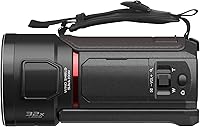
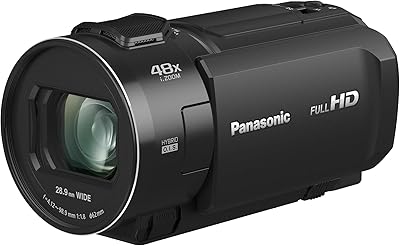
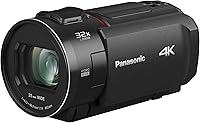
The Panasonic HC-VX3 4K Camcorder arrived in late 2024 as Panasonic's answer to a question many families are still asking: why buy a dedicated camcorder when your phone shoots 4K? The answer comes down to ergonomics and purpose. This Panasonic camcorder fits naturally in one hand, weighs just over a pound, and wraps a 3-inch touchscreen and USB-C port into a compact body built for extended shooting comfort. It is not a mirrorless hybrid trying to do everything — it is designed specifically to record video, and that focus shows. At its price point, buyers reasonably expect reliable optics, confident stabilization, and footage that holds up years from now.
Features & Benefits

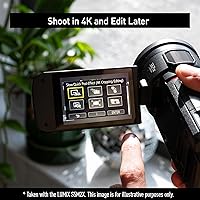
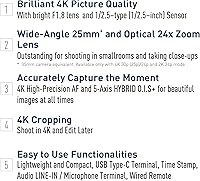
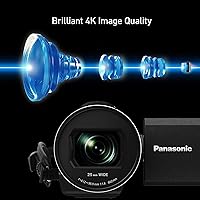
The F1.8 maximum aperture is one of this camcorder's more practical assets — in real terms, that means shooting a candlelit birthday scene or a school auditorium performance without footage turning into a muddy mess. Paired with a BSI MOS sensor, it handles moderate low light reasonably well, though it is not a low-light specialist. The 5-Axis HYBRID O.I.S+ stabilization genuinely earns its place: walk while filming a toddler's first steps and the footage stays watchable rather than shaky. A 24x optical zoom stretches from a wide-angle view to a long telephoto equivalent — useful for sports sidelines or distant wildlife. In-camera 4K-to-2K editing means you can trim and reframe footage without touching a laptop.

Best For

This 4K camcorder is a strong fit for parents who want to capture family milestones without learning a new camera system every time. If your footage archive lives on your phone and you want optical zoom plus real stabilization without the bulk of an interchangeable-lens setup, the HC-VX3 makes a compelling case. It also suits travel-minded shooters who want a single carry-on-friendly device that can go wide for landscapes and long for distant subjects. The no-computer-required workflow appeals to users who would rather spend time watching memories than sorting files. It is less suited to filmmakers or content creators who need log profiles, external audio inputs, or 4K at higher frame rates.

User Feedback

Because this Panasonic camcorder only launched in late 2024, available buyer feedback is still limited — treat any emerging patterns with appropriate caution. That said, early owners consistently highlight sharp outdoor footage and accurate color rendering in good light, alongside genuine praise for the grip comfort during longer shoots. On the flip side, a recurring concern involves low-light performance: at this sensor size, some buyers feel it falls short of competitors with larger sensors. A handful of users have flagged battery life running shorter than expected during intensive recording sessions, and the AVCHD format occasionally catches newcomers off guard when it comes to playback compatibility on modern devices.

Pros

  • Bright F1.8 lens handles moderate indoor and low-light situations better than most kit camcorders at this size.
  • 5-Axis HYBRID O.I.S+ keeps handheld footage smooth even when walking or shooting on the move.
  • 24x optical zoom covers everything from wide group shots to distant subjects without switching lenses.
  • At just over a pound, the HC-VX3 is easy to carry through a full day of events without fatigue.
  • In-camera 4K editing lets you reframe and trim clips on the spot — no laptop required.
  • The ergonomic grip and 3-inch touchscreen make one-handed operation genuinely comfortable.
  • USB-C charging and Wi-Fi connectivity keep the workflow modern and flexible.
  • Panasonic’s build quality and brand reliability give buyers reasonable confidence in long-term durability.
  • The included lithium-ion battery means you are ready to shoot right out of the box.
  • A dedicated camcorder form factor means faster, simpler operation compared to navigating a smartphone or mirrorless menu system.

Cons

  • The 1/2.5-inch sensor struggles in genuinely dark environments — dimly lit venues will reveal its limits quickly.
  • AVCHD is an older recording format that requires conversion before it plays nicely with many modern editing apps.
  • No external microphone input is a real drawback for anyone who cares about audio quality beyond the built-in mic.
  • Battery life under sustained 4K recording can fall short of what a full event day demands — a spare battery is worth budgeting for.
  • Buyers considering this 4K camcorder should know that log or flat color profiles are not available, limiting post-production flexibility.
  • The 1/2.5-inch sensor produces noticeably less background blur than larger-sensor alternatives at the same price point.
  • High-frame-rate 4K is not supported, which rules it out for smooth slow-motion footage in 4K resolution.
  • As a late 2024 release, long-term reliability data and a deep pool of real-world user feedback are still building up.
  • Wi-Fi transfer speeds for large 4K files can be slow compared to direct SD card offloading.
  • The telephoto end of the zoom range introduces some softness, as is common with high-ratio optical zoom lenses.

Ratings

Our AI rating system analyzed verified global user reviews for the Panasonic HC-VX3 4K Camcorder, actively filtering out incentivized, bot-generated, and duplicate submissions to surface genuine buyer sentiment. The scores below reflect a transparent synthesis of both what users consistently praised and the frustrations that appeared repeatedly across independent purchases worldwide. Strengths and limitations are weighted equally — nothing is glossed over.

Video Quality (Daylight)
88%
In bright outdoor conditions — think beach holidays, backyard birthday parties, or sports days — users consistently describe footage as sharp, colorful, and natural-looking without heavy post-processing. The F1.8 lens and BSI MOS sensor work well together when light is plentiful, producing 4K clips that hold up on large screens.
A handful of users noted that colors can occasionally skew slightly warm in harsh midday sunlight, and fine detail at the edges of the frame shows mild softness at longer zoom lengths. These are minor issues for casual use but visible to anyone scrutinizing footage critically.
Low-Light Performance
61%
39%
The F1.8 aperture gives the HC-VX3 a meaningful advantage over camcorders with slower lenses in moderately dim settings like a restaurant or indoor birthday celebration with decent ambient light. Users shooting in those conditions reported cleaner results than they expected from a compact consumer camcorder.
In genuinely dark environments — dim auditoriums, evening outdoor events, or candle-only indoor settings — noise becomes distracting and fine detail breaks down noticeably. Buyers comparing this against larger-sensor competitors at the same price point frequently flag this as the most significant disappointment, and the 1/2.5-inch sensor size is the core constraint.
Image Stabilization
91%
This is one of the most praised aspects across user feedback. Parents filming children running around at sports events, or travelers walking through busy markets while recording, consistently report that footage stays smooth and watchable without needing a gimbal. The 5-axis system handles both subtle hand tremor and broader body movement effectively.
At maximum zoom range — approaching the 600mm telephoto equivalent — stabilization effectiveness drops off, and some telephoto shakiness creeps back in. A few users also noted that switching stabilization modes mid-shoot requires navigating the menu, which interrupts the flow of capturing fast-moving moments.
Zoom Versatility
84%
The 24x optical zoom is a genuine differentiator for users coming from smartphones, and reviewers mention it frequently in the context of school plays, wildlife spotting on holiday, and stadium events where physical distance from the subject is unavoidable. The smooth motorized zoom control makes gradual push-ins feel natural rather than abrupt.
Image sharpness at the extreme telephoto end is softer than at mid-range zoom positions, which is typical for high-ratio zoom lenses but still draws occasional criticism. A small number of users found the zoom speed options limited, wishing for finer incremental control during slow, deliberate zooming sequences.
Ergonomics & Handling
86%
User feedback around physical comfort is notably positive — the grip feels secure during extended sessions and the overall weight distribution makes single-handed shooting sustainable for an hour or more without fatigue. The placement of key buttons is intuitive enough that most buyers report rarely needing to consult the manual after the first session.
A few users with larger hands found the body slightly compact for their grip size, particularly during long recording sessions. The wrist strap, while functional, was described by some as feeling thin and less substantial than expected at this price tier.
Touchscreen & Interface
74%
26%
The 3-inch touchscreen receives consistent praise for brightness and legibility outdoors — a pain point on many competing camcorders — and the tap-to-focus function is responsive enough for practical use when framing moving subjects. Menu layout is generally logical for first-time camcorder buyers.
Users with more experience noted that the touchscreen occasionally requires a firmer press than expected, and the menu depth for accessing less-used settings can feel unnecessarily layered. In cold weather, gloved operation becomes impractical given the screen’s sensitivity requirements.
In-Camera Editing
79%
21%
For users who simply want to trim the start and end of a clip, reframe a shaky shot, or downscale 4K footage to a shareable 2K file, the built-in editing tools work well and require no external software. This feature earns genuine appreciation from less tech-savvy buyers who want a finished clip ready to share with family.
The editing functionality is basic by any serious standard — there is no color grading, no transition tooling, and no audio adjustment capability. Users who expected anything beyond simple trimming and cropping came away underwhelmed, and processing time for 4K edits on the camera itself can feel sluggish.
Battery Life
63%
37%
For shorter shooting sessions — an afternoon at a school event or a couple of hours on a vacation day — the included lithium-ion battery is sufficient and charges conveniently via USB-C. Some users appreciate being able to top up using a portable power bank in the field.
Extended 4K recording drains the battery faster than many buyers anticipated, and several reviews flag running out of power mid-event as a real frustration. The consensus recommendation from experienced users is to purchase a spare battery before any important occasion, which adds to the overall ownership cost.
Audio Quality
58%
42%
For casual family recording in relatively quiet outdoor environments, the built-in stereo microphone captures ambient sound and subject voices adequately. Wind noise suppression in moderate breezes is functional enough for non-critical use.
Indoor audio in reverberant spaces like gymnasiums or event halls sounds noticeably hollow, and the absence of an external microphone port is a hard wall for anyone who wants to improve audio quality. Users recording speeches, performances, or interviews frequently cite this as a meaningful limitation that the hardware simply cannot work around.
File Compatibility
66%
34%
AVCHD is a well-established format with broad support across smart TVs, Blu-ray players, and many dedicated video editing applications. Users who plug the SD card directly into a compatible TV report smooth playback with no additional steps required.
On computers — particularly for users on macOS or those using newer editing platforms — AVCHD often requires a conversion step before the files can be edited natively, which adds friction to the workflow. Several reviewers expressed frustration that a 2024 camcorder still relies on this format rather than offering a more universally compatible MP4 or MOV output option.
Wi-Fi & Connectivity
71%
29%
Users who took time to set up the smartphone app found the remote viewfinder and wireless shutter trigger features genuinely useful for tripod-based group shots and creative angles. USB-C is a welcome addition that keeps the charging ecosystem compatible with modern devices.
Transferring large 4K video files over Wi-Fi is slow enough that most users abandon it in favor of direct SD card transfer after the first attempt. Initial pairing with the smartphone app was described as fiddly by multiple reviewers, and the app itself received mixed reviews for stability on both Android and iOS.
Build Quality & Durability
77%
23%
The overall construction feels solid without being heavy, and Panasonic’s manufacturing reputation gives buyers reasonable confidence in long-term reliability. Early users report no issues with buttons, dials, or the touchscreen hinge after regular use.
The plastic body finish — while functional — does not feel as premium as the price point might suggest, and some users noted that the lens cover mechanism feels slightly fragile. There is no weather sealing of any kind, so outdoor use in light rain requires caution.
Ease of Use
83%
Buyers who are new to dedicated camcorders consistently highlight how quickly they were up and recording without reading documentation. Auto-focus tracking and automatic exposure handling are reliable enough that most users are happy leaving the camera in a fully automatic mode and getting good results.
More experienced users find the manual control options limited and buried in menus that were clearly designed for casual users rather than enthusiasts. Accessing settings like white balance or shutter speed during an active shoot requires more button presses than competing models at this tier.
Value for Money
68%
32%
For buyers whose primary goal is reliable 4K family video with strong stabilization and optical zoom in a compact, easy-to-use package, the HC-VX3 delivers a coherent and functional experience that justifies consideration at its price tier. The all-in-one workflow — including in-camera editing — adds perceived value for non-technical users.
At this price point, the small sensor, lack of external audio input, and AVCHD-only recording format are harder to overlook than they would be on a cheaper device. Informed buyers comparing specifications against mirrorless cameras or higher-end camcorders from rival brands will find the value proposition requires a very specific use-case alignment to feel justified.

Suitable for:

The Panasonic HC-VX3 4K Camcorder is built for people who want a reliable, purpose-built device for capturing life as it happens — not a tool they need to configure before every shoot. Parents documenting school plays, birthday parties, or family vacations will appreciate that it is light enough to carry all day, stable enough to shoot while walking, and simple enough to hand to a grandparent without a tutorial. Travelers who want serious zoom reach without checking a bag will find the compact body and 24x optical zoom a practical combination. It also suits buyers who are tired of fumbling through phone menus mid-moment and want physical buttons, a proper grip, and a dedicated recording device that is always ready. The in-camera editing workflow is a genuine plus for anyone who wants to trim and share footage without sitting down at a computer.
Not suitable for:

The Panasonic HC-VX3 4K Camcorder is not the right tool for buyers who need professional-grade low-light performance — the 1/2.5-inch sensor is a real limitation in dim environments, and at this price tier, that trade-off deserves honest acknowledgment. Filmmakers or video content creators who rely on flat or log color profiles, external microphone inputs, or high-frame-rate 4K recording will find this camcorder too restrictive for their workflows. The AVCHD recording format can also create friction for users who want to drop footage straight into modern editing software without a conversion step. Anyone expecting the dynamic range or shallow depth-of-field control of a larger-sensor mirrorless camera will be disappointed — that is simply not what this device is designed to deliver. If cutting-edge low-light capability or creative manual control is a priority, the budget is better spent elsewhere.
Specifications

  • Video Resolution: Records in 4K (3840x2160) and full HD 1080p, giving you flexibility depending on storage space and intended use.
  • Image Sensor: Uses a 1/2.5-inch BSI MOS sensor, which improves light sensitivity compared to standard front-illuminated sensors of the same physical size.
  • Lens Aperture: The maximum aperture of F1.8 allows more light to reach the sensor, making it more capable in dim indoor environments than slower F2.8 or F3.5 lenses.
  • Optical Zoom: Offers 24x optical zoom, covering a focal range equivalent to 25mm wide-angle through 600mm telephoto on a 35mm camera.
  • Stabilization: 5-Axis HYBRID O.I.S+ corrects for vertical, horizontal, rotational, and angular camera movement simultaneously during handheld recording.
  • Screen: Features a 3-inch touchscreen LCD for framing shots, navigating menus, and reviewing footage directly on the camera.
  • Video Format: Records in AVCHD format, which delivers efficient compression for HD and 4K footage but may require transcoding for use in some modern editing software.
  • Storage: Uses standard SD, SDHC, or SDXC flash memory cards, which are widely available and easy to swap in the field.
  • Connectivity: Includes built-in Wi-Fi for smartphone pairing, a USB-C terminal for charging and data transfer, and a dedicated remote control port.
  • Dimensions: The camera body measures 5.55 x 2.68 x 3.03 inches, making it compact enough to fit in a medium-sized bag or large jacket pocket.
  • Weight: Weighs 15.4 ounces including the battery, which allows comfortable single-handed operation throughout extended shooting sessions.
  • Battery: Ships with one rechargeable lithium-ion battery included, charged via the USB-C port, with real-world recording time varying by resolution and zoom usage.
  • In-Camera Editing: Allows users to edit 4K footage directly on the camera and export a downscaled 2K version without needing a computer or external software.
  • Color: Available in black, with a matte finish designed to minimize reflections during outdoor shooting.
  • Manufacturer: Designed and manufactured by Panasonic Corporation, headquartered in Japan, with a long-standing heritage in consumer and professional imaging equipment.
  • Release Date: First made available for purchase in October 2024, making it one of Panasonic’s more recent consumer camcorder releases.
  • Model Number: The official model designation is HC-VX3K, used to identify this specific variant across retailer listings and support documentation.

Related Reviews

Panasonic HC-V900 Full HD Camcorder
76%
88%
Low-Light Performance
84%
Image Stabilization
71%
Autofocus Reliability
91%
Optical Zoom Range
62%
Video Resolution & Quality
More
ZIMOCE HDV900PRO 4K Camcorder
81%
92%
Value for Money
88%
Video Quality
76%
Zoom Performance
83%
Build Quality
90%
Ease of Use
More
LUKPOW 4K Camcorder DV112
80%
88%
Video Quality
91%
Ease of Use
80%
Battery Life
85%
Screen Versatility
78%
Night Vision Performance
More
Hojocojo NDV2000 4K Night Vision Camcorder
72%
83%
Value for Money
76%
Night Vision Performance
67%
Video Quality (Daytime)
71%
Audio Quality
86%
Ease of Use
More
Peryoua V108 4K Camcorder
69%
83%
Value for Money
61%
Video Quality
88%
Ease of Use
91%
Bundle Completeness
67%
Battery Performance
More
Minolta 4K Ultra HD Pocket Camcorder
84%
89%
Value for Money
92%
Portability & Size
87%
Video Quality
90%
Durability & Waterproofing
85%
Ease of Use
More
OIEXI UHD 4K Video Camera Camcorder
83%
88%
Video Quality
84%
Ease of Use
87%
Portability
91%
Battery Life
62%
Audio Quality
More
Sony FDR-AX43 4K Camcorder
80%
93%
Image Stabilization
88%
Autofocus Performance
84%
Video Quality (4K)
61%
Low-Light Performance
89%
Optical Zoom Range
More
ORDRO EP6 Head-Mounted Camcorder
69%
83%
Value for Money
61%
Video Quality
76%
Wearability & Comfort
54%
Wi-Fi & App Performance
58%
Battery Life
More
Panasonic LUMIX FZ80D
75%
93%
Zoom Range & Reach
88%
Image Stabilization
78%
Image Quality in Good Light
54%
Low-Light Performance
81%
4K Video Quality
More

FAQ

The Panasonic HC-VX3 4K Camcorder records native 4K at 3840x2160 resolution, so it is not upscaled from a lower resolution source. That said, the 1/2.5-inch sensor means the overall image quality still depends on lighting conditions — in good light, 4K output looks sharp and detailed.
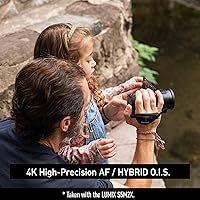
Genuinely solid for a camcorder in this class. The 5-Axis HYBRID O.I.S+ system compensates for the kind of natural hand tremor and body movement you get when walking and filming simultaneously. It will not completely eliminate all motion if you are jogging, but for normal walking pace it keeps footage very watchable.

The F1.8 lens helps more than a typical F2.8 or F3.5 kit lens would in dim venues, but the 1/2.5-inch sensor has physical limits. You will get usable footage in moderately dim spaces like a candle-lit reception hall, but a dark auditorium with stage lighting will likely show noise. Managing your expectations here is important.

The HC-VX3 accepts standard SD, SDHC, and SDXC cards. For 4K recording, you should use a card rated at UHS Speed Class 3 (U3) or Video Speed Class 30 (V30) or higher to avoid dropped frames or recording interruptions. A 64GB or 128GB card is a practical starting point for longer sessions.

That depends on your setup. AVCHD is widely supported on modern smart TVs and Blu-ray players, but some PC-based editing software does not handle it natively and may require a conversion step first. If you plan to edit on a Mac or Windows PC, check whether your editing app supports AVCHD before assuming it will work without transcoding.

Battery life varies depending on whether you are recording in 4K or 1080p, how often you use the zoom, and how active the Wi-Fi connection is. Under typical mixed use, expect somewhere in the range of 1.5 to 2.5 hours of actual recording time. For a full-day event, bringing a spare battery is a sensible precaution.

Unfortunately, no — this camcorder does not have an external microphone input. You are limited to the built-in stereo microphone. For casual family recording this is fine, but if audio quality is a priority for your use case, that is a meaningful limitation worth factoring into your decision.

It is genuinely useful for a specific workflow: you can pair it with Panasonic’s smartphone app to use your phone as a live viewfinder or remote shutter trigger, which is handy when the camera is mounted on a tripod. Transferring large 4K files over Wi-Fi is slow, though — for moving footage to a computer, copying directly from the SD card is much faster.

A current flagship smartphone can match or exceed the HC-VX3’s image quality in ideal conditions, but it cannot replicate 24x optical zoom, a physical ergonomic grip, or dedicated stabilization hardware. The real advantage of this 4K camcorder is the experience of using it: one-handed operation, physical controls, and a device that is always in video mode rather than a multi-purpose phone you have to unlock and navigate.

Yes, it is designed with approachability in mind. The touchscreen interface, auto-focus system, and ergonomic grip lower the learning curve significantly compared to a DSLR or mirrorless camera. Most buyers can pick it up and shoot decent footage within minutes. The in-camera editing feature also means you do not need to invest in separate software to do basic post-production.

Where to Buy