Overview

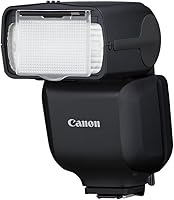
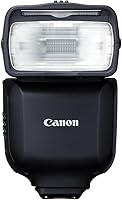
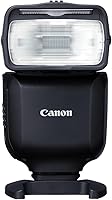
The Canon Speedlite EL-10 Camera Flash arrives as the practical successor to Canon's long-running 430EX III-RT, built specifically for photographers who have made the jump to the EOS R mirrorless system. It sits comfortably in the mid-range tier — more capable than a basic entry-level flash, but not burdened with the price of a pro unit. The multi-function shoe connector is a genuine step forward over the standard hotshoe, allowing the camera and flash to share far more information on compatible bodies. Add in wireless master control for up to 15 additional Speedlites, plus the thoughtful bundle of soft case and stand, and it reads like a well-considered upgrade.
Features & Benefits

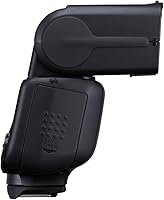
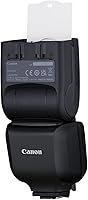
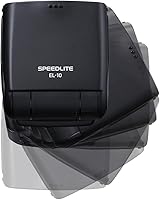
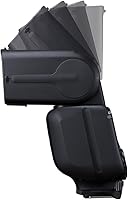
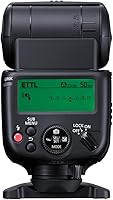
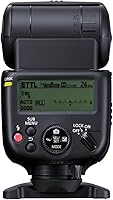
What sets this Speedlite apart from older Canon flashes is the combination of hardware and control options packed into a surprisingly portable body. The bounce and swivel head offers 90 degrees of tilt and up to 180 degrees of rotation, which matters enormously for portrait and event work where flat, direct flash rarely looks its best. Custom Flash modes let you save both E-TTL — the camera's automatic flash metering — and fully manual settings, then switch between them instantly on location. Pair this Canon flash with the Camera Connect app and you can trigger the shutter or adjust wireless flash settings right from your phone. The 1/200s sync speed covers most typical shooting situations.

Best For

This Speedlite is a natural fit for Canon EOS R shooters who have outgrown the limitations of a basic built-in or entry-level flash and want something with real creative flexibility. Portrait photographers, event shooters, and anyone working weddings will find the bounce head and wireless capability genuinely useful day-to-day. It's also a solid pick for photographers who want to build out a multi-flash setup gradually without spending on a high-end flagship unit. Travelers and run-and-gun shooters will appreciate the compact dimensions and the included carry case. If you're already using the Canon Camera Connect app, the remote wireless control adds a practical layer to your workflow worth considering.

User Feedback

Buyers who have used this Canon flash in the real world tend to highlight build quality and reliability as immediate positives, with many noting that it feels like a step up from the previous generation. The improved communication through the multi-function shoe is frequently mentioned by R-series users who notice more consistent exposure in automatic modes. On the downside, battery drain is a recurring concern — running four AA cells through a heavy event shoot can deplete them faster than expected, so carrying a spare set is smart. A handful of buyers also question whether the price holds up against capable third-party alternatives. For Canon ecosystem users, though, the integration is hard to argue with.

Pros

  • Multi-function shoe delivers noticeably more accurate automatic flash exposure on compatible EOS R bodies.
  • Wireless master control for up to 15 Speedlite units makes building a multi-light portrait setup practical and affordable.
  • Bounce head with 180-degree swivel and 90-degree tilt covers virtually every real-world bounce lighting scenario.
  • Build quality feels solid and well above what most photographers expect at this price tier.
  • Custom Flash modes let you store and recall full configurations instantly, which speeds up workflow on busy shoots.
  • The included soft case and stand add immediate practical value right out of the box.
  • Runs on standard AA batteries — easy to source anywhere, no proprietary charging required.
  • Canon Camera Connect app integration enables smartphone-based remote shooting and wireless flash adjustments.
  • Compact enough to carry comfortably alongside a mirrorless body without dominating your bag.
  • A reliable step-up option for EOS R shooters who want more than an entry-level flash without paying professional prices.

Cons

  • Battery drain under sustained high-power use is faster than expected — always carry spare AAs to a professional job.
  • The optical wireless system requires line-of-sight to slave units, limiting off-camera placement flexibility outdoors.
  • No native high-speed sync support makes outdoor fill flash against bright backgrounds genuinely difficult.
  • Camera Connect app connectivity can be unstable, with occasional drops requiring re-pairing mid-shoot.
  • The swivel head tension can loosen after extended repeated use, which becomes noticeable during long events.
  • Multi-function shoe benefits are restricted to a short list of newer EOS R bodies, leaving mixed-kit users shortchanged.
  • Menu navigation for Custom Flash modes has a learning curve that first-time flash users find unintuitive.
  • The included stand is lightweight and tips easily on uneven surfaces or in any outdoor breeze.
  • Maximum guide number output is modest compared to some rivals offered at a similar or lower price point.
  • Third-party radio flash alternatives at lower prices offer comparable or better HSS and off-camera flexibility.

Ratings

The Canon Speedlite EL-10 Camera Flash scores here reflect AI-driven analysis of verified global buyer reviews, with spam, bot activity, and incentivized feedback actively filtered out before scoring. Across thousands of real-world impressions from portrait shooters, event photographers, and mirrorless converts, both the strengths and the frustrations of this Speedlite are represented transparently in every category below.
Build Quality
88%
Most buyers comment on how solid this Speedlite feels compared to older Canon flashes and competing third-party units at a similar price. The plastics don't creak, the controls have a satisfying click, and the hot shoe foot inspires confidence when mounted on an EOS R body for extended shoots.
A few users note that the swivel head, while functional, feels slightly less robust than they expected given the price. After repeated rotation during long events, some report a loosening of the head tension over time.
Flash Performance & Output
84%
Photographers using this Canon flash for indoor portraits and wedding receptions praise the consistent, well-metered output. E-TTL automatic exposure tends to nail mixed-lighting environments without constant manual compensation, which matters when moments are fleeting.
At maximum power, recycle times can slow noticeably — a real concern for burst shooters. A handful of users also feel the maximum guide number is slightly underwhelming compared to what rivals offer at a comparable price point.
Wireless Control
86%
The ability to act as a wireless master controlling up to 15 additional Speedlite units is a standout feature that genuinely impressed buyers building out multi-light portrait setups. Triggering off-camera flashes reliably from across a reception hall is exactly the kind of real-world use case this earns high marks for.
Wireless range in cluttered environments or bright outdoor conditions can be inconsistent for some users. A few buyers also note that the optical wireless system is line-of-sight dependent, which limits placement flexibility compared to radio-based solutions.
Multi-Function Shoe Integration
83%
EOS R series owners consistently single out the multi-function shoe connector as a meaningful upgrade over the standard hotshoe found on older flashes. The richer data exchange between flash and camera translates to more accurate auto exposure and faster response in rapidly changing lighting conditions.
The benefit is entirely exclusive to compatible EOS R bodies — users with older Canon cameras or those considering cross-system use get nothing extra from this connector. It is a feature that rewards loyalty to the current Canon mirrorless ecosystem and no one else.
Bounce & Swivel Head Range
81%
19%
The 90-degree tilt combined with 180-degree right swivel and 150-degree left swivel covers nearly every practical bounce angle a portrait or event photographer would reach for. Ceiling bounces, wall bounces, and over-the-shoulder angles are all achievable without repositioning your stance.
Some buyers coming from third-party flashes that allow downward tilt find the lack of negative tilt limiting for specific table-level or macro setups. The locking mechanism on the tilt could also be firmer for photographers who change angles frequently mid-shoot.
Battery Life
61%
39%
Under moderate shooting conditions — think a casual portrait session or a short event — four AA batteries hold up reasonably well and the flash recycles quickly enough to keep pace. Using quality lithium AAs noticeably extends runtime compared to standard alkaline cells.
Heavy event shooters, particularly those firing at high power through a full wedding reception, report burning through a set of AAs faster than expected. Carrying two or three spare sets is essentially mandatory for professional use, which is a real inconvenience in the field.
Camera Connect App Integration
72%
28%
When it works well, triggering the shutter and adjusting wireless flash settings from a smartphone adds a genuinely useful remote shooting capability. Solo photographers doing self-portraits or product shots on a tripod find this particularly practical.
Connection stability is the most common complaint — the Bluetooth and Wi-Fi handshake between the app and camera can drop or require re-pairing at inconvenient moments. Some users on Android devices report a noticeably less polished experience than those on iOS.
Custom Flash Modes
78%
22%
The ability to register and instantly recall custom flash configurations — switching between a saved E-TTL portrait preset and a manual product-photography setting with a few button presses — is a workflow improvement that experienced photographers genuinely appreciate on busy shoots.
The interface for setting up and navigating Custom Flash modes has a learning curve that newer photographers find unintuitive without consulting the manual. The labeling on the flash body is not always self-explanatory, which slows down initial setup.
Ease of Use
77%
23%
Once the initial learning curve is cleared, day-to-day operation is straightforward. Basic E-TTL shooting requires minimal input, and the button layout becomes second nature after a few sessions. Photographers transitioning from the 430EX III-RT find the controls familiar enough to feel comfortable quickly.
First-time flash users may feel overwhelmed by the number of modes and options available. The menu navigation, while logical to experienced shooters, lacks the immediacy of some rival flashes that offer dedicated physical dials for key settings.
Portability & Size
85%
At just over 15 ounces and compact enough to slip into a camera bag side pocket, this Speedlite earns consistent praise from travel photographers and those shooting on the move. The included soft case and stand add genuine everyday value without adding meaningful bulk.
Compared to ultra-compact third-party mini flashes, the EL-10 is still a noticeable addition to a lightweight mirrorless kit. Photographers who have specifically chosen a small EOS R body for portability reasons may find the size trade-off worth considering.
Value for Money
69%
31%
Within the Canon native flash ecosystem, buyers largely feel this Speedlite delivers what the price implies — a meaningful capability upgrade over entry-level options with solid integration benefits for EOS R users. The multi-function shoe and wireless master features do add tangible value.
The third-party flash market is competitive, and several capable alternatives exist at noticeably lower prices. Buyers who do not specifically need native Canon ecosystem features — or who shoot on older Canon bodies — may feel the premium is harder to justify.
Sync Speed
76%
24%
The 1/200s maximum flash sync speed handles the majority of indoor and studio scenarios comfortably. For wedding receptions, event halls, and controlled portrait environments, it is rarely a limiting factor and performs reliably across those conditions.
Photographers who frequently shoot outdoors in bright conditions and want to balance ambient light with fill flash will hit the 1/200s ceiling sooner than they would like. High-speed sync is not natively supported, which is a genuine gap for outdoor portrait work.
Included Accessories
79%
21%
The soft carry case is genuinely useful rather than an afterthought — it protects the flash during transport and keeps it dust-free in a bag. The included stand lets users immediately experiment with off-camera flash placement without any additional purchase.
The stand is basic and lightweight, prone to tipping on uneven surfaces or in light breezes during outdoor use. The soft case offers minimal impact protection, so photographers who shoot in rough environments may want to invest in a sturdier aftermarket option.
Compatibility
74%
26%
For the target audience — Canon EOS R series mirrorless shooters — compatibility is essentially a non-issue. The flash mounts, communicates, and performs exactly as expected across the range of compatible RF-mount bodies without requiring firmware gymnastics.
The multi-function shoe benefits are locked to a relatively short list of newer EOS R bodies, and the flash offers only standard hotshoe functionality on older Canon EF-mount cameras. Photographers with a mixed or transitional Canon kit will not get the full feature set everywhere they mount it.

Suitable for:

The Canon Speedlite EL-10 Camera Flash is purpose-built for Canon EOS R series mirrorless photographers who have outgrown the limitations of a basic pop-up or entry-level flash and want meaningful creative control without stepping into flagship-tier pricing. Portrait photographers, wedding shooters, and event photographers will find the bounce head range and wireless master capability particularly valuable — being able to redirect light off a ceiling or wall, or trigger additional off-camera Speedlites across a reception hall, makes a visible difference in image quality. Photographers who are building out a multi-light setup incrementally will appreciate that this Speedlite can orchestrate up to 15 additional units, making it a genuinely scalable investment. Travel-oriented shooters and those who move between locations frequently will value the compact footprint, the included protective case, and the fact that it runs on AA batteries available anywhere in the world. If you are already embedded in the Canon ecosystem and use a compatible EOS R body, the multi-function shoe integration adds a layer of camera-to-flash communication that makes automatic exposure noticeably more reliable in tricky mixed-lighting environments.
Not suitable for:

The Canon Speedlite EL-10 Camera Flash is a harder sell for photographers who shoot primarily outdoors in bright ambient light, since the 1/200s sync speed cap and the absence of native high-speed sync support limit how effectively fill flash can balance a sunlit background. Photographers with older Canon EF-mount DSLR bodies will find the multi-function shoe connector delivers no additional benefit, reducing the value proposition to essentially that of a standard hotshoe flash at a mid-range price. Anyone seriously comparing it against third-party alternatives — particularly radio-triggered flashes with broader HSS support and more flexible off-camera placement — will find the EL-10's optical wireless system constraining in real-world use cases. Heavy event shooters who fire at high power through an entire wedding day will also find the four-AA battery requirement genuinely inconvenient, as runtime under sustained professional use demands frequent battery swaps. Finally, photographers who prioritize portability above all else and want to keep their mirrorless kit as minimal as possible may find that even this mid-range flash adds more size and weight than they are willing to accept.
Specifications

  • Brand: Manufactured by Canon, a Japan-based imaging company with decades of flash system development behind the Speedlite product line.
  • Model: Speedlite EL-10, carrying the official Canon model number 6579C001, positioned as the direct successor to the 430EX III-RT.
  • Compatibility: Designed for select Canon EOS R series mirrorless cameras; full multi-function shoe benefits require a compatible RF-mount body with a multi-function hot shoe.
  • Flash Type: External shoe-mount flash unit that attaches to the camera via the hot shoe or multi-function shoe connector on supported EOS R bodies.
  • Sync Speed: Maximum flash sync speed of 1/200s, suitable for most indoor and controlled studio conditions but without native high-speed sync support.
  • Head Tilt: The flash head tilts upward to a maximum of 90 degrees, enabling ceiling bounce lighting in portrait and event scenarios.
  • Head Swivel: The flash head rotates 150 degrees to the left and 180 degrees to the right, covering nearly all practical bounce and wrap-lighting angles.
  • Wireless Control: Functions as a wireless master unit capable of controlling up to 15 additional compatible Canon Speedlite units in a multi-flash arrangement.
  • Connector Type: Equipped with a multi-function shoe connector at the flash foot, enabling advanced data communication with compatible multi-function shoe cameras beyond standard hotshoe signaling.
  • App Support: Compatible with the Canon Camera Connect smartphone application, allowing remote shutter release, wireless flash adjustment, and photo review from a paired mobile device.
  • Power Source: Requires 4 AA batteries (not included); lithium AA cells are recommended for extended shoot durations and faster recycle times.
  • Dimensions: The unit measures 4.6 x 3.9 x 2.8 inches, keeping the overall footprint compact relative to higher-output professional flash units.
  • Weight: Weighs 15.2 ounces (approximately 431 grams) without batteries, light enough for extended handheld use without significantly unbalancing a mirrorless body.
  • Flash Modes: Supports E-TTL automatic flash metering, full Manual output control, and Custom Flash modes that allow photographers to save and instantly recall registered settings.
  • In the Box: Package includes the flash unit itself, a soft protective carry case, and a flash stand for basic off-camera placement without additional accessories.
  • Best Sellers Rank: Ranked #22 in the Shoe-Mount Flashes category on Amazon at the time of review, reflecting strong adoption within the Canon mirrorless user base.
  • Release Date: First made available for purchase on June 5, 2024, making it a relatively recent addition to Canon's current Speedlite lineup.

Related Reviews
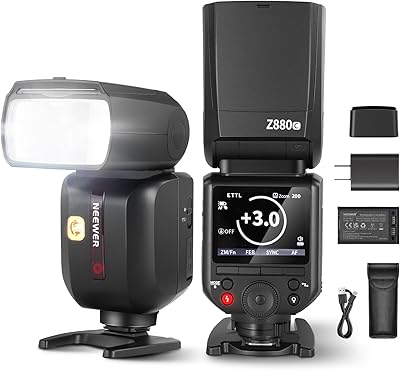
NEEWER Z880-C TTL Camera Flash Speedlite
83%
83%
Build Quality
88%
TTL Accuracy
86%
HSS Performance
74%
Wireless Reliability
91%
Battery Life
More
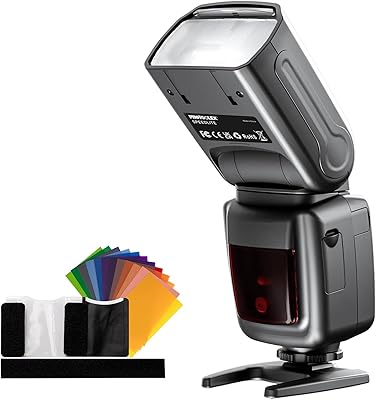
Photoolex FK300 Camera Flash Speedlite
76%
88%
Value for Money
91%
Ease of Setup
74%
Flash Power & Output
58%
Build Quality
71%
Wireless Slave Performance
More
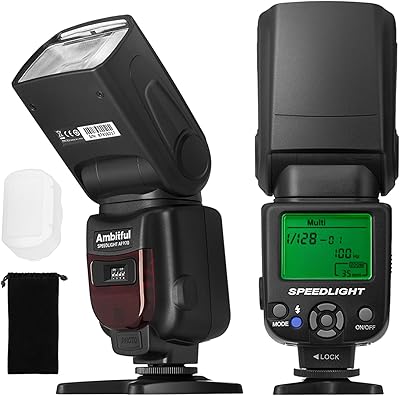
AMBITFUL AF970 Camera Flash Speedlite
81%
91%
Value for Money
84%
Wireless Performance
88%
Manual Power Control
82%
Recycle Time
74%
Build Quality
More
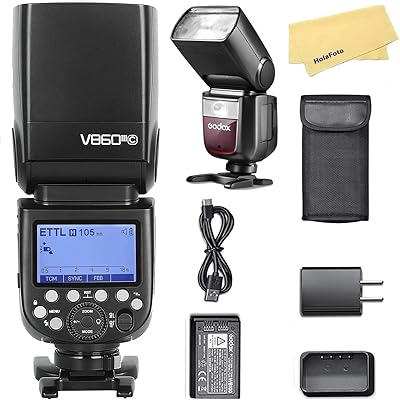
Godox V860III Canon Speedlite Flash
83%
93%
Battery Life & Endurance
91%
Recycle Time
74%
TTL Accuracy & Consistency
78%
Wireless Reliability
82%
Build Quality & Durability
More
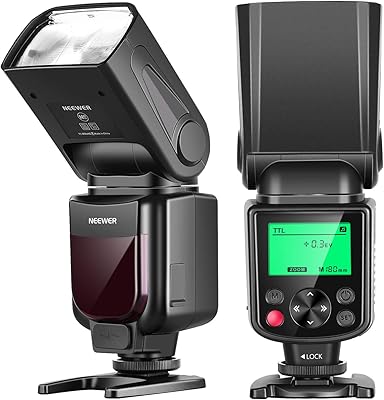
NEEWER 750II TTL Camera Flash Speedlite
84%
88%
Flash Power & Performance
85%
Ease of Use
72%
Build Quality
90%
TTL Functionality
80%
Portability & Weight
More
ZENIKO ZF08 Mini Camera Flash Speedlite
79%
94%
Portability & Form Factor
91%
Ease of Use
61%
Build Quality
58%
Output Power & Range
67%
Color Temperature Accuracy
More
Godox TT350S Mini Speedlite Flash
81%
83%
TTL Accuracy
88%
High Speed Sync (HSS)
86%
Wireless Performance
93%
Portability & Form Factor
78%
Build Quality
More
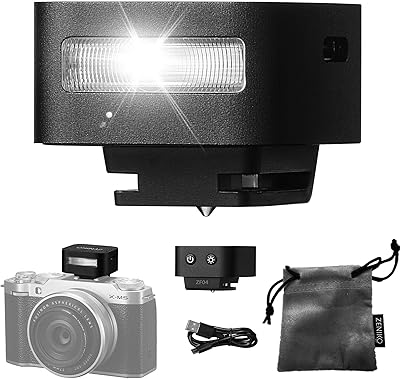
Zeniko ZF04 Mini Hot Shoe Flash
80%
96%
Portability & Size
91%
Ease of Use
51%
Power Control & Flexibility
83%
Recycle Time
87%
Battery Life
More
NEEWER NW635II-S TTL Camera Flash Speedlite
86%
88%
Value for Money
91%
Performance
75%
Build Quality
85%
Ease of Use
92%
Portability
More
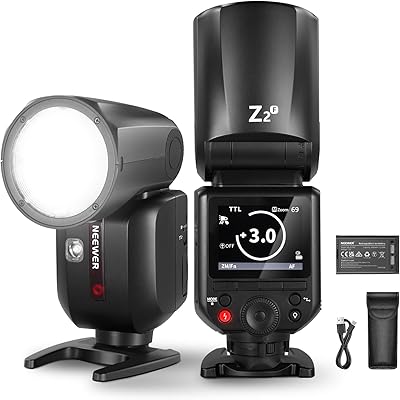
NEEWER Z2-F 2.4G TTL Camera Flash Speedlite for Fujifilm
86%
88%
Performance
85%
Ease of Use
91%
Wireless Connectivity
83%
Battery Life
90%
Flash Power Output
More

FAQ

It will physically mount on older Canon DSLRs with a standard hot shoe and fire in basic modes, but the multi-function shoe connector — one of its headline features — only communicates fully with compatible EOS R series mirrorless bodies. If you're using an older EF-mount camera, you lose the advanced integration that justifies much of the price, so it's worth factoring that in before buying.

Under moderate conditions — a portrait session or a short event — a set of quality AA batteries will carry you through comfortably. Heavy professional use at higher power levels, like a full wedding reception, will drain them faster than you might expect. Lithium AAs recycle quicker and last noticeably longer than alkaline cells, so they are strongly recommended, and carrying at least one spare set to any professional job is sensible.

No, the EL-10 does not support high-speed sync natively. The maximum sync speed caps at 1/200s, which handles indoor and studio work well but can be a limiting factor when shooting outdoor portraits in bright sunlight where you want to balance fill flash against a fast shutter speed.

The EL-10 is designed to operate as a wireless master controller for other Speedlite units, but it can also fire as part of a Canon optical wireless system in certain configurations. Whether it functions as a slave depends on the specific setup and the Canon flashes involved — check Canon's compatibility documentation for your exact combination of bodies and flashes.

A standard hot shoe passes basic trigger and exposure signals between camera and flash. The multi-function shoe connector on compatible EOS R bodies shares a much richer stream of data, which translates to more responsive automatic exposure, tighter integration with in-camera settings, and better coordination during continuous shooting. For photographers who rely on E-TTL in unpredictable lighting, the difference in consistency is genuinely noticeable.

For the most part, yes — but it is worth knowing that the connection can occasionally drop, particularly in RF-heavy environments like convention halls or crowded venues. iOS users tend to report a smoother pairing experience than Android users. For solo product or self-portrait shooting in a controlled environment, the remote functionality works well; for time-critical event work, treat it as a convenient bonus rather than a mission-critical tool.

The biggest practical upgrade is the multi-function shoe connector, which the 430EX III-RT does not have. The EL-10 also introduces Custom Flash modes for saving and recalling settings quickly, and the head rotation range is slightly improved. If you are shooting an older Canon DSLR, the 430EX III-RT may actually serve you equally well and can often be found at a lower price on the used market; the EL-10's advantages are most significant for EOS R users.

Initial impressions from buyers are positive — the head feels firm and well-constructed out of the box. A minority of users report that the tension loosens slightly with very heavy repetitive use over time, which is worth monitoring. For most photographers shooting a reasonable number of events or sessions per year, it should hold up well; those using it daily and constantly repositioning the head may want to handle it with some care.

Canon rates the optical wireless system for use across a reasonable indoor distance, though real-world range varies considerably depending on environment. Cluttered spaces, strong ambient light, or obstacles between the master and slave units can reduce reliability. For a typical indoor reception or portrait studio, the range is generally sufficient; for large outdoor setups where slaves may be placed far from the camera position, a dedicated radio trigger system would be more dependable.

The Speedlite ships with the flash unit, a soft protective case, and a stand — so basic on-camera and simple off-camera shooting are covered from day one. You will need to supply four AA batteries yourself, as these are not included. If you plan to shoot wirelessly with multiple flashes, you will also need additional compatible Speedlite units to act as slaves, but the EL-10 itself is ready to use as a standalone on-camera flash straight out of the box.

Where to Buy