Overview

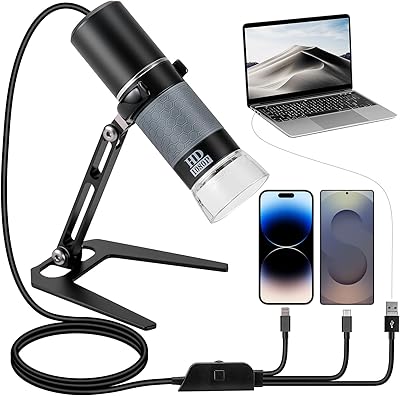
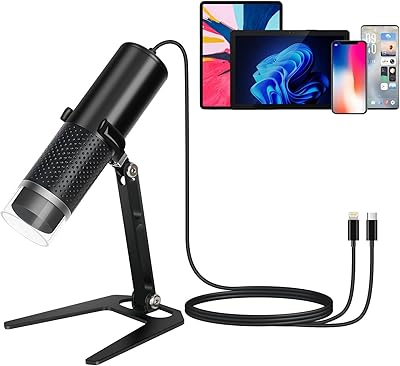
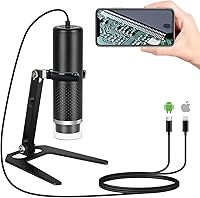
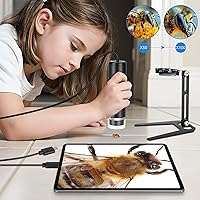
The Cainda RM USB Digital Microscope is a smartphone-first optics tool that skips the PC entirely — plug it into your iPhone or Android, install the app, and you're looking at the microscopic world within minutes. Launched in late 2024, it targets curious beginners rather than lab professionals. At just 5.6 oz, this pocket microscope is light enough to toss in a school bag or carry to a park. One key detail upfront: it pulls power directly from your phone, so no charging is ever required — but keep your battery above 20% or you'll run into connection issues. That no built-in battery design is genuinely handy for kids, though less ideal during longer outdoor sessions.
Features & Benefits

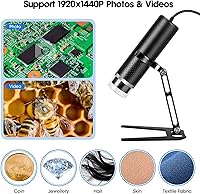
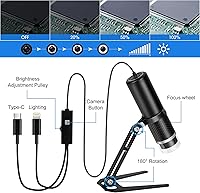
The magnification range spans 50x to 1600x, which sounds impressive — and at the lower end, it genuinely delivers. Coins, insects, fabric weaves, and circuit board traces all come through clearly at moderate zoom levels. The 1920x1440P HD resolution means photos and videos look sharp enough to share or revisit later. Eight adjustable LED lights handle low-light situations without needing any external source. The 31-inch cable gives you enough slack that you're not awkwardly hunching your phone over the subject. One honest caveat: image quality at the upper zoom range tends to soften considerably, which is typical for optics at this price tier — treat that ceiling as a best-case figure rather than an everyday working range.

Best For

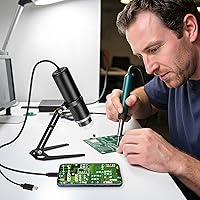
This phone-compatible microscope hits its stride with a pretty specific crowd. Kids doing science fair projects or nature walks will get the most from it — setup is simple enough that a ten-year-old can handle it independently. Hobbyists inspecting coins, stamps, or small jewelry pieces will find the mid-range zoom levels genuinely useful for that kind of detail work. It also suits electronics tinkerers who occasionally need to check solder joints or PCB traces without dragging out a full bench microscope. If you're already working semi-professionally, you'll likely outgrow it fast. Think of the Cainda scope as a low-commitment entry point — a way to find out whether microscopy is something you'll actually pursue.

User Feedback

With around 97 ratings and a 4.2-star average, the Cainda scope has had a solid early reception — though that's still a modest sample, so treat patterns here with some caution. Buyers consistently highlight easy app setup and satisfying image clarity at mid-range zoom levels. The metal stand also earns praise for feeling more stable than you'd expect. Recurring complaints center on Android compatibility — specifically, users who didn't realize their device needed OTG support and a Type-C port, which isn't guaranteed on every phone. A few reviewers also found the companion app less refined than hoped. No serious durability concerns have emerged yet, which is a reasonable sign for a product only a few months into its life.

Pros

  • Plug-and-play setup takes under five minutes with no technical knowledge required.
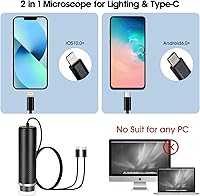
  • The dual Lightning and Type-C cable means one device covers both iPhone and Android users.
  • Image clarity at low to mid magnification levels is genuinely solid for casual inspection work.
  • Eight built-in LEDs eliminate the need for external lighting in most indoor environments.
  • The metal stand feels noticeably more stable than plastic alternatives at a similar price.
  • At 5.6 oz, this pocket microscope is light enough to carry in a school bag without a second thought.
  • No battery to charge means it is always ready to use as long as your phone has power.
  • Photo and video capture through the app works reliably for documenting specimens or sharing findings.
  • The 31-inch cable gives comfortable working distance without cramping your hands or your setup.
  • For a first microscope experience, it delivers enough capability to genuinely spark curiosity in younger users.

Cons

  • Android OTG compatibility is a hard requirement that the product listing does not communicate clearly enough.
  • Image quality degrades significantly above 600x to 800x, making the 1600x spec misleading in practice.
  • The companion app feels dated and has reported stability issues on newer operating system versions.
  • Extended use noticeably drains the connected phone battery, limiting session length without a power source nearby.
  • No carrying case or pouch is included despite the product being marketed as portable.
  • The cable does not coil neatly, which makes packing up after a session more fiddling than it should be.
  • Reflective surfaces like polished coins or glass slides can create LED glare that washes out fine detail.
  • The scope body does not lock firmly into the stand and can drift slightly during longer inspection sessions.
  • PC users are completely excluded, and this limitation is not always obvious from the product title alone.
  • With under 100 reviews, long-term durability and app update reliability remain genuinely unknown quantities.

Ratings

The Cainda RM USB Digital Microscope has been scored below by our AI system after processing verified buyer reviews from multiple global markets, with spam, bot activity, and incentivized feedback actively filtered out. The scores reflect what real users consistently experienced — not just what worked well, but also where this pocket microscope fell short. Strengths and frustrations are weighted equally so you get a genuinely honest picture before buying.
Ease of Setup
91%
Most buyers were up and running within a few minutes — download the app, plug in the cable, and the live feed appears almost instantly. Parents setting it up for younger kids especially appreciated that there were no drivers, no pairing screens, and no confusing menus to navigate.
A small number of Android users hit a wall because their phone lacked OTG support or didn't use a Type-C port, which made the whole setup process fail immediately. The instructions don't make this requirement prominent enough, so it catches people off guard.
Image Quality at Mid-Range Zoom
78%
22%
At 50x to around 400x, the Cainda scope produces genuinely clear, detailed images that hold up well for casual inspection of coins, insects, fabric, and skin. The 1920x1440P resolution gives photos enough detail to zoom in digitally after the fact without the image falling apart immediately.
Sharpness and color accuracy vary noticeably depending on how still you can hold the scope and how well the LEDs are positioned. At moderate zoom levels, slight hand tremors translate into blurry frames more quickly than you might expect from a mounted scope.
Maximum Magnification Performance
54%
46%
The 1600x ceiling is achievable in a technical sense, and some users did report capturing usable images of fine circuit board traces and textile fibers at very high zoom when conditions were just right and the subject was completely still.
In practice, the image softens considerably as you push past 600x to 800x, and at the true maximum, most photos come out blurry or washed out. Treating 1600x as a marketing ceiling rather than a reliable working spec is the honest framing here.
LED Lighting System
83%
Eight adjustable LEDs make a real difference when working indoors or in dim spaces — you can actually inspect subjects without needing a desk lamp shining nearby. Buyers doing late-night hobby work with coins or jewelry found the built-in lighting more than adequate for detailed inspection.
At very close distances, the lighting can create hotspots or glare on reflective surfaces like polished metals and glass slides, which washes out fine detail. The brightness adjustment is manual and can take a moment to dial in correctly for each new subject.
iOS Compatibility
88%
iPhone users consistently reported the smoothest experience overall — the Lightning connector fits securely, the companion app behaves predictably, and image capture feels responsive. Several reviewers specifically called out the iOS experience as a reason they'd recommend it to others.
The app, while functional, lacks some of the polish iPhone users might expect compared to native camera apps. Features like zoom control and image saving work, but the interface feels utilitarian rather than refined.
Android Compatibility
61%
39%
When an Android device actually meets the requirements — OTG-enabled and running a Type-C port — the experience works well enough, with live preview and photo capture functioning as expected. Newer flagship Android phones tend to handle it without issues.
This is the most frequent source of one-star reviews. Many mid-range and older Android devices either lack OTG support or use a Micro-USB port, rendering the scope completely non-functional. The product listing buries this requirement, and buyers feel misled when it doesn't work on their phone.
Build Quality & Stand Stability
76%
24%
The metal stand is a genuine positive at this price point — it doesn't flex or wobble the way plastic-framed alternatives can, and it holds the scope at a consistent height during longer inspection sessions. Several buyers compared it favorably to cheaper competitors that feel flimsy by comparison.
The stand's adjustment mechanism can feel slightly stiff on some units, making fine height changes tricky. A few users also noted that the scope body itself, while lightweight, doesn't lock into position perfectly and can drift during use.
Portability
89%
At 5.6 oz and packaged in a compact box, this phone-compatible microscope fits comfortably in a school bag or a jacket pocket when disassembled. Teachers and students who carry it to class or outdoors for nature observation found the size genuinely practical rather than a compromise.
The 31-inch cable, while useful during use, becomes a minor nuisance when packing up — it doesn't coil neatly and can tangle. There's no carrying case or pouch included, which feels like a missed opportunity for a product clearly designed to be used on the move.
Battery-Free Power Design
72%
28%
Drawing power directly from the phone eliminates the frustration of a dead microscope battery mid-session, which is a real advantage for classroom use where kids aren't always reliable about charging accessories. Parents appreciated one less gadget to keep charged.
During extended use, the scope drains the connected phone noticeably, and the product itself warns against using it below 20% phone battery. For anyone planning a longer outdoor session or already running low, this dependency can become a genuine inconvenience.
Companion App Experience
63%
37%
The app gets the core job done — live preview, zoom adjustment, photo capture, and video recording all work without requiring any technical knowledge. For casual users who just want to look at things up close, it's more than sufficient.
The interface feels dated and the app has received mixed feedback around stability, with some users reporting occasional crashes or unresponsive controls. It hasn't been updated frequently enough to keep pace with newer iOS and Android OS versions, which introduces compatibility quirks over time.
Cable Quality & Length
81%
19%
The 31-inch dual-plug cable is legitimately useful — it gives you enough distance to hold your phone comfortably while the scope sits on a flat surface, rather than hunching both devices together awkwardly. The two-in-one Lightning and Type-C design means one cable covers both device types.
The cable feels on the thinner side and a few buyers questioned its long-term durability under repeated bending. At this price, a braided or reinforced cable would have added meaningful peace of mind, especially for younger users who aren't always careful with accessories.
Value for Money
84%
For anyone who understands what they're buying — a beginner-tier, smartphone-dependent scope with real limitations at high magnification — the price-to-performance ratio is genuinely solid. The metal stand, dual-plug cable, and HD resolution are features that competing products at similar price points don't always include.
Buyers who expected lab-grade optics or seamless Android compatibility based on the listing felt the value proposition didn't hold up. When the device fails to work due to OTG issues or the 1600x claim disappoints in practice, the overall value perception drops sharply.
Suitability for Children
86%
The plug-and-play setup means kids as young as eight or nine can operate it independently after a brief introduction. Buyers who gave it as a gift for science-curious children reported genuine enthusiasm and repeated use, particularly for exploring nature specimens and household objects.
Younger children may struggle to hold the scope steady enough to get a clear image without the stand, and the app's interface isn't designed with kids specifically in mind. The phone-draining power setup also means an adult's device is often tied up during use.
Photo & Video Capture
74%
26%
Saving still images works reliably through the app, and the 1920x1440P resolution produces photos that hold up reasonably well for sharing on social media or including in a school report. Video recording is a useful addition for documenting moving subjects like insects.
There's no manual control over exposure or white balance, which limits the quality of captures in non-ideal lighting. Video files can also look noticeably softer than still images, and there's a slight lag between the live view and actual capture that takes some getting used to.

Suitable for:

The Cainda RM USB Digital Microscope is a strong fit for anyone stepping into microscopy for the first time without wanting to spend serious money or wrestle with complicated software. Kids between roughly 8 and 14 years old are probably the ideal audience — the plug-and-play setup means a child can operate it independently after a five-minute introduction, and the metal stand keeps things stable enough during show-and-tell or science fair prep. Students who need to document specimens, inspect plant cells, or photograph small objects for a project will find the HD image quality more than sufficient for that kind of work. Hobbyists who examine coins, stamps, small jewelry pieces, or vintage collectibles will appreciate the mid-range zoom performance for that type of close-up inspection. It also makes a practical tool for DIY electronics enthusiasts who occasionally need to verify a solder joint or check a PCB trace without committing to a full bench microscope setup. If you own an iPhone or a modern Android device with a Type-C port and OTG support, and your goal is casual exploration rather than precision analysis, this pocket microscope is genuinely hard to beat at its price point.
Not suitable for:

The Cainda RM USB Digital Microscope is the wrong choice for anyone expecting professional-grade optics or consistent sharpness at the upper end of its magnification range — the 1600x figure is a ceiling, not a reliable working spec, and images soften considerably past 600x to 800x. PC users should stop here entirely, as this scope has no Windows or macOS compatibility whatsoever and there is no workaround. Android users with older or mid-range phones should verify OTG support and a Type-C port before purchasing, because incompatible devices will render the scope completely non-functional right out of the box — this is the single most common reason for negative reviews. Anyone planning extended outdoor sessions should also think twice, since the scope drains the connected phone and stops working reliably below 20% battery, which can cut a session short at inconvenient moments. Researchers, lab technicians, or serious hobbyists who need repeatable, high-precision magnification for technical documentation will find this phone-compatible microscope underpowered for that level of work and should invest in a dedicated benchtop model instead.
Specifications

  • Brand: Manufactured by Cainda, a brand focused on accessible optical and imaging tools for consumer use.
  • Model: The model designation is RM, first made available in December 2024.
  • Magnification: Optical magnification ranges from 50x at the low end to a maximum of 1600x under ideal conditions.
  • Resolution: The camera captures still images and video at 1920x1440P HD resolution through the companion app.
  • Compatibility: Works with iOS and Android smartphones and tablets only — there is no PC, Mac, or Chromebook support of any kind.
  • Android Requirement: Android devices must support OTG (On-The-Go) functionality and use a Type-C port for the connection to work.
  • Connection Type: Connects via a dual-plug USB cable that includes both a Lightning connector and a Type-C connector in a single cable.
  • Cable Length: The included USB cable measures 31 inches (approximately 79 cm), providing comfortable working distance between scope and phone.
  • Light Source: Equipped with 8 adjustable LED lights arranged around the lens to illuminate subjects evenly, including in low-light environments.
  • Power Source: Draws power directly from the connected smartphone or tablet — there is no internal battery and no external charging required.
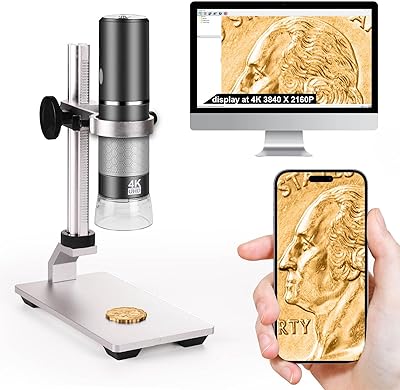
  • Stand Material: The included stand is constructed from metal, providing more rigidity and stability than typical plastic stands in this category.
  • Weight: The unit weighs 5.6 oz (approximately 160g), making it genuinely lightweight for portable or classroom use.
  • Packaged Dimensions: The product ships in a box measuring 7.17 x 3.7 x 2.05 inches, compact enough to store in a drawer or bag.
  • Color: Available in black only, with a matte finish across both the scope body and stand.
  • App Required: A companion app must be installed on the connected device to view the live feed, capture photos, and record video.
  • Setup Method: Setup is plug-and-play after app installation — no account creation, driver installation, or device pairing is required.
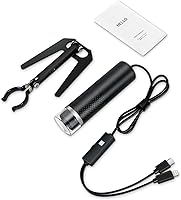
  • What's Included: The package contains one digital microscope, one 31-inch dual-plug USB cable (Lightning and Type-C), one metal stand, and a user manual.
  • View Angle: The real angle of view is listed at 3.0 degrees, which is typical for a high-magnification optical tube design.

Related Reviews

Ninyoon 4K Digital USB Microscope
83%
88%
Image Quality
85%
Ease of Use
90%
Cross-Device Compatibility
80%
Build Quality
91%
Stability of Stand
More
Cainda 4K WiFi Handheld Digital Microscope
75%
83%
Image Clarity
78%
WiFi Connectivity
61%
App Performance
69%
Magnification Range
74%
LED Lighting
More
Cainda F2 WiFi Digital Microscope
80%
82%
Image Quality at Mid-Range Magnification
67%
WiFi Connectivity & App Experience
74%
Build Quality & Materials
79%
Magnification Range & Versatility
71%
Battery Life
More
Bysameyee SA-00 USB Digital Microscope
76%
83%
Image Quality (Mid-Range Zoom)
51%
Maximum Zoom Performance
79%
Build Quality
88%
Ease of Setup
76%
LED Lighting System
More
Teslong MS100-C USB-C Digital Microscope
76%
93%
Device Compatibility
91%
Ease of Setup
84%
Build Quality
78%
Image Quality (Mid-Range Zoom)
54%
Image Quality (Max 200X Zoom)
More
Ninyoon Full HD 1080P USB Digital Microscope
82%
90%
Value for Money
88%
Image Quality
92%
Ease of Setup
85%
Portability
80%
Magnification Performance
More
Jiusion Digital USB Microscope Camera for iPhone iPad Android Phones
87%
94%
Ease of Use
89%
Magnification Quality
85%
Build Quality
92%
Portability
75%
LED Light Performance
More
National Geographic Kids Digital Handheld Microscope
81%
88%
Ease of Use for Kids
83%
Image & Screen Quality
71%
Magnification Performance
79%
Battery Life
91%
Kit Completeness & Value
More
TOMLOV DM702 Digital Coin Microscope 10-inch
78%
88%
Display Quality
74%
Magnification Performance
83%
Build Quality & Durability
86%
Lighting System
84%
Stand & Working Space
More
Andonstar AD266S 7-Inch 5-Lens Digital Microscope
74%
83%
Image Clarity
88%
Lens Versatility
81%
Build Quality
79%
Value for Money
76%
LCD Display
More

FAQ

It depends on your specific device. Your Android phone must support OTG (On-The-Go) functionality and have a Type-C port — both conditions need to be true simultaneously. Many newer Samsung, Google Pixel, and OnePlus devices meet these requirements, but older or budget Android phones often don't. It's worth checking your phone's specs or searching your model name plus 'OTG support' before purchasing.

No charging needed at all — the Cainda RM USB Digital Microscope draws its power directly from your connected phone or tablet. Just plug it in and it's ready to go. The one thing to keep in mind is that it will drain your phone battery during use, so Cainda recommends keeping your phone above 20% charge for stable performance.
Unfortunately, no. This scope is designed exclusively for smartphones and tablets running iOS or Android. There are no PC drivers available and no USB-A connection option, so it simply won't function when plugged into a computer. If you need PC compatibility, you would need to look at a different type of USB microscope entirely.

Technically, yes — but with a big caveat. At the maximum 1600x zoom, images tend to soften considerably and are very sensitive to any movement or vibration. The sweet spot for genuinely sharp, usable images is more in the 100x to 500x range. Think of 1600x as a ceiling that's achievable under perfect conditions rather than something you'll rely on day-to-day.

The user manual that comes in the box will direct you to the correct companion app for your device type. The app is free to download from the App Store or Google Play. Setup is quick — install, open, plug in the scope, and the live feed should appear almost immediately. No account or subscription is required.

The metal stand is one of the better-received aspects of this pocket microscope. It holds the scope at a consistent height without flexing, which makes a noticeable difference compared to cheaper plastic alternatives. That said, the scope body itself doesn't lock in with a firm click, so at very high magnification levels even a small nudge can shift your view. For general use it's more than adequate.

Kids aged roughly 8 and up can generally handle it on their own after a quick introduction. The setup is simple enough that it doesn't require ongoing adult involvement once the app is installed. Younger children might need some help holding the scope steady to get a clear image, but the overall experience is designed to be accessible rather than technical.

Yes, both photo and video capture are supported through the companion app. Images save directly to your device's camera roll or gallery, so they're easy to share, include in school reports, or revisit later. Video quality is functional but tends to be slightly softer than still images, particularly at higher magnification levels.

The eight built-in LED lights around the lens handle most indoor and low-light situations well enough that you won't need an extra desk lamp. You can adjust the brightness to suit the subject, which helps with both dim environments and avoiding glare on reflective surfaces like polished coins or metal components. For outdoor daylight use, the LEDs are less critical but still active.

The main things that set this phone-compatible microscope apart from similarly priced competitors are the metal stand and the dual-plug cable that covers both iPhone and Android in one unit. Many competing products at this tier use plastic stands that feel noticeably less stable. The trade-off is that PC users are completely left out, whereas some rivals offer both smartphone and PC connectivity. If you're a smartphone user, the build and convenience edge is real.