Overview

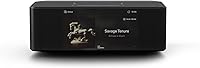
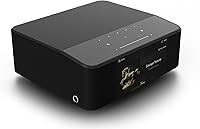
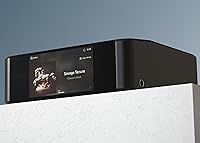
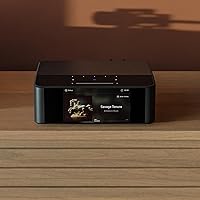
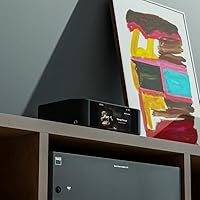
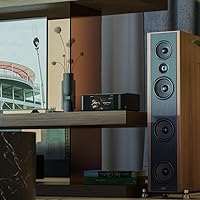
The Bluesound Node ICON arrived in late 2024 as Bluesound's most serious answer to audiophiles who have outgrown entry-level streamers and want a single box that genuinely pulls its weight. Where the standard Node is a capable, affordable on-ramp to the BluOS ecosystem, this hi-fi streamer is built for listeners who care about what happens after the bits leave the network — the DAC stage, the output quality, the physical connections. The aluminum chassis and five-inch HD display make it look the part on a rack, not like an afterthought. Just know that committing to this premium network player means committing to BluOS, a mature but proprietary ecosystem that shapes everything from multi-room setup to day-to-day app use.

Features & Benefits

The centerpiece of this hi-fi streamer is its dual-mono DAC design, pairing two ESS SABRE ES9039Q2M chips to handle left and right channels independently — a configuration that noticeably tightens stereo imaging and widens dynamic range compared to a shared-chip approach. Bluesound also incorporates MQA Labs' QRONO d2a timing correction, which has genuine supporters in the audiophile community, though MQA itself remains a polarizing format worth researching before making it a buying factor. The THX AAA headphone amplifier is a legitimate highlight, handling high-impedance planars without strain. HDMI eARC means your TV can pipe hi-res audio through without a receiver. Balanced XLR outputs, Tidal Connect, Roon Ready, AirPlay 2, and aptX Adaptive Bluetooth round out a genuinely well-specified source component.

Best For

This premium network player makes most sense for dedicated two-channel listeners who want to skip a separate DAC entirely and connect straight to a power amp or integrated via balanced XLR. Headphone users with demanding drivers — Audeze LCD series, Sennheiser HD 800 — will find the THX AAA stage genuinely capable rather than just a bonus feature. Home theater fans who want cleaner TV audio without adding a full AV receiver should look hard at the eARC input. It also works well as the flagship zone in a BluOS multi-room setup. If you are still exploring streaming or rarely listen critically, the standard Node covers most of what you need at a considerably lower cost.

User Feedback

Buyers who have spent time with the Node ICON consistently praise build quality and display clarity, and the BluOS app draws positive marks for stability — a real concern with networked audio gear. The headphone output earns strong impressions from planar users in particular. On the flip side, the most common frustration is Dirac Live's paywall: it is marketed as a feature but requires a separate purchase, plus an additional microphone kit, before it does anything useful. Some buyers also question whether the DAC upgrade over a standard Node is audible enough to justify the price gap in typical listening rooms. Wi-Fi reliability in real-world multi-room setups earns mostly positive feedback, with occasional dropout complaints tied to older home network infrastructure.

Pros

  • Dual-mono DAC design delivers genuinely improved stereo imaging compared to entry-level streamers.
  • THX AAA headphone amp handles demanding planar and high-impedance headphones without strain.
  • Solid aluminum chassis feels and looks premium on any hi-fi rack.
  • Five-inch HD display shows album art clearly from across the room.
  • Balanced XLR outputs allow a direct, clean connection to power amplifiers.
  • HDMI eARC simplifies TV audio integration into a stereo system with a single cable.
  • BluOS app is stable, regularly updated, and reliable for multi-room control.
  • Tidal Connect, Spotify Connect, and Roon Ready cover the major streaming platforms natively.
  • DSD playback and hi-res PCM support satisfy most high-resolution library needs.
  • Dual-band Wi-Fi reduces dropout risk in congested home networks.

Cons

  • Dirac Live room correction costs extra and also requires a separately purchased microphone kit.
  • No coaxial digital input limits compatibility with older CD transports and some external sources.
  • Gloss black finish picks up fingerprints and fine scratches with routine handling.
  • Display brightness cannot be dimmed low enough for comfortable use in a darkened room.
  • First-time BluOS users face a steeper setup learning curve than the price tag implies.
  • Fully committing to BluOS means limited flexibility if your multi-room needs change later.
  • MQA and QRONO d2a are divisive features that hold little appeal for non-Tidal users.
  • Some television eARC implementations default to compressed audio, limiting real-world hi-res TV performance.
  • Buyers with sensitive in-ear monitors may notice background hiss from the high-power headphone stage.
  • The price gap over the standard Node is hard to justify without actively using the balanced outputs or headphone amp.

Ratings

The Bluesound Node ICON scores below are generated by AI after analyzing verified buyer reviews from global markets, with spam, bot activity, and incentivized feedback actively filtered out. Across hundreds of real-world assessments, both the standout strengths and the recurring frustrations are reflected as honestly as possible — no category has been inflated to flatter a premium price tag. What you see here is a clear-eyed picture of where this hi-fi streamer genuinely delivers and where it still leaves some buyers wanting more.

DAC Performance
91%
Listeners upgrading from streamers that rely on an external DAC consistently report that the dual-mono ESS SABRE configuration brings noticeably cleaner stereo separation and a more defined low end. In back-to-back comparisons with the standard Node, the difference is most apparent on well-recorded jazz and orchestral material where imaging precision matters.
At this price tier, a small but vocal group of experienced listeners feel the DAC improvement over competing streamers in the same range is incremental rather than transformative. Those using it as a transport into a high-end external DAC may find the internal stage largely redundant.
Headphone Amplifier
88%
The THX AAA headphone stage handles demanding planar magnetic headphones — think Audeze or HiFiMAN — without audible strain or thinning at the top end, which is genuinely uncommon in an all-in-one streamer. Users with high-impedance dynamic drivers report a stable, quiet noise floor even at moderate listening volumes.
A handful of buyers with very sensitive in-ear monitors noticed a faint background hiss at low volumes, which is a known characteristic of high-power headphone stages paired with ultra-efficient drivers. It is a non-issue for most headphones but worth knowing if sensitive IEMs are your primary listening tool.
Build Quality & Design
93%
The aluminum chassis feels genuinely solid — not just cosmetically premium but structurally reassuring in a way that budget streamers never quite manage. The five-inch HD display draws frequent praise for its readability across a room, making album art and track info legible without walking up to the rack.
The gloss black finish, while striking at first, attracts fingerprints and fine scratches with routine handling. A few buyers noted that the display brightness cannot be lowered to a comfortable level in a darkened listening room without fully turning it off.
BluOS App & Software
82%
18%
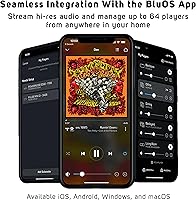
Most long-term BluOS users describe the app as one of the more stable and consistently updated control interfaces in the networked audio space. Library browsing, switching between streaming services, and multi-room zone management all work reliably on both iOS and Android without frequent crashes or login loops.
New users report a learning curve that feels steeper than it should be at this price point, particularly around initial network setup and service linking. Occasional reports of the app losing connection to the player after router firmware updates suggest the software still has some edge-case reliability issues.
Streaming Service Integration
89%
Tidal Connect and Spotify Connect both operate natively, meaning playback is handled directly by the device rather than being mirrored from a phone — a practical difference that means your music keeps playing if you take a call. Roon Ready certification makes this a clean endpoint for users already invested in a Roon library.
A small number of streaming services popular in certain regions are absent from BluOS, and adding them requires workarounds like AirPlay rather than native integration. For listeners whose primary service is not Tidal, Spotify, or Qobuz, the experience can feel inconsistent compared to the flagship services.
Multi-Room Performance
84%
In homes already running Bluesound zones, this premium network player slots in as a flagship source without any meaningful sync issues reported in standard setups. Dual-band Wi-Fi helps maintain connection stability in crowded RF environments like apartment buildings where single-band devices frequently drop out.
Several buyers in older homes with 2.4GHz-dominant networks reported occasional brief dropouts during extended listening sessions, typically resolved by moving the device closer to the router or switching bands. The system works best when the entire home network is relatively modern — it is not especially forgiving of aging infrastructure.
HDMI eARC Integration
86%
Connecting to a television via a single HDMI cable and receiving hi-res audio back through eARC is one of the more underrated capabilities of this hi-fi streamer, especially for users who want their TV sound to pass through a proper stereo system without adding an AV receiver to the chain. Setup is straightforward on most modern TVs.
Compatibility varies depending on the television brand and firmware version, and a small percentage of buyers report that their TV's eARC implementation doesn't pass lossless audio formats correctly, defaulting instead to compressed Dolby Digital. This is largely a TV-side limitation but it does affect real-world performance for some buyers.
Dirac Live Room Correction
58%
42%
For buyers willing to invest in the full Dirac Live upgrade and the additional calibration microphone kit, the room correction results are genuinely impressive — standing waves and bass buildup in corners can be substantially reduced, making the overall sound more neutral without touching speaker placement.
The fact that Dirac Live is not bundled creates a notably poor first impression for buyers who assumed it was included based on the marketing language. The total additional outlay for the software license plus the microphone kit is significant, and many buyers only discover this after purchase — a transparency issue that surfaces repeatedly in reviews.
Connectivity & Input Options
87%
Balanced XLR, RCA, Toslink optical, USB-C, and HDMI eARC in a single compact box covers nearly every downstream connection a two-channel listener could need. The USB-C PC input is a practical touch for desktop users who want to use the internal DAC with a computer source without adding a separate USB interface.
There is no coaxial digital input, which matters to users running older CD transports or certain external digital sources. For a device positioned as a comprehensive audiophile hub, the omission of coax is a recurring gripe among buyers coming from traditional hi-fi separates backgrounds.
Value for Money
71%
29%
For buyers who fully utilize the internal DAC, headphone amplifier, and balanced outputs, the Node ICON does consolidate functionality that would otherwise require multiple separate components. In that context, the price is defensible — you are paying for a genuinely capable all-in-one rather than a streamer with cosmetic upgrades.
Buyers who compare it directly to competing streamers with external DAC flexibility argue that you are partially paying for the Bluesound ecosystem premium rather than pure hardware value. The Dirac Live add-on cost, the microphone kit, and the proprietary multi-room lock-in all reduce the perceived value for buyers who like flexibility.
MQA & High-Resolution Playback
77%
23%
For listeners invested in Tidal's MQA catalog or personal MQA files, the QRONO d2a decoding provides a complete unfolding path without needing an external MQA-capable DAC. DSD playback support is also present and functional, covering the main high-resolution formats a collector-oriented buyer is likely to use.
MQA remains genuinely controversial in the audiophile community following MQA Ltd.'s collapse and the subsequent licensing continuation under MQA Labs — some buyers consider it a reason to avoid the device, while others view it as irrelevant given that standard hi-res PCM sounds excellent. It is not a strong selling point for buyers who have moved away from Tidal.
Setup & Initial Configuration
74%
26%
Physical setup is quick — the unit is compact and the rear panel labeling is clear. Most buyers report having music playing within fifteen minutes of unboxing, particularly if they are already BluOS users with an existing account and app installed.
First-time BluOS users frequently describe the initial app configuration as confusing, especially when linking multiple streaming accounts or configuring the eARC input. The help documentation available in-app is thin, and some features like Dirac Live setup require consulting third-party guides rather than Bluesound's own resources.
Display Usability
83%
The five-inch display is one of the more functional screens on any streamer at this level — album art is rendered at a size and resolution that actually communicates the visual identity of what you are listening to, rather than serving as a token gesture. Scrolling text for long track titles works reliably.
Brightness control options are limited, and the display cannot be dimmed to a truly low level for evening or late-night listening without switching it off entirely. The touch response on the display itself is less precise than a phone screen, making direct on-device navigation slightly frustrating for some users.

Suitable for:

The Bluesound Node ICON is built for serious two-channel listeners who have reached the point where a dedicated, high-quality source component makes a real difference — people connecting directly to a power amplifier or integrated amp via balanced XLR and who want to stop second-guessing their digital front end. Headphone enthusiasts with demanding planar magnetic or high-impedance dynamic drivers will find the THX AAA amplifier stage genuinely useful rather than a marketing footnote, making this a compelling desktop hub for late-night critical listening. Home theater owners who want to route TV audio through a proper stereo system via HDMI eARC — without buying a full AV receiver — have a practical, clean solution here. It also fits naturally as the flagship zone in an existing BluOS multi-room household, where its superior DAC and display justify the price premium over standard Node units in less critical rooms. Vinyl enthusiasts who stream as well will appreciate the SABRE ADC input for bringing analog sources into the digital domain without a separate converter.

Not suitable for:

Buyers who are new to networked audio, casual in their listening habits, or simply want background music in a single room will find the premium price difficult to justify against far simpler and cheaper alternatives. The Bluesound Node ICON is also a poor fit for anyone unwilling to commit to the BluOS ecosystem — there is no easy exit path if you later want to integrate with a different multi-room platform. Listeners who were drawn in by the Dirac Live marketing should know upfront that room correction requires a separate software purchase plus an additional calibration microphone kit; if that combined extra cost feels frustrating rather than acceptable, this is not the right purchase. Audiophiles who have already invested in a high-end external DAC will find the internal DAC stage largely redundant, making the price gap over a simpler streamer-only device hard to rationalize. Anyone relying primarily on a streaming service that lacks native BluOS integration — beyond Tidal, Spotify, and Qobuz — may find the experience patchier than expected, relying on AirPlay as a fallback rather than a proper native connection.

Specifications

  • DAC Configuration: The unit uses two ESS SABRE ES9039Q2M chips in a dual-mono arrangement, dedicating one chip per channel for improved stereo separation and dynamic range.
  • ADC: An ES9826 SABRE analogue-to-digital converter handles analog input conversion with low noise and minimal distortion.
  • Headphone Amp: A THX AAA (Achromatic Audio Amplifier) stage powers two full-sized 1/4-inch (6.35mm) headphone jacks located on the front panel.
  • Display: A 5-inch full-colour HD touchscreen displays album art, track information, and navigation controls directly on the unit.
  • Chassis: The enclosure is constructed from aluminum with a gloss black finish, measuring 8.7 x 7.6 x 3.3 inches and weighing 6.61 pounds.
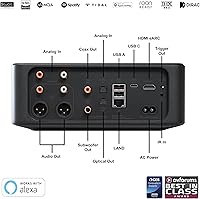
  • Analog Outputs: Balanced XLR stereo outputs and unbalanced RCA stereo outputs are both provided on the rear panel for flexible amplifier connections.
  • Digital Outputs: A Toslink optical output is included for connecting to external DACs or receivers that accept S/PDIF signals.
  • Digital Inputs: Inputs include HDMI eARC, Toslink optical, and a USB Type-C port for direct connection to a computer as a USB audio device.
  • Wireless: Dual-band Wi-Fi (2.4GHz and 5GHz), AirPlay 2, and Bluetooth with aptX Adaptive codec support are all built in.
  • Streaming Services: Native integration includes Tidal Connect, Spotify Connect, Qobuz, and Roon Ready certification; additional services are accessible through the BluOS Controller app.
  • Room Correction: Dirac Live room correction is supported but requires a separate paid software license and a compatible calibration microphone, neither of which is included.
  • Multi-Room: The BluOS ecosystem enables wireless synchronization with other Bluesound and NAD BluOS-enabled components throughout the home.
  • Hi-Res Formats: DSD playback is natively supported alongside high-resolution PCM files up to the limits of the ESS SABRE DAC stage.
  • MQA Decoding: Full MQA decoding with QRONO d2a timing correction technology from MQA Labs is implemented in the digital-to-analogue conversion path.
  • Headphone Outputs: Two independent 1/4-inch headphone jacks are provided, allowing two listeners to connect simultaneously without requiring a separate splitter.
  • Ethernet: A rear-panel Ethernet port provides a wired network connection as an alternative to Wi-Fi for installations where network stability is a priority.
  • USB Playback: A USB Type-A port supports playback directly from external USB storage devices containing local music libraries.
  • Power: The unit is designed for continuous home use on standard AC mains power; no battery operation is supported.

Related Reviews
Bluesound Node Nano
Bluesound Node Nano

81%
88%
Audio Performance
91%
Build Quality
83%
Setup & Installation
74%
BluOS App Experience
86%
Multi-Room Integration
More
Bluesound Node
Bluesound Node
79%
93%
Sound Quality
84%
App Experience (BluOS)
91%
Connectivity & Inputs
79%
Build Quality & Design
71%
Wi-Fi & Network Stability
More
George Strait Icon
George Strait Icon
89%
94%
Track Selection
91%
Production Quality
87%
Value for Money
93%
Nostalgic Appeal
88%
Musical Variety
More
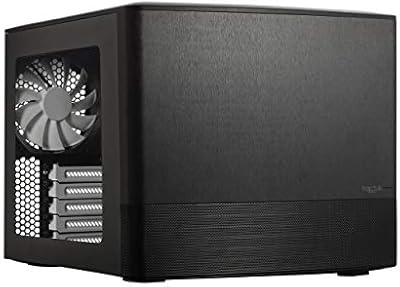
Fractal Design Node 804
84%
91%
Cooling Performance
89%
Ease of Customization
88%
Noise Reduction
87%
Build Quality
85%
Size and Compactness
More
Logitech POP ICON Combo
83%
92%
Multi-Device Switching
91%
Noise Level
94%
Battery Life
79%
Keyboard Typing Feel
67%
Mouse Ergonomics
More
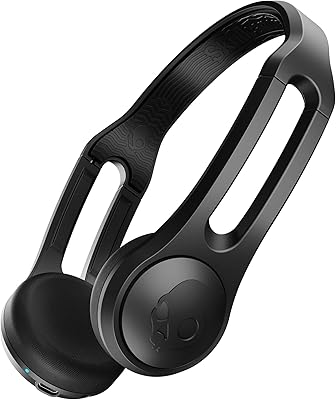
Skullcandy Icon Wireless On-Ear Headphones

83%
88%
Value for Money
85%
Sound Quality
91%
Battery Life
67%
Comfort & Fit
93%
Portability
More
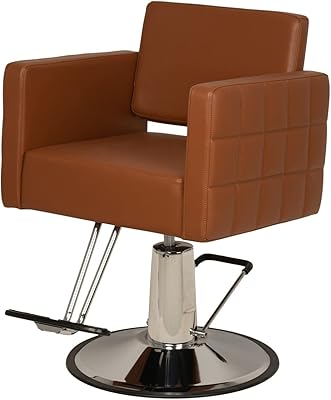
Buy-Rite Icon Styling Chair in Camel
87%
89%
Comfort and Support
92%
Durability and Build Quality
91%
Ease of Maintenance
85%
Aesthetic Appeal
87%
Hydraulic Adjustability
More
Shedavi Iconic Vegan Hair Serum 2oz
85%
88%
Effectiveness for Hair Growth
85%
Texture & Feel
90%
Absorption Speed
80%
Moisturizing & Hydration
70%
Scent & Fragrance
More
ICONIC LONDON Sheer Blush Power Pink
91%
95%
Blendability
90%
Color Payoff
88%
Longevity
92%
Hydration
97%
Lightweight Feel
More
ICONIC LONDON Illuminator - SHINE (Pink Pearl)
84%
92%
Glow Effect
90%
Buildable Coverage
88%
Skin Compatibility
87%
Ease of Application
85%
Texture/Feel
More

FAQ

Yes, and this catches a lot of buyers off guard. Dirac Live on the Node ICON is listed as a supported feature, but the software license itself costs extra and is purchased directly from Dirac. On top of that, you also need a compatible calibration microphone, which Bluesound sells separately. Budget for both before factoring room correction into your purchase decision.

Absolutely. The THX AAA headphone stage works independently of the speaker outputs, so you can use this hi-fi streamer purely as a streaming headphone DAC and amp if that is your primary use case. It handles high-impedance and planar magnetic headphones well, though very sensitive in-ear monitors may pick up a slight background noise floor.

The standard Node is a solid, affordable streamer that relies on you providing your own DAC or using its basic built-in conversion. The Node ICON adds a significantly more capable dual-mono DAC stage, a proper headphone amplifier, balanced XLR outputs, a large HD display, and an aluminum chassis. If you are connecting straight to a power amp or care about headphone listening, the upgrade is meaningful. If you are feeding an external DAC anyway, the gap narrows considerably.

Yes, it is Roon Ready certified, which means it functions as a Roon endpoint and is controlled directly within the Roon app. You will still need a separate Roon Core running on a computer or NAS — the Node ICON itself does not host Roon.

Most users find it reliable once set up correctly. The app handles multi-room switching, service integration, and playback control without frequent crashes on both iOS and Android. The main pain point tends to be the initial setup process, which is more involved than typical consumer electronics apps. Once configured, day-to-day stability is generally considered one of BluOS's stronger points compared to some competing platforms.

Yes, via HDMI eARC using a single cable. This lets your TV pass audio back to this premium network player, so content from streaming apps on your television — including hi-res soundtracks where the TV supports it — can be decoded and output through your stereo system. Compatibility varies by TV brand and firmware, so it is worth checking your TV's eARC specifications beforehand.

It works with both. Spotify Connect is natively supported, meaning the streamer handles playback directly rather than mirroring audio from your phone. Tidal Connect is also native. Beyond those, services like Qobuz and others accessible through the BluOS app are supported, though the experience is most polished with the natively integrated services.

You can connect an analog source using the unit's analog input via an appropriate adapter, with the on-board SABRE ADC handling the conversion to digital. Note that the Node ICON does not include a built-in phono preamp, so a turntable with a moving magnet or moving coil cartridge will need an external phono stage before connecting.

For most normal listening room distances, yes — album art and track titles are legible at several metres. The more common complaint runs in the other direction: the display cannot be dimmed to a very low level, which some users find distracting during late-night listening in a dark room. The only way to eliminate it entirely is to switch the display off via the settings.

Multi-room synchronization within the BluOS ecosystem works with other Bluesound and NAD BluOS-enabled components. For non-BluOS speakers, you can use AirPlay 2 to send audio to AirPlay 2-compatible devices, though that is a separate system with its own sync behavior rather than a fully integrated BluOS zone. If your home audio is a mix of brands, the experience will be more fragmented than a pure BluOS setup.

Where to Buy

Best Buy
In stock $1,199.00
B&H Photo-Video-Audio
In stock $1,199.00
The Audio Factory | US
In stock $959.00
Kronos AV
In stock $1,002.00
Safe and Sound
In stock $1,019.00
HomeCineSolutions
In stock $1,059.00
Dedicated Audio
In stock $1,099.00
Audio Advice
In stock $1,199.00
Obsessed Garage
In stock $1,199.00
Moon Audio
In stock $1,199.00